.avif)





Blogs
Stay updated with our latest blog posts.
Deciding should I repair or replace my furnace or AC is one of the most stressful calls a homeowner can face — especially when the heat goes out in January or your AC quits during a Wichita summer. The good news is that the decision doesn't have to be a gut call. There are clear, practical frameworks that point you toward the right answer based on your system's age, repair costs, efficiency, and safety.
Quick answer: repair or replace?
| Situation | Recommendation |
|---|---|
| System is under 10 years old, isolated issue | Repair |
| System is 10-15+ years old, repair costs exceed 30-50% of replacement | Replace |
| System uses R-22 refrigerant and needs a recharge | Replace |
| Cracked heat exchanger or carbon monoxide risk detected | Replace immediately |
| Multiple repairs in the past 2-3 years | Replace |
| System is under warranty and repair is covered | Repair |
| Repair cost × system age exceeds $5,000 | Replace |
Two rules of thumb are used most widely in the HVAC industry:
Neither rule tells the whole story on its own — age, efficiency ratings, refrigerant type, and your plans for the home all matter too. This guide walks you through every factor so you can make a confident, informed decision.
Central Kansas homeowners face a unique challenge: wide temperature swings from brutal summer heat to freezing winters put more strain on HVAC equipment than many other parts of the country. That means your system's age and condition matter even more here than the national averages suggest.

Should i repair or replace my furnace or ac further reading:
When we visit a home in Andover or Goddard to diagnose a struggling system, we don't just look at the broken part. We look at the big picture. Deciding whether to invest in another fix or transition to a new system requires looking at several intersecting factors.
First, let's look at the age of your equipment. A young system with a failed capacitor is a clear candidate for a quick repair. However, as systems creep past their first decade of service, the risk of compounding component failures increases.
Second, evaluate the frequency of your service calls. If you find yourself on a first-name basis with your service technician because they are at your house every season, you are likely caught in a repair spiral. Individual service calls might feel manageable, but when you add them up over two or three years, you could have easily funded a significant portion of a modern, reliable system.
Additionally, you must weigh your system's current efficiency and warranty status. To help you navigate these overlapping details, we recommend looking at our Should I Repair or Replace My HVAC System overview. If you are ready for a deep dive into the math, our HVAC Repair vs Replace Complete Guide breaks down these financial and mechanical considerations step-by-step.
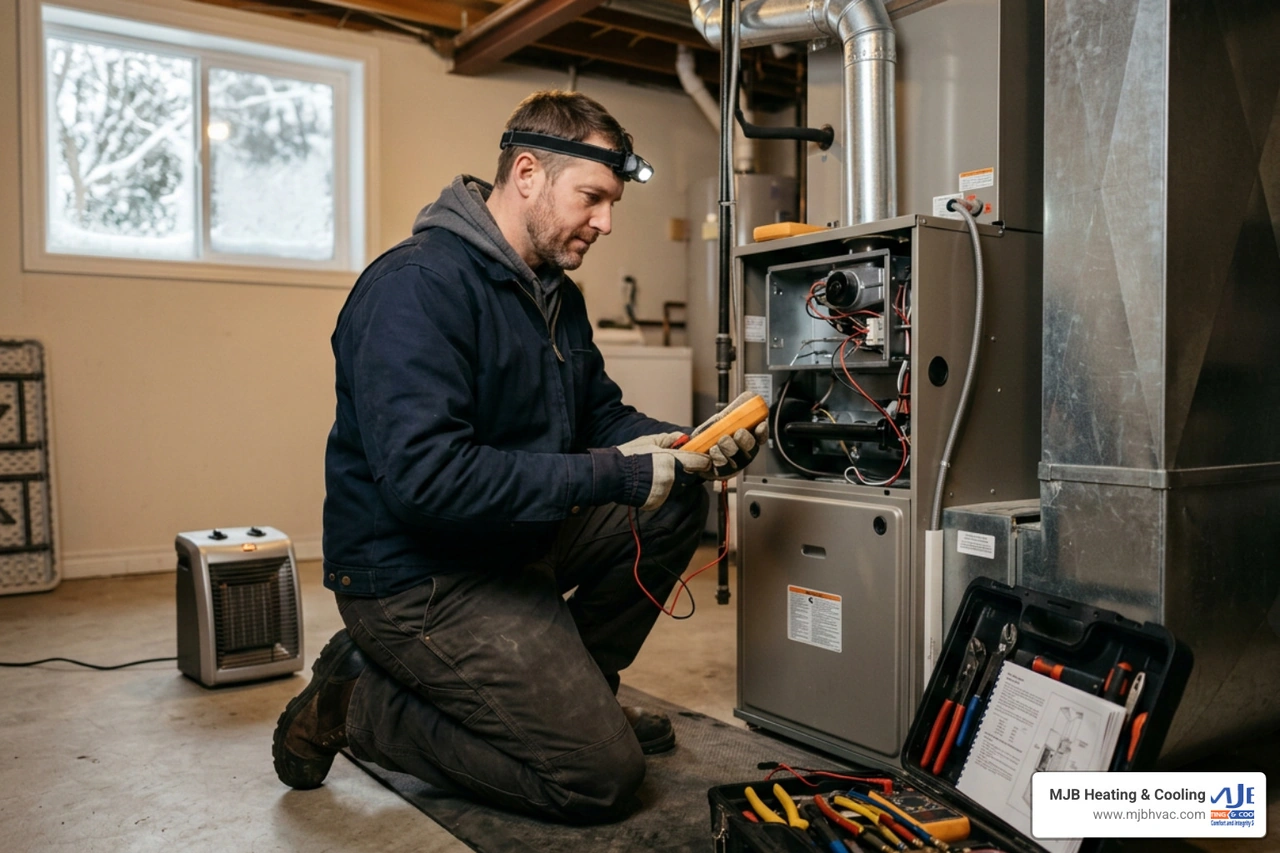
Time is undefeated, especially when it comes to mechanical equipment. Understanding where your heating and cooling units stand relative to their expected useful life is the first step in making an educated decision.
While proper maintenance can stretch the life of your equipment, every system has a natural expiration date. Here is what you can typically expect under normal operating conditions:
If your air conditioner is blowing warm air and is already past its twelfth birthday, investing in a major repair is often like putting brand-new tires on a car with a failing transmission. To get a localized perspective on how long your equipment is likely to last, take a look at our guide on the Average Lifespan of an HVAC System in Kansas. To make sure you are doing everything you can to maximize that lifespan, review our Essential HVAC Maintenance Tips for Your Furnace and AC.
In South-Central Kansas, our weather is anything but mild. From summer afternoons in El Dorado where the heat index climbs past triple digits, to bone-chilling winter nights in Newton where the wind chill drops below zero, our systems operate under extreme conditions.
This dramatic seasonal transition means your air conditioner is running at maximum capacity for months, immediately followed by your furnace working overtime to keep the prairie winds at bay. This constant cycling back and forth accelerates the physical expansion and contraction of metal components, such as your furnace's heat exchanger or your AC's copper coils. Consequently, systems in the Wichita metro area often reach the end of their reliable lifespans a few years earlier than those in more temperate coastal climates.
When a system breaks down, the immediate question is always about the bottom line. However, the upfront repair estimate is only one part of the financial equation. To make a smart choice, you must compare the cost of keeping an old system limping along against the long-term value of a new, efficient installation.
To remove the guesswork, we often guide homeowners through the $5,000 rule. Let's look at how this math plays out in real life:
Imagine you have a 12-year-old air conditioner in Derby that needs a major repair. If you multiply that age by the repair estimate, and the total exceeds the $5,000 threshold, the math strongly points toward replacement. On the other hand, if you have a 6-year-old system with the exact same issue, the math will fall well below the threshold, indicating that a repair is a highly sensible investment.
Another helpful tool is the 50% rule: if the repair quote approaches or exceeds half the cost of a brand-new, modern system, that money is almost always better spent as a down payment on a replacement that comes with a fresh ten-year warranty. For a detailed breakdown of these scenarios, check out our analysis on the Cost of Repairing Old HVAC vs Buying New System.
Older heating and cooling systems are notorious energy hogs. Even if your 15-year-old furnace still runs, it is likely operating at a fraction of the efficiency of a modern unit.
Over the course of a few years, those monthly utility savings add up, helping to offset the cost of your new equipment. You can learn more about how these metrics are calculated in our guide, Efficiency Ratings Explained for Homeowners, and see real-world savings projections in our article on How Much Does a High Efficiency System Save.
If you have an older air conditioner or heat pump, the type of chemical refrigerant it uses could make your decision for you. Systems manufactured before 2010 typically rely on R-22 (often called Freon). Because R-22 depletes the ozone layer, the EPA has completely phased out its production and import.
As we move through 2026, finding reclaimed R-22 to service a leak has become incredibly difficult and extraordinarily expensive. Furthermore, the industry is currently transitioning away from R-410A under the AIM Act to newer, more environmentally friendly refrigerants.
If your old R-22 system develops a refrigerant leak, attempting to patch the coil and recharge the system is a temporary, expensive band-aid. That money is far better invested in a modern, eco-friendly system. To help cushion the transition, you can explore available state and federal incentives through our resources on Kansas Energy Rebates for HVAC Upgrades and the Inflation Reduction Act Benefits for Kansas Homeowners.
While financial calculations are incredibly important, your family's safety and daily comfort must always come first. Some warning signs are not just inconveniences—they are critical red flags.
In a gas furnace, the heat exchanger is the metal chamber where fuel is burned to create warmth. The metal walls of the exchanger keep dangerous combustion byproducts—like carbon monoxide—completely separate from the air circulating through your home's ductwork.
As a furnace ages, the constant stress of heating up and cooling down causes the metal to expand and contract. Over time, this can lead to microscopic cracks. A cracked heat exchanger is an absolute safety emergency. It can leak odorless, colorless, and deadly carbon monoxide gas into your living spaces.
If a safety inspection reveals a cracked heat exchanger, the system must be shut down immediately. Because replacing a heat exchanger is one of the most labor-intensive and complex repairs possible, it almost always warrants a full furnace replacement. If you are experiencing issues with your system, it is vital to recognize the Signs Your AC Needs Repair or when your furnace is showing dangerous symptoms.
If you find yourself calling for service multiple times over a single season, your system is likely caught in a repair spiral. When one major component fails—such as the blower motor or the compressor—it often places extra strain on the remaining older parts.
Within a year or two of fixing one issue, you may find yourself facing another major component failure. This cycle of constant repairs is a strong signal that the system's overall structural integrity is failing, and it is time to retire the unit.
Are you planning to live in your current home in Maize or Bel Aire for the next twenty years, or are you preparing to put it on the market in the near future? Your personal timeline plays a massive role in this decision.
If you plan to stay long-term, upgrading to a high-efficiency system allows you to personally enjoy the improved comfort, whisper-quiet operation, and lower monthly utility bills for years to come. However, even if you plan to sell soon, replacing an ancient, limping system can be a major selling point. Modern buyers are often wary of homes with aging mechanical systems, and a new HVAC unit can prevent negotiation hurdles during the home inspection process.
To see how this investment impacts your bottom line as a seller, read our articles on How a New HVAC System Increases Home Value and the overall HVAC Replacement Return on Investment.
As a family-owned local business, we hear many of the same questions from homeowners in Valley Center, Mulvane, and across the Wichita area. Here are some of the most common queries we address.
In most cases, yes. Your furnace and air conditioner share several critical components, including the indoor blower motor and the ductwork system. When you install a matched system, you ensure that both units are engineered to work together at peak efficiency.
Replacing both at the same time also saves you significant labor costs, as our installation team only has to prep, seal, and configure your home's utility space once. If you want to keep your current units running smoothly for as long as possible before making that leap, find out more by reading Is an HVAC Maintenance Plan Worth It and learning How Often Should You Service Your HVAC System.
The most expensive components to fix or replace include:
If your system is still under its original manufacturer parts warranty, repairs are much easier to justify. Most major brands offer a 5-to-10-year warranty on parts (provided the system was properly registered after installation).
However, that manufacturer warranties typically cover the cost of the replacement part itself, but not the labor required to install it. If your system is out of warranty entirely, you will be responsible for both parts and labor, which quickly tips the financial scale in favor of replacement.
At MJB Heating & Cooling, we have been helping our neighbors throughout the Wichita metro area navigate these tough decisions since 1984. Founded right here in Derby, KS, our family-owned business was built on a simple foundation: quality workmanship and an honest, transparent approach.
We never push for an expensive replacement when a simple, reliable repair will safely keep your home comfortable. Likewise, we won't let you throw hard-earned money at a failing, unsafe system that belongs in retirement. If you are trying to decide whether to repair or replace your home's heating or cooling system, let our licensed, experienced technicians provide a clear, professional assessment.
Are you ready for an honest, dependable evaluation of your home's heating or cooling system? Schedule professional HVAC service with MJB Heating & Cooling today.
Deciding should I repair or replace my furnace or AC is one of the most stressful calls a homeowner can face — especially when the heat goes out in January or your AC quits during a Wichita summer. The good news is that the decision doesn't have to be a gut call. There are clear, practical frameworks that point you toward the right answer based on your system's age, repair costs, efficiency, and safety.
Quick answer: repair or replace?
| Situation | Recommendation |
|---|---|
| System is under 10 years old, isolated issue | Repair |
| System is 10-15+ years old, repair costs exceed 30-50% of replacement | Replace |
| System uses R-22 refrigerant and needs a recharge | Replace |
| Cracked heat exchanger or carbon monoxide risk detected | Replace immediately |
| Multiple repairs in the past 2-3 years | Replace |
| System is under warranty and repair is covered | Repair |
| Repair cost × system age exceeds $5,000 | Replace |
Two rules of thumb are used most widely in the HVAC industry:
Neither rule tells the whole story on its own — age, efficiency ratings, refrigerant type, and your plans for the home all matter too. This guide walks you through every factor so you can make a confident, informed decision.
Central Kansas homeowners face a unique challenge: wide temperature swings from brutal summer heat to freezing winters put more strain on HVAC equipment than many other parts of the country. That means your system's age and condition matter even more here than the national averages suggest.
Should i repair or replace my furnace or ac further reading:
When we visit a home in Andover or Goddard to diagnose a struggling system, we don't just look at the broken part. We look at the big picture. Deciding whether to invest in another fix or transition to a new system requires looking at several intersecting factors.
First, let's look at the age of your equipment. A young system with a failed capacitor is a clear candidate for a quick repair. However, as systems creep past their first decade of service, the risk of compounding component failures increases.
Second, evaluate the frequency of your service calls. If you find yourself on a first-name basis with your service technician because they are at your house every season, you are likely caught in a repair spiral. Individual service calls might feel manageable, but when you add them up over two or three years, you could have easily funded a significant portion of a modern, reliable system.
Additionally, you must weigh your system's current efficiency and warranty status. To help you navigate these overlapping details, we recommend looking at our Should I Repair or Replace My HVAC System overview. If you are ready for a deep dive into the math, our HVAC Repair vs Replace Complete Guide breaks down these financial and mechanical considerations step-by-step.
Time is undefeated, especially when it comes to mechanical equipment. Understanding where your heating and cooling units stand relative to their expected useful life is the first step in making an educated decision.
While proper maintenance can stretch the life of your equipment, every system has a natural expiration date. Here is what you can typically expect under normal operating conditions:
If your air conditioner is blowing warm air and is already past its twelfth birthday, investing in a major repair is often like putting brand-new tires on a car with a failing transmission. To get a localized perspective on how long your equipment is likely to last, take a look at our guide on the Average Lifespan of an HVAC System in Kansas. To make sure you are doing everything you can to maximize that lifespan, review our Essential HVAC Maintenance Tips for Your Furnace and AC.
In South-Central Kansas, our weather is anything but mild. From summer afternoons in El Dorado where the heat index climbs past triple digits, to bone-chilling winter nights in Newton where the wind chill drops below zero, our systems operate under extreme conditions.
This dramatic seasonal transition means your air conditioner is running at maximum capacity for months, immediately followed by your furnace working overtime to keep the prairie winds at bay. This constant cycling back and forth accelerates the physical expansion and contraction of metal components, such as your furnace's heat exchanger or your AC's copper coils. Consequently, systems in the Wichita metro area often reach the end of their reliable lifespans a few years earlier than those in more temperate coastal climates.
When a system breaks down, the immediate question is always about the bottom line. However, the upfront repair estimate is only one part of the financial equation. To make a smart choice, you must compare the cost of keeping an old system limping along against the long-term value of a new, efficient installation.
To remove the guesswork, we often guide homeowners through the $5,000 rule. Let's look at how this math plays out in real life:
Imagine you have a 12-year-old air conditioner in Derby that needs a major repair. If you multiply that age by the repair estimate, and the total exceeds the $5,000 threshold, the math strongly points toward replacement. On the other hand, if you have a 6-year-old system with the exact same issue, the math will fall well below the threshold, indicating that a repair is a highly sensible investment.
Another helpful tool is the 50% rule: if the repair quote approaches or exceeds half the cost of a brand-new, modern system, that money is almost always better spent as a down payment on a replacement that comes with a fresh ten-year warranty. For a detailed breakdown of these scenarios, check out our analysis on the Cost of Repairing Old HVAC vs Buying New System.
Older heating and cooling systems are notorious energy hogs. Even if your 15-year-old furnace still runs, it is likely operating at a fraction of the efficiency of a modern unit.
Over the course of a few years, those monthly utility savings add up, helping to offset the cost of your new equipment. You can learn more about how these metrics are calculated in our guide, Efficiency Ratings Explained for Homeowners, and see real-world savings projections in our article on How Much Does a High Efficiency System Save.
If you have an older air conditioner or heat pump, the type of chemical refrigerant it uses could make your decision for you. Systems manufactured before 2010 typically rely on R-22 (often called Freon). Because R-22 depletes the ozone layer, the EPA has completely phased out its production and import.
As we move through 2026, finding reclaimed R-22 to service a leak has become incredibly difficult and extraordinarily expensive. Furthermore, the industry is currently transitioning away from R-410A under the AIM Act to newer, more environmentally friendly refrigerants.
If your old R-22 system develops a refrigerant leak, attempting to patch the coil and recharge the system is a temporary, expensive band-aid. That money is far better invested in a modern, eco-friendly system. To help cushion the transition, you can explore available state and federal incentives through our resources on Kansas Energy Rebates for HVAC Upgrades and the Inflation Reduction Act Benefits for Kansas Homeowners.
While financial calculations are incredibly important, your family's safety and daily comfort must always come first. Some warning signs are not just inconveniences—they are critical red flags.
In a gas furnace, the heat exchanger is the metal chamber where fuel is burned to create warmth. The metal walls of the exchanger keep dangerous combustion byproducts—like carbon monoxide—completely separate from the air circulating through your home's ductwork.
As a furnace ages, the constant stress of heating up and cooling down causes the metal to expand and contract. Over time, this can lead to microscopic cracks. A cracked heat exchanger is an absolute safety emergency. It can leak odorless, colorless, and deadly carbon monoxide gas into your living spaces.
If a safety inspection reveals a cracked heat exchanger, the system must be shut down immediately. Because replacing a heat exchanger is one of the most labor-intensive and complex repairs possible, it almost always warrants a full furnace replacement. If you are experiencing issues with your system, it is vital to recognize the Signs Your AC Needs Repair or when your furnace is showing dangerous symptoms.
If you find yourself calling for service multiple times over a single season, your system is likely caught in a repair spiral. When one major component fails—such as the blower motor or the compressor—it often places extra strain on the remaining older parts.
Within a year or two of fixing one issue, you may find yourself facing another major component failure. This cycle of constant repairs is a strong signal that the system's overall structural integrity is failing, and it is time to retire the unit.
Are you planning to live in your current home in Maize or Bel Aire for the next twenty years, or are you preparing to put it on the market in the near future? Your personal timeline plays a massive role in this decision.
If you plan to stay long-term, upgrading to a high-efficiency system allows you to personally enjoy the improved comfort, whisper-quiet operation, and lower monthly utility bills for years to come. However, even if you plan to sell soon, replacing an ancient, limping system can be a major selling point. Modern buyers are often wary of homes with aging mechanical systems, and a new HVAC unit can prevent negotiation hurdles during the home inspection process.
To see how this investment impacts your bottom line as a seller, read our articles on How a New HVAC System Increases Home Value and the overall HVAC Replacement Return on Investment.
As a family-owned local business, we hear many of the same questions from homeowners in Valley Center, Mulvane, and across the Wichita area. Here are some of the most common queries we address.
In most cases, yes. Your furnace and air conditioner share several critical components, including the indoor blower motor and the ductwork system. When you install a matched system, you ensure that both units are engineered to work together at peak efficiency.
Replacing both at the same time also saves you significant labor costs, as our installation team only has to prep, seal, and configure your home's utility space once. If you want to keep your current units running smoothly for as long as possible before making that leap, find out more by reading Is an HVAC Maintenance Plan Worth It and learning How Often Should You Service Your HVAC System.
The most expensive components to fix or replace include:
If your system is still under its original manufacturer parts warranty, repairs are much easier to justify. Most major brands offer a 5-to-10-year warranty on parts (provided the system was properly registered after installation).
However, that manufacturer warranties typically cover the cost of the replacement part itself, but not the labor required to install it. If your system is out of warranty entirely, you will be responsible for both parts and labor, which quickly tips the financial scale in favor of replacement.
At MJB Heating & Cooling, we have been helping our neighbors throughout the Wichita metro area navigate these tough decisions since 1984. Founded right here in Derby, KS, our family-owned business was built on a simple foundation: quality workmanship and an honest, transparent approach.
We never push for an expensive replacement when a simple, reliable repair will safely keep your home comfortable. Likewise, we won't let you throw hard-earned money at a failing, unsafe system that belongs in retirement. If you are trying to decide whether to repair or replace your home's heating or cooling system, let our licensed, experienced technicians provide a clear, professional assessment.
Are you ready for an honest, dependable evaluation of your home's heating or cooling system? Schedule professional HVAC service with MJB Heating & Cooling today.
Deciding should I repair or replace my furnace or AC is one of the most stressful calls a homeowner can face — especially when the heat goes out in January or your AC quits during a Wichita summer. The good news is that the decision doesn't have to be a gut call. There are clear, practical frameworks that point you toward the right answer based on your system's age, repair costs, efficiency, and safety.
Quick answer: repair or replace?
| Situation | Recommendation |
|---|---|
| System is under 10 years old, isolated issue | Repair |
| System is 10-15+ years old, repair costs exceed 30-50% of replacement | Replace |
| System uses R-22 refrigerant and needs a recharge | Replace |
| Cracked heat exchanger or carbon monoxide risk detected | Replace immediately |
| Multiple repairs in the past 2-3 years | Replace |
| System is under warranty and repair is covered | Repair |
| Repair cost × system age exceeds $5,000 | Replace |
Two rules of thumb are used most widely in the HVAC industry:
Neither rule tells the whole story on its own — age, efficiency ratings, refrigerant type, and your plans for the home all matter too. This guide walks you through every factor so you can make a confident, informed decision.
Central Kansas homeowners face a unique challenge: wide temperature swings from brutal summer heat to freezing winters put more strain on HVAC equipment than many other parts of the country. That means your system's age and condition matter even more here than the national averages suggest.
Should i repair or replace my furnace or ac further reading:
When we visit a home in Andover or Goddard to diagnose a struggling system, we don't just look at the broken part. We look at the big picture. Deciding whether to invest in another fix or transition to a new system requires looking at several intersecting factors.
First, let's look at the age of your equipment. A young system with a failed capacitor is a clear candidate for a quick repair. However, as systems creep past their first decade of service, the risk of compounding component failures increases.
Second, evaluate the frequency of your service calls. If you find yourself on a first-name basis with your service technician because they are at your house every season, you are likely caught in a repair spiral. Individual service calls might feel manageable, but when you add them up over two or three years, you could have easily funded a significant portion of a modern, reliable system.
Additionally, you must weigh your system's current efficiency and warranty status. To help you navigate these overlapping details, we recommend looking at our Should I Repair or Replace My HVAC System overview. If you are ready for a deep dive into the math, our HVAC Repair vs Replace Complete Guide breaks down these financial and mechanical considerations step-by-step.
Time is undefeated, especially when it comes to mechanical equipment. Understanding where your heating and cooling units stand relative to their expected useful life is the first step in making an educated decision.
While proper maintenance can stretch the life of your equipment, every system has a natural expiration date. Here is what you can typically expect under normal operating conditions:
If your air conditioner is blowing warm air and is already past its twelfth birthday, investing in a major repair is often like putting brand-new tires on a car with a failing transmission. To get a localized perspective on how long your equipment is likely to last, take a look at our guide on the Average Lifespan of an HVAC System in Kansas. To make sure you are doing everything you can to maximize that lifespan, review our Essential HVAC Maintenance Tips for Your Furnace and AC.
In South-Central Kansas, our weather is anything but mild. From summer afternoons in El Dorado where the heat index climbs past triple digits, to bone-chilling winter nights in Newton where the wind chill drops below zero, our systems operate under extreme conditions.
This dramatic seasonal transition means your air conditioner is running at maximum capacity for months, immediately followed by your furnace working overtime to keep the prairie winds at bay. This constant cycling back and forth accelerates the physical expansion and contraction of metal components, such as your furnace's heat exchanger or your AC's copper coils. Consequently, systems in the Wichita metro area often reach the end of their reliable lifespans a few years earlier than those in more temperate coastal climates.
When a system breaks down, the immediate question is always about the bottom line. However, the upfront repair estimate is only one part of the financial equation. To make a smart choice, you must compare the cost of keeping an old system limping along against the long-term value of a new, efficient installation.
To remove the guesswork, we often guide homeowners through the $5,000 rule. Let's look at how this math plays out in real life:
Imagine you have a 12-year-old air conditioner in Derby that needs a major repair. If you multiply that age by the repair estimate, and the total exceeds the $5,000 threshold, the math strongly points toward replacement. On the other hand, if you have a 6-year-old system with the exact same issue, the math will fall well below the threshold, indicating that a repair is a highly sensible investment.
Another helpful tool is the 50% rule: if the repair quote approaches or exceeds half the cost of a brand-new, modern system, that money is almost always better spent as a down payment on a replacement that comes with a fresh ten-year warranty. For a detailed breakdown of these scenarios, check out our analysis on the Cost of Repairing Old HVAC vs Buying New System.
Older heating and cooling systems are notorious energy hogs. Even if your 15-year-old furnace still runs, it is likely operating at a fraction of the efficiency of a modern unit.
Over the course of a few years, those monthly utility savings add up, helping to offset the cost of your new equipment. You can learn more about how these metrics are calculated in our guide, Efficiency Ratings Explained for Homeowners, and see real-world savings projections in our article on How Much Does a High Efficiency System Save.
If you have an older air conditioner or heat pump, the type of chemical refrigerant it uses could make your decision for you. Systems manufactured before 2010 typically rely on R-22 (often called Freon). Because R-22 depletes the ozone layer, the EPA has completely phased out its production and import.
As we move through 2026, finding reclaimed R-22 to service a leak has become incredibly difficult and extraordinarily expensive. Furthermore, the industry is currently transitioning away from R-410A under the AIM Act to newer, more environmentally friendly refrigerants.
If your old R-22 system develops a refrigerant leak, attempting to patch the coil and recharge the system is a temporary, expensive band-aid. That money is far better invested in a modern, eco-friendly system. To help cushion the transition, you can explore available state and federal incentives through our resources on Kansas Energy Rebates for HVAC Upgrades and the Inflation Reduction Act Benefits for Kansas Homeowners.
While financial calculations are incredibly important, your family's safety and daily comfort must always come first. Some warning signs are not just inconveniences—they are critical red flags.
In a gas furnace, the heat exchanger is the metal chamber where fuel is burned to create warmth. The metal walls of the exchanger keep dangerous combustion byproducts—like carbon monoxide—completely separate from the air circulating through your home's ductwork.
As a furnace ages, the constant stress of heating up and cooling down causes the metal to expand and contract. Over time, this can lead to microscopic cracks. A cracked heat exchanger is an absolute safety emergency. It can leak odorless, colorless, and deadly carbon monoxide gas into your living spaces.
If a safety inspection reveals a cracked heat exchanger, the system must be shut down immediately. Because replacing a heat exchanger is one of the most labor-intensive and complex repairs possible, it almost always warrants a full furnace replacement. If you are experiencing issues with your system, it is vital to recognize the Signs Your AC Needs Repair or when your furnace is showing dangerous symptoms.
If you find yourself calling for service multiple times over a single season, your system is likely caught in a repair spiral. When one major component fails—such as the blower motor or the compressor—it often places extra strain on the remaining older parts.
Within a year or two of fixing one issue, you may find yourself facing another major component failure. This cycle of constant repairs is a strong signal that the system's overall structural integrity is failing, and it is time to retire the unit.
Are you planning to live in your current home in Maize or Bel Aire for the next twenty years, or are you preparing to put it on the market in the near future? Your personal timeline plays a massive role in this decision.
If you plan to stay long-term, upgrading to a high-efficiency system allows you to personally enjoy the improved comfort, whisper-quiet operation, and lower monthly utility bills for years to come. However, even if you plan to sell soon, replacing an ancient, limping system can be a major selling point. Modern buyers are often wary of homes with aging mechanical systems, and a new HVAC unit can prevent negotiation hurdles during the home inspection process.
To see how this investment impacts your bottom line as a seller, read our articles on How a New HVAC System Increases Home Value and the overall HVAC Replacement Return on Investment.
As a family-owned local business, we hear many of the same questions from homeowners in Valley Center, Mulvane, and across the Wichita area. Here are some of the most common queries we address.
In most cases, yes. Your furnace and air conditioner share several critical components, including the indoor blower motor and the ductwork system. When you install a matched system, you ensure that both units are engineered to work together at peak efficiency.
Replacing both at the same time also saves you significant labor costs, as our installation team only has to prep, seal, and configure your home's utility space once. If you want to keep your current units running smoothly for as long as possible before making that leap, find out more by reading Is an HVAC Maintenance Plan Worth It and learning How Often Should You Service Your HVAC System.
The most expensive components to fix or replace include:
If your system is still under its original manufacturer parts warranty, repairs are much easier to justify. Most major brands offer a 5-to-10-year warranty on parts (provided the system was properly registered after installation).
However, that manufacturer warranties typically cover the cost of the replacement part itself, but not the labor required to install it. If your system is out of warranty entirely, you will be responsible for both parts and labor, which quickly tips the financial scale in favor of replacement.
At MJB Heating & Cooling, we have been helping our neighbors throughout the Wichita metro area navigate these tough decisions since 1984. Founded right here in Derby, KS, our family-owned business was built on a simple foundation: quality workmanship and an honest, transparent approach.
We never push for an expensive replacement when a simple, reliable repair will safely keep your home comfortable. Likewise, we won't let you throw hard-earned money at a failing, unsafe system that belongs in retirement. If you are trying to decide whether to repair or replace your home's heating or cooling system, let our licensed, experienced technicians provide a clear, professional assessment.
Are you ready for an honest, dependable evaluation of your home's heating or cooling system? Schedule professional HVAC service with MJB Heating & Cooling today.
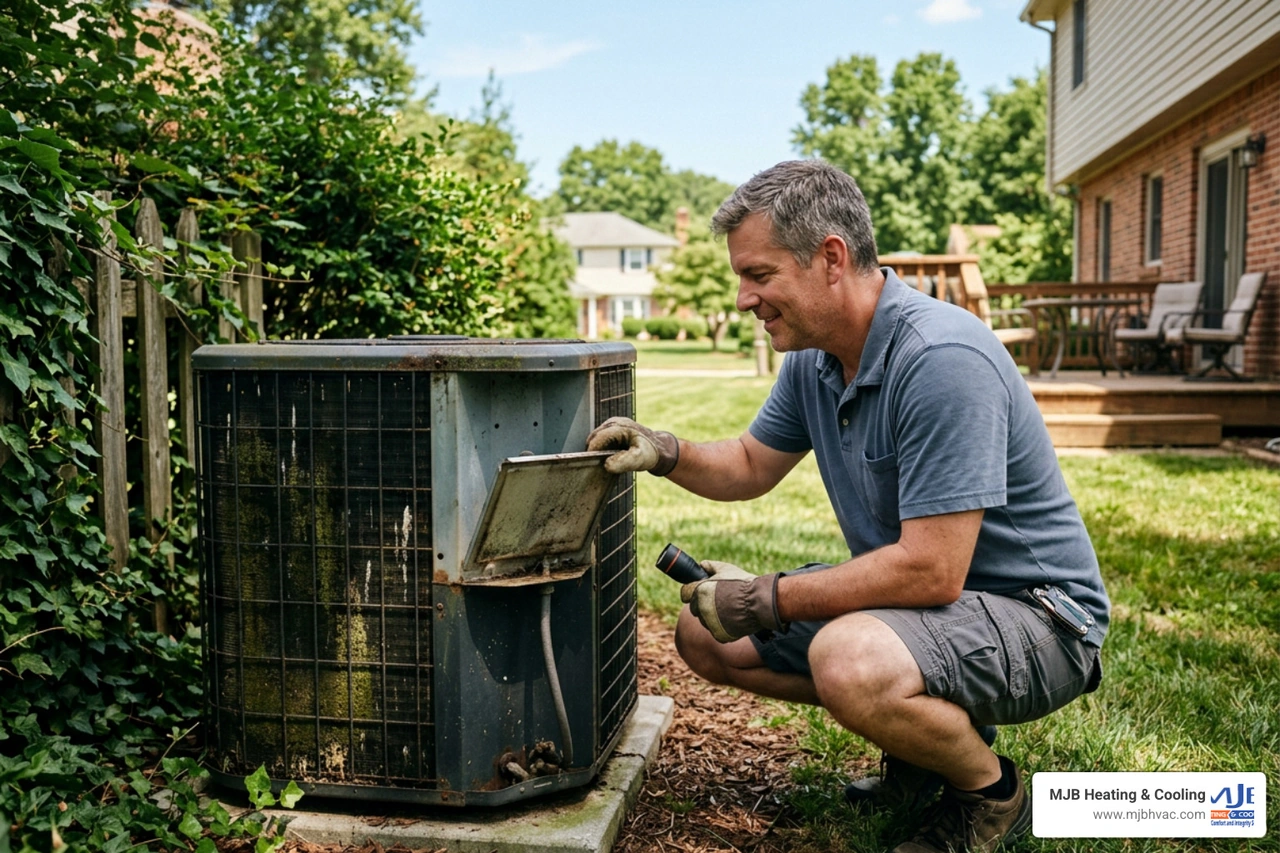

Deciding should I repair or replace my furnace or AC is one of the most stressful calls a homeowner can face — especially when the heat goes out in January or your AC quits during a Wichita summer. The good news is that the decision doesn't have to be a gut call. There are clear, practical frameworks that point you toward the right answer based on your system's age, repair costs, efficiency, and safety.
Quick answer: repair or replace?
| Situation | Recommendation |
|---|---|
| System is under 10 years old, isolated issue | Repair |
| System is 10-15+ years old, repair costs exceed 30-50% of replacement | Replace |
| System uses R-22 refrigerant and needs a recharge | Replace |
| Cracked heat exchanger or carbon monoxide risk detected | Replace immediately |
| Multiple repairs in the past 2-3 years | Replace |
| System is under warranty and repair is covered | Repair |
| Repair cost × system age exceeds $5,000 | Replace |
Two rules of thumb are used most widely in the HVAC industry:
Neither rule tells the whole story on its own — age, efficiency ratings, refrigerant type, and your plans for the home all matter too. This guide walks you through every factor so you can make a confident, informed decision.
Central Kansas homeowners face a unique challenge: wide temperature swings from brutal summer heat to freezing winters put more strain on HVAC equipment than many other parts of the country. That means your system's age and condition matter even more here than the national averages suggest.
Should i repair or replace my furnace or ac further reading:
When we visit a home in Andover or Goddard to diagnose a struggling system, we don't just look at the broken part. We look at the big picture. Deciding whether to invest in another fix or transition to a new system requires looking at several intersecting factors.
First, let's look at the age of your equipment. A young system with a failed capacitor is a clear candidate for a quick repair. However, as systems creep past their first decade of service, the risk of compounding component failures increases.
Second, evaluate the frequency of your service calls. If you find yourself on a first-name basis with your service technician because they are at your house every season, you are likely caught in a repair spiral. Individual service calls might feel manageable, but when you add them up over two or three years, you could have easily funded a significant portion of a modern, reliable system.
Additionally, you must weigh your system's current efficiency and warranty status. To help you navigate these overlapping details, we recommend looking at our Should I Repair or Replace My HVAC System overview. If you are ready for a deep dive into the math, our HVAC Repair vs Replace Complete Guide breaks down these financial and mechanical considerations step-by-step.
Time is undefeated, especially when it comes to mechanical equipment. Understanding where your heating and cooling units stand relative to their expected useful life is the first step in making an educated decision.
While proper maintenance can stretch the life of your equipment, every system has a natural expiration date. Here is what you can typically expect under normal operating conditions:
If your air conditioner is blowing warm air and is already past its twelfth birthday, investing in a major repair is often like putting brand-new tires on a car with a failing transmission. To get a localized perspective on how long your equipment is likely to last, take a look at our guide on the Average Lifespan of an HVAC System in Kansas. To make sure you are doing everything you can to maximize that lifespan, review our Essential HVAC Maintenance Tips for Your Furnace and AC.
In South-Central Kansas, our weather is anything but mild. From summer afternoons in El Dorado where the heat index climbs past triple digits, to bone-chilling winter nights in Newton where the wind chill drops below zero, our systems operate under extreme conditions.
This dramatic seasonal transition means your air conditioner is running at maximum capacity for months, immediately followed by your furnace working overtime to keep the prairie winds at bay. This constant cycling back and forth accelerates the physical expansion and contraction of metal components, such as your furnace's heat exchanger or your AC's copper coils. Consequently, systems in the Wichita metro area often reach the end of their reliable lifespans a few years earlier than those in more temperate coastal climates.
When a system breaks down, the immediate question is always about the bottom line. However, the upfront repair estimate is only one part of the financial equation. To make a smart choice, you must compare the cost of keeping an old system limping along against the long-term value of a new, efficient installation.
To remove the guesswork, we often guide homeowners through the $5,000 rule. Let's look at how this math plays out in real life:
Imagine you have a 12-year-old air conditioner in Derby that needs a major repair. If you multiply that age by the repair estimate, and the total exceeds the $5,000 threshold, the math strongly points toward replacement. On the other hand, if you have a 6-year-old system with the exact same issue, the math will fall well below the threshold, indicating that a repair is a highly sensible investment.
Another helpful tool is the 50% rule: if the repair quote approaches or exceeds half the cost of a brand-new, modern system, that money is almost always better spent as a down payment on a replacement that comes with a fresh ten-year warranty. For a detailed breakdown of these scenarios, check out our analysis on the Cost of Repairing Old HVAC vs Buying New System.
Older heating and cooling systems are notorious energy hogs. Even if your 15-year-old furnace still runs, it is likely operating at a fraction of the efficiency of a modern unit.
Over the course of a few years, those monthly utility savings add up, helping to offset the cost of your new equipment. You can learn more about how these metrics are calculated in our guide, Efficiency Ratings Explained for Homeowners, and see real-world savings projections in our article on How Much Does a High Efficiency System Save.
If you have an older air conditioner or heat pump, the type of chemical refrigerant it uses could make your decision for you. Systems manufactured before 2010 typically rely on R-22 (often called Freon). Because R-22 depletes the ozone layer, the EPA has completely phased out its production and import.
As we move through 2026, finding reclaimed R-22 to service a leak has become incredibly difficult and extraordinarily expensive. Furthermore, the industry is currently transitioning away from R-410A under the AIM Act to newer, more environmentally friendly refrigerants.
If your old R-22 system develops a refrigerant leak, attempting to patch the coil and recharge the system is a temporary, expensive band-aid. That money is far better invested in a modern, eco-friendly system. To help cushion the transition, you can explore available state and federal incentives through our resources on Kansas Energy Rebates for HVAC Upgrades and the Inflation Reduction Act Benefits for Kansas Homeowners.
While financial calculations are incredibly important, your family's safety and daily comfort must always come first. Some warning signs are not just inconveniences—they are critical red flags.
In a gas furnace, the heat exchanger is the metal chamber where fuel is burned to create warmth. The metal walls of the exchanger keep dangerous combustion byproducts—like carbon monoxide—completely separate from the air circulating through your home's ductwork.
As a furnace ages, the constant stress of heating up and cooling down causes the metal to expand and contract. Over time, this can lead to microscopic cracks. A cracked heat exchanger is an absolute safety emergency. It can leak odorless, colorless, and deadly carbon monoxide gas into your living spaces.
If a safety inspection reveals a cracked heat exchanger, the system must be shut down immediately. Because replacing a heat exchanger is one of the most labor-intensive and complex repairs possible, it almost always warrants a full furnace replacement. If you are experiencing issues with your system, it is vital to recognize the Signs Your AC Needs Repair or when your furnace is showing dangerous symptoms.
If you find yourself calling for service multiple times over a single season, your system is likely caught in a repair spiral. When one major component fails—such as the blower motor or the compressor—it often places extra strain on the remaining older parts.
Within a year or two of fixing one issue, you may find yourself facing another major component failure. This cycle of constant repairs is a strong signal that the system's overall structural integrity is failing, and it is time to retire the unit.
Are you planning to live in your current home in Maize or Bel Aire for the next twenty years, or are you preparing to put it on the market in the near future? Your personal timeline plays a massive role in this decision.
If you plan to stay long-term, upgrading to a high-efficiency system allows you to personally enjoy the improved comfort, whisper-quiet operation, and lower monthly utility bills for years to come. However, even if you plan to sell soon, replacing an ancient, limping system can be a major selling point. Modern buyers are often wary of homes with aging mechanical systems, and a new HVAC unit can prevent negotiation hurdles during the home inspection process.
To see how this investment impacts your bottom line as a seller, read our articles on How a New HVAC System Increases Home Value and the overall HVAC Replacement Return on Investment.
As a family-owned local business, we hear many of the same questions from homeowners in Valley Center, Mulvane, and across the Wichita area. Here are some of the most common queries we address.
In most cases, yes. Your furnace and air conditioner share several critical components, including the indoor blower motor and the ductwork system. When you install a matched system, you ensure that both units are engineered to work together at peak efficiency.
Replacing both at the same time also saves you significant labor costs, as our installation team only has to prep, seal, and configure your home's utility space once. If you want to keep your current units running smoothly for as long as possible before making that leap, find out more by reading Is an HVAC Maintenance Plan Worth It and learning How Often Should You Service Your HVAC System.
The most expensive components to fix or replace include:
If your system is still under its original manufacturer parts warranty, repairs are much easier to justify. Most major brands offer a 5-to-10-year warranty on parts (provided the system was properly registered after installation).
However, that manufacturer warranties typically cover the cost of the replacement part itself, but not the labor required to install it. If your system is out of warranty entirely, you will be responsible for both parts and labor, which quickly tips the financial scale in favor of replacement.
At MJB Heating & Cooling, we have been helping our neighbors throughout the Wichita metro area navigate these tough decisions since 1984. Founded right here in Derby, KS, our family-owned business was built on a simple foundation: quality workmanship and an honest, transparent approach.
We never push for an expensive replacement when a simple, reliable repair will safely keep your home comfortable. Likewise, we won't let you throw hard-earned money at a failing, unsafe system that belongs in retirement. If you are trying to decide whether to repair or replace your home's heating or cooling system, let our licensed, experienced technicians provide a clear, professional assessment.
Are you ready for an honest, dependable evaluation of your home's heating or cooling system? Schedule professional HVAC service with MJB Heating & Cooling today.
Deciding should I repair or replace my furnace or AC is one of the most stressful calls a homeowner can face — especially when the heat goes out in January or your AC quits during a Wichita summer. The good news is that the decision doesn't have to be a gut call. There are clear, practical frameworks that point you toward the right answer based on your system's age, repair costs, efficiency, and safety.
Quick answer: repair or replace?
| Situation | Recommendation |
|---|---|
| System is under 10 years old, isolated issue | Repair |
| System is 10-15+ years old, repair costs exceed 30-50% of replacement | Replace |
| System uses R-22 refrigerant and needs a recharge | Replace |
| Cracked heat exchanger or carbon monoxide risk detected | Replace immediately |
| Multiple repairs in the past 2-3 years | Replace |
| System is under warranty and repair is covered | Repair |
| Repair cost × system age exceeds $5,000 | Replace |
Two rules of thumb are used most widely in the HVAC industry:
Neither rule tells the whole story on its own — age, efficiency ratings, refrigerant type, and your plans for the home all matter too. This guide walks you through every factor so you can make a confident, informed decision.
Central Kansas homeowners face a unique challenge: wide temperature swings from brutal summer heat to freezing winters put more strain on HVAC equipment than many other parts of the country. That means your system's age and condition matter even more here than the national averages suggest.
Should i repair or replace my furnace or ac further reading:
When we visit a home in Andover or Goddard to diagnose a struggling system, we don't just look at the broken part. We look at the big picture. Deciding whether to invest in another fix or transition to a new system requires looking at several intersecting factors.
First, let's look at the age of your equipment. A young system with a failed capacitor is a clear candidate for a quick repair. However, as systems creep past their first decade of service, the risk of compounding component failures increases.
Second, evaluate the frequency of your service calls. If you find yourself on a first-name basis with your service technician because they are at your house every season, you are likely caught in a repair spiral. Individual service calls might feel manageable, but when you add them up over two or three years, you could have easily funded a significant portion of a modern, reliable system.
Additionally, you must weigh your system's current efficiency and warranty status. To help you navigate these overlapping details, we recommend looking at our Should I Repair or Replace My HVAC System overview. If you are ready for a deep dive into the math, our HVAC Repair vs Replace Complete Guide breaks down these financial and mechanical considerations step-by-step.
Time is undefeated, especially when it comes to mechanical equipment. Understanding where your heating and cooling units stand relative to their expected useful life is the first step in making an educated decision.
While proper maintenance can stretch the life of your equipment, every system has a natural expiration date. Here is what you can typically expect under normal operating conditions:
If your air conditioner is blowing warm air and is already past its twelfth birthday, investing in a major repair is often like putting brand-new tires on a car with a failing transmission. To get a localized perspective on how long your equipment is likely to last, take a look at our guide on the Average Lifespan of an HVAC System in Kansas. To make sure you are doing everything you can to maximize that lifespan, review our Essential HVAC Maintenance Tips for Your Furnace and AC.
In South-Central Kansas, our weather is anything but mild. From summer afternoons in El Dorado where the heat index climbs past triple digits, to bone-chilling winter nights in Newton where the wind chill drops below zero, our systems operate under extreme conditions.
This dramatic seasonal transition means your air conditioner is running at maximum capacity for months, immediately followed by your furnace working overtime to keep the prairie winds at bay. This constant cycling back and forth accelerates the physical expansion and contraction of metal components, such as your furnace's heat exchanger or your AC's copper coils. Consequently, systems in the Wichita metro area often reach the end of their reliable lifespans a few years earlier than those in more temperate coastal climates.
When a system breaks down, the immediate question is always about the bottom line. However, the upfront repair estimate is only one part of the financial equation. To make a smart choice, you must compare the cost of keeping an old system limping along against the long-term value of a new, efficient installation.
To remove the guesswork, we often guide homeowners through the $5,000 rule. Let's look at how this math plays out in real life:
Imagine you have a 12-year-old air conditioner in Derby that needs a major repair. If you multiply that age by the repair estimate, and the total exceeds the $5,000 threshold, the math strongly points toward replacement. On the other hand, if you have a 6-year-old system with the exact same issue, the math will fall well below the threshold, indicating that a repair is a highly sensible investment.
Another helpful tool is the 50% rule: if the repair quote approaches or exceeds half the cost of a brand-new, modern system, that money is almost always better spent as a down payment on a replacement that comes with a fresh ten-year warranty. For a detailed breakdown of these scenarios, check out our analysis on the Cost of Repairing Old HVAC vs Buying New System.
Older heating and cooling systems are notorious energy hogs. Even if your 15-year-old furnace still runs, it is likely operating at a fraction of the efficiency of a modern unit.
Over the course of a few years, those monthly utility savings add up, helping to offset the cost of your new equipment. You can learn more about how these metrics are calculated in our guide, Efficiency Ratings Explained for Homeowners, and see real-world savings projections in our article on How Much Does a High Efficiency System Save.
If you have an older air conditioner or heat pump, the type of chemical refrigerant it uses could make your decision for you. Systems manufactured before 2010 typically rely on R-22 (often called Freon). Because R-22 depletes the ozone layer, the EPA has completely phased out its production and import.
As we move through 2026, finding reclaimed R-22 to service a leak has become incredibly difficult and extraordinarily expensive. Furthermore, the industry is currently transitioning away from R-410A under the AIM Act to newer, more environmentally friendly refrigerants.
If your old R-22 system develops a refrigerant leak, attempting to patch the coil and recharge the system is a temporary, expensive band-aid. That money is far better invested in a modern, eco-friendly system. To help cushion the transition, you can explore available state and federal incentives through our resources on Kansas Energy Rebates for HVAC Upgrades and the Inflation Reduction Act Benefits for Kansas Homeowners.
While financial calculations are incredibly important, your family's safety and daily comfort must always come first. Some warning signs are not just inconveniences—they are critical red flags.
In a gas furnace, the heat exchanger is the metal chamber where fuel is burned to create warmth. The metal walls of the exchanger keep dangerous combustion byproducts—like carbon monoxide—completely separate from the air circulating through your home's ductwork.
As a furnace ages, the constant stress of heating up and cooling down causes the metal to expand and contract. Over time, this can lead to microscopic cracks. A cracked heat exchanger is an absolute safety emergency. It can leak odorless, colorless, and deadly carbon monoxide gas into your living spaces.
If a safety inspection reveals a cracked heat exchanger, the system must be shut down immediately. Because replacing a heat exchanger is one of the most labor-intensive and complex repairs possible, it almost always warrants a full furnace replacement. If you are experiencing issues with your system, it is vital to recognize the Signs Your AC Needs Repair or when your furnace is showing dangerous symptoms.
If you find yourself calling for service multiple times over a single season, your system is likely caught in a repair spiral. When one major component fails—such as the blower motor or the compressor—it often places extra strain on the remaining older parts.
Within a year or two of fixing one issue, you may find yourself facing another major component failure. This cycle of constant repairs is a strong signal that the system's overall structural integrity is failing, and it is time to retire the unit.
Are you planning to live in your current home in Maize or Bel Aire for the next twenty years, or are you preparing to put it on the market in the near future? Your personal timeline plays a massive role in this decision.
If you plan to stay long-term, upgrading to a high-efficiency system allows you to personally enjoy the improved comfort, whisper-quiet operation, and lower monthly utility bills for years to come. However, even if you plan to sell soon, replacing an ancient, limping system can be a major selling point. Modern buyers are often wary of homes with aging mechanical systems, and a new HVAC unit can prevent negotiation hurdles during the home inspection process.
To see how this investment impacts your bottom line as a seller, read our articles on How a New HVAC System Increases Home Value and the overall HVAC Replacement Return on Investment.
As a family-owned local business, we hear many of the same questions from homeowners in Valley Center, Mulvane, and across the Wichita area. Here are some of the most common queries we address.
In most cases, yes. Your furnace and air conditioner share several critical components, including the indoor blower motor and the ductwork system. When you install a matched system, you ensure that both units are engineered to work together at peak efficiency.
Replacing both at the same time also saves you significant labor costs, as our installation team only has to prep, seal, and configure your home's utility space once. If you want to keep your current units running smoothly for as long as possible before making that leap, find out more by reading Is an HVAC Maintenance Plan Worth It and learning How Often Should You Service Your HVAC System.
The most expensive components to fix or replace include:
If your system is still under its original manufacturer parts warranty, repairs are much easier to justify. Most major brands offer a 5-to-10-year warranty on parts (provided the system was properly registered after installation).
However, that manufacturer warranties typically cover the cost of the replacement part itself, but not the labor required to install it. If your system is out of warranty entirely, you will be responsible for both parts and labor, which quickly tips the financial scale in favor of replacement.
At MJB Heating & Cooling, we have been helping our neighbors throughout the Wichita metro area navigate these tough decisions since 1984. Founded right here in Derby, KS, our family-owned business was built on a simple foundation: quality workmanship and an honest, transparent approach.
We never push for an expensive replacement when a simple, reliable repair will safely keep your home comfortable. Likewise, we won't let you throw hard-earned money at a failing, unsafe system that belongs in retirement. If you are trying to decide whether to repair or replace your home's heating or cooling system, let our licensed, experienced technicians provide a clear, professional assessment.
Are you ready for an honest, dependable evaluation of your home's heating or cooling system? Schedule professional HVAC service with MJB Heating & Cooling today.


Our A/C stopped working on a Sunday and due to health issues, we needed to find a service company available on a Sunday. I called MJB and left a message on their emergency voice mail. Within 10 minutes Tom Buck called me to hear my description of the symptoms. He was just finishing an appointment in Wichita and would be on his way to my home on the south end of Derby. He arrived within 30 minutes! From start to finish he was the perfect example of what you could ever hope for in an HVAC tech and a human being. His evaluation of our system inside and out was as thorough as I could ever imagine and once he was done with the repair, our system is running as well or better than ever. Well worth the price for the evaluation, parts, and labor. Thank you again Tom for an awesome experience.
Our AC went out during the hottest days of the year, and they were out next day! We have been jerked around by a shoddy home warranty for years. We finally had a chance to pick our own repair people, and MJB came highly recommended. I can see why! I was impressed with the honesty and speed at which they fixed our AC unit!
Our commercial building had a lightening/electrical strike and damaged our 20 ton AC unit. No one could find us a new unit before the end of September. Imagining going all of August and September with no AC in Kansas and working inside near 100 degree temps is less than thrilling. Dale and the team at MJB called around and saved the day. They had us a new unit 5 weeks earlier than other could promise and I now have happy employees. The unit is amazingly quiet, super cold and so much more energy efficient. Thank you for being our super hero!
Came out and installed my new furnace. Was very polite and affordable. They are very acknowledgeable and I highly recommend!
Thank you very much. We had our 1st warm night in 3weeks. MJB took the time and effort to find the real problem. And the employees were kind and thoughtful and explained things very well. I cannot thank you and all of MJB. Will recommend you highly. Thanks again Marjorie Herman Oxford Kansas
We had a new system installed and I was so impressed with how quick they were in come out and install it, in the middle of a hot summer day. They were so friendly & very professional. I had a small problem with a weird sound and they came over immediately and fixed it. Love them!