.avif)





Blogs
Stay updated with our latest blog posts.
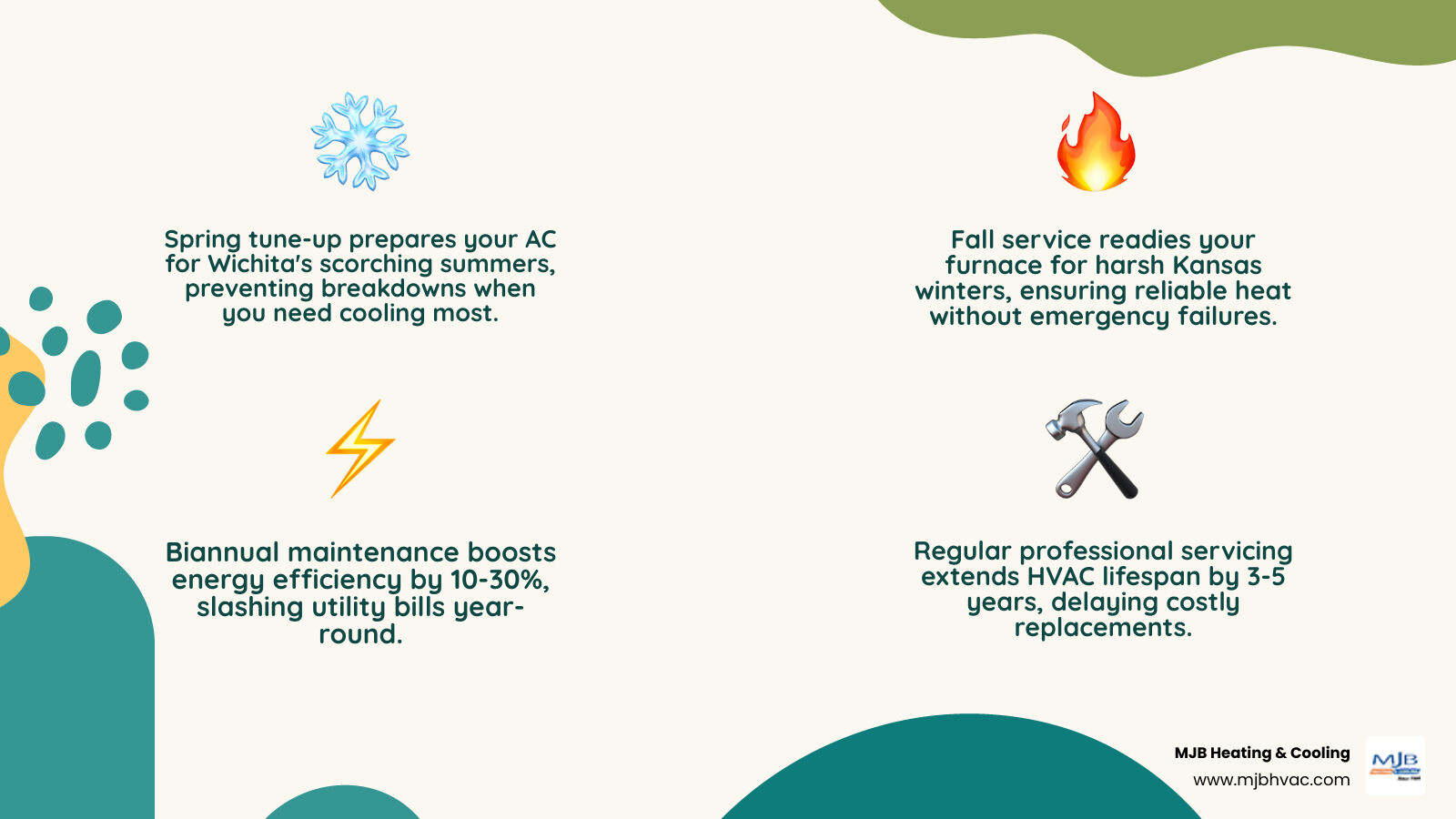
How often should you service your HVAC system is one of the most common questions homeowners ask — and the short answer is: at least once a year, but ideally twice. Most heating and cooling professionals recommend scheduling a tune-up every spring before cooling season and every fall before heating season. Here in Wichita, KS, where summers push your AC hard and winters demand a reliable furnace, staying on that schedule matters more than most people realize.
Quick Answer: Recommended HVAC Service Frequency
| Situation | Recommended Frequency |
|---|---|
| Standard home, newer system | Twice a year (spring + fall) |
| Older system (10+ years) | Twice a year, minimum |
| Heat pump (runs year-round) | Twice a year |
| Pets, heavy dust, or allergies | Twice a year + more frequent filter checks |
| Extreme climate or heavy usage | Consider additional mid-season check |
Most homeowners don't think about their HVAC system until something goes wrong — usually on the hottest day of July or the coldest night in January. By then, you're looking at emergency repair costs, uncomfortable wait times, and sometimes serious damage that a simple tune-up could have prevented. A well-maintained system uses 10–30% less energy than a neglected one, and regular service can extend your system's life by 3–5 years or more.
The good news? Staying ahead of it is straightforward once you know the right schedule for your home and system.
When we talk about peak performance, we are talking about a system that hums along quietly, keeps every room at the perfect temperature, and doesn't send your energy bills into the stratosphere. To achieve this, the "gold standard" in the HVAC industry is biannual servicing.
Think of your HVAC system like a car. You wouldn't drive 20,000 miles without an oil change and expect the engine to stay healthy. Similarly, your heating and cooling equipment needs a professional eyes-on inspection before the high-stress seasons arrive.
While every major manufacturer and consumer advocacy group recommends at least an annual check-up, there are distinct differences between doing it once versus twice a year.
| Feature | Annual Service | Biannual Service (Recommended) |
|---|---|---|
| Focus | Usually just the AC or just the furnace. | Full prep for both cooling and heating seasons. |
| Efficiency | Maintains decent efficiency but may miss seasonal drifts. | Optimizes system for 10-30% energy savings year-round. |
| Breakdown Prevention | Reduces risk by about 50%. | Prevents 70-80% of all mid-season breakdowns. |
| Safety | One-time check for electrical/gas issues. | Regular monitoring for CO leaks and fire hazards. |
If you are looking for a reliable Service to get your schedule started, choosing a local expert who understands our specific climate is the first step toward long-term peace of mind.
In the Wichita metro area, our usage patterns are intense. We experience "shoulder seasons" that are often very short, meaning our systems transition quickly from heavy cooling to heavy heating.
If you have a traditional split system (an AC unit and a furnace), each component works for about half the year. However, if you use a heat pump, that unit is working 365 days a year. Because heat pumps handle both heating and cooling, they accumulate twice the wear and tear of a standard AC. For these systems, a twice-yearly service is non-negotiable to prevent premature compressor failure.
Heavy usage also impacts airflow. When a system runs constantly during a 100-degree July week, it pulls a massive amount of air through your ductwork. If there are obstructions or leaks, the system overworks and overheats. Learning How to Spot HVAC Air Flow Problems can help you identify if your high usage requires a service call sooner than your scheduled six-month visit.
One of the most overlooked reasons for regular maintenance is your manufacturer’s warranty. Most people assume that if a part fails within the first 10 years, it’s automatically covered. However, if you read the fine print of brands like Carrier, Trane, or Lennox, you’ll find that regular professional maintenance is a requirement.
If your compressor fails and you cannot provide documented proof of annual or biannual professional service, the manufacturer may deny your claim. This could turn a covered repair into a multi-thousand-dollar out-of-pocket expense. By following Essential HVAC Maintenance Tips for Your Furnace and AC, you aren't just keeping the air cold; you're protecting your financial investment.
Why do we emphasize this schedule so much? It’s not just about avoiding a breakdown; it’s about the tangible benefits you see in your daily life and your bank account.
While the general rule is twice a year, some homes in Central Kansas need a bit more attention. If any of the following apply to you, you might need to check your system more frequently:
Knowing How Often Should HVAC Air Filters Be Changed is a great starting point for managing these extra factors between our professional visits.
While a professional needs to handle things like refrigerant levels and electrical diagnostics, there is plenty you can do to keep things running smoothly. Think of these as the "daily vitamins" for your HVAC system.
Skipping service is a gamble where the odds are against you. Initially, you’ll notice your energy bills creeping up as the system works harder to compensate for dirty coils and clogged filters. Over time, the added strain leads to component failure. Most importantly, you lose the safety check that ensures your furnace isn't leaking carbon monoxide or that your AC’s electrical connections aren't a fire hazard.
A comprehensive visit isn't just a quick glance. It includes:
The best time is "pre-season." For cooling, schedule your visit in March, April, or May. For heating, aim for September, October, or November. Scheduling during these windows ensures you get an appointment at a time that works for you, rather than waiting days for a technician during a July heatwave when everyone’s system is breaking down at once.
At MJB Heating & Cooling, we’ve seen how a little bit of prevention goes a long way. As a family-owned business with roots in Derby and decades of experience across the Wichita metro area, we’ve built our reputation on an honest business approach and quality workmanship. We don't believe in selling you things you don't need; we believe in keeping the system you have running as efficiently and safely as possible.
Whether you are in Wichita, Maize, Goddard, or any of our surrounding communities, we are here to ensure your home remains a sanctuary of comfort. Don't wait for the Kansas weather to test your system's limits. Consider joining our Maintenance Plan to take the guesswork out of your schedule and ensure your heating and cooling systems get the expert attention they deserve, twice a year, every year.
Stay comfortable, stay efficient, and remember: when it comes to HVAC, timing really is everything.
How often should you service your HVAC system is one of the most common questions homeowners ask — and the short answer is: at least once a year, but ideally twice. Most heating and cooling professionals recommend scheduling a tune-up every spring before cooling season and every fall before heating season. Here in Wichita, KS, where summers push your AC hard and winters demand a reliable furnace, staying on that schedule matters more than most people realize.
Quick Answer: Recommended HVAC Service Frequency
| Situation | Recommended Frequency |
|---|---|
| Standard home, newer system | Twice a year (spring + fall) |
| Older system (10+ years) | Twice a year, minimum |
| Heat pump (runs year-round) | Twice a year |
| Pets, heavy dust, or allergies | Twice a year + more frequent filter checks |
| Extreme climate or heavy usage | Consider additional mid-season check |
Most homeowners don't think about their HVAC system until something goes wrong — usually on the hottest day of July or the coldest night in January. By then, you're looking at emergency repair costs, uncomfortable wait times, and sometimes serious damage that a simple tune-up could have prevented. A well-maintained system uses 10–30% less energy than a neglected one, and regular service can extend your system's life by 3–5 years or more.
The good news? Staying ahead of it is straightforward once you know the right schedule for your home and system.
When we talk about peak performance, we are talking about a system that hums along quietly, keeps every room at the perfect temperature, and doesn't send your energy bills into the stratosphere. To achieve this, the "gold standard" in the HVAC industry is biannual servicing.
Think of your HVAC system like a car. You wouldn't drive 20,000 miles without an oil change and expect the engine to stay healthy. Similarly, your heating and cooling equipment needs a professional eyes-on inspection before the high-stress seasons arrive.
While every major manufacturer and consumer advocacy group recommends at least an annual check-up, there are distinct differences between doing it once versus twice a year.
| Feature | Annual Service | Biannual Service (Recommended) |
|---|---|---|
| Focus | Usually just the AC or just the furnace. | Full prep for both cooling and heating seasons. |
| Efficiency | Maintains decent efficiency but may miss seasonal drifts. | Optimizes system for 10-30% energy savings year-round. |
| Breakdown Prevention | Reduces risk by about 50%. | Prevents 70-80% of all mid-season breakdowns. |
| Safety | One-time check for electrical/gas issues. | Regular monitoring for CO leaks and fire hazards. |
If you are looking for a reliable Service to get your schedule started, choosing a local expert who understands our specific climate is the first step toward long-term peace of mind.
In the Wichita metro area, our usage patterns are intense. We experience "shoulder seasons" that are often very short, meaning our systems transition quickly from heavy cooling to heavy heating.
If you have a traditional split system (an AC unit and a furnace), each component works for about half the year. However, if you use a heat pump, that unit is working 365 days a year. Because heat pumps handle both heating and cooling, they accumulate twice the wear and tear of a standard AC. For these systems, a twice-yearly service is non-negotiable to prevent premature compressor failure.
Heavy usage also impacts airflow. When a system runs constantly during a 100-degree July week, it pulls a massive amount of air through your ductwork. If there are obstructions or leaks, the system overworks and overheats. Learning How to Spot HVAC Air Flow Problems can help you identify if your high usage requires a service call sooner than your scheduled six-month visit.
One of the most overlooked reasons for regular maintenance is your manufacturer’s warranty. Most people assume that if a part fails within the first 10 years, it’s automatically covered. However, if you read the fine print of brands like Carrier, Trane, or Lennox, you’ll find that regular professional maintenance is a requirement.
If your compressor fails and you cannot provide documented proof of annual or biannual professional service, the manufacturer may deny your claim. This could turn a covered repair into a multi-thousand-dollar out-of-pocket expense. By following Essential HVAC Maintenance Tips for Your Furnace and AC, you aren't just keeping the air cold; you're protecting your financial investment.
Why do we emphasize this schedule so much? It’s not just about avoiding a breakdown; it’s about the tangible benefits you see in your daily life and your bank account.
While the general rule is twice a year, some homes in Central Kansas need a bit more attention. If any of the following apply to you, you might need to check your system more frequently:
Knowing How Often Should HVAC Air Filters Be Changed is a great starting point for managing these extra factors between our professional visits.
While a professional needs to handle things like refrigerant levels and electrical diagnostics, there is plenty you can do to keep things running smoothly. Think of these as the "daily vitamins" for your HVAC system.
Skipping service is a gamble where the odds are against you. Initially, you’ll notice your energy bills creeping up as the system works harder to compensate for dirty coils and clogged filters. Over time, the added strain leads to component failure. Most importantly, you lose the safety check that ensures your furnace isn't leaking carbon monoxide or that your AC’s electrical connections aren't a fire hazard.
A comprehensive visit isn't just a quick glance. It includes:
The best time is "pre-season." For cooling, schedule your visit in March, April, or May. For heating, aim for September, October, or November. Scheduling during these windows ensures you get an appointment at a time that works for you, rather than waiting days for a technician during a July heatwave when everyone’s system is breaking down at once.
At MJB Heating & Cooling, we’ve seen how a little bit of prevention goes a long way. As a family-owned business with roots in Derby and decades of experience across the Wichita metro area, we’ve built our reputation on an honest business approach and quality workmanship. We don't believe in selling you things you don't need; we believe in keeping the system you have running as efficiently and safely as possible.
Whether you are in Wichita, Maize, Goddard, or any of our surrounding communities, we are here to ensure your home remains a sanctuary of comfort. Don't wait for the Kansas weather to test your system's limits. Consider joining our Maintenance Plan to take the guesswork out of your schedule and ensure your heating and cooling systems get the expert attention they deserve, twice a year, every year.
Stay comfortable, stay efficient, and remember: when it comes to HVAC, timing really is everything.
How often should you service your HVAC system is one of the most common questions homeowners ask — and the short answer is: at least once a year, but ideally twice. Most heating and cooling professionals recommend scheduling a tune-up every spring before cooling season and every fall before heating season. Here in Wichita, KS, where summers push your AC hard and winters demand a reliable furnace, staying on that schedule matters more than most people realize.
Quick Answer: Recommended HVAC Service Frequency
| Situation | Recommended Frequency |
|---|---|
| Standard home, newer system | Twice a year (spring + fall) |
| Older system (10+ years) | Twice a year, minimum |
| Heat pump (runs year-round) | Twice a year |
| Pets, heavy dust, or allergies | Twice a year + more frequent filter checks |
| Extreme climate or heavy usage | Consider additional mid-season check |
Most homeowners don't think about their HVAC system until something goes wrong — usually on the hottest day of July or the coldest night in January. By then, you're looking at emergency repair costs, uncomfortable wait times, and sometimes serious damage that a simple tune-up could have prevented. A well-maintained system uses 10–30% less energy than a neglected one, and regular service can extend your system's life by 3–5 years or more.
The good news? Staying ahead of it is straightforward once you know the right schedule for your home and system.
When we talk about peak performance, we are talking about a system that hums along quietly, keeps every room at the perfect temperature, and doesn't send your energy bills into the stratosphere. To achieve this, the "gold standard" in the HVAC industry is biannual servicing.
Think of your HVAC system like a car. You wouldn't drive 20,000 miles without an oil change and expect the engine to stay healthy. Similarly, your heating and cooling equipment needs a professional eyes-on inspection before the high-stress seasons arrive.
While every major manufacturer and consumer advocacy group recommends at least an annual check-up, there are distinct differences between doing it once versus twice a year.
| Feature | Annual Service | Biannual Service (Recommended) |
|---|---|---|
| Focus | Usually just the AC or just the furnace. | Full prep for both cooling and heating seasons. |
| Efficiency | Maintains decent efficiency but may miss seasonal drifts. | Optimizes system for 10-30% energy savings year-round. |
| Breakdown Prevention | Reduces risk by about 50%. | Prevents 70-80% of all mid-season breakdowns. |
| Safety | One-time check for electrical/gas issues. | Regular monitoring for CO leaks and fire hazards. |
If you are looking for a reliable Service to get your schedule started, choosing a local expert who understands our specific climate is the first step toward long-term peace of mind.
In the Wichita metro area, our usage patterns are intense. We experience "shoulder seasons" that are often very short, meaning our systems transition quickly from heavy cooling to heavy heating.
If you have a traditional split system (an AC unit and a furnace), each component works for about half the year. However, if you use a heat pump, that unit is working 365 days a year. Because heat pumps handle both heating and cooling, they accumulate twice the wear and tear of a standard AC. For these systems, a twice-yearly service is non-negotiable to prevent premature compressor failure.
Heavy usage also impacts airflow. When a system runs constantly during a 100-degree July week, it pulls a massive amount of air through your ductwork. If there are obstructions or leaks, the system overworks and overheats. Learning How to Spot HVAC Air Flow Problems can help you identify if your high usage requires a service call sooner than your scheduled six-month visit.
One of the most overlooked reasons for regular maintenance is your manufacturer’s warranty. Most people assume that if a part fails within the first 10 years, it’s automatically covered. However, if you read the fine print of brands like Carrier, Trane, or Lennox, you’ll find that regular professional maintenance is a requirement.
If your compressor fails and you cannot provide documented proof of annual or biannual professional service, the manufacturer may deny your claim. This could turn a covered repair into a multi-thousand-dollar out-of-pocket expense. By following Essential HVAC Maintenance Tips for Your Furnace and AC, you aren't just keeping the air cold; you're protecting your financial investment.
Why do we emphasize this schedule so much? It’s not just about avoiding a breakdown; it’s about the tangible benefits you see in your daily life and your bank account.
While the general rule is twice a year, some homes in Central Kansas need a bit more attention. If any of the following apply to you, you might need to check your system more frequently:
Knowing How Often Should HVAC Air Filters Be Changed is a great starting point for managing these extra factors between our professional visits.
While a professional needs to handle things like refrigerant levels and electrical diagnostics, there is plenty you can do to keep things running smoothly. Think of these as the "daily vitamins" for your HVAC system.
Skipping service is a gamble where the odds are against you. Initially, you’ll notice your energy bills creeping up as the system works harder to compensate for dirty coils and clogged filters. Over time, the added strain leads to component failure. Most importantly, you lose the safety check that ensures your furnace isn't leaking carbon monoxide or that your AC’s electrical connections aren't a fire hazard.
A comprehensive visit isn't just a quick glance. It includes:
The best time is "pre-season." For cooling, schedule your visit in March, April, or May. For heating, aim for September, October, or November. Scheduling during these windows ensures you get an appointment at a time that works for you, rather than waiting days for a technician during a July heatwave when everyone’s system is breaking down at once.
At MJB Heating & Cooling, we’ve seen how a little bit of prevention goes a long way. As a family-owned business with roots in Derby and decades of experience across the Wichita metro area, we’ve built our reputation on an honest business approach and quality workmanship. We don't believe in selling you things you don't need; we believe in keeping the system you have running as efficiently and safely as possible.
Whether you are in Wichita, Maize, Goddard, or any of our surrounding communities, we are here to ensure your home remains a sanctuary of comfort. Don't wait for the Kansas weather to test your system's limits. Consider joining our Maintenance Plan to take the guesswork out of your schedule and ensure your heating and cooling systems get the expert attention they deserve, twice a year, every year.
Stay comfortable, stay efficient, and remember: when it comes to HVAC, timing really is everything.
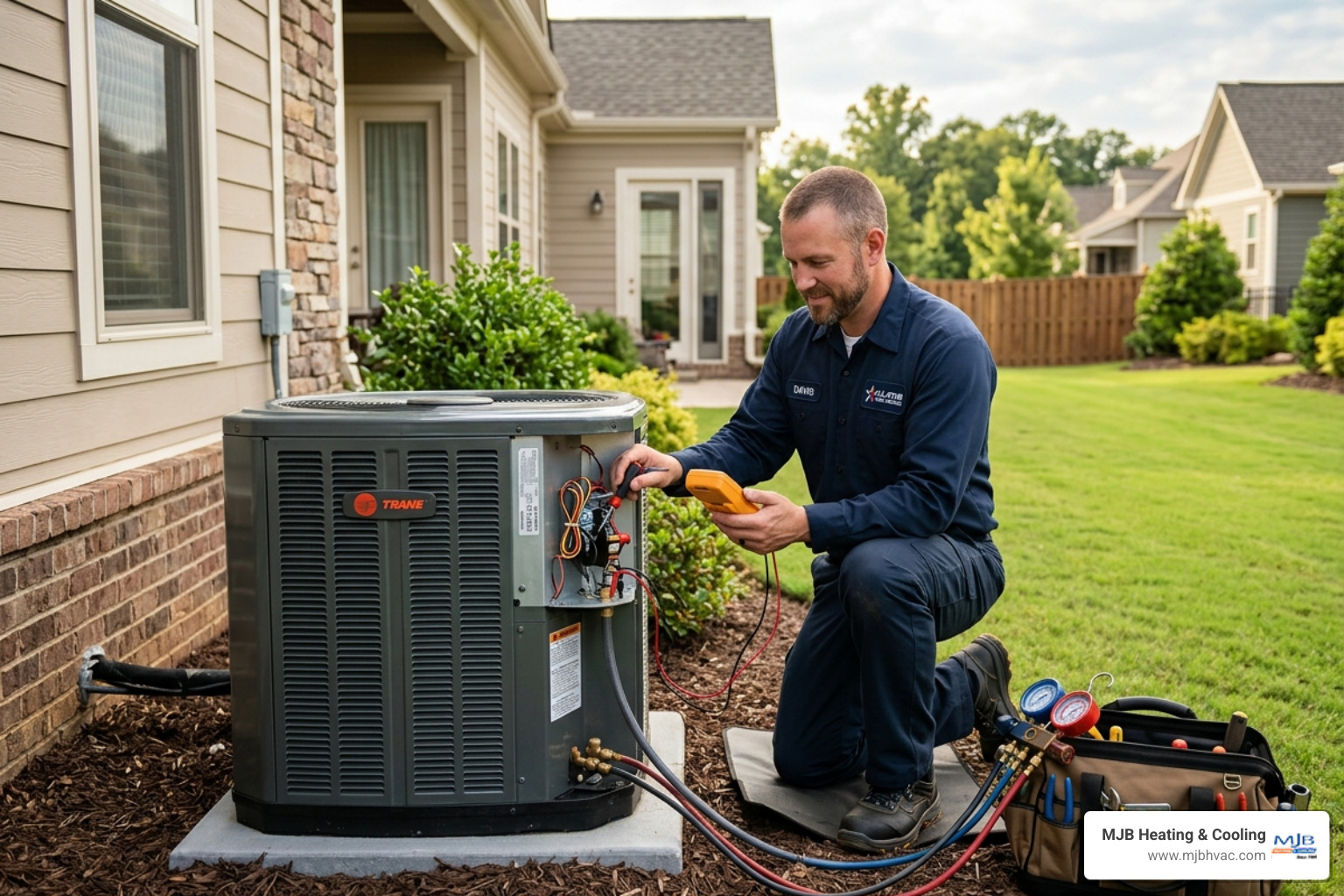

How often should you service your HVAC system is one of the most common questions homeowners ask — and the short answer is: at least once a year, but ideally twice. Most heating and cooling professionals recommend scheduling a tune-up every spring before cooling season and every fall before heating season. Here in Wichita, KS, where summers push your AC hard and winters demand a reliable furnace, staying on that schedule matters more than most people realize.
Quick Answer: Recommended HVAC Service Frequency
| Situation | Recommended Frequency |
|---|---|
| Standard home, newer system | Twice a year (spring + fall) |
| Older system (10+ years) | Twice a year, minimum |
| Heat pump (runs year-round) | Twice a year |
| Pets, heavy dust, or allergies | Twice a year + more frequent filter checks |
| Extreme climate or heavy usage | Consider additional mid-season check |
Most homeowners don't think about their HVAC system until something goes wrong — usually on the hottest day of July or the coldest night in January. By then, you're looking at emergency repair costs, uncomfortable wait times, and sometimes serious damage that a simple tune-up could have prevented. A well-maintained system uses 10–30% less energy than a neglected one, and regular service can extend your system's life by 3–5 years or more.
The good news? Staying ahead of it is straightforward once you know the right schedule for your home and system.
When we talk about peak performance, we are talking about a system that hums along quietly, keeps every room at the perfect temperature, and doesn't send your energy bills into the stratosphere. To achieve this, the "gold standard" in the HVAC industry is biannual servicing.
Think of your HVAC system like a car. You wouldn't drive 20,000 miles without an oil change and expect the engine to stay healthy. Similarly, your heating and cooling equipment needs a professional eyes-on inspection before the high-stress seasons arrive.
While every major manufacturer and consumer advocacy group recommends at least an annual check-up, there are distinct differences between doing it once versus twice a year.
| Feature | Annual Service | Biannual Service (Recommended) |
|---|---|---|
| Focus | Usually just the AC or just the furnace. | Full prep for both cooling and heating seasons. |
| Efficiency | Maintains decent efficiency but may miss seasonal drifts. | Optimizes system for 10-30% energy savings year-round. |
| Breakdown Prevention | Reduces risk by about 50%. | Prevents 70-80% of all mid-season breakdowns. |
| Safety | One-time check for electrical/gas issues. | Regular monitoring for CO leaks and fire hazards. |
If you are looking for a reliable Service to get your schedule started, choosing a local expert who understands our specific climate is the first step toward long-term peace of mind.
In the Wichita metro area, our usage patterns are intense. We experience "shoulder seasons" that are often very short, meaning our systems transition quickly from heavy cooling to heavy heating.
If you have a traditional split system (an AC unit and a furnace), each component works for about half the year. However, if you use a heat pump, that unit is working 365 days a year. Because heat pumps handle both heating and cooling, they accumulate twice the wear and tear of a standard AC. For these systems, a twice-yearly service is non-negotiable to prevent premature compressor failure.
Heavy usage also impacts airflow. When a system runs constantly during a 100-degree July week, it pulls a massive amount of air through your ductwork. If there are obstructions or leaks, the system overworks and overheats. Learning How to Spot HVAC Air Flow Problems can help you identify if your high usage requires a service call sooner than your scheduled six-month visit.
One of the most overlooked reasons for regular maintenance is your manufacturer’s warranty. Most people assume that if a part fails within the first 10 years, it’s automatically covered. However, if you read the fine print of brands like Carrier, Trane, or Lennox, you’ll find that regular professional maintenance is a requirement.
If your compressor fails and you cannot provide documented proof of annual or biannual professional service, the manufacturer may deny your claim. This could turn a covered repair into a multi-thousand-dollar out-of-pocket expense. By following Essential HVAC Maintenance Tips for Your Furnace and AC, you aren't just keeping the air cold; you're protecting your financial investment.
Why do we emphasize this schedule so much? It’s not just about avoiding a breakdown; it’s about the tangible benefits you see in your daily life and your bank account.
While the general rule is twice a year, some homes in Central Kansas need a bit more attention. If any of the following apply to you, you might need to check your system more frequently:
Knowing How Often Should HVAC Air Filters Be Changed is a great starting point for managing these extra factors between our professional visits.
While a professional needs to handle things like refrigerant levels and electrical diagnostics, there is plenty you can do to keep things running smoothly. Think of these as the "daily vitamins" for your HVAC system.
Skipping service is a gamble where the odds are against you. Initially, you’ll notice your energy bills creeping up as the system works harder to compensate for dirty coils and clogged filters. Over time, the added strain leads to component failure. Most importantly, you lose the safety check that ensures your furnace isn't leaking carbon monoxide or that your AC’s electrical connections aren't a fire hazard.
A comprehensive visit isn't just a quick glance. It includes:
The best time is "pre-season." For cooling, schedule your visit in March, April, or May. For heating, aim for September, October, or November. Scheduling during these windows ensures you get an appointment at a time that works for you, rather than waiting days for a technician during a July heatwave when everyone’s system is breaking down at once.
At MJB Heating & Cooling, we’ve seen how a little bit of prevention goes a long way. As a family-owned business with roots in Derby and decades of experience across the Wichita metro area, we’ve built our reputation on an honest business approach and quality workmanship. We don't believe in selling you things you don't need; we believe in keeping the system you have running as efficiently and safely as possible.
Whether you are in Wichita, Maize, Goddard, or any of our surrounding communities, we are here to ensure your home remains a sanctuary of comfort. Don't wait for the Kansas weather to test your system's limits. Consider joining our Maintenance Plan to take the guesswork out of your schedule and ensure your heating and cooling systems get the expert attention they deserve, twice a year, every year.
Stay comfortable, stay efficient, and remember: when it comes to HVAC, timing really is everything.
How often should you service your HVAC system is one of the most common questions homeowners ask — and the short answer is: at least once a year, but ideally twice. Most heating and cooling professionals recommend scheduling a tune-up every spring before cooling season and every fall before heating season. Here in Wichita, KS, where summers push your AC hard and winters demand a reliable furnace, staying on that schedule matters more than most people realize.
Quick Answer: Recommended HVAC Service Frequency
| Situation | Recommended Frequency |
|---|---|
| Standard home, newer system | Twice a year (spring + fall) |
| Older system (10+ years) | Twice a year, minimum |
| Heat pump (runs year-round) | Twice a year |
| Pets, heavy dust, or allergies | Twice a year + more frequent filter checks |
| Extreme climate or heavy usage | Consider additional mid-season check |
Most homeowners don't think about their HVAC system until something goes wrong — usually on the hottest day of July or the coldest night in January. By then, you're looking at emergency repair costs, uncomfortable wait times, and sometimes serious damage that a simple tune-up could have prevented. A well-maintained system uses 10–30% less energy than a neglected one, and regular service can extend your system's life by 3–5 years or more.
The good news? Staying ahead of it is straightforward once you know the right schedule for your home and system.
When we talk about peak performance, we are talking about a system that hums along quietly, keeps every room at the perfect temperature, and doesn't send your energy bills into the stratosphere. To achieve this, the "gold standard" in the HVAC industry is biannual servicing.
Think of your HVAC system like a car. You wouldn't drive 20,000 miles without an oil change and expect the engine to stay healthy. Similarly, your heating and cooling equipment needs a professional eyes-on inspection before the high-stress seasons arrive.
While every major manufacturer and consumer advocacy group recommends at least an annual check-up, there are distinct differences between doing it once versus twice a year.
| Feature | Annual Service | Biannual Service (Recommended) |
|---|---|---|
| Focus | Usually just the AC or just the furnace. | Full prep for both cooling and heating seasons. |
| Efficiency | Maintains decent efficiency but may miss seasonal drifts. | Optimizes system for 10-30% energy savings year-round. |
| Breakdown Prevention | Reduces risk by about 50%. | Prevents 70-80% of all mid-season breakdowns. |
| Safety | One-time check for electrical/gas issues. | Regular monitoring for CO leaks and fire hazards. |
If you are looking for a reliable Service to get your schedule started, choosing a local expert who understands our specific climate is the first step toward long-term peace of mind.
In the Wichita metro area, our usage patterns are intense. We experience "shoulder seasons" that are often very short, meaning our systems transition quickly from heavy cooling to heavy heating.
If you have a traditional split system (an AC unit and a furnace), each component works for about half the year. However, if you use a heat pump, that unit is working 365 days a year. Because heat pumps handle both heating and cooling, they accumulate twice the wear and tear of a standard AC. For these systems, a twice-yearly service is non-negotiable to prevent premature compressor failure.
Heavy usage also impacts airflow. When a system runs constantly during a 100-degree July week, it pulls a massive amount of air through your ductwork. If there are obstructions or leaks, the system overworks and overheats. Learning How to Spot HVAC Air Flow Problems can help you identify if your high usage requires a service call sooner than your scheduled six-month visit.
One of the most overlooked reasons for regular maintenance is your manufacturer’s warranty. Most people assume that if a part fails within the first 10 years, it’s automatically covered. However, if you read the fine print of brands like Carrier, Trane, or Lennox, you’ll find that regular professional maintenance is a requirement.
If your compressor fails and you cannot provide documented proof of annual or biannual professional service, the manufacturer may deny your claim. This could turn a covered repair into a multi-thousand-dollar out-of-pocket expense. By following Essential HVAC Maintenance Tips for Your Furnace and AC, you aren't just keeping the air cold; you're protecting your financial investment.
Why do we emphasize this schedule so much? It’s not just about avoiding a breakdown; it’s about the tangible benefits you see in your daily life and your bank account.
While the general rule is twice a year, some homes in Central Kansas need a bit more attention. If any of the following apply to you, you might need to check your system more frequently:
Knowing How Often Should HVAC Air Filters Be Changed is a great starting point for managing these extra factors between our professional visits.
While a professional needs to handle things like refrigerant levels and electrical diagnostics, there is plenty you can do to keep things running smoothly. Think of these as the "daily vitamins" for your HVAC system.
Skipping service is a gamble where the odds are against you. Initially, you’ll notice your energy bills creeping up as the system works harder to compensate for dirty coils and clogged filters. Over time, the added strain leads to component failure. Most importantly, you lose the safety check that ensures your furnace isn't leaking carbon monoxide or that your AC’s electrical connections aren't a fire hazard.
A comprehensive visit isn't just a quick glance. It includes:
The best time is "pre-season." For cooling, schedule your visit in March, April, or May. For heating, aim for September, October, or November. Scheduling during these windows ensures you get an appointment at a time that works for you, rather than waiting days for a technician during a July heatwave when everyone’s system is breaking down at once.
At MJB Heating & Cooling, we’ve seen how a little bit of prevention goes a long way. As a family-owned business with roots in Derby and decades of experience across the Wichita metro area, we’ve built our reputation on an honest business approach and quality workmanship. We don't believe in selling you things you don't need; we believe in keeping the system you have running as efficiently and safely as possible.
Whether you are in Wichita, Maize, Goddard, or any of our surrounding communities, we are here to ensure your home remains a sanctuary of comfort. Don't wait for the Kansas weather to test your system's limits. Consider joining our Maintenance Plan to take the guesswork out of your schedule and ensure your heating and cooling systems get the expert attention they deserve, twice a year, every year.
Stay comfortable, stay efficient, and remember: when it comes to HVAC, timing really is everything.


Our A/C stopped working on a Sunday and due to health issues, we needed to find a service company available on a Sunday. I called MJB and left a message on their emergency voice mail. Within 10 minutes Tom Buck called me to hear my description of the symptoms. He was just finishing an appointment in Wichita and would be on his way to my home on the south end of Derby. He arrived within 30 minutes! From start to finish he was the perfect example of what you could ever hope for in an HVAC tech and a human being. His evaluation of our system inside and out was as thorough as I could ever imagine and once he was done with the repair, our system is running as well or better than ever. Well worth the price for the evaluation, parts, and labor. Thank you again Tom for an awesome experience.
Our AC went out during the hottest days of the year, and they were out next day! We have been jerked around by a shoddy home warranty for years. We finally had a chance to pick our own repair people, and MJB came highly recommended. I can see why! I was impressed with the honesty and speed at which they fixed our AC unit!
Our commercial building had a lightening/electrical strike and damaged our 20 ton AC unit. No one could find us a new unit before the end of September. Imagining going all of August and September with no AC in Kansas and working inside near 100 degree temps is less than thrilling. Dale and the team at MJB called around and saved the day. They had us a new unit 5 weeks earlier than other could promise and I now have happy employees. The unit is amazingly quiet, super cold and so much more energy efficient. Thank you for being our super hero!
Came out and installed my new furnace. Was very polite and affordable. They are very acknowledgeable and I highly recommend!
Thank you very much. We had our 1st warm night in 3weeks. MJB took the time and effort to find the real problem. And the employees were kind and thoughtful and explained things very well. I cannot thank you and all of MJB. Will recommend you highly. Thanks again Marjorie Herman Oxford Kansas
We had a new system installed and I was so impressed with how quick they were in come out and install it, in the middle of a hot summer day. They were so friendly & very professional. I had a small problem with a weird sound and they came over immediately and fixed it. Love them!