.avif)





Blogs
Stay updated with our latest blog posts.
Efficiency ratings explained for homeowners is one of those topics that sounds complicated but makes a real difference once you understand it. If you own a home in Wichita or anywhere in Central Kansas, these ratings directly affect how much you pay to heat and cool your home every single month.
Here is a quick answer to get you started:
Home efficiency ratings at a glance:
| Rating | What It Measures | Higher or Lower is Better? |
|---|---|---|
| AFUE | Furnace fuel efficiency (%) | Higher is better (95% = top tier) |
| SEER2 | Air conditioner cooling efficiency | Higher is better (14+ minimum as of 2023) |
| HSPF2 | Heat pump heating efficiency | Higher is better (8.8+ minimum as of 2023) |
| HERS Index | Whole-home energy performance | Lower is better (0 = net-zero) |
| Energy Star | EPA-certified product efficiency | Certified = meets strict standards |
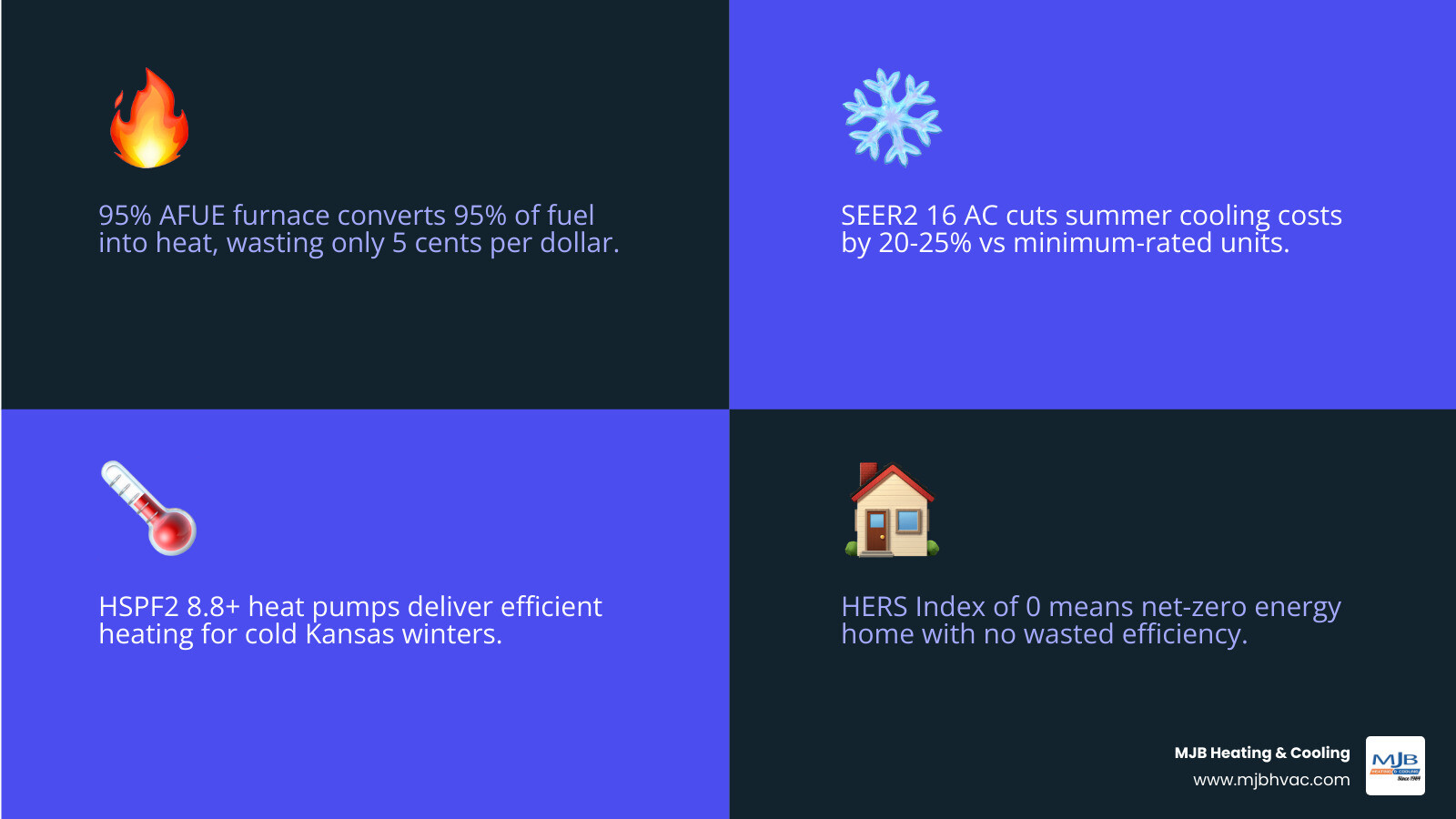
Kansas summers are hot and winters are cold. That means your HVAC system runs hard for most of the year. A furnace with a 95% AFUE rating converts 95 cents of every energy dollar into heat. An older 80% AFUE unit wastes 20 cents of every dollar right out the flue. Over a full heating season, that gap adds up fast.
The same logic applies to cooling. A SEER2 16 air conditioner can cut your summer cooling costs by 20 to 25% compared to a minimum-rated unit. For a typical household spending $500 on summer cooling, that is $100 to $125 back in your pocket every year.
Understanding these numbers is the first step toward smarter decisions — whether you are replacing aging equipment, shopping for a new system, or just trying to figure out why your utility bills keep climbing.
When you start shopping for a new HVAC system in Derby or Maize, you’re suddenly hit with a barrage of acronyms. AFUE, SEER2, HSPF2—it feels like you need a secret decoder ring just to buy a furnace. Don't worry; we've been helping Central Kansas families navigate this "alphabet soup" since 1984.
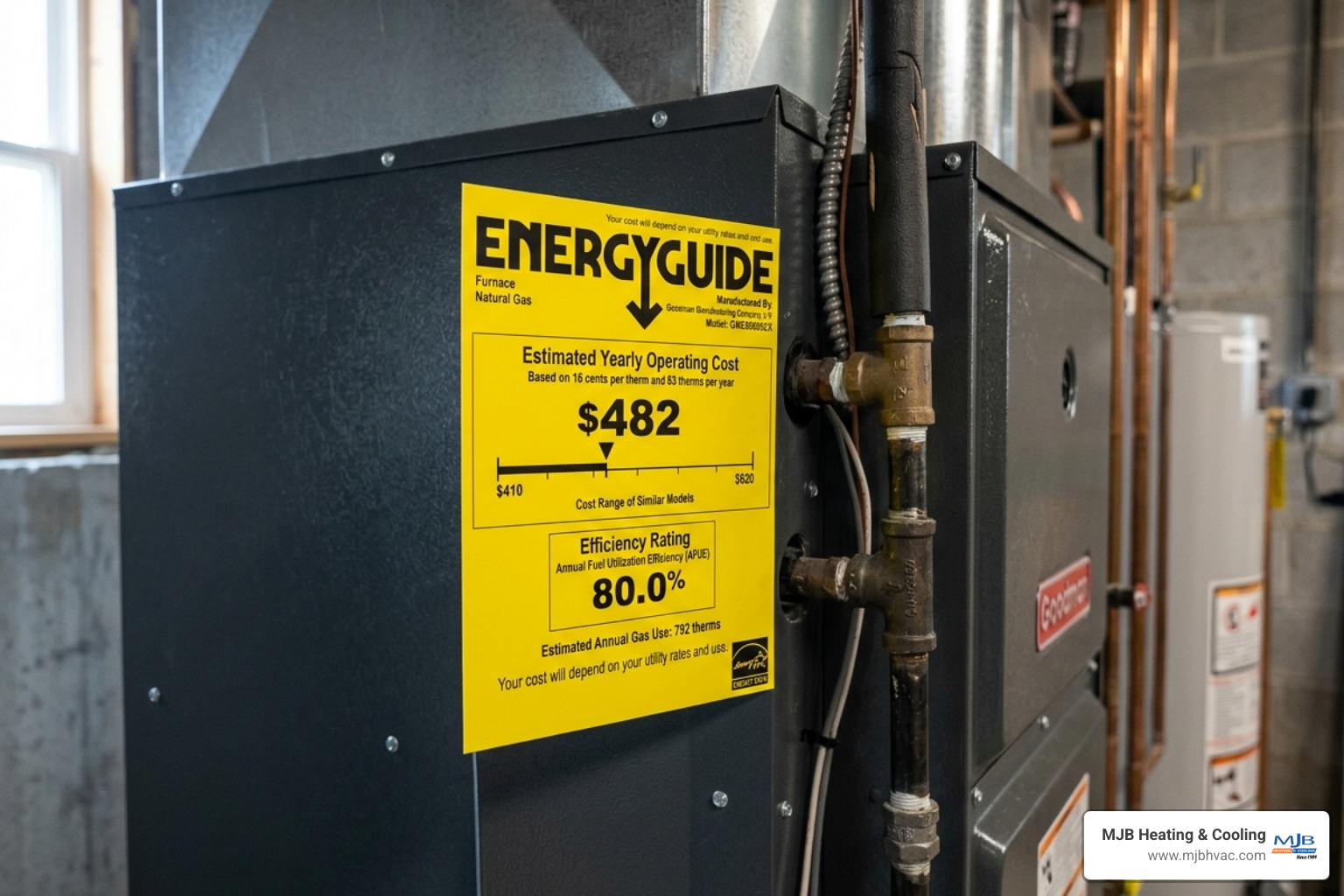
The most important thing to look for is the bright yellow EnergyGuide label. This label is required by the Department of Energy (DOE) on all new units. It provides a standardized way to compare models. Think of it like the "Nutrition Facts" label on a cereal box, but for your home’s energy consumption.
Here is a breakdown of the big three ratings you’ll encounter:
It’s worth noting that in 2023, the industry shifted from SEER/HSPF to SEER2/HSPF2. This wasn't just a name change; the testing standards became much more rigorous to better reflect real-world conditions, such as the static pressure found in typical home ductwork. This transition represents about a 7% improvement in how accurately we measure efficiency.
If you’re considering a heat pump, you can Discover Energy Savings with Daikin's HSPF Rating Insights to see how these numbers translate into actual dollar amounts on your Westar or Kansas Gas Service bills.
| System Type | Minimum Standard | High Efficiency | Premium Tier |
|---|---|---|---|
| Gas Furnace (AFUE) | 80% | 92% - 95% | 96% - 98.5% |
| Air Conditioner (SEER2) | 13.4 - 14.3* | 16 - 18 | 20+ |
| Heat Pump (HSPF2) | 7.5 - 8.8 | 9.0 - 10.0 | 10.5+ |
*Minimums vary slightly based on region and system type.
To truly grasp efficiency ratings explained for homeowners, we need to talk about BTUs (British Thermal Units). A BTU is a measurement of heat energy. Specifically, it’s the amount of energy needed to raise the temperature of one pound of water by one degree Fahrenheit.
In HVAC terms, BTUs represent the "size" or capacity of your system. However, the efficiency rating tells us how much electricity or gas is required to produce those BTUs.
Modern high-efficiency systems often utilize variable-speed technology. Unlike older units that are either "all on" or "all off" (like a light switch), variable-speed systems can adjust their output to meet the exact needs of your home (more like a dimmer switch). This allows them to run longer at lower speeds, which uses significantly less energy and provides much more consistent comfort.
While a high rating is great, it’s only half the battle. To keep those ratings accurate throughout the life of the system, Essential HVAC Maintenance Tips for Your Furnace and AC are vital. Without regular cleanings and inspections, a 16 SEER2 unit can quickly start performing like a 13 SEER2 unit due to dirt and wear.
Living in the Wichita metro area means preparing for those 100-degree August days. Your air conditioner's SEER2 rating is its "miles per gallon" for the summer.
As of the 2023 DOE standards, all new air conditioning units must have a SEER rating of at least 14 (or 13.4 SEER2). But why stop at the minimum?
In the winter, the script flips. We care about AFUE.If you have an older furnace with a metal flue pipe, it’s likely an 80% AFUE model. This means 20% of the gas you pay for is literally going up the chimney as exhaust.
High-efficiency furnaces (90% to 98.5% AFUE) use a secondary heat exchanger. This component captures the heat from the exhaust gases that would normally be wasted. Because this process cools the exhaust so much, it turns into liquid (condensate), which is why these are called "condensing furnaces." These units require PVC venting because the exhaust isn't hot enough to rise naturally out of a traditional chimney.
For a typical household in Newton or Hutchinson spending $1,500 a year on heating, upgrading from an 80% to a 95% AFUE furnace could save you roughly $237 per year. Over a 20-year lifespan, that’s nearly $5,000 in savings!
Heat pumps are becoming incredibly popular in places like Goddard and Valley Center because they provide both heating and cooling. The HSPF2 rating measures their heating efficiency.
If you’re curious about how a heat pump might perform in our climate, we recommend you Discover Energy Savings with Daikin's HSPF Rating Insights to see how modern technology has changed the game for electric heating.
Here is a truth that many big-box retailers won't tell you: the number on the yellow tag is a "lab rating." Real-world performance depends on how the system is integrated into your specific home. At MJB Heating & Cooling, we emphasize that the most efficient furnace in the world will perform poorly if it’s installed incorrectly.
One of the biggest mistakes homeowners make is thinking "bigger is better." If an HVAC system is oversized, it will "short cycle"—turning on, blasting the house with air, and turning off before it can properly dehumidify or circulate the air. This leads to:
Conversely, an undersized unit will run constantly, struggling to keep up with a Wichita heatwave, which also sky-rockets your bills. We use Manual J Load Calculations to ensure your system is sized perfectly for your home’s square footage, insulation levels, and window orientations.
Your home is a system. Even a high-rated HVAC unit can’t overcome:
To keep your system running at its rated efficiency, you need to know How Often Should HVAC Air Filters Be Changed. For most homes in Rose Hill or Park City, this is every 1–3 months, but it varies based on pets and allergies. For a deeper dive, check out our guide on How Often Should You Change Your HVAC Air Filter.
Factors Affecting Real-World HVAC Performance:
If you want the "Gold Standard" for your home, look beyond the basic ratings to these certifications.
The HERS Index (Home Energy Rating System) is like a golf score—lower is better. Developed by RESNET, it compares your home to a "Reference Home" (a home built to the 2006 energy code).
According to a study by Freddie Mac, homes with better efficiency ratings can sell for 3% to 5% more than standard homes. It’s an investment that pays off both in monthly bills and future resale value.
You’ve likely seen the blue Energy Star logo on your fridge or dishwasher. But Energy Star NextGen, rolled out in 2024, is the new frontier. These standards focus on:
The easiest way is to look for the EnergyGuide label on the side of your outdoor AC unit or the front of your furnace. If that label is missing or faded, find the model number on the manufacturer's data plate. You can search that model number online or call us, and we can look up the original factory specs for you. A quick visual tip: if your furnace has a plastic PVC pipe for exhaust, it’s likely 90% AFUE or higher. If it has a metal pipe, it’s likely 80% or lower.
In today’s market, we consider a 95% AFUE furnace and a 16 SEER2 air conditioner to be the "sweet spot" for most Central Kansas homeowners. These ratings offer a great balance between the initial investment and long-term utility savings. If you are looking for the absolute best, look for 98% AFUE and 20+ SEER2 systems, which often feature fully modulating technology for maximum comfort.
Not necessarily. This is a common misconception. A 20 SEER2 air conditioner installed in a home with leaky ducts, no attic insulation, and an oversized blower will likely cost more to run than a properly installed 14 SEER2 system. Efficiency is about the entire home envelope. Think of your HVAC system like the engine of a car; if the tires are flat (leaky ducts) and the windows are down (poor insulation), the most efficient engine in the world won't get you good gas mileage.
At MJB Heating & Cooling, we believe in an honest business approach. We aren't here to just sell you the most expensive unit on the lot. We want to help you find the right efficiency level for your specific home and budget, whether you’re in El Dorado, Haysville, or downtown Wichita.
Since 1984, our family-owned business has focused on quality workmanship. We know that efficiency ratings explained for homeowners can be a lot to digest, but you don't have to figure it out alone. From professional load calculations to expert installation and long-term maintenance, we are here to ensure your Central Kansas home stays comfortable without breaking the bank.
If you’re ready to stop guessing and start saving, we invite you to Discover Energy Savings with Daikin's HSPF Rating Insights or give us a call to schedule a professional efficiency assessment of your current system. Let’s make sure your home is ready for whatever the Kansas weather throws at us!
Efficiency ratings explained for homeowners is one of those topics that sounds complicated but makes a real difference once you understand it. If you own a home in Wichita or anywhere in Central Kansas, these ratings directly affect how much you pay to heat and cool your home every single month.
Here is a quick answer to get you started:
Home efficiency ratings at a glance:
| Rating | What It Measures | Higher or Lower is Better? |
|---|---|---|
| AFUE | Furnace fuel efficiency (%) | Higher is better (95% = top tier) |
| SEER2 | Air conditioner cooling efficiency | Higher is better (14+ minimum as of 2023) |
| HSPF2 | Heat pump heating efficiency | Higher is better (8.8+ minimum as of 2023) |
| HERS Index | Whole-home energy performance | Lower is better (0 = net-zero) |
| Energy Star | EPA-certified product efficiency | Certified = meets strict standards |
Kansas summers are hot and winters are cold. That means your HVAC system runs hard for most of the year. A furnace with a 95% AFUE rating converts 95 cents of every energy dollar into heat. An older 80% AFUE unit wastes 20 cents of every dollar right out the flue. Over a full heating season, that gap adds up fast.
The same logic applies to cooling. A SEER2 16 air conditioner can cut your summer cooling costs by 20 to 25% compared to a minimum-rated unit. For a typical household spending $500 on summer cooling, that is $100 to $125 back in your pocket every year.
Understanding these numbers is the first step toward smarter decisions — whether you are replacing aging equipment, shopping for a new system, or just trying to figure out why your utility bills keep climbing.
When you start shopping for a new HVAC system in Derby or Maize, you’re suddenly hit with a barrage of acronyms. AFUE, SEER2, HSPF2—it feels like you need a secret decoder ring just to buy a furnace. Don't worry; we've been helping Central Kansas families navigate this "alphabet soup" since 1984.
The most important thing to look for is the bright yellow EnergyGuide label. This label is required by the Department of Energy (DOE) on all new units. It provides a standardized way to compare models. Think of it like the "Nutrition Facts" label on a cereal box, but for your home’s energy consumption.
Here is a breakdown of the big three ratings you’ll encounter:
It’s worth noting that in 2023, the industry shifted from SEER/HSPF to SEER2/HSPF2. This wasn't just a name change; the testing standards became much more rigorous to better reflect real-world conditions, such as the static pressure found in typical home ductwork. This transition represents about a 7% improvement in how accurately we measure efficiency.
If you’re considering a heat pump, you can Discover Energy Savings with Daikin's HSPF Rating Insights to see how these numbers translate into actual dollar amounts on your Westar or Kansas Gas Service bills.
| System Type | Minimum Standard | High Efficiency | Premium Tier |
|---|---|---|---|
| Gas Furnace (AFUE) | 80% | 92% - 95% | 96% - 98.5% |
| Air Conditioner (SEER2) | 13.4 - 14.3* | 16 - 18 | 20+ |
| Heat Pump (HSPF2) | 7.5 - 8.8 | 9.0 - 10.0 | 10.5+ |
*Minimums vary slightly based on region and system type.
To truly grasp efficiency ratings explained for homeowners, we need to talk about BTUs (British Thermal Units). A BTU is a measurement of heat energy. Specifically, it’s the amount of energy needed to raise the temperature of one pound of water by one degree Fahrenheit.
In HVAC terms, BTUs represent the "size" or capacity of your system. However, the efficiency rating tells us how much electricity or gas is required to produce those BTUs.
Modern high-efficiency systems often utilize variable-speed technology. Unlike older units that are either "all on" or "all off" (like a light switch), variable-speed systems can adjust their output to meet the exact needs of your home (more like a dimmer switch). This allows them to run longer at lower speeds, which uses significantly less energy and provides much more consistent comfort.
While a high rating is great, it’s only half the battle. To keep those ratings accurate throughout the life of the system, Essential HVAC Maintenance Tips for Your Furnace and AC are vital. Without regular cleanings and inspections, a 16 SEER2 unit can quickly start performing like a 13 SEER2 unit due to dirt and wear.
Living in the Wichita metro area means preparing for those 100-degree August days. Your air conditioner's SEER2 rating is its "miles per gallon" for the summer.
As of the 2023 DOE standards, all new air conditioning units must have a SEER rating of at least 14 (or 13.4 SEER2). But why stop at the minimum?
In the winter, the script flips. We care about AFUE.If you have an older furnace with a metal flue pipe, it’s likely an 80% AFUE model. This means 20% of the gas you pay for is literally going up the chimney as exhaust.
High-efficiency furnaces (90% to 98.5% AFUE) use a secondary heat exchanger. This component captures the heat from the exhaust gases that would normally be wasted. Because this process cools the exhaust so much, it turns into liquid (condensate), which is why these are called "condensing furnaces." These units require PVC venting because the exhaust isn't hot enough to rise naturally out of a traditional chimney.
For a typical household in Newton or Hutchinson spending $1,500 a year on heating, upgrading from an 80% to a 95% AFUE furnace could save you roughly $237 per year. Over a 20-year lifespan, that’s nearly $5,000 in savings!
Heat pumps are becoming incredibly popular in places like Goddard and Valley Center because they provide both heating and cooling. The HSPF2 rating measures their heating efficiency.
If you’re curious about how a heat pump might perform in our climate, we recommend you Discover Energy Savings with Daikin's HSPF Rating Insights to see how modern technology has changed the game for electric heating.
Here is a truth that many big-box retailers won't tell you: the number on the yellow tag is a "lab rating." Real-world performance depends on how the system is integrated into your specific home. At MJB Heating & Cooling, we emphasize that the most efficient furnace in the world will perform poorly if it’s installed incorrectly.
One of the biggest mistakes homeowners make is thinking "bigger is better." If an HVAC system is oversized, it will "short cycle"—turning on, blasting the house with air, and turning off before it can properly dehumidify or circulate the air. This leads to:
Conversely, an undersized unit will run constantly, struggling to keep up with a Wichita heatwave, which also sky-rockets your bills. We use Manual J Load Calculations to ensure your system is sized perfectly for your home’s square footage, insulation levels, and window orientations.
Your home is a system. Even a high-rated HVAC unit can’t overcome:
To keep your system running at its rated efficiency, you need to know How Often Should HVAC Air Filters Be Changed. For most homes in Rose Hill or Park City, this is every 1–3 months, but it varies based on pets and allergies. For a deeper dive, check out our guide on How Often Should You Change Your HVAC Air Filter.
Factors Affecting Real-World HVAC Performance:
If you want the "Gold Standard" for your home, look beyond the basic ratings to these certifications.
The HERS Index (Home Energy Rating System) is like a golf score—lower is better. Developed by RESNET, it compares your home to a "Reference Home" (a home built to the 2006 energy code).
According to a study by Freddie Mac, homes with better efficiency ratings can sell for 3% to 5% more than standard homes. It’s an investment that pays off both in monthly bills and future resale value.
You’ve likely seen the blue Energy Star logo on your fridge or dishwasher. But Energy Star NextGen, rolled out in 2024, is the new frontier. These standards focus on:
The easiest way is to look for the EnergyGuide label on the side of your outdoor AC unit or the front of your furnace. If that label is missing or faded, find the model number on the manufacturer's data plate. You can search that model number online or call us, and we can look up the original factory specs for you. A quick visual tip: if your furnace has a plastic PVC pipe for exhaust, it’s likely 90% AFUE or higher. If it has a metal pipe, it’s likely 80% or lower.
In today’s market, we consider a 95% AFUE furnace and a 16 SEER2 air conditioner to be the "sweet spot" for most Central Kansas homeowners. These ratings offer a great balance between the initial investment and long-term utility savings. If you are looking for the absolute best, look for 98% AFUE and 20+ SEER2 systems, which often feature fully modulating technology for maximum comfort.
Not necessarily. This is a common misconception. A 20 SEER2 air conditioner installed in a home with leaky ducts, no attic insulation, and an oversized blower will likely cost more to run than a properly installed 14 SEER2 system. Efficiency is about the entire home envelope. Think of your HVAC system like the engine of a car; if the tires are flat (leaky ducts) and the windows are down (poor insulation), the most efficient engine in the world won't get you good gas mileage.
At MJB Heating & Cooling, we believe in an honest business approach. We aren't here to just sell you the most expensive unit on the lot. We want to help you find the right efficiency level for your specific home and budget, whether you’re in El Dorado, Haysville, or downtown Wichita.
Since 1984, our family-owned business has focused on quality workmanship. We know that efficiency ratings explained for homeowners can be a lot to digest, but you don't have to figure it out alone. From professional load calculations to expert installation and long-term maintenance, we are here to ensure your Central Kansas home stays comfortable without breaking the bank.
If you’re ready to stop guessing and start saving, we invite you to Discover Energy Savings with Daikin's HSPF Rating Insights or give us a call to schedule a professional efficiency assessment of your current system. Let’s make sure your home is ready for whatever the Kansas weather throws at us!
Efficiency ratings explained for homeowners is one of those topics that sounds complicated but makes a real difference once you understand it. If you own a home in Wichita or anywhere in Central Kansas, these ratings directly affect how much you pay to heat and cool your home every single month.
Here is a quick answer to get you started:
Home efficiency ratings at a glance:
| Rating | What It Measures | Higher or Lower is Better? |
|---|---|---|
| AFUE | Furnace fuel efficiency (%) | Higher is better (95% = top tier) |
| SEER2 | Air conditioner cooling efficiency | Higher is better (14+ minimum as of 2023) |
| HSPF2 | Heat pump heating efficiency | Higher is better (8.8+ minimum as of 2023) |
| HERS Index | Whole-home energy performance | Lower is better (0 = net-zero) |
| Energy Star | EPA-certified product efficiency | Certified = meets strict standards |
Kansas summers are hot and winters are cold. That means your HVAC system runs hard for most of the year. A furnace with a 95% AFUE rating converts 95 cents of every energy dollar into heat. An older 80% AFUE unit wastes 20 cents of every dollar right out the flue. Over a full heating season, that gap adds up fast.
The same logic applies to cooling. A SEER2 16 air conditioner can cut your summer cooling costs by 20 to 25% compared to a minimum-rated unit. For a typical household spending $500 on summer cooling, that is $100 to $125 back in your pocket every year.
Understanding these numbers is the first step toward smarter decisions — whether you are replacing aging equipment, shopping for a new system, or just trying to figure out why your utility bills keep climbing.
When you start shopping for a new HVAC system in Derby or Maize, you’re suddenly hit with a barrage of acronyms. AFUE, SEER2, HSPF2—it feels like you need a secret decoder ring just to buy a furnace. Don't worry; we've been helping Central Kansas families navigate this "alphabet soup" since 1984.
The most important thing to look for is the bright yellow EnergyGuide label. This label is required by the Department of Energy (DOE) on all new units. It provides a standardized way to compare models. Think of it like the "Nutrition Facts" label on a cereal box, but for your home’s energy consumption.
Here is a breakdown of the big three ratings you’ll encounter:
It’s worth noting that in 2023, the industry shifted from SEER/HSPF to SEER2/HSPF2. This wasn't just a name change; the testing standards became much more rigorous to better reflect real-world conditions, such as the static pressure found in typical home ductwork. This transition represents about a 7% improvement in how accurately we measure efficiency.
If you’re considering a heat pump, you can Discover Energy Savings with Daikin's HSPF Rating Insights to see how these numbers translate into actual dollar amounts on your Westar or Kansas Gas Service bills.
| System Type | Minimum Standard | High Efficiency | Premium Tier |
|---|---|---|---|
| Gas Furnace (AFUE) | 80% | 92% - 95% | 96% - 98.5% |
| Air Conditioner (SEER2) | 13.4 - 14.3* | 16 - 18 | 20+ |
| Heat Pump (HSPF2) | 7.5 - 8.8 | 9.0 - 10.0 | 10.5+ |
*Minimums vary slightly based on region and system type.
To truly grasp efficiency ratings explained for homeowners, we need to talk about BTUs (British Thermal Units). A BTU is a measurement of heat energy. Specifically, it’s the amount of energy needed to raise the temperature of one pound of water by one degree Fahrenheit.
In HVAC terms, BTUs represent the "size" or capacity of your system. However, the efficiency rating tells us how much electricity or gas is required to produce those BTUs.
Modern high-efficiency systems often utilize variable-speed technology. Unlike older units that are either "all on" or "all off" (like a light switch), variable-speed systems can adjust their output to meet the exact needs of your home (more like a dimmer switch). This allows them to run longer at lower speeds, which uses significantly less energy and provides much more consistent comfort.
While a high rating is great, it’s only half the battle. To keep those ratings accurate throughout the life of the system, Essential HVAC Maintenance Tips for Your Furnace and AC are vital. Without regular cleanings and inspections, a 16 SEER2 unit can quickly start performing like a 13 SEER2 unit due to dirt and wear.
Living in the Wichita metro area means preparing for those 100-degree August days. Your air conditioner's SEER2 rating is its "miles per gallon" for the summer.
As of the 2023 DOE standards, all new air conditioning units must have a SEER rating of at least 14 (or 13.4 SEER2). But why stop at the minimum?
In the winter, the script flips. We care about AFUE.If you have an older furnace with a metal flue pipe, it’s likely an 80% AFUE model. This means 20% of the gas you pay for is literally going up the chimney as exhaust.
High-efficiency furnaces (90% to 98.5% AFUE) use a secondary heat exchanger. This component captures the heat from the exhaust gases that would normally be wasted. Because this process cools the exhaust so much, it turns into liquid (condensate), which is why these are called "condensing furnaces." These units require PVC venting because the exhaust isn't hot enough to rise naturally out of a traditional chimney.
For a typical household in Newton or Hutchinson spending $1,500 a year on heating, upgrading from an 80% to a 95% AFUE furnace could save you roughly $237 per year. Over a 20-year lifespan, that’s nearly $5,000 in savings!
Heat pumps are becoming incredibly popular in places like Goddard and Valley Center because they provide both heating and cooling. The HSPF2 rating measures their heating efficiency.
If you’re curious about how a heat pump might perform in our climate, we recommend you Discover Energy Savings with Daikin's HSPF Rating Insights to see how modern technology has changed the game for electric heating.
Here is a truth that many big-box retailers won't tell you: the number on the yellow tag is a "lab rating." Real-world performance depends on how the system is integrated into your specific home. At MJB Heating & Cooling, we emphasize that the most efficient furnace in the world will perform poorly if it’s installed incorrectly.
One of the biggest mistakes homeowners make is thinking "bigger is better." If an HVAC system is oversized, it will "short cycle"—turning on, blasting the house with air, and turning off before it can properly dehumidify or circulate the air. This leads to:
Conversely, an undersized unit will run constantly, struggling to keep up with a Wichita heatwave, which also sky-rockets your bills. We use Manual J Load Calculations to ensure your system is sized perfectly for your home’s square footage, insulation levels, and window orientations.
Your home is a system. Even a high-rated HVAC unit can’t overcome:
To keep your system running at its rated efficiency, you need to know How Often Should HVAC Air Filters Be Changed. For most homes in Rose Hill or Park City, this is every 1–3 months, but it varies based on pets and allergies. For a deeper dive, check out our guide on How Often Should You Change Your HVAC Air Filter.
Factors Affecting Real-World HVAC Performance:
If you want the "Gold Standard" for your home, look beyond the basic ratings to these certifications.
The HERS Index (Home Energy Rating System) is like a golf score—lower is better. Developed by RESNET, it compares your home to a "Reference Home" (a home built to the 2006 energy code).
According to a study by Freddie Mac, homes with better efficiency ratings can sell for 3% to 5% more than standard homes. It’s an investment that pays off both in monthly bills and future resale value.
You’ve likely seen the blue Energy Star logo on your fridge or dishwasher. But Energy Star NextGen, rolled out in 2024, is the new frontier. These standards focus on:
The easiest way is to look for the EnergyGuide label on the side of your outdoor AC unit or the front of your furnace. If that label is missing or faded, find the model number on the manufacturer's data plate. You can search that model number online or call us, and we can look up the original factory specs for you. A quick visual tip: if your furnace has a plastic PVC pipe for exhaust, it’s likely 90% AFUE or higher. If it has a metal pipe, it’s likely 80% or lower.
In today’s market, we consider a 95% AFUE furnace and a 16 SEER2 air conditioner to be the "sweet spot" for most Central Kansas homeowners. These ratings offer a great balance between the initial investment and long-term utility savings. If you are looking for the absolute best, look for 98% AFUE and 20+ SEER2 systems, which often feature fully modulating technology for maximum comfort.
Not necessarily. This is a common misconception. A 20 SEER2 air conditioner installed in a home with leaky ducts, no attic insulation, and an oversized blower will likely cost more to run than a properly installed 14 SEER2 system. Efficiency is about the entire home envelope. Think of your HVAC system like the engine of a car; if the tires are flat (leaky ducts) and the windows are down (poor insulation), the most efficient engine in the world won't get you good gas mileage.
At MJB Heating & Cooling, we believe in an honest business approach. We aren't here to just sell you the most expensive unit on the lot. We want to help you find the right efficiency level for your specific home and budget, whether you’re in El Dorado, Haysville, or downtown Wichita.
Since 1984, our family-owned business has focused on quality workmanship. We know that efficiency ratings explained for homeowners can be a lot to digest, but you don't have to figure it out alone. From professional load calculations to expert installation and long-term maintenance, we are here to ensure your Central Kansas home stays comfortable without breaking the bank.
If you’re ready to stop guessing and start saving, we invite you to Discover Energy Savings with Daikin's HSPF Rating Insights or give us a call to schedule a professional efficiency assessment of your current system. Let’s make sure your home is ready for whatever the Kansas weather throws at us!
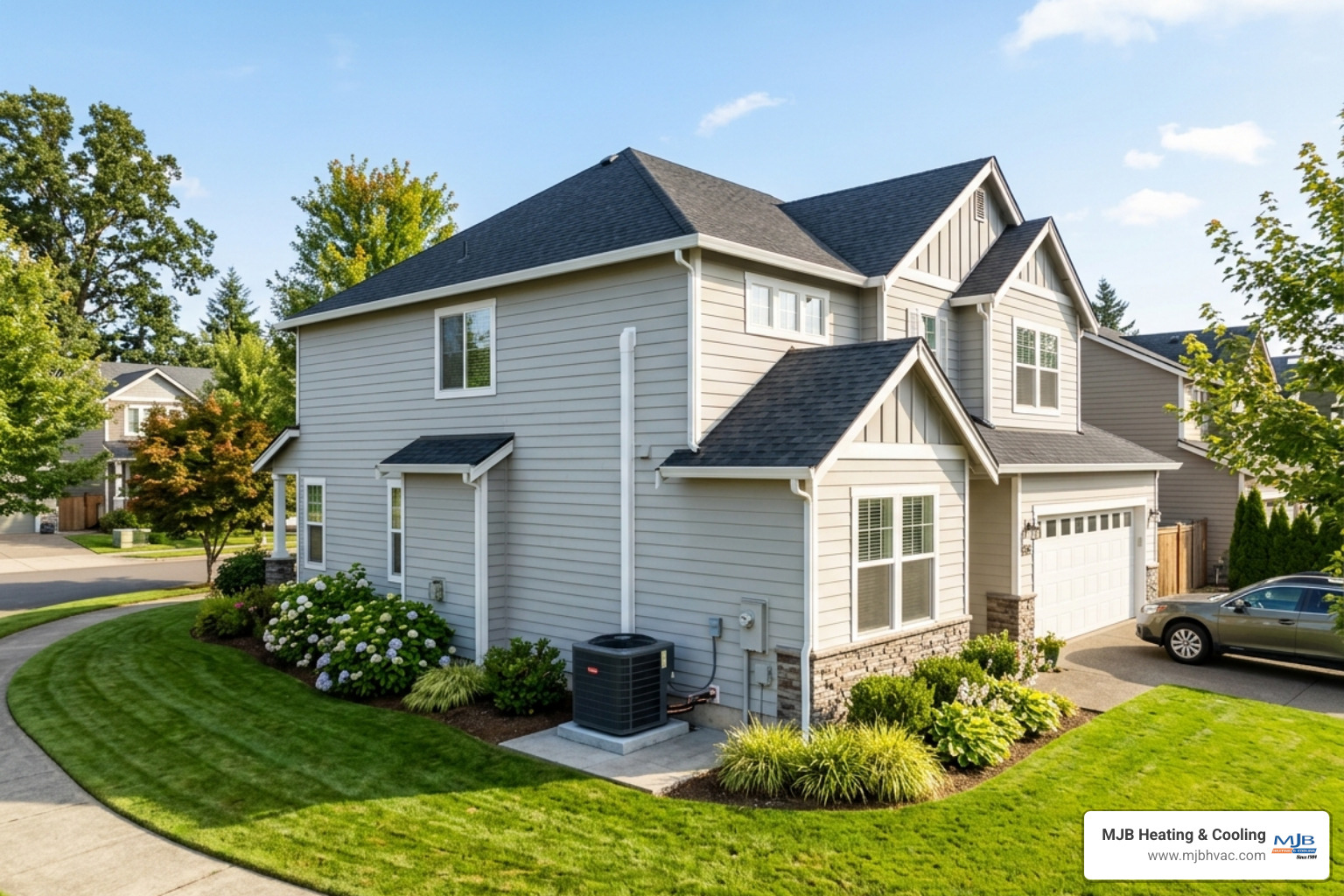

Efficiency ratings explained for homeowners is one of those topics that sounds complicated but makes a real difference once you understand it. If you own a home in Wichita or anywhere in Central Kansas, these ratings directly affect how much you pay to heat and cool your home every single month.
Here is a quick answer to get you started:
Home efficiency ratings at a glance:
| Rating | What It Measures | Higher or Lower is Better? |
|---|---|---|
| AFUE | Furnace fuel efficiency (%) | Higher is better (95% = top tier) |
| SEER2 | Air conditioner cooling efficiency | Higher is better (14+ minimum as of 2023) |
| HSPF2 | Heat pump heating efficiency | Higher is better (8.8+ minimum as of 2023) |
| HERS Index | Whole-home energy performance | Lower is better (0 = net-zero) |
| Energy Star | EPA-certified product efficiency | Certified = meets strict standards |
Kansas summers are hot and winters are cold. That means your HVAC system runs hard for most of the year. A furnace with a 95% AFUE rating converts 95 cents of every energy dollar into heat. An older 80% AFUE unit wastes 20 cents of every dollar right out the flue. Over a full heating season, that gap adds up fast.
The same logic applies to cooling. A SEER2 16 air conditioner can cut your summer cooling costs by 20 to 25% compared to a minimum-rated unit. For a typical household spending $500 on summer cooling, that is $100 to $125 back in your pocket every year.
Understanding these numbers is the first step toward smarter decisions — whether you are replacing aging equipment, shopping for a new system, or just trying to figure out why your utility bills keep climbing.
When you start shopping for a new HVAC system in Derby or Maize, you’re suddenly hit with a barrage of acronyms. AFUE, SEER2, HSPF2—it feels like you need a secret decoder ring just to buy a furnace. Don't worry; we've been helping Central Kansas families navigate this "alphabet soup" since 1984.
The most important thing to look for is the bright yellow EnergyGuide label. This label is required by the Department of Energy (DOE) on all new units. It provides a standardized way to compare models. Think of it like the "Nutrition Facts" label on a cereal box, but for your home’s energy consumption.
Here is a breakdown of the big three ratings you’ll encounter:
It’s worth noting that in 2023, the industry shifted from SEER/HSPF to SEER2/HSPF2. This wasn't just a name change; the testing standards became much more rigorous to better reflect real-world conditions, such as the static pressure found in typical home ductwork. This transition represents about a 7% improvement in how accurately we measure efficiency.
If you’re considering a heat pump, you can Discover Energy Savings with Daikin's HSPF Rating Insights to see how these numbers translate into actual dollar amounts on your Westar or Kansas Gas Service bills.
| System Type | Minimum Standard | High Efficiency | Premium Tier |
|---|---|---|---|
| Gas Furnace (AFUE) | 80% | 92% - 95% | 96% - 98.5% |
| Air Conditioner (SEER2) | 13.4 - 14.3* | 16 - 18 | 20+ |
| Heat Pump (HSPF2) | 7.5 - 8.8 | 9.0 - 10.0 | 10.5+ |
*Minimums vary slightly based on region and system type.
To truly grasp efficiency ratings explained for homeowners, we need to talk about BTUs (British Thermal Units). A BTU is a measurement of heat energy. Specifically, it’s the amount of energy needed to raise the temperature of one pound of water by one degree Fahrenheit.
In HVAC terms, BTUs represent the "size" or capacity of your system. However, the efficiency rating tells us how much electricity or gas is required to produce those BTUs.
Modern high-efficiency systems often utilize variable-speed technology. Unlike older units that are either "all on" or "all off" (like a light switch), variable-speed systems can adjust their output to meet the exact needs of your home (more like a dimmer switch). This allows them to run longer at lower speeds, which uses significantly less energy and provides much more consistent comfort.
While a high rating is great, it’s only half the battle. To keep those ratings accurate throughout the life of the system, Essential HVAC Maintenance Tips for Your Furnace and AC are vital. Without regular cleanings and inspections, a 16 SEER2 unit can quickly start performing like a 13 SEER2 unit due to dirt and wear.
Living in the Wichita metro area means preparing for those 100-degree August days. Your air conditioner's SEER2 rating is its "miles per gallon" for the summer.
As of the 2023 DOE standards, all new air conditioning units must have a SEER rating of at least 14 (or 13.4 SEER2). But why stop at the minimum?
In the winter, the script flips. We care about AFUE.If you have an older furnace with a metal flue pipe, it’s likely an 80% AFUE model. This means 20% of the gas you pay for is literally going up the chimney as exhaust.
High-efficiency furnaces (90% to 98.5% AFUE) use a secondary heat exchanger. This component captures the heat from the exhaust gases that would normally be wasted. Because this process cools the exhaust so much, it turns into liquid (condensate), which is why these are called "condensing furnaces." These units require PVC venting because the exhaust isn't hot enough to rise naturally out of a traditional chimney.
For a typical household in Newton or Hutchinson spending $1,500 a year on heating, upgrading from an 80% to a 95% AFUE furnace could save you roughly $237 per year. Over a 20-year lifespan, that’s nearly $5,000 in savings!
Heat pumps are becoming incredibly popular in places like Goddard and Valley Center because they provide both heating and cooling. The HSPF2 rating measures their heating efficiency.
If you’re curious about how a heat pump might perform in our climate, we recommend you Discover Energy Savings with Daikin's HSPF Rating Insights to see how modern technology has changed the game for electric heating.
Here is a truth that many big-box retailers won't tell you: the number on the yellow tag is a "lab rating." Real-world performance depends on how the system is integrated into your specific home. At MJB Heating & Cooling, we emphasize that the most efficient furnace in the world will perform poorly if it’s installed incorrectly.
One of the biggest mistakes homeowners make is thinking "bigger is better." If an HVAC system is oversized, it will "short cycle"—turning on, blasting the house with air, and turning off before it can properly dehumidify or circulate the air. This leads to:
Conversely, an undersized unit will run constantly, struggling to keep up with a Wichita heatwave, which also sky-rockets your bills. We use Manual J Load Calculations to ensure your system is sized perfectly for your home’s square footage, insulation levels, and window orientations.
Your home is a system. Even a high-rated HVAC unit can’t overcome:
To keep your system running at its rated efficiency, you need to know How Often Should HVAC Air Filters Be Changed. For most homes in Rose Hill or Park City, this is every 1–3 months, but it varies based on pets and allergies. For a deeper dive, check out our guide on How Often Should You Change Your HVAC Air Filter.
Factors Affecting Real-World HVAC Performance:
If you want the "Gold Standard" for your home, look beyond the basic ratings to these certifications.
The HERS Index (Home Energy Rating System) is like a golf score—lower is better. Developed by RESNET, it compares your home to a "Reference Home" (a home built to the 2006 energy code).
According to a study by Freddie Mac, homes with better efficiency ratings can sell for 3% to 5% more than standard homes. It’s an investment that pays off both in monthly bills and future resale value.
You’ve likely seen the blue Energy Star logo on your fridge or dishwasher. But Energy Star NextGen, rolled out in 2024, is the new frontier. These standards focus on:
The easiest way is to look for the EnergyGuide label on the side of your outdoor AC unit or the front of your furnace. If that label is missing or faded, find the model number on the manufacturer's data plate. You can search that model number online or call us, and we can look up the original factory specs for you. A quick visual tip: if your furnace has a plastic PVC pipe for exhaust, it’s likely 90% AFUE or higher. If it has a metal pipe, it’s likely 80% or lower.
In today’s market, we consider a 95% AFUE furnace and a 16 SEER2 air conditioner to be the "sweet spot" for most Central Kansas homeowners. These ratings offer a great balance between the initial investment and long-term utility savings. If you are looking for the absolute best, look for 98% AFUE and 20+ SEER2 systems, which often feature fully modulating technology for maximum comfort.
Not necessarily. This is a common misconception. A 20 SEER2 air conditioner installed in a home with leaky ducts, no attic insulation, and an oversized blower will likely cost more to run than a properly installed 14 SEER2 system. Efficiency is about the entire home envelope. Think of your HVAC system like the engine of a car; if the tires are flat (leaky ducts) and the windows are down (poor insulation), the most efficient engine in the world won't get you good gas mileage.
At MJB Heating & Cooling, we believe in an honest business approach. We aren't here to just sell you the most expensive unit on the lot. We want to help you find the right efficiency level for your specific home and budget, whether you’re in El Dorado, Haysville, or downtown Wichita.
Since 1984, our family-owned business has focused on quality workmanship. We know that efficiency ratings explained for homeowners can be a lot to digest, but you don't have to figure it out alone. From professional load calculations to expert installation and long-term maintenance, we are here to ensure your Central Kansas home stays comfortable without breaking the bank.
If you’re ready to stop guessing and start saving, we invite you to Discover Energy Savings with Daikin's HSPF Rating Insights or give us a call to schedule a professional efficiency assessment of your current system. Let’s make sure your home is ready for whatever the Kansas weather throws at us!
Efficiency ratings explained for homeowners is one of those topics that sounds complicated but makes a real difference once you understand it. If you own a home in Wichita or anywhere in Central Kansas, these ratings directly affect how much you pay to heat and cool your home every single month.
Here is a quick answer to get you started:
Home efficiency ratings at a glance:
| Rating | What It Measures | Higher or Lower is Better? |
|---|---|---|
| AFUE | Furnace fuel efficiency (%) | Higher is better (95% = top tier) |
| SEER2 | Air conditioner cooling efficiency | Higher is better (14+ minimum as of 2023) |
| HSPF2 | Heat pump heating efficiency | Higher is better (8.8+ minimum as of 2023) |
| HERS Index | Whole-home energy performance | Lower is better (0 = net-zero) |
| Energy Star | EPA-certified product efficiency | Certified = meets strict standards |
Kansas summers are hot and winters are cold. That means your HVAC system runs hard for most of the year. A furnace with a 95% AFUE rating converts 95 cents of every energy dollar into heat. An older 80% AFUE unit wastes 20 cents of every dollar right out the flue. Over a full heating season, that gap adds up fast.
The same logic applies to cooling. A SEER2 16 air conditioner can cut your summer cooling costs by 20 to 25% compared to a minimum-rated unit. For a typical household spending $500 on summer cooling, that is $100 to $125 back in your pocket every year.
Understanding these numbers is the first step toward smarter decisions — whether you are replacing aging equipment, shopping for a new system, or just trying to figure out why your utility bills keep climbing.
When you start shopping for a new HVAC system in Derby or Maize, you’re suddenly hit with a barrage of acronyms. AFUE, SEER2, HSPF2—it feels like you need a secret decoder ring just to buy a furnace. Don't worry; we've been helping Central Kansas families navigate this "alphabet soup" since 1984.
The most important thing to look for is the bright yellow EnergyGuide label. This label is required by the Department of Energy (DOE) on all new units. It provides a standardized way to compare models. Think of it like the "Nutrition Facts" label on a cereal box, but for your home’s energy consumption.
Here is a breakdown of the big three ratings you’ll encounter:
It’s worth noting that in 2023, the industry shifted from SEER/HSPF to SEER2/HSPF2. This wasn't just a name change; the testing standards became much more rigorous to better reflect real-world conditions, such as the static pressure found in typical home ductwork. This transition represents about a 7% improvement in how accurately we measure efficiency.
If you’re considering a heat pump, you can Discover Energy Savings with Daikin's HSPF Rating Insights to see how these numbers translate into actual dollar amounts on your Westar or Kansas Gas Service bills.
| System Type | Minimum Standard | High Efficiency | Premium Tier |
|---|---|---|---|
| Gas Furnace (AFUE) | 80% | 92% - 95% | 96% - 98.5% |
| Air Conditioner (SEER2) | 13.4 - 14.3* | 16 - 18 | 20+ |
| Heat Pump (HSPF2) | 7.5 - 8.8 | 9.0 - 10.0 | 10.5+ |
*Minimums vary slightly based on region and system type.
To truly grasp efficiency ratings explained for homeowners, we need to talk about BTUs (British Thermal Units). A BTU is a measurement of heat energy. Specifically, it’s the amount of energy needed to raise the temperature of one pound of water by one degree Fahrenheit.
In HVAC terms, BTUs represent the "size" or capacity of your system. However, the efficiency rating tells us how much electricity or gas is required to produce those BTUs.
Modern high-efficiency systems often utilize variable-speed technology. Unlike older units that are either "all on" or "all off" (like a light switch), variable-speed systems can adjust their output to meet the exact needs of your home (more like a dimmer switch). This allows them to run longer at lower speeds, which uses significantly less energy and provides much more consistent comfort.
While a high rating is great, it’s only half the battle. To keep those ratings accurate throughout the life of the system, Essential HVAC Maintenance Tips for Your Furnace and AC are vital. Without regular cleanings and inspections, a 16 SEER2 unit can quickly start performing like a 13 SEER2 unit due to dirt and wear.
Living in the Wichita metro area means preparing for those 100-degree August days. Your air conditioner's SEER2 rating is its "miles per gallon" for the summer.
As of the 2023 DOE standards, all new air conditioning units must have a SEER rating of at least 14 (or 13.4 SEER2). But why stop at the minimum?
In the winter, the script flips. We care about AFUE.If you have an older furnace with a metal flue pipe, it’s likely an 80% AFUE model. This means 20% of the gas you pay for is literally going up the chimney as exhaust.
High-efficiency furnaces (90% to 98.5% AFUE) use a secondary heat exchanger. This component captures the heat from the exhaust gases that would normally be wasted. Because this process cools the exhaust so much, it turns into liquid (condensate), which is why these are called "condensing furnaces." These units require PVC venting because the exhaust isn't hot enough to rise naturally out of a traditional chimney.
For a typical household in Newton or Hutchinson spending $1,500 a year on heating, upgrading from an 80% to a 95% AFUE furnace could save you roughly $237 per year. Over a 20-year lifespan, that’s nearly $5,000 in savings!
Heat pumps are becoming incredibly popular in places like Goddard and Valley Center because they provide both heating and cooling. The HSPF2 rating measures their heating efficiency.
If you’re curious about how a heat pump might perform in our climate, we recommend you Discover Energy Savings with Daikin's HSPF Rating Insights to see how modern technology has changed the game for electric heating.
Here is a truth that many big-box retailers won't tell you: the number on the yellow tag is a "lab rating." Real-world performance depends on how the system is integrated into your specific home. At MJB Heating & Cooling, we emphasize that the most efficient furnace in the world will perform poorly if it’s installed incorrectly.
One of the biggest mistakes homeowners make is thinking "bigger is better." If an HVAC system is oversized, it will "short cycle"—turning on, blasting the house with air, and turning off before it can properly dehumidify or circulate the air. This leads to:
Conversely, an undersized unit will run constantly, struggling to keep up with a Wichita heatwave, which also sky-rockets your bills. We use Manual J Load Calculations to ensure your system is sized perfectly for your home’s square footage, insulation levels, and window orientations.
Your home is a system. Even a high-rated HVAC unit can’t overcome:
To keep your system running at its rated efficiency, you need to know How Often Should HVAC Air Filters Be Changed. For most homes in Rose Hill or Park City, this is every 1–3 months, but it varies based on pets and allergies. For a deeper dive, check out our guide on How Often Should You Change Your HVAC Air Filter.
Factors Affecting Real-World HVAC Performance:
If you want the "Gold Standard" for your home, look beyond the basic ratings to these certifications.
The HERS Index (Home Energy Rating System) is like a golf score—lower is better. Developed by RESNET, it compares your home to a "Reference Home" (a home built to the 2006 energy code).
According to a study by Freddie Mac, homes with better efficiency ratings can sell for 3% to 5% more than standard homes. It’s an investment that pays off both in monthly bills and future resale value.
You’ve likely seen the blue Energy Star logo on your fridge or dishwasher. But Energy Star NextGen, rolled out in 2024, is the new frontier. These standards focus on:
The easiest way is to look for the EnergyGuide label on the side of your outdoor AC unit or the front of your furnace. If that label is missing or faded, find the model number on the manufacturer's data plate. You can search that model number online or call us, and we can look up the original factory specs for you. A quick visual tip: if your furnace has a plastic PVC pipe for exhaust, it’s likely 90% AFUE or higher. If it has a metal pipe, it’s likely 80% or lower.
In today’s market, we consider a 95% AFUE furnace and a 16 SEER2 air conditioner to be the "sweet spot" for most Central Kansas homeowners. These ratings offer a great balance between the initial investment and long-term utility savings. If you are looking for the absolute best, look for 98% AFUE and 20+ SEER2 systems, which often feature fully modulating technology for maximum comfort.
Not necessarily. This is a common misconception. A 20 SEER2 air conditioner installed in a home with leaky ducts, no attic insulation, and an oversized blower will likely cost more to run than a properly installed 14 SEER2 system. Efficiency is about the entire home envelope. Think of your HVAC system like the engine of a car; if the tires are flat (leaky ducts) and the windows are down (poor insulation), the most efficient engine in the world won't get you good gas mileage.
At MJB Heating & Cooling, we believe in an honest business approach. We aren't here to just sell you the most expensive unit on the lot. We want to help you find the right efficiency level for your specific home and budget, whether you’re in El Dorado, Haysville, or downtown Wichita.
Since 1984, our family-owned business has focused on quality workmanship. We know that efficiency ratings explained for homeowners can be a lot to digest, but you don't have to figure it out alone. From professional load calculations to expert installation and long-term maintenance, we are here to ensure your Central Kansas home stays comfortable without breaking the bank.
If you’re ready to stop guessing and start saving, we invite you to Discover Energy Savings with Daikin's HSPF Rating Insights or give us a call to schedule a professional efficiency assessment of your current system. Let’s make sure your home is ready for whatever the Kansas weather throws at us!


Our A/C stopped working on a Sunday and due to health issues, we needed to find a service company available on a Sunday. I called MJB and left a message on their emergency voice mail. Within 10 minutes Tom Buck called me to hear my description of the symptoms. He was just finishing an appointment in Wichita and would be on his way to my home on the south end of Derby. He arrived within 30 minutes! From start to finish he was the perfect example of what you could ever hope for in an HVAC tech and a human being. His evaluation of our system inside and out was as thorough as I could ever imagine and once he was done with the repair, our system is running as well or better than ever. Well worth the price for the evaluation, parts, and labor. Thank you again Tom for an awesome experience.
Our AC went out during the hottest days of the year, and they were out next day! We have been jerked around by a shoddy home warranty for years. We finally had a chance to pick our own repair people, and MJB came highly recommended. I can see why! I was impressed with the honesty and speed at which they fixed our AC unit!
Our commercial building had a lightening/electrical strike and damaged our 20 ton AC unit. No one could find us a new unit before the end of September. Imagining going all of August and September with no AC in Kansas and working inside near 100 degree temps is less than thrilling. Dale and the team at MJB called around and saved the day. They had us a new unit 5 weeks earlier than other could promise and I now have happy employees. The unit is amazingly quiet, super cold and so much more energy efficient. Thank you for being our super hero!
Came out and installed my new furnace. Was very polite and affordable. They are very acknowledgeable and I highly recommend!
Thank you very much. We had our 1st warm night in 3weeks. MJB took the time and effort to find the real problem. And the employees were kind and thoughtful and explained things very well. I cannot thank you and all of MJB. Will recommend you highly. Thanks again Marjorie Herman Oxford Kansas
We had a new system installed and I was so impressed with how quick they were in come out and install it, in the middle of a hot summer day. They were so friendly & very professional. I had a small problem with a weird sound and they came over immediately and fixed it. Love them!