


.avif)





Blogs
Stay updated with our latest blog posts.
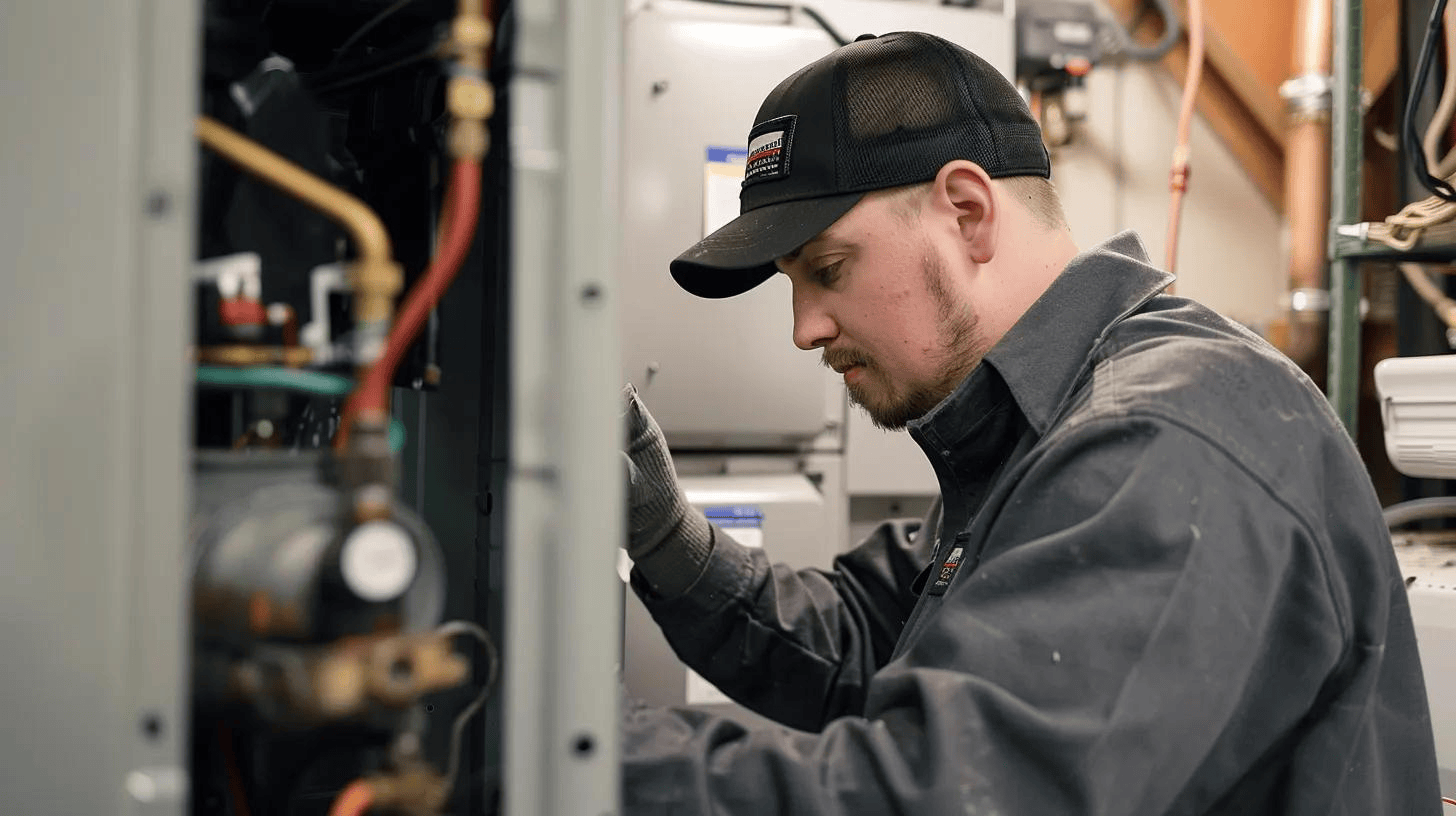

Proper HVAC maintenance is the routine care and inspection of heating, ventilation, and air conditioning systems that preserves performance, reduces energy use, and prevents unexpected failures Regular maintenance works by keeping air pathways clear, refrigerant at correct levels, and mechanical parts lubricated and calibrated, which together maintain efficient heat transfer and airflow Homeowners and building managers benefit from lower utility costs, improved indoor air quality, and a longer equipment lifespan when preventive tasks are performed on schedule This guide explains why maintenance matters, how often to change filters, what a comprehensive AC checklist includes, furnace tune-up best practices, how preventive care extends system life, and Kansas-specific seasonal tasks for Derby and Wichita climates Throughout, you’ll find step-by-step actions, comparison tables for filters and AC components, and practical troubleshooting homeowners can safely try before calling a technician The goal is to give clear, local-focused guidance that helps you keep systems reliable and comfortable while showing how scheduled professional plans can simplify long-term care.
Regular HVAC system maintenance is the proactive process of inspecting and servicing components to sustain efficiency, safety, and air quality while minimizing repair costs The mechanism is straightforward: clean heat-transfer surfaces and unrestricted airflow reduce energy use, calibrated controls prevent short cycling, and early detection of wear stops small issues from becoming major failures Maintaining systems also preserves warranties and reduces the risk of safety hazards such as electrical faults or combustion problems Below are the primary benefits you’ll see when maintenance is performed consistently.
The primary benefits of regular HVAC maintenance include energy savings, system longevity, improved indoor air quality, and fewer emergency repairs These advantages compound over time because small efficiency gains translate into measurable monthly savings, and early fixes avoid expensive part replacements Keeping these benefits in mind helps prioritize seasonal tune-ups and filter changes to match local weather demands. Understanding these practical benefits leads naturally to how maintenance improves energy efficiency in measurable ways.
Regular maintenance improves energy efficiency mainly by restoring proper heat transfer and minimizing airflow restrictions, which reduces the workload on compressors and fans For example, a dirty evaporator or condenser coil lowers system capacity and forces compressors to run longer, increasing electricity consumption by noticeable percentages Calibrated thermostats and correct refrigerant charge also prevent short cycling and inefficient runtime patterns These mechanisms translate directly into lower energy bills and a more comfortable home, which sets up the next discussion about cost savings from preventive care.
How preventive HVAC care yields cost savings involves both direct and indirect factors: reduced utility bills, avoided major repairs, and fewer emergency service fees A well-maintained system typically uses less energy and requires fewer unscheduled repairs, which lowers lifetime ownership costs In many cases, catching issues early reduces replacement frequency and protects warranty coverage, saving hundreds to thousands of dollars over equipment life These cost considerations reinforce why consistent maintenance is an economical long-term strategy and lead into concrete actions homeowners can take, starting with managing filters.
Preventive Maintenance for HVAC Lifespan and Cost-Benefit
Cost-effective and proactive option, preventive maintenance focuses on tasks that contribute to extending the useful life of the equipment, with a good cost-benefit Automating HVAC Implementation in Hospitals: Pressure Losses, Maintenance, and Life Cycle Cost Analysis, 2025
HVAC maintenance improves energy efficiency by restoring optimal heat exchange, ensuring proper airflow, and maintaining correct control settings to reduce wasted runtime Clean coils and properly charged refrigerant improve heat transfer at both the indoor evaporator and outdoor condenser, allowing the system to reach setpoints with less energy input Replacing clogged air filters and sealing duct leaks reduces blower motor power and avoids overworking compressors, which further lowers electric draw Regular calibration of thermostats and timely lubrication of moving parts prevents friction losses and control-related inefficiencies, all of which combine to improve system performance and reduce monthly bills.
Preventive HVAC care reduces both operating and ownership costs by lowering energy usage and preventing expensive component failures that occur when small problems escalate. For homeowners, savings appear as smaller utility bills, fewer emergency repair calls, and postponed replacement expenses because components last longer when serviced Additionally, many manufacturers require scheduled maintenance to keep warranty coverage valid, which protects customers from out-of-pocket part costs for covered failures Recognizing these savings helps prioritize annual tune-ups and targeted seasonal checks to maximize return on maintenance investments.
Changing HVAC air filters on the correct schedule keeps airflow steady, protects equipment, and improves indoor air quality by capturing particulates before they circulate Filters work by trapping dust, pollen, pet dander, and other particles; as they load up, resistance increases and blower motors must run harder, which reduces efficiency and stresses components Recommended baseline replacement is every 1–3 months, but factors such as pets, allergies, indoor air quality goals, occupancy, and local dust loads in Kansas modify that range Below is guidance to help you choose a schedule and filter type that balances filtration and system performance.
Different filter types offer trade-offs between cost, filtration efficiency, and airflow; choose a filter compatible with your system’s design and your IAQ needs Higher-MERV media capture finer particles but can reduce airflow if the system isn’t designed for them, while basic pleated or fiberglass filters provide sufficient protection for many homes with lower pressure drop Checking filters monthly and marking replacement dates helps prevent excessive loading that harms efficiency The next section compares common filter types, MERV ratings, recommended change frequencies, and IAQ impact.
HVAC Filter Impact on Energy and Air Quality
The relationship between filter pressure drop, indoor air quality, and energy consumption in rooftop HVAC units Impact of high MERV filters on energy and indoor air quality between filter pressure drop and fan pressure, airflow rate, estimate the impact of filter pressure drop on cooling capacity The relationship between filter pressure drop, indoor air quality, and energy consumption in rooftop HVAC units, J Siegel, 2014
• Fiberglass panel — Typical MERV Range: 1–4 — Recommended Change Frequency: Replace every 1–2 months — IAQ Impact: Basic protection for large particles; minimal impact on IAQ
• Pleated polyester — Typical MERV Range: 5–8 — Recommended Change Frequency: Replace every 2–3 months — IAQ Impact: Good balance of filtration and airflow for most homes
• High-efficiency pleated (media) — Typical MERV Range: 9–13 — Recommended Change Frequency: Replace every 3 months — IAQ Impact: Captures finer particles; may affect airflow if system not rated
• HEPA / electrostatic (where supported) — Typical MERV Range: 13–17+ — Recommended Change Frequency: Replace per manufacturer (3–12 months) — IAQ Impact: Best IAQ but typically requires compatible HVAC or stand-alone unit
This comparison shows that selecting a filter depends on IAQ goals and system capability; homeowners should aim for the highest practical MERV rating their system can handle without causing airflow problems. Regular inspection and adherence to replacement intervals protect both indoor air quality and equipment efficiency, which leads into safe, step-by-step filter replacement guidance.
Below is a short, actionable list explaining signs that a filter needs changing and simple checks you can perform monthly.
• Visible dirt build-up: If the filter surface looks gray or clogged, it needs replacement.
• Increased dust in living spaces: More settled dust suggests reduced filtration effectiveness.
• Reduced airflow at registers: Weak airflow often indicates a loaded filter restricting the blower.
Regular checks help avoid the efficiency drop that overloaded filters cause and transition naturally into stepwise replacement instructions homeowners can follow.
Choosing the best filter depends on system limitations and IAQ priorities; pleated polyester filters are a common balance between cost and performance, while higher-MERV media suits allergy sufferers if airflow is adequate Systems with smaller furnace blowers or older duct designs may not tolerate high-MERV filters without reducing airflow and efficiency, so consult system specifications before upgrading For homes with pets or allergy concerns in Wichita and Derby, a higher-efficiency pleated filter (MERV 8–11) often offers noticeable IAQ improvement without excessive pressure drop Understanding these trade-offs prepares you to change filters correctly and safely to maintain system health.
Changing most residential filters is a straightforward safety-first task: turn off the system power, locate the return grille or furnace filter compartment, and remove the old filter while noting its size and airflow orientation markings Slide the new filter into place with the arrow pointing toward the furnace or air handler; secure the access panel, restore power, and run the system to verify normal airflow and operation Avoid using the wrong size or folding filters, and do not install very high-MERV filters without confirming system compatibility because restricted airflow can harm equipment Proper disposal and a marked replacement schedule ensure ongoing protection and reduce wear on system components.
After performing DIY filter replacement, many homeowners find scheduled professional maintenance simplifies upkeep and catches issues filters can't reveal Enrollment in a scheduled maintenance plan ensures routine filter replacement and professional inspection without the guesswork, helping maintain efficiency and detect early problems before they require costly repairs For readers interested in an ongoing service option, the Friends & Family Maintenance Plan described later explains how scheduled care and priority service support long-term system health.
A comprehensive AC maintenance checklist covers the outdoor condenser, indoor evaporator, refrigerant levels, electrical connections, drain lines, and airflow components to ensure full-system performance The purpose of a checklist is to ensure each critical element that affects cooling capacity and efficiency gets addressed on a predictable schedule before failures occur Many checklist items are safe for homeowners to inspect visually, while certain tasks—like refrigerant handling and sealed-system work—should be left to technicians. The table below breaks components into actionable items so you can understand what a professional typically inspects and what you can handle yourself.
• Condenser unit — Inspection / Attribute: Exterior condition — Action / Checklist Item: Clear debris, check fins, ensure unit is level
• Evaporator coil — Inspection / Attribute: Coil cleanliness — Action / Checklist Item: Inspect for dirt; schedule professional cleaning if needed
• Refrigerant — Inspection / Attribute: Charge level — Action / Checklist Item: Verify correct charge; technician measures pressures
• Electrical — Inspection / Attribute: Connections and contactors — Action / Checklist Item: Inspect wiring and replace worn parts as needed
• Drain line — Inspection / Attribute: Clogs and backups — Action / Checklist Item: Flush drain with water or safe cleaner; verify flow
• Airflow & filter — Inspection / Attribute: Blower and filter status — Action / Checklist Item: Replace filter and check blower motor operation
This breakdown shows which maintenance actions protect cooling performance and which require a trained technician After homeowners perform basic upkeep like clearing debris and changing filters, professional tune-ups deliver deeper inspections that preserve system life and efficiency.
Below is a numbered list introducing the top AC checklist items many homeowners can observe or perform safely.
• Clear debris around outdoor unit: Keep a 2–3 foot clearance to maintain airflow.
• Replace or inspect filters: Maintain recommended replacement intervals to prevent airflow loss.
• Check thermostat operation: Ensure setpoints are met and cycles are normal.
These actions reduce strain on the system and prepare it for a professional inspection, and they lead directly into concrete condenser cleaning steps you can follow safely.
Cleaning the outdoor condenser requires safety-first steps: turn off power at the service disconnect before clearing debris and use gentle tools to remove leaves and grass Brush or vacuum loose dirt from the fins and use a garden hose on low pressure to rinse coil surfaces from the inside out; avoid high-pressure washers that can bend fins Trim vegetation to maintain airflow and ensure the unit sits level to prevent compressor stress, noting that chemical coil cleaning and refrigerant service must be done by a licensed technician Performing these safe cleaning steps seasonally helps maintain capacity and leads into thermostat management practices for optimal cooling.
Managing thermostat settings balances comfort and energy savings by using programmable schedules, reasonable setpoints, and smart thermostat features that reduce runtime during unoccupied periods For Kansas summers, setting a steady cooling setpoint and using 4–6 degree setbacks when away reduces compressor runtime without sacrificing comfort upon return; smart thermostats enhance this by learning patterns and optimizing staging Verify thermostat calibration annually and replace batteries to avoid incorrect temperature readings that cause longer run times Combining proper thermostat strategies with maintained equipment delivers predictable comfort and efficiency that minimize wear on systems Derby Kansas is a great example of where to implement these strategies.
After reviewing AC checklist items, many homeowners decide professional tune-ups are worthwhile to address the deeper tasks on the list and ensure refrigerant, coil, and electrical systems are inspected thoroughly MJB Heating & Cooling technicians perform these checklist items during tune-ups, offering the expertise to handle refrigerant checks, electrical safety inspections, and coil cleaning that homeowners should not attempt alone If you need AC repair, installation, or a professional tune-up to complete this checklist, contacting a trusted local provider can ensure the job is done safely and effectively.


Our A/C stopped working on a Sunday and due to health issues, we needed to find a service company available on a Sunday. I called MJB and left a message on their emergency voice mail. Within 10 minutes Tom Buck called me to hear my description of the symptoms. He was just finishing an appointment in Wichita and would be on his way to my home on the south end of Derby. He arrived within 30 minutes! From start to finish he was the perfect example of what you could ever hope for in an HVAC tech and a human being. His evaluation of our system inside and out was as thorough as I could ever imagine and once he was done with the repair, our system is running as well or better than ever. Well worth the price for the evaluation, parts, and labor. Thank you again Tom for an awesome experience.
Our AC went out during the hottest days of the year, and they were out next day! We have been jerked around by a shoddy home warranty for years. We finally had a chance to pick our own repair people, and MJB came highly recommended. I can see why! I was impressed with the honesty and speed at which they fixed our AC unit!
Our commercial building had a lightening/electrical strike and damaged our 20 ton AC unit. No one could find us a new unit before the end of September. Imagining going all of August and September with no AC in Kansas and working inside near 100 degree temps is less than thrilling. Dale and the team at MJB called around and saved the day. They had us a new unit 5 weeks earlier than other could promise and I now have happy employees. The unit is amazingly quiet, super cold and so much more energy efficient. Thank you for being our super hero!
Came out and installed my new furnace. Was very polite and affordable. They are very acknowledgeable and I highly recommend!
Thank you very much. We had our 1st warm night in 3weeks. MJB took the time and effort to find the real problem. And the employees were kind and thoughtful and explained things very well. I cannot thank you and all of MJB. Will recommend you highly. Thanks again Marjorie Herman Oxford Kansas
We had a new system installed and I was so impressed with how quick they were in come out and install it, in the middle of a hot summer day. They were so friendly & very professional. I had a small problem with a weird sound and they came over immediately and fixed it. Love them!


