


.avif)





Blogs
Stay updated with our latest blog posts.
Understanding hvac replacement return on investment is one of the smartest financial moves you can make as a homeowner in Central Kansas. A new heating and cooling system isn't cheap — but it's not just an expense either. Done right, it pays you back in three real ways: lower monthly energy bills, fewer repair headaches, and a higher home value when you sell.
Here's a quick snapshot of what the numbers typically look like:
| ROI Factor | What to Expect |
|---|---|
| Energy bill reduction | 20%–40% annually with an ENERGY STAR-rated system |
| Home value increase | 5%–7% in most markets |
| Resale cost recovery | 30%–71% of installation cost recouped at sale |
| Payback period | 5–10 years through energy savings alone |
| Smart thermostat add-on | Pays back in 1–3 years |
Nearly 1 in 5 homeowners nationally is planning a new HVAC installation in 2026 — and 82% say they'd pull the trigger if the system paid for itself within 5 to 10 years through energy savings. That threshold is very achievable with today's high-efficiency equipment.
But the actual return you see depends on your specific system, your home, your utility rates, and how you approach the investment. This guide walks you through exactly how to calculate it.
When we talk about hvac replacement return on investment, we have to look at it through the lens of our local market. Whether you are in a suburban neighborhood in Derby or an older home in Riverside, the real estate market in 2026 places a massive premium on mechanical reliability.
Real estate experts and appraisers often view a new HVAC system as a "defensive" investment. While a kitchen remodel might be more fun to show off, a failing furnace is a "ticking time bomb" that can sink a home sale during the inspection phase. In our experience serving the Wichita metro area, a home with a brand-new, high-efficiency system often sells faster and closer to the asking price.
Data shows that homeowners can typically recover between 30% and 71% of the installation cost at the time of resale. Furthermore, a modern system can increase your total home value by 5% to 7%. For a home in Andover or Maize, that could mean adding several thousand dollars to your equity just by ensuring the "mechanical heart" of the home is in top shape.
In May 2026, buyers are more eco-conscious and budget-aware than ever. They aren't just looking at the number of bedrooms; they are looking at the Efficiency Ratings Explained For Homeowners to estimate their future monthly costs. A new system acts as a "silent salesman," providing documented proof that the new owner won't be hit with a massive repair bill three months after moving in.
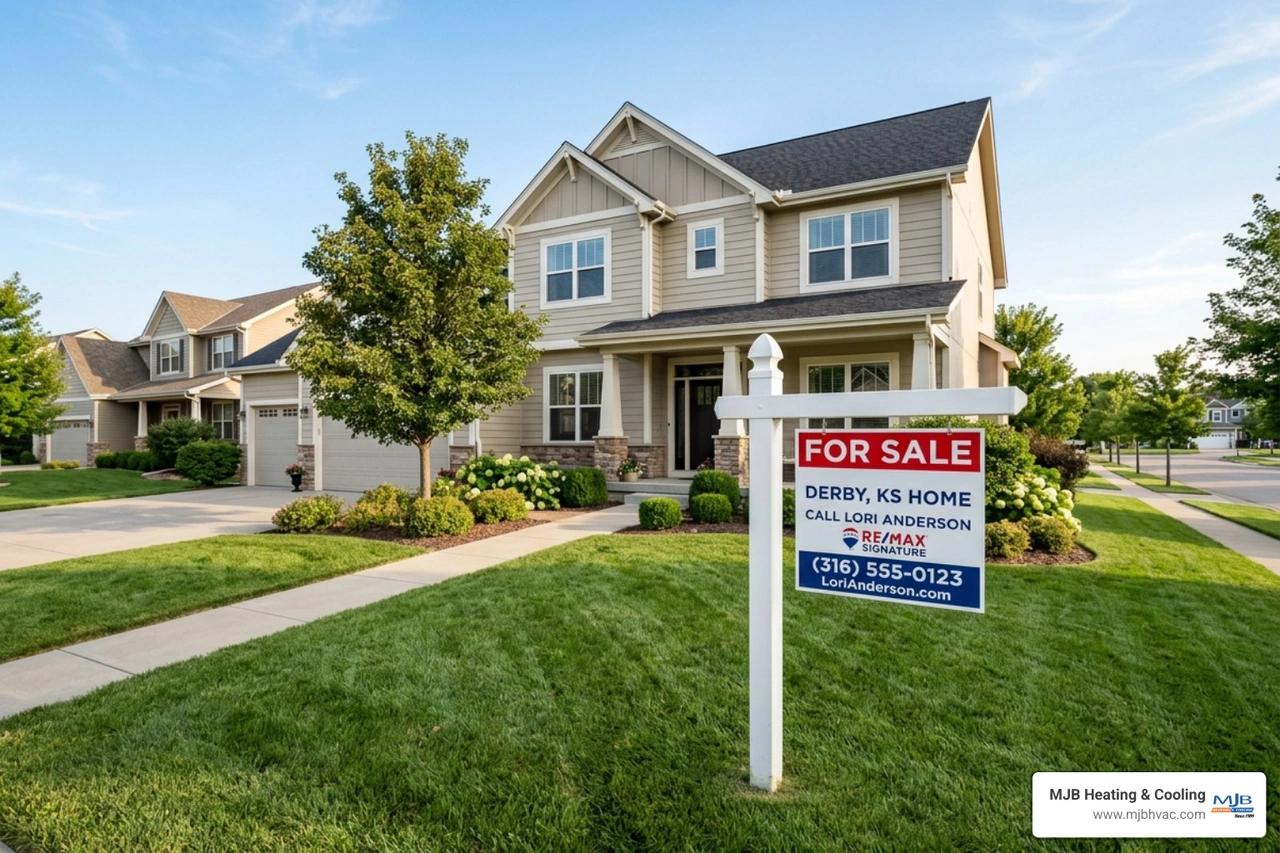
Not all systems offer the same financial return. Here is how the different technologies generally stack up in the Central Kansas climate:
| System Type | Typical Resale Recovery | Energy Savings Potential |
|---|---|---|
| High-Efficiency Heat Pump | 65%–75% | Highest (30%–50% over old systems) |
| Central Air & Gas Furnace | 50%–60% | Moderate (20%–40% over old systems) |
| Ductless Mini-Split | Variable (High for additions) | Very High (Zoned cooling) |
| Geothermal Systems | Up to $7,300 value boost | Maximum long-term savings |
To calculate your personal ROI, you first need to understand the labels on the equipment. In 2026, we are operating under strict SEER2 standards, which changed the way we measure cooling efficiency to better reflect real-world conditions.
By upgrading, you are essentially asking: How Much Does A High Efficiency System Save? The answer is often a reduction in operating costs of 20% to 40% annually.
If you want to get down to the brass tacks of your ROI, you need to look at your utility bills. We recommend gathering 12 months of bills from Evergy or your local cooperative to establish a baseline.
A system only pays for itself if it is sized correctly. An oversized unit will "short-cycle," turning on and off constantly, which wears out parts and spikes energy bills. We use Manual J load calculations to ensure How Proper Hvac Sizing Affects Comfort And Efficiency are perfectly balanced for your home’s square footage, insulation levels, and window orientation.
One of the biggest changes in 2026 is the availability of significant financial incentives that lower your "net investment," thereby speeding up your ROI.
The federal government currently offers a 30% tax credit on qualifying high-efficiency HVAC upgrades.
Don't overlook Kansas Energy Rebates For Hvac Upgrades. Utility providers like Evergy often provide instant or mail-in rebates for customers who switch to high-efficiency heat pumps or install smart thermostats. These incentives can shave hundreds or even thousands off the upfront cost, making the hvac replacement return on investment much more attractive.
Replacing the "box" outside is only part of the equation. To truly maximize your ROI, we often recommend a holistic approach to the home's "envelope."
If there is one "no-brainer" upgrade, it is the smart thermostat. These devices often pay for themselves in just 1 to 3 years by learning your schedule and reducing run-time when you aren't home. Is Upgrading To A Smart Thermostat Worth It? Absolutely—it's the easiest 10-15% you'll ever save on your energy bill.
The Department of Energy estimates that the typical home loses 20% to 30% of its conditioned air through leaky ducts. If you put a high-efficiency unit on "leaky" ducts, you are throwing money away. Sealing those leaks and ensuring your attic insulation is up to par can shorten your payback period significantly.
In 2026, buyers are hyper-aware of health. Adding features like UV lights or asking Is A Whole House Air Purifier Worth It can add a "wow factor" to your home's listing. These upgrades improve your quality of life today and serve as a major selling point tomorrow.
We often see homeowners in places like Haysville or Park City struggling with the decision to keep fixing an old unit. While we pride ourselves on our repair expertise, there comes a point where repairing is simply "throwing good money after bad."
A simple way to decide is the $5,000 rule: Multiply the cost of the repair by the age of the system. If the total is more than $5,000, replacement is usually the better financial move.
If your system was installed before 2010, it likely uses R-22 refrigerant (Freon). This has been phased out for environmental reasons, and the cost of the remaining supply is astronomical. If your old R-22 unit has a leak, the cost of the refrigerant alone often makes the hvac replacement return on investment a clear winner.
Beyond the math, there is the "peace of mind" factor. An old furnace can develop cracked heat exchangers, posing a carbon monoxide risk. Furthermore, frequent breakdowns usually happen on the hottest or coldest days of the year when emergency service is in high demand. Investing in a new system before it fails allows you to shop around, utilize Is An Hvac Maintenance Plan Worth It to keep the warranty valid, and avoid the stress of a mid-winter breakdown.
Most real estate professionals agree that a new HVAC system adds 5% to 7% to a home's value. More importantly, it ensures the home appraises correctly. If an appraiser notes a non-functional or end-of-life system, they may lower the "effective age" of the home, which can disqualify certain buyers (like those using FHA or VA loans) who require all major systems to be in good working order.
Systems older than 15 years are considered to be running on "borrowed time." Even if it's still spinning, the efficiency gap between a 2011 model and a 2026 SEER2 model is massive. You are likely paying a "hidden tax" every month in the form of higher utility bills. Replacing it now allows you to enjoy the savings yourself rather than just giving that value to the next homeowner.
The industry benchmark is 5 to 10 years. This includes the cumulative energy savings, the elimination of repair costs, and the "net" reduction in price from tax credits and rebates. If you plan to stay in your home for at least five years, a high-efficiency upgrade is almost always a sound financial investment.
At MJB Heating & Cooling, we’ve been part of the Central Kansas community since 1984. Founded in Derby, our family-owned business was built on the idea that quality workmanship and an honest approach are the only ways to do business. We aren't just here to sell you a box; we’re here to help you navigate the complex world of hvac replacement return on investment so you can make the best choice for your family’s budget.
Whether you are in Wichita, El Dorado, or any of our surrounding communities, our licensed technicians are ready to provide the local expertise you need. We understand the specific demands our Kansas climate puts on your equipment—from 100-degree August afternoons to sub-zero January nights.
Ready to maximize your home's efficiency and see how a new system can pay for itself? Explore our professional HVAC services and let us help you find the perfect balance of comfort and value.
Understanding hvac replacement return on investment is one of the smartest financial moves you can make as a homeowner in Central Kansas. A new heating and cooling system isn't cheap — but it's not just an expense either. Done right, it pays you back in three real ways: lower monthly energy bills, fewer repair headaches, and a higher home value when you sell.
Here's a quick snapshot of what the numbers typically look like:
| ROI Factor | What to Expect |
|---|---|
| Energy bill reduction | 20%–40% annually with an ENERGY STAR-rated system |
| Home value increase | 5%–7% in most markets |
| Resale cost recovery | 30%–71% of installation cost recouped at sale |
| Payback period | 5–10 years through energy savings alone |
| Smart thermostat add-on | Pays back in 1–3 years |
Nearly 1 in 5 homeowners nationally is planning a new HVAC installation in 2026 — and 82% say they'd pull the trigger if the system paid for itself within 5 to 10 years through energy savings. That threshold is very achievable with today's high-efficiency equipment.
But the actual return you see depends on your specific system, your home, your utility rates, and how you approach the investment. This guide walks you through exactly how to calculate it.
When we talk about hvac replacement return on investment, we have to look at it through the lens of our local market. Whether you are in a suburban neighborhood in Derby or an older home in Riverside, the real estate market in 2026 places a massive premium on mechanical reliability.
Real estate experts and appraisers often view a new HVAC system as a "defensive" investment. While a kitchen remodel might be more fun to show off, a failing furnace is a "ticking time bomb" that can sink a home sale during the inspection phase. In our experience serving the Wichita metro area, a home with a brand-new, high-efficiency system often sells faster and closer to the asking price.
Data shows that homeowners can typically recover between 30% and 71% of the installation cost at the time of resale. Furthermore, a modern system can increase your total home value by 5% to 7%. For a home in Andover or Maize, that could mean adding several thousand dollars to your equity just by ensuring the "mechanical heart" of the home is in top shape.
In May 2026, buyers are more eco-conscious and budget-aware than ever. They aren't just looking at the number of bedrooms; they are looking at the Efficiency Ratings Explained For Homeowners to estimate their future monthly costs. A new system acts as a "silent salesman," providing documented proof that the new owner won't be hit with a massive repair bill three months after moving in.
Not all systems offer the same financial return. Here is how the different technologies generally stack up in the Central Kansas climate:
| System Type | Typical Resale Recovery | Energy Savings Potential |
|---|---|---|
| High-Efficiency Heat Pump | 65%–75% | Highest (30%–50% over old systems) |
| Central Air & Gas Furnace | 50%–60% | Moderate (20%–40% over old systems) |
| Ductless Mini-Split | Variable (High for additions) | Very High (Zoned cooling) |
| Geothermal Systems | Up to $7,300 value boost | Maximum long-term savings |
To calculate your personal ROI, you first need to understand the labels on the equipment. In 2026, we are operating under strict SEER2 standards, which changed the way we measure cooling efficiency to better reflect real-world conditions.
By upgrading, you are essentially asking: How Much Does A High Efficiency System Save? The answer is often a reduction in operating costs of 20% to 40% annually.
If you want to get down to the brass tacks of your ROI, you need to look at your utility bills. We recommend gathering 12 months of bills from Evergy or your local cooperative to establish a baseline.
A system only pays for itself if it is sized correctly. An oversized unit will "short-cycle," turning on and off constantly, which wears out parts and spikes energy bills. We use Manual J load calculations to ensure How Proper Hvac Sizing Affects Comfort And Efficiency are perfectly balanced for your home’s square footage, insulation levels, and window orientation.
One of the biggest changes in 2026 is the availability of significant financial incentives that lower your "net investment," thereby speeding up your ROI.
The federal government currently offers a 30% tax credit on qualifying high-efficiency HVAC upgrades.
Don't overlook Kansas Energy Rebates For Hvac Upgrades. Utility providers like Evergy often provide instant or mail-in rebates for customers who switch to high-efficiency heat pumps or install smart thermostats. These incentives can shave hundreds or even thousands off the upfront cost, making the hvac replacement return on investment much more attractive.
Replacing the "box" outside is only part of the equation. To truly maximize your ROI, we often recommend a holistic approach to the home's "envelope."
If there is one "no-brainer" upgrade, it is the smart thermostat. These devices often pay for themselves in just 1 to 3 years by learning your schedule and reducing run-time when you aren't home. Is Upgrading To A Smart Thermostat Worth It? Absolutely—it's the easiest 10-15% you'll ever save on your energy bill.
The Department of Energy estimates that the typical home loses 20% to 30% of its conditioned air through leaky ducts. If you put a high-efficiency unit on "leaky" ducts, you are throwing money away. Sealing those leaks and ensuring your attic insulation is up to par can shorten your payback period significantly.
In 2026, buyers are hyper-aware of health. Adding features like UV lights or asking Is A Whole House Air Purifier Worth It can add a "wow factor" to your home's listing. These upgrades improve your quality of life today and serve as a major selling point tomorrow.
We often see homeowners in places like Haysville or Park City struggling with the decision to keep fixing an old unit. While we pride ourselves on our repair expertise, there comes a point where repairing is simply "throwing good money after bad."
A simple way to decide is the $5,000 rule: Multiply the cost of the repair by the age of the system. If the total is more than $5,000, replacement is usually the better financial move.
If your system was installed before 2010, it likely uses R-22 refrigerant (Freon). This has been phased out for environmental reasons, and the cost of the remaining supply is astronomical. If your old R-22 unit has a leak, the cost of the refrigerant alone often makes the hvac replacement return on investment a clear winner.
Beyond the math, there is the "peace of mind" factor. An old furnace can develop cracked heat exchangers, posing a carbon monoxide risk. Furthermore, frequent breakdowns usually happen on the hottest or coldest days of the year when emergency service is in high demand. Investing in a new system before it fails allows you to shop around, utilize Is An Hvac Maintenance Plan Worth It to keep the warranty valid, and avoid the stress of a mid-winter breakdown.
Most real estate professionals agree that a new HVAC system adds 5% to 7% to a home's value. More importantly, it ensures the home appraises correctly. If an appraiser notes a non-functional or end-of-life system, they may lower the "effective age" of the home, which can disqualify certain buyers (like those using FHA or VA loans) who require all major systems to be in good working order.
Systems older than 15 years are considered to be running on "borrowed time." Even if it's still spinning, the efficiency gap between a 2011 model and a 2026 SEER2 model is massive. You are likely paying a "hidden tax" every month in the form of higher utility bills. Replacing it now allows you to enjoy the savings yourself rather than just giving that value to the next homeowner.
The industry benchmark is 5 to 10 years. This includes the cumulative energy savings, the elimination of repair costs, and the "net" reduction in price from tax credits and rebates. If you plan to stay in your home for at least five years, a high-efficiency upgrade is almost always a sound financial investment.
At MJB Heating & Cooling, we’ve been part of the Central Kansas community since 1984. Founded in Derby, our family-owned business was built on the idea that quality workmanship and an honest approach are the only ways to do business. We aren't just here to sell you a box; we’re here to help you navigate the complex world of hvac replacement return on investment so you can make the best choice for your family’s budget.
Whether you are in Wichita, El Dorado, or any of our surrounding communities, our licensed technicians are ready to provide the local expertise you need. We understand the specific demands our Kansas climate puts on your equipment—from 100-degree August afternoons to sub-zero January nights.
Ready to maximize your home's efficiency and see how a new system can pay for itself? Explore our professional HVAC services and let us help you find the perfect balance of comfort and value.
Understanding hvac replacement return on investment is one of the smartest financial moves you can make as a homeowner in Central Kansas. A new heating and cooling system isn't cheap — but it's not just an expense either. Done right, it pays you back in three real ways: lower monthly energy bills, fewer repair headaches, and a higher home value when you sell.
Here's a quick snapshot of what the numbers typically look like:
| ROI Factor | What to Expect |
|---|---|
| Energy bill reduction | 20%–40% annually with an ENERGY STAR-rated system |
| Home value increase | 5%–7% in most markets |
| Resale cost recovery | 30%–71% of installation cost recouped at sale |
| Payback period | 5–10 years through energy savings alone |
| Smart thermostat add-on | Pays back in 1–3 years |
Nearly 1 in 5 homeowners nationally is planning a new HVAC installation in 2026 — and 82% say they'd pull the trigger if the system paid for itself within 5 to 10 years through energy savings. That threshold is very achievable with today's high-efficiency equipment.
But the actual return you see depends on your specific system, your home, your utility rates, and how you approach the investment. This guide walks you through exactly how to calculate it.
When we talk about hvac replacement return on investment, we have to look at it through the lens of our local market. Whether you are in a suburban neighborhood in Derby or an older home in Riverside, the real estate market in 2026 places a massive premium on mechanical reliability.
Real estate experts and appraisers often view a new HVAC system as a "defensive" investment. While a kitchen remodel might be more fun to show off, a failing furnace is a "ticking time bomb" that can sink a home sale during the inspection phase. In our experience serving the Wichita metro area, a home with a brand-new, high-efficiency system often sells faster and closer to the asking price.
Data shows that homeowners can typically recover between 30% and 71% of the installation cost at the time of resale. Furthermore, a modern system can increase your total home value by 5% to 7%. For a home in Andover or Maize, that could mean adding several thousand dollars to your equity just by ensuring the "mechanical heart" of the home is in top shape.
In May 2026, buyers are more eco-conscious and budget-aware than ever. They aren't just looking at the number of bedrooms; they are looking at the Efficiency Ratings Explained For Homeowners to estimate their future monthly costs. A new system acts as a "silent salesman," providing documented proof that the new owner won't be hit with a massive repair bill three months after moving in.
Not all systems offer the same financial return. Here is how the different technologies generally stack up in the Central Kansas climate:
| System Type | Typical Resale Recovery | Energy Savings Potential |
|---|---|---|
| High-Efficiency Heat Pump | 65%–75% | Highest (30%–50% over old systems) |
| Central Air & Gas Furnace | 50%–60% | Moderate (20%–40% over old systems) |
| Ductless Mini-Split | Variable (High for additions) | Very High (Zoned cooling) |
| Geothermal Systems | Up to $7,300 value boost | Maximum long-term savings |
To calculate your personal ROI, you first need to understand the labels on the equipment. In 2026, we are operating under strict SEER2 standards, which changed the way we measure cooling efficiency to better reflect real-world conditions.
By upgrading, you are essentially asking: How Much Does A High Efficiency System Save? The answer is often a reduction in operating costs of 20% to 40% annually.
If you want to get down to the brass tacks of your ROI, you need to look at your utility bills. We recommend gathering 12 months of bills from Evergy or your local cooperative to establish a baseline.
A system only pays for itself if it is sized correctly. An oversized unit will "short-cycle," turning on and off constantly, which wears out parts and spikes energy bills. We use Manual J load calculations to ensure How Proper Hvac Sizing Affects Comfort And Efficiency are perfectly balanced for your home’s square footage, insulation levels, and window orientation.
One of the biggest changes in 2026 is the availability of significant financial incentives that lower your "net investment," thereby speeding up your ROI.
The federal government currently offers a 30% tax credit on qualifying high-efficiency HVAC upgrades.
Don't overlook Kansas Energy Rebates For Hvac Upgrades. Utility providers like Evergy often provide instant or mail-in rebates for customers who switch to high-efficiency heat pumps or install smart thermostats. These incentives can shave hundreds or even thousands off the upfront cost, making the hvac replacement return on investment much more attractive.
Replacing the "box" outside is only part of the equation. To truly maximize your ROI, we often recommend a holistic approach to the home's "envelope."
If there is one "no-brainer" upgrade, it is the smart thermostat. These devices often pay for themselves in just 1 to 3 years by learning your schedule and reducing run-time when you aren't home. Is Upgrading To A Smart Thermostat Worth It? Absolutely—it's the easiest 10-15% you'll ever save on your energy bill.
The Department of Energy estimates that the typical home loses 20% to 30% of its conditioned air through leaky ducts. If you put a high-efficiency unit on "leaky" ducts, you are throwing money away. Sealing those leaks and ensuring your attic insulation is up to par can shorten your payback period significantly.
In 2026, buyers are hyper-aware of health. Adding features like UV lights or asking Is A Whole House Air Purifier Worth It can add a "wow factor" to your home's listing. These upgrades improve your quality of life today and serve as a major selling point tomorrow.
We often see homeowners in places like Haysville or Park City struggling with the decision to keep fixing an old unit. While we pride ourselves on our repair expertise, there comes a point where repairing is simply "throwing good money after bad."
A simple way to decide is the $5,000 rule: Multiply the cost of the repair by the age of the system. If the total is more than $5,000, replacement is usually the better financial move.
If your system was installed before 2010, it likely uses R-22 refrigerant (Freon). This has been phased out for environmental reasons, and the cost of the remaining supply is astronomical. If your old R-22 unit has a leak, the cost of the refrigerant alone often makes the hvac replacement return on investment a clear winner.
Beyond the math, there is the "peace of mind" factor. An old furnace can develop cracked heat exchangers, posing a carbon monoxide risk. Furthermore, frequent breakdowns usually happen on the hottest or coldest days of the year when emergency service is in high demand. Investing in a new system before it fails allows you to shop around, utilize Is An Hvac Maintenance Plan Worth It to keep the warranty valid, and avoid the stress of a mid-winter breakdown.
Most real estate professionals agree that a new HVAC system adds 5% to 7% to a home's value. More importantly, it ensures the home appraises correctly. If an appraiser notes a non-functional or end-of-life system, they may lower the "effective age" of the home, which can disqualify certain buyers (like those using FHA or VA loans) who require all major systems to be in good working order.
Systems older than 15 years are considered to be running on "borrowed time." Even if it's still spinning, the efficiency gap between a 2011 model and a 2026 SEER2 model is massive. You are likely paying a "hidden tax" every month in the form of higher utility bills. Replacing it now allows you to enjoy the savings yourself rather than just giving that value to the next homeowner.
The industry benchmark is 5 to 10 years. This includes the cumulative energy savings, the elimination of repair costs, and the "net" reduction in price from tax credits and rebates. If you plan to stay in your home for at least five years, a high-efficiency upgrade is almost always a sound financial investment.
At MJB Heating & Cooling, we’ve been part of the Central Kansas community since 1984. Founded in Derby, our family-owned business was built on the idea that quality workmanship and an honest approach are the only ways to do business. We aren't just here to sell you a box; we’re here to help you navigate the complex world of hvac replacement return on investment so you can make the best choice for your family’s budget.
Whether you are in Wichita, El Dorado, or any of our surrounding communities, our licensed technicians are ready to provide the local expertise you need. We understand the specific demands our Kansas climate puts on your equipment—from 100-degree August afternoons to sub-zero January nights.
Ready to maximize your home's efficiency and see how a new system can pay for itself? Explore our professional HVAC services and let us help you find the perfect balance of comfort and value.

Understanding hvac replacement return on investment is one of the smartest financial moves you can make as a homeowner in Central Kansas. A new heating and cooling system isn't cheap — but it's not just an expense either. Done right, it pays you back in three real ways: lower monthly energy bills, fewer repair headaches, and a higher home value when you sell.
Here's a quick snapshot of what the numbers typically look like:
| ROI Factor | What to Expect |
|---|---|
| Energy bill reduction | 20%–40% annually with an ENERGY STAR-rated system |
| Home value increase | 5%–7% in most markets |
| Resale cost recovery | 30%–71% of installation cost recouped at sale |
| Payback period | 5–10 years through energy savings alone |
| Smart thermostat add-on | Pays back in 1–3 years |
Nearly 1 in 5 homeowners nationally is planning a new HVAC installation in 2026 — and 82% say they'd pull the trigger if the system paid for itself within 5 to 10 years through energy savings. That threshold is very achievable with today's high-efficiency equipment.
But the actual return you see depends on your specific system, your home, your utility rates, and how you approach the investment. This guide walks you through exactly how to calculate it.
When we talk about hvac replacement return on investment, we have to look at it through the lens of our local market. Whether you are in a suburban neighborhood in Derby or an older home in Riverside, the real estate market in 2026 places a massive premium on mechanical reliability.
Real estate experts and appraisers often view a new HVAC system as a "defensive" investment. While a kitchen remodel might be more fun to show off, a failing furnace is a "ticking time bomb" that can sink a home sale during the inspection phase. In our experience serving the Wichita metro area, a home with a brand-new, high-efficiency system often sells faster and closer to the asking price.
Data shows that homeowners can typically recover between 30% and 71% of the installation cost at the time of resale. Furthermore, a modern system can increase your total home value by 5% to 7%. For a home in Andover or Maize, that could mean adding several thousand dollars to your equity just by ensuring the "mechanical heart" of the home is in top shape.
In May 2026, buyers are more eco-conscious and budget-aware than ever. They aren't just looking at the number of bedrooms; they are looking at the Efficiency Ratings Explained For Homeowners to estimate their future monthly costs. A new system acts as a "silent salesman," providing documented proof that the new owner won't be hit with a massive repair bill three months after moving in.
Not all systems offer the same financial return. Here is how the different technologies generally stack up in the Central Kansas climate:
| System Type | Typical Resale Recovery | Energy Savings Potential |
|---|---|---|
| High-Efficiency Heat Pump | 65%–75% | Highest (30%–50% over old systems) |
| Central Air & Gas Furnace | 50%–60% | Moderate (20%–40% over old systems) |
| Ductless Mini-Split | Variable (High for additions) | Very High (Zoned cooling) |
| Geothermal Systems | Up to $7,300 value boost | Maximum long-term savings |
To calculate your personal ROI, you first need to understand the labels on the equipment. In 2026, we are operating under strict SEER2 standards, which changed the way we measure cooling efficiency to better reflect real-world conditions.
By upgrading, you are essentially asking: How Much Does A High Efficiency System Save? The answer is often a reduction in operating costs of 20% to 40% annually.
If you want to get down to the brass tacks of your ROI, you need to look at your utility bills. We recommend gathering 12 months of bills from Evergy or your local cooperative to establish a baseline.
A system only pays for itself if it is sized correctly. An oversized unit will "short-cycle," turning on and off constantly, which wears out parts and spikes energy bills. We use Manual J load calculations to ensure How Proper Hvac Sizing Affects Comfort And Efficiency are perfectly balanced for your home’s square footage, insulation levels, and window orientation.
One of the biggest changes in 2026 is the availability of significant financial incentives that lower your "net investment," thereby speeding up your ROI.
The federal government currently offers a 30% tax credit on qualifying high-efficiency HVAC upgrades.
Don't overlook Kansas Energy Rebates For Hvac Upgrades. Utility providers like Evergy often provide instant or mail-in rebates for customers who switch to high-efficiency heat pumps or install smart thermostats. These incentives can shave hundreds or even thousands off the upfront cost, making the hvac replacement return on investment much more attractive.
Replacing the "box" outside is only part of the equation. To truly maximize your ROI, we often recommend a holistic approach to the home's "envelope."
If there is one "no-brainer" upgrade, it is the smart thermostat. These devices often pay for themselves in just 1 to 3 years by learning your schedule and reducing run-time when you aren't home. Is Upgrading To A Smart Thermostat Worth It? Absolutely—it's the easiest 10-15% you'll ever save on your energy bill.
The Department of Energy estimates that the typical home loses 20% to 30% of its conditioned air through leaky ducts. If you put a high-efficiency unit on "leaky" ducts, you are throwing money away. Sealing those leaks and ensuring your attic insulation is up to par can shorten your payback period significantly.
In 2026, buyers are hyper-aware of health. Adding features like UV lights or asking Is A Whole House Air Purifier Worth It can add a "wow factor" to your home's listing. These upgrades improve your quality of life today and serve as a major selling point tomorrow.
We often see homeowners in places like Haysville or Park City struggling with the decision to keep fixing an old unit. While we pride ourselves on our repair expertise, there comes a point where repairing is simply "throwing good money after bad."
A simple way to decide is the $5,000 rule: Multiply the cost of the repair by the age of the system. If the total is more than $5,000, replacement is usually the better financial move.
If your system was installed before 2010, it likely uses R-22 refrigerant (Freon). This has been phased out for environmental reasons, and the cost of the remaining supply is astronomical. If your old R-22 unit has a leak, the cost of the refrigerant alone often makes the hvac replacement return on investment a clear winner.
Beyond the math, there is the "peace of mind" factor. An old furnace can develop cracked heat exchangers, posing a carbon monoxide risk. Furthermore, frequent breakdowns usually happen on the hottest or coldest days of the year when emergency service is in high demand. Investing in a new system before it fails allows you to shop around, utilize Is An Hvac Maintenance Plan Worth It to keep the warranty valid, and avoid the stress of a mid-winter breakdown.
Most real estate professionals agree that a new HVAC system adds 5% to 7% to a home's value. More importantly, it ensures the home appraises correctly. If an appraiser notes a non-functional or end-of-life system, they may lower the "effective age" of the home, which can disqualify certain buyers (like those using FHA or VA loans) who require all major systems to be in good working order.
Systems older than 15 years are considered to be running on "borrowed time." Even if it's still spinning, the efficiency gap between a 2011 model and a 2026 SEER2 model is massive. You are likely paying a "hidden tax" every month in the form of higher utility bills. Replacing it now allows you to enjoy the savings yourself rather than just giving that value to the next homeowner.
The industry benchmark is 5 to 10 years. This includes the cumulative energy savings, the elimination of repair costs, and the "net" reduction in price from tax credits and rebates. If you plan to stay in your home for at least five years, a high-efficiency upgrade is almost always a sound financial investment.
At MJB Heating & Cooling, we’ve been part of the Central Kansas community since 1984. Founded in Derby, our family-owned business was built on the idea that quality workmanship and an honest approach are the only ways to do business. We aren't just here to sell you a box; we’re here to help you navigate the complex world of hvac replacement return on investment so you can make the best choice for your family’s budget.
Whether you are in Wichita, El Dorado, or any of our surrounding communities, our licensed technicians are ready to provide the local expertise you need. We understand the specific demands our Kansas climate puts on your equipment—from 100-degree August afternoons to sub-zero January nights.
Ready to maximize your home's efficiency and see how a new system can pay for itself? Explore our professional HVAC services and let us help you find the perfect balance of comfort and value.
Understanding hvac replacement return on investment is one of the smartest financial moves you can make as a homeowner in Central Kansas. A new heating and cooling system isn't cheap — but it's not just an expense either. Done right, it pays you back in three real ways: lower monthly energy bills, fewer repair headaches, and a higher home value when you sell.
Here's a quick snapshot of what the numbers typically look like:
| ROI Factor | What to Expect |
|---|---|
| Energy bill reduction | 20%–40% annually with an ENERGY STAR-rated system |
| Home value increase | 5%–7% in most markets |
| Resale cost recovery | 30%–71% of installation cost recouped at sale |
| Payback period | 5–10 years through energy savings alone |
| Smart thermostat add-on | Pays back in 1–3 years |
Nearly 1 in 5 homeowners nationally is planning a new HVAC installation in 2026 — and 82% say they'd pull the trigger if the system paid for itself within 5 to 10 years through energy savings. That threshold is very achievable with today's high-efficiency equipment.
But the actual return you see depends on your specific system, your home, your utility rates, and how you approach the investment. This guide walks you through exactly how to calculate it.
When we talk about hvac replacement return on investment, we have to look at it through the lens of our local market. Whether you are in a suburban neighborhood in Derby or an older home in Riverside, the real estate market in 2026 places a massive premium on mechanical reliability.
Real estate experts and appraisers often view a new HVAC system as a "defensive" investment. While a kitchen remodel might be more fun to show off, a failing furnace is a "ticking time bomb" that can sink a home sale during the inspection phase. In our experience serving the Wichita metro area, a home with a brand-new, high-efficiency system often sells faster and closer to the asking price.
Data shows that homeowners can typically recover between 30% and 71% of the installation cost at the time of resale. Furthermore, a modern system can increase your total home value by 5% to 7%. For a home in Andover or Maize, that could mean adding several thousand dollars to your equity just by ensuring the "mechanical heart" of the home is in top shape.
In May 2026, buyers are more eco-conscious and budget-aware than ever. They aren't just looking at the number of bedrooms; they are looking at the Efficiency Ratings Explained For Homeowners to estimate their future monthly costs. A new system acts as a "silent salesman," providing documented proof that the new owner won't be hit with a massive repair bill three months after moving in.
Not all systems offer the same financial return. Here is how the different technologies generally stack up in the Central Kansas climate:
| System Type | Typical Resale Recovery | Energy Savings Potential |
|---|---|---|
| High-Efficiency Heat Pump | 65%–75% | Highest (30%–50% over old systems) |
| Central Air & Gas Furnace | 50%–60% | Moderate (20%–40% over old systems) |
| Ductless Mini-Split | Variable (High for additions) | Very High (Zoned cooling) |
| Geothermal Systems | Up to $7,300 value boost | Maximum long-term savings |
To calculate your personal ROI, you first need to understand the labels on the equipment. In 2026, we are operating under strict SEER2 standards, which changed the way we measure cooling efficiency to better reflect real-world conditions.
By upgrading, you are essentially asking: How Much Does A High Efficiency System Save? The answer is often a reduction in operating costs of 20% to 40% annually.
If you want to get down to the brass tacks of your ROI, you need to look at your utility bills. We recommend gathering 12 months of bills from Evergy or your local cooperative to establish a baseline.
A system only pays for itself if it is sized correctly. An oversized unit will "short-cycle," turning on and off constantly, which wears out parts and spikes energy bills. We use Manual J load calculations to ensure How Proper Hvac Sizing Affects Comfort And Efficiency are perfectly balanced for your home’s square footage, insulation levels, and window orientation.
One of the biggest changes in 2026 is the availability of significant financial incentives that lower your "net investment," thereby speeding up your ROI.
The federal government currently offers a 30% tax credit on qualifying high-efficiency HVAC upgrades.
Don't overlook Kansas Energy Rebates For Hvac Upgrades. Utility providers like Evergy often provide instant or mail-in rebates for customers who switch to high-efficiency heat pumps or install smart thermostats. These incentives can shave hundreds or even thousands off the upfront cost, making the hvac replacement return on investment much more attractive.
Replacing the "box" outside is only part of the equation. To truly maximize your ROI, we often recommend a holistic approach to the home's "envelope."
If there is one "no-brainer" upgrade, it is the smart thermostat. These devices often pay for themselves in just 1 to 3 years by learning your schedule and reducing run-time when you aren't home. Is Upgrading To A Smart Thermostat Worth It? Absolutely—it's the easiest 10-15% you'll ever save on your energy bill.
The Department of Energy estimates that the typical home loses 20% to 30% of its conditioned air through leaky ducts. If you put a high-efficiency unit on "leaky" ducts, you are throwing money away. Sealing those leaks and ensuring your attic insulation is up to par can shorten your payback period significantly.
In 2026, buyers are hyper-aware of health. Adding features like UV lights or asking Is A Whole House Air Purifier Worth It can add a "wow factor" to your home's listing. These upgrades improve your quality of life today and serve as a major selling point tomorrow.
We often see homeowners in places like Haysville or Park City struggling with the decision to keep fixing an old unit. While we pride ourselves on our repair expertise, there comes a point where repairing is simply "throwing good money after bad."
A simple way to decide is the $5,000 rule: Multiply the cost of the repair by the age of the system. If the total is more than $5,000, replacement is usually the better financial move.
If your system was installed before 2010, it likely uses R-22 refrigerant (Freon). This has been phased out for environmental reasons, and the cost of the remaining supply is astronomical. If your old R-22 unit has a leak, the cost of the refrigerant alone often makes the hvac replacement return on investment a clear winner.
Beyond the math, there is the "peace of mind" factor. An old furnace can develop cracked heat exchangers, posing a carbon monoxide risk. Furthermore, frequent breakdowns usually happen on the hottest or coldest days of the year when emergency service is in high demand. Investing in a new system before it fails allows you to shop around, utilize Is An Hvac Maintenance Plan Worth It to keep the warranty valid, and avoid the stress of a mid-winter breakdown.
Most real estate professionals agree that a new HVAC system adds 5% to 7% to a home's value. More importantly, it ensures the home appraises correctly. If an appraiser notes a non-functional or end-of-life system, they may lower the "effective age" of the home, which can disqualify certain buyers (like those using FHA or VA loans) who require all major systems to be in good working order.
Systems older than 15 years are considered to be running on "borrowed time." Even if it's still spinning, the efficiency gap between a 2011 model and a 2026 SEER2 model is massive. You are likely paying a "hidden tax" every month in the form of higher utility bills. Replacing it now allows you to enjoy the savings yourself rather than just giving that value to the next homeowner.
The industry benchmark is 5 to 10 years. This includes the cumulative energy savings, the elimination of repair costs, and the "net" reduction in price from tax credits and rebates. If you plan to stay in your home for at least five years, a high-efficiency upgrade is almost always a sound financial investment.
At MJB Heating & Cooling, we’ve been part of the Central Kansas community since 1984. Founded in Derby, our family-owned business was built on the idea that quality workmanship and an honest approach are the only ways to do business. We aren't just here to sell you a box; we’re here to help you navigate the complex world of hvac replacement return on investment so you can make the best choice for your family’s budget.
Whether you are in Wichita, El Dorado, or any of our surrounding communities, our licensed technicians are ready to provide the local expertise you need. We understand the specific demands our Kansas climate puts on your equipment—from 100-degree August afternoons to sub-zero January nights.
Ready to maximize your home's efficiency and see how a new system can pay for itself? Explore our professional HVAC services and let us help you find the perfect balance of comfort and value.


Our A/C stopped working on a Sunday and due to health issues, we needed to find a service company available on a Sunday. I called MJB and left a message on their emergency voice mail. Within 10 minutes Tom Buck called me to hear my description of the symptoms. He was just finishing an appointment in Wichita and would be on his way to my home on the south end of Derby. He arrived within 30 minutes! From start to finish he was the perfect example of what you could ever hope for in an HVAC tech and a human being. His evaluation of our system inside and out was as thorough as I could ever imagine and once he was done with the repair, our system is running as well or better than ever. Well worth the price for the evaluation, parts, and labor. Thank you again Tom for an awesome experience.
Our AC went out during the hottest days of the year, and they were out next day! We have been jerked around by a shoddy home warranty for years. We finally had a chance to pick our own repair people, and MJB came highly recommended. I can see why! I was impressed with the honesty and speed at which they fixed our AC unit!
Our commercial building had a lightening/electrical strike and damaged our 20 ton AC unit. No one could find us a new unit before the end of September. Imagining going all of August and September with no AC in Kansas and working inside near 100 degree temps is less than thrilling. Dale and the team at MJB called around and saved the day. They had us a new unit 5 weeks earlier than other could promise and I now have happy employees. The unit is amazingly quiet, super cold and so much more energy efficient. Thank you for being our super hero!
Came out and installed my new furnace. Was very polite and affordable. They are very acknowledgeable and I highly recommend!
Thank you very much. We had our 1st warm night in 3weeks. MJB took the time and effort to find the real problem. And the employees were kind and thoughtful and explained things very well. I cannot thank you and all of MJB. Will recommend you highly. Thanks again Marjorie Herman Oxford Kansas
We had a new system installed and I was so impressed with how quick they were in come out and install it, in the middle of a hot summer day. They were so friendly & very professional. I had a small problem with a weird sound and they came over immediately and fixed it. Love them!


