


.avif)





Blogs
Stay updated with our latest blog posts.
The energy efficient HVAC and home value connection is one of the most overlooked financial advantages available to homeowners in the Wichita metro area — and in 2026, it matters more than ever. Most people think about countertops or curb appeal when preparing to sell. But the system quietly running behind your walls often carries more weight with buyers, appraisers, and lenders than any cosmetic upgrade you can make.
Here is a quick summary of what the research shows:
Today's buyers are payment-sensitive. After stretching to cover a down payment, the last thing they want is a five-figure HVAC bill in their first year of ownership. A home with a modern, efficient system removes that anxiety — and that peace of mind translates directly into stronger offers and faster closings.
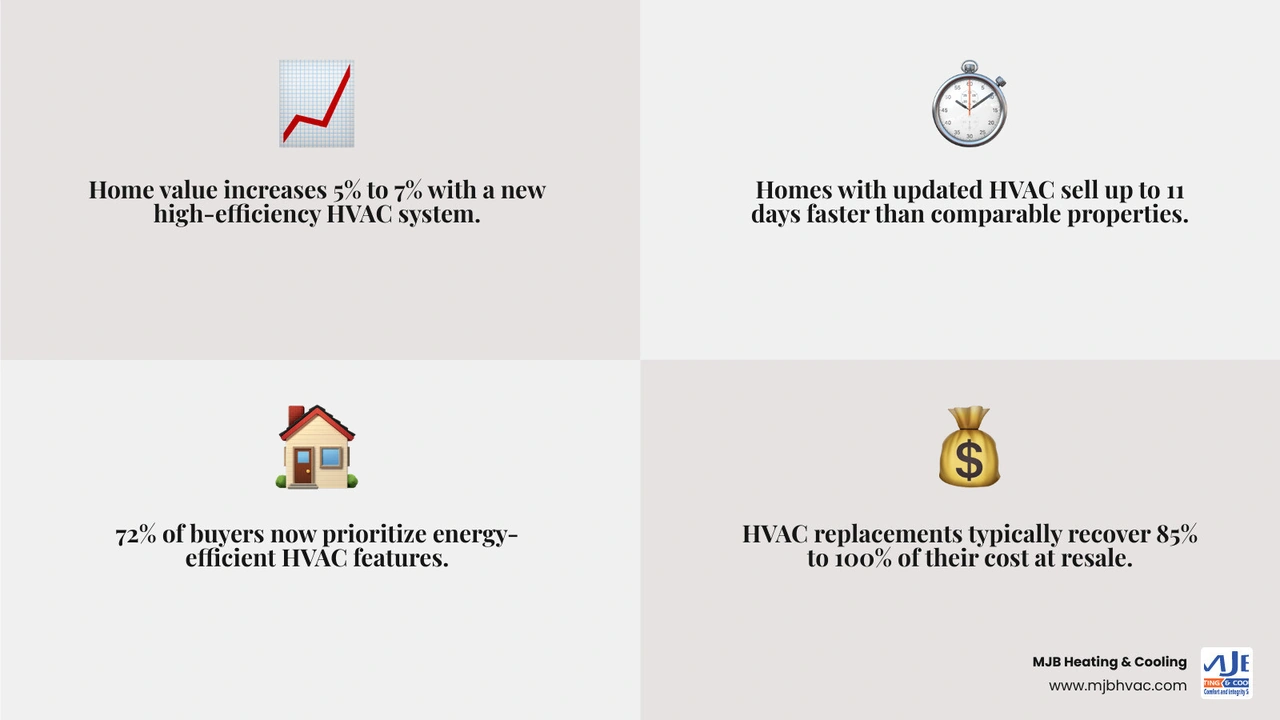
Key energy efficient hvac and home value connection vocabulary:
To truly understand the energy efficient hvac and home value connection, we have to look closely at the psychology of the modern homebuyer. In the current 2026 real estate market across communities like Derby, Andover, and Bel Aire, buyers are highly sensitive to monthly cash flow. Elevated mortgage interest rates and rising utility costs mean that buyers are looking for homes that are ready for immediate move-in without hidden liabilities.
When a buyer tours a home in El Dorado or Maize and sees an air conditioner or furnace that is over 15 years old, they do not just see a piece of metal. They see an impending financial emergency. They know that replacing a system requires immediate, out-of-pocket cash—something they are likely short on after paying closing costs.
Conversely, when a home features a brand-new, high-efficiency system, it acts as a powerful "maintenance signal." It shows that the current owner cared for the property. This structural reassurance is why a new HVAC system can boost a home’s value by 5% to 7% on average. In premium neighborhoods or competitive markets, that value boost can represent a substantial increase in your final sale price.
Additionally, efficiency is a primary differentiator. Homes with updated, energy-efficient HVAC units sell 10% to 15% faster—often up to 11 days sooner than comparable properties with aging equipment. When your home sells faster, you save money on carrying costs, taxes, and insurance, which further increases your net return. Read more about how these dynamics play out in our guide on how a new hvac system increases home value.
Not all heating and cooling systems are created equal in the eyes of buyers and appraisers. If you want to maximize your hvac replacement return on investment, you need to select features that carry the most weight in 2026.
As of 2026, old SEER standards have been completely phased out in favor of SEER2 (Seasonal Energy Efficiency Ratio 2), which uses much more rigorous testing conditions to reflect real-world performance. For maximum resale value, we recommend systems with SEER2 ratings between 16 and 21. Buyers are increasingly savvy about these numbers; they know that higher ratings mean lower monthly cooling bills. To understand how these new standards protect your wallet, check out our resource on efficiency ratings explained for homeowners.
Older systems operate like a light switch: they are either 100% on or completely off. This leads to temperature swings and noisy operation. Modern variable-speed compressors and blower motors work more like a dimmer switch, adjusting their output continuously to match the precise heating or cooling load of your home. This provides incredibly quiet operation, superior humidity control during humid Kansas summers, and a massive drop in energy consumption. You can learn more about these monthly savings by reading how much does a high efficiency system save.
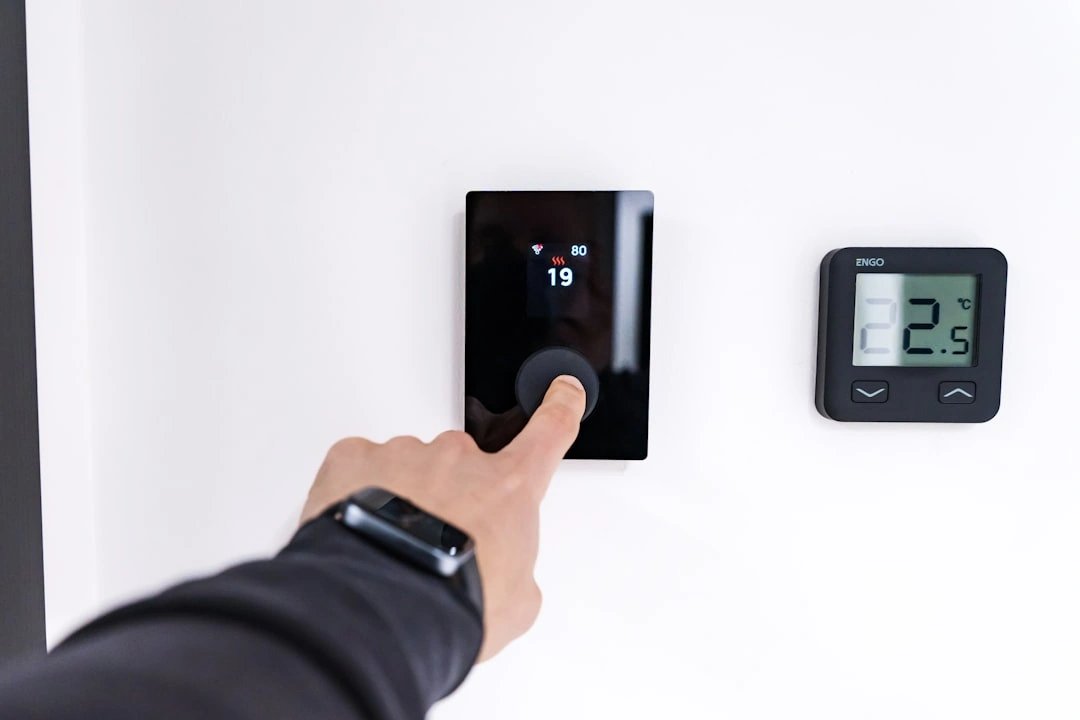
A high-efficiency HVAC system paired with a smart thermostat can increase a home's aesthetic appeal and functional value. Smart thermostats allow buyers to control their home’s climate from their phones and set automated schedules. When combined with a zoned system—which uses dampers in your ductwork to heat or cool different sections of the house independently—you eliminate the classic "hot upstairs bedroom" problem. This high-tech upgrade can boost overall home appeal by 3% to 5% while cutting utility waste.
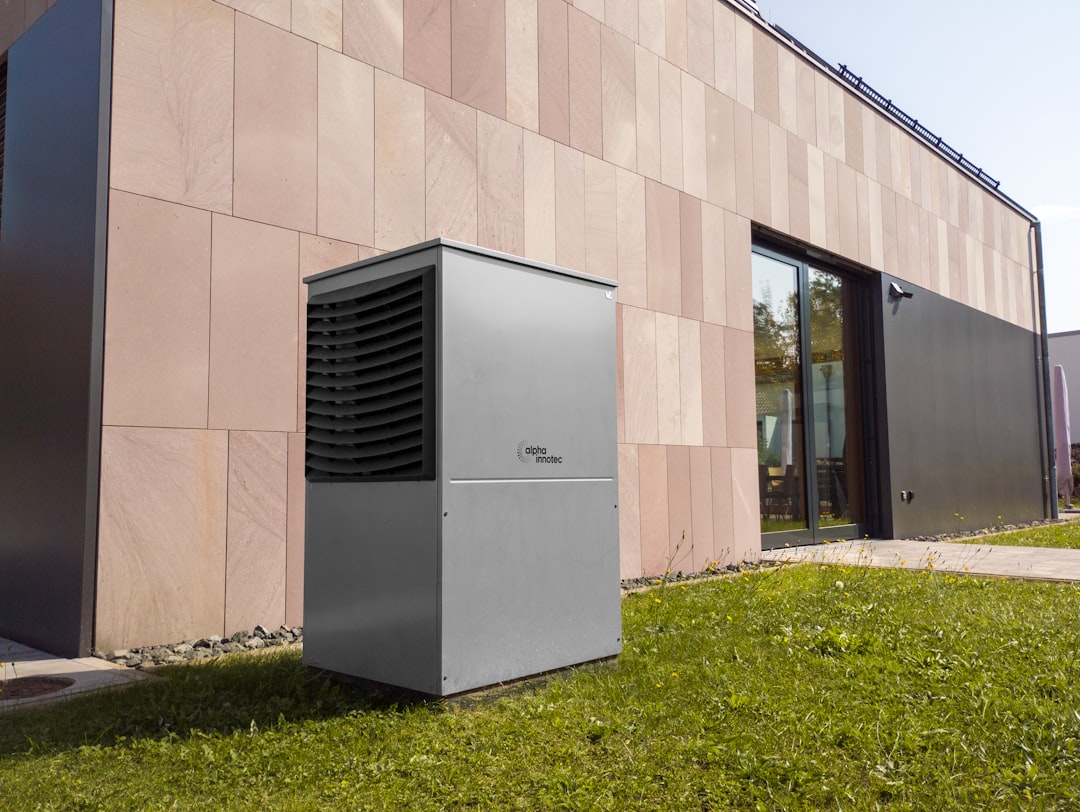
One of the most significant shifts in the 2026 housing market is the rapid adoption of electric heat pumps. A landmark peer-reviewed research study analyzing transaction data across 23 states concluded that homes with an air-source heat pump enjoy a price premium of 4.3% to 7.1%.
Heat pumps are incredibly efficient because they do not create heat; they simply move it. In the winter, they extract heat from the outdoor air and pump it inside. In the summer, they reverse the process to act as an air conditioner. For homeowners in the Wichita metro area, where we experience freezing winters and scorching summers, a heat pump is an ideal solution.
If you are concerned about extreme winter temperatures, a dual-fuel system—which pairs an electric heat pump with a high-efficiency gas furnace—offers the ultimate combination of efficiency and reliability. The system automatically switches to gas heating when temperatures drop below freezing, ensuring you are always comfortable. Discover how these systems excel in our article on heat pump efficiency in hot summers and cold winters and learn more about performance metrics by reading discover energy savings with daikins hspf rating insights.
In a post-pandemic world, buyers care deeply about the health of their indoor environment. Upgrading your home’s indoor air quality (IAQ) and ventilation can be a major selling point. High-impact additions include:
When planning pre-listing home improvements, many sellers default to cosmetic renovations. However, when you look at cost recovery, mechanical upgrades often outperform decorative ones.
| Home Improvement Project | Average Cost Recovery / ROI | Buyer Appeal Type | Risk of Design Obsolescence |
|---|---|---|---|
| HVAC Replacement | 85% – 100% | Objective (Financial & Comfort) | None (Universally valued) |
| Minor Kitchen Remodel | 70% – 80% | Subjective (Aesthetic) | High (Color/material trends change) |
| Bathroom Remodel | 60% – 70% | Subjective (Aesthetic) | High (Fixture/tile preferences vary) |
| Wood Deck Addition | 60% – 65% | Subjective (Lifestyle) | Medium (Requires ongoing maintenance) |
Why does a new HVAC system consistently achieve such a high return on investment compared to a kitchen or bath remodel? It comes down to the difference between objective and subjective value.
If you spend thousands of dollars on a custom kitchen remodel, you are making highly subjective design choices. The buyer might hate your quartz countertops, your shaker cabinets, or your choice of brass hardware. They may look at your brand-new kitchen and immediately plan to tear it out, which means they will not pay a premium for it.
An energy-efficient HVAC system, however, is an objective improvement. No buyer has ever walked into a home and said, "I really hate how quiet, clean, and cheap to run this heating and cooling system is." It is a universal benefit that appeals to every single buyer, regardless of their personal style. This makes it a much safer investment for sellers looking to maximize equity. If you are trying to decide whether your current unit is worth saving or if it is time to upgrade, read our expert analysis on should i repair or replace my hvac system.
To unlock the full financial potential of the energy efficient hvac and home value connection, you must understand how your home's mechanical systems are evaluated during the appraisal and lending process.
When an appraiser evaluates your property, they do not just look at the calendar age of the house; they calculate its effective age. A home built in 1990 that has a brand-new roof, updated windows, and a high-efficiency HVAC system will have a much lower effective age than an identical home with original mechanical systems. A lower effective age directly translates to a higher appraised value—often boosting the appraisal by $5,000 to $10,000.
To ensure your appraiser fully accounts for your upgrades, you should provide them with the Appraisal Institute’s Residential Green and Energy Efficiency Addendum. This official document allows you to formally record your system's SEER2 ratings, AFUE (Annual Fuel Utilization Efficiency) ratings, and any third-party energy certifications.
Furthermore, an old or non-functional HVAC system can be a major obstacle to securing financing. For buyers utilizing FHA or VA loans, the appraiser must certify that the home’s primary systems are safe, functional, and have a "remaining economic life" of at least two to three years. If the system is non-functional, uses obsolete refrigerants, or shows signs of imminent failure, the lender may refuse to fund the mortgage until the system is completely replaced. This can delay your closing or kill the deal entirely. For a closer look at the financial risks of holding onto an aging system, check out cost of repairing old hvac vs buying new system.
One of the best ways to improve your net ROI on a new heating and cooling system is to lower your upfront acquisition costs using federal incentives and regional rebates.
Under the federal Inflation Reduction Act (IRA), homeowners can access significant tax savings for installing qualifying energy-efficient equipment. If you install an eligible high-efficiency air-source heat pump, you can claim a federal tax credit of up to $2,000. For high-efficiency central air conditioners or gas furnaces, you may qualify for tax credits up to $600 each.
These federal incentives can be combined with local utility rebates from Kansas energy providers, significantly reducing the net cost of your upgrade. To see how these programs can work together for your home, read our detailed guides on inflation reduction act benefits for kansas homeowners and kansas energy rebates for hvac upgrades.
Additionally, the heating and cooling industry is currently undergoing a major transition. The EPA is phasing out older R-410A refrigerants in favor of eco-friendly, low-GWP (Global Warming Potential) options like R-454B. Installing a system that complies with these 2026 standards ensures your home’s mechanical systems are "future-proofed," which is highly attractive to forward-thinking buyers.
If you are not ready to replace your system before selling, you can still protect your home’s value by demonstrating impeccable system integrity. We recommend creating a physical or digital "Home Energy Folder" to present to prospective buyers. This folder should contain:
Yes, absolutely. In the 2026 real estate market, an old, noisy, or poorly maintained HVAC system is a major red flag during home inspections. Savvy buyers will often use an aging system as a powerful negotiation lever, demanding thousands of dollars in price concessions or repair credits. If the system is completely non-functional, it can prevent buyers from securing FHA or VA financing, which can derail your entire sale.
On average, a new, high-efficiency HVAC system increases a home's overall value by 5% to 7%. In hot or highly competitive markets throughout Central Kansas, this value boost can reach up to 10%, especially if you are replacing an obsolete system with a modern, eco-friendly heat pump or zoned mini-split system.
Federal tax credits under the Inflation Reduction Act can cover up to $2,000 of the cost of a qualifying heat pump. When you combine these federal incentives with local utility rebates, the net cost of the upgrade drops significantly. This lower net cost means you recover a much higher percentage of your initial investment when you eventually sell your home.
The energy efficient hvac and home value connection is clear: upgrading to a modern, high-efficiency heating and cooling system is one of the safest, highest-yielding investments you can make in your property. It lowers your monthly utility bills, enhances your daily indoor comfort, appeals to payment-sensitive buyers, and protects your home’s equity during appraisals and inspections.
At MJB Heating & Cooling, we have been helping our neighbors throughout the Wichita metro area stay comfortable since 1984. As a family-owned business founded in Derby, KS, we pride ourselves on our honest business approach and quality workmanship. Whether you are living in Andover, Haysville, Mulvane, or right here in Wichita, our experienced, licensed technicians are ready to help you find the perfect energy-efficient solutions for your home.
Ready to boost your home’s value, slash your utility bills, and enjoy peerless indoor comfort? Schedule your energy-efficient HVAC consultation today with MJB HVAC and let us show you how easy it is to upgrade your home's comfort and financial future.
The energy efficient HVAC and home value connection is one of the most overlooked financial advantages available to homeowners in the Wichita metro area — and in 2026, it matters more than ever. Most people think about countertops or curb appeal when preparing to sell. But the system quietly running behind your walls often carries more weight with buyers, appraisers, and lenders than any cosmetic upgrade you can make.
Here is a quick summary of what the research shows:
Today's buyers are payment-sensitive. After stretching to cover a down payment, the last thing they want is a five-figure HVAC bill in their first year of ownership. A home with a modern, efficient system removes that anxiety — and that peace of mind translates directly into stronger offers and faster closings.
Key energy efficient hvac and home value connection vocabulary:
To truly understand the energy efficient hvac and home value connection, we have to look closely at the psychology of the modern homebuyer. In the current 2026 real estate market across communities like Derby, Andover, and Bel Aire, buyers are highly sensitive to monthly cash flow. Elevated mortgage interest rates and rising utility costs mean that buyers are looking for homes that are ready for immediate move-in without hidden liabilities.
When a buyer tours a home in El Dorado or Maize and sees an air conditioner or furnace that is over 15 years old, they do not just see a piece of metal. They see an impending financial emergency. They know that replacing a system requires immediate, out-of-pocket cash—something they are likely short on after paying closing costs.
Conversely, when a home features a brand-new, high-efficiency system, it acts as a powerful "maintenance signal." It shows that the current owner cared for the property. This structural reassurance is why a new HVAC system can boost a home’s value by 5% to 7% on average. In premium neighborhoods or competitive markets, that value boost can represent a substantial increase in your final sale price.
Additionally, efficiency is a primary differentiator. Homes with updated, energy-efficient HVAC units sell 10% to 15% faster—often up to 11 days sooner than comparable properties with aging equipment. When your home sells faster, you save money on carrying costs, taxes, and insurance, which further increases your net return. Read more about how these dynamics play out in our guide on how a new hvac system increases home value.
Not all heating and cooling systems are created equal in the eyes of buyers and appraisers. If you want to maximize your hvac replacement return on investment, you need to select features that carry the most weight in 2026.
As of 2026, old SEER standards have been completely phased out in favor of SEER2 (Seasonal Energy Efficiency Ratio 2), which uses much more rigorous testing conditions to reflect real-world performance. For maximum resale value, we recommend systems with SEER2 ratings between 16 and 21. Buyers are increasingly savvy about these numbers; they know that higher ratings mean lower monthly cooling bills. To understand how these new standards protect your wallet, check out our resource on efficiency ratings explained for homeowners.
Older systems operate like a light switch: they are either 100% on or completely off. This leads to temperature swings and noisy operation. Modern variable-speed compressors and blower motors work more like a dimmer switch, adjusting their output continuously to match the precise heating or cooling load of your home. This provides incredibly quiet operation, superior humidity control during humid Kansas summers, and a massive drop in energy consumption. You can learn more about these monthly savings by reading how much does a high efficiency system save.
A high-efficiency HVAC system paired with a smart thermostat can increase a home's aesthetic appeal and functional value. Smart thermostats allow buyers to control their home’s climate from their phones and set automated schedules. When combined with a zoned system—which uses dampers in your ductwork to heat or cool different sections of the house independently—you eliminate the classic "hot upstairs bedroom" problem. This high-tech upgrade can boost overall home appeal by 3% to 5% while cutting utility waste.
One of the most significant shifts in the 2026 housing market is the rapid adoption of electric heat pumps. A landmark peer-reviewed research study analyzing transaction data across 23 states concluded that homes with an air-source heat pump enjoy a price premium of 4.3% to 7.1%.
Heat pumps are incredibly efficient because they do not create heat; they simply move it. In the winter, they extract heat from the outdoor air and pump it inside. In the summer, they reverse the process to act as an air conditioner. For homeowners in the Wichita metro area, where we experience freezing winters and scorching summers, a heat pump is an ideal solution.
If you are concerned about extreme winter temperatures, a dual-fuel system—which pairs an electric heat pump with a high-efficiency gas furnace—offers the ultimate combination of efficiency and reliability. The system automatically switches to gas heating when temperatures drop below freezing, ensuring you are always comfortable. Discover how these systems excel in our article on heat pump efficiency in hot summers and cold winters and learn more about performance metrics by reading discover energy savings with daikins hspf rating insights.
In a post-pandemic world, buyers care deeply about the health of their indoor environment. Upgrading your home’s indoor air quality (IAQ) and ventilation can be a major selling point. High-impact additions include:
When planning pre-listing home improvements, many sellers default to cosmetic renovations. However, when you look at cost recovery, mechanical upgrades often outperform decorative ones.
| Home Improvement Project | Average Cost Recovery / ROI | Buyer Appeal Type | Risk of Design Obsolescence |
|---|---|---|---|
| HVAC Replacement | 85% – 100% | Objective (Financial & Comfort) | None (Universally valued) |
| Minor Kitchen Remodel | 70% – 80% | Subjective (Aesthetic) | High (Color/material trends change) |
| Bathroom Remodel | 60% – 70% | Subjective (Aesthetic) | High (Fixture/tile preferences vary) |
| Wood Deck Addition | 60% – 65% | Subjective (Lifestyle) | Medium (Requires ongoing maintenance) |
Why does a new HVAC system consistently achieve such a high return on investment compared to a kitchen or bath remodel? It comes down to the difference between objective and subjective value.
If you spend thousands of dollars on a custom kitchen remodel, you are making highly subjective design choices. The buyer might hate your quartz countertops, your shaker cabinets, or your choice of brass hardware. They may look at your brand-new kitchen and immediately plan to tear it out, which means they will not pay a premium for it.
An energy-efficient HVAC system, however, is an objective improvement. No buyer has ever walked into a home and said, "I really hate how quiet, clean, and cheap to run this heating and cooling system is." It is a universal benefit that appeals to every single buyer, regardless of their personal style. This makes it a much safer investment for sellers looking to maximize equity. If you are trying to decide whether your current unit is worth saving or if it is time to upgrade, read our expert analysis on should i repair or replace my hvac system.
To unlock the full financial potential of the energy efficient hvac and home value connection, you must understand how your home's mechanical systems are evaluated during the appraisal and lending process.
When an appraiser evaluates your property, they do not just look at the calendar age of the house; they calculate its effective age. A home built in 1990 that has a brand-new roof, updated windows, and a high-efficiency HVAC system will have a much lower effective age than an identical home with original mechanical systems. A lower effective age directly translates to a higher appraised value—often boosting the appraisal by $5,000 to $10,000.
To ensure your appraiser fully accounts for your upgrades, you should provide them with the Appraisal Institute’s Residential Green and Energy Efficiency Addendum. This official document allows you to formally record your system's SEER2 ratings, AFUE (Annual Fuel Utilization Efficiency) ratings, and any third-party energy certifications.
Furthermore, an old or non-functional HVAC system can be a major obstacle to securing financing. For buyers utilizing FHA or VA loans, the appraiser must certify that the home’s primary systems are safe, functional, and have a "remaining economic life" of at least two to three years. If the system is non-functional, uses obsolete refrigerants, or shows signs of imminent failure, the lender may refuse to fund the mortgage until the system is completely replaced. This can delay your closing or kill the deal entirely. For a closer look at the financial risks of holding onto an aging system, check out cost of repairing old hvac vs buying new system.
One of the best ways to improve your net ROI on a new heating and cooling system is to lower your upfront acquisition costs using federal incentives and regional rebates.
Under the federal Inflation Reduction Act (IRA), homeowners can access significant tax savings for installing qualifying energy-efficient equipment. If you install an eligible high-efficiency air-source heat pump, you can claim a federal tax credit of up to $2,000. For high-efficiency central air conditioners or gas furnaces, you may qualify for tax credits up to $600 each.
These federal incentives can be combined with local utility rebates from Kansas energy providers, significantly reducing the net cost of your upgrade. To see how these programs can work together for your home, read our detailed guides on inflation reduction act benefits for kansas homeowners and kansas energy rebates for hvac upgrades.
Additionally, the heating and cooling industry is currently undergoing a major transition. The EPA is phasing out older R-410A refrigerants in favor of eco-friendly, low-GWP (Global Warming Potential) options like R-454B. Installing a system that complies with these 2026 standards ensures your home’s mechanical systems are "future-proofed," which is highly attractive to forward-thinking buyers.
If you are not ready to replace your system before selling, you can still protect your home’s value by demonstrating impeccable system integrity. We recommend creating a physical or digital "Home Energy Folder" to present to prospective buyers. This folder should contain:
Yes, absolutely. In the 2026 real estate market, an old, noisy, or poorly maintained HVAC system is a major red flag during home inspections. Savvy buyers will often use an aging system as a powerful negotiation lever, demanding thousands of dollars in price concessions or repair credits. If the system is completely non-functional, it can prevent buyers from securing FHA or VA financing, which can derail your entire sale.
On average, a new, high-efficiency HVAC system increases a home's overall value by 5% to 7%. In hot or highly competitive markets throughout Central Kansas, this value boost can reach up to 10%, especially if you are replacing an obsolete system with a modern, eco-friendly heat pump or zoned mini-split system.
Federal tax credits under the Inflation Reduction Act can cover up to $2,000 of the cost of a qualifying heat pump. When you combine these federal incentives with local utility rebates, the net cost of the upgrade drops significantly. This lower net cost means you recover a much higher percentage of your initial investment when you eventually sell your home.
The energy efficient hvac and home value connection is clear: upgrading to a modern, high-efficiency heating and cooling system is one of the safest, highest-yielding investments you can make in your property. It lowers your monthly utility bills, enhances your daily indoor comfort, appeals to payment-sensitive buyers, and protects your home’s equity during appraisals and inspections.
At MJB Heating & Cooling, we have been helping our neighbors throughout the Wichita metro area stay comfortable since 1984. As a family-owned business founded in Derby, KS, we pride ourselves on our honest business approach and quality workmanship. Whether you are living in Andover, Haysville, Mulvane, or right here in Wichita, our experienced, licensed technicians are ready to help you find the perfect energy-efficient solutions for your home.
Ready to boost your home’s value, slash your utility bills, and enjoy peerless indoor comfort? Schedule your energy-efficient HVAC consultation today with MJB HVAC and let us show you how easy it is to upgrade your home's comfort and financial future.
The energy efficient HVAC and home value connection is one of the most overlooked financial advantages available to homeowners in the Wichita metro area — and in 2026, it matters more than ever. Most people think about countertops or curb appeal when preparing to sell. But the system quietly running behind your walls often carries more weight with buyers, appraisers, and lenders than any cosmetic upgrade you can make.
Here is a quick summary of what the research shows:
Today's buyers are payment-sensitive. After stretching to cover a down payment, the last thing they want is a five-figure HVAC bill in their first year of ownership. A home with a modern, efficient system removes that anxiety — and that peace of mind translates directly into stronger offers and faster closings.
Key energy efficient hvac and home value connection vocabulary:
To truly understand the energy efficient hvac and home value connection, we have to look closely at the psychology of the modern homebuyer. In the current 2026 real estate market across communities like Derby, Andover, and Bel Aire, buyers are highly sensitive to monthly cash flow. Elevated mortgage interest rates and rising utility costs mean that buyers are looking for homes that are ready for immediate move-in without hidden liabilities.
When a buyer tours a home in El Dorado or Maize and sees an air conditioner or furnace that is over 15 years old, they do not just see a piece of metal. They see an impending financial emergency. They know that replacing a system requires immediate, out-of-pocket cash—something they are likely short on after paying closing costs.
Conversely, when a home features a brand-new, high-efficiency system, it acts as a powerful "maintenance signal." It shows that the current owner cared for the property. This structural reassurance is why a new HVAC system can boost a home’s value by 5% to 7% on average. In premium neighborhoods or competitive markets, that value boost can represent a substantial increase in your final sale price.
Additionally, efficiency is a primary differentiator. Homes with updated, energy-efficient HVAC units sell 10% to 15% faster—often up to 11 days sooner than comparable properties with aging equipment. When your home sells faster, you save money on carrying costs, taxes, and insurance, which further increases your net return. Read more about how these dynamics play out in our guide on how a new hvac system increases home value.
Not all heating and cooling systems are created equal in the eyes of buyers and appraisers. If you want to maximize your hvac replacement return on investment, you need to select features that carry the most weight in 2026.
As of 2026, old SEER standards have been completely phased out in favor of SEER2 (Seasonal Energy Efficiency Ratio 2), which uses much more rigorous testing conditions to reflect real-world performance. For maximum resale value, we recommend systems with SEER2 ratings between 16 and 21. Buyers are increasingly savvy about these numbers; they know that higher ratings mean lower monthly cooling bills. To understand how these new standards protect your wallet, check out our resource on efficiency ratings explained for homeowners.
Older systems operate like a light switch: they are either 100% on or completely off. This leads to temperature swings and noisy operation. Modern variable-speed compressors and blower motors work more like a dimmer switch, adjusting their output continuously to match the precise heating or cooling load of your home. This provides incredibly quiet operation, superior humidity control during humid Kansas summers, and a massive drop in energy consumption. You can learn more about these monthly savings by reading how much does a high efficiency system save.
A high-efficiency HVAC system paired with a smart thermostat can increase a home's aesthetic appeal and functional value. Smart thermostats allow buyers to control their home’s climate from their phones and set automated schedules. When combined with a zoned system—which uses dampers in your ductwork to heat or cool different sections of the house independently—you eliminate the classic "hot upstairs bedroom" problem. This high-tech upgrade can boost overall home appeal by 3% to 5% while cutting utility waste.
One of the most significant shifts in the 2026 housing market is the rapid adoption of electric heat pumps. A landmark peer-reviewed research study analyzing transaction data across 23 states concluded that homes with an air-source heat pump enjoy a price premium of 4.3% to 7.1%.
Heat pumps are incredibly efficient because they do not create heat; they simply move it. In the winter, they extract heat from the outdoor air and pump it inside. In the summer, they reverse the process to act as an air conditioner. For homeowners in the Wichita metro area, where we experience freezing winters and scorching summers, a heat pump is an ideal solution.
If you are concerned about extreme winter temperatures, a dual-fuel system—which pairs an electric heat pump with a high-efficiency gas furnace—offers the ultimate combination of efficiency and reliability. The system automatically switches to gas heating when temperatures drop below freezing, ensuring you are always comfortable. Discover how these systems excel in our article on heat pump efficiency in hot summers and cold winters and learn more about performance metrics by reading discover energy savings with daikins hspf rating insights.
In a post-pandemic world, buyers care deeply about the health of their indoor environment. Upgrading your home’s indoor air quality (IAQ) and ventilation can be a major selling point. High-impact additions include:
When planning pre-listing home improvements, many sellers default to cosmetic renovations. However, when you look at cost recovery, mechanical upgrades often outperform decorative ones.
| Home Improvement Project | Average Cost Recovery / ROI | Buyer Appeal Type | Risk of Design Obsolescence |
|---|---|---|---|
| HVAC Replacement | 85% – 100% | Objective (Financial & Comfort) | None (Universally valued) |
| Minor Kitchen Remodel | 70% – 80% | Subjective (Aesthetic) | High (Color/material trends change) |
| Bathroom Remodel | 60% – 70% | Subjective (Aesthetic) | High (Fixture/tile preferences vary) |
| Wood Deck Addition | 60% – 65% | Subjective (Lifestyle) | Medium (Requires ongoing maintenance) |
Why does a new HVAC system consistently achieve such a high return on investment compared to a kitchen or bath remodel? It comes down to the difference between objective and subjective value.
If you spend thousands of dollars on a custom kitchen remodel, you are making highly subjective design choices. The buyer might hate your quartz countertops, your shaker cabinets, or your choice of brass hardware. They may look at your brand-new kitchen and immediately plan to tear it out, which means they will not pay a premium for it.
An energy-efficient HVAC system, however, is an objective improvement. No buyer has ever walked into a home and said, "I really hate how quiet, clean, and cheap to run this heating and cooling system is." It is a universal benefit that appeals to every single buyer, regardless of their personal style. This makes it a much safer investment for sellers looking to maximize equity. If you are trying to decide whether your current unit is worth saving or if it is time to upgrade, read our expert analysis on should i repair or replace my hvac system.
To unlock the full financial potential of the energy efficient hvac and home value connection, you must understand how your home's mechanical systems are evaluated during the appraisal and lending process.
When an appraiser evaluates your property, they do not just look at the calendar age of the house; they calculate its effective age. A home built in 1990 that has a brand-new roof, updated windows, and a high-efficiency HVAC system will have a much lower effective age than an identical home with original mechanical systems. A lower effective age directly translates to a higher appraised value—often boosting the appraisal by $5,000 to $10,000.
To ensure your appraiser fully accounts for your upgrades, you should provide them with the Appraisal Institute’s Residential Green and Energy Efficiency Addendum. This official document allows you to formally record your system's SEER2 ratings, AFUE (Annual Fuel Utilization Efficiency) ratings, and any third-party energy certifications.
Furthermore, an old or non-functional HVAC system can be a major obstacle to securing financing. For buyers utilizing FHA or VA loans, the appraiser must certify that the home’s primary systems are safe, functional, and have a "remaining economic life" of at least two to three years. If the system is non-functional, uses obsolete refrigerants, or shows signs of imminent failure, the lender may refuse to fund the mortgage until the system is completely replaced. This can delay your closing or kill the deal entirely. For a closer look at the financial risks of holding onto an aging system, check out cost of repairing old hvac vs buying new system.
One of the best ways to improve your net ROI on a new heating and cooling system is to lower your upfront acquisition costs using federal incentives and regional rebates.
Under the federal Inflation Reduction Act (IRA), homeowners can access significant tax savings for installing qualifying energy-efficient equipment. If you install an eligible high-efficiency air-source heat pump, you can claim a federal tax credit of up to $2,000. For high-efficiency central air conditioners or gas furnaces, you may qualify for tax credits up to $600 each.
These federal incentives can be combined with local utility rebates from Kansas energy providers, significantly reducing the net cost of your upgrade. To see how these programs can work together for your home, read our detailed guides on inflation reduction act benefits for kansas homeowners and kansas energy rebates for hvac upgrades.
Additionally, the heating and cooling industry is currently undergoing a major transition. The EPA is phasing out older R-410A refrigerants in favor of eco-friendly, low-GWP (Global Warming Potential) options like R-454B. Installing a system that complies with these 2026 standards ensures your home’s mechanical systems are "future-proofed," which is highly attractive to forward-thinking buyers.
If you are not ready to replace your system before selling, you can still protect your home’s value by demonstrating impeccable system integrity. We recommend creating a physical or digital "Home Energy Folder" to present to prospective buyers. This folder should contain:
Yes, absolutely. In the 2026 real estate market, an old, noisy, or poorly maintained HVAC system is a major red flag during home inspections. Savvy buyers will often use an aging system as a powerful negotiation lever, demanding thousands of dollars in price concessions or repair credits. If the system is completely non-functional, it can prevent buyers from securing FHA or VA financing, which can derail your entire sale.
On average, a new, high-efficiency HVAC system increases a home's overall value by 5% to 7%. In hot or highly competitive markets throughout Central Kansas, this value boost can reach up to 10%, especially if you are replacing an obsolete system with a modern, eco-friendly heat pump or zoned mini-split system.
Federal tax credits under the Inflation Reduction Act can cover up to $2,000 of the cost of a qualifying heat pump. When you combine these federal incentives with local utility rebates, the net cost of the upgrade drops significantly. This lower net cost means you recover a much higher percentage of your initial investment when you eventually sell your home.
The energy efficient hvac and home value connection is clear: upgrading to a modern, high-efficiency heating and cooling system is one of the safest, highest-yielding investments you can make in your property. It lowers your monthly utility bills, enhances your daily indoor comfort, appeals to payment-sensitive buyers, and protects your home’s equity during appraisals and inspections.
At MJB Heating & Cooling, we have been helping our neighbors throughout the Wichita metro area stay comfortable since 1984. As a family-owned business founded in Derby, KS, we pride ourselves on our honest business approach and quality workmanship. Whether you are living in Andover, Haysville, Mulvane, or right here in Wichita, our experienced, licensed technicians are ready to help you find the perfect energy-efficient solutions for your home.
Ready to boost your home’s value, slash your utility bills, and enjoy peerless indoor comfort? Schedule your energy-efficient HVAC consultation today with MJB HVAC and let us show you how easy it is to upgrade your home's comfort and financial future.

The energy efficient HVAC and home value connection is one of the most overlooked financial advantages available to homeowners in the Wichita metro area — and in 2026, it matters more than ever. Most people think about countertops or curb appeal when preparing to sell. But the system quietly running behind your walls often carries more weight with buyers, appraisers, and lenders than any cosmetic upgrade you can make.
Here is a quick summary of what the research shows:
Today's buyers are payment-sensitive. After stretching to cover a down payment, the last thing they want is a five-figure HVAC bill in their first year of ownership. A home with a modern, efficient system removes that anxiety — and that peace of mind translates directly into stronger offers and faster closings.
Key energy efficient hvac and home value connection vocabulary:
To truly understand the energy efficient hvac and home value connection, we have to look closely at the psychology of the modern homebuyer. In the current 2026 real estate market across communities like Derby, Andover, and Bel Aire, buyers are highly sensitive to monthly cash flow. Elevated mortgage interest rates and rising utility costs mean that buyers are looking for homes that are ready for immediate move-in without hidden liabilities.
When a buyer tours a home in El Dorado or Maize and sees an air conditioner or furnace that is over 15 years old, they do not just see a piece of metal. They see an impending financial emergency. They know that replacing a system requires immediate, out-of-pocket cash—something they are likely short on after paying closing costs.
Conversely, when a home features a brand-new, high-efficiency system, it acts as a powerful "maintenance signal." It shows that the current owner cared for the property. This structural reassurance is why a new HVAC system can boost a home’s value by 5% to 7% on average. In premium neighborhoods or competitive markets, that value boost can represent a substantial increase in your final sale price.
Additionally, efficiency is a primary differentiator. Homes with updated, energy-efficient HVAC units sell 10% to 15% faster—often up to 11 days sooner than comparable properties with aging equipment. When your home sells faster, you save money on carrying costs, taxes, and insurance, which further increases your net return. Read more about how these dynamics play out in our guide on how a new hvac system increases home value.
Not all heating and cooling systems are created equal in the eyes of buyers and appraisers. If you want to maximize your hvac replacement return on investment, you need to select features that carry the most weight in 2026.
As of 2026, old SEER standards have been completely phased out in favor of SEER2 (Seasonal Energy Efficiency Ratio 2), which uses much more rigorous testing conditions to reflect real-world performance. For maximum resale value, we recommend systems with SEER2 ratings between 16 and 21. Buyers are increasingly savvy about these numbers; they know that higher ratings mean lower monthly cooling bills. To understand how these new standards protect your wallet, check out our resource on efficiency ratings explained for homeowners.
Older systems operate like a light switch: they are either 100% on or completely off. This leads to temperature swings and noisy operation. Modern variable-speed compressors and blower motors work more like a dimmer switch, adjusting their output continuously to match the precise heating or cooling load of your home. This provides incredibly quiet operation, superior humidity control during humid Kansas summers, and a massive drop in energy consumption. You can learn more about these monthly savings by reading how much does a high efficiency system save.
A high-efficiency HVAC system paired with a smart thermostat can increase a home's aesthetic appeal and functional value. Smart thermostats allow buyers to control their home’s climate from their phones and set automated schedules. When combined with a zoned system—which uses dampers in your ductwork to heat or cool different sections of the house independently—you eliminate the classic "hot upstairs bedroom" problem. This high-tech upgrade can boost overall home appeal by 3% to 5% while cutting utility waste.
One of the most significant shifts in the 2026 housing market is the rapid adoption of electric heat pumps. A landmark peer-reviewed research study analyzing transaction data across 23 states concluded that homes with an air-source heat pump enjoy a price premium of 4.3% to 7.1%.
Heat pumps are incredibly efficient because they do not create heat; they simply move it. In the winter, they extract heat from the outdoor air and pump it inside. In the summer, they reverse the process to act as an air conditioner. For homeowners in the Wichita metro area, where we experience freezing winters and scorching summers, a heat pump is an ideal solution.
If you are concerned about extreme winter temperatures, a dual-fuel system—which pairs an electric heat pump with a high-efficiency gas furnace—offers the ultimate combination of efficiency and reliability. The system automatically switches to gas heating when temperatures drop below freezing, ensuring you are always comfortable. Discover how these systems excel in our article on heat pump efficiency in hot summers and cold winters and learn more about performance metrics by reading discover energy savings with daikins hspf rating insights.
In a post-pandemic world, buyers care deeply about the health of their indoor environment. Upgrading your home’s indoor air quality (IAQ) and ventilation can be a major selling point. High-impact additions include:
When planning pre-listing home improvements, many sellers default to cosmetic renovations. However, when you look at cost recovery, mechanical upgrades often outperform decorative ones.
| Home Improvement Project | Average Cost Recovery / ROI | Buyer Appeal Type | Risk of Design Obsolescence |
|---|---|---|---|
| HVAC Replacement | 85% – 100% | Objective (Financial & Comfort) | None (Universally valued) |
| Minor Kitchen Remodel | 70% – 80% | Subjective (Aesthetic) | High (Color/material trends change) |
| Bathroom Remodel | 60% – 70% | Subjective (Aesthetic) | High (Fixture/tile preferences vary) |
| Wood Deck Addition | 60% – 65% | Subjective (Lifestyle) | Medium (Requires ongoing maintenance) |
Why does a new HVAC system consistently achieve such a high return on investment compared to a kitchen or bath remodel? It comes down to the difference between objective and subjective value.
If you spend thousands of dollars on a custom kitchen remodel, you are making highly subjective design choices. The buyer might hate your quartz countertops, your shaker cabinets, or your choice of brass hardware. They may look at your brand-new kitchen and immediately plan to tear it out, which means they will not pay a premium for it.
An energy-efficient HVAC system, however, is an objective improvement. No buyer has ever walked into a home and said, "I really hate how quiet, clean, and cheap to run this heating and cooling system is." It is a universal benefit that appeals to every single buyer, regardless of their personal style. This makes it a much safer investment for sellers looking to maximize equity. If you are trying to decide whether your current unit is worth saving or if it is time to upgrade, read our expert analysis on should i repair or replace my hvac system.
To unlock the full financial potential of the energy efficient hvac and home value connection, you must understand how your home's mechanical systems are evaluated during the appraisal and lending process.
When an appraiser evaluates your property, they do not just look at the calendar age of the house; they calculate its effective age. A home built in 1990 that has a brand-new roof, updated windows, and a high-efficiency HVAC system will have a much lower effective age than an identical home with original mechanical systems. A lower effective age directly translates to a higher appraised value—often boosting the appraisal by $5,000 to $10,000.
To ensure your appraiser fully accounts for your upgrades, you should provide them with the Appraisal Institute’s Residential Green and Energy Efficiency Addendum. This official document allows you to formally record your system's SEER2 ratings, AFUE (Annual Fuel Utilization Efficiency) ratings, and any third-party energy certifications.
Furthermore, an old or non-functional HVAC system can be a major obstacle to securing financing. For buyers utilizing FHA or VA loans, the appraiser must certify that the home’s primary systems are safe, functional, and have a "remaining economic life" of at least two to three years. If the system is non-functional, uses obsolete refrigerants, or shows signs of imminent failure, the lender may refuse to fund the mortgage until the system is completely replaced. This can delay your closing or kill the deal entirely. For a closer look at the financial risks of holding onto an aging system, check out cost of repairing old hvac vs buying new system.
One of the best ways to improve your net ROI on a new heating and cooling system is to lower your upfront acquisition costs using federal incentives and regional rebates.
Under the federal Inflation Reduction Act (IRA), homeowners can access significant tax savings for installing qualifying energy-efficient equipment. If you install an eligible high-efficiency air-source heat pump, you can claim a federal tax credit of up to $2,000. For high-efficiency central air conditioners or gas furnaces, you may qualify for tax credits up to $600 each.
These federal incentives can be combined with local utility rebates from Kansas energy providers, significantly reducing the net cost of your upgrade. To see how these programs can work together for your home, read our detailed guides on inflation reduction act benefits for kansas homeowners and kansas energy rebates for hvac upgrades.
Additionally, the heating and cooling industry is currently undergoing a major transition. The EPA is phasing out older R-410A refrigerants in favor of eco-friendly, low-GWP (Global Warming Potential) options like R-454B. Installing a system that complies with these 2026 standards ensures your home’s mechanical systems are "future-proofed," which is highly attractive to forward-thinking buyers.
If you are not ready to replace your system before selling, you can still protect your home’s value by demonstrating impeccable system integrity. We recommend creating a physical or digital "Home Energy Folder" to present to prospective buyers. This folder should contain:
Yes, absolutely. In the 2026 real estate market, an old, noisy, or poorly maintained HVAC system is a major red flag during home inspections. Savvy buyers will often use an aging system as a powerful negotiation lever, demanding thousands of dollars in price concessions or repair credits. If the system is completely non-functional, it can prevent buyers from securing FHA or VA financing, which can derail your entire sale.
On average, a new, high-efficiency HVAC system increases a home's overall value by 5% to 7%. In hot or highly competitive markets throughout Central Kansas, this value boost can reach up to 10%, especially if you are replacing an obsolete system with a modern, eco-friendly heat pump or zoned mini-split system.
Federal tax credits under the Inflation Reduction Act can cover up to $2,000 of the cost of a qualifying heat pump. When you combine these federal incentives with local utility rebates, the net cost of the upgrade drops significantly. This lower net cost means you recover a much higher percentage of your initial investment when you eventually sell your home.
The energy efficient hvac and home value connection is clear: upgrading to a modern, high-efficiency heating and cooling system is one of the safest, highest-yielding investments you can make in your property. It lowers your monthly utility bills, enhances your daily indoor comfort, appeals to payment-sensitive buyers, and protects your home’s equity during appraisals and inspections.
At MJB Heating & Cooling, we have been helping our neighbors throughout the Wichita metro area stay comfortable since 1984. As a family-owned business founded in Derby, KS, we pride ourselves on our honest business approach and quality workmanship. Whether you are living in Andover, Haysville, Mulvane, or right here in Wichita, our experienced, licensed technicians are ready to help you find the perfect energy-efficient solutions for your home.
Ready to boost your home’s value, slash your utility bills, and enjoy peerless indoor comfort? Schedule your energy-efficient HVAC consultation today with MJB HVAC and let us show you how easy it is to upgrade your home's comfort and financial future.
The energy efficient HVAC and home value connection is one of the most overlooked financial advantages available to homeowners in the Wichita metro area — and in 2026, it matters more than ever. Most people think about countertops or curb appeal when preparing to sell. But the system quietly running behind your walls often carries more weight with buyers, appraisers, and lenders than any cosmetic upgrade you can make.
Here is a quick summary of what the research shows:
Today's buyers are payment-sensitive. After stretching to cover a down payment, the last thing they want is a five-figure HVAC bill in their first year of ownership. A home with a modern, efficient system removes that anxiety — and that peace of mind translates directly into stronger offers and faster closings.
Key energy efficient hvac and home value connection vocabulary:
To truly understand the energy efficient hvac and home value connection, we have to look closely at the psychology of the modern homebuyer. In the current 2026 real estate market across communities like Derby, Andover, and Bel Aire, buyers are highly sensitive to monthly cash flow. Elevated mortgage interest rates and rising utility costs mean that buyers are looking for homes that are ready for immediate move-in without hidden liabilities.
When a buyer tours a home in El Dorado or Maize and sees an air conditioner or furnace that is over 15 years old, they do not just see a piece of metal. They see an impending financial emergency. They know that replacing a system requires immediate, out-of-pocket cash—something they are likely short on after paying closing costs.
Conversely, when a home features a brand-new, high-efficiency system, it acts as a powerful "maintenance signal." It shows that the current owner cared for the property. This structural reassurance is why a new HVAC system can boost a home’s value by 5% to 7% on average. In premium neighborhoods or competitive markets, that value boost can represent a substantial increase in your final sale price.
Additionally, efficiency is a primary differentiator. Homes with updated, energy-efficient HVAC units sell 10% to 15% faster—often up to 11 days sooner than comparable properties with aging equipment. When your home sells faster, you save money on carrying costs, taxes, and insurance, which further increases your net return. Read more about how these dynamics play out in our guide on how a new hvac system increases home value.
Not all heating and cooling systems are created equal in the eyes of buyers and appraisers. If you want to maximize your hvac replacement return on investment, you need to select features that carry the most weight in 2026.
As of 2026, old SEER standards have been completely phased out in favor of SEER2 (Seasonal Energy Efficiency Ratio 2), which uses much more rigorous testing conditions to reflect real-world performance. For maximum resale value, we recommend systems with SEER2 ratings between 16 and 21. Buyers are increasingly savvy about these numbers; they know that higher ratings mean lower monthly cooling bills. To understand how these new standards protect your wallet, check out our resource on efficiency ratings explained for homeowners.
Older systems operate like a light switch: they are either 100% on or completely off. This leads to temperature swings and noisy operation. Modern variable-speed compressors and blower motors work more like a dimmer switch, adjusting their output continuously to match the precise heating or cooling load of your home. This provides incredibly quiet operation, superior humidity control during humid Kansas summers, and a massive drop in energy consumption. You can learn more about these monthly savings by reading how much does a high efficiency system save.
A high-efficiency HVAC system paired with a smart thermostat can increase a home's aesthetic appeal and functional value. Smart thermostats allow buyers to control their home’s climate from their phones and set automated schedules. When combined with a zoned system—which uses dampers in your ductwork to heat or cool different sections of the house independently—you eliminate the classic "hot upstairs bedroom" problem. This high-tech upgrade can boost overall home appeal by 3% to 5% while cutting utility waste.
One of the most significant shifts in the 2026 housing market is the rapid adoption of electric heat pumps. A landmark peer-reviewed research study analyzing transaction data across 23 states concluded that homes with an air-source heat pump enjoy a price premium of 4.3% to 7.1%.
Heat pumps are incredibly efficient because they do not create heat; they simply move it. In the winter, they extract heat from the outdoor air and pump it inside. In the summer, they reverse the process to act as an air conditioner. For homeowners in the Wichita metro area, where we experience freezing winters and scorching summers, a heat pump is an ideal solution.
If you are concerned about extreme winter temperatures, a dual-fuel system—which pairs an electric heat pump with a high-efficiency gas furnace—offers the ultimate combination of efficiency and reliability. The system automatically switches to gas heating when temperatures drop below freezing, ensuring you are always comfortable. Discover how these systems excel in our article on heat pump efficiency in hot summers and cold winters and learn more about performance metrics by reading discover energy savings with daikins hspf rating insights.
In a post-pandemic world, buyers care deeply about the health of their indoor environment. Upgrading your home’s indoor air quality (IAQ) and ventilation can be a major selling point. High-impact additions include:
When planning pre-listing home improvements, many sellers default to cosmetic renovations. However, when you look at cost recovery, mechanical upgrades often outperform decorative ones.
| Home Improvement Project | Average Cost Recovery / ROI | Buyer Appeal Type | Risk of Design Obsolescence |
|---|---|---|---|
| HVAC Replacement | 85% – 100% | Objective (Financial & Comfort) | None (Universally valued) |
| Minor Kitchen Remodel | 70% – 80% | Subjective (Aesthetic) | High (Color/material trends change) |
| Bathroom Remodel | 60% – 70% | Subjective (Aesthetic) | High (Fixture/tile preferences vary) |
| Wood Deck Addition | 60% – 65% | Subjective (Lifestyle) | Medium (Requires ongoing maintenance) |
Why does a new HVAC system consistently achieve such a high return on investment compared to a kitchen or bath remodel? It comes down to the difference between objective and subjective value.
If you spend thousands of dollars on a custom kitchen remodel, you are making highly subjective design choices. The buyer might hate your quartz countertops, your shaker cabinets, or your choice of brass hardware. They may look at your brand-new kitchen and immediately plan to tear it out, which means they will not pay a premium for it.
An energy-efficient HVAC system, however, is an objective improvement. No buyer has ever walked into a home and said, "I really hate how quiet, clean, and cheap to run this heating and cooling system is." It is a universal benefit that appeals to every single buyer, regardless of their personal style. This makes it a much safer investment for sellers looking to maximize equity. If you are trying to decide whether your current unit is worth saving or if it is time to upgrade, read our expert analysis on should i repair or replace my hvac system.
To unlock the full financial potential of the energy efficient hvac and home value connection, you must understand how your home's mechanical systems are evaluated during the appraisal and lending process.
When an appraiser evaluates your property, they do not just look at the calendar age of the house; they calculate its effective age. A home built in 1990 that has a brand-new roof, updated windows, and a high-efficiency HVAC system will have a much lower effective age than an identical home with original mechanical systems. A lower effective age directly translates to a higher appraised value—often boosting the appraisal by $5,000 to $10,000.
To ensure your appraiser fully accounts for your upgrades, you should provide them with the Appraisal Institute’s Residential Green and Energy Efficiency Addendum. This official document allows you to formally record your system's SEER2 ratings, AFUE (Annual Fuel Utilization Efficiency) ratings, and any third-party energy certifications.
Furthermore, an old or non-functional HVAC system can be a major obstacle to securing financing. For buyers utilizing FHA or VA loans, the appraiser must certify that the home’s primary systems are safe, functional, and have a "remaining economic life" of at least two to three years. If the system is non-functional, uses obsolete refrigerants, or shows signs of imminent failure, the lender may refuse to fund the mortgage until the system is completely replaced. This can delay your closing or kill the deal entirely. For a closer look at the financial risks of holding onto an aging system, check out cost of repairing old hvac vs buying new system.
One of the best ways to improve your net ROI on a new heating and cooling system is to lower your upfront acquisition costs using federal incentives and regional rebates.
Under the federal Inflation Reduction Act (IRA), homeowners can access significant tax savings for installing qualifying energy-efficient equipment. If you install an eligible high-efficiency air-source heat pump, you can claim a federal tax credit of up to $2,000. For high-efficiency central air conditioners or gas furnaces, you may qualify for tax credits up to $600 each.
These federal incentives can be combined with local utility rebates from Kansas energy providers, significantly reducing the net cost of your upgrade. To see how these programs can work together for your home, read our detailed guides on inflation reduction act benefits for kansas homeowners and kansas energy rebates for hvac upgrades.
Additionally, the heating and cooling industry is currently undergoing a major transition. The EPA is phasing out older R-410A refrigerants in favor of eco-friendly, low-GWP (Global Warming Potential) options like R-454B. Installing a system that complies with these 2026 standards ensures your home’s mechanical systems are "future-proofed," which is highly attractive to forward-thinking buyers.
If you are not ready to replace your system before selling, you can still protect your home’s value by demonstrating impeccable system integrity. We recommend creating a physical or digital "Home Energy Folder" to present to prospective buyers. This folder should contain:
Yes, absolutely. In the 2026 real estate market, an old, noisy, or poorly maintained HVAC system is a major red flag during home inspections. Savvy buyers will often use an aging system as a powerful negotiation lever, demanding thousands of dollars in price concessions or repair credits. If the system is completely non-functional, it can prevent buyers from securing FHA or VA financing, which can derail your entire sale.
On average, a new, high-efficiency HVAC system increases a home's overall value by 5% to 7%. In hot or highly competitive markets throughout Central Kansas, this value boost can reach up to 10%, especially if you are replacing an obsolete system with a modern, eco-friendly heat pump or zoned mini-split system.
Federal tax credits under the Inflation Reduction Act can cover up to $2,000 of the cost of a qualifying heat pump. When you combine these federal incentives with local utility rebates, the net cost of the upgrade drops significantly. This lower net cost means you recover a much higher percentage of your initial investment when you eventually sell your home.
The energy efficient hvac and home value connection is clear: upgrading to a modern, high-efficiency heating and cooling system is one of the safest, highest-yielding investments you can make in your property. It lowers your monthly utility bills, enhances your daily indoor comfort, appeals to payment-sensitive buyers, and protects your home’s equity during appraisals and inspections.
At MJB Heating & Cooling, we have been helping our neighbors throughout the Wichita metro area stay comfortable since 1984. As a family-owned business founded in Derby, KS, we pride ourselves on our honest business approach and quality workmanship. Whether you are living in Andover, Haysville, Mulvane, or right here in Wichita, our experienced, licensed technicians are ready to help you find the perfect energy-efficient solutions for your home.
Ready to boost your home’s value, slash your utility bills, and enjoy peerless indoor comfort? Schedule your energy-efficient HVAC consultation today with MJB HVAC and let us show you how easy it is to upgrade your home's comfort and financial future.


Our A/C stopped working on a Sunday and due to health issues, we needed to find a service company available on a Sunday. I called MJB and left a message on their emergency voice mail. Within 10 minutes Tom Buck called me to hear my description of the symptoms. He was just finishing an appointment in Wichita and would be on his way to my home on the south end of Derby. He arrived within 30 minutes! From start to finish he was the perfect example of what you could ever hope for in an HVAC tech and a human being. His evaluation of our system inside and out was as thorough as I could ever imagine and once he was done with the repair, our system is running as well or better than ever. Well worth the price for the evaluation, parts, and labor. Thank you again Tom for an awesome experience.
Our AC went out during the hottest days of the year, and they were out next day! We have been jerked around by a shoddy home warranty for years. We finally had a chance to pick our own repair people, and MJB came highly recommended. I can see why! I was impressed with the honesty and speed at which they fixed our AC unit!
Our commercial building had a lightening/electrical strike and damaged our 20 ton AC unit. No one could find us a new unit before the end of September. Imagining going all of August and September with no AC in Kansas and working inside near 100 degree temps is less than thrilling. Dale and the team at MJB called around and saved the day. They had us a new unit 5 weeks earlier than other could promise and I now have happy employees. The unit is amazingly quiet, super cold and so much more energy efficient. Thank you for being our super hero!
Came out and installed my new furnace. Was very polite and affordable. They are very acknowledgeable and I highly recommend!
Thank you very much. We had our 1st warm night in 3weeks. MJB took the time and effort to find the real problem. And the employees were kind and thoughtful and explained things very well. I cannot thank you and all of MJB. Will recommend you highly. Thanks again Marjorie Herman Oxford Kansas
We had a new system installed and I was so impressed with how quick they were in come out and install it, in the middle of a hot summer day. They were so friendly & very professional. I had a small problem with a weird sound and they came over immediately and fixed it. Love them!


