.avif)





Blogs
Stay updated with our latest blog posts.
A post storm HVAC inspection checklist is the fastest way to catch hidden damage before it turns into a costly repair — or a safety hazard. Severe weather in the Wichita, KS area is no joke. Hail, high winds, heavy rain, and power surges can all hit your heating and cooling system hard, often in ways you can't see from the outside.
Here's a quick overview of the key steps to inspect your HVAC after a storm:
Nearly 80% of power outages in the U.S. are caused by weather events, and the storms that sweep through Central Kansas can combine wind, hail, flooding, and electrical surges all at once. Mold can begin growing inside wet ductwork within just 24 to 48 hours. Even a modest amount of storm debris can block up to 25% of your system's airflow, putting serious strain on the compressor.
The guide below walks you through each step in detail so you can inspect your system safely and know exactly when to call in a professional.
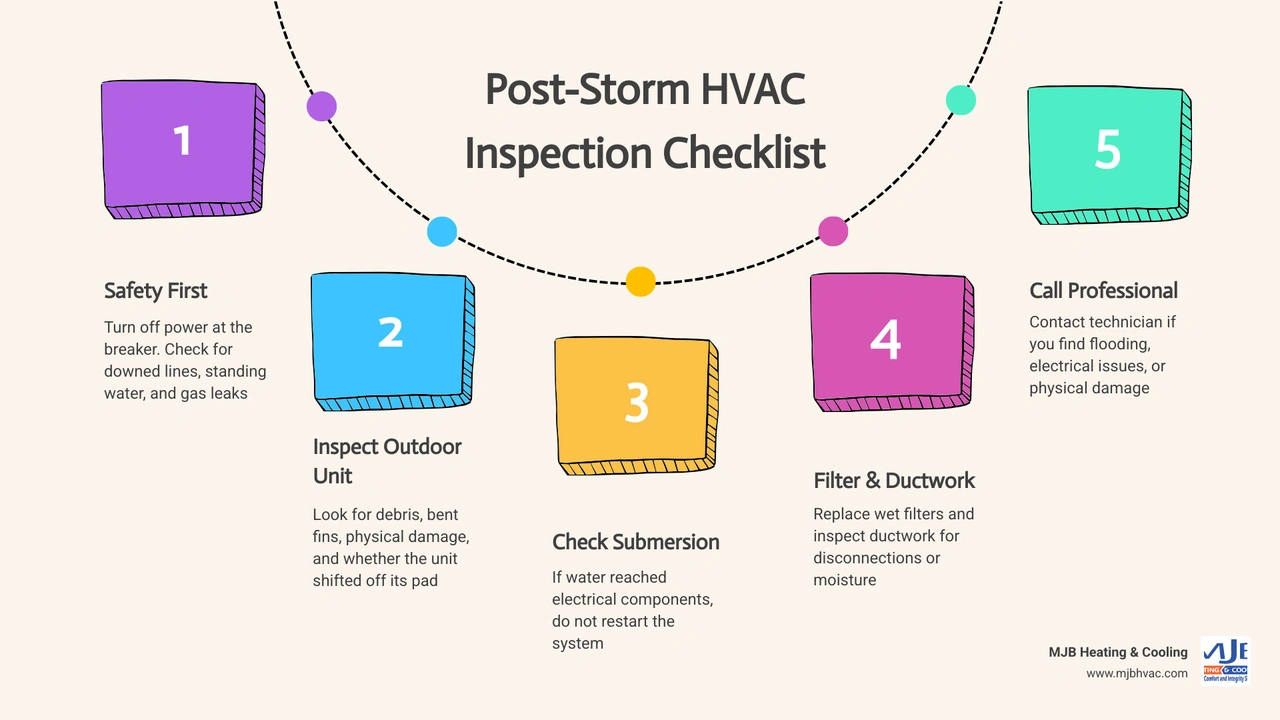
Post storm hvac inspection checklist vocab to learn:
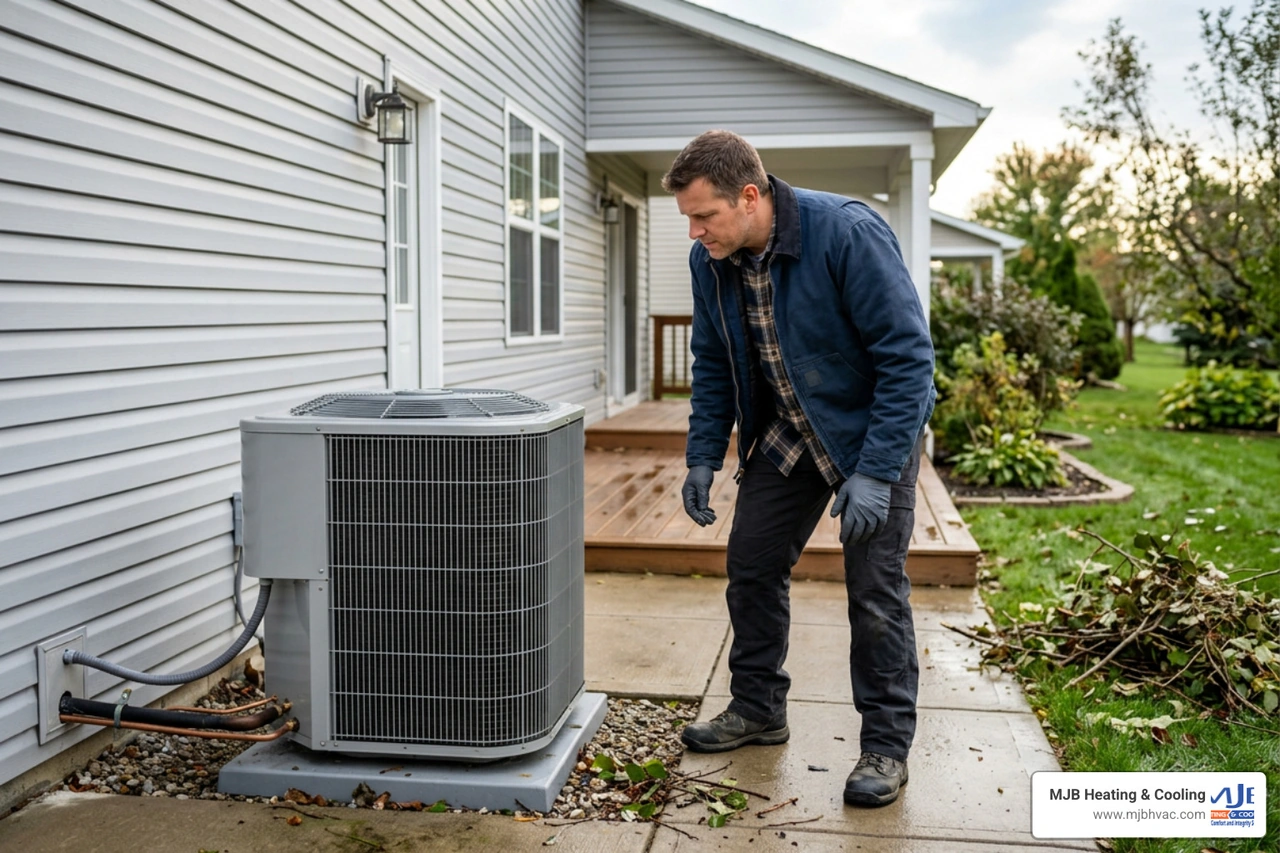
Before you step outside or open up your mechanical closet, safety is your absolute top priority. A severe storm can leave behind hazards that aren't immediately obvious, turning a quick inspection into a dangerous situation.
First, look for downed power lines. If you spot any fallen lines on or near your property, stay at least 30 feet away and call your utility provider immediately. Never assume a downed line is dead.
Next, watch out for standing water. Water conducts electricity with terrifying efficiency. If there is standing water around your outdoor condenser unit or in your basement near the indoor furnace, do not walk through it. Standing water near electrical components creates a massive shock hazard. Wait for the water to completely recede, or call a professional who has the specialized gear to handle it.
You also need to check for gas leaks. If your home uses natural gas for heating and you smell a distinct "rotten egg" odor, do not turn on any electrical switches, light matches, or try to inspect your system. Leave the area immediately and call your utility company and emergency services.
Finally, make sure you gear up properly before starting your walkthrough. Put on sturdy, thick-soled shoes (preferably rubber-soled boots), heavy-duty work gloves, and safety glasses. This protects you from sharp metal edges, broken glass, hidden nails, and displaced wildlife seeking shelter in your equipment. For more detailed safety tips, check out our guide on Emergency HVAC Repair Tips for Kansas Homeowners.
Once you've confirmed that the area is safe and you've shut down the power to your system at the main circuit breaker, you can begin your physical walkthrough. Kansas storms are famous for hurling hail and driving debris at intense speeds.
Start with a visual inspection of your outdoor unit. Check the cabinet for heavy dents, punctures, or missing panels. High winds can turn patio furniture, tree branches, and loose shingles into high-velocity projectiles. To understand how severe winds impact your system, read about How Tornadoes and Hail Damage HVAC Equipment.
Next, look at the alignment of the outdoor condenser. The heavy concrete or plastic pad underneath your unit can shift if the soil becomes saturated and washed out by heavy rainfall. If the unit is tilted or leaning, it puts immense physical stress on the copper refrigerant lines. Check these copper lines carefully. If you see any kinks, cracks, or notice a hissing sound, you likely have a refrigerant leak, which requires immediate professional repair. If your system exhibits these signs, you can read more about Signs Your AC Needs Repair.
The delicate aluminum fins surrounding your outdoor condenser coils are highly susceptible to hail and wind-blown debris. These fins are responsible for dispersing heat from your home into the outdoor air. When hail hits, it can flatten these fins, sealing off the airflow.
We use the "30% Rule" to evaluate fin damage:
If your neighborhood experienced flash flooding, your outdoor unit may have been partially or fully submerged. Even if the floodwaters have completely receded by the time you inspect, do not turn the system back on.
Silt, mud, and salt-laden residue from floodwaters get trapped inside the electrical compartments, the fan motor, and the compressor terminals. If you restore power to a unit that has been submerged, these contaminants will cause immediate electrical short circuits, potentially destroying the expensive motor windings or the entire compressor.
A professional technician must perform a specialized insulation test on the motor windings to ensure it is dry and safe before power is ever restored. For more details on weather-related risks, see How Kansas Severe Weather Affects Your HVAC System.
Once you've completed your outdoor checks, move inside to inspect the air handler or furnace. The first item on your indoor checklist is the air filter. If wind-driven rain or local flooding reached your indoor system, the air filter may have absorbed moisture.
A wet air filter must be replaced immediately. Wet filters restrict airflow and quickly become a hotbed for mold and mildew, which can spread spores throughout your home's air supply.
Next, inspect your accessible ductwork, especially if it runs through an unconditioned crawlspace, basement, or attic. Look for:
If moisture gets trapped inside your ductwork, mold can begin to grow in wet insulation or the duct interior within just 24 to 48 hours, creating a serious indoor air quality hazard. Keeping up with regular checks is a key part of HVAC Maintenance Tips for Kansas Homeowners.
Severe storms often bring lightning strikes and power grid fluctuations, which can send massive voltage spikes through your home's electrical wiring. Your HVAC system contains sensitive electronic control boards, capacitors, and sensors that can easily fry during a surge, even if there is no visible damage.
Check your home's main electrical panel:
Surge damage can be incredibly subtle, but keeping an eye out for these signs is crucial. For ductless systems, you can learn more about what to watch for by reading Signs Your Ductless AC System Needs Attention.
Before you begin clearing away branches or wiping down your unit, pull out your smartphone and document everything. Take clear, high-resolution, date-stamped photos and videos of the entire scene from multiple angles. Capture close-ups of hail dents, shifted pads, water lines from flooding, and any fallen branches resting on the equipment.
This documentation is vital for your insurance claims. Most standard homeowners insurance policies cover damage caused by wind, hail, lightning strikes, or fallen trees, but they often require separate flood insurance for water submersion. Having a detailed visual record—along with a professional diagnostic report—will significantly speed up your claims process and help protect your warranty coverage. Many manufacturers will void their equipment warranties if a system is operated after a natural disaster without being professionally inspected and cleared first.
To understand how storm risks vary, it's helpful to look at how different climates impact HVAC systems:
| Storm Risk Factor | Midwest Region (e.g., Central Kansas) | Coastal Regions (e.g., Gulf Coast) |
|---|---|---|
| Primary Storm Types | Severe thunderstorms, tornadoes, heavy hail, ice storms | Hurricanes, tropical storms, nor'easters |
| Physical Threat | High-velocity hail impact, sudden wind shear, falling tree limbs | Sustained high winds, massive storm surges, flying debris |
| Corrosion Risk | Low (primarily localized moisture rust over time) | Extreme (salt air corrosion causes rapid oxidation of copper and aluminum) |
| Flooding Type | Localized flash flooding, rapid creek rises | Coastal storm surges, widespread prolonged flooding |
| Grid Vulnerability | Power surges from lightning, wind-damaged lines | Long-term outages, massive grid infrastructure damage |
Whether your system has sustained physical damage from a Kansas hailstorm or electrical damage from a summer power surge, you'll eventually face the question of whether to repair or replace your components. For guidance on making this choice, see Should I Repair or Replace My HVAC System.
To prevent storm damage from catching you off guard, it helps to understand How Often Should You Service Your HVAC System and keep in mind the Average Lifespan of an HVAC System in Kansas.
No, it is not safe. Even if the floodwaters have completely receded and the outside of the unit looks dry, mud, silt, and moisture are likely trapped inside the electrical disconnect box, the fan motor, and the compressor terminals. Restoring power to a submerged unit can cause a catastrophic electrical short, permanently destroying the compressor or motor windings. Always have a licensed technician perform an insulation test and thoroughly clean the internal components before turning the system back on.
When a storm dumps heavy rain, local humidity levels skyrocket. If your ductwork has any minor leaks, or if moisture managed to seep into your attic or crawlspace, this high humidity combined with existing dust inside the ducts creates the perfect breeding ground for mold. Because mold can begin to grow within a 24 to 48-hour window, it is critical to inspect your ductwork for water intrusion and ensure your indoor air quality isn't compromised.
A circuit breaker that trips after a storm usually points to one of three issues: a power surge that damaged the unit's compressor or control board, wind-driven rain that penetrated an outdoor electrical outlet or disconnect box, or a frayed wire caused by flying debris. Never repeatedly reset a tripping breaker. This is a clear warning sign of an electrical short, and attempting to force the system to run can result in severe equipment damage or an electrical fire.
When severe weather strikes the Wichita metro area, taking a cautious, systematic approach to your HVAC system can save you from dangerous electrical hazards and incredibly expensive secondary damage. By following this post storm HVAC inspection checklist, you can spot the warning signs of hail damage, electrical surges, and water intrusion before they escalate.
Since 1984, MJB Heating & Cooling has been the trusted, family-owned name for dependable comfort across Central Kansas, including Derby, Andover, Haysville, Wichita, and the surrounding communities. We built our business on quality workmanship and an honest, straightforward approach. If your system was exposed to flooding, high winds, heavy hail, or severe power surges, don't leave your home's comfort and safety to chance.
Schedule your professional post-storm inspection with MJB HVAC today, and let our licensed, experienced technicians ensure your heating and cooling systems are safe, efficient, and ready to keep your family comfortable.
A post storm HVAC inspection checklist is the fastest way to catch hidden damage before it turns into a costly repair — or a safety hazard. Severe weather in the Wichita, KS area is no joke. Hail, high winds, heavy rain, and power surges can all hit your heating and cooling system hard, often in ways you can't see from the outside.
Here's a quick overview of the key steps to inspect your HVAC after a storm:
Nearly 80% of power outages in the U.S. are caused by weather events, and the storms that sweep through Central Kansas can combine wind, hail, flooding, and electrical surges all at once. Mold can begin growing inside wet ductwork within just 24 to 48 hours. Even a modest amount of storm debris can block up to 25% of your system's airflow, putting serious strain on the compressor.
The guide below walks you through each step in detail so you can inspect your system safely and know exactly when to call in a professional.
Post storm hvac inspection checklist vocab to learn:
Before you step outside or open up your mechanical closet, safety is your absolute top priority. A severe storm can leave behind hazards that aren't immediately obvious, turning a quick inspection into a dangerous situation.
First, look for downed power lines. If you spot any fallen lines on or near your property, stay at least 30 feet away and call your utility provider immediately. Never assume a downed line is dead.
Next, watch out for standing water. Water conducts electricity with terrifying efficiency. If there is standing water around your outdoor condenser unit or in your basement near the indoor furnace, do not walk through it. Standing water near electrical components creates a massive shock hazard. Wait for the water to completely recede, or call a professional who has the specialized gear to handle it.
You also need to check for gas leaks. If your home uses natural gas for heating and you smell a distinct "rotten egg" odor, do not turn on any electrical switches, light matches, or try to inspect your system. Leave the area immediately and call your utility company and emergency services.
Finally, make sure you gear up properly before starting your walkthrough. Put on sturdy, thick-soled shoes (preferably rubber-soled boots), heavy-duty work gloves, and safety glasses. This protects you from sharp metal edges, broken glass, hidden nails, and displaced wildlife seeking shelter in your equipment. For more detailed safety tips, check out our guide on Emergency HVAC Repair Tips for Kansas Homeowners.
Once you've confirmed that the area is safe and you've shut down the power to your system at the main circuit breaker, you can begin your physical walkthrough. Kansas storms are famous for hurling hail and driving debris at intense speeds.
Start with a visual inspection of your outdoor unit. Check the cabinet for heavy dents, punctures, or missing panels. High winds can turn patio furniture, tree branches, and loose shingles into high-velocity projectiles. To understand how severe winds impact your system, read about How Tornadoes and Hail Damage HVAC Equipment.
Next, look at the alignment of the outdoor condenser. The heavy concrete or plastic pad underneath your unit can shift if the soil becomes saturated and washed out by heavy rainfall. If the unit is tilted or leaning, it puts immense physical stress on the copper refrigerant lines. Check these copper lines carefully. If you see any kinks, cracks, or notice a hissing sound, you likely have a refrigerant leak, which requires immediate professional repair. If your system exhibits these signs, you can read more about Signs Your AC Needs Repair.
The delicate aluminum fins surrounding your outdoor condenser coils are highly susceptible to hail and wind-blown debris. These fins are responsible for dispersing heat from your home into the outdoor air. When hail hits, it can flatten these fins, sealing off the airflow.
We use the "30% Rule" to evaluate fin damage:
If your neighborhood experienced flash flooding, your outdoor unit may have been partially or fully submerged. Even if the floodwaters have completely receded by the time you inspect, do not turn the system back on.
Silt, mud, and salt-laden residue from floodwaters get trapped inside the electrical compartments, the fan motor, and the compressor terminals. If you restore power to a unit that has been submerged, these contaminants will cause immediate electrical short circuits, potentially destroying the expensive motor windings or the entire compressor.
A professional technician must perform a specialized insulation test on the motor windings to ensure it is dry and safe before power is ever restored. For more details on weather-related risks, see How Kansas Severe Weather Affects Your HVAC System.
Once you've completed your outdoor checks, move inside to inspect the air handler or furnace. The first item on your indoor checklist is the air filter. If wind-driven rain or local flooding reached your indoor system, the air filter may have absorbed moisture.
A wet air filter must be replaced immediately. Wet filters restrict airflow and quickly become a hotbed for mold and mildew, which can spread spores throughout your home's air supply.
Next, inspect your accessible ductwork, especially if it runs through an unconditioned crawlspace, basement, or attic. Look for:
If moisture gets trapped inside your ductwork, mold can begin to grow in wet insulation or the duct interior within just 24 to 48 hours, creating a serious indoor air quality hazard. Keeping up with regular checks is a key part of HVAC Maintenance Tips for Kansas Homeowners.
Severe storms often bring lightning strikes and power grid fluctuations, which can send massive voltage spikes through your home's electrical wiring. Your HVAC system contains sensitive electronic control boards, capacitors, and sensors that can easily fry during a surge, even if there is no visible damage.
Check your home's main electrical panel:
Surge damage can be incredibly subtle, but keeping an eye out for these signs is crucial. For ductless systems, you can learn more about what to watch for by reading Signs Your Ductless AC System Needs Attention.
Before you begin clearing away branches or wiping down your unit, pull out your smartphone and document everything. Take clear, high-resolution, date-stamped photos and videos of the entire scene from multiple angles. Capture close-ups of hail dents, shifted pads, water lines from flooding, and any fallen branches resting on the equipment.
This documentation is vital for your insurance claims. Most standard homeowners insurance policies cover damage caused by wind, hail, lightning strikes, or fallen trees, but they often require separate flood insurance for water submersion. Having a detailed visual record—along with a professional diagnostic report—will significantly speed up your claims process and help protect your warranty coverage. Many manufacturers will void their equipment warranties if a system is operated after a natural disaster without being professionally inspected and cleared first.
To understand how storm risks vary, it's helpful to look at how different climates impact HVAC systems:
| Storm Risk Factor | Midwest Region (e.g., Central Kansas) | Coastal Regions (e.g., Gulf Coast) |
|---|---|---|
| Primary Storm Types | Severe thunderstorms, tornadoes, heavy hail, ice storms | Hurricanes, tropical storms, nor'easters |
| Physical Threat | High-velocity hail impact, sudden wind shear, falling tree limbs | Sustained high winds, massive storm surges, flying debris |
| Corrosion Risk | Low (primarily localized moisture rust over time) | Extreme (salt air corrosion causes rapid oxidation of copper and aluminum) |
| Flooding Type | Localized flash flooding, rapid creek rises | Coastal storm surges, widespread prolonged flooding |
| Grid Vulnerability | Power surges from lightning, wind-damaged lines | Long-term outages, massive grid infrastructure damage |
Whether your system has sustained physical damage from a Kansas hailstorm or electrical damage from a summer power surge, you'll eventually face the question of whether to repair or replace your components. For guidance on making this choice, see Should I Repair or Replace My HVAC System.
To prevent storm damage from catching you off guard, it helps to understand How Often Should You Service Your HVAC System and keep in mind the Average Lifespan of an HVAC System in Kansas.
No, it is not safe. Even if the floodwaters have completely receded and the outside of the unit looks dry, mud, silt, and moisture are likely trapped inside the electrical disconnect box, the fan motor, and the compressor terminals. Restoring power to a submerged unit can cause a catastrophic electrical short, permanently destroying the compressor or motor windings. Always have a licensed technician perform an insulation test and thoroughly clean the internal components before turning the system back on.
When a storm dumps heavy rain, local humidity levels skyrocket. If your ductwork has any minor leaks, or if moisture managed to seep into your attic or crawlspace, this high humidity combined with existing dust inside the ducts creates the perfect breeding ground for mold. Because mold can begin to grow within a 24 to 48-hour window, it is critical to inspect your ductwork for water intrusion and ensure your indoor air quality isn't compromised.
A circuit breaker that trips after a storm usually points to one of three issues: a power surge that damaged the unit's compressor or control board, wind-driven rain that penetrated an outdoor electrical outlet or disconnect box, or a frayed wire caused by flying debris. Never repeatedly reset a tripping breaker. This is a clear warning sign of an electrical short, and attempting to force the system to run can result in severe equipment damage or an electrical fire.
When severe weather strikes the Wichita metro area, taking a cautious, systematic approach to your HVAC system can save you from dangerous electrical hazards and incredibly expensive secondary damage. By following this post storm HVAC inspection checklist, you can spot the warning signs of hail damage, electrical surges, and water intrusion before they escalate.
Since 1984, MJB Heating & Cooling has been the trusted, family-owned name for dependable comfort across Central Kansas, including Derby, Andover, Haysville, Wichita, and the surrounding communities. We built our business on quality workmanship and an honest, straightforward approach. If your system was exposed to flooding, high winds, heavy hail, or severe power surges, don't leave your home's comfort and safety to chance.
Schedule your professional post-storm inspection with MJB HVAC today, and let our licensed, experienced technicians ensure your heating and cooling systems are safe, efficient, and ready to keep your family comfortable.
A post storm HVAC inspection checklist is the fastest way to catch hidden damage before it turns into a costly repair — or a safety hazard. Severe weather in the Wichita, KS area is no joke. Hail, high winds, heavy rain, and power surges can all hit your heating and cooling system hard, often in ways you can't see from the outside.
Here's a quick overview of the key steps to inspect your HVAC after a storm:
Nearly 80% of power outages in the U.S. are caused by weather events, and the storms that sweep through Central Kansas can combine wind, hail, flooding, and electrical surges all at once. Mold can begin growing inside wet ductwork within just 24 to 48 hours. Even a modest amount of storm debris can block up to 25% of your system's airflow, putting serious strain on the compressor.
The guide below walks you through each step in detail so you can inspect your system safely and know exactly when to call in a professional.
Post storm hvac inspection checklist vocab to learn:
Before you step outside or open up your mechanical closet, safety is your absolute top priority. A severe storm can leave behind hazards that aren't immediately obvious, turning a quick inspection into a dangerous situation.
First, look for downed power lines. If you spot any fallen lines on or near your property, stay at least 30 feet away and call your utility provider immediately. Never assume a downed line is dead.
Next, watch out for standing water. Water conducts electricity with terrifying efficiency. If there is standing water around your outdoor condenser unit or in your basement near the indoor furnace, do not walk through it. Standing water near electrical components creates a massive shock hazard. Wait for the water to completely recede, or call a professional who has the specialized gear to handle it.
You also need to check for gas leaks. If your home uses natural gas for heating and you smell a distinct "rotten egg" odor, do not turn on any electrical switches, light matches, or try to inspect your system. Leave the area immediately and call your utility company and emergency services.
Finally, make sure you gear up properly before starting your walkthrough. Put on sturdy, thick-soled shoes (preferably rubber-soled boots), heavy-duty work gloves, and safety glasses. This protects you from sharp metal edges, broken glass, hidden nails, and displaced wildlife seeking shelter in your equipment. For more detailed safety tips, check out our guide on Emergency HVAC Repair Tips for Kansas Homeowners.
Once you've confirmed that the area is safe and you've shut down the power to your system at the main circuit breaker, you can begin your physical walkthrough. Kansas storms are famous for hurling hail and driving debris at intense speeds.
Start with a visual inspection of your outdoor unit. Check the cabinet for heavy dents, punctures, or missing panels. High winds can turn patio furniture, tree branches, and loose shingles into high-velocity projectiles. To understand how severe winds impact your system, read about How Tornadoes and Hail Damage HVAC Equipment.
Next, look at the alignment of the outdoor condenser. The heavy concrete or plastic pad underneath your unit can shift if the soil becomes saturated and washed out by heavy rainfall. If the unit is tilted or leaning, it puts immense physical stress on the copper refrigerant lines. Check these copper lines carefully. If you see any kinks, cracks, or notice a hissing sound, you likely have a refrigerant leak, which requires immediate professional repair. If your system exhibits these signs, you can read more about Signs Your AC Needs Repair.
The delicate aluminum fins surrounding your outdoor condenser coils are highly susceptible to hail and wind-blown debris. These fins are responsible for dispersing heat from your home into the outdoor air. When hail hits, it can flatten these fins, sealing off the airflow.
We use the "30% Rule" to evaluate fin damage:
If your neighborhood experienced flash flooding, your outdoor unit may have been partially or fully submerged. Even if the floodwaters have completely receded by the time you inspect, do not turn the system back on.
Silt, mud, and salt-laden residue from floodwaters get trapped inside the electrical compartments, the fan motor, and the compressor terminals. If you restore power to a unit that has been submerged, these contaminants will cause immediate electrical short circuits, potentially destroying the expensive motor windings or the entire compressor.
A professional technician must perform a specialized insulation test on the motor windings to ensure it is dry and safe before power is ever restored. For more details on weather-related risks, see How Kansas Severe Weather Affects Your HVAC System.
Once you've completed your outdoor checks, move inside to inspect the air handler or furnace. The first item on your indoor checklist is the air filter. If wind-driven rain or local flooding reached your indoor system, the air filter may have absorbed moisture.
A wet air filter must be replaced immediately. Wet filters restrict airflow and quickly become a hotbed for mold and mildew, which can spread spores throughout your home's air supply.
Next, inspect your accessible ductwork, especially if it runs through an unconditioned crawlspace, basement, or attic. Look for:
If moisture gets trapped inside your ductwork, mold can begin to grow in wet insulation or the duct interior within just 24 to 48 hours, creating a serious indoor air quality hazard. Keeping up with regular checks is a key part of HVAC Maintenance Tips for Kansas Homeowners.
Severe storms often bring lightning strikes and power grid fluctuations, which can send massive voltage spikes through your home's electrical wiring. Your HVAC system contains sensitive electronic control boards, capacitors, and sensors that can easily fry during a surge, even if there is no visible damage.
Check your home's main electrical panel:
Surge damage can be incredibly subtle, but keeping an eye out for these signs is crucial. For ductless systems, you can learn more about what to watch for by reading Signs Your Ductless AC System Needs Attention.
Before you begin clearing away branches or wiping down your unit, pull out your smartphone and document everything. Take clear, high-resolution, date-stamped photos and videos of the entire scene from multiple angles. Capture close-ups of hail dents, shifted pads, water lines from flooding, and any fallen branches resting on the equipment.
This documentation is vital for your insurance claims. Most standard homeowners insurance policies cover damage caused by wind, hail, lightning strikes, or fallen trees, but they often require separate flood insurance for water submersion. Having a detailed visual record—along with a professional diagnostic report—will significantly speed up your claims process and help protect your warranty coverage. Many manufacturers will void their equipment warranties if a system is operated after a natural disaster without being professionally inspected and cleared first.
To understand how storm risks vary, it's helpful to look at how different climates impact HVAC systems:
| Storm Risk Factor | Midwest Region (e.g., Central Kansas) | Coastal Regions (e.g., Gulf Coast) |
|---|---|---|
| Primary Storm Types | Severe thunderstorms, tornadoes, heavy hail, ice storms | Hurricanes, tropical storms, nor'easters |
| Physical Threat | High-velocity hail impact, sudden wind shear, falling tree limbs | Sustained high winds, massive storm surges, flying debris |
| Corrosion Risk | Low (primarily localized moisture rust over time) | Extreme (salt air corrosion causes rapid oxidation of copper and aluminum) |
| Flooding Type | Localized flash flooding, rapid creek rises | Coastal storm surges, widespread prolonged flooding |
| Grid Vulnerability | Power surges from lightning, wind-damaged lines | Long-term outages, massive grid infrastructure damage |
Whether your system has sustained physical damage from a Kansas hailstorm or electrical damage from a summer power surge, you'll eventually face the question of whether to repair or replace your components. For guidance on making this choice, see Should I Repair or Replace My HVAC System.
To prevent storm damage from catching you off guard, it helps to understand How Often Should You Service Your HVAC System and keep in mind the Average Lifespan of an HVAC System in Kansas.
No, it is not safe. Even if the floodwaters have completely receded and the outside of the unit looks dry, mud, silt, and moisture are likely trapped inside the electrical disconnect box, the fan motor, and the compressor terminals. Restoring power to a submerged unit can cause a catastrophic electrical short, permanently destroying the compressor or motor windings. Always have a licensed technician perform an insulation test and thoroughly clean the internal components before turning the system back on.
When a storm dumps heavy rain, local humidity levels skyrocket. If your ductwork has any minor leaks, or if moisture managed to seep into your attic or crawlspace, this high humidity combined with existing dust inside the ducts creates the perfect breeding ground for mold. Because mold can begin to grow within a 24 to 48-hour window, it is critical to inspect your ductwork for water intrusion and ensure your indoor air quality isn't compromised.
A circuit breaker that trips after a storm usually points to one of three issues: a power surge that damaged the unit's compressor or control board, wind-driven rain that penetrated an outdoor electrical outlet or disconnect box, or a frayed wire caused by flying debris. Never repeatedly reset a tripping breaker. This is a clear warning sign of an electrical short, and attempting to force the system to run can result in severe equipment damage or an electrical fire.
When severe weather strikes the Wichita metro area, taking a cautious, systematic approach to your HVAC system can save you from dangerous electrical hazards and incredibly expensive secondary damage. By following this post storm HVAC inspection checklist, you can spot the warning signs of hail damage, electrical surges, and water intrusion before they escalate.
Since 1984, MJB Heating & Cooling has been the trusted, family-owned name for dependable comfort across Central Kansas, including Derby, Andover, Haysville, Wichita, and the surrounding communities. We built our business on quality workmanship and an honest, straightforward approach. If your system was exposed to flooding, high winds, heavy hail, or severe power surges, don't leave your home's comfort and safety to chance.
Schedule your professional post-storm inspection with MJB HVAC today, and let our licensed, experienced technicians ensure your heating and cooling systems are safe, efficient, and ready to keep your family comfortable.

A post storm HVAC inspection checklist is the fastest way to catch hidden damage before it turns into a costly repair — or a safety hazard. Severe weather in the Wichita, KS area is no joke. Hail, high winds, heavy rain, and power surges can all hit your heating and cooling system hard, often in ways you can't see from the outside.
Here's a quick overview of the key steps to inspect your HVAC after a storm:
Nearly 80% of power outages in the U.S. are caused by weather events, and the storms that sweep through Central Kansas can combine wind, hail, flooding, and electrical surges all at once. Mold can begin growing inside wet ductwork within just 24 to 48 hours. Even a modest amount of storm debris can block up to 25% of your system's airflow, putting serious strain on the compressor.
The guide below walks you through each step in detail so you can inspect your system safely and know exactly when to call in a professional.
Post storm hvac inspection checklist vocab to learn:
Before you step outside or open up your mechanical closet, safety is your absolute top priority. A severe storm can leave behind hazards that aren't immediately obvious, turning a quick inspection into a dangerous situation.
First, look for downed power lines. If you spot any fallen lines on or near your property, stay at least 30 feet away and call your utility provider immediately. Never assume a downed line is dead.
Next, watch out for standing water. Water conducts electricity with terrifying efficiency. If there is standing water around your outdoor condenser unit or in your basement near the indoor furnace, do not walk through it. Standing water near electrical components creates a massive shock hazard. Wait for the water to completely recede, or call a professional who has the specialized gear to handle it.
You also need to check for gas leaks. If your home uses natural gas for heating and you smell a distinct "rotten egg" odor, do not turn on any electrical switches, light matches, or try to inspect your system. Leave the area immediately and call your utility company and emergency services.
Finally, make sure you gear up properly before starting your walkthrough. Put on sturdy, thick-soled shoes (preferably rubber-soled boots), heavy-duty work gloves, and safety glasses. This protects you from sharp metal edges, broken glass, hidden nails, and displaced wildlife seeking shelter in your equipment. For more detailed safety tips, check out our guide on Emergency HVAC Repair Tips for Kansas Homeowners.
Once you've confirmed that the area is safe and you've shut down the power to your system at the main circuit breaker, you can begin your physical walkthrough. Kansas storms are famous for hurling hail and driving debris at intense speeds.
Start with a visual inspection of your outdoor unit. Check the cabinet for heavy dents, punctures, or missing panels. High winds can turn patio furniture, tree branches, and loose shingles into high-velocity projectiles. To understand how severe winds impact your system, read about How Tornadoes and Hail Damage HVAC Equipment.
Next, look at the alignment of the outdoor condenser. The heavy concrete or plastic pad underneath your unit can shift if the soil becomes saturated and washed out by heavy rainfall. If the unit is tilted or leaning, it puts immense physical stress on the copper refrigerant lines. Check these copper lines carefully. If you see any kinks, cracks, or notice a hissing sound, you likely have a refrigerant leak, which requires immediate professional repair. If your system exhibits these signs, you can read more about Signs Your AC Needs Repair.
The delicate aluminum fins surrounding your outdoor condenser coils are highly susceptible to hail and wind-blown debris. These fins are responsible for dispersing heat from your home into the outdoor air. When hail hits, it can flatten these fins, sealing off the airflow.
We use the "30% Rule" to evaluate fin damage:
If your neighborhood experienced flash flooding, your outdoor unit may have been partially or fully submerged. Even if the floodwaters have completely receded by the time you inspect, do not turn the system back on.
Silt, mud, and salt-laden residue from floodwaters get trapped inside the electrical compartments, the fan motor, and the compressor terminals. If you restore power to a unit that has been submerged, these contaminants will cause immediate electrical short circuits, potentially destroying the expensive motor windings or the entire compressor.
A professional technician must perform a specialized insulation test on the motor windings to ensure it is dry and safe before power is ever restored. For more details on weather-related risks, see How Kansas Severe Weather Affects Your HVAC System.
Once you've completed your outdoor checks, move inside to inspect the air handler or furnace. The first item on your indoor checklist is the air filter. If wind-driven rain or local flooding reached your indoor system, the air filter may have absorbed moisture.
A wet air filter must be replaced immediately. Wet filters restrict airflow and quickly become a hotbed for mold and mildew, which can spread spores throughout your home's air supply.
Next, inspect your accessible ductwork, especially if it runs through an unconditioned crawlspace, basement, or attic. Look for:
If moisture gets trapped inside your ductwork, mold can begin to grow in wet insulation or the duct interior within just 24 to 48 hours, creating a serious indoor air quality hazard. Keeping up with regular checks is a key part of HVAC Maintenance Tips for Kansas Homeowners.
Severe storms often bring lightning strikes and power grid fluctuations, which can send massive voltage spikes through your home's electrical wiring. Your HVAC system contains sensitive electronic control boards, capacitors, and sensors that can easily fry during a surge, even if there is no visible damage.
Check your home's main electrical panel:
Surge damage can be incredibly subtle, but keeping an eye out for these signs is crucial. For ductless systems, you can learn more about what to watch for by reading Signs Your Ductless AC System Needs Attention.
Before you begin clearing away branches or wiping down your unit, pull out your smartphone and document everything. Take clear, high-resolution, date-stamped photos and videos of the entire scene from multiple angles. Capture close-ups of hail dents, shifted pads, water lines from flooding, and any fallen branches resting on the equipment.
This documentation is vital for your insurance claims. Most standard homeowners insurance policies cover damage caused by wind, hail, lightning strikes, or fallen trees, but they often require separate flood insurance for water submersion. Having a detailed visual record—along with a professional diagnostic report—will significantly speed up your claims process and help protect your warranty coverage. Many manufacturers will void their equipment warranties if a system is operated after a natural disaster without being professionally inspected and cleared first.
To understand how storm risks vary, it's helpful to look at how different climates impact HVAC systems:
| Storm Risk Factor | Midwest Region (e.g., Central Kansas) | Coastal Regions (e.g., Gulf Coast) |
|---|---|---|
| Primary Storm Types | Severe thunderstorms, tornadoes, heavy hail, ice storms | Hurricanes, tropical storms, nor'easters |
| Physical Threat | High-velocity hail impact, sudden wind shear, falling tree limbs | Sustained high winds, massive storm surges, flying debris |
| Corrosion Risk | Low (primarily localized moisture rust over time) | Extreme (salt air corrosion causes rapid oxidation of copper and aluminum) |
| Flooding Type | Localized flash flooding, rapid creek rises | Coastal storm surges, widespread prolonged flooding |
| Grid Vulnerability | Power surges from lightning, wind-damaged lines | Long-term outages, massive grid infrastructure damage |
Whether your system has sustained physical damage from a Kansas hailstorm or electrical damage from a summer power surge, you'll eventually face the question of whether to repair or replace your components. For guidance on making this choice, see Should I Repair or Replace My HVAC System.
To prevent storm damage from catching you off guard, it helps to understand How Often Should You Service Your HVAC System and keep in mind the Average Lifespan of an HVAC System in Kansas.
No, it is not safe. Even if the floodwaters have completely receded and the outside of the unit looks dry, mud, silt, and moisture are likely trapped inside the electrical disconnect box, the fan motor, and the compressor terminals. Restoring power to a submerged unit can cause a catastrophic electrical short, permanently destroying the compressor or motor windings. Always have a licensed technician perform an insulation test and thoroughly clean the internal components before turning the system back on.
When a storm dumps heavy rain, local humidity levels skyrocket. If your ductwork has any minor leaks, or if moisture managed to seep into your attic or crawlspace, this high humidity combined with existing dust inside the ducts creates the perfect breeding ground for mold. Because mold can begin to grow within a 24 to 48-hour window, it is critical to inspect your ductwork for water intrusion and ensure your indoor air quality isn't compromised.
A circuit breaker that trips after a storm usually points to one of three issues: a power surge that damaged the unit's compressor or control board, wind-driven rain that penetrated an outdoor electrical outlet or disconnect box, or a frayed wire caused by flying debris. Never repeatedly reset a tripping breaker. This is a clear warning sign of an electrical short, and attempting to force the system to run can result in severe equipment damage or an electrical fire.
When severe weather strikes the Wichita metro area, taking a cautious, systematic approach to your HVAC system can save you from dangerous electrical hazards and incredibly expensive secondary damage. By following this post storm HVAC inspection checklist, you can spot the warning signs of hail damage, electrical surges, and water intrusion before they escalate.
Since 1984, MJB Heating & Cooling has been the trusted, family-owned name for dependable comfort across Central Kansas, including Derby, Andover, Haysville, Wichita, and the surrounding communities. We built our business on quality workmanship and an honest, straightforward approach. If your system was exposed to flooding, high winds, heavy hail, or severe power surges, don't leave your home's comfort and safety to chance.
Schedule your professional post-storm inspection with MJB HVAC today, and let our licensed, experienced technicians ensure your heating and cooling systems are safe, efficient, and ready to keep your family comfortable.
A post storm HVAC inspection checklist is the fastest way to catch hidden damage before it turns into a costly repair — or a safety hazard. Severe weather in the Wichita, KS area is no joke. Hail, high winds, heavy rain, and power surges can all hit your heating and cooling system hard, often in ways you can't see from the outside.
Here's a quick overview of the key steps to inspect your HVAC after a storm:
Nearly 80% of power outages in the U.S. are caused by weather events, and the storms that sweep through Central Kansas can combine wind, hail, flooding, and electrical surges all at once. Mold can begin growing inside wet ductwork within just 24 to 48 hours. Even a modest amount of storm debris can block up to 25% of your system's airflow, putting serious strain on the compressor.
The guide below walks you through each step in detail so you can inspect your system safely and know exactly when to call in a professional.
Post storm hvac inspection checklist vocab to learn:
Before you step outside or open up your mechanical closet, safety is your absolute top priority. A severe storm can leave behind hazards that aren't immediately obvious, turning a quick inspection into a dangerous situation.
First, look for downed power lines. If you spot any fallen lines on or near your property, stay at least 30 feet away and call your utility provider immediately. Never assume a downed line is dead.
Next, watch out for standing water. Water conducts electricity with terrifying efficiency. If there is standing water around your outdoor condenser unit or in your basement near the indoor furnace, do not walk through it. Standing water near electrical components creates a massive shock hazard. Wait for the water to completely recede, or call a professional who has the specialized gear to handle it.
You also need to check for gas leaks. If your home uses natural gas for heating and you smell a distinct "rotten egg" odor, do not turn on any electrical switches, light matches, or try to inspect your system. Leave the area immediately and call your utility company and emergency services.
Finally, make sure you gear up properly before starting your walkthrough. Put on sturdy, thick-soled shoes (preferably rubber-soled boots), heavy-duty work gloves, and safety glasses. This protects you from sharp metal edges, broken glass, hidden nails, and displaced wildlife seeking shelter in your equipment. For more detailed safety tips, check out our guide on Emergency HVAC Repair Tips for Kansas Homeowners.
Once you've confirmed that the area is safe and you've shut down the power to your system at the main circuit breaker, you can begin your physical walkthrough. Kansas storms are famous for hurling hail and driving debris at intense speeds.
Start with a visual inspection of your outdoor unit. Check the cabinet for heavy dents, punctures, or missing panels. High winds can turn patio furniture, tree branches, and loose shingles into high-velocity projectiles. To understand how severe winds impact your system, read about How Tornadoes and Hail Damage HVAC Equipment.
Next, look at the alignment of the outdoor condenser. The heavy concrete or plastic pad underneath your unit can shift if the soil becomes saturated and washed out by heavy rainfall. If the unit is tilted or leaning, it puts immense physical stress on the copper refrigerant lines. Check these copper lines carefully. If you see any kinks, cracks, or notice a hissing sound, you likely have a refrigerant leak, which requires immediate professional repair. If your system exhibits these signs, you can read more about Signs Your AC Needs Repair.
The delicate aluminum fins surrounding your outdoor condenser coils are highly susceptible to hail and wind-blown debris. These fins are responsible for dispersing heat from your home into the outdoor air. When hail hits, it can flatten these fins, sealing off the airflow.
We use the "30% Rule" to evaluate fin damage:
If your neighborhood experienced flash flooding, your outdoor unit may have been partially or fully submerged. Even if the floodwaters have completely receded by the time you inspect, do not turn the system back on.
Silt, mud, and salt-laden residue from floodwaters get trapped inside the electrical compartments, the fan motor, and the compressor terminals. If you restore power to a unit that has been submerged, these contaminants will cause immediate electrical short circuits, potentially destroying the expensive motor windings or the entire compressor.
A professional technician must perform a specialized insulation test on the motor windings to ensure it is dry and safe before power is ever restored. For more details on weather-related risks, see How Kansas Severe Weather Affects Your HVAC System.
Once you've completed your outdoor checks, move inside to inspect the air handler or furnace. The first item on your indoor checklist is the air filter. If wind-driven rain or local flooding reached your indoor system, the air filter may have absorbed moisture.
A wet air filter must be replaced immediately. Wet filters restrict airflow and quickly become a hotbed for mold and mildew, which can spread spores throughout your home's air supply.
Next, inspect your accessible ductwork, especially if it runs through an unconditioned crawlspace, basement, or attic. Look for:
If moisture gets trapped inside your ductwork, mold can begin to grow in wet insulation or the duct interior within just 24 to 48 hours, creating a serious indoor air quality hazard. Keeping up with regular checks is a key part of HVAC Maintenance Tips for Kansas Homeowners.
Severe storms often bring lightning strikes and power grid fluctuations, which can send massive voltage spikes through your home's electrical wiring. Your HVAC system contains sensitive electronic control boards, capacitors, and sensors that can easily fry during a surge, even if there is no visible damage.
Check your home's main electrical panel:
Surge damage can be incredibly subtle, but keeping an eye out for these signs is crucial. For ductless systems, you can learn more about what to watch for by reading Signs Your Ductless AC System Needs Attention.
Before you begin clearing away branches or wiping down your unit, pull out your smartphone and document everything. Take clear, high-resolution, date-stamped photos and videos of the entire scene from multiple angles. Capture close-ups of hail dents, shifted pads, water lines from flooding, and any fallen branches resting on the equipment.
This documentation is vital for your insurance claims. Most standard homeowners insurance policies cover damage caused by wind, hail, lightning strikes, or fallen trees, but they often require separate flood insurance for water submersion. Having a detailed visual record—along with a professional diagnostic report—will significantly speed up your claims process and help protect your warranty coverage. Many manufacturers will void their equipment warranties if a system is operated after a natural disaster without being professionally inspected and cleared first.
To understand how storm risks vary, it's helpful to look at how different climates impact HVAC systems:
| Storm Risk Factor | Midwest Region (e.g., Central Kansas) | Coastal Regions (e.g., Gulf Coast) |
|---|---|---|
| Primary Storm Types | Severe thunderstorms, tornadoes, heavy hail, ice storms | Hurricanes, tropical storms, nor'easters |
| Physical Threat | High-velocity hail impact, sudden wind shear, falling tree limbs | Sustained high winds, massive storm surges, flying debris |
| Corrosion Risk | Low (primarily localized moisture rust over time) | Extreme (salt air corrosion causes rapid oxidation of copper and aluminum) |
| Flooding Type | Localized flash flooding, rapid creek rises | Coastal storm surges, widespread prolonged flooding |
| Grid Vulnerability | Power surges from lightning, wind-damaged lines | Long-term outages, massive grid infrastructure damage |
Whether your system has sustained physical damage from a Kansas hailstorm or electrical damage from a summer power surge, you'll eventually face the question of whether to repair or replace your components. For guidance on making this choice, see Should I Repair or Replace My HVAC System.
To prevent storm damage from catching you off guard, it helps to understand How Often Should You Service Your HVAC System and keep in mind the Average Lifespan of an HVAC System in Kansas.
No, it is not safe. Even if the floodwaters have completely receded and the outside of the unit looks dry, mud, silt, and moisture are likely trapped inside the electrical disconnect box, the fan motor, and the compressor terminals. Restoring power to a submerged unit can cause a catastrophic electrical short, permanently destroying the compressor or motor windings. Always have a licensed technician perform an insulation test and thoroughly clean the internal components before turning the system back on.
When a storm dumps heavy rain, local humidity levels skyrocket. If your ductwork has any minor leaks, or if moisture managed to seep into your attic or crawlspace, this high humidity combined with existing dust inside the ducts creates the perfect breeding ground for mold. Because mold can begin to grow within a 24 to 48-hour window, it is critical to inspect your ductwork for water intrusion and ensure your indoor air quality isn't compromised.
A circuit breaker that trips after a storm usually points to one of three issues: a power surge that damaged the unit's compressor or control board, wind-driven rain that penetrated an outdoor electrical outlet or disconnect box, or a frayed wire caused by flying debris. Never repeatedly reset a tripping breaker. This is a clear warning sign of an electrical short, and attempting to force the system to run can result in severe equipment damage or an electrical fire.
When severe weather strikes the Wichita metro area, taking a cautious, systematic approach to your HVAC system can save you from dangerous electrical hazards and incredibly expensive secondary damage. By following this post storm HVAC inspection checklist, you can spot the warning signs of hail damage, electrical surges, and water intrusion before they escalate.
Since 1984, MJB Heating & Cooling has been the trusted, family-owned name for dependable comfort across Central Kansas, including Derby, Andover, Haysville, Wichita, and the surrounding communities. We built our business on quality workmanship and an honest, straightforward approach. If your system was exposed to flooding, high winds, heavy hail, or severe power surges, don't leave your home's comfort and safety to chance.
Schedule your professional post-storm inspection with MJB HVAC today, and let our licensed, experienced technicians ensure your heating and cooling systems are safe, efficient, and ready to keep your family comfortable.


Our A/C stopped working on a Sunday and due to health issues, we needed to find a service company available on a Sunday. I called MJB and left a message on their emergency voice mail. Within 10 minutes Tom Buck called me to hear my description of the symptoms. He was just finishing an appointment in Wichita and would be on his way to my home on the south end of Derby. He arrived within 30 minutes! From start to finish he was the perfect example of what you could ever hope for in an HVAC tech and a human being. His evaluation of our system inside and out was as thorough as I could ever imagine and once he was done with the repair, our system is running as well or better than ever. Well worth the price for the evaluation, parts, and labor. Thank you again Tom for an awesome experience.
Our AC went out during the hottest days of the year, and they were out next day! We have been jerked around by a shoddy home warranty for years. We finally had a chance to pick our own repair people, and MJB came highly recommended. I can see why! I was impressed with the honesty and speed at which they fixed our AC unit!
Our commercial building had a lightening/electrical strike and damaged our 20 ton AC unit. No one could find us a new unit before the end of September. Imagining going all of August and September with no AC in Kansas and working inside near 100 degree temps is less than thrilling. Dale and the team at MJB called around and saved the day. They had us a new unit 5 weeks earlier than other could promise and I now have happy employees. The unit is amazingly quiet, super cold and so much more energy efficient. Thank you for being our super hero!
Came out and installed my new furnace. Was very polite and affordable. They are very acknowledgeable and I highly recommend!
Thank you very much. We had our 1st warm night in 3weeks. MJB took the time and effort to find the real problem. And the employees were kind and thoughtful and explained things very well. I cannot thank you and all of MJB. Will recommend you highly. Thanks again Marjorie Herman Oxford Kansas
We had a new system installed and I was so impressed with how quick they were in come out and install it, in the middle of a hot summer day. They were so friendly & very professional. I had a small problem with a weird sound and they came over immediately and fixed it. Love them!