.avif)





Blogs
Stay updated with our latest blog posts.
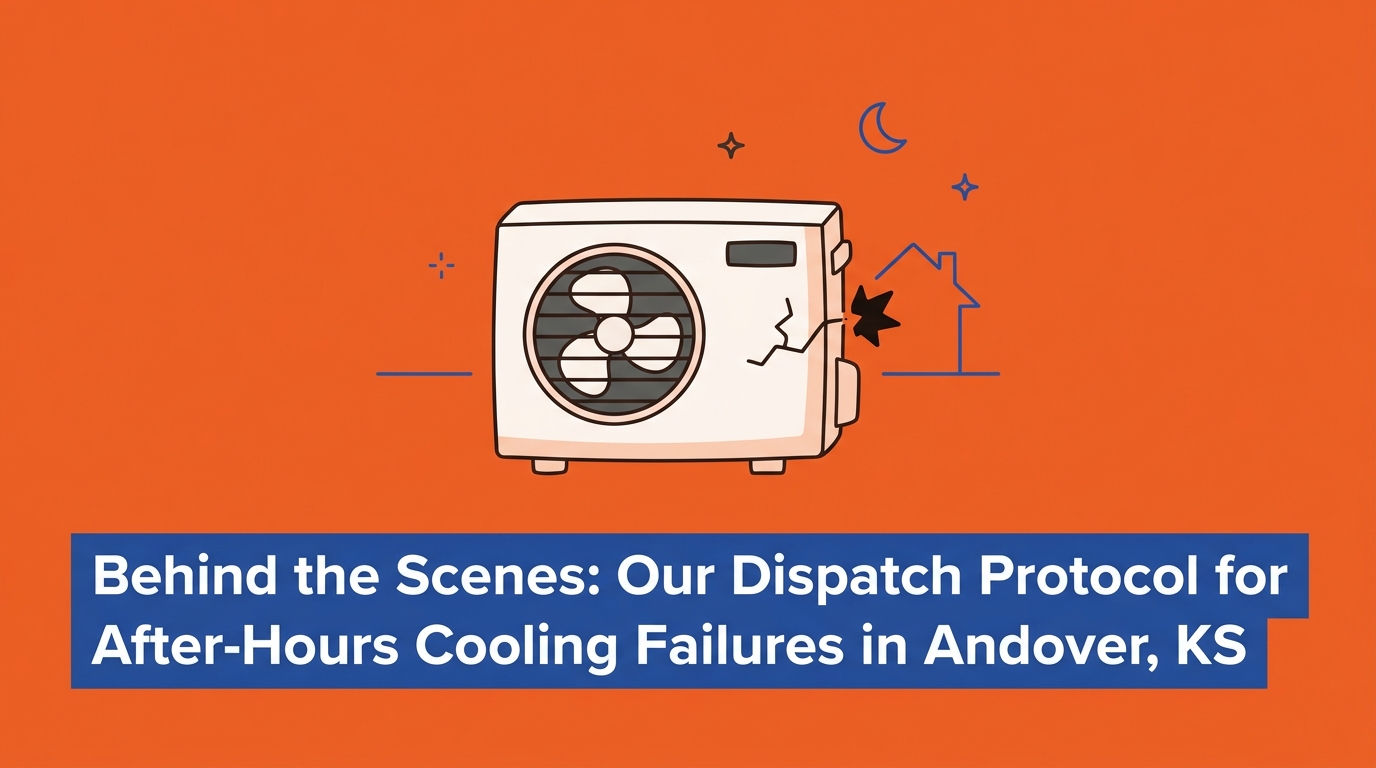

Your air conditioner has been running constantly all afternoon, but the vents are barely blowing warm air—and when the system finally shuts down completely at 2:00 AM, you need to understand our dispatch protocol for after-hours cooling failures in Andover. In our years of serving the local community, we've seen firsthand how incredibly stressful a complete cooling system failure in the middle of the night can be, especially when the house is already trapping the daytime heat. The heavy, stagnant air quickly makes it difficult to sleep, and the uncertainty of when help will arrive only adds to the frustration.
During the late August end-of-season heat, a broken air conditioner transitions rapidly from a basic comfort inconvenience to a critical safety issue. Kansas summer heat waves make urgent dispatch non-negotiable for indoor safety, as temperatures inside a sealed home can climb to dangerous levels before sunrise. Addressing these severe conditions requires much more than simply answering a phone and putting a name on a waiting list; it requires a highly structured, reliable routing protocol designed to handle catastrophic failures immediately.
Behind the scenes at our MJB Heating & Cooling headquarters, every late-night call triggers a specific operational workflow. We maintain a transparent, highly organized system to ensure that homeowners facing extreme indoor temperatures receive prioritized, rapid assistance. For immediate help when your system fails, request emergency HVAC services or contact our 24-hour emergency dispatch right away.
When a call comes into the dispatch center after hours, the first step is immediate assessment. Not all HVAC issues carry the same level of urgency, and our triage process is designed to identify which situations pose an immediate risk to the household. The dispatcher's primary goal is to gather specific data points about the system's status and the indoor environment to determine the exact level of response required.
There is a distinct operational difference between a standard repair need and a catastrophic failure risking indoor heat stress. A system that is making an unusual noise but still maintaining a 72-degree indoor temperature requires attention, but it does not carry the same immediate threat as a unit that has completely stopped functioning while the indoor temperature approaches 85 degrees. Our dispatchers prioritize calls based on these immediate safety risks, the current outdoor conditions, and the specific vulnerability of the household.
Homeowners in Andover can rest assured that their emergency is handled via a strict protocol, not a random waitlist. Calls are categorized logically, ensuring that the most severe heat emergencies receive the fastest possible deployment.
To maintain an efficient dispatch system, dispatchers use specific criteria to escalate a call to emergency status. The role of current outdoor temperatures is a heavy factor in priority routing. If the overnight low is still dangerously warm, the risk of indoor heat accumulation increases exponentially.
• Complete System Shutdown — System Status: No airflow, thermostat unresponsive — Dispatch Priority Level: High Priority Emergency
• Warm Air Blowing — System Status: Compressor failure, indoor temp rising rapidly — Dispatch Priority Level: High Priority Emergency
• Unusual System Noises — System Status: Grinding or squealing, but still cooling — Dispatch Priority Level: Standard Priority (Next available daylight hour)
• Minor Water Drip — System Status: Condensate line draining slowly, cooling active — Dispatch Priority Level: Standard Priority
By the time the late August end-of-season heat arrives, air conditioning systems have been working near maximum capacity for months. This continuous operation creates severe cumulative wear and tear on mechanical and electrical components. The constant cycling, combined with high ambient temperatures, pushes aging parts past their breaking point, which is why late-season breakdowns are statistically so common.
At MJB Heating & Cooling, our team typically sees a sharp spike in specific component failures right around the back-to-school transition. To combat this predictable surge in equipment failures, our operational strategy relies heavily on pre-stocking vans with the specific high-failure components that break down most frequently during severe heat waves. The most common late-summer culprits include:
• Dual run capacitors: These components store the electrical charge needed to jump-start the compressor and fan motors. Heat is the natural enemy of a capacitor, and months of thermal stress often cause them to swell and fail by late August.
• Electrical contactors: The switch that pulls high-voltage power to the outdoor unit can become pitted or burned out after thousands of cycles over a long summer.
• Condenser fan motors: Operating in direct sunlight and extreme heat, these motors can overheat and seize, causing the entire system to shut down to prevent compressor damage.
This strict inventory readiness eliminates delays and prevents multiple trips during night-time service calls. When a technician arrives at a home, they already have the necessary parts to resolve the vast majority of cooling failures on the spot. We utilize dedicated 24-hour service vans that are specifically equipped for these rapid-response scenarios, ensuring that the technician has everything required to restore cooling immediately without waiting for a supply house to open the next morning.
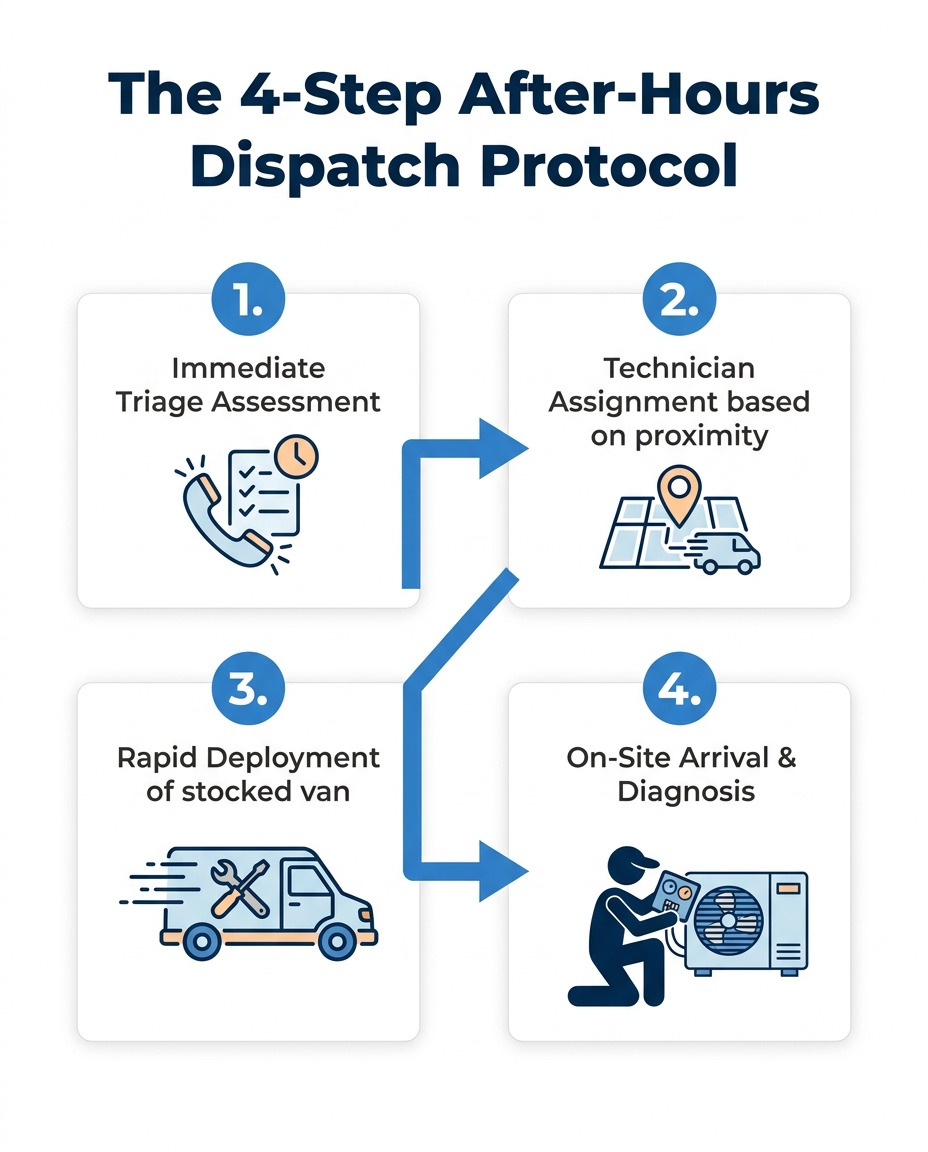
To ensure rapid, reliable service across Andover, we follow a strict, highly organized procedure for every late-night breakdown. This structured approach removes guesswork and guarantees that every homeowner receives a professional, timely response.
1. Immediate Call Reception and Triage Assessment: The process begins the moment the phone rings. The dispatcher collects vital information regarding the system's symptoms, the current indoor temperature, and any specific household vulnerabilities. This data determines the priority level and dictates the speed of deployment.
2. Technician Assignment based on proximity and specific system expertise: Once the call is categorized as an emergency, the system identifies the nearest on-call technician. Assignment is based on geographic proximity to reduce travel time, as well as the technician's specific expertise with the type of equipment experiencing the failure.
3. Rapid Deployment of the fully stocked 24-hour service van: The assigned technician is dispatched immediately, utilizing optimized routing software to navigate directly to the property. Because the van is already pre-stocked with high-failure seasonal components, there is no delay for gathering parts.
4. On-Site Arrival, immediate diagnosis, and swift restoration of cooling: Upon arrival, the technician performs a focused diagnostic assessment to isolate the exact cause of the failure. Once identified, the repair is executed immediately to halt the rising indoor temperatures and restore a safe, comfortable environment.
Operating a highly responsive emergency service requires mastering the logistics of dispatching from our Derby headquarters to locations across Sedgwick and Butler counties. The physical distance between municipalities means that strategic geographic routing is absolutely necessary to minimize the time a homeowner spends waiting in the heat.
During normal business hours, traffic patterns dictate response times. However, after-hours dispatch presents a different set of logistical advantages and challenges. While traffic is generally lighter, optimized routing software is still utilized to map the most direct, unobstructed path to the property. This technology accounts for late-night road closures, late-summer construction zones, and the fastest arterial routes connecting the two cities.
Furthermore, the local expertise of our technicians plays a massive role in our response times. As a local team, our technicians are deeply familiar with the area and do not waste precious minutes searching for poorly lit addresses or navigating confusing neighborhood layouts. They know the fastest routes to reach homeowners quickly, whether taking the turnpike or utilizing major county roads.
This geographic familiarity directly translates to faster relief from the heat. By utilizing a specialized rapid-response routing protocol optimized specifically for reaching the Andover service area without delay, we ensure that our response times remain consistent and reliable, even in the middle of the night.
The urgency behind our dispatch protocol is heavily driven by the physical realities of severe hot weather. National Weather Service (NWS) and CDC data consistently highlight how rapidly indoor temperatures can rise during severe heat waves. When an air conditioning system fails entirely, a home quickly transforms from a comfortable refuge into a heat trap.
The physical toll of trapped heat inside a home is significant. Houses are designed with thick insulation and thermal mass to retain energy. During the summer, this means that once the cooling stops, the heat absorbed by the roof and walls begins radiating inward. Without mechanical cooling to remove the humidity and lower the temperature, the indoor environment can quickly surpass outdoor temperatures, leading to a high risk of heat exhaustion for the occupants.
The late August end-of-season heat in Kansas specifically dictates the extreme urgency of nighttime dispatch. When the overnight lows offer no relief, a home cannot cool down naturally by opening windows. The speed of the dispatch protocol is directly connected to the prevention of these dangerous temperature spikes. Understanding the underlying causes of these failures—and why your AC stopped working at night—is helpful, but the immediate operational response is what ultimately protects the household.
The effectiveness of this protocol is best demonstrated by real-world operational outcomes in Andover. A pattern we see often during severe late-summer heat waves involves systems that have been struggling for days before finally suffering a catastrophic failure. In one specific instance our team recently handled, an air conditioning system had been completely non-functional for almost a week during extreme hot weather, leaving the household to endure severe indoor temperatures.
Upon receiving the call, the rapid dispatch protocol was immediately initiated. A fully stocked service van was routed to the property. Because the technician was equipped with the right diagnostic tools and replacement components, they were able to arrive, accurately diagnose the root cause of the failure, and get the system running immediately to provide instant relief from the heat.
The operational focus in these scenarios is always on thorough diagnosis and immediate action to mitigate the heat emergency. In this particular case, the immediate repair restored a safe indoor temperature, allowing the homeowners to sleep comfortably. Later, with the immediate emergency resolved, our team was able to return and strategically install a brand-new, highly efficient cooling system to permanently replace the aging unit. This outcome highlights the core objective of the emergency dispatch protocol: stabilize the environment immediately, then implement a long-term operational solution.
When you call for after-hours AC repair, your call is immediately answered by a dispatcher who performs a rapid triage assessment. They will ask specific questions about your system's symptoms and the current indoor temperature to determine the severity of the situation. Once assessed as an emergency, the closest available technician is assigned and deployed to your home in Andover.
HVAC emergency dispatch works through a structured protocol of prioritization and rapid routing. Calls are categorized based on the immediate risk to indoor safety, prioritizing complete system failures during extreme weather. Technicians are then routed from headquarters using optimized software to ensure the fastest possible arrival time, driving vans pre-stocked with essential repair parts.
Arrival times at night depend on the severity of the emergency, current call volume, and your exact location relative to the dispatched van. Because our routing protocol specifically optimizes the path from Derby to Andover, travel times are minimized. Our dispatchers will provide a clear, realistic estimated time of arrival based on real-time logistics.
An AC emergency is generally defined as a complete loss of cooling during periods of extreme heat, posing a risk to the safety and health of the occupants. If your system is blowing completely warm air, the thermostat is unresponsive, or you notice burning electrical smells, it qualifies as an emergency. Minor drips or unusual noises that do not affect the indoor temperature are typically scheduled for standard priority hours.
Leaving your AC off during a severe heat wave is highly discouraged due to the rapid accumulation of dangerous indoor heat. A sealed home will trap radiant heat, often causing indoor temperatures to exceed outdoor temperatures. Maintaining a functional cooling system is necessary to prevent heat exhaustion and protect the structural integrity of temperature-sensitive items in your home.
Late August is a peak time for failures because cooling systems have endured months of continuous thermal and mechanical stress. Components like capacitors, contactors, and fan motors suffer from cumulative wear and tear, making them highly susceptible to failure during end-of-season heat waves. This predictable spike in breakdowns is why our 24-hour vans are heavily pre-stocked for these specific repairs.
In our years of serving Sedgwick and Butler counties, we've learned that a reliable, structured dispatch system is the absolute best defense against severe heat emergencies in Andover. When the late August end-of-season heat pushes your cooling system to the point of failure, you need the certainty that help is actively on the way, backed by a clear operational protocol.
Our team at MJB Heating & Cooling is fully equipped, pre-stocked, and ready to respond when you need it most. We understand the physical toll of a broken air conditioner at night, and our routing logistics are designed specifically to eliminate unnecessary delays. If you are currently experiencing a complete system failure, or if you want to proactively discuss the reliability of your aging unit before the next heat wave hits, reach out to our dispatch center today to secure your indoor comfort.


Our A/C stopped working on a Sunday and due to health issues, we needed to find a service company available on a Sunday. I called MJB and left a message on their emergency voice mail. Within 10 minutes Tom Buck called me to hear my description of the symptoms. He was just finishing an appointment in Wichita and would be on his way to my home on the south end of Derby. He arrived within 30 minutes! From start to finish he was the perfect example of what you could ever hope for in an HVAC tech and a human being. His evaluation of our system inside and out was as thorough as I could ever imagine and once he was done with the repair, our system is running as well or better than ever. Well worth the price for the evaluation, parts, and labor. Thank you again Tom for an awesome experience.
Our AC went out during the hottest days of the year, and they were out next day! We have been jerked around by a shoddy home warranty for years. We finally had a chance to pick our own repair people, and MJB came highly recommended. I can see why! I was impressed with the honesty and speed at which they fixed our AC unit!
Our commercial building had a lightening/electrical strike and damaged our 20 ton AC unit. No one could find us a new unit before the end of September. Imagining going all of August and September with no AC in Kansas and working inside near 100 degree temps is less than thrilling. Dale and the team at MJB called around and saved the day. They had us a new unit 5 weeks earlier than other could promise and I now have happy employees. The unit is amazingly quiet, super cold and so much more energy efficient. Thank you for being our super hero!
Came out and installed my new furnace. Was very polite and affordable. They are very acknowledgeable and I highly recommend!
Thank you very much. We had our 1st warm night in 3weeks. MJB took the time and effort to find the real problem. And the employees were kind and thoughtful and explained things very well. I cannot thank you and all of MJB. Will recommend you highly. Thanks again Marjorie Herman Oxford Kansas
We had a new system installed and I was so impressed with how quick they were in come out and install it, in the middle of a hot summer day. They were so friendly & very professional. I had a small problem with a weird sound and they came over immediately and fixed it. Love them!