.avif)





Blogs
Stay updated with our latest blog posts.
The heat pump benefits for Kansas homeowners are real, measurable, and especially relevant if you're tired of unpredictable utility bills and a heating system that works overtime every January. Kansas weather doesn't play favorites — you can go from a mild 50-degree afternoon to a bitter cold snap within 48 hours. That kind of climate puts serious demands on your home comfort system, and your choice of heating and cooling equipment matters more here than in most parts of the country.
Here's a quick look at the core benefits Kansas homeowners get from a heat pump:
Whether you're replacing an aging furnace, upgrading your central AC, or looking for a smarter all-in-one system, this guide covers everything you need to make a confident decision for your Kansas home.
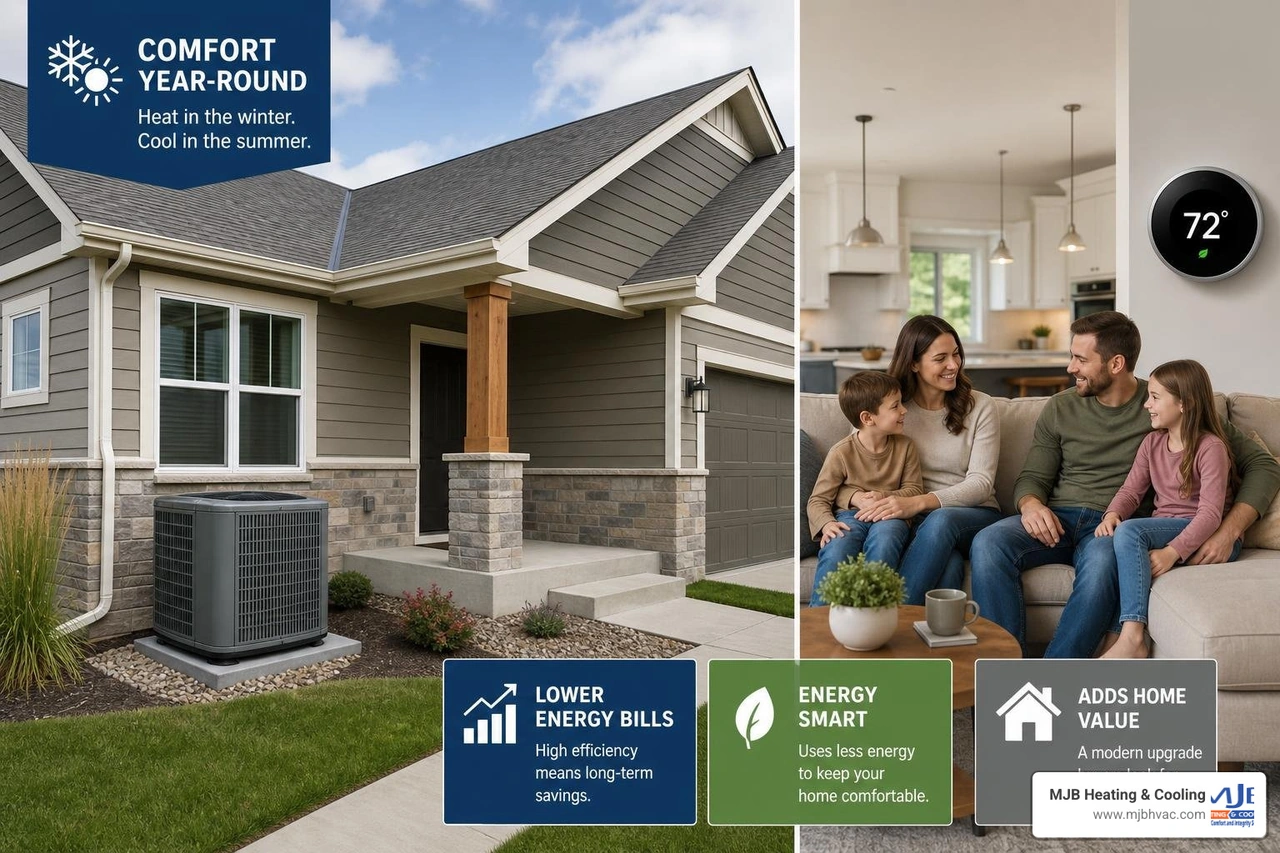
Quick look at heat pump benefits for kansas homeowners:
To appreciate why a heat pump is such a smart investment for your home in the Wichita metro area, it helps to understand the fundamental difference in how these systems operate compared to traditional heating and cooling setups.
A traditional gas or electric furnace creates heat through combustion or electric resistance. This process is inherently limited; even a high-efficiency furnace can never exceed 100% efficiency because it cannot generate more heat energy than the fuel it consumes. In contrast, a heat pump does not generate heat at all. Instead, it moves existing heat from one place to another.
During the hot Kansas summer, a heat pump acts exactly like a standard air conditioner. It extracts heat from inside your home and transfers it outdoors, leaving your indoor spaces cool and comfortable. In the winter, the refrigeration cycle reverses. Even when the outdoor air feels freezing to us, there is still a significant amount of ambient thermal energy present. The heat pump absorbs this outdoor heat, compresses the refrigerant to raise its temperature, and releases it into your home.
Because moving heat requires far less electricity than creating it, heat pumps can deliver up to three times more heat energy than the electricity they consume. This incredible thermodynamic advantage translates directly into lower utility bills and more consistent year-round comfort. For a detailed breakdown of this refrigeration cycle, check out our guide on How Does a Heat Pump Work.
Many local homeowners wonder if a system that relies on outdoor air can truly keep up with our unpredictable winters and scorching summer heat waves. After all, South-Central Kansas sits in a transitional climate zone. We regularly experience intense winter cold snaps, strong winds, and summer temperatures that soar past 100°F.
Historically, older heat pumps struggled when temperatures dropped below freezing, which gave rise to the misconception that they aren't suitable for the Midwest. However, modern HVAC technology has completely changed the landscape. Today's cold-climate heat pumps are engineered specifically to maintain peak performance through our most intense seasonal shifts. If you want to know more about matching your HVAC system to our unique local weather patterns, take a look at our Kansas Climate HVAC Guide and explore the Best HVAC Setup for Kansas Weather.
Modern cold-climate heat pumps utilize advanced engineering to solve the challenges of sub-zero heating. The secret lies in three key technological advancements:
These innovations ensure that high-quality heat pumps maintain excellent heating capacity when you need it most. To understand how these efficiency ratings translate into real-world performance, you can read more and Discover Energy Savings with Daikin's HSPF Rating Insights.
For homeowners in the Wichita metro area, choosing between a standalone heat pump and a dual-fuel hybrid system is a common decision. A standalone system relies entirely on the heat pump (often paired with auxiliary electric heat strips for extreme emergency conditions). A dual-fuel system pairs an electric heat pump with a high-efficiency gas furnace.
In a dual-fuel hybrid setup, the heat pump handles all the heating during mild winter days. When temperatures drop below a designated switchover point—typically around 30°F to 35°F—the system automatically switches to the gas furnace. This hybrid approach combines the high efficiency of a heat pump with the rapid, high-temperature heating of natural gas during extreme cold snaps.
| Feature | Standalone Heat Pump | Dual-Fuel Hybrid System |
|---|---|---|
| Primary Heating Source | Electricity (Heat Pump) | Electricity (Mild Weather) / Gas (Extreme Cold) |
| Cooling Source | Electricity (Heat Pump) | Electricity (Heat Pump) |
| Backup Heat | Electric Resistance Strips | Natural Gas or Propane Furnace |
| Best Suited For | Homes without gas lines, highly insulated modern builds | Homes with existing gas lines, older homes with moderate insulation |
| Environmental Impact | Lowest carbon footprint (fully electric) | Low carbon footprint with reliable backup |
| Extreme Cold Performance | Relies on advanced cold-climate tech or electric backup | Seamless transition to gas combustion for high-temp air |
Upgrading to a heat pump is an investment that pays dividends over time. Because heating and cooling account for up to half of a typical home's energy use, cutting your electricity consumption for heating by up to 50% can lead to substantial long-term savings.
To make this transition even more accessible, there are numerous financial incentives available in 2026. Under the federal Inflation Reduction Act, homeowners can claim the Section 25C tax credit, which provides a 30% credit for qualifying heat pump installations. Additionally, local utility providers like Evergy offer tiered rebates for energy-efficient HVAC upgrades.
By stacking these federal tax credits with local utility rebates, you can significantly offset your initial investment. To learn more about navigating these financial opportunities, check out our comprehensive guide on Kansas Energy Rebates for HVAC Upgrades and see How Much Does a High Efficiency System Save to calculate your potential return on investment.
Beyond the direct utility bill savings, choosing a heat pump offers a powerful combination of environmental and financial advantages. Kansas electricity rates have experienced a steady climb in recent years, rising from 13.0 cents per kWh in 2021 to 14.2 cents in 2024. As energy costs continue to fluctuate, maximizing your home's operational efficiency is the best way to protect your household budget.
From an environmental perspective, heat pumps are the cleanest heating option available. Because they run entirely on electricity and move heat rather than burning fossil fuels, they produce zero direct emissions. As the Kansas electrical grid continues to integrate more renewable energy sources like wind and solar, your heat pump automatically becomes even cleaner over time.
To evaluate these benefits, it helps to understand the industry-standard efficiency metrics:
Understanding these numbers allows you to choose a system tailored perfectly to your budget and efficiency goals. Learn more by reading Efficiency Ratings Explained for Homeowners.
Investing in a high-efficiency heat pump does more than lower your monthly bills—it also enhances your home's equity. Modern home buyers are increasingly energy-conscious, and a system that offers both heating and cooling while keeping operating costs low is a major selling point. National real estate studies show that homes with high-efficiency air-source heat pumps can sell for 4% to 7% more than those with traditional HVAC setups. For a deeper look at how home upgrades impact your equity, read How a New HVAC System Increases Home Value.
To protect this investment and ensure your system operates at peak efficiency for its entire service life, regular maintenance is essential. While a gas furnace only runs during the colder months, a heat pump works year-round to provide both heating and cooling. Because of this continuous operation, we recommend scheduling bi-annual professional tune-ups—once in the spring before the summer heat hits, and once in the fall before winter arrives.
During these seasonal maintenance visits, our technicians will:
With proper care, a quality heat pump typically lasts 12 to 15 years. If your current HVAC system is starting to show its age, you can explore the Average Lifespan of an HVAC System in Kansas and use our decision framework to determine Should I Repair or Replace My HVAC System.
Proper sizing is critical for comfort and efficiency. An oversized system will cycle on and off too quickly (short-cycling), which increases wear and tear and fails to dehumidify your home properly in the summer. An undersized system will run constantly and struggle to maintain your desired temperature.
To determine the perfect size, we perform a professional Manual J load calculation. This assessment looks beyond simple square footage to analyze your home's insulation levels, window placement, ceiling heights, ductwork design, and local climate factors.
Yes. Modern cold-climate heat pumps are designed to operate efficiently in sub-zero temperatures. High-performance models can maintain 100% of their heating capacity down to 5°F and continue to provide reliable heat even when temperatures drop as low as -15°F. For extreme weather conditions, pairing your heat pump with a backup gas furnace in a dual-fuel configuration or utilizing electric auxiliary heat ensures your home remains safe and warm.
Not necessarily. While heat pumps do require a dedicated electrical circuit, many homes with a standard 200-amp electrical panel have plenty of capacity to support a heat pump installation without an upgrade. This is calculated using the National Electrical Code (NEC) 220.82 load calculation method, which accounts for the diversity of electrical loads in your home. If your home has an older 100-amp panel, our team can perform a comprehensive electrical load assessment to determine if a panel upgrade is necessary.
Upgrading to a heat pump is one of the smartest decisions you can make for your Kansas home. From delivering outstanding year-round comfort to significantly reducing your monthly energy bills, the long-term benefits are clear.
At MJB Heating & Cooling, we have proudly served the Wichita metro area and surrounding communities since 1984. As a family-owned business founded in Derby, KS, we built our reputation on quality workmanship, honest advice, and dependable service. Whether you are in Derby, Andover, Haysville, Wichita, or any of our surrounding service locations, our experienced team is here to help you find the perfect comfort solutions for your home.
If you are ready to experience the year-round comfort and efficiency of a modern heat pump, contact us today to schedule your consultation for a professional heat pump installation in Derby, KS.
The heat pump benefits for Kansas homeowners are real, measurable, and especially relevant if you're tired of unpredictable utility bills and a heating system that works overtime every January. Kansas weather doesn't play favorites — you can go from a mild 50-degree afternoon to a bitter cold snap within 48 hours. That kind of climate puts serious demands on your home comfort system, and your choice of heating and cooling equipment matters more here than in most parts of the country.
Here's a quick look at the core benefits Kansas homeowners get from a heat pump:
Whether you're replacing an aging furnace, upgrading your central AC, or looking for a smarter all-in-one system, this guide covers everything you need to make a confident decision for your Kansas home.
Quick look at heat pump benefits for kansas homeowners:
To appreciate why a heat pump is such a smart investment for your home in the Wichita metro area, it helps to understand the fundamental difference in how these systems operate compared to traditional heating and cooling setups.
A traditional gas or electric furnace creates heat through combustion or electric resistance. This process is inherently limited; even a high-efficiency furnace can never exceed 100% efficiency because it cannot generate more heat energy than the fuel it consumes. In contrast, a heat pump does not generate heat at all. Instead, it moves existing heat from one place to another.
During the hot Kansas summer, a heat pump acts exactly like a standard air conditioner. It extracts heat from inside your home and transfers it outdoors, leaving your indoor spaces cool and comfortable. In the winter, the refrigeration cycle reverses. Even when the outdoor air feels freezing to us, there is still a significant amount of ambient thermal energy present. The heat pump absorbs this outdoor heat, compresses the refrigerant to raise its temperature, and releases it into your home.
Because moving heat requires far less electricity than creating it, heat pumps can deliver up to three times more heat energy than the electricity they consume. This incredible thermodynamic advantage translates directly into lower utility bills and more consistent year-round comfort. For a detailed breakdown of this refrigeration cycle, check out our guide on How Does a Heat Pump Work.
Many local homeowners wonder if a system that relies on outdoor air can truly keep up with our unpredictable winters and scorching summer heat waves. After all, South-Central Kansas sits in a transitional climate zone. We regularly experience intense winter cold snaps, strong winds, and summer temperatures that soar past 100°F.
Historically, older heat pumps struggled when temperatures dropped below freezing, which gave rise to the misconception that they aren't suitable for the Midwest. However, modern HVAC technology has completely changed the landscape. Today's cold-climate heat pumps are engineered specifically to maintain peak performance through our most intense seasonal shifts. If you want to know more about matching your HVAC system to our unique local weather patterns, take a look at our Kansas Climate HVAC Guide and explore the Best HVAC Setup for Kansas Weather.
Modern cold-climate heat pumps utilize advanced engineering to solve the challenges of sub-zero heating. The secret lies in three key technological advancements:
These innovations ensure that high-quality heat pumps maintain excellent heating capacity when you need it most. To understand how these efficiency ratings translate into real-world performance, you can read more and Discover Energy Savings with Daikin's HSPF Rating Insights.
For homeowners in the Wichita metro area, choosing between a standalone heat pump and a dual-fuel hybrid system is a common decision. A standalone system relies entirely on the heat pump (often paired with auxiliary electric heat strips for extreme emergency conditions). A dual-fuel system pairs an electric heat pump with a high-efficiency gas furnace.
In a dual-fuel hybrid setup, the heat pump handles all the heating during mild winter days. When temperatures drop below a designated switchover point—typically around 30°F to 35°F—the system automatically switches to the gas furnace. This hybrid approach combines the high efficiency of a heat pump with the rapid, high-temperature heating of natural gas during extreme cold snaps.
| Feature | Standalone Heat Pump | Dual-Fuel Hybrid System |
|---|---|---|
| Primary Heating Source | Electricity (Heat Pump) | Electricity (Mild Weather) / Gas (Extreme Cold) |
| Cooling Source | Electricity (Heat Pump) | Electricity (Heat Pump) |
| Backup Heat | Electric Resistance Strips | Natural Gas or Propane Furnace |
| Best Suited For | Homes without gas lines, highly insulated modern builds | Homes with existing gas lines, older homes with moderate insulation |
| Environmental Impact | Lowest carbon footprint (fully electric) | Low carbon footprint with reliable backup |
| Extreme Cold Performance | Relies on advanced cold-climate tech or electric backup | Seamless transition to gas combustion for high-temp air |
Upgrading to a heat pump is an investment that pays dividends over time. Because heating and cooling account for up to half of a typical home's energy use, cutting your electricity consumption for heating by up to 50% can lead to substantial long-term savings.
To make this transition even more accessible, there are numerous financial incentives available in 2026. Under the federal Inflation Reduction Act, homeowners can claim the Section 25C tax credit, which provides a 30% credit for qualifying heat pump installations. Additionally, local utility providers like Evergy offer tiered rebates for energy-efficient HVAC upgrades.
By stacking these federal tax credits with local utility rebates, you can significantly offset your initial investment. To learn more about navigating these financial opportunities, check out our comprehensive guide on Kansas Energy Rebates for HVAC Upgrades and see How Much Does a High Efficiency System Save to calculate your potential return on investment.
Beyond the direct utility bill savings, choosing a heat pump offers a powerful combination of environmental and financial advantages. Kansas electricity rates have experienced a steady climb in recent years, rising from 13.0 cents per kWh in 2021 to 14.2 cents in 2024. As energy costs continue to fluctuate, maximizing your home's operational efficiency is the best way to protect your household budget.
From an environmental perspective, heat pumps are the cleanest heating option available. Because they run entirely on electricity and move heat rather than burning fossil fuels, they produce zero direct emissions. As the Kansas electrical grid continues to integrate more renewable energy sources like wind and solar, your heat pump automatically becomes even cleaner over time.
To evaluate these benefits, it helps to understand the industry-standard efficiency metrics:
Understanding these numbers allows you to choose a system tailored perfectly to your budget and efficiency goals. Learn more by reading Efficiency Ratings Explained for Homeowners.
Investing in a high-efficiency heat pump does more than lower your monthly bills—it also enhances your home's equity. Modern home buyers are increasingly energy-conscious, and a system that offers both heating and cooling while keeping operating costs low is a major selling point. National real estate studies show that homes with high-efficiency air-source heat pumps can sell for 4% to 7% more than those with traditional HVAC setups. For a deeper look at how home upgrades impact your equity, read How a New HVAC System Increases Home Value.
To protect this investment and ensure your system operates at peak efficiency for its entire service life, regular maintenance is essential. While a gas furnace only runs during the colder months, a heat pump works year-round to provide both heating and cooling. Because of this continuous operation, we recommend scheduling bi-annual professional tune-ups—once in the spring before the summer heat hits, and once in the fall before winter arrives.
During these seasonal maintenance visits, our technicians will:
With proper care, a quality heat pump typically lasts 12 to 15 years. If your current HVAC system is starting to show its age, you can explore the Average Lifespan of an HVAC System in Kansas and use our decision framework to determine Should I Repair or Replace My HVAC System.
Proper sizing is critical for comfort and efficiency. An oversized system will cycle on and off too quickly (short-cycling), which increases wear and tear and fails to dehumidify your home properly in the summer. An undersized system will run constantly and struggle to maintain your desired temperature.
To determine the perfect size, we perform a professional Manual J load calculation. This assessment looks beyond simple square footage to analyze your home's insulation levels, window placement, ceiling heights, ductwork design, and local climate factors.
Yes. Modern cold-climate heat pumps are designed to operate efficiently in sub-zero temperatures. High-performance models can maintain 100% of their heating capacity down to 5°F and continue to provide reliable heat even when temperatures drop as low as -15°F. For extreme weather conditions, pairing your heat pump with a backup gas furnace in a dual-fuel configuration or utilizing electric auxiliary heat ensures your home remains safe and warm.
Not necessarily. While heat pumps do require a dedicated electrical circuit, many homes with a standard 200-amp electrical panel have plenty of capacity to support a heat pump installation without an upgrade. This is calculated using the National Electrical Code (NEC) 220.82 load calculation method, which accounts for the diversity of electrical loads in your home. If your home has an older 100-amp panel, our team can perform a comprehensive electrical load assessment to determine if a panel upgrade is necessary.
Upgrading to a heat pump is one of the smartest decisions you can make for your Kansas home. From delivering outstanding year-round comfort to significantly reducing your monthly energy bills, the long-term benefits are clear.
At MJB Heating & Cooling, we have proudly served the Wichita metro area and surrounding communities since 1984. As a family-owned business founded in Derby, KS, we built our reputation on quality workmanship, honest advice, and dependable service. Whether you are in Derby, Andover, Haysville, Wichita, or any of our surrounding service locations, our experienced team is here to help you find the perfect comfort solutions for your home.
If you are ready to experience the year-round comfort and efficiency of a modern heat pump, contact us today to schedule your consultation for a professional heat pump installation in Derby, KS.
The heat pump benefits for Kansas homeowners are real, measurable, and especially relevant if you're tired of unpredictable utility bills and a heating system that works overtime every January. Kansas weather doesn't play favorites — you can go from a mild 50-degree afternoon to a bitter cold snap within 48 hours. That kind of climate puts serious demands on your home comfort system, and your choice of heating and cooling equipment matters more here than in most parts of the country.
Here's a quick look at the core benefits Kansas homeowners get from a heat pump:
Whether you're replacing an aging furnace, upgrading your central AC, or looking for a smarter all-in-one system, this guide covers everything you need to make a confident decision for your Kansas home.
Quick look at heat pump benefits for kansas homeowners:
To appreciate why a heat pump is such a smart investment for your home in the Wichita metro area, it helps to understand the fundamental difference in how these systems operate compared to traditional heating and cooling setups.
A traditional gas or electric furnace creates heat through combustion or electric resistance. This process is inherently limited; even a high-efficiency furnace can never exceed 100% efficiency because it cannot generate more heat energy than the fuel it consumes. In contrast, a heat pump does not generate heat at all. Instead, it moves existing heat from one place to another.
During the hot Kansas summer, a heat pump acts exactly like a standard air conditioner. It extracts heat from inside your home and transfers it outdoors, leaving your indoor spaces cool and comfortable. In the winter, the refrigeration cycle reverses. Even when the outdoor air feels freezing to us, there is still a significant amount of ambient thermal energy present. The heat pump absorbs this outdoor heat, compresses the refrigerant to raise its temperature, and releases it into your home.
Because moving heat requires far less electricity than creating it, heat pumps can deliver up to three times more heat energy than the electricity they consume. This incredible thermodynamic advantage translates directly into lower utility bills and more consistent year-round comfort. For a detailed breakdown of this refrigeration cycle, check out our guide on How Does a Heat Pump Work.
Many local homeowners wonder if a system that relies on outdoor air can truly keep up with our unpredictable winters and scorching summer heat waves. After all, South-Central Kansas sits in a transitional climate zone. We regularly experience intense winter cold snaps, strong winds, and summer temperatures that soar past 100°F.
Historically, older heat pumps struggled when temperatures dropped below freezing, which gave rise to the misconception that they aren't suitable for the Midwest. However, modern HVAC technology has completely changed the landscape. Today's cold-climate heat pumps are engineered specifically to maintain peak performance through our most intense seasonal shifts. If you want to know more about matching your HVAC system to our unique local weather patterns, take a look at our Kansas Climate HVAC Guide and explore the Best HVAC Setup for Kansas Weather.
Modern cold-climate heat pumps utilize advanced engineering to solve the challenges of sub-zero heating. The secret lies in three key technological advancements:
These innovations ensure that high-quality heat pumps maintain excellent heating capacity when you need it most. To understand how these efficiency ratings translate into real-world performance, you can read more and Discover Energy Savings with Daikin's HSPF Rating Insights.
For homeowners in the Wichita metro area, choosing between a standalone heat pump and a dual-fuel hybrid system is a common decision. A standalone system relies entirely on the heat pump (often paired with auxiliary electric heat strips for extreme emergency conditions). A dual-fuel system pairs an electric heat pump with a high-efficiency gas furnace.
In a dual-fuel hybrid setup, the heat pump handles all the heating during mild winter days. When temperatures drop below a designated switchover point—typically around 30°F to 35°F—the system automatically switches to the gas furnace. This hybrid approach combines the high efficiency of a heat pump with the rapid, high-temperature heating of natural gas during extreme cold snaps.
| Feature | Standalone Heat Pump | Dual-Fuel Hybrid System |
|---|---|---|
| Primary Heating Source | Electricity (Heat Pump) | Electricity (Mild Weather) / Gas (Extreme Cold) |
| Cooling Source | Electricity (Heat Pump) | Electricity (Heat Pump) |
| Backup Heat | Electric Resistance Strips | Natural Gas or Propane Furnace |
| Best Suited For | Homes without gas lines, highly insulated modern builds | Homes with existing gas lines, older homes with moderate insulation |
| Environmental Impact | Lowest carbon footprint (fully electric) | Low carbon footprint with reliable backup |
| Extreme Cold Performance | Relies on advanced cold-climate tech or electric backup | Seamless transition to gas combustion for high-temp air |
Upgrading to a heat pump is an investment that pays dividends over time. Because heating and cooling account for up to half of a typical home's energy use, cutting your electricity consumption for heating by up to 50% can lead to substantial long-term savings.
To make this transition even more accessible, there are numerous financial incentives available in 2026. Under the federal Inflation Reduction Act, homeowners can claim the Section 25C tax credit, which provides a 30% credit for qualifying heat pump installations. Additionally, local utility providers like Evergy offer tiered rebates for energy-efficient HVAC upgrades.
By stacking these federal tax credits with local utility rebates, you can significantly offset your initial investment. To learn more about navigating these financial opportunities, check out our comprehensive guide on Kansas Energy Rebates for HVAC Upgrades and see How Much Does a High Efficiency System Save to calculate your potential return on investment.
Beyond the direct utility bill savings, choosing a heat pump offers a powerful combination of environmental and financial advantages. Kansas electricity rates have experienced a steady climb in recent years, rising from 13.0 cents per kWh in 2021 to 14.2 cents in 2024. As energy costs continue to fluctuate, maximizing your home's operational efficiency is the best way to protect your household budget.
From an environmental perspective, heat pumps are the cleanest heating option available. Because they run entirely on electricity and move heat rather than burning fossil fuels, they produce zero direct emissions. As the Kansas electrical grid continues to integrate more renewable energy sources like wind and solar, your heat pump automatically becomes even cleaner over time.
To evaluate these benefits, it helps to understand the industry-standard efficiency metrics:
Understanding these numbers allows you to choose a system tailored perfectly to your budget and efficiency goals. Learn more by reading Efficiency Ratings Explained for Homeowners.
Investing in a high-efficiency heat pump does more than lower your monthly bills—it also enhances your home's equity. Modern home buyers are increasingly energy-conscious, and a system that offers both heating and cooling while keeping operating costs low is a major selling point. National real estate studies show that homes with high-efficiency air-source heat pumps can sell for 4% to 7% more than those with traditional HVAC setups. For a deeper look at how home upgrades impact your equity, read How a New HVAC System Increases Home Value.
To protect this investment and ensure your system operates at peak efficiency for its entire service life, regular maintenance is essential. While a gas furnace only runs during the colder months, a heat pump works year-round to provide both heating and cooling. Because of this continuous operation, we recommend scheduling bi-annual professional tune-ups—once in the spring before the summer heat hits, and once in the fall before winter arrives.
During these seasonal maintenance visits, our technicians will:
With proper care, a quality heat pump typically lasts 12 to 15 years. If your current HVAC system is starting to show its age, you can explore the Average Lifespan of an HVAC System in Kansas and use our decision framework to determine Should I Repair or Replace My HVAC System.
Proper sizing is critical for comfort and efficiency. An oversized system will cycle on and off too quickly (short-cycling), which increases wear and tear and fails to dehumidify your home properly in the summer. An undersized system will run constantly and struggle to maintain your desired temperature.
To determine the perfect size, we perform a professional Manual J load calculation. This assessment looks beyond simple square footage to analyze your home's insulation levels, window placement, ceiling heights, ductwork design, and local climate factors.
Yes. Modern cold-climate heat pumps are designed to operate efficiently in sub-zero temperatures. High-performance models can maintain 100% of their heating capacity down to 5°F and continue to provide reliable heat even when temperatures drop as low as -15°F. For extreme weather conditions, pairing your heat pump with a backup gas furnace in a dual-fuel configuration or utilizing electric auxiliary heat ensures your home remains safe and warm.
Not necessarily. While heat pumps do require a dedicated electrical circuit, many homes with a standard 200-amp electrical panel have plenty of capacity to support a heat pump installation without an upgrade. This is calculated using the National Electrical Code (NEC) 220.82 load calculation method, which accounts for the diversity of electrical loads in your home. If your home has an older 100-amp panel, our team can perform a comprehensive electrical load assessment to determine if a panel upgrade is necessary.
Upgrading to a heat pump is one of the smartest decisions you can make for your Kansas home. From delivering outstanding year-round comfort to significantly reducing your monthly energy bills, the long-term benefits are clear.
At MJB Heating & Cooling, we have proudly served the Wichita metro area and surrounding communities since 1984. As a family-owned business founded in Derby, KS, we built our reputation on quality workmanship, honest advice, and dependable service. Whether you are in Derby, Andover, Haysville, Wichita, or any of our surrounding service locations, our experienced team is here to help you find the perfect comfort solutions for your home.
If you are ready to experience the year-round comfort and efficiency of a modern heat pump, contact us today to schedule your consultation for a professional heat pump installation in Derby, KS.
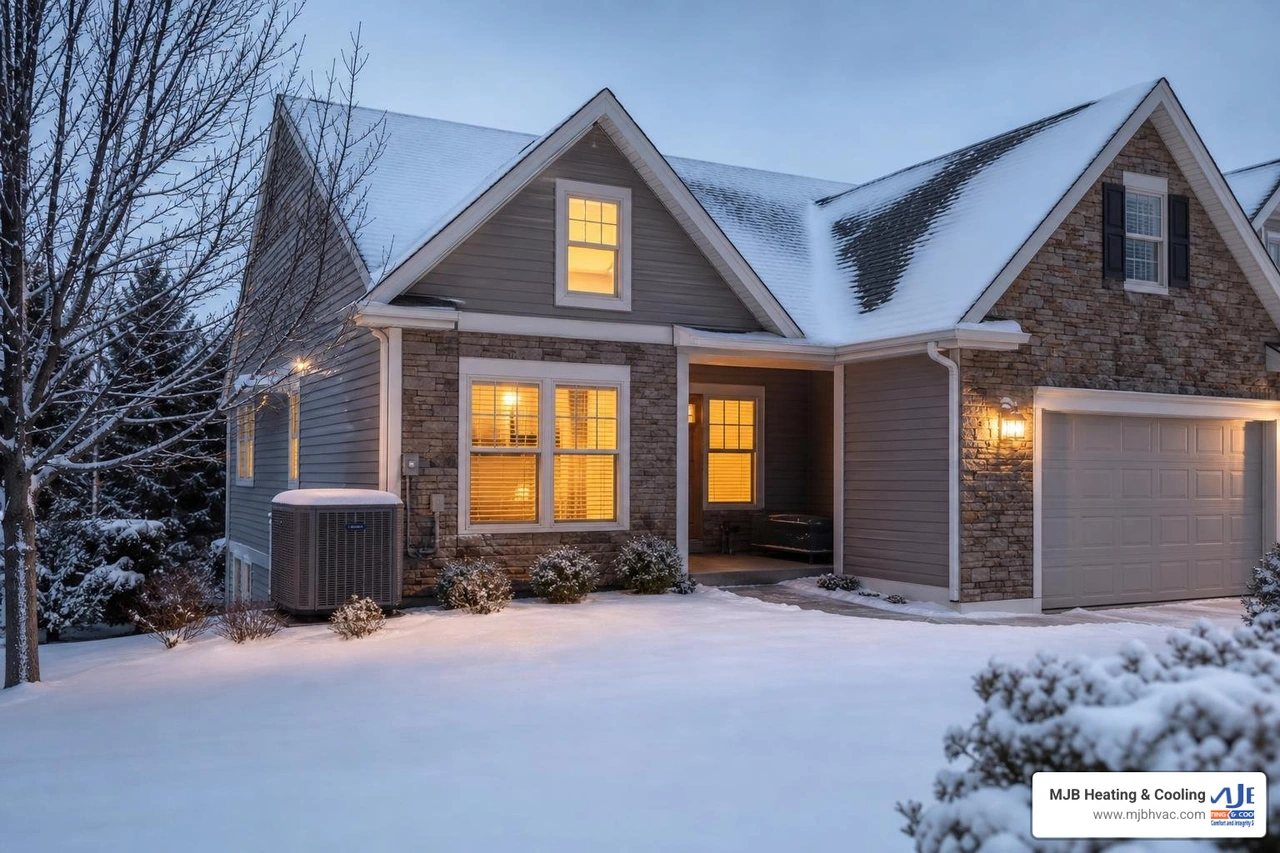

The heat pump benefits for Kansas homeowners are real, measurable, and especially relevant if you're tired of unpredictable utility bills and a heating system that works overtime every January. Kansas weather doesn't play favorites — you can go from a mild 50-degree afternoon to a bitter cold snap within 48 hours. That kind of climate puts serious demands on your home comfort system, and your choice of heating and cooling equipment matters more here than in most parts of the country.
Here's a quick look at the core benefits Kansas homeowners get from a heat pump:
Whether you're replacing an aging furnace, upgrading your central AC, or looking for a smarter all-in-one system, this guide covers everything you need to make a confident decision for your Kansas home.
Quick look at heat pump benefits for kansas homeowners:
To appreciate why a heat pump is such a smart investment for your home in the Wichita metro area, it helps to understand the fundamental difference in how these systems operate compared to traditional heating and cooling setups.
A traditional gas or electric furnace creates heat through combustion or electric resistance. This process is inherently limited; even a high-efficiency furnace can never exceed 100% efficiency because it cannot generate more heat energy than the fuel it consumes. In contrast, a heat pump does not generate heat at all. Instead, it moves existing heat from one place to another.
During the hot Kansas summer, a heat pump acts exactly like a standard air conditioner. It extracts heat from inside your home and transfers it outdoors, leaving your indoor spaces cool and comfortable. In the winter, the refrigeration cycle reverses. Even when the outdoor air feels freezing to us, there is still a significant amount of ambient thermal energy present. The heat pump absorbs this outdoor heat, compresses the refrigerant to raise its temperature, and releases it into your home.
Because moving heat requires far less electricity than creating it, heat pumps can deliver up to three times more heat energy than the electricity they consume. This incredible thermodynamic advantage translates directly into lower utility bills and more consistent year-round comfort. For a detailed breakdown of this refrigeration cycle, check out our guide on How Does a Heat Pump Work.
Many local homeowners wonder if a system that relies on outdoor air can truly keep up with our unpredictable winters and scorching summer heat waves. After all, South-Central Kansas sits in a transitional climate zone. We regularly experience intense winter cold snaps, strong winds, and summer temperatures that soar past 100°F.
Historically, older heat pumps struggled when temperatures dropped below freezing, which gave rise to the misconception that they aren't suitable for the Midwest. However, modern HVAC technology has completely changed the landscape. Today's cold-climate heat pumps are engineered specifically to maintain peak performance through our most intense seasonal shifts. If you want to know more about matching your HVAC system to our unique local weather patterns, take a look at our Kansas Climate HVAC Guide and explore the Best HVAC Setup for Kansas Weather.
Modern cold-climate heat pumps utilize advanced engineering to solve the challenges of sub-zero heating. The secret lies in three key technological advancements:
These innovations ensure that high-quality heat pumps maintain excellent heating capacity when you need it most. To understand how these efficiency ratings translate into real-world performance, you can read more and Discover Energy Savings with Daikin's HSPF Rating Insights.
For homeowners in the Wichita metro area, choosing between a standalone heat pump and a dual-fuel hybrid system is a common decision. A standalone system relies entirely on the heat pump (often paired with auxiliary electric heat strips for extreme emergency conditions). A dual-fuel system pairs an electric heat pump with a high-efficiency gas furnace.
In a dual-fuel hybrid setup, the heat pump handles all the heating during mild winter days. When temperatures drop below a designated switchover point—typically around 30°F to 35°F—the system automatically switches to the gas furnace. This hybrid approach combines the high efficiency of a heat pump with the rapid, high-temperature heating of natural gas during extreme cold snaps.
| Feature | Standalone Heat Pump | Dual-Fuel Hybrid System |
|---|---|---|
| Primary Heating Source | Electricity (Heat Pump) | Electricity (Mild Weather) / Gas (Extreme Cold) |
| Cooling Source | Electricity (Heat Pump) | Electricity (Heat Pump) |
| Backup Heat | Electric Resistance Strips | Natural Gas or Propane Furnace |
| Best Suited For | Homes without gas lines, highly insulated modern builds | Homes with existing gas lines, older homes with moderate insulation |
| Environmental Impact | Lowest carbon footprint (fully electric) | Low carbon footprint with reliable backup |
| Extreme Cold Performance | Relies on advanced cold-climate tech or electric backup | Seamless transition to gas combustion for high-temp air |
Upgrading to a heat pump is an investment that pays dividends over time. Because heating and cooling account for up to half of a typical home's energy use, cutting your electricity consumption for heating by up to 50% can lead to substantial long-term savings.
To make this transition even more accessible, there are numerous financial incentives available in 2026. Under the federal Inflation Reduction Act, homeowners can claim the Section 25C tax credit, which provides a 30% credit for qualifying heat pump installations. Additionally, local utility providers like Evergy offer tiered rebates for energy-efficient HVAC upgrades.
By stacking these federal tax credits with local utility rebates, you can significantly offset your initial investment. To learn more about navigating these financial opportunities, check out our comprehensive guide on Kansas Energy Rebates for HVAC Upgrades and see How Much Does a High Efficiency System Save to calculate your potential return on investment.
Beyond the direct utility bill savings, choosing a heat pump offers a powerful combination of environmental and financial advantages. Kansas electricity rates have experienced a steady climb in recent years, rising from 13.0 cents per kWh in 2021 to 14.2 cents in 2024. As energy costs continue to fluctuate, maximizing your home's operational efficiency is the best way to protect your household budget.
From an environmental perspective, heat pumps are the cleanest heating option available. Because they run entirely on electricity and move heat rather than burning fossil fuels, they produce zero direct emissions. As the Kansas electrical grid continues to integrate more renewable energy sources like wind and solar, your heat pump automatically becomes even cleaner over time.
To evaluate these benefits, it helps to understand the industry-standard efficiency metrics:
Understanding these numbers allows you to choose a system tailored perfectly to your budget and efficiency goals. Learn more by reading Efficiency Ratings Explained for Homeowners.
Investing in a high-efficiency heat pump does more than lower your monthly bills—it also enhances your home's equity. Modern home buyers are increasingly energy-conscious, and a system that offers both heating and cooling while keeping operating costs low is a major selling point. National real estate studies show that homes with high-efficiency air-source heat pumps can sell for 4% to 7% more than those with traditional HVAC setups. For a deeper look at how home upgrades impact your equity, read How a New HVAC System Increases Home Value.
To protect this investment and ensure your system operates at peak efficiency for its entire service life, regular maintenance is essential. While a gas furnace only runs during the colder months, a heat pump works year-round to provide both heating and cooling. Because of this continuous operation, we recommend scheduling bi-annual professional tune-ups—once in the spring before the summer heat hits, and once in the fall before winter arrives.
During these seasonal maintenance visits, our technicians will:
With proper care, a quality heat pump typically lasts 12 to 15 years. If your current HVAC system is starting to show its age, you can explore the Average Lifespan of an HVAC System in Kansas and use our decision framework to determine Should I Repair or Replace My HVAC System.
Proper sizing is critical for comfort and efficiency. An oversized system will cycle on and off too quickly (short-cycling), which increases wear and tear and fails to dehumidify your home properly in the summer. An undersized system will run constantly and struggle to maintain your desired temperature.
To determine the perfect size, we perform a professional Manual J load calculation. This assessment looks beyond simple square footage to analyze your home's insulation levels, window placement, ceiling heights, ductwork design, and local climate factors.
Yes. Modern cold-climate heat pumps are designed to operate efficiently in sub-zero temperatures. High-performance models can maintain 100% of their heating capacity down to 5°F and continue to provide reliable heat even when temperatures drop as low as -15°F. For extreme weather conditions, pairing your heat pump with a backup gas furnace in a dual-fuel configuration or utilizing electric auxiliary heat ensures your home remains safe and warm.
Not necessarily. While heat pumps do require a dedicated electrical circuit, many homes with a standard 200-amp electrical panel have plenty of capacity to support a heat pump installation without an upgrade. This is calculated using the National Electrical Code (NEC) 220.82 load calculation method, which accounts for the diversity of electrical loads in your home. If your home has an older 100-amp panel, our team can perform a comprehensive electrical load assessment to determine if a panel upgrade is necessary.
Upgrading to a heat pump is one of the smartest decisions you can make for your Kansas home. From delivering outstanding year-round comfort to significantly reducing your monthly energy bills, the long-term benefits are clear.
At MJB Heating & Cooling, we have proudly served the Wichita metro area and surrounding communities since 1984. As a family-owned business founded in Derby, KS, we built our reputation on quality workmanship, honest advice, and dependable service. Whether you are in Derby, Andover, Haysville, Wichita, or any of our surrounding service locations, our experienced team is here to help you find the perfect comfort solutions for your home.
If you are ready to experience the year-round comfort and efficiency of a modern heat pump, contact us today to schedule your consultation for a professional heat pump installation in Derby, KS.
The heat pump benefits for Kansas homeowners are real, measurable, and especially relevant if you're tired of unpredictable utility bills and a heating system that works overtime every January. Kansas weather doesn't play favorites — you can go from a mild 50-degree afternoon to a bitter cold snap within 48 hours. That kind of climate puts serious demands on your home comfort system, and your choice of heating and cooling equipment matters more here than in most parts of the country.
Here's a quick look at the core benefits Kansas homeowners get from a heat pump:
Whether you're replacing an aging furnace, upgrading your central AC, or looking for a smarter all-in-one system, this guide covers everything you need to make a confident decision for your Kansas home.
Quick look at heat pump benefits for kansas homeowners:
To appreciate why a heat pump is such a smart investment for your home in the Wichita metro area, it helps to understand the fundamental difference in how these systems operate compared to traditional heating and cooling setups.
A traditional gas or electric furnace creates heat through combustion or electric resistance. This process is inherently limited; even a high-efficiency furnace can never exceed 100% efficiency because it cannot generate more heat energy than the fuel it consumes. In contrast, a heat pump does not generate heat at all. Instead, it moves existing heat from one place to another.
During the hot Kansas summer, a heat pump acts exactly like a standard air conditioner. It extracts heat from inside your home and transfers it outdoors, leaving your indoor spaces cool and comfortable. In the winter, the refrigeration cycle reverses. Even when the outdoor air feels freezing to us, there is still a significant amount of ambient thermal energy present. The heat pump absorbs this outdoor heat, compresses the refrigerant to raise its temperature, and releases it into your home.
Because moving heat requires far less electricity than creating it, heat pumps can deliver up to three times more heat energy than the electricity they consume. This incredible thermodynamic advantage translates directly into lower utility bills and more consistent year-round comfort. For a detailed breakdown of this refrigeration cycle, check out our guide on How Does a Heat Pump Work.
Many local homeowners wonder if a system that relies on outdoor air can truly keep up with our unpredictable winters and scorching summer heat waves. After all, South-Central Kansas sits in a transitional climate zone. We regularly experience intense winter cold snaps, strong winds, and summer temperatures that soar past 100°F.
Historically, older heat pumps struggled when temperatures dropped below freezing, which gave rise to the misconception that they aren't suitable for the Midwest. However, modern HVAC technology has completely changed the landscape. Today's cold-climate heat pumps are engineered specifically to maintain peak performance through our most intense seasonal shifts. If you want to know more about matching your HVAC system to our unique local weather patterns, take a look at our Kansas Climate HVAC Guide and explore the Best HVAC Setup for Kansas Weather.
Modern cold-climate heat pumps utilize advanced engineering to solve the challenges of sub-zero heating. The secret lies in three key technological advancements:
These innovations ensure that high-quality heat pumps maintain excellent heating capacity when you need it most. To understand how these efficiency ratings translate into real-world performance, you can read more and Discover Energy Savings with Daikin's HSPF Rating Insights.
For homeowners in the Wichita metro area, choosing between a standalone heat pump and a dual-fuel hybrid system is a common decision. A standalone system relies entirely on the heat pump (often paired with auxiliary electric heat strips for extreme emergency conditions). A dual-fuel system pairs an electric heat pump with a high-efficiency gas furnace.
In a dual-fuel hybrid setup, the heat pump handles all the heating during mild winter days. When temperatures drop below a designated switchover point—typically around 30°F to 35°F—the system automatically switches to the gas furnace. This hybrid approach combines the high efficiency of a heat pump with the rapid, high-temperature heating of natural gas during extreme cold snaps.
| Feature | Standalone Heat Pump | Dual-Fuel Hybrid System |
|---|---|---|
| Primary Heating Source | Electricity (Heat Pump) | Electricity (Mild Weather) / Gas (Extreme Cold) |
| Cooling Source | Electricity (Heat Pump) | Electricity (Heat Pump) |
| Backup Heat | Electric Resistance Strips | Natural Gas or Propane Furnace |
| Best Suited For | Homes without gas lines, highly insulated modern builds | Homes with existing gas lines, older homes with moderate insulation |
| Environmental Impact | Lowest carbon footprint (fully electric) | Low carbon footprint with reliable backup |
| Extreme Cold Performance | Relies on advanced cold-climate tech or electric backup | Seamless transition to gas combustion for high-temp air |
Upgrading to a heat pump is an investment that pays dividends over time. Because heating and cooling account for up to half of a typical home's energy use, cutting your electricity consumption for heating by up to 50% can lead to substantial long-term savings.
To make this transition even more accessible, there are numerous financial incentives available in 2026. Under the federal Inflation Reduction Act, homeowners can claim the Section 25C tax credit, which provides a 30% credit for qualifying heat pump installations. Additionally, local utility providers like Evergy offer tiered rebates for energy-efficient HVAC upgrades.
By stacking these federal tax credits with local utility rebates, you can significantly offset your initial investment. To learn more about navigating these financial opportunities, check out our comprehensive guide on Kansas Energy Rebates for HVAC Upgrades and see How Much Does a High Efficiency System Save to calculate your potential return on investment.
Beyond the direct utility bill savings, choosing a heat pump offers a powerful combination of environmental and financial advantages. Kansas electricity rates have experienced a steady climb in recent years, rising from 13.0 cents per kWh in 2021 to 14.2 cents in 2024. As energy costs continue to fluctuate, maximizing your home's operational efficiency is the best way to protect your household budget.
From an environmental perspective, heat pumps are the cleanest heating option available. Because they run entirely on electricity and move heat rather than burning fossil fuels, they produce zero direct emissions. As the Kansas electrical grid continues to integrate more renewable energy sources like wind and solar, your heat pump automatically becomes even cleaner over time.
To evaluate these benefits, it helps to understand the industry-standard efficiency metrics:
Understanding these numbers allows you to choose a system tailored perfectly to your budget and efficiency goals. Learn more by reading Efficiency Ratings Explained for Homeowners.
Investing in a high-efficiency heat pump does more than lower your monthly bills—it also enhances your home's equity. Modern home buyers are increasingly energy-conscious, and a system that offers both heating and cooling while keeping operating costs low is a major selling point. National real estate studies show that homes with high-efficiency air-source heat pumps can sell for 4% to 7% more than those with traditional HVAC setups. For a deeper look at how home upgrades impact your equity, read How a New HVAC System Increases Home Value.
To protect this investment and ensure your system operates at peak efficiency for its entire service life, regular maintenance is essential. While a gas furnace only runs during the colder months, a heat pump works year-round to provide both heating and cooling. Because of this continuous operation, we recommend scheduling bi-annual professional tune-ups—once in the spring before the summer heat hits, and once in the fall before winter arrives.
During these seasonal maintenance visits, our technicians will:
With proper care, a quality heat pump typically lasts 12 to 15 years. If your current HVAC system is starting to show its age, you can explore the Average Lifespan of an HVAC System in Kansas and use our decision framework to determine Should I Repair or Replace My HVAC System.
Proper sizing is critical for comfort and efficiency. An oversized system will cycle on and off too quickly (short-cycling), which increases wear and tear and fails to dehumidify your home properly in the summer. An undersized system will run constantly and struggle to maintain your desired temperature.
To determine the perfect size, we perform a professional Manual J load calculation. This assessment looks beyond simple square footage to analyze your home's insulation levels, window placement, ceiling heights, ductwork design, and local climate factors.
Yes. Modern cold-climate heat pumps are designed to operate efficiently in sub-zero temperatures. High-performance models can maintain 100% of their heating capacity down to 5°F and continue to provide reliable heat even when temperatures drop as low as -15°F. For extreme weather conditions, pairing your heat pump with a backup gas furnace in a dual-fuel configuration or utilizing electric auxiliary heat ensures your home remains safe and warm.
Not necessarily. While heat pumps do require a dedicated electrical circuit, many homes with a standard 200-amp electrical panel have plenty of capacity to support a heat pump installation without an upgrade. This is calculated using the National Electrical Code (NEC) 220.82 load calculation method, which accounts for the diversity of electrical loads in your home. If your home has an older 100-amp panel, our team can perform a comprehensive electrical load assessment to determine if a panel upgrade is necessary.
Upgrading to a heat pump is one of the smartest decisions you can make for your Kansas home. From delivering outstanding year-round comfort to significantly reducing your monthly energy bills, the long-term benefits are clear.
At MJB Heating & Cooling, we have proudly served the Wichita metro area and surrounding communities since 1984. As a family-owned business founded in Derby, KS, we built our reputation on quality workmanship, honest advice, and dependable service. Whether you are in Derby, Andover, Haysville, Wichita, or any of our surrounding service locations, our experienced team is here to help you find the perfect comfort solutions for your home.
If you are ready to experience the year-round comfort and efficiency of a modern heat pump, contact us today to schedule your consultation for a professional heat pump installation in Derby, KS.


Our A/C stopped working on a Sunday and due to health issues, we needed to find a service company available on a Sunday. I called MJB and left a message on their emergency voice mail. Within 10 minutes Tom Buck called me to hear my description of the symptoms. He was just finishing an appointment in Wichita and would be on his way to my home on the south end of Derby. He arrived within 30 minutes! From start to finish he was the perfect example of what you could ever hope for in an HVAC tech and a human being. His evaluation of our system inside and out was as thorough as I could ever imagine and once he was done with the repair, our system is running as well or better than ever. Well worth the price for the evaluation, parts, and labor. Thank you again Tom for an awesome experience.
Our AC went out during the hottest days of the year, and they were out next day! We have been jerked around by a shoddy home warranty for years. We finally had a chance to pick our own repair people, and MJB came highly recommended. I can see why! I was impressed with the honesty and speed at which they fixed our AC unit!
Our commercial building had a lightening/electrical strike and damaged our 20 ton AC unit. No one could find us a new unit before the end of September. Imagining going all of August and September with no AC in Kansas and working inside near 100 degree temps is less than thrilling. Dale and the team at MJB called around and saved the day. They had us a new unit 5 weeks earlier than other could promise and I now have happy employees. The unit is amazingly quiet, super cold and so much more energy efficient. Thank you for being our super hero!
Came out and installed my new furnace. Was very polite and affordable. They are very acknowledgeable and I highly recommend!
Thank you very much. We had our 1st warm night in 3weeks. MJB took the time and effort to find the real problem. And the employees were kind and thoughtful and explained things very well. I cannot thank you and all of MJB. Will recommend you highly. Thanks again Marjorie Herman Oxford Kansas
We had a new system installed and I was so impressed with how quick they were in come out and install it, in the middle of a hot summer day. They were so friendly & very professional. I had a small problem with a weird sound and they came over immediately and fixed it. Love them!