.avif)





Blogs
Stay updated with our latest blog posts.
What does an HVAC maintenance visit include is one of the most practical questions a Wichita-area homeowner can ask — and the short answer is more than most people expect.
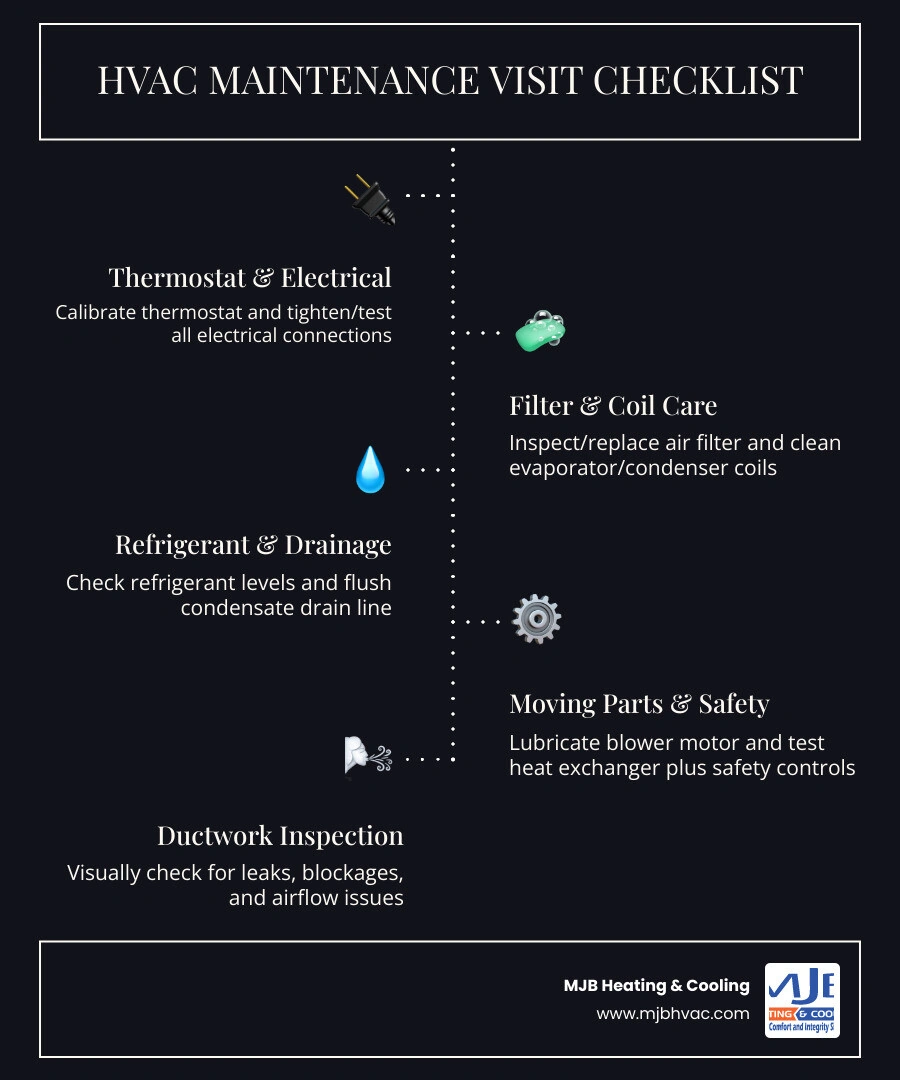
Here is a quick overview of what a professional HVAC maintenance visit typically covers:
Most people do not think about their HVAC system until something goes wrong — usually in the middle of a Wichita summer heat wave or on the coldest night of January. By that point, what started as a small, preventable issue has turned into an emergency repair or even a full system failure. According to the U.S. Department of Energy's ENERGY STAR program, airflow problems alone can reduce system efficiency by up to 15 percent, and that loss compounds every year maintenance is skipped.
A professional tune-up twice a year — once in spring before cooling season and once in fall before heating season — is the single most effective way to protect your equipment, keep utility bills in check, and avoid the breakdowns that always seem to happen at the worst possible time.
Essential what does an hvac maintenance visit include terms:
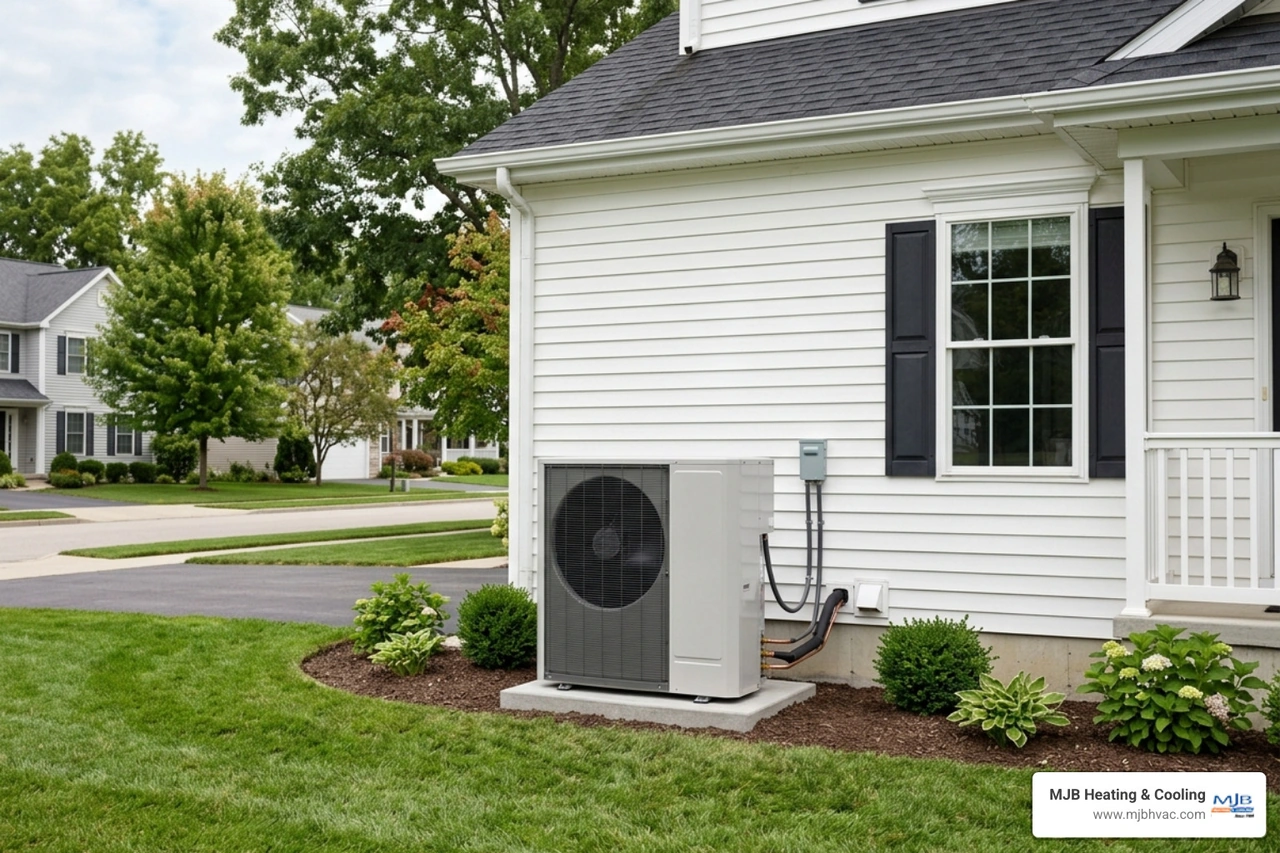
When we step into a home in Derby or Andover, we look at the heating and cooling system as a single, integrated machine. It is not just about making sure air blows out of the vents; it is about verifying that every electrical, mechanical, and safety component operates exactly as the manufacturer intended.
Our technicians follow a rigorous checklist based on national standards to ensure nothing is overlooked. If you are curious about the bigger picture of system preservation, you can read our detailed HVAC Maintenance Guide 2026 to see how these tasks keep your system running optimally.
Here is what a deep-dive, professional tune-up looks like at its core:
When the autumn chill settles over Haysville or Augusta, your focus shifts to staying warm. A furnace check is primarily a safety check. Because furnaces burn fuel to create heat, an unmaintained heating system poses real safety hazards, including fire and carbon monoxide exposure. For a comprehensive look at keeping both sides of your system healthy, check out our Essential HVAC Maintenance Tips for Your Furnace and AC.
During the heating portion of a maintenance visit, we focus on several critical steps:
When the summer sun beats down on Wellington or El Dorado, your outdoor condenser unit is under incredible pressure. It has to reject the heat pulled from inside your home out into the boiling outdoor air.
Our outdoor air conditioner maintenance checklist includes:
Wichita-area weather is famously unpredictable. We can easily experience a freezing morning and a warm, sunny afternoon in the span of twelve hours. Because our local climate swings from sub-zero winter winds to sweltering triple-digit summer humidity, timing your maintenance visits is key to keeping your home comfortable year-round.
We recommend scheduling professional maintenance twice a year:
For more details on setting up a regular schedule that fits your home's needs, read our guide on How Often Should You Service Your HVAC System.
Skipping seasonal maintenance sets off what we call a "spiral of inefficiency." A system that is not cleaned and calibrated loses about 5 percent of its operating efficiency every single year. Dust builds up on the blower wheel, coils get coated in grime, and electrical components degrade under heat stress.
In Central Kansas, where systems run hard for months at a time, this neglect directly impacts how long your equipment will last. You can explore the Average Lifespan of an HVAC System in Kansas to see how routine, twice-yearly care can protect your investment and prevent premature system failure.
Many homeowners ask us if they can handle their own HVAC maintenance. While there are several simple, crucial tasks you should perform yourself, a professional tune-up requires specialized diagnostic tools, safety training, and licensing. Working with high-voltage electrical panels, natural gas lines, and pressurized chemical refrigerants is dangerous and must be left to certified professionals.
To help clarify where your responsibilities end and our professional services begin, we have put together this comparison table:
| Maintenance Task | Homeowner (DIY) | Professional Technician | Why It Matters |
|---|---|---|---|
| Air Filter Replacement | Yes | Yes | Keeps system airflow clean and unrestricted. Learn more about How Often Should You Change Your HVAC Air Filter. |
| Outdoor Unit Clearance | Yes | Yes | Keeps shrubs, weeds, and debris at least 2 feet away from the unit to maintain proper airflow. |
| Vent and Register Dusting | Yes | Yes | Keeps dust from accumulating in the ductwork and circulating back into your living areas. |
| Electrical Diagnostic Testing | No | Yes | Measures voltage and capacitor strength to prevent sudden system electrical failures. |
| Refrigerant Pressure/Charge | No | Yes | Requires EPA certification to handle and measure refrigerant levels accurately. |
| Heat Exchanger Inspection | No | Yes | Requires specialized camera scopes to check for microscopic cracks that leak carbon monoxide. |
| Condensate Line Flushing | No | Yes | Uses specialized tools to clear stubborn clogs and treat the line to prevent mold growth. |
If you have scheduled a maintenance visit with us, there are a few simple ways you can help our technician work efficiently and get the most value out of our time in your home:
A thorough, professional HVAC maintenance visit for a single system typically takes 1 to 1.5 hours. If your home has a dual-system setup (such as two separate furnaces and air conditioners), you should expect the visit to take around 2 to 3 hours.
Any service visit that is completed in 15 or 20 minutes is likely just a visual inspection. A true tune-up requires physical cleaning, electrical testing, and safety checks that simply cannot be rushed.
Unfortunately, not all maintenance visits are created equal. Homeowners should watch out for these red flags that indicate a technician is cutting corners or trying to upsell you unnecessarily:
Your HVAC system acts as the lungs of your home. As air circulates, dust, pollen, pet dander, and moisture pass through your system. If your indoor coil is dirty or your condensate drain pan is clogged, standing water can accumulate. In dark, damp environments, this standing water quickly leads to mold growth, which is then blown directly into your living areas.
Regular maintenance prevents this by keeping the system dry, clean, and properly drained. For a deeper look at how routine professional service protects your family's health, read our guide on How Proper Maintenance Prevents Mold Growth.
Your heating and cooling system is a major investment in your family's comfort and safety. Understanding what does an hvac maintenance visit include empowers you to take control of your home's energy efficiency, prevent expensive emergency repairs, and ensure your system lasts for many years to come.
At MJB Heating & Cooling, we have been serving our neighbors across the Wichita metro area—from Derby and Andover to Haysville and Augusta—since 1984. As a family-owned business, we have built our reputation on an honest business approach and quality workmanship. We do not believe in high-pressure sales or cutting corners; we believe in keeping your home comfortable, safe, and efficient through every season.
If you are wondering whether a long-term care strategy is right for your home, you can read our guide on Is an HVAC Maintenance Plan Worth It. For practical tips on keeping your system running smoothly between our visits, check out our HVAC Maintenance Tips for Kansas Homeowners.
Ready to secure peace of mind and dependable comfort for your home? Sign up for a dependable comfort plan today or contact us to schedule your seasonal tune-up!
What does an HVAC maintenance visit include is one of the most practical questions a Wichita-area homeowner can ask — and the short answer is more than most people expect.
Here is a quick overview of what a professional HVAC maintenance visit typically covers:
Most people do not think about their HVAC system until something goes wrong — usually in the middle of a Wichita summer heat wave or on the coldest night of January. By that point, what started as a small, preventable issue has turned into an emergency repair or even a full system failure. According to the U.S. Department of Energy's ENERGY STAR program, airflow problems alone can reduce system efficiency by up to 15 percent, and that loss compounds every year maintenance is skipped.
A professional tune-up twice a year — once in spring before cooling season and once in fall before heating season — is the single most effective way to protect your equipment, keep utility bills in check, and avoid the breakdowns that always seem to happen at the worst possible time.
Essential what does an hvac maintenance visit include terms:
When we step into a home in Derby or Andover, we look at the heating and cooling system as a single, integrated machine. It is not just about making sure air blows out of the vents; it is about verifying that every electrical, mechanical, and safety component operates exactly as the manufacturer intended.
Our technicians follow a rigorous checklist based on national standards to ensure nothing is overlooked. If you are curious about the bigger picture of system preservation, you can read our detailed HVAC Maintenance Guide 2026 to see how these tasks keep your system running optimally.
Here is what a deep-dive, professional tune-up looks like at its core:
When the autumn chill settles over Haysville or Augusta, your focus shifts to staying warm. A furnace check is primarily a safety check. Because furnaces burn fuel to create heat, an unmaintained heating system poses real safety hazards, including fire and carbon monoxide exposure. For a comprehensive look at keeping both sides of your system healthy, check out our Essential HVAC Maintenance Tips for Your Furnace and AC.
During the heating portion of a maintenance visit, we focus on several critical steps:
When the summer sun beats down on Wellington or El Dorado, your outdoor condenser unit is under incredible pressure. It has to reject the heat pulled from inside your home out into the boiling outdoor air.
Our outdoor air conditioner maintenance checklist includes:
Wichita-area weather is famously unpredictable. We can easily experience a freezing morning and a warm, sunny afternoon in the span of twelve hours. Because our local climate swings from sub-zero winter winds to sweltering triple-digit summer humidity, timing your maintenance visits is key to keeping your home comfortable year-round.
We recommend scheduling professional maintenance twice a year:
For more details on setting up a regular schedule that fits your home's needs, read our guide on How Often Should You Service Your HVAC System.
Skipping seasonal maintenance sets off what we call a "spiral of inefficiency." A system that is not cleaned and calibrated loses about 5 percent of its operating efficiency every single year. Dust builds up on the blower wheel, coils get coated in grime, and electrical components degrade under heat stress.
In Central Kansas, where systems run hard for months at a time, this neglect directly impacts how long your equipment will last. You can explore the Average Lifespan of an HVAC System in Kansas to see how routine, twice-yearly care can protect your investment and prevent premature system failure.
Many homeowners ask us if they can handle their own HVAC maintenance. While there are several simple, crucial tasks you should perform yourself, a professional tune-up requires specialized diagnostic tools, safety training, and licensing. Working with high-voltage electrical panels, natural gas lines, and pressurized chemical refrigerants is dangerous and must be left to certified professionals.
To help clarify where your responsibilities end and our professional services begin, we have put together this comparison table:
| Maintenance Task | Homeowner (DIY) | Professional Technician | Why It Matters |
|---|---|---|---|
| Air Filter Replacement | Yes | Yes | Keeps system airflow clean and unrestricted. Learn more about How Often Should You Change Your HVAC Air Filter. |
| Outdoor Unit Clearance | Yes | Yes | Keeps shrubs, weeds, and debris at least 2 feet away from the unit to maintain proper airflow. |
| Vent and Register Dusting | Yes | Yes | Keeps dust from accumulating in the ductwork and circulating back into your living areas. |
| Electrical Diagnostic Testing | No | Yes | Measures voltage and capacitor strength to prevent sudden system electrical failures. |
| Refrigerant Pressure/Charge | No | Yes | Requires EPA certification to handle and measure refrigerant levels accurately. |
| Heat Exchanger Inspection | No | Yes | Requires specialized camera scopes to check for microscopic cracks that leak carbon monoxide. |
| Condensate Line Flushing | No | Yes | Uses specialized tools to clear stubborn clogs and treat the line to prevent mold growth. |
If you have scheduled a maintenance visit with us, there are a few simple ways you can help our technician work efficiently and get the most value out of our time in your home:
A thorough, professional HVAC maintenance visit for a single system typically takes 1 to 1.5 hours. If your home has a dual-system setup (such as two separate furnaces and air conditioners), you should expect the visit to take around 2 to 3 hours.
Any service visit that is completed in 15 or 20 minutes is likely just a visual inspection. A true tune-up requires physical cleaning, electrical testing, and safety checks that simply cannot be rushed.
Unfortunately, not all maintenance visits are created equal. Homeowners should watch out for these red flags that indicate a technician is cutting corners or trying to upsell you unnecessarily:
Your HVAC system acts as the lungs of your home. As air circulates, dust, pollen, pet dander, and moisture pass through your system. If your indoor coil is dirty or your condensate drain pan is clogged, standing water can accumulate. In dark, damp environments, this standing water quickly leads to mold growth, which is then blown directly into your living areas.
Regular maintenance prevents this by keeping the system dry, clean, and properly drained. For a deeper look at how routine professional service protects your family's health, read our guide on How Proper Maintenance Prevents Mold Growth.
Your heating and cooling system is a major investment in your family's comfort and safety. Understanding what does an hvac maintenance visit include empowers you to take control of your home's energy efficiency, prevent expensive emergency repairs, and ensure your system lasts for many years to come.
At MJB Heating & Cooling, we have been serving our neighbors across the Wichita metro area—from Derby and Andover to Haysville and Augusta—since 1984. As a family-owned business, we have built our reputation on an honest business approach and quality workmanship. We do not believe in high-pressure sales or cutting corners; we believe in keeping your home comfortable, safe, and efficient through every season.
If you are wondering whether a long-term care strategy is right for your home, you can read our guide on Is an HVAC Maintenance Plan Worth It. For practical tips on keeping your system running smoothly between our visits, check out our HVAC Maintenance Tips for Kansas Homeowners.
Ready to secure peace of mind and dependable comfort for your home? Sign up for a dependable comfort plan today or contact us to schedule your seasonal tune-up!
What does an HVAC maintenance visit include is one of the most practical questions a Wichita-area homeowner can ask — and the short answer is more than most people expect.
Here is a quick overview of what a professional HVAC maintenance visit typically covers:
Most people do not think about their HVAC system until something goes wrong — usually in the middle of a Wichita summer heat wave or on the coldest night of January. By that point, what started as a small, preventable issue has turned into an emergency repair or even a full system failure. According to the U.S. Department of Energy's ENERGY STAR program, airflow problems alone can reduce system efficiency by up to 15 percent, and that loss compounds every year maintenance is skipped.
A professional tune-up twice a year — once in spring before cooling season and once in fall before heating season — is the single most effective way to protect your equipment, keep utility bills in check, and avoid the breakdowns that always seem to happen at the worst possible time.
Essential what does an hvac maintenance visit include terms:
When we step into a home in Derby or Andover, we look at the heating and cooling system as a single, integrated machine. It is not just about making sure air blows out of the vents; it is about verifying that every electrical, mechanical, and safety component operates exactly as the manufacturer intended.
Our technicians follow a rigorous checklist based on national standards to ensure nothing is overlooked. If you are curious about the bigger picture of system preservation, you can read our detailed HVAC Maintenance Guide 2026 to see how these tasks keep your system running optimally.
Here is what a deep-dive, professional tune-up looks like at its core:
When the autumn chill settles over Haysville or Augusta, your focus shifts to staying warm. A furnace check is primarily a safety check. Because furnaces burn fuel to create heat, an unmaintained heating system poses real safety hazards, including fire and carbon monoxide exposure. For a comprehensive look at keeping both sides of your system healthy, check out our Essential HVAC Maintenance Tips for Your Furnace and AC.
During the heating portion of a maintenance visit, we focus on several critical steps:
When the summer sun beats down on Wellington or El Dorado, your outdoor condenser unit is under incredible pressure. It has to reject the heat pulled from inside your home out into the boiling outdoor air.
Our outdoor air conditioner maintenance checklist includes:
Wichita-area weather is famously unpredictable. We can easily experience a freezing morning and a warm, sunny afternoon in the span of twelve hours. Because our local climate swings from sub-zero winter winds to sweltering triple-digit summer humidity, timing your maintenance visits is key to keeping your home comfortable year-round.
We recommend scheduling professional maintenance twice a year:
For more details on setting up a regular schedule that fits your home's needs, read our guide on How Often Should You Service Your HVAC System.
Skipping seasonal maintenance sets off what we call a "spiral of inefficiency." A system that is not cleaned and calibrated loses about 5 percent of its operating efficiency every single year. Dust builds up on the blower wheel, coils get coated in grime, and electrical components degrade under heat stress.
In Central Kansas, where systems run hard for months at a time, this neglect directly impacts how long your equipment will last. You can explore the Average Lifespan of an HVAC System in Kansas to see how routine, twice-yearly care can protect your investment and prevent premature system failure.
Many homeowners ask us if they can handle their own HVAC maintenance. While there are several simple, crucial tasks you should perform yourself, a professional tune-up requires specialized diagnostic tools, safety training, and licensing. Working with high-voltage electrical panels, natural gas lines, and pressurized chemical refrigerants is dangerous and must be left to certified professionals.
To help clarify where your responsibilities end and our professional services begin, we have put together this comparison table:
| Maintenance Task | Homeowner (DIY) | Professional Technician | Why It Matters |
|---|---|---|---|
| Air Filter Replacement | Yes | Yes | Keeps system airflow clean and unrestricted. Learn more about How Often Should You Change Your HVAC Air Filter. |
| Outdoor Unit Clearance | Yes | Yes | Keeps shrubs, weeds, and debris at least 2 feet away from the unit to maintain proper airflow. |
| Vent and Register Dusting | Yes | Yes | Keeps dust from accumulating in the ductwork and circulating back into your living areas. |
| Electrical Diagnostic Testing | No | Yes | Measures voltage and capacitor strength to prevent sudden system electrical failures. |
| Refrigerant Pressure/Charge | No | Yes | Requires EPA certification to handle and measure refrigerant levels accurately. |
| Heat Exchanger Inspection | No | Yes | Requires specialized camera scopes to check for microscopic cracks that leak carbon monoxide. |
| Condensate Line Flushing | No | Yes | Uses specialized tools to clear stubborn clogs and treat the line to prevent mold growth. |
If you have scheduled a maintenance visit with us, there are a few simple ways you can help our technician work efficiently and get the most value out of our time in your home:
A thorough, professional HVAC maintenance visit for a single system typically takes 1 to 1.5 hours. If your home has a dual-system setup (such as two separate furnaces and air conditioners), you should expect the visit to take around 2 to 3 hours.
Any service visit that is completed in 15 or 20 minutes is likely just a visual inspection. A true tune-up requires physical cleaning, electrical testing, and safety checks that simply cannot be rushed.
Unfortunately, not all maintenance visits are created equal. Homeowners should watch out for these red flags that indicate a technician is cutting corners or trying to upsell you unnecessarily:
Your HVAC system acts as the lungs of your home. As air circulates, dust, pollen, pet dander, and moisture pass through your system. If your indoor coil is dirty or your condensate drain pan is clogged, standing water can accumulate. In dark, damp environments, this standing water quickly leads to mold growth, which is then blown directly into your living areas.
Regular maintenance prevents this by keeping the system dry, clean, and properly drained. For a deeper look at how routine professional service protects your family's health, read our guide on How Proper Maintenance Prevents Mold Growth.
Your heating and cooling system is a major investment in your family's comfort and safety. Understanding what does an hvac maintenance visit include empowers you to take control of your home's energy efficiency, prevent expensive emergency repairs, and ensure your system lasts for many years to come.
At MJB Heating & Cooling, we have been serving our neighbors across the Wichita metro area—from Derby and Andover to Haysville and Augusta—since 1984. As a family-owned business, we have built our reputation on an honest business approach and quality workmanship. We do not believe in high-pressure sales or cutting corners; we believe in keeping your home comfortable, safe, and efficient through every season.
If you are wondering whether a long-term care strategy is right for your home, you can read our guide on Is an HVAC Maintenance Plan Worth It. For practical tips on keeping your system running smoothly between our visits, check out our HVAC Maintenance Tips for Kansas Homeowners.
Ready to secure peace of mind and dependable comfort for your home? Sign up for a dependable comfort plan today or contact us to schedule your seasonal tune-up!
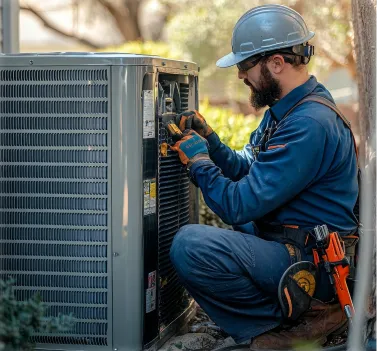

What does an HVAC maintenance visit include is one of the most practical questions a Wichita-area homeowner can ask — and the short answer is more than most people expect.
Here is a quick overview of what a professional HVAC maintenance visit typically covers:
Most people do not think about their HVAC system until something goes wrong — usually in the middle of a Wichita summer heat wave or on the coldest night of January. By that point, what started as a small, preventable issue has turned into an emergency repair or even a full system failure. According to the U.S. Department of Energy's ENERGY STAR program, airflow problems alone can reduce system efficiency by up to 15 percent, and that loss compounds every year maintenance is skipped.
A professional tune-up twice a year — once in spring before cooling season and once in fall before heating season — is the single most effective way to protect your equipment, keep utility bills in check, and avoid the breakdowns that always seem to happen at the worst possible time.
Essential what does an hvac maintenance visit include terms:
When we step into a home in Derby or Andover, we look at the heating and cooling system as a single, integrated machine. It is not just about making sure air blows out of the vents; it is about verifying that every electrical, mechanical, and safety component operates exactly as the manufacturer intended.
Our technicians follow a rigorous checklist based on national standards to ensure nothing is overlooked. If you are curious about the bigger picture of system preservation, you can read our detailed HVAC Maintenance Guide 2026 to see how these tasks keep your system running optimally.
Here is what a deep-dive, professional tune-up looks like at its core:
When the autumn chill settles over Haysville or Augusta, your focus shifts to staying warm. A furnace check is primarily a safety check. Because furnaces burn fuel to create heat, an unmaintained heating system poses real safety hazards, including fire and carbon monoxide exposure. For a comprehensive look at keeping both sides of your system healthy, check out our Essential HVAC Maintenance Tips for Your Furnace and AC.
During the heating portion of a maintenance visit, we focus on several critical steps:
When the summer sun beats down on Wellington or El Dorado, your outdoor condenser unit is under incredible pressure. It has to reject the heat pulled from inside your home out into the boiling outdoor air.
Our outdoor air conditioner maintenance checklist includes:
Wichita-area weather is famously unpredictable. We can easily experience a freezing morning and a warm, sunny afternoon in the span of twelve hours. Because our local climate swings from sub-zero winter winds to sweltering triple-digit summer humidity, timing your maintenance visits is key to keeping your home comfortable year-round.
We recommend scheduling professional maintenance twice a year:
For more details on setting up a regular schedule that fits your home's needs, read our guide on How Often Should You Service Your HVAC System.
Skipping seasonal maintenance sets off what we call a "spiral of inefficiency." A system that is not cleaned and calibrated loses about 5 percent of its operating efficiency every single year. Dust builds up on the blower wheel, coils get coated in grime, and electrical components degrade under heat stress.
In Central Kansas, where systems run hard for months at a time, this neglect directly impacts how long your equipment will last. You can explore the Average Lifespan of an HVAC System in Kansas to see how routine, twice-yearly care can protect your investment and prevent premature system failure.
Many homeowners ask us if they can handle their own HVAC maintenance. While there are several simple, crucial tasks you should perform yourself, a professional tune-up requires specialized diagnostic tools, safety training, and licensing. Working with high-voltage electrical panels, natural gas lines, and pressurized chemical refrigerants is dangerous and must be left to certified professionals.
To help clarify where your responsibilities end and our professional services begin, we have put together this comparison table:
| Maintenance Task | Homeowner (DIY) | Professional Technician | Why It Matters |
|---|---|---|---|
| Air Filter Replacement | Yes | Yes | Keeps system airflow clean and unrestricted. Learn more about How Often Should You Change Your HVAC Air Filter. |
| Outdoor Unit Clearance | Yes | Yes | Keeps shrubs, weeds, and debris at least 2 feet away from the unit to maintain proper airflow. |
| Vent and Register Dusting | Yes | Yes | Keeps dust from accumulating in the ductwork and circulating back into your living areas. |
| Electrical Diagnostic Testing | No | Yes | Measures voltage and capacitor strength to prevent sudden system electrical failures. |
| Refrigerant Pressure/Charge | No | Yes | Requires EPA certification to handle and measure refrigerant levels accurately. |
| Heat Exchanger Inspection | No | Yes | Requires specialized camera scopes to check for microscopic cracks that leak carbon monoxide. |
| Condensate Line Flushing | No | Yes | Uses specialized tools to clear stubborn clogs and treat the line to prevent mold growth. |
If you have scheduled a maintenance visit with us, there are a few simple ways you can help our technician work efficiently and get the most value out of our time in your home:
A thorough, professional HVAC maintenance visit for a single system typically takes 1 to 1.5 hours. If your home has a dual-system setup (such as two separate furnaces and air conditioners), you should expect the visit to take around 2 to 3 hours.
Any service visit that is completed in 15 or 20 minutes is likely just a visual inspection. A true tune-up requires physical cleaning, electrical testing, and safety checks that simply cannot be rushed.
Unfortunately, not all maintenance visits are created equal. Homeowners should watch out for these red flags that indicate a technician is cutting corners or trying to upsell you unnecessarily:
Your HVAC system acts as the lungs of your home. As air circulates, dust, pollen, pet dander, and moisture pass through your system. If your indoor coil is dirty or your condensate drain pan is clogged, standing water can accumulate. In dark, damp environments, this standing water quickly leads to mold growth, which is then blown directly into your living areas.
Regular maintenance prevents this by keeping the system dry, clean, and properly drained. For a deeper look at how routine professional service protects your family's health, read our guide on How Proper Maintenance Prevents Mold Growth.
Your heating and cooling system is a major investment in your family's comfort and safety. Understanding what does an hvac maintenance visit include empowers you to take control of your home's energy efficiency, prevent expensive emergency repairs, and ensure your system lasts for many years to come.
At MJB Heating & Cooling, we have been serving our neighbors across the Wichita metro area—from Derby and Andover to Haysville and Augusta—since 1984. As a family-owned business, we have built our reputation on an honest business approach and quality workmanship. We do not believe in high-pressure sales or cutting corners; we believe in keeping your home comfortable, safe, and efficient through every season.
If you are wondering whether a long-term care strategy is right for your home, you can read our guide on Is an HVAC Maintenance Plan Worth It. For practical tips on keeping your system running smoothly between our visits, check out our HVAC Maintenance Tips for Kansas Homeowners.
Ready to secure peace of mind and dependable comfort for your home? Sign up for a dependable comfort plan today or contact us to schedule your seasonal tune-up!
What does an HVAC maintenance visit include is one of the most practical questions a Wichita-area homeowner can ask — and the short answer is more than most people expect.
Here is a quick overview of what a professional HVAC maintenance visit typically covers:
Most people do not think about their HVAC system until something goes wrong — usually in the middle of a Wichita summer heat wave or on the coldest night of January. By that point, what started as a small, preventable issue has turned into an emergency repair or even a full system failure. According to the U.S. Department of Energy's ENERGY STAR program, airflow problems alone can reduce system efficiency by up to 15 percent, and that loss compounds every year maintenance is skipped.
A professional tune-up twice a year — once in spring before cooling season and once in fall before heating season — is the single most effective way to protect your equipment, keep utility bills in check, and avoid the breakdowns that always seem to happen at the worst possible time.
Essential what does an hvac maintenance visit include terms:
When we step into a home in Derby or Andover, we look at the heating and cooling system as a single, integrated machine. It is not just about making sure air blows out of the vents; it is about verifying that every electrical, mechanical, and safety component operates exactly as the manufacturer intended.
Our technicians follow a rigorous checklist based on national standards to ensure nothing is overlooked. If you are curious about the bigger picture of system preservation, you can read our detailed HVAC Maintenance Guide 2026 to see how these tasks keep your system running optimally.
Here is what a deep-dive, professional tune-up looks like at its core:
When the autumn chill settles over Haysville or Augusta, your focus shifts to staying warm. A furnace check is primarily a safety check. Because furnaces burn fuel to create heat, an unmaintained heating system poses real safety hazards, including fire and carbon monoxide exposure. For a comprehensive look at keeping both sides of your system healthy, check out our Essential HVAC Maintenance Tips for Your Furnace and AC.
During the heating portion of a maintenance visit, we focus on several critical steps:
When the summer sun beats down on Wellington or El Dorado, your outdoor condenser unit is under incredible pressure. It has to reject the heat pulled from inside your home out into the boiling outdoor air.
Our outdoor air conditioner maintenance checklist includes:
Wichita-area weather is famously unpredictable. We can easily experience a freezing morning and a warm, sunny afternoon in the span of twelve hours. Because our local climate swings from sub-zero winter winds to sweltering triple-digit summer humidity, timing your maintenance visits is key to keeping your home comfortable year-round.
We recommend scheduling professional maintenance twice a year:
For more details on setting up a regular schedule that fits your home's needs, read our guide on How Often Should You Service Your HVAC System.
Skipping seasonal maintenance sets off what we call a "spiral of inefficiency." A system that is not cleaned and calibrated loses about 5 percent of its operating efficiency every single year. Dust builds up on the blower wheel, coils get coated in grime, and electrical components degrade under heat stress.
In Central Kansas, where systems run hard for months at a time, this neglect directly impacts how long your equipment will last. You can explore the Average Lifespan of an HVAC System in Kansas to see how routine, twice-yearly care can protect your investment and prevent premature system failure.
Many homeowners ask us if they can handle their own HVAC maintenance. While there are several simple, crucial tasks you should perform yourself, a professional tune-up requires specialized diagnostic tools, safety training, and licensing. Working with high-voltage electrical panels, natural gas lines, and pressurized chemical refrigerants is dangerous and must be left to certified professionals.
To help clarify where your responsibilities end and our professional services begin, we have put together this comparison table:
| Maintenance Task | Homeowner (DIY) | Professional Technician | Why It Matters |
|---|---|---|---|
| Air Filter Replacement | Yes | Yes | Keeps system airflow clean and unrestricted. Learn more about How Often Should You Change Your HVAC Air Filter. |
| Outdoor Unit Clearance | Yes | Yes | Keeps shrubs, weeds, and debris at least 2 feet away from the unit to maintain proper airflow. |
| Vent and Register Dusting | Yes | Yes | Keeps dust from accumulating in the ductwork and circulating back into your living areas. |
| Electrical Diagnostic Testing | No | Yes | Measures voltage and capacitor strength to prevent sudden system electrical failures. |
| Refrigerant Pressure/Charge | No | Yes | Requires EPA certification to handle and measure refrigerant levels accurately. |
| Heat Exchanger Inspection | No | Yes | Requires specialized camera scopes to check for microscopic cracks that leak carbon monoxide. |
| Condensate Line Flushing | No | Yes | Uses specialized tools to clear stubborn clogs and treat the line to prevent mold growth. |
If you have scheduled a maintenance visit with us, there are a few simple ways you can help our technician work efficiently and get the most value out of our time in your home:
A thorough, professional HVAC maintenance visit for a single system typically takes 1 to 1.5 hours. If your home has a dual-system setup (such as two separate furnaces and air conditioners), you should expect the visit to take around 2 to 3 hours.
Any service visit that is completed in 15 or 20 minutes is likely just a visual inspection. A true tune-up requires physical cleaning, electrical testing, and safety checks that simply cannot be rushed.
Unfortunately, not all maintenance visits are created equal. Homeowners should watch out for these red flags that indicate a technician is cutting corners or trying to upsell you unnecessarily:
Your HVAC system acts as the lungs of your home. As air circulates, dust, pollen, pet dander, and moisture pass through your system. If your indoor coil is dirty or your condensate drain pan is clogged, standing water can accumulate. In dark, damp environments, this standing water quickly leads to mold growth, which is then blown directly into your living areas.
Regular maintenance prevents this by keeping the system dry, clean, and properly drained. For a deeper look at how routine professional service protects your family's health, read our guide on How Proper Maintenance Prevents Mold Growth.
Your heating and cooling system is a major investment in your family's comfort and safety. Understanding what does an hvac maintenance visit include empowers you to take control of your home's energy efficiency, prevent expensive emergency repairs, and ensure your system lasts for many years to come.
At MJB Heating & Cooling, we have been serving our neighbors across the Wichita metro area—from Derby and Andover to Haysville and Augusta—since 1984. As a family-owned business, we have built our reputation on an honest business approach and quality workmanship. We do not believe in high-pressure sales or cutting corners; we believe in keeping your home comfortable, safe, and efficient through every season.
If you are wondering whether a long-term care strategy is right for your home, you can read our guide on Is an HVAC Maintenance Plan Worth It. For practical tips on keeping your system running smoothly between our visits, check out our HVAC Maintenance Tips for Kansas Homeowners.
Ready to secure peace of mind and dependable comfort for your home? Sign up for a dependable comfort plan today or contact us to schedule your seasonal tune-up!


Our A/C stopped working on a Sunday and due to health issues, we needed to find a service company available on a Sunday. I called MJB and left a message on their emergency voice mail. Within 10 minutes Tom Buck called me to hear my description of the symptoms. He was just finishing an appointment in Wichita and would be on his way to my home on the south end of Derby. He arrived within 30 minutes! From start to finish he was the perfect example of what you could ever hope for in an HVAC tech and a human being. His evaluation of our system inside and out was as thorough as I could ever imagine and once he was done with the repair, our system is running as well or better than ever. Well worth the price for the evaluation, parts, and labor. Thank you again Tom for an awesome experience.
Our AC went out during the hottest days of the year, and they were out next day! We have been jerked around by a shoddy home warranty for years. We finally had a chance to pick our own repair people, and MJB came highly recommended. I can see why! I was impressed with the honesty and speed at which they fixed our AC unit!
Our commercial building had a lightening/electrical strike and damaged our 20 ton AC unit. No one could find us a new unit before the end of September. Imagining going all of August and September with no AC in Kansas and working inside near 100 degree temps is less than thrilling. Dale and the team at MJB called around and saved the day. They had us a new unit 5 weeks earlier than other could promise and I now have happy employees. The unit is amazingly quiet, super cold and so much more energy efficient. Thank you for being our super hero!
Came out and installed my new furnace. Was very polite and affordable. They are very acknowledgeable and I highly recommend!
Thank you very much. We had our 1st warm night in 3weeks. MJB took the time and effort to find the real problem. And the employees were kind and thoughtful and explained things very well. I cannot thank you and all of MJB. Will recommend you highly. Thanks again Marjorie Herman Oxford Kansas
We had a new system installed and I was so impressed with how quick they were in come out and install it, in the middle of a hot summer day. They were so friendly & very professional. I had a small problem with a weird sound and they came over immediately and fixed it. Love them!