.avif)





Blogs
Stay updated with our latest blog posts.
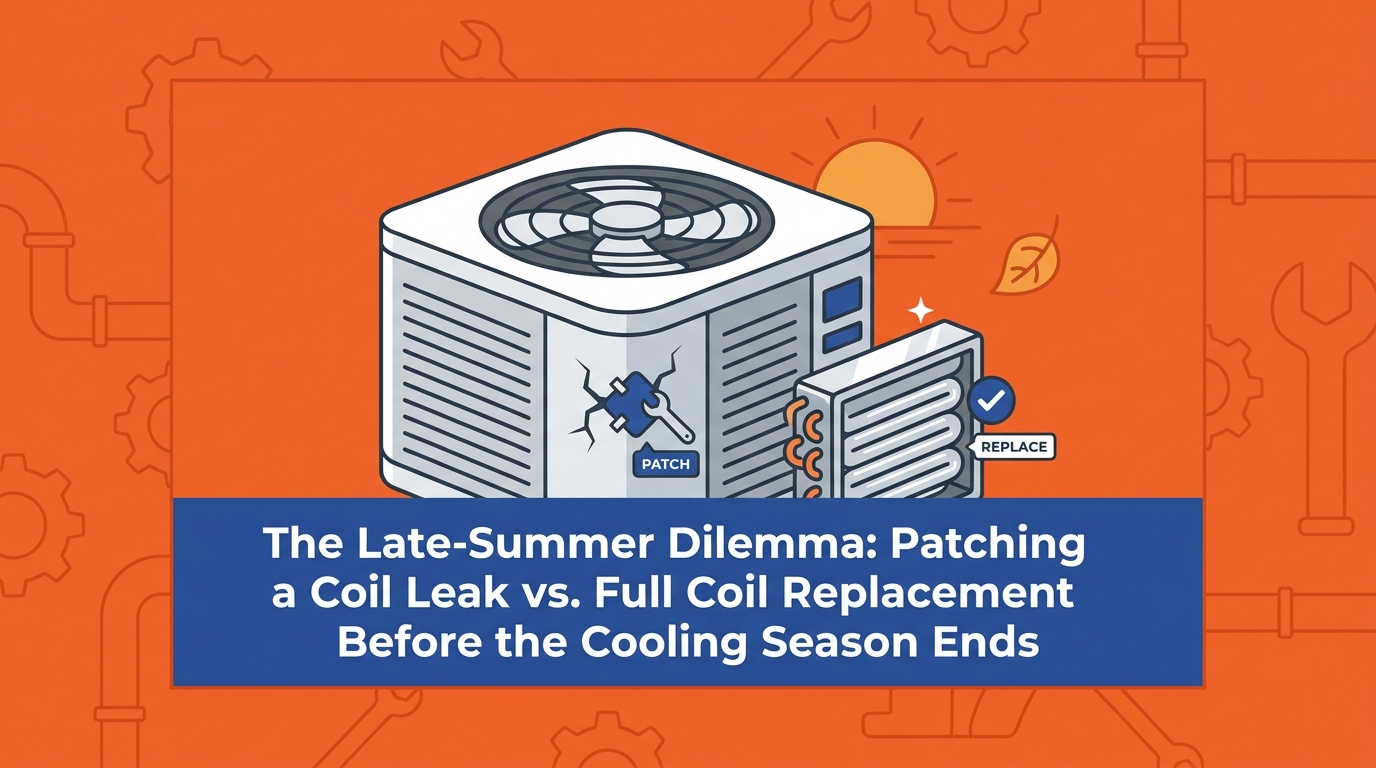

Late August in Kansas is unforgiving, and finding yourself weighing patching a coil leak vs. full coil replacement before the cooling season ends is a stressful position for any homeowner. The intense heat of late summer means your air conditioner is already working overtime. When it suddenly starts blowing warm air instead of crisp, cool relief, the frustration is immediate. You check the thermostat, confirm it is set correctly, but the indoor temperature keeps climbing. This is a classic symptom of an air conditioning system that has lost its ability to cool the home, and the most common culprit is a leaky evaporator coil.
If you are facing this exact scenario during late August / end-of-season cooling, you are immediately forced into a difficult decision. Do you gamble on a temporary braze to survive the remaining hot weeks, hoping it holds until the weather breaks? Or do you invest in a reliable, long-term replacement to guarantee your comfort? Making the right choice requires understanding the true condition of your equipment. To help you navigate this, our experienced team at MJB Heating & Cooling provides comprehensive professional HVAC services to diagnose the exact location and severity of the leak, as well as flexible financing options for AC replacement to ensure a permanent solution fits your budget.
This dilemma is incredibly common as summer winds down and families transition back to school. The cumulative wear and tear of the hottest months finally takes its toll on aging metal components. By examining the anatomy of a coil failure, the risks of a temporary patch, and the guaranteed reliability of a new coil, you can make a confident decision that protects your home's comfort and your wallet.
To make an informed choice about your air conditioner, you first need to understand why these leaks happen in the first place. An evaporator coil is a network of tightly wound copper or aluminum tubing that sits inside your indoor air handler. Its job is to absorb heat from your home's air as cold liquid refrigerant flows through it. Over time, this metal is subjected to constant moisture, temperature fluctuations, and airborne chemicals, leading to inevitable degradation.
The vast majority of evaporator coil leaks are not caused by physical damage, but by a chemical reaction known as formicary corrosion. This occurs when volatile organic compounds (VOCs)—found in everyday household items like cleaning sprays, air fresheners, and building materials—mix with the natural condensation on the coil. This mixture creates a weak acid that slowly eats away at the metal.
Microscopic pinholes: Formicary corrosion does not create one large, obvious hole. Instead, it creates microscopic, tunnel-like pinhole leaks that weaken the entire structure of the coil. Because these tiny leaks are a symptom of systemic metal degradation, they are rarely isolated to a single, easily fixable spot. Where there is one pinhole, dozens more are usually forming right behind it.
When a coil begins to leak, the most immediate symptom is low refrigerant pressure. As refrigerant escapes, the system loses its ability to absorb heat. This forces the compressor—the heart of your outdoor unit—to run longer and harder to achieve the target temperature. Running a compromised system with low refrigerant pressure severely strains the compressor, risking total system failure.
Just recently, a local Derby customer contacted us because their system needed a recharge. During the HVAC servicing, our MJB Heating & Cooling technician performed the recharge and clearly explained the testing performed to find the root cause. We emphasize this because, in our professional experience, simply adding refrigerant without locating the leak is a temporary illusion of a fix. Furthermore, locating these microscopic leaks requires specialized electronic leak detectors or UV dyes. A professional diagnosis is strictly required, as handling refrigerant involves high-pressure lines and environmental regulations that make DIY attempts highly dangerous and illegal.
When our technicians locate a leak on an evaporator coil, one option is to attempt a repair by brazing the hole. This process involves using an oxy-acetylene torch to melt a metal alloy over the leak, effectively sealing the breach. From a purely informational standpoint, brazing requires immense precision. The technician must clean the area, apply intense heat, and flow a silver-based solder over the compromised copper.
The primary appeal of this approach is obvious: it is a faster, short-term attempt to restore cooling without the upfront investment of a brand-new coil. If you are just trying to get through the last few weeks of summer, a patch might seem like the most logical band-aid.
However, the critical flaw in patching a heavily corroded coil lies in the nature of the metal itself. Here is why we often see this process fail:
1. Heat stress on weakened metal: The extreme heat required to melt the brazing alloy puts immense thermal stress on the surrounding copper. If the coil is already thinned out by formicary corrosion, the heat from the torch can instantly cause a new blowout right next to the repair.
2. The "Whack-a-Mole" effect: Because formicary corrosion affects the entire coil, sealing one pinhole simply redirects the system's internal pressure to the next weakest point. It is incredibly common for a patched coil to spring a new leak within days or weeks.
3. Lost efficiency: A patched coil rarely operates at its original efficiency. The internal flow of refrigerant may be slightly restricted by the repair, and the underlying corrosion continues to insulate the metal, reducing its ability to transfer heat.
Paying for a temporary fix is often a false economy if the unit is older. You end up paying for the labor to locate the leak, the labor to braze it, and the cost of the replacement refrigerant. When the coil inevitably leaks again, that money is entirely lost. If you are weighing these costs, it is helpful to understand the broader cost of repairing an old HVAC vs buying a new system.
Brazing is not always a bad idea. A patch only makes sense if the coil is relatively new, is still under the manufacturer's warranty, and suffered physical damage (such as a puncture from a tool during duct cleaning) rather than systemic chemical corrosion. In these rare cases, the surrounding metal is strong enough to handle the braze and hold the pressure.
In our professional opinion, the alternative to a temporary patch is replacing the compromised coil entirely. This is the long-term solution that eliminates the risk of chasing endless leaks. The process involves recovering any remaining refrigerant, cutting out the old, corroded coil, and installing a brand new, factory-sealed component that is perfectly matched to your air handler and outdoor condenser.
While this requires a larger initial investment, the immediate benefits of a full coil replacement are substantial:
• Restored System Efficiency: A brand-new coil is completely free of corrosion, dirt, and scale. It absorbs heat exactly as the manufacturer intended, allowing your air conditioner to cool your home faster and use less electricity in the process.
• Guaranteed Refrigerant Containment: A factory-sealed coil provides absolute peace of mind that your refrigerant will stay inside the closed loop where it belongs. You will no longer have to worry about paying for expensive refrigerant top-offs.
• Relief of Compressor Strain: By restoring the proper internal pressure and heat transfer capabilities, a new coil takes the immense workload off your outdoor compressor. This can significantly extend the overall lifespan of your entire HVAC system.
Beyond performance, the most significant advantage of a replacement is the warranty protection. New coils come with fresh manufacturer warranties, providing long-term peace of mind that a patched coil simply cannot offer. Additionally, upgrading your equipment may qualify you for generic utility incentive programs or federal tax credits, though we always advise verifying current programs with your utility provider or a tax professional. Once your new coil is installed, keeping it in pristine condition becomes the priority. Enrolling in routine preventative HVAC maintenance ensures that your new equipment is cleaned and inspected annually, extending the life of the newly installed coil and preventing future breakdowns.
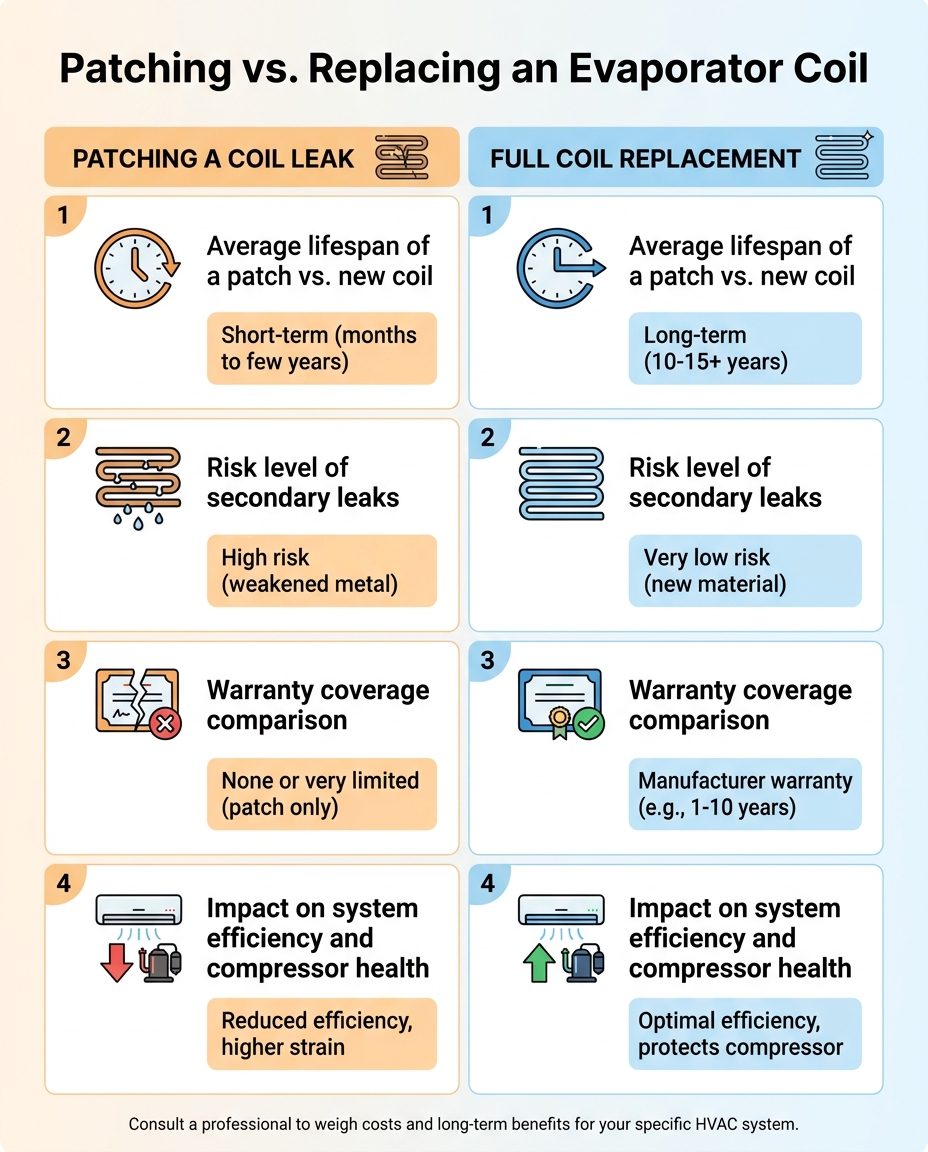
To help clarify this late-summer dilemma, it is vital to look at the facts side-by-side. When you compare the short-term band-aid of a patch against the long-term reliability of a replacement, the differences in risk and reward become starkly apparent.
• Expected Lifespan — Patching / Brazing the Coil: Unpredictable (days to a few months) — Full Coil Replacement: 10 to 15+ years with maintenance
• Secondary Breakdown Risk — Patching / Brazing the Coil: Very High (corrosion causes new leaks) — Full Coil Replacement: Very Low (factory-sealed metal)
• Efficiency Impact — Patching / Brazing the Coil: May not restore full cooling capacity — Full Coil Replacement: Optimizes performance and lowers bills
• Compressor Health — Patching / Brazing the Coil: High risk of continued strain — Full Coil Replacement: Restores proper pressure and relieves strain
• Warranty Protection — Patching / Brazing the Coil: No warranty on the rest of the aging coil — Full Coil Replacement: Backed by a new manufacturer warranty
Timing plays a massive role in HVAC failures. In our years serving the local community, we've seen firsthand how the sustained late-summer heat in Derby, KS puts extreme workload hours on aging AC equipment, accelerating wear on compromised components precisely when you need them most. In late August, it is not uncommon for temperatures to remain punishingly high for weeks on end. This means your air conditioner is running in its longest, most demanding cycles of the year.
The pressure of non-stop operation: When an air conditioner runs continuously to combat Kansas heatwaves, the internal pressure inside the evaporator coil remains elevated for extended periods. If a coil has been patched, this relentless pressure tests the integrity of the braze and the weakened, corroded metal surrounding it. A patched coil is incredibly vulnerable to a secondary blowout under these conditions.
The risk of gambling in August: Opting for a patch in late summer is a high-stakes gamble. If the patch fails during a late August heatwave, your system will rapidly lose its remaining refrigerant. Not only does this leave your home dangerously hot and uncomfortable, but it also forces you to start the repair process all over again—paying a second time for labor, diagnostics, and potentially a full replacement anyway. Understanding the unique stress that our regional climate puts on HVAC equipment is crucial when deciding whether a band-aid fix is worth the risk.
Ultimately, the decision between patching and replacing comes down to the specific condition of your equipment. At MJB Heating & Cooling, we believe in providing honest, transparent assessments based on years of hands-on experience. We will always weigh the risk of a temporary braze against the guaranteed reliability of a new coil, ensuring you have the facts needed to make the right choice for your family.
Before you throw money at a doomed unit, consider this decision-making checklist:
• Age of the Unit: If your air conditioner is over 10 years old, investing in a major repair like a coil patch is rarely cost-effective. The system is already nearing the end of its lifespan.
• Type of Refrigerant: Older systems that use phased-out refrigerants are incredibly expensive to recharge. A leak in one of these systems almost always justifies a replacement.
• Overall System Health: Has the compressor been struggling? Are there electrical issues? A new coil cannot fix a failing outdoor unit.
Our team sees these situations constantly. One local homeowner called us after going almost a week without AC during hot late-summer weather. Our crew diagnosed the immediate issue to get them cooling again, then worked with them to objectively evaluate their aging equipment. Ultimately, they decided to install a complete new system efficiently and cleanly, ensuring their house stays cool and comfortable for years to come without the stress of impending breakdowns.
If you suspect your system is losing its cooling power, the smartest move is to get a definitive answer. We encourage you to schedule a coil inspection so our technicians can provide a clear, objective evaluation of your system's condition.
Yes, a leaking AC coil can technically be patched through a process called brazing. A technician uses high heat to melt a metal alloy over the leak to seal it. However, this is usually only successful if the leak was caused by physical damage rather than widespread chemical corrosion. If the coil is heavily corroded, patching one hole often leads to new leaks forming nearby.
The lifespan of a brazed AC coil is highly unpredictable and depends entirely on the condition of the surrounding metal. If the coil is severely corroded, a patch might only hold for a few days or weeks before a new pinhole leak develops under pressure. In rare cases where the coil is relatively new and healthy, a quality braze can last for several years.
In the vast majority of cases, it is better to replace an older, corroded coil rather than patch it. Replacing the coil provides guaranteed refrigerant containment, restores system efficiency, and comes with a manufacturer warranty. Patching is often a false economy that requires you to pay for temporary labor and lost refrigerant, only to face the same problem again shortly after.
While commercial AC sealants exist, they are generally not recommended by HVAC professionals for permanent evaporator coil repairs. Sealants can sometimes temporarily plug microscopic pinholes, but they can also gum up the internal components of your system, leading to severe compressor damage or restricted refrigerant flow. A mechanical repair or full replacement is always the safer, more reliable route.
Not necessarily, but they must be strictly compatible. If your outdoor unit (condenser) is in good health and uses a modern refrigerant, you can often replace just the indoor evaporator coil. However, if your outdoor unit is very old, uses a phased-out refrigerant, or is showing signs of compressor failure, we usually advise replacing both units at the same time to ensure matched efficiency and performance.
Dealing with an air conditioning failure in the final, sweltering weeks of summer is never easy. However, making a confident, end-of-season decision to replace a failing coil rather than gambling on a risky patch is the best way to secure your home's comfort. A straightforward, objective comparison shows that the long-term peace of mind of a replacement far outweighs the short-term illusion of a band-aid fix.
If your AC is blowing warm air and you are tired of crossing your fingers every time the thermostat kicks on, it is time for a permanent solution. Remember that we offer flexible financing options to make major replacements manageable for your budget. Contact the experts at MJB Heating & Cooling today for a transparent assessment, and let our experienced team restore reliable, efficient cooling to your home.


Our A/C stopped working on a Sunday and due to health issues, we needed to find a service company available on a Sunday. I called MJB and left a message on their emergency voice mail. Within 10 minutes Tom Buck called me to hear my description of the symptoms. He was just finishing an appointment in Wichita and would be on his way to my home on the south end of Derby. He arrived within 30 minutes! From start to finish he was the perfect example of what you could ever hope for in an HVAC tech and a human being. His evaluation of our system inside and out was as thorough as I could ever imagine and once he was done with the repair, our system is running as well or better than ever. Well worth the price for the evaluation, parts, and labor. Thank you again Tom for an awesome experience.
Our AC went out during the hottest days of the year, and they were out next day! We have been jerked around by a shoddy home warranty for years. We finally had a chance to pick our own repair people, and MJB came highly recommended. I can see why! I was impressed with the honesty and speed at which they fixed our AC unit!
Our commercial building had a lightening/electrical strike and damaged our 20 ton AC unit. No one could find us a new unit before the end of September. Imagining going all of August and September with no AC in Kansas and working inside near 100 degree temps is less than thrilling. Dale and the team at MJB called around and saved the day. They had us a new unit 5 weeks earlier than other could promise and I now have happy employees. The unit is amazingly quiet, super cold and so much more energy efficient. Thank you for being our super hero!
Came out and installed my new furnace. Was very polite and affordable. They are very acknowledgeable and I highly recommend!
Thank you very much. We had our 1st warm night in 3weeks. MJB took the time and effort to find the real problem. And the employees were kind and thoughtful and explained things very well. I cannot thank you and all of MJB. Will recommend you highly. Thanks again Marjorie Herman Oxford Kansas
We had a new system installed and I was so impressed with how quick they were in come out and install it, in the middle of a hot summer day. They were so friendly & very professional. I had a small problem with a weird sound and they came over immediately and fixed it. Love them!