.avif)





Blogs
Stay updated with our latest blog posts.
If you're looking for a quick HVAC maintenance checklist for extreme weather climates, here's what you need to do every season to keep your system running reliably in Wichita and Central Kansas:
Quick-Reference HVAC Maintenance Checklist for Extreme Weather:
Kansas doesn't go easy on HVAC equipment. One day it's 95°F and humid enough to feel like Houston. A week later, a cold front drops temperatures 40 degrees overnight. Then comes the hail. Then a tornado watch. Then a flash freeze that turns condensate lines into ice plugs and sends furnaces into shutdown. For homeowners and small business owners across the Wichita metro area, this isn't a rare worst-case scenario — it's just a typical Kansas year.
The stress this puts on heating and cooling systems is real. Research shows that furnaces in volatile climates like Kansas can cycle twice as often as those in stable climates, accelerating wear on heat exchangers, blower motors, and ignition components. Emergency HVAC repair calls spike by roughly 300% during extreme cold snaps. And nearly 90% of electrical AC issues happen when a unit is left running during a major storm — a mistake many homeowners don't realize they're making.
The good news? Most of these failures are preventable. A solid, season-by-season maintenance routine keeps your system ready for whatever Kansas throws at it — and that's exactly what this guide covers.

Similar topics to hvac maintenance checklist for extreme weather climates:
When you live in communities like Derby, Andover, or Haysville, your heating and air conditioning system isn't a luxury—it's a critical safety shield. Understanding how often should you service your HVAC system is the first step toward securing that shield. In extreme weather climates, the standard "set it and forget it" approach is a recipe for mid-season system failure.
A neglected HVAC system in Central Kansas has a significantly shorter operational life. While a well-maintained furnace or air conditioner can easily last 15 to 20 years, a system left to battle our dusty, high-wind prairie summers and sub-zero winters without care often fails by year 10.
The physical toll of extreme weather is cumulative. Rapid temperature swings cause metal ductwork and heat exchangers to expand and contract rapidly, which can lead to structural fatigue and cracks. Furthermore, our region's heavy agricultural dust and cottonwood fluff act like a thick wool blanket on outdoor coils, forcing the compressor to run hotter and longer. By keeping up with a seasonal checklist, you prevent minor wear from turning into a catastrophic system failure during a July heatwave or a January polar vortex. Learn more about how our regional climate challenges your equipment in our Kansas Climate HVAC Guide.
Your heating and cooling system accounts for roughly 52% of your household's annual energy consumption. When extreme temperatures hit, that percentage climbs even higher.
Proactive seasonal maintenance keeps your system running at peak thermodynamic efficiency, keeping your utility bills manageable even when the weather goes wild. For a deeper dive into these impacts, read about how Kansas severe weather affects your HVAC system.
To keep your home comfortable and safe, you need a structured plan. This seasonal checklist is designed specifically for the unique demands of the Central Kansas climate, helping you prepare your system before the peak heating and cooling seasons arrive.
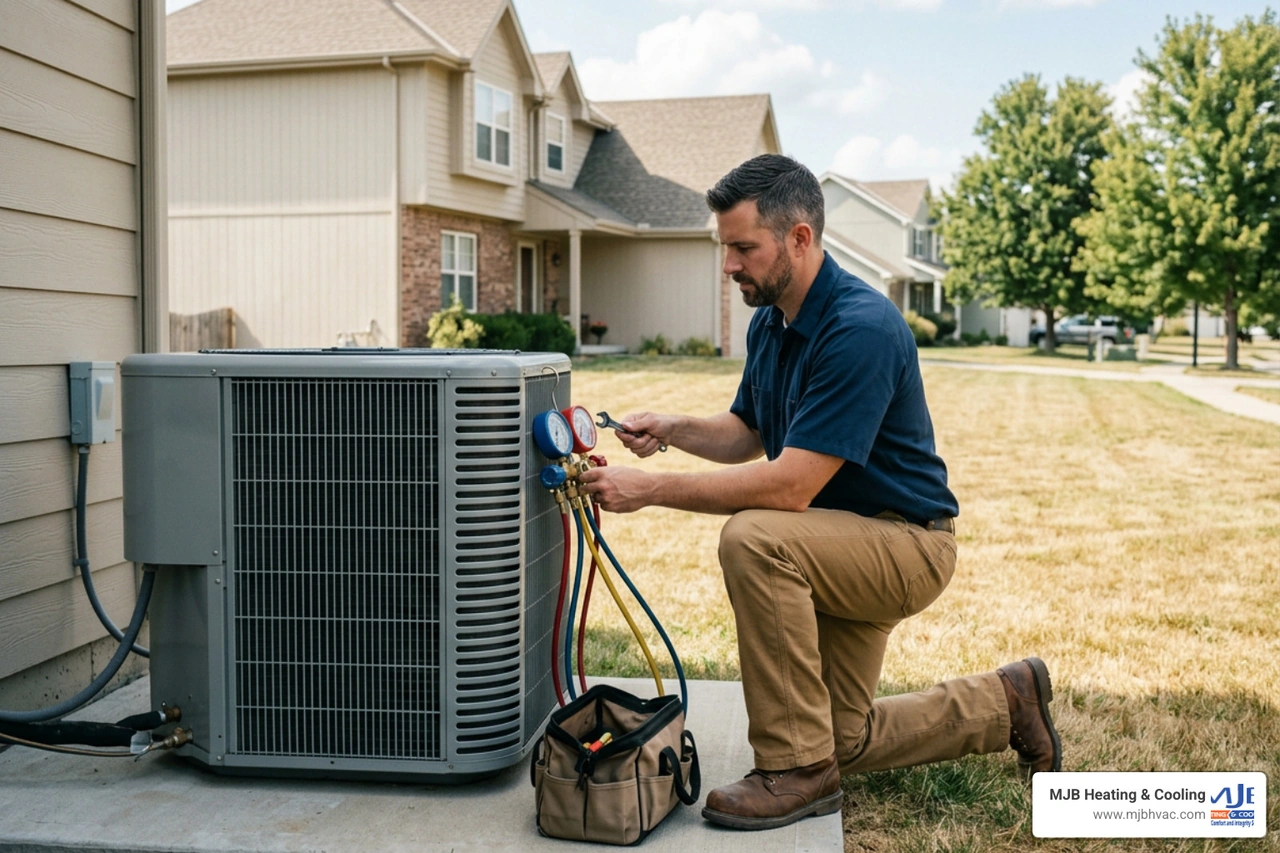
For a complete overview of year-round care, you can also consult our comprehensive HVAC Maintenance Guide 2026 and discover the best HVAC setup for Kansas weather.
Before the scorching summer heat settles over Wichita, Maize, and El Dorado, your air conditioning system needs a thorough tune-up. Use this checklist to ensure your cooling system can handle 100°F+ days without breaking a sweat:
For additional tips on keeping your cooling system in top shape, check out our Essential HVAC Maintenance Tips for Your Furnace and AC.
Winter in Central Kansas brings bitter winds and sub-zero temperatures. Preparing your heating system in early autumn is vital to prevent emergency outages during a hard freeze:
For a localized breakdown of winter prep, explore our guide on HVAC Maintenance Tips for Kansas Homeowners.
Kansas severe weather isn't limited to temperature extremes; we also face high winds, heavy thunderstorms, hail, and tornadoes. Taking proactive steps to protect your outdoor equipment can save you from premature replacement and extensive property damage.
High winds can easily turn patio furniture, toys, and loose tree branches into dangerous projectiles.
To learn more about how severe weather impacts your equipment, read How Tornadoes and Hail Damage HVAC Equipment and How Severe Storms and Tornadoes Affect Your HVAC.
| Maintenance Category | Safe DIY Tasks | Professional Technical Services |
|---|---|---|
| Storm Preparedness | Clear yard debris within 10 feet; secure patio furniture; turn off system at breaker before major storms. | Install whole-home and unit-specific surge protectors; install wind-rated tie-down straps. |
| Hail Protection | Clear light leaves and twigs from the top grille; monitor weather alerts. | Install heavy-duty, aerodynamic hail guards; straighten bent coil fins with specialized fin combs. |
| Electrical Safety | Replace standard thermostat batteries; check that outdoor electrical disconnect box is closed. | Inspect contactors and capacitors for electrical wear; test electrical draw (amps/volts) of motors. |
| Post-Storm Recovery | Visually inspect for obvious physical damage; clear away small branches; check for tripped breakers. | Conduct megohmmeter testing on flooded motors; inspect heat exchangers for storm-related stress; check refrigerant pressures. |
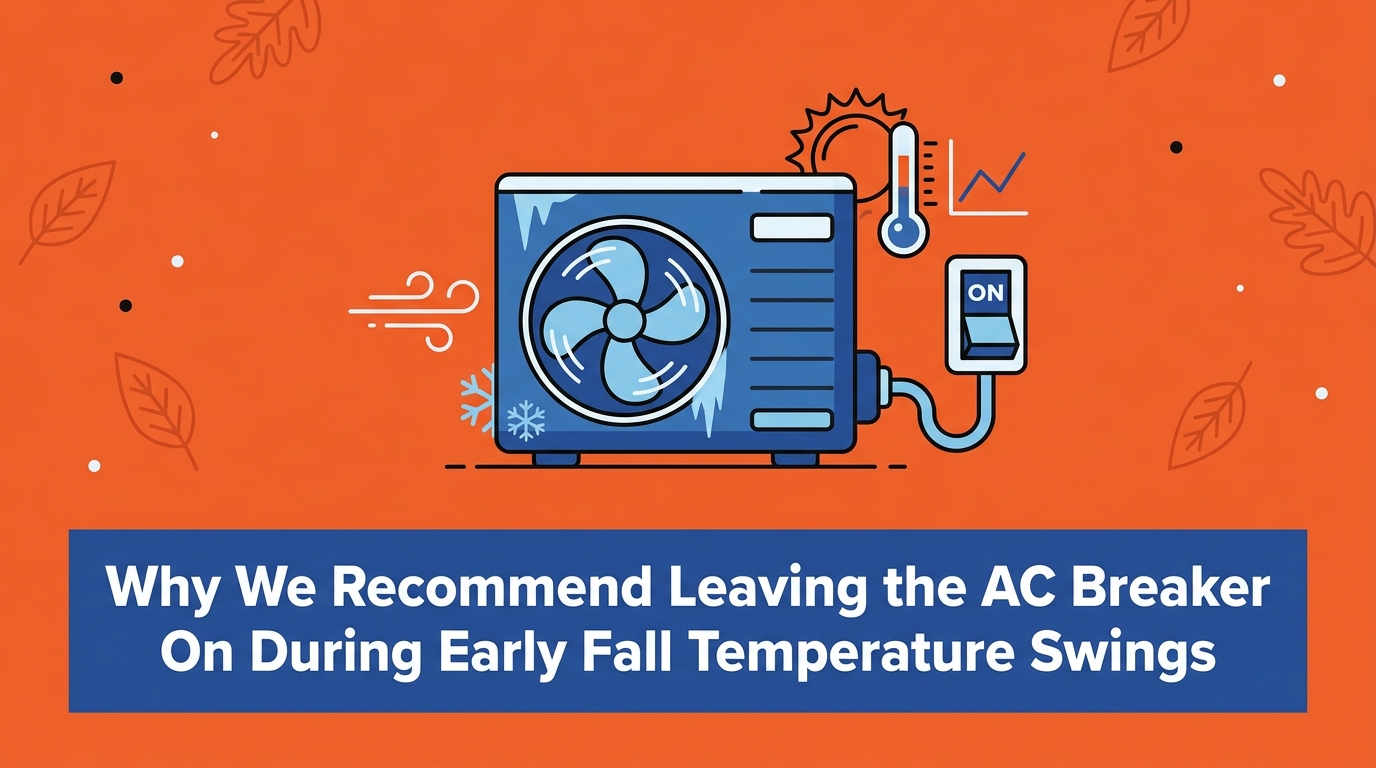
If your power goes out during a major storm, turn your system off at the thermostat immediately. When power is restored to your neighborhood, do not turn the system back on right away. Follow the 20-30 minute rule:
We generally advise against wrapping your outdoor unit in tight, airtight plastic tarps.
Airtight plastic covers trap moisture inside the cabinet. This trapped condensation accelerates rust, corrodes electrical connections, and creates an attractive, sheltered nesting environment for mice and other pests who love to chew on wiring.
Instead, if you want to protect your unit from heavy ice and falling icicles, place a breathable cover or a piece of weighted plywood over the top of the unit only. This protects the fan motor from falling debris while allowing moisture to escape through the open sides. If you use a heat pump for winter heating, never cover the unit, as it must have completely unrestricted airflow to function in heating mode.
High humidity adds a massive "latent heat" load to your air conditioning system. Your AC doesn't just lower the air temperature; it also has to remove moisture from the air to make you feel comfortable.
When humidity levels are high, your system spends a significant amount of its energy condensing water vapor on the indoor evaporator coil rather than lowering the indoor air temperature. If your system is poorly maintained, this extra moisture can lead to clogged condensate lines, water leaks, and elevated indoor humidity. Over time, high indoor humidity (above 60%) can foster mold growth inside your ductwork and living spaces.
Keeping your evaporator coils clean and your condensate drain clear is essential to prevent these issues. To learn more about protecting your home, check out How Proper Maintenance Prevents Mold Growth.
Keeping your heating and cooling system in peak condition during Central Kansas's wild weather swings doesn't have to be stressful. By following a consistent hvac maintenance checklist for extreme weather climates, you can protect your home, slash your utility bills, and ensure your family stays safe and comfortable all year long.
At MJB Heating & Cooling, we've been helping our neighbors across the Wichita metro area navigate our unique climate since 1984. From our home base in Derby, KS, to Andover, Haysville, Maize, and beyond, our family-owned business is built on quality workmanship and an honest, straightforward approach to service. We don't believe in high-pressure sales pitches or unnecessary repairs — just dependable comfort and fast, local expertise.
If you want to take the guesswork out of seasonal prep, consider signing up for an annual maintenance plan. To see if it's the right fit for your home and budget, read our guides on Is an HVAC Maintenance Plan Worth It and How a Maintenance Plan Extends Equipment Life.
Don't wait for the next extreme weather event to test your system's limits. Schedule professional service with MJB Heating & Cooling today and let our licensed technicians ensure your home is ready for whatever the Kansas sky brings next!
If you're looking for a quick HVAC maintenance checklist for extreme weather climates, here's what you need to do every season to keep your system running reliably in Wichita and Central Kansas:
Quick-Reference HVAC Maintenance Checklist for Extreme Weather:
Kansas doesn't go easy on HVAC equipment. One day it's 95°F and humid enough to feel like Houston. A week later, a cold front drops temperatures 40 degrees overnight. Then comes the hail. Then a tornado watch. Then a flash freeze that turns condensate lines into ice plugs and sends furnaces into shutdown. For homeowners and small business owners across the Wichita metro area, this isn't a rare worst-case scenario — it's just a typical Kansas year.
The stress this puts on heating and cooling systems is real. Research shows that furnaces in volatile climates like Kansas can cycle twice as often as those in stable climates, accelerating wear on heat exchangers, blower motors, and ignition components. Emergency HVAC repair calls spike by roughly 300% during extreme cold snaps. And nearly 90% of electrical AC issues happen when a unit is left running during a major storm — a mistake many homeowners don't realize they're making.
The good news? Most of these failures are preventable. A solid, season-by-season maintenance routine keeps your system ready for whatever Kansas throws at it — and that's exactly what this guide covers.
Similar topics to hvac maintenance checklist for extreme weather climates:
When you live in communities like Derby, Andover, or Haysville, your heating and air conditioning system isn't a luxury—it's a critical safety shield. Understanding how often should you service your HVAC system is the first step toward securing that shield. In extreme weather climates, the standard "set it and forget it" approach is a recipe for mid-season system failure.
A neglected HVAC system in Central Kansas has a significantly shorter operational life. While a well-maintained furnace or air conditioner can easily last 15 to 20 years, a system left to battle our dusty, high-wind prairie summers and sub-zero winters without care often fails by year 10.
The physical toll of extreme weather is cumulative. Rapid temperature swings cause metal ductwork and heat exchangers to expand and contract rapidly, which can lead to structural fatigue and cracks. Furthermore, our region's heavy agricultural dust and cottonwood fluff act like a thick wool blanket on outdoor coils, forcing the compressor to run hotter and longer. By keeping up with a seasonal checklist, you prevent minor wear from turning into a catastrophic system failure during a July heatwave or a January polar vortex. Learn more about how our regional climate challenges your equipment in our Kansas Climate HVAC Guide.
Your heating and cooling system accounts for roughly 52% of your household's annual energy consumption. When extreme temperatures hit, that percentage climbs even higher.
Proactive seasonal maintenance keeps your system running at peak thermodynamic efficiency, keeping your utility bills manageable even when the weather goes wild. For a deeper dive into these impacts, read about how Kansas severe weather affects your HVAC system.
To keep your home comfortable and safe, you need a structured plan. This seasonal checklist is designed specifically for the unique demands of the Central Kansas climate, helping you prepare your system before the peak heating and cooling seasons arrive.
For a complete overview of year-round care, you can also consult our comprehensive HVAC Maintenance Guide 2026 and discover the best HVAC setup for Kansas weather.
Before the scorching summer heat settles over Wichita, Maize, and El Dorado, your air conditioning system needs a thorough tune-up. Use this checklist to ensure your cooling system can handle 100°F+ days without breaking a sweat:
For additional tips on keeping your cooling system in top shape, check out our Essential HVAC Maintenance Tips for Your Furnace and AC.
Winter in Central Kansas brings bitter winds and sub-zero temperatures. Preparing your heating system in early autumn is vital to prevent emergency outages during a hard freeze:
For a localized breakdown of winter prep, explore our guide on HVAC Maintenance Tips for Kansas Homeowners.
Kansas severe weather isn't limited to temperature extremes; we also face high winds, heavy thunderstorms, hail, and tornadoes. Taking proactive steps to protect your outdoor equipment can save you from premature replacement and extensive property damage.
High winds can easily turn patio furniture, toys, and loose tree branches into dangerous projectiles.
To learn more about how severe weather impacts your equipment, read How Tornadoes and Hail Damage HVAC Equipment and How Severe Storms and Tornadoes Affect Your HVAC.
| Maintenance Category | Safe DIY Tasks | Professional Technical Services |
|---|---|---|
| Storm Preparedness | Clear yard debris within 10 feet; secure patio furniture; turn off system at breaker before major storms. | Install whole-home and unit-specific surge protectors; install wind-rated tie-down straps. |
| Hail Protection | Clear light leaves and twigs from the top grille; monitor weather alerts. | Install heavy-duty, aerodynamic hail guards; straighten bent coil fins with specialized fin combs. |
| Electrical Safety | Replace standard thermostat batteries; check that outdoor electrical disconnect box is closed. | Inspect contactors and capacitors for electrical wear; test electrical draw (amps/volts) of motors. |
| Post-Storm Recovery | Visually inspect for obvious physical damage; clear away small branches; check for tripped breakers. | Conduct megohmmeter testing on flooded motors; inspect heat exchangers for storm-related stress; check refrigerant pressures. |
If your power goes out during a major storm, turn your system off at the thermostat immediately. When power is restored to your neighborhood, do not turn the system back on right away. Follow the 20-30 minute rule:
We generally advise against wrapping your outdoor unit in tight, airtight plastic tarps.
Airtight plastic covers trap moisture inside the cabinet. This trapped condensation accelerates rust, corrodes electrical connections, and creates an attractive, sheltered nesting environment for mice and other pests who love to chew on wiring.
Instead, if you want to protect your unit from heavy ice and falling icicles, place a breathable cover or a piece of weighted plywood over the top of the unit only. This protects the fan motor from falling debris while allowing moisture to escape through the open sides. If you use a heat pump for winter heating, never cover the unit, as it must have completely unrestricted airflow to function in heating mode.
High humidity adds a massive "latent heat" load to your air conditioning system. Your AC doesn't just lower the air temperature; it also has to remove moisture from the air to make you feel comfortable.
When humidity levels are high, your system spends a significant amount of its energy condensing water vapor on the indoor evaporator coil rather than lowering the indoor air temperature. If your system is poorly maintained, this extra moisture can lead to clogged condensate lines, water leaks, and elevated indoor humidity. Over time, high indoor humidity (above 60%) can foster mold growth inside your ductwork and living spaces.
Keeping your evaporator coils clean and your condensate drain clear is essential to prevent these issues. To learn more about protecting your home, check out How Proper Maintenance Prevents Mold Growth.
Keeping your heating and cooling system in peak condition during Central Kansas's wild weather swings doesn't have to be stressful. By following a consistent hvac maintenance checklist for extreme weather climates, you can protect your home, slash your utility bills, and ensure your family stays safe and comfortable all year long.
At MJB Heating & Cooling, we've been helping our neighbors across the Wichita metro area navigate our unique climate since 1984. From our home base in Derby, KS, to Andover, Haysville, Maize, and beyond, our family-owned business is built on quality workmanship and an honest, straightforward approach to service. We don't believe in high-pressure sales pitches or unnecessary repairs — just dependable comfort and fast, local expertise.
If you want to take the guesswork out of seasonal prep, consider signing up for an annual maintenance plan. To see if it's the right fit for your home and budget, read our guides on Is an HVAC Maintenance Plan Worth It and How a Maintenance Plan Extends Equipment Life.
Don't wait for the next extreme weather event to test your system's limits. Schedule professional service with MJB Heating & Cooling today and let our licensed technicians ensure your home is ready for whatever the Kansas sky brings next!
If you're looking for a quick HVAC maintenance checklist for extreme weather climates, here's what you need to do every season to keep your system running reliably in Wichita and Central Kansas:
Quick-Reference HVAC Maintenance Checklist for Extreme Weather:
Kansas doesn't go easy on HVAC equipment. One day it's 95°F and humid enough to feel like Houston. A week later, a cold front drops temperatures 40 degrees overnight. Then comes the hail. Then a tornado watch. Then a flash freeze that turns condensate lines into ice plugs and sends furnaces into shutdown. For homeowners and small business owners across the Wichita metro area, this isn't a rare worst-case scenario — it's just a typical Kansas year.
The stress this puts on heating and cooling systems is real. Research shows that furnaces in volatile climates like Kansas can cycle twice as often as those in stable climates, accelerating wear on heat exchangers, blower motors, and ignition components. Emergency HVAC repair calls spike by roughly 300% during extreme cold snaps. And nearly 90% of electrical AC issues happen when a unit is left running during a major storm — a mistake many homeowners don't realize they're making.
The good news? Most of these failures are preventable. A solid, season-by-season maintenance routine keeps your system ready for whatever Kansas throws at it — and that's exactly what this guide covers.
Similar topics to hvac maintenance checklist for extreme weather climates:
When you live in communities like Derby, Andover, or Haysville, your heating and air conditioning system isn't a luxury—it's a critical safety shield. Understanding how often should you service your HVAC system is the first step toward securing that shield. In extreme weather climates, the standard "set it and forget it" approach is a recipe for mid-season system failure.
A neglected HVAC system in Central Kansas has a significantly shorter operational life. While a well-maintained furnace or air conditioner can easily last 15 to 20 years, a system left to battle our dusty, high-wind prairie summers and sub-zero winters without care often fails by year 10.
The physical toll of extreme weather is cumulative. Rapid temperature swings cause metal ductwork and heat exchangers to expand and contract rapidly, which can lead to structural fatigue and cracks. Furthermore, our region's heavy agricultural dust and cottonwood fluff act like a thick wool blanket on outdoor coils, forcing the compressor to run hotter and longer. By keeping up with a seasonal checklist, you prevent minor wear from turning into a catastrophic system failure during a July heatwave or a January polar vortex. Learn more about how our regional climate challenges your equipment in our Kansas Climate HVAC Guide.
Your heating and cooling system accounts for roughly 52% of your household's annual energy consumption. When extreme temperatures hit, that percentage climbs even higher.
Proactive seasonal maintenance keeps your system running at peak thermodynamic efficiency, keeping your utility bills manageable even when the weather goes wild. For a deeper dive into these impacts, read about how Kansas severe weather affects your HVAC system.
To keep your home comfortable and safe, you need a structured plan. This seasonal checklist is designed specifically for the unique demands of the Central Kansas climate, helping you prepare your system before the peak heating and cooling seasons arrive.
For a complete overview of year-round care, you can also consult our comprehensive HVAC Maintenance Guide 2026 and discover the best HVAC setup for Kansas weather.
Before the scorching summer heat settles over Wichita, Maize, and El Dorado, your air conditioning system needs a thorough tune-up. Use this checklist to ensure your cooling system can handle 100°F+ days without breaking a sweat:
For additional tips on keeping your cooling system in top shape, check out our Essential HVAC Maintenance Tips for Your Furnace and AC.
Winter in Central Kansas brings bitter winds and sub-zero temperatures. Preparing your heating system in early autumn is vital to prevent emergency outages during a hard freeze:
For a localized breakdown of winter prep, explore our guide on HVAC Maintenance Tips for Kansas Homeowners.
Kansas severe weather isn't limited to temperature extremes; we also face high winds, heavy thunderstorms, hail, and tornadoes. Taking proactive steps to protect your outdoor equipment can save you from premature replacement and extensive property damage.
High winds can easily turn patio furniture, toys, and loose tree branches into dangerous projectiles.
To learn more about how severe weather impacts your equipment, read How Tornadoes and Hail Damage HVAC Equipment and How Severe Storms and Tornadoes Affect Your HVAC.
| Maintenance Category | Safe DIY Tasks | Professional Technical Services |
|---|---|---|
| Storm Preparedness | Clear yard debris within 10 feet; secure patio furniture; turn off system at breaker before major storms. | Install whole-home and unit-specific surge protectors; install wind-rated tie-down straps. |
| Hail Protection | Clear light leaves and twigs from the top grille; monitor weather alerts. | Install heavy-duty, aerodynamic hail guards; straighten bent coil fins with specialized fin combs. |
| Electrical Safety | Replace standard thermostat batteries; check that outdoor electrical disconnect box is closed. | Inspect contactors and capacitors for electrical wear; test electrical draw (amps/volts) of motors. |
| Post-Storm Recovery | Visually inspect for obvious physical damage; clear away small branches; check for tripped breakers. | Conduct megohmmeter testing on flooded motors; inspect heat exchangers for storm-related stress; check refrigerant pressures. |
If your power goes out during a major storm, turn your system off at the thermostat immediately. When power is restored to your neighborhood, do not turn the system back on right away. Follow the 20-30 minute rule:
We generally advise against wrapping your outdoor unit in tight, airtight plastic tarps.
Airtight plastic covers trap moisture inside the cabinet. This trapped condensation accelerates rust, corrodes electrical connections, and creates an attractive, sheltered nesting environment for mice and other pests who love to chew on wiring.
Instead, if you want to protect your unit from heavy ice and falling icicles, place a breathable cover or a piece of weighted plywood over the top of the unit only. This protects the fan motor from falling debris while allowing moisture to escape through the open sides. If you use a heat pump for winter heating, never cover the unit, as it must have completely unrestricted airflow to function in heating mode.
High humidity adds a massive "latent heat" load to your air conditioning system. Your AC doesn't just lower the air temperature; it also has to remove moisture from the air to make you feel comfortable.
When humidity levels are high, your system spends a significant amount of its energy condensing water vapor on the indoor evaporator coil rather than lowering the indoor air temperature. If your system is poorly maintained, this extra moisture can lead to clogged condensate lines, water leaks, and elevated indoor humidity. Over time, high indoor humidity (above 60%) can foster mold growth inside your ductwork and living spaces.
Keeping your evaporator coils clean and your condensate drain clear is essential to prevent these issues. To learn more about protecting your home, check out How Proper Maintenance Prevents Mold Growth.
Keeping your heating and cooling system in peak condition during Central Kansas's wild weather swings doesn't have to be stressful. By following a consistent hvac maintenance checklist for extreme weather climates, you can protect your home, slash your utility bills, and ensure your family stays safe and comfortable all year long.
At MJB Heating & Cooling, we've been helping our neighbors across the Wichita metro area navigate our unique climate since 1984. From our home base in Derby, KS, to Andover, Haysville, Maize, and beyond, our family-owned business is built on quality workmanship and an honest, straightforward approach to service. We don't believe in high-pressure sales pitches or unnecessary repairs — just dependable comfort and fast, local expertise.
If you want to take the guesswork out of seasonal prep, consider signing up for an annual maintenance plan. To see if it's the right fit for your home and budget, read our guides on Is an HVAC Maintenance Plan Worth It and How a Maintenance Plan Extends Equipment Life.
Don't wait for the next extreme weather event to test your system's limits. Schedule professional service with MJB Heating & Cooling today and let our licensed technicians ensure your home is ready for whatever the Kansas sky brings next!
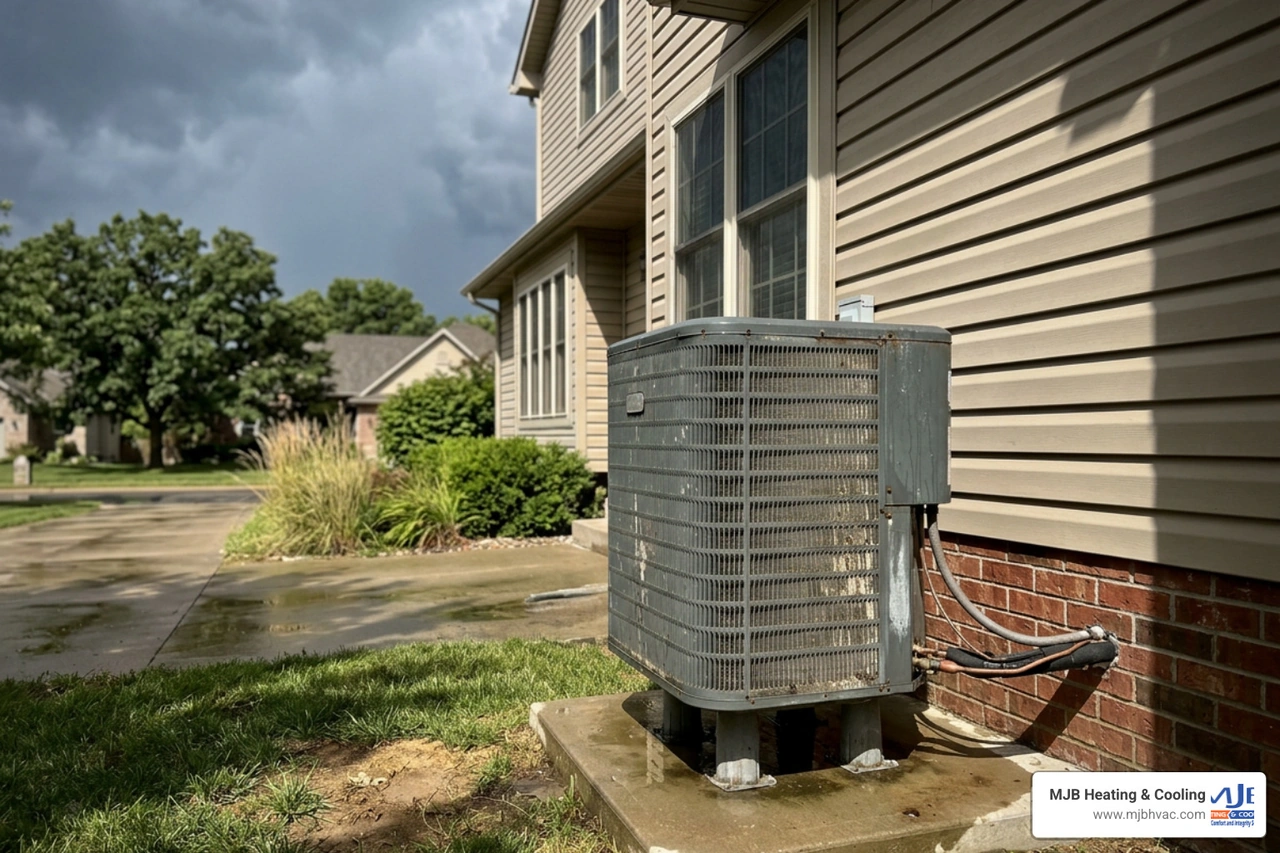

If you're looking for a quick HVAC maintenance checklist for extreme weather climates, here's what you need to do every season to keep your system running reliably in Wichita and Central Kansas:
Quick-Reference HVAC Maintenance Checklist for Extreme Weather:
Kansas doesn't go easy on HVAC equipment. One day it's 95°F and humid enough to feel like Houston. A week later, a cold front drops temperatures 40 degrees overnight. Then comes the hail. Then a tornado watch. Then a flash freeze that turns condensate lines into ice plugs and sends furnaces into shutdown. For homeowners and small business owners across the Wichita metro area, this isn't a rare worst-case scenario — it's just a typical Kansas year.
The stress this puts on heating and cooling systems is real. Research shows that furnaces in volatile climates like Kansas can cycle twice as often as those in stable climates, accelerating wear on heat exchangers, blower motors, and ignition components. Emergency HVAC repair calls spike by roughly 300% during extreme cold snaps. And nearly 90% of electrical AC issues happen when a unit is left running during a major storm — a mistake many homeowners don't realize they're making.
The good news? Most of these failures are preventable. A solid, season-by-season maintenance routine keeps your system ready for whatever Kansas throws at it — and that's exactly what this guide covers.
Similar topics to hvac maintenance checklist for extreme weather climates:
When you live in communities like Derby, Andover, or Haysville, your heating and air conditioning system isn't a luxury—it's a critical safety shield. Understanding how often should you service your HVAC system is the first step toward securing that shield. In extreme weather climates, the standard "set it and forget it" approach is a recipe for mid-season system failure.
A neglected HVAC system in Central Kansas has a significantly shorter operational life. While a well-maintained furnace or air conditioner can easily last 15 to 20 years, a system left to battle our dusty, high-wind prairie summers and sub-zero winters without care often fails by year 10.
The physical toll of extreme weather is cumulative. Rapid temperature swings cause metal ductwork and heat exchangers to expand and contract rapidly, which can lead to structural fatigue and cracks. Furthermore, our region's heavy agricultural dust and cottonwood fluff act like a thick wool blanket on outdoor coils, forcing the compressor to run hotter and longer. By keeping up with a seasonal checklist, you prevent minor wear from turning into a catastrophic system failure during a July heatwave or a January polar vortex. Learn more about how our regional climate challenges your equipment in our Kansas Climate HVAC Guide.
Your heating and cooling system accounts for roughly 52% of your household's annual energy consumption. When extreme temperatures hit, that percentage climbs even higher.
Proactive seasonal maintenance keeps your system running at peak thermodynamic efficiency, keeping your utility bills manageable even when the weather goes wild. For a deeper dive into these impacts, read about how Kansas severe weather affects your HVAC system.
To keep your home comfortable and safe, you need a structured plan. This seasonal checklist is designed specifically for the unique demands of the Central Kansas climate, helping you prepare your system before the peak heating and cooling seasons arrive.
For a complete overview of year-round care, you can also consult our comprehensive HVAC Maintenance Guide 2026 and discover the best HVAC setup for Kansas weather.
Before the scorching summer heat settles over Wichita, Maize, and El Dorado, your air conditioning system needs a thorough tune-up. Use this checklist to ensure your cooling system can handle 100°F+ days without breaking a sweat:
For additional tips on keeping your cooling system in top shape, check out our Essential HVAC Maintenance Tips for Your Furnace and AC.
Winter in Central Kansas brings bitter winds and sub-zero temperatures. Preparing your heating system in early autumn is vital to prevent emergency outages during a hard freeze:
For a localized breakdown of winter prep, explore our guide on HVAC Maintenance Tips for Kansas Homeowners.
Kansas severe weather isn't limited to temperature extremes; we also face high winds, heavy thunderstorms, hail, and tornadoes. Taking proactive steps to protect your outdoor equipment can save you from premature replacement and extensive property damage.
High winds can easily turn patio furniture, toys, and loose tree branches into dangerous projectiles.
To learn more about how severe weather impacts your equipment, read How Tornadoes and Hail Damage HVAC Equipment and How Severe Storms and Tornadoes Affect Your HVAC.
| Maintenance Category | Safe DIY Tasks | Professional Technical Services |
|---|---|---|
| Storm Preparedness | Clear yard debris within 10 feet; secure patio furniture; turn off system at breaker before major storms. | Install whole-home and unit-specific surge protectors; install wind-rated tie-down straps. |
| Hail Protection | Clear light leaves and twigs from the top grille; monitor weather alerts. | Install heavy-duty, aerodynamic hail guards; straighten bent coil fins with specialized fin combs. |
| Electrical Safety | Replace standard thermostat batteries; check that outdoor electrical disconnect box is closed. | Inspect contactors and capacitors for electrical wear; test electrical draw (amps/volts) of motors. |
| Post-Storm Recovery | Visually inspect for obvious physical damage; clear away small branches; check for tripped breakers. | Conduct megohmmeter testing on flooded motors; inspect heat exchangers for storm-related stress; check refrigerant pressures. |
If your power goes out during a major storm, turn your system off at the thermostat immediately. When power is restored to your neighborhood, do not turn the system back on right away. Follow the 20-30 minute rule:
We generally advise against wrapping your outdoor unit in tight, airtight plastic tarps.
Airtight plastic covers trap moisture inside the cabinet. This trapped condensation accelerates rust, corrodes electrical connections, and creates an attractive, sheltered nesting environment for mice and other pests who love to chew on wiring.
Instead, if you want to protect your unit from heavy ice and falling icicles, place a breathable cover or a piece of weighted plywood over the top of the unit only. This protects the fan motor from falling debris while allowing moisture to escape through the open sides. If you use a heat pump for winter heating, never cover the unit, as it must have completely unrestricted airflow to function in heating mode.
High humidity adds a massive "latent heat" load to your air conditioning system. Your AC doesn't just lower the air temperature; it also has to remove moisture from the air to make you feel comfortable.
When humidity levels are high, your system spends a significant amount of its energy condensing water vapor on the indoor evaporator coil rather than lowering the indoor air temperature. If your system is poorly maintained, this extra moisture can lead to clogged condensate lines, water leaks, and elevated indoor humidity. Over time, high indoor humidity (above 60%) can foster mold growth inside your ductwork and living spaces.
Keeping your evaporator coils clean and your condensate drain clear is essential to prevent these issues. To learn more about protecting your home, check out How Proper Maintenance Prevents Mold Growth.
Keeping your heating and cooling system in peak condition during Central Kansas's wild weather swings doesn't have to be stressful. By following a consistent hvac maintenance checklist for extreme weather climates, you can protect your home, slash your utility bills, and ensure your family stays safe and comfortable all year long.
At MJB Heating & Cooling, we've been helping our neighbors across the Wichita metro area navigate our unique climate since 1984. From our home base in Derby, KS, to Andover, Haysville, Maize, and beyond, our family-owned business is built on quality workmanship and an honest, straightforward approach to service. We don't believe in high-pressure sales pitches or unnecessary repairs — just dependable comfort and fast, local expertise.
If you want to take the guesswork out of seasonal prep, consider signing up for an annual maintenance plan. To see if it's the right fit for your home and budget, read our guides on Is an HVAC Maintenance Plan Worth It and How a Maintenance Plan Extends Equipment Life.
Don't wait for the next extreme weather event to test your system's limits. Schedule professional service with MJB Heating & Cooling today and let our licensed technicians ensure your home is ready for whatever the Kansas sky brings next!
If you're looking for a quick HVAC maintenance checklist for extreme weather climates, here's what you need to do every season to keep your system running reliably in Wichita and Central Kansas:
Quick-Reference HVAC Maintenance Checklist for Extreme Weather:
Kansas doesn't go easy on HVAC equipment. One day it's 95°F and humid enough to feel like Houston. A week later, a cold front drops temperatures 40 degrees overnight. Then comes the hail. Then a tornado watch. Then a flash freeze that turns condensate lines into ice plugs and sends furnaces into shutdown. For homeowners and small business owners across the Wichita metro area, this isn't a rare worst-case scenario — it's just a typical Kansas year.
The stress this puts on heating and cooling systems is real. Research shows that furnaces in volatile climates like Kansas can cycle twice as often as those in stable climates, accelerating wear on heat exchangers, blower motors, and ignition components. Emergency HVAC repair calls spike by roughly 300% during extreme cold snaps. And nearly 90% of electrical AC issues happen when a unit is left running during a major storm — a mistake many homeowners don't realize they're making.
The good news? Most of these failures are preventable. A solid, season-by-season maintenance routine keeps your system ready for whatever Kansas throws at it — and that's exactly what this guide covers.
Similar topics to hvac maintenance checklist for extreme weather climates:
When you live in communities like Derby, Andover, or Haysville, your heating and air conditioning system isn't a luxury—it's a critical safety shield. Understanding how often should you service your HVAC system is the first step toward securing that shield. In extreme weather climates, the standard "set it and forget it" approach is a recipe for mid-season system failure.
A neglected HVAC system in Central Kansas has a significantly shorter operational life. While a well-maintained furnace or air conditioner can easily last 15 to 20 years, a system left to battle our dusty, high-wind prairie summers and sub-zero winters without care often fails by year 10.
The physical toll of extreme weather is cumulative. Rapid temperature swings cause metal ductwork and heat exchangers to expand and contract rapidly, which can lead to structural fatigue and cracks. Furthermore, our region's heavy agricultural dust and cottonwood fluff act like a thick wool blanket on outdoor coils, forcing the compressor to run hotter and longer. By keeping up with a seasonal checklist, you prevent minor wear from turning into a catastrophic system failure during a July heatwave or a January polar vortex. Learn more about how our regional climate challenges your equipment in our Kansas Climate HVAC Guide.
Your heating and cooling system accounts for roughly 52% of your household's annual energy consumption. When extreme temperatures hit, that percentage climbs even higher.
Proactive seasonal maintenance keeps your system running at peak thermodynamic efficiency, keeping your utility bills manageable even when the weather goes wild. For a deeper dive into these impacts, read about how Kansas severe weather affects your HVAC system.
To keep your home comfortable and safe, you need a structured plan. This seasonal checklist is designed specifically for the unique demands of the Central Kansas climate, helping you prepare your system before the peak heating and cooling seasons arrive.
For a complete overview of year-round care, you can also consult our comprehensive HVAC Maintenance Guide 2026 and discover the best HVAC setup for Kansas weather.
Before the scorching summer heat settles over Wichita, Maize, and El Dorado, your air conditioning system needs a thorough tune-up. Use this checklist to ensure your cooling system can handle 100°F+ days without breaking a sweat:
For additional tips on keeping your cooling system in top shape, check out our Essential HVAC Maintenance Tips for Your Furnace and AC.
Winter in Central Kansas brings bitter winds and sub-zero temperatures. Preparing your heating system in early autumn is vital to prevent emergency outages during a hard freeze:
For a localized breakdown of winter prep, explore our guide on HVAC Maintenance Tips for Kansas Homeowners.
Kansas severe weather isn't limited to temperature extremes; we also face high winds, heavy thunderstorms, hail, and tornadoes. Taking proactive steps to protect your outdoor equipment can save you from premature replacement and extensive property damage.
High winds can easily turn patio furniture, toys, and loose tree branches into dangerous projectiles.
To learn more about how severe weather impacts your equipment, read How Tornadoes and Hail Damage HVAC Equipment and How Severe Storms and Tornadoes Affect Your HVAC.
| Maintenance Category | Safe DIY Tasks | Professional Technical Services |
|---|---|---|
| Storm Preparedness | Clear yard debris within 10 feet; secure patio furniture; turn off system at breaker before major storms. | Install whole-home and unit-specific surge protectors; install wind-rated tie-down straps. |
| Hail Protection | Clear light leaves and twigs from the top grille; monitor weather alerts. | Install heavy-duty, aerodynamic hail guards; straighten bent coil fins with specialized fin combs. |
| Electrical Safety | Replace standard thermostat batteries; check that outdoor electrical disconnect box is closed. | Inspect contactors and capacitors for electrical wear; test electrical draw (amps/volts) of motors. |
| Post-Storm Recovery | Visually inspect for obvious physical damage; clear away small branches; check for tripped breakers. | Conduct megohmmeter testing on flooded motors; inspect heat exchangers for storm-related stress; check refrigerant pressures. |
If your power goes out during a major storm, turn your system off at the thermostat immediately. When power is restored to your neighborhood, do not turn the system back on right away. Follow the 20-30 minute rule:
We generally advise against wrapping your outdoor unit in tight, airtight plastic tarps.
Airtight plastic covers trap moisture inside the cabinet. This trapped condensation accelerates rust, corrodes electrical connections, and creates an attractive, sheltered nesting environment for mice and other pests who love to chew on wiring.
Instead, if you want to protect your unit from heavy ice and falling icicles, place a breathable cover or a piece of weighted plywood over the top of the unit only. This protects the fan motor from falling debris while allowing moisture to escape through the open sides. If you use a heat pump for winter heating, never cover the unit, as it must have completely unrestricted airflow to function in heating mode.
High humidity adds a massive "latent heat" load to your air conditioning system. Your AC doesn't just lower the air temperature; it also has to remove moisture from the air to make you feel comfortable.
When humidity levels are high, your system spends a significant amount of its energy condensing water vapor on the indoor evaporator coil rather than lowering the indoor air temperature. If your system is poorly maintained, this extra moisture can lead to clogged condensate lines, water leaks, and elevated indoor humidity. Over time, high indoor humidity (above 60%) can foster mold growth inside your ductwork and living spaces.
Keeping your evaporator coils clean and your condensate drain clear is essential to prevent these issues. To learn more about protecting your home, check out How Proper Maintenance Prevents Mold Growth.
Keeping your heating and cooling system in peak condition during Central Kansas's wild weather swings doesn't have to be stressful. By following a consistent hvac maintenance checklist for extreme weather climates, you can protect your home, slash your utility bills, and ensure your family stays safe and comfortable all year long.
At MJB Heating & Cooling, we've been helping our neighbors across the Wichita metro area navigate our unique climate since 1984. From our home base in Derby, KS, to Andover, Haysville, Maize, and beyond, our family-owned business is built on quality workmanship and an honest, straightforward approach to service. We don't believe in high-pressure sales pitches or unnecessary repairs — just dependable comfort and fast, local expertise.
If you want to take the guesswork out of seasonal prep, consider signing up for an annual maintenance plan. To see if it's the right fit for your home and budget, read our guides on Is an HVAC Maintenance Plan Worth It and How a Maintenance Plan Extends Equipment Life.
Don't wait for the next extreme weather event to test your system's limits. Schedule professional service with MJB Heating & Cooling today and let our licensed technicians ensure your home is ready for whatever the Kansas sky brings next!


Our A/C stopped working on a Sunday and due to health issues, we needed to find a service company available on a Sunday. I called MJB and left a message on their emergency voice mail. Within 10 minutes Tom Buck called me to hear my description of the symptoms. He was just finishing an appointment in Wichita and would be on his way to my home on the south end of Derby. He arrived within 30 minutes! From start to finish he was the perfect example of what you could ever hope for in an HVAC tech and a human being. His evaluation of our system inside and out was as thorough as I could ever imagine and once he was done with the repair, our system is running as well or better than ever. Well worth the price for the evaluation, parts, and labor. Thank you again Tom for an awesome experience.
Our AC went out during the hottest days of the year, and they were out next day! We have been jerked around by a shoddy home warranty for years. We finally had a chance to pick our own repair people, and MJB came highly recommended. I can see why! I was impressed with the honesty and speed at which they fixed our AC unit!
Our commercial building had a lightening/electrical strike and damaged our 20 ton AC unit. No one could find us a new unit before the end of September. Imagining going all of August and September with no AC in Kansas and working inside near 100 degree temps is less than thrilling. Dale and the team at MJB called around and saved the day. They had us a new unit 5 weeks earlier than other could promise and I now have happy employees. The unit is amazingly quiet, super cold and so much more energy efficient. Thank you for being our super hero!
Came out and installed my new furnace. Was very polite and affordable. They are very acknowledgeable and I highly recommend!
Thank you very much. We had our 1st warm night in 3weeks. MJB took the time and effort to find the real problem. And the employees were kind and thoughtful and explained things very well. I cannot thank you and all of MJB. Will recommend you highly. Thanks again Marjorie Herman Oxford Kansas
We had a new system installed and I was so impressed with how quick they were in come out and install it, in the middle of a hot summer day. They were so friendly & very professional. I had a small problem with a weird sound and they came over immediately and fixed it. Love them!