.avif)





Blogs
Stay updated with our latest blog posts.
When Kansas winters drop into the single digits and summers push past 100°F, Daikin extreme weather performance vs other brands becomes one of the most important questions you can ask before buying a new heat pump or mini-split system.
Here's a quick summary so you can compare at a glance:
| Brand | Min. Operating Temp | Heating Capacity at 5°F | HSPF2 Rating | Warranty |
|---|---|---|---|---|
| Daikin Aurora (Fit) | -13°F to -20°F | 100% rated capacity | Up to 10.0 | 12 years (registered) |
| Other Premium Brands (Average) | -13°F | Variable retention | Up to 9.8 | 10 years |
| Standard Heat Pumps | 10°F to 25°F | Significant drop (30-50%) | 7.5 to 8.5 | 5 to 10 years |
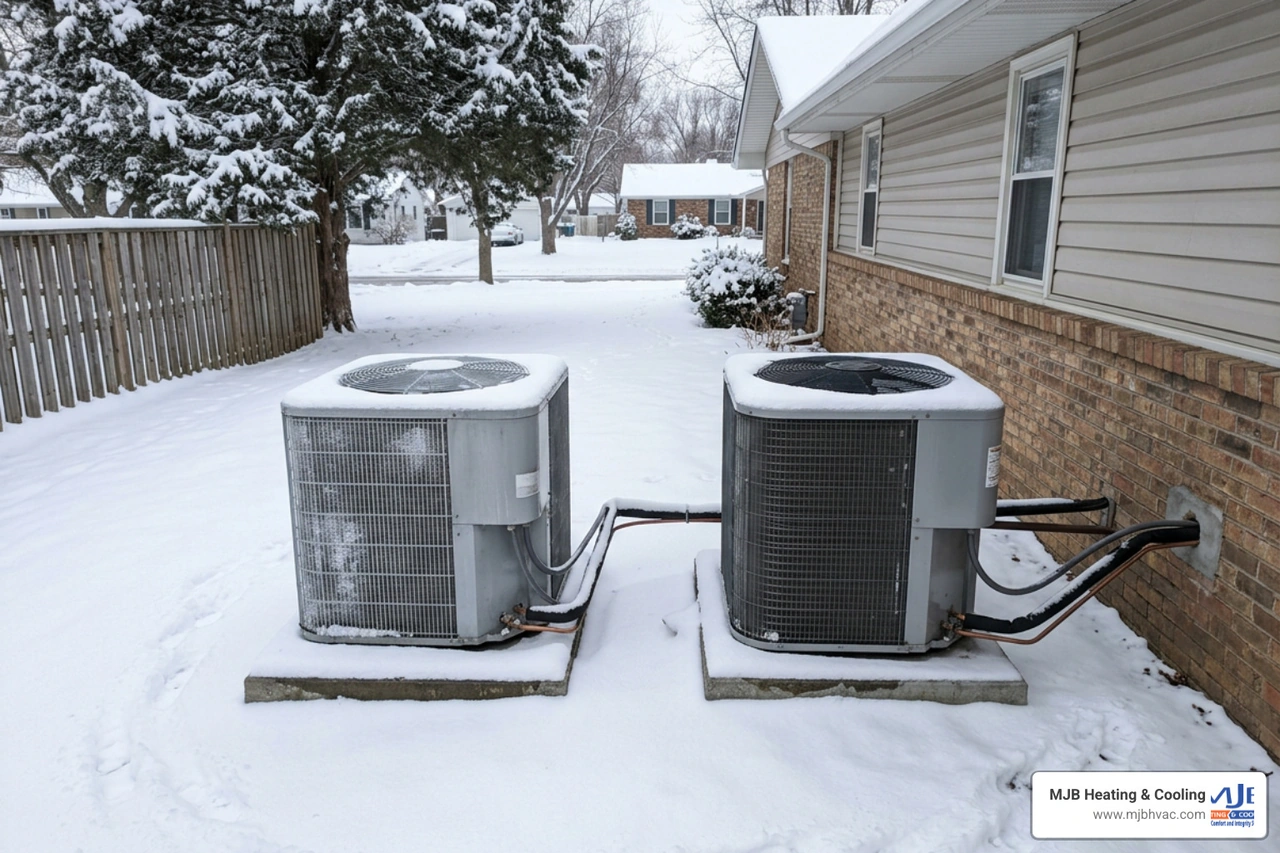
Kansas weather does not compromise. A polar vortex can push Wichita temperatures well below zero, while July heat waves regularly top 100°F. Most standard heat pumps struggle below 30°F and lose efficiency fast in high-humidity summer conditions. Cold-climate models — like the Daikin Aurora and Daikin Fit — are built specifically to handle both extremes, operating reliably in sub-zero cold while also delivering strong cooling and dehumidification when the heat index climbs.
The key differences between Daikin and competing brands come down to four things: minimum operating temperature, how much heating capacity the system retains in extreme cold, SEER2/HSPF2 efficiency ratings, and warranty length. In this guide, we break all of that down so you can make a confident decision for your home.
Daikin extreme weather performance vs other brands further reading:
To understand how Daikin stacks up against other industry options, we have to look past simple marketing slogans and dive into the actual engineering.
For decades, traditional heat pumps were viewed as moderate-climate systems. When winter temperatures fell below freezing, they would lose their ability to extract heat from the outdoor air, forcing them to rely on auxiliary electric backup heat strips.
Today, advanced inverter technology has completely rewritten that narrative. Leading systems use variable-speed inverter compressors that can scale their output up or down in tiny increments, rather than turning completely on or off. This allows them to run continuously at a highly efficient lower speed to maintain your exact indoor temperature.
But how does Daikin’s specific inverter execution compare to the rest of the field?
When analyzing What Makes Daikin HVAC Systems Different, the answer lies in their proprietary swing compressor technology and global scale. Daikin is the world's largest HVAC manufacturer, meaning their research and development budget is massive. They design and build their own inverter compressors, rather than sourcing them from third parties.
In a head-to-head Daikin vs Other HVAC Brands Comparison, Daikin systems consistently demonstrate a unique design philosophy: they prioritize long-term mechanical simplicity, wide modulation ranges, and quiet operation. While some alternative systems focus on squeezing out raw heating capacity at the expense of efficiency, Daikin builds systems designed to balance extreme cold performance with exceptional summer dehumidification and lower overall operating energy requirements.
In our local South-Central Kansas climate, a winter storm can bring single-digit temperatures and biting winds to Derby, Andover, and Haysville. This is where Daikin’s specialized Aurora series shines.
Standard heat pumps begin to see a sharp decline in heating capacity as temperatures drop below 32°F. Daikin Aurora systems, however, are engineered with enhanced vapor injection and larger outdoor coils to maintain 100% of their rated heating capacity down to 5°F, continuing to deliver comfort even when the outdoor air plummets to -13°F or -20°F.
How does this compare to other options on the market?
Understanding Heat Pump Efficiency in Hot Summers and Cold Winters is key to realizing that a system must be a true double-threat to handle our local climate.
While cold-weather heating gets a lot of attention, Kansas summers are legendary for their oppressive heat and heavy, sticky humidity. When July brings 100°F+ temperatures to communities like Mulvane, Wellington, and El Dorado, your system's high-ambient cooling performance is what keeps your home livable.
This is where Daikin holds a distinct engineering advantage. Because Daikin’s primary global markets include incredibly hot and humid regions, their systems are designed from the ground up to operate in ambient temperatures up to 115°F or even 122°F without tripping safety switches or shutting down.
To get a complete picture of what our local weather demands from an air conditioner or heat pump, check out our comprehensive Kansas Climate HVAC Guide.
When a polar vortex sweeps through the Wichita metro area, your heating system is put to the ultimate test. To understand how Daikin keeps your living room cozy when it’s freezing outside, we have to look at the mechanical innovations inside the Daikin Fit and Aurora systems.
Traditional heat pumps struggle in the cold because as the outdoor air gets colder, the refrigerant inside the system has a harder time absorbing heat. To overcome this, Daikin uses vapor injection technology in its cold-climate compressors. Think of this like a turbocharger for your heat pump. By injecting a portion of superheated refrigerant vapor directly back into the compressor, the system can pump more heat into your home without overworking the motor or consuming excessive electricity.
This technology allows the Daikin Fit Aurora to maintain high efficiency and steady heating capacity when standard heat pumps would have long since switched over to auxiliary electric heat. To learn more about how heating efficiency is measured and how it impacts your winter energy efficiency, take a look at our guide to Discover Energy Savings with Daikin's HSPF Rating Insights.
When comparing Daikin extreme weather performance vs other brands, capacity retention is the metric that matters most. A heat pump's "rated capacity" is measured at a mild 47°F. But you don't need much help heating your home when it's 47°F outside; you need to know how many BTUs of heat the system can deliver when it's 5°F.
Choosing a high-efficiency cold-climate system over a standard model is one of the smartest upgrades you can make for winter comfort. For a detailed breakdown of how these systems compare to traditional units, read our Standard Efficiency vs High Efficiency HVAC Comparison.
Daikin’s ability to dominate in extreme weather isn't just due to heavy-duty compressors; it's also driven by their leadership in next-generation refrigerants.
Daikin is a pioneer in the transition to R32 refrigerant. For years, the North American HVAC industry relied on R-410A. However, R32 is a next-generation refrigerant that transfers heat far more efficiently than R-410A, requiring up to a 20% smaller refrigerant charge to achieve the same heating and cooling output.
Furthermore, R32 has a 68% lower Global Warming Potential (GWP) than R-410A. By pairing this advanced, highly efficient refrigerant with their proprietary variable-speed inverter compressors, Daikin systems can squeeze every last drop of heat out of freezing outdoor air, providing a highly sustainable and incredibly reliable heating solution for Kansas homes.
In South-Central Kansas, summer comfort isn't just about lowering the temperature on your thermostat; it's about controlling the heavy, humid air that rolls across the Southern Plains. If your air conditioner only runs in short, powerful blasts, it won't stay on long enough to pull moisture out of your home, leaving you with a indoor environment that feels cool but damp and sticky.
Daikin systems are engineered to combat this exact issue. Because their inverter compressors can ramp down to run continuously at ultra-low speeds, they act like a constant dehumidifier. By keeping air moving steadily across the cold indoor evaporator coil, they extract maximum moisture from your indoor air while using a fraction of the electricity of a traditional single-stage system. To see how these high-efficiency cooling cycles translate directly to lower utility bills, check out How High Efficiency Systems Reduce Summer Costs.
One of Daikin's most unique comfort features is their proprietary Coanda Airflow technology, found in many of their ductless and light-commercial systems.
Named after the Coanda effect, this design uses precisely engineered louvers to stream cool air upward along the ceiling rather than blowing it directly onto the people in the room. As the cool air hugs the ceiling, it naturally and gently drafts downward, creating an incredibly even temperature distribution across the entire space. This completely eliminates the cold drafts and hot spots common with traditional wall units.
Additionally, Daikin's high-end systems utilize intelligent thermal sensors that scan the room to detect human presence. If you leave the room, the system automatically adjusts to an eco-mode to save energy, ramping back up the moment you return. This level of smart control is a major reason why homeowners see such significant utility savings. For more insights on the financial return of upgrading your system, read How Much Does a High Efficiency System Save.
In our service area—including towns like Augusta, Rose Hill, and Park City—extreme weather doesn't just mean high and low temperatures. It also means severe thunderstorms, high winds, heavy hail, and the occasional tornado threat.
Our outdoor HVAC units are completely exposed to these harsh elements. Hail can easily flatten the delicate aluminum fins on an outdoor coil, restricting airflow and causing the compressor to overheat and fail.
Daikin builds their outdoor cabinets with heavy-gauge galvanized steel and applies specialized anti-corrosion coatings (such as their Gold Fin or blue fin coatings) to protect the coils from both physical damage and environmental wear. While no outdoor unit is completely immune to a direct hit from a major storm, Daikin’s rugged construction gives them an exceptional survival rate against the elements.
For a deeper look at how to protect your home's comfort systems from our region's intense storm seasons, explore these resources:
Yes, Daikin heat pumps can operate in temperatures below -13°F. While -13°F is the official rated limit for guaranteed performance on many Aurora models, the systems are programmed to continue running even in colder sub-zero conditions.
However, as temperatures drop past this threshold, the heating capacity and efficiency (COP) will naturally decline. In extreme climates like Zone 7 or during an unprecedented Kansas polar vortex, we highly recommend pairing your Daikin heat pump with a backup heating source—such as an electric heat strip kit or a dual-fuel gas furnace—to ensure your home remains safe and warm no matter how low the mercury drops.
Daikin offers one of the best warranties in the residential HVAC industry. While the standard industry warranty is 10 years on parts and compressor, Daikin provides a 12-year limited parts and unit replacement warranty on their premium systems (including the Daikin Fit and Aurora series).
This means if your compressor fails within the first 12 years of operation, Daikin doesn't just provide a replacement part—they provide a completely new outdoor unit. To qualify for this exceptional 12-year coverage, the system must be installed in an owner-occupied residence, registered online within 60 days of installation, and installed by a certified professional.
While a Daikin Aurora system is incredibly powerful and can easily handle the vast majority of Kansas winter days on its own, having a backup heating source is always a smart and safe practice in South-Central Kansas.
Whether you choose a dual-fuel setup (pairing the heat pump with a high-efficiency gas furnace) or install auxiliary electric heat strips inside your air handler, a backup heat source acts as an insurance policy. During those rare, extreme sub-zero nights in Wichita or Derby, the backup heat will automatically kick on to assist the heat pump, ensuring your family stays perfectly warm without putting unnecessary strain on your outdoor unit.
When the weather in South-Central Kansas gets wild, you need an HVAC system that is engineered to perform without compromise. Comparing Daikin extreme weather performance vs other brands reveals that while other premium brands offer solid systems, Daikin delivers an unmatched combination of sub-zero heating capacity, high-ambient cooling efficiency, advanced R32 refrigerant technology, and an industry-leading 12-year warranty.
However, even the most advanced HVAC technology in the world will fail to keep you comfortable if it isn't sized, designed, and installed correctly. Every home has a unique thermal footprint, and proper system sizing is critical to achieving the efficiency and performance you expect.
At MJB Heating & Cooling, we have been serving our friends and neighbors across the Wichita metro area—from Derby and Andover to Mulvane and beyond—since 1984. As a family-owned business, we believe in honest advice, quality workmanship, and helping you find the absolute best comfort solutions for your home.
To learn more about how we can help you maximize your home's comfort and energy savings, explore our expert guides:
Ready to experience the ultimate in year-round home comfort? Discover energy savings with Daikin's HSPF rating insights and let our team help you design the perfect, storm-resistant comfort system for your Kansas home today!
When Kansas winters drop into the single digits and summers push past 100°F, Daikin extreme weather performance vs other brands becomes one of the most important questions you can ask before buying a new heat pump or mini-split system.
Here's a quick summary so you can compare at a glance:
| Brand | Min. Operating Temp | Heating Capacity at 5°F | HSPF2 Rating | Warranty |
|---|---|---|---|---|
| Daikin Aurora (Fit) | -13°F to -20°F | 100% rated capacity | Up to 10.0 | 12 years (registered) |
| Other Premium Brands (Average) | -13°F | Variable retention | Up to 9.8 | 10 years |
| Standard Heat Pumps | 10°F to 25°F | Significant drop (30-50%) | 7.5 to 8.5 | 5 to 10 years |
Kansas weather does not compromise. A polar vortex can push Wichita temperatures well below zero, while July heat waves regularly top 100°F. Most standard heat pumps struggle below 30°F and lose efficiency fast in high-humidity summer conditions. Cold-climate models — like the Daikin Aurora and Daikin Fit — are built specifically to handle both extremes, operating reliably in sub-zero cold while also delivering strong cooling and dehumidification when the heat index climbs.
The key differences between Daikin and competing brands come down to four things: minimum operating temperature, how much heating capacity the system retains in extreme cold, SEER2/HSPF2 efficiency ratings, and warranty length. In this guide, we break all of that down so you can make a confident decision for your home.
Daikin extreme weather performance vs other brands further reading:
To understand how Daikin stacks up against other industry options, we have to look past simple marketing slogans and dive into the actual engineering.
For decades, traditional heat pumps were viewed as moderate-climate systems. When winter temperatures fell below freezing, they would lose their ability to extract heat from the outdoor air, forcing them to rely on auxiliary electric backup heat strips.
Today, advanced inverter technology has completely rewritten that narrative. Leading systems use variable-speed inverter compressors that can scale their output up or down in tiny increments, rather than turning completely on or off. This allows them to run continuously at a highly efficient lower speed to maintain your exact indoor temperature.
But how does Daikin’s specific inverter execution compare to the rest of the field?
When analyzing What Makes Daikin HVAC Systems Different, the answer lies in their proprietary swing compressor technology and global scale. Daikin is the world's largest HVAC manufacturer, meaning their research and development budget is massive. They design and build their own inverter compressors, rather than sourcing them from third parties.
In a head-to-head Daikin vs Other HVAC Brands Comparison, Daikin systems consistently demonstrate a unique design philosophy: they prioritize long-term mechanical simplicity, wide modulation ranges, and quiet operation. While some alternative systems focus on squeezing out raw heating capacity at the expense of efficiency, Daikin builds systems designed to balance extreme cold performance with exceptional summer dehumidification and lower overall operating energy requirements.
In our local South-Central Kansas climate, a winter storm can bring single-digit temperatures and biting winds to Derby, Andover, and Haysville. This is where Daikin’s specialized Aurora series shines.
Standard heat pumps begin to see a sharp decline in heating capacity as temperatures drop below 32°F. Daikin Aurora systems, however, are engineered with enhanced vapor injection and larger outdoor coils to maintain 100% of their rated heating capacity down to 5°F, continuing to deliver comfort even when the outdoor air plummets to -13°F or -20°F.
How does this compare to other options on the market?
Understanding Heat Pump Efficiency in Hot Summers and Cold Winters is key to realizing that a system must be a true double-threat to handle our local climate.
While cold-weather heating gets a lot of attention, Kansas summers are legendary for their oppressive heat and heavy, sticky humidity. When July brings 100°F+ temperatures to communities like Mulvane, Wellington, and El Dorado, your system's high-ambient cooling performance is what keeps your home livable.
This is where Daikin holds a distinct engineering advantage. Because Daikin’s primary global markets include incredibly hot and humid regions, their systems are designed from the ground up to operate in ambient temperatures up to 115°F or even 122°F without tripping safety switches or shutting down.
To get a complete picture of what our local weather demands from an air conditioner or heat pump, check out our comprehensive Kansas Climate HVAC Guide.
When a polar vortex sweeps through the Wichita metro area, your heating system is put to the ultimate test. To understand how Daikin keeps your living room cozy when it’s freezing outside, we have to look at the mechanical innovations inside the Daikin Fit and Aurora systems.
Traditional heat pumps struggle in the cold because as the outdoor air gets colder, the refrigerant inside the system has a harder time absorbing heat. To overcome this, Daikin uses vapor injection technology in its cold-climate compressors. Think of this like a turbocharger for your heat pump. By injecting a portion of superheated refrigerant vapor directly back into the compressor, the system can pump more heat into your home without overworking the motor or consuming excessive electricity.
This technology allows the Daikin Fit Aurora to maintain high efficiency and steady heating capacity when standard heat pumps would have long since switched over to auxiliary electric heat. To learn more about how heating efficiency is measured and how it impacts your winter energy efficiency, take a look at our guide to Discover Energy Savings with Daikin's HSPF Rating Insights.
When comparing Daikin extreme weather performance vs other brands, capacity retention is the metric that matters most. A heat pump's "rated capacity" is measured at a mild 47°F. But you don't need much help heating your home when it's 47°F outside; you need to know how many BTUs of heat the system can deliver when it's 5°F.
Choosing a high-efficiency cold-climate system over a standard model is one of the smartest upgrades you can make for winter comfort. For a detailed breakdown of how these systems compare to traditional units, read our Standard Efficiency vs High Efficiency HVAC Comparison.
Daikin’s ability to dominate in extreme weather isn't just due to heavy-duty compressors; it's also driven by their leadership in next-generation refrigerants.
Daikin is a pioneer in the transition to R32 refrigerant. For years, the North American HVAC industry relied on R-410A. However, R32 is a next-generation refrigerant that transfers heat far more efficiently than R-410A, requiring up to a 20% smaller refrigerant charge to achieve the same heating and cooling output.
Furthermore, R32 has a 68% lower Global Warming Potential (GWP) than R-410A. By pairing this advanced, highly efficient refrigerant with their proprietary variable-speed inverter compressors, Daikin systems can squeeze every last drop of heat out of freezing outdoor air, providing a highly sustainable and incredibly reliable heating solution for Kansas homes.
In South-Central Kansas, summer comfort isn't just about lowering the temperature on your thermostat; it's about controlling the heavy, humid air that rolls across the Southern Plains. If your air conditioner only runs in short, powerful blasts, it won't stay on long enough to pull moisture out of your home, leaving you with a indoor environment that feels cool but damp and sticky.
Daikin systems are engineered to combat this exact issue. Because their inverter compressors can ramp down to run continuously at ultra-low speeds, they act like a constant dehumidifier. By keeping air moving steadily across the cold indoor evaporator coil, they extract maximum moisture from your indoor air while using a fraction of the electricity of a traditional single-stage system. To see how these high-efficiency cooling cycles translate directly to lower utility bills, check out How High Efficiency Systems Reduce Summer Costs.
One of Daikin's most unique comfort features is their proprietary Coanda Airflow technology, found in many of their ductless and light-commercial systems.
Named after the Coanda effect, this design uses precisely engineered louvers to stream cool air upward along the ceiling rather than blowing it directly onto the people in the room. As the cool air hugs the ceiling, it naturally and gently drafts downward, creating an incredibly even temperature distribution across the entire space. This completely eliminates the cold drafts and hot spots common with traditional wall units.
Additionally, Daikin's high-end systems utilize intelligent thermal sensors that scan the room to detect human presence. If you leave the room, the system automatically adjusts to an eco-mode to save energy, ramping back up the moment you return. This level of smart control is a major reason why homeowners see such significant utility savings. For more insights on the financial return of upgrading your system, read How Much Does a High Efficiency System Save.
In our service area—including towns like Augusta, Rose Hill, and Park City—extreme weather doesn't just mean high and low temperatures. It also means severe thunderstorms, high winds, heavy hail, and the occasional tornado threat.
Our outdoor HVAC units are completely exposed to these harsh elements. Hail can easily flatten the delicate aluminum fins on an outdoor coil, restricting airflow and causing the compressor to overheat and fail.
Daikin builds their outdoor cabinets with heavy-gauge galvanized steel and applies specialized anti-corrosion coatings (such as their Gold Fin or blue fin coatings) to protect the coils from both physical damage and environmental wear. While no outdoor unit is completely immune to a direct hit from a major storm, Daikin’s rugged construction gives them an exceptional survival rate against the elements.
For a deeper look at how to protect your home's comfort systems from our region's intense storm seasons, explore these resources:
Yes, Daikin heat pumps can operate in temperatures below -13°F. While -13°F is the official rated limit for guaranteed performance on many Aurora models, the systems are programmed to continue running even in colder sub-zero conditions.
However, as temperatures drop past this threshold, the heating capacity and efficiency (COP) will naturally decline. In extreme climates like Zone 7 or during an unprecedented Kansas polar vortex, we highly recommend pairing your Daikin heat pump with a backup heating source—such as an electric heat strip kit or a dual-fuel gas furnace—to ensure your home remains safe and warm no matter how low the mercury drops.
Daikin offers one of the best warranties in the residential HVAC industry. While the standard industry warranty is 10 years on parts and compressor, Daikin provides a 12-year limited parts and unit replacement warranty on their premium systems (including the Daikin Fit and Aurora series).
This means if your compressor fails within the first 12 years of operation, Daikin doesn't just provide a replacement part—they provide a completely new outdoor unit. To qualify for this exceptional 12-year coverage, the system must be installed in an owner-occupied residence, registered online within 60 days of installation, and installed by a certified professional.
While a Daikin Aurora system is incredibly powerful and can easily handle the vast majority of Kansas winter days on its own, having a backup heating source is always a smart and safe practice in South-Central Kansas.
Whether you choose a dual-fuel setup (pairing the heat pump with a high-efficiency gas furnace) or install auxiliary electric heat strips inside your air handler, a backup heat source acts as an insurance policy. During those rare, extreme sub-zero nights in Wichita or Derby, the backup heat will automatically kick on to assist the heat pump, ensuring your family stays perfectly warm without putting unnecessary strain on your outdoor unit.
When the weather in South-Central Kansas gets wild, you need an HVAC system that is engineered to perform without compromise. Comparing Daikin extreme weather performance vs other brands reveals that while other premium brands offer solid systems, Daikin delivers an unmatched combination of sub-zero heating capacity, high-ambient cooling efficiency, advanced R32 refrigerant technology, and an industry-leading 12-year warranty.
However, even the most advanced HVAC technology in the world will fail to keep you comfortable if it isn't sized, designed, and installed correctly. Every home has a unique thermal footprint, and proper system sizing is critical to achieving the efficiency and performance you expect.
At MJB Heating & Cooling, we have been serving our friends and neighbors across the Wichita metro area—from Derby and Andover to Mulvane and beyond—since 1984. As a family-owned business, we believe in honest advice, quality workmanship, and helping you find the absolute best comfort solutions for your home.
To learn more about how we can help you maximize your home's comfort and energy savings, explore our expert guides:
Ready to experience the ultimate in year-round home comfort? Discover energy savings with Daikin's HSPF rating insights and let our team help you design the perfect, storm-resistant comfort system for your Kansas home today!
When Kansas winters drop into the single digits and summers push past 100°F, Daikin extreme weather performance vs other brands becomes one of the most important questions you can ask before buying a new heat pump or mini-split system.
Here's a quick summary so you can compare at a glance:
| Brand | Min. Operating Temp | Heating Capacity at 5°F | HSPF2 Rating | Warranty |
|---|---|---|---|---|
| Daikin Aurora (Fit) | -13°F to -20°F | 100% rated capacity | Up to 10.0 | 12 years (registered) |
| Other Premium Brands (Average) | -13°F | Variable retention | Up to 9.8 | 10 years |
| Standard Heat Pumps | 10°F to 25°F | Significant drop (30-50%) | 7.5 to 8.5 | 5 to 10 years |
Kansas weather does not compromise. A polar vortex can push Wichita temperatures well below zero, while July heat waves regularly top 100°F. Most standard heat pumps struggle below 30°F and lose efficiency fast in high-humidity summer conditions. Cold-climate models — like the Daikin Aurora and Daikin Fit — are built specifically to handle both extremes, operating reliably in sub-zero cold while also delivering strong cooling and dehumidification when the heat index climbs.
The key differences between Daikin and competing brands come down to four things: minimum operating temperature, how much heating capacity the system retains in extreme cold, SEER2/HSPF2 efficiency ratings, and warranty length. In this guide, we break all of that down so you can make a confident decision for your home.
Daikin extreme weather performance vs other brands further reading:
To understand how Daikin stacks up against other industry options, we have to look past simple marketing slogans and dive into the actual engineering.
For decades, traditional heat pumps were viewed as moderate-climate systems. When winter temperatures fell below freezing, they would lose their ability to extract heat from the outdoor air, forcing them to rely on auxiliary electric backup heat strips.
Today, advanced inverter technology has completely rewritten that narrative. Leading systems use variable-speed inverter compressors that can scale their output up or down in tiny increments, rather than turning completely on or off. This allows them to run continuously at a highly efficient lower speed to maintain your exact indoor temperature.
But how does Daikin’s specific inverter execution compare to the rest of the field?
When analyzing What Makes Daikin HVAC Systems Different, the answer lies in their proprietary swing compressor technology and global scale. Daikin is the world's largest HVAC manufacturer, meaning their research and development budget is massive. They design and build their own inverter compressors, rather than sourcing them from third parties.
In a head-to-head Daikin vs Other HVAC Brands Comparison, Daikin systems consistently demonstrate a unique design philosophy: they prioritize long-term mechanical simplicity, wide modulation ranges, and quiet operation. While some alternative systems focus on squeezing out raw heating capacity at the expense of efficiency, Daikin builds systems designed to balance extreme cold performance with exceptional summer dehumidification and lower overall operating energy requirements.
In our local South-Central Kansas climate, a winter storm can bring single-digit temperatures and biting winds to Derby, Andover, and Haysville. This is where Daikin’s specialized Aurora series shines.
Standard heat pumps begin to see a sharp decline in heating capacity as temperatures drop below 32°F. Daikin Aurora systems, however, are engineered with enhanced vapor injection and larger outdoor coils to maintain 100% of their rated heating capacity down to 5°F, continuing to deliver comfort even when the outdoor air plummets to -13°F or -20°F.
How does this compare to other options on the market?
Understanding Heat Pump Efficiency in Hot Summers and Cold Winters is key to realizing that a system must be a true double-threat to handle our local climate.
While cold-weather heating gets a lot of attention, Kansas summers are legendary for their oppressive heat and heavy, sticky humidity. When July brings 100°F+ temperatures to communities like Mulvane, Wellington, and El Dorado, your system's high-ambient cooling performance is what keeps your home livable.
This is where Daikin holds a distinct engineering advantage. Because Daikin’s primary global markets include incredibly hot and humid regions, their systems are designed from the ground up to operate in ambient temperatures up to 115°F or even 122°F without tripping safety switches or shutting down.
To get a complete picture of what our local weather demands from an air conditioner or heat pump, check out our comprehensive Kansas Climate HVAC Guide.
When a polar vortex sweeps through the Wichita metro area, your heating system is put to the ultimate test. To understand how Daikin keeps your living room cozy when it’s freezing outside, we have to look at the mechanical innovations inside the Daikin Fit and Aurora systems.
Traditional heat pumps struggle in the cold because as the outdoor air gets colder, the refrigerant inside the system has a harder time absorbing heat. To overcome this, Daikin uses vapor injection technology in its cold-climate compressors. Think of this like a turbocharger for your heat pump. By injecting a portion of superheated refrigerant vapor directly back into the compressor, the system can pump more heat into your home without overworking the motor or consuming excessive electricity.
This technology allows the Daikin Fit Aurora to maintain high efficiency and steady heating capacity when standard heat pumps would have long since switched over to auxiliary electric heat. To learn more about how heating efficiency is measured and how it impacts your winter energy efficiency, take a look at our guide to Discover Energy Savings with Daikin's HSPF Rating Insights.
When comparing Daikin extreme weather performance vs other brands, capacity retention is the metric that matters most. A heat pump's "rated capacity" is measured at a mild 47°F. But you don't need much help heating your home when it's 47°F outside; you need to know how many BTUs of heat the system can deliver when it's 5°F.
Choosing a high-efficiency cold-climate system over a standard model is one of the smartest upgrades you can make for winter comfort. For a detailed breakdown of how these systems compare to traditional units, read our Standard Efficiency vs High Efficiency HVAC Comparison.
Daikin’s ability to dominate in extreme weather isn't just due to heavy-duty compressors; it's also driven by their leadership in next-generation refrigerants.
Daikin is a pioneer in the transition to R32 refrigerant. For years, the North American HVAC industry relied on R-410A. However, R32 is a next-generation refrigerant that transfers heat far more efficiently than R-410A, requiring up to a 20% smaller refrigerant charge to achieve the same heating and cooling output.
Furthermore, R32 has a 68% lower Global Warming Potential (GWP) than R-410A. By pairing this advanced, highly efficient refrigerant with their proprietary variable-speed inverter compressors, Daikin systems can squeeze every last drop of heat out of freezing outdoor air, providing a highly sustainable and incredibly reliable heating solution for Kansas homes.
In South-Central Kansas, summer comfort isn't just about lowering the temperature on your thermostat; it's about controlling the heavy, humid air that rolls across the Southern Plains. If your air conditioner only runs in short, powerful blasts, it won't stay on long enough to pull moisture out of your home, leaving you with a indoor environment that feels cool but damp and sticky.
Daikin systems are engineered to combat this exact issue. Because their inverter compressors can ramp down to run continuously at ultra-low speeds, they act like a constant dehumidifier. By keeping air moving steadily across the cold indoor evaporator coil, they extract maximum moisture from your indoor air while using a fraction of the electricity of a traditional single-stage system. To see how these high-efficiency cooling cycles translate directly to lower utility bills, check out How High Efficiency Systems Reduce Summer Costs.
One of Daikin's most unique comfort features is their proprietary Coanda Airflow technology, found in many of their ductless and light-commercial systems.
Named after the Coanda effect, this design uses precisely engineered louvers to stream cool air upward along the ceiling rather than blowing it directly onto the people in the room. As the cool air hugs the ceiling, it naturally and gently drafts downward, creating an incredibly even temperature distribution across the entire space. This completely eliminates the cold drafts and hot spots common with traditional wall units.
Additionally, Daikin's high-end systems utilize intelligent thermal sensors that scan the room to detect human presence. If you leave the room, the system automatically adjusts to an eco-mode to save energy, ramping back up the moment you return. This level of smart control is a major reason why homeowners see such significant utility savings. For more insights on the financial return of upgrading your system, read How Much Does a High Efficiency System Save.
In our service area—including towns like Augusta, Rose Hill, and Park City—extreme weather doesn't just mean high and low temperatures. It also means severe thunderstorms, high winds, heavy hail, and the occasional tornado threat.
Our outdoor HVAC units are completely exposed to these harsh elements. Hail can easily flatten the delicate aluminum fins on an outdoor coil, restricting airflow and causing the compressor to overheat and fail.
Daikin builds their outdoor cabinets with heavy-gauge galvanized steel and applies specialized anti-corrosion coatings (such as their Gold Fin or blue fin coatings) to protect the coils from both physical damage and environmental wear. While no outdoor unit is completely immune to a direct hit from a major storm, Daikin’s rugged construction gives them an exceptional survival rate against the elements.
For a deeper look at how to protect your home's comfort systems from our region's intense storm seasons, explore these resources:
Yes, Daikin heat pumps can operate in temperatures below -13°F. While -13°F is the official rated limit for guaranteed performance on many Aurora models, the systems are programmed to continue running even in colder sub-zero conditions.
However, as temperatures drop past this threshold, the heating capacity and efficiency (COP) will naturally decline. In extreme climates like Zone 7 or during an unprecedented Kansas polar vortex, we highly recommend pairing your Daikin heat pump with a backup heating source—such as an electric heat strip kit or a dual-fuel gas furnace—to ensure your home remains safe and warm no matter how low the mercury drops.
Daikin offers one of the best warranties in the residential HVAC industry. While the standard industry warranty is 10 years on parts and compressor, Daikin provides a 12-year limited parts and unit replacement warranty on their premium systems (including the Daikin Fit and Aurora series).
This means if your compressor fails within the first 12 years of operation, Daikin doesn't just provide a replacement part—they provide a completely new outdoor unit. To qualify for this exceptional 12-year coverage, the system must be installed in an owner-occupied residence, registered online within 60 days of installation, and installed by a certified professional.
While a Daikin Aurora system is incredibly powerful and can easily handle the vast majority of Kansas winter days on its own, having a backup heating source is always a smart and safe practice in South-Central Kansas.
Whether you choose a dual-fuel setup (pairing the heat pump with a high-efficiency gas furnace) or install auxiliary electric heat strips inside your air handler, a backup heat source acts as an insurance policy. During those rare, extreme sub-zero nights in Wichita or Derby, the backup heat will automatically kick on to assist the heat pump, ensuring your family stays perfectly warm without putting unnecessary strain on your outdoor unit.
When the weather in South-Central Kansas gets wild, you need an HVAC system that is engineered to perform without compromise. Comparing Daikin extreme weather performance vs other brands reveals that while other premium brands offer solid systems, Daikin delivers an unmatched combination of sub-zero heating capacity, high-ambient cooling efficiency, advanced R32 refrigerant technology, and an industry-leading 12-year warranty.
However, even the most advanced HVAC technology in the world will fail to keep you comfortable if it isn't sized, designed, and installed correctly. Every home has a unique thermal footprint, and proper system sizing is critical to achieving the efficiency and performance you expect.
At MJB Heating & Cooling, we have been serving our friends and neighbors across the Wichita metro area—from Derby and Andover to Mulvane and beyond—since 1984. As a family-owned business, we believe in honest advice, quality workmanship, and helping you find the absolute best comfort solutions for your home.
To learn more about how we can help you maximize your home's comfort and energy savings, explore our expert guides:
Ready to experience the ultimate in year-round home comfort? Discover energy savings with Daikin's HSPF rating insights and let our team help you design the perfect, storm-resistant comfort system for your Kansas home today!
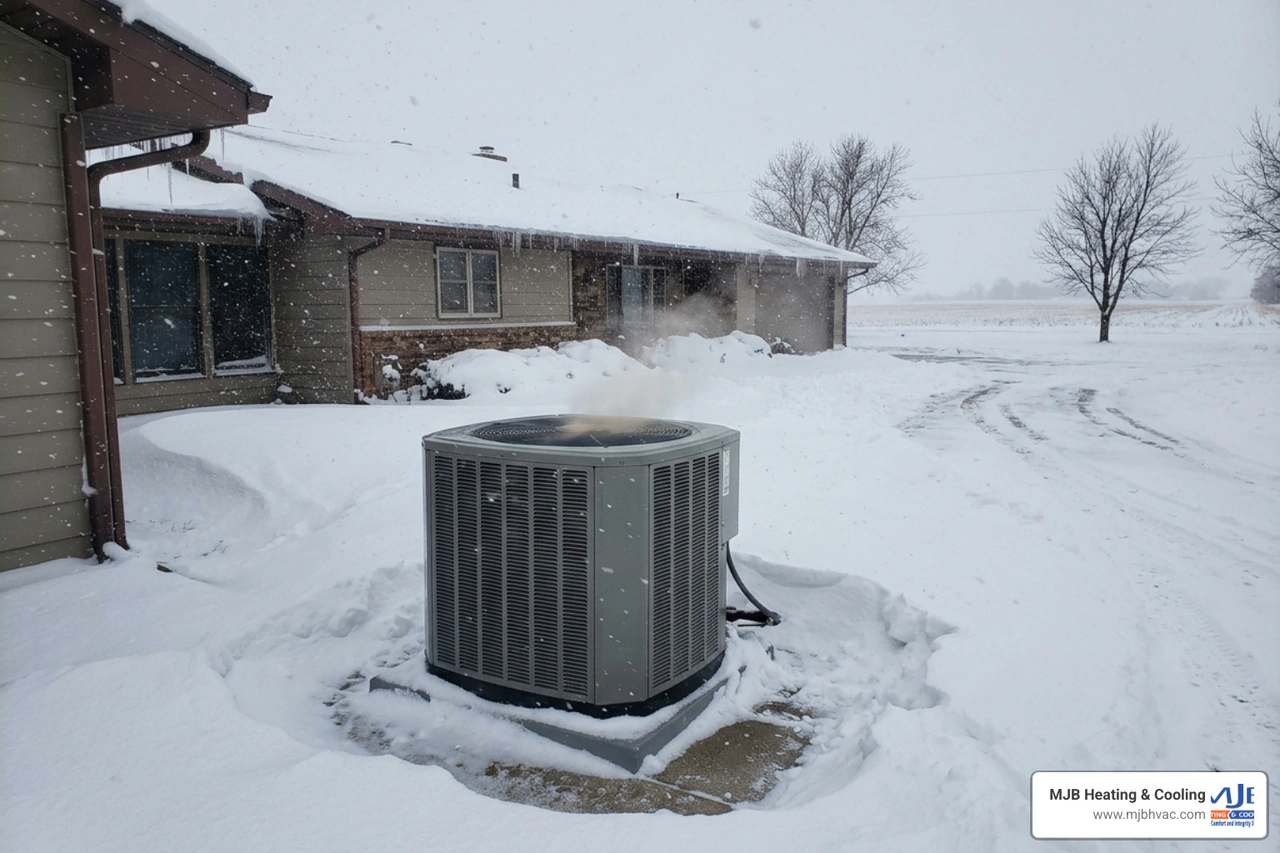

When Kansas winters drop into the single digits and summers push past 100°F, Daikin extreme weather performance vs other brands becomes one of the most important questions you can ask before buying a new heat pump or mini-split system.
Here's a quick summary so you can compare at a glance:
| Brand | Min. Operating Temp | Heating Capacity at 5°F | HSPF2 Rating | Warranty |
|---|---|---|---|---|
| Daikin Aurora (Fit) | -13°F to -20°F | 100% rated capacity | Up to 10.0 | 12 years (registered) |
| Other Premium Brands (Average) | -13°F | Variable retention | Up to 9.8 | 10 years |
| Standard Heat Pumps | 10°F to 25°F | Significant drop (30-50%) | 7.5 to 8.5 | 5 to 10 years |
Kansas weather does not compromise. A polar vortex can push Wichita temperatures well below zero, while July heat waves regularly top 100°F. Most standard heat pumps struggle below 30°F and lose efficiency fast in high-humidity summer conditions. Cold-climate models — like the Daikin Aurora and Daikin Fit — are built specifically to handle both extremes, operating reliably in sub-zero cold while also delivering strong cooling and dehumidification when the heat index climbs.
The key differences between Daikin and competing brands come down to four things: minimum operating temperature, how much heating capacity the system retains in extreme cold, SEER2/HSPF2 efficiency ratings, and warranty length. In this guide, we break all of that down so you can make a confident decision for your home.
Daikin extreme weather performance vs other brands further reading:
To understand how Daikin stacks up against other industry options, we have to look past simple marketing slogans and dive into the actual engineering.
For decades, traditional heat pumps were viewed as moderate-climate systems. When winter temperatures fell below freezing, they would lose their ability to extract heat from the outdoor air, forcing them to rely on auxiliary electric backup heat strips.
Today, advanced inverter technology has completely rewritten that narrative. Leading systems use variable-speed inverter compressors that can scale their output up or down in tiny increments, rather than turning completely on or off. This allows them to run continuously at a highly efficient lower speed to maintain your exact indoor temperature.
But how does Daikin’s specific inverter execution compare to the rest of the field?
When analyzing What Makes Daikin HVAC Systems Different, the answer lies in their proprietary swing compressor technology and global scale. Daikin is the world's largest HVAC manufacturer, meaning their research and development budget is massive. They design and build their own inverter compressors, rather than sourcing them from third parties.
In a head-to-head Daikin vs Other HVAC Brands Comparison, Daikin systems consistently demonstrate a unique design philosophy: they prioritize long-term mechanical simplicity, wide modulation ranges, and quiet operation. While some alternative systems focus on squeezing out raw heating capacity at the expense of efficiency, Daikin builds systems designed to balance extreme cold performance with exceptional summer dehumidification and lower overall operating energy requirements.
In our local South-Central Kansas climate, a winter storm can bring single-digit temperatures and biting winds to Derby, Andover, and Haysville. This is where Daikin’s specialized Aurora series shines.
Standard heat pumps begin to see a sharp decline in heating capacity as temperatures drop below 32°F. Daikin Aurora systems, however, are engineered with enhanced vapor injection and larger outdoor coils to maintain 100% of their rated heating capacity down to 5°F, continuing to deliver comfort even when the outdoor air plummets to -13°F or -20°F.
How does this compare to other options on the market?
Understanding Heat Pump Efficiency in Hot Summers and Cold Winters is key to realizing that a system must be a true double-threat to handle our local climate.
While cold-weather heating gets a lot of attention, Kansas summers are legendary for their oppressive heat and heavy, sticky humidity. When July brings 100°F+ temperatures to communities like Mulvane, Wellington, and El Dorado, your system's high-ambient cooling performance is what keeps your home livable.
This is where Daikin holds a distinct engineering advantage. Because Daikin’s primary global markets include incredibly hot and humid regions, their systems are designed from the ground up to operate in ambient temperatures up to 115°F or even 122°F without tripping safety switches or shutting down.
To get a complete picture of what our local weather demands from an air conditioner or heat pump, check out our comprehensive Kansas Climate HVAC Guide.
When a polar vortex sweeps through the Wichita metro area, your heating system is put to the ultimate test. To understand how Daikin keeps your living room cozy when it’s freezing outside, we have to look at the mechanical innovations inside the Daikin Fit and Aurora systems.
Traditional heat pumps struggle in the cold because as the outdoor air gets colder, the refrigerant inside the system has a harder time absorbing heat. To overcome this, Daikin uses vapor injection technology in its cold-climate compressors. Think of this like a turbocharger for your heat pump. By injecting a portion of superheated refrigerant vapor directly back into the compressor, the system can pump more heat into your home without overworking the motor or consuming excessive electricity.
This technology allows the Daikin Fit Aurora to maintain high efficiency and steady heating capacity when standard heat pumps would have long since switched over to auxiliary electric heat. To learn more about how heating efficiency is measured and how it impacts your winter energy efficiency, take a look at our guide to Discover Energy Savings with Daikin's HSPF Rating Insights.
When comparing Daikin extreme weather performance vs other brands, capacity retention is the metric that matters most. A heat pump's "rated capacity" is measured at a mild 47°F. But you don't need much help heating your home when it's 47°F outside; you need to know how many BTUs of heat the system can deliver when it's 5°F.
Choosing a high-efficiency cold-climate system over a standard model is one of the smartest upgrades you can make for winter comfort. For a detailed breakdown of how these systems compare to traditional units, read our Standard Efficiency vs High Efficiency HVAC Comparison.
Daikin’s ability to dominate in extreme weather isn't just due to heavy-duty compressors; it's also driven by their leadership in next-generation refrigerants.
Daikin is a pioneer in the transition to R32 refrigerant. For years, the North American HVAC industry relied on R-410A. However, R32 is a next-generation refrigerant that transfers heat far more efficiently than R-410A, requiring up to a 20% smaller refrigerant charge to achieve the same heating and cooling output.
Furthermore, R32 has a 68% lower Global Warming Potential (GWP) than R-410A. By pairing this advanced, highly efficient refrigerant with their proprietary variable-speed inverter compressors, Daikin systems can squeeze every last drop of heat out of freezing outdoor air, providing a highly sustainable and incredibly reliable heating solution for Kansas homes.
In South-Central Kansas, summer comfort isn't just about lowering the temperature on your thermostat; it's about controlling the heavy, humid air that rolls across the Southern Plains. If your air conditioner only runs in short, powerful blasts, it won't stay on long enough to pull moisture out of your home, leaving you with a indoor environment that feels cool but damp and sticky.
Daikin systems are engineered to combat this exact issue. Because their inverter compressors can ramp down to run continuously at ultra-low speeds, they act like a constant dehumidifier. By keeping air moving steadily across the cold indoor evaporator coil, they extract maximum moisture from your indoor air while using a fraction of the electricity of a traditional single-stage system. To see how these high-efficiency cooling cycles translate directly to lower utility bills, check out How High Efficiency Systems Reduce Summer Costs.
One of Daikin's most unique comfort features is their proprietary Coanda Airflow technology, found in many of their ductless and light-commercial systems.
Named after the Coanda effect, this design uses precisely engineered louvers to stream cool air upward along the ceiling rather than blowing it directly onto the people in the room. As the cool air hugs the ceiling, it naturally and gently drafts downward, creating an incredibly even temperature distribution across the entire space. This completely eliminates the cold drafts and hot spots common with traditional wall units.
Additionally, Daikin's high-end systems utilize intelligent thermal sensors that scan the room to detect human presence. If you leave the room, the system automatically adjusts to an eco-mode to save energy, ramping back up the moment you return. This level of smart control is a major reason why homeowners see such significant utility savings. For more insights on the financial return of upgrading your system, read How Much Does a High Efficiency System Save.
In our service area—including towns like Augusta, Rose Hill, and Park City—extreme weather doesn't just mean high and low temperatures. It also means severe thunderstorms, high winds, heavy hail, and the occasional tornado threat.
Our outdoor HVAC units are completely exposed to these harsh elements. Hail can easily flatten the delicate aluminum fins on an outdoor coil, restricting airflow and causing the compressor to overheat and fail.
Daikin builds their outdoor cabinets with heavy-gauge galvanized steel and applies specialized anti-corrosion coatings (such as their Gold Fin or blue fin coatings) to protect the coils from both physical damage and environmental wear. While no outdoor unit is completely immune to a direct hit from a major storm, Daikin’s rugged construction gives them an exceptional survival rate against the elements.
For a deeper look at how to protect your home's comfort systems from our region's intense storm seasons, explore these resources:
Yes, Daikin heat pumps can operate in temperatures below -13°F. While -13°F is the official rated limit for guaranteed performance on many Aurora models, the systems are programmed to continue running even in colder sub-zero conditions.
However, as temperatures drop past this threshold, the heating capacity and efficiency (COP) will naturally decline. In extreme climates like Zone 7 or during an unprecedented Kansas polar vortex, we highly recommend pairing your Daikin heat pump with a backup heating source—such as an electric heat strip kit or a dual-fuel gas furnace—to ensure your home remains safe and warm no matter how low the mercury drops.
Daikin offers one of the best warranties in the residential HVAC industry. While the standard industry warranty is 10 years on parts and compressor, Daikin provides a 12-year limited parts and unit replacement warranty on their premium systems (including the Daikin Fit and Aurora series).
This means if your compressor fails within the first 12 years of operation, Daikin doesn't just provide a replacement part—they provide a completely new outdoor unit. To qualify for this exceptional 12-year coverage, the system must be installed in an owner-occupied residence, registered online within 60 days of installation, and installed by a certified professional.
While a Daikin Aurora system is incredibly powerful and can easily handle the vast majority of Kansas winter days on its own, having a backup heating source is always a smart and safe practice in South-Central Kansas.
Whether you choose a dual-fuel setup (pairing the heat pump with a high-efficiency gas furnace) or install auxiliary electric heat strips inside your air handler, a backup heat source acts as an insurance policy. During those rare, extreme sub-zero nights in Wichita or Derby, the backup heat will automatically kick on to assist the heat pump, ensuring your family stays perfectly warm without putting unnecessary strain on your outdoor unit.
When the weather in South-Central Kansas gets wild, you need an HVAC system that is engineered to perform without compromise. Comparing Daikin extreme weather performance vs other brands reveals that while other premium brands offer solid systems, Daikin delivers an unmatched combination of sub-zero heating capacity, high-ambient cooling efficiency, advanced R32 refrigerant technology, and an industry-leading 12-year warranty.
However, even the most advanced HVAC technology in the world will fail to keep you comfortable if it isn't sized, designed, and installed correctly. Every home has a unique thermal footprint, and proper system sizing is critical to achieving the efficiency and performance you expect.
At MJB Heating & Cooling, we have been serving our friends and neighbors across the Wichita metro area—from Derby and Andover to Mulvane and beyond—since 1984. As a family-owned business, we believe in honest advice, quality workmanship, and helping you find the absolute best comfort solutions for your home.
To learn more about how we can help you maximize your home's comfort and energy savings, explore our expert guides:
Ready to experience the ultimate in year-round home comfort? Discover energy savings with Daikin's HSPF rating insights and let our team help you design the perfect, storm-resistant comfort system for your Kansas home today!
When Kansas winters drop into the single digits and summers push past 100°F, Daikin extreme weather performance vs other brands becomes one of the most important questions you can ask before buying a new heat pump or mini-split system.
Here's a quick summary so you can compare at a glance:
| Brand | Min. Operating Temp | Heating Capacity at 5°F | HSPF2 Rating | Warranty |
|---|---|---|---|---|
| Daikin Aurora (Fit) | -13°F to -20°F | 100% rated capacity | Up to 10.0 | 12 years (registered) |
| Other Premium Brands (Average) | -13°F | Variable retention | Up to 9.8 | 10 years |
| Standard Heat Pumps | 10°F to 25°F | Significant drop (30-50%) | 7.5 to 8.5 | 5 to 10 years |
Kansas weather does not compromise. A polar vortex can push Wichita temperatures well below zero, while July heat waves regularly top 100°F. Most standard heat pumps struggle below 30°F and lose efficiency fast in high-humidity summer conditions. Cold-climate models — like the Daikin Aurora and Daikin Fit — are built specifically to handle both extremes, operating reliably in sub-zero cold while also delivering strong cooling and dehumidification when the heat index climbs.
The key differences between Daikin and competing brands come down to four things: minimum operating temperature, how much heating capacity the system retains in extreme cold, SEER2/HSPF2 efficiency ratings, and warranty length. In this guide, we break all of that down so you can make a confident decision for your home.
Daikin extreme weather performance vs other brands further reading:
To understand how Daikin stacks up against other industry options, we have to look past simple marketing slogans and dive into the actual engineering.
For decades, traditional heat pumps were viewed as moderate-climate systems. When winter temperatures fell below freezing, they would lose their ability to extract heat from the outdoor air, forcing them to rely on auxiliary electric backup heat strips.
Today, advanced inverter technology has completely rewritten that narrative. Leading systems use variable-speed inverter compressors that can scale their output up or down in tiny increments, rather than turning completely on or off. This allows them to run continuously at a highly efficient lower speed to maintain your exact indoor temperature.
But how does Daikin’s specific inverter execution compare to the rest of the field?
When analyzing What Makes Daikin HVAC Systems Different, the answer lies in their proprietary swing compressor technology and global scale. Daikin is the world's largest HVAC manufacturer, meaning their research and development budget is massive. They design and build their own inverter compressors, rather than sourcing them from third parties.
In a head-to-head Daikin vs Other HVAC Brands Comparison, Daikin systems consistently demonstrate a unique design philosophy: they prioritize long-term mechanical simplicity, wide modulation ranges, and quiet operation. While some alternative systems focus on squeezing out raw heating capacity at the expense of efficiency, Daikin builds systems designed to balance extreme cold performance with exceptional summer dehumidification and lower overall operating energy requirements.
In our local South-Central Kansas climate, a winter storm can bring single-digit temperatures and biting winds to Derby, Andover, and Haysville. This is where Daikin’s specialized Aurora series shines.
Standard heat pumps begin to see a sharp decline in heating capacity as temperatures drop below 32°F. Daikin Aurora systems, however, are engineered with enhanced vapor injection and larger outdoor coils to maintain 100% of their rated heating capacity down to 5°F, continuing to deliver comfort even when the outdoor air plummets to -13°F or -20°F.
How does this compare to other options on the market?
Understanding Heat Pump Efficiency in Hot Summers and Cold Winters is key to realizing that a system must be a true double-threat to handle our local climate.
While cold-weather heating gets a lot of attention, Kansas summers are legendary for their oppressive heat and heavy, sticky humidity. When July brings 100°F+ temperatures to communities like Mulvane, Wellington, and El Dorado, your system's high-ambient cooling performance is what keeps your home livable.
This is where Daikin holds a distinct engineering advantage. Because Daikin’s primary global markets include incredibly hot and humid regions, their systems are designed from the ground up to operate in ambient temperatures up to 115°F or even 122°F without tripping safety switches or shutting down.
To get a complete picture of what our local weather demands from an air conditioner or heat pump, check out our comprehensive Kansas Climate HVAC Guide.
When a polar vortex sweeps through the Wichita metro area, your heating system is put to the ultimate test. To understand how Daikin keeps your living room cozy when it’s freezing outside, we have to look at the mechanical innovations inside the Daikin Fit and Aurora systems.
Traditional heat pumps struggle in the cold because as the outdoor air gets colder, the refrigerant inside the system has a harder time absorbing heat. To overcome this, Daikin uses vapor injection technology in its cold-climate compressors. Think of this like a turbocharger for your heat pump. By injecting a portion of superheated refrigerant vapor directly back into the compressor, the system can pump more heat into your home without overworking the motor or consuming excessive electricity.
This technology allows the Daikin Fit Aurora to maintain high efficiency and steady heating capacity when standard heat pumps would have long since switched over to auxiliary electric heat. To learn more about how heating efficiency is measured and how it impacts your winter energy efficiency, take a look at our guide to Discover Energy Savings with Daikin's HSPF Rating Insights.
When comparing Daikin extreme weather performance vs other brands, capacity retention is the metric that matters most. A heat pump's "rated capacity" is measured at a mild 47°F. But you don't need much help heating your home when it's 47°F outside; you need to know how many BTUs of heat the system can deliver when it's 5°F.
Choosing a high-efficiency cold-climate system over a standard model is one of the smartest upgrades you can make for winter comfort. For a detailed breakdown of how these systems compare to traditional units, read our Standard Efficiency vs High Efficiency HVAC Comparison.
Daikin’s ability to dominate in extreme weather isn't just due to heavy-duty compressors; it's also driven by their leadership in next-generation refrigerants.
Daikin is a pioneer in the transition to R32 refrigerant. For years, the North American HVAC industry relied on R-410A. However, R32 is a next-generation refrigerant that transfers heat far more efficiently than R-410A, requiring up to a 20% smaller refrigerant charge to achieve the same heating and cooling output.
Furthermore, R32 has a 68% lower Global Warming Potential (GWP) than R-410A. By pairing this advanced, highly efficient refrigerant with their proprietary variable-speed inverter compressors, Daikin systems can squeeze every last drop of heat out of freezing outdoor air, providing a highly sustainable and incredibly reliable heating solution for Kansas homes.
In South-Central Kansas, summer comfort isn't just about lowering the temperature on your thermostat; it's about controlling the heavy, humid air that rolls across the Southern Plains. If your air conditioner only runs in short, powerful blasts, it won't stay on long enough to pull moisture out of your home, leaving you with a indoor environment that feels cool but damp and sticky.
Daikin systems are engineered to combat this exact issue. Because their inverter compressors can ramp down to run continuously at ultra-low speeds, they act like a constant dehumidifier. By keeping air moving steadily across the cold indoor evaporator coil, they extract maximum moisture from your indoor air while using a fraction of the electricity of a traditional single-stage system. To see how these high-efficiency cooling cycles translate directly to lower utility bills, check out How High Efficiency Systems Reduce Summer Costs.
One of Daikin's most unique comfort features is their proprietary Coanda Airflow technology, found in many of their ductless and light-commercial systems.
Named after the Coanda effect, this design uses precisely engineered louvers to stream cool air upward along the ceiling rather than blowing it directly onto the people in the room. As the cool air hugs the ceiling, it naturally and gently drafts downward, creating an incredibly even temperature distribution across the entire space. This completely eliminates the cold drafts and hot spots common with traditional wall units.
Additionally, Daikin's high-end systems utilize intelligent thermal sensors that scan the room to detect human presence. If you leave the room, the system automatically adjusts to an eco-mode to save energy, ramping back up the moment you return. This level of smart control is a major reason why homeowners see such significant utility savings. For more insights on the financial return of upgrading your system, read How Much Does a High Efficiency System Save.
In our service area—including towns like Augusta, Rose Hill, and Park City—extreme weather doesn't just mean high and low temperatures. It also means severe thunderstorms, high winds, heavy hail, and the occasional tornado threat.
Our outdoor HVAC units are completely exposed to these harsh elements. Hail can easily flatten the delicate aluminum fins on an outdoor coil, restricting airflow and causing the compressor to overheat and fail.
Daikin builds their outdoor cabinets with heavy-gauge galvanized steel and applies specialized anti-corrosion coatings (such as their Gold Fin or blue fin coatings) to protect the coils from both physical damage and environmental wear. While no outdoor unit is completely immune to a direct hit from a major storm, Daikin’s rugged construction gives them an exceptional survival rate against the elements.
For a deeper look at how to protect your home's comfort systems from our region's intense storm seasons, explore these resources:
Yes, Daikin heat pumps can operate in temperatures below -13°F. While -13°F is the official rated limit for guaranteed performance on many Aurora models, the systems are programmed to continue running even in colder sub-zero conditions.
However, as temperatures drop past this threshold, the heating capacity and efficiency (COP) will naturally decline. In extreme climates like Zone 7 or during an unprecedented Kansas polar vortex, we highly recommend pairing your Daikin heat pump with a backup heating source—such as an electric heat strip kit or a dual-fuel gas furnace—to ensure your home remains safe and warm no matter how low the mercury drops.
Daikin offers one of the best warranties in the residential HVAC industry. While the standard industry warranty is 10 years on parts and compressor, Daikin provides a 12-year limited parts and unit replacement warranty on their premium systems (including the Daikin Fit and Aurora series).
This means if your compressor fails within the first 12 years of operation, Daikin doesn't just provide a replacement part—they provide a completely new outdoor unit. To qualify for this exceptional 12-year coverage, the system must be installed in an owner-occupied residence, registered online within 60 days of installation, and installed by a certified professional.
While a Daikin Aurora system is incredibly powerful and can easily handle the vast majority of Kansas winter days on its own, having a backup heating source is always a smart and safe practice in South-Central Kansas.
Whether you choose a dual-fuel setup (pairing the heat pump with a high-efficiency gas furnace) or install auxiliary electric heat strips inside your air handler, a backup heat source acts as an insurance policy. During those rare, extreme sub-zero nights in Wichita or Derby, the backup heat will automatically kick on to assist the heat pump, ensuring your family stays perfectly warm without putting unnecessary strain on your outdoor unit.
When the weather in South-Central Kansas gets wild, you need an HVAC system that is engineered to perform without compromise. Comparing Daikin extreme weather performance vs other brands reveals that while other premium brands offer solid systems, Daikin delivers an unmatched combination of sub-zero heating capacity, high-ambient cooling efficiency, advanced R32 refrigerant technology, and an industry-leading 12-year warranty.
However, even the most advanced HVAC technology in the world will fail to keep you comfortable if it isn't sized, designed, and installed correctly. Every home has a unique thermal footprint, and proper system sizing is critical to achieving the efficiency and performance you expect.
At MJB Heating & Cooling, we have been serving our friends and neighbors across the Wichita metro area—from Derby and Andover to Mulvane and beyond—since 1984. As a family-owned business, we believe in honest advice, quality workmanship, and helping you find the absolute best comfort solutions for your home.
To learn more about how we can help you maximize your home's comfort and energy savings, explore our expert guides:
Ready to experience the ultimate in year-round home comfort? Discover energy savings with Daikin's HSPF rating insights and let our team help you design the perfect, storm-resistant comfort system for your Kansas home today!


Our A/C stopped working on a Sunday and due to health issues, we needed to find a service company available on a Sunday. I called MJB and left a message on their emergency voice mail. Within 10 minutes Tom Buck called me to hear my description of the symptoms. He was just finishing an appointment in Wichita and would be on his way to my home on the south end of Derby. He arrived within 30 minutes! From start to finish he was the perfect example of what you could ever hope for in an HVAC tech and a human being. His evaluation of our system inside and out was as thorough as I could ever imagine and once he was done with the repair, our system is running as well or better than ever. Well worth the price for the evaluation, parts, and labor. Thank you again Tom for an awesome experience.
Our AC went out during the hottest days of the year, and they were out next day! We have been jerked around by a shoddy home warranty for years. We finally had a chance to pick our own repair people, and MJB came highly recommended. I can see why! I was impressed with the honesty and speed at which they fixed our AC unit!
Our commercial building had a lightening/electrical strike and damaged our 20 ton AC unit. No one could find us a new unit before the end of September. Imagining going all of August and September with no AC in Kansas and working inside near 100 degree temps is less than thrilling. Dale and the team at MJB called around and saved the day. They had us a new unit 5 weeks earlier than other could promise and I now have happy employees. The unit is amazingly quiet, super cold and so much more energy efficient. Thank you for being our super hero!
Came out and installed my new furnace. Was very polite and affordable. They are very acknowledgeable and I highly recommend!
Thank you very much. We had our 1st warm night in 3weeks. MJB took the time and effort to find the real problem. And the employees were kind and thoughtful and explained things very well. I cannot thank you and all of MJB. Will recommend you highly. Thanks again Marjorie Herman Oxford Kansas
We had a new system installed and I was so impressed with how quick they were in come out and install it, in the middle of a hot summer day. They were so friendly & very professional. I had a small problem with a weird sound and they came over immediately and fixed it. Love them!