.avif)





Blogs
Stay updated with our latest blog posts.
This spring air filter replacement guide walks you through exactly what to do — and when to do it — so your HVAC system runs clean and efficient all season long.
Quick Answer: How to Replace a Spring Air Filter in 5 Simple Steps
Every April and May, pollen counts spike across Central Kansas. At the same time, months of winter dust, pet dander, and debris have quietly been building up inside your HVAC system. If your filter hasn't been changed since fall, it's almost certainly working against you — forcing your blower motor to push air through a clogged barrier, raising your energy use, and recirculating allergens back into the rooms where your family lives and breathes.
The good news? A filter change takes less than five minutes and is the single most effective DIY task a homeowner can do to prevent a costly mid-summer breakdown. Whether you're in Wichita, Maize, Derby, or anywhere across the Central Kansas area, the steps are the same — and this guide covers all of them.
Key terms for spring air filter replacement guide:
Spring in the Wichita metro area is beautiful, but it is also one of the most challenging seasons for your home’s indoor air quality. As we transition from chilly winter nights to warm, humid summer afternoons, our heating and cooling systems face a double whammy of indoor and outdoor contaminants.
During the winter, your heating system recirculates indoor air continuously. This leads to a massive accumulation of skin cells, pet dander, lint, and household dust inside your ductwork and on the surface of your air filter. When spring arrives, tree pollen (especially from oak, elm, and hackberry trees common in Kansas) and mold spores find their way inside every time you open a door or window.
When you combine winter’s leftover dust with spring’s heavy pollen load, your air filter can become completely choked in a matter of weeks. A clogged filter restricts the volume of air flowing into your air handler. This restriction creates a "pressure drop," forcing your blower motor to work twice as hard to distribute conditioned air. According to the U.S. Department of Energy, running an HVAC system with a clean filter instead of a heavily clogged one can boost system efficiency by 5% to 15%.
Neglecting this simple task in April or May can lead to serious mechanical trouble by July. When airflow is restricted, the cooling coils on your air conditioner can drop below freezing, causing ice to build up and potentially leading to a system-wide breakdown. Taking a few minutes to complete a spring filter refresh is your best defense against unexpected breakdowns. For a complete look at getting your comfort system ready for the heat, check out our guide on spring ac preparation for kansas summer and read up on why we recommend spring maintenance to prevent summer breakdowns.
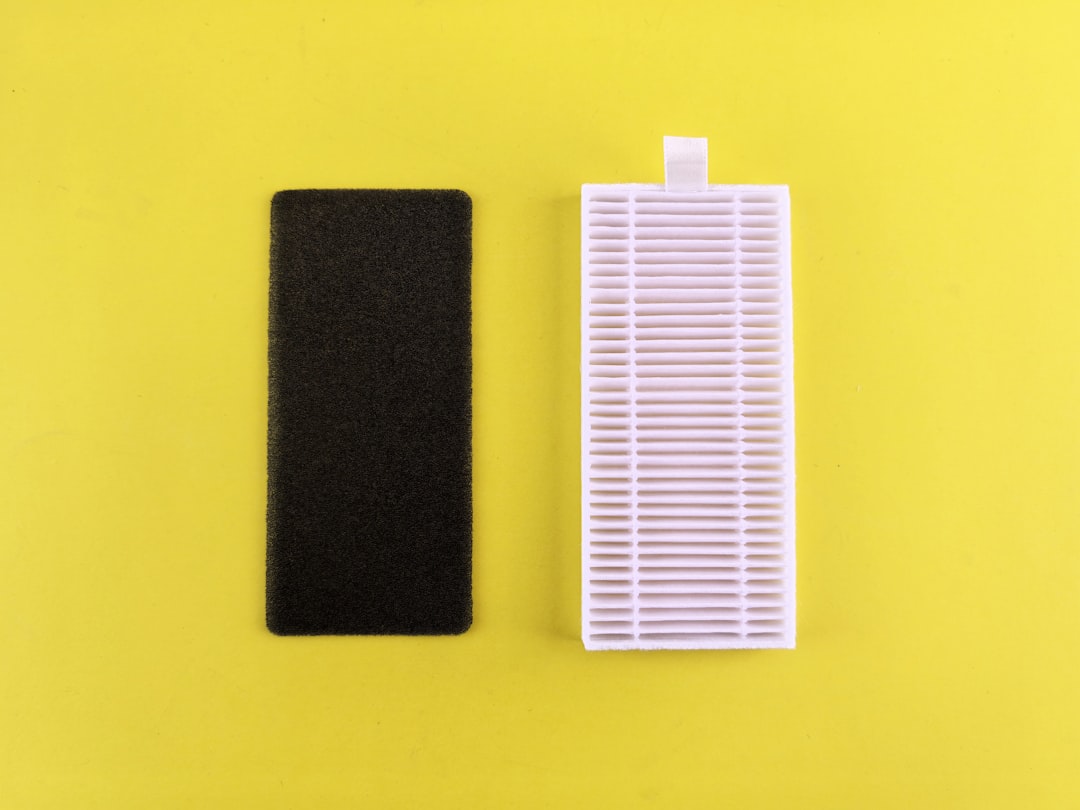
Before you head to the store or order filters online, it helps to understand what kind of filter your system uses and how different styles affect your indoor air quality. Air filters are rated on the MERV (Minimum Efficiency Reporting Value) scale, which ranges from 1 to 16 for residential systems. The higher the MERV rating, the smaller the particles the filter can trap. However, highly restrictive filters can also reduce airflow if your system isn't designed to handle them.
| Filter Type | MERV Rating | Typical Lifespan | What It Captures | Best For |
|---|---|---|---|---|
| Fiberglass | 1 - 4 | 30 Days | Large dust particles, lint, carpet fibers | Basic system protection, low-budget |
| Pleated Paper/Cotton | 8 - 11 | 90 Days | Pollen, mold spores, dust mites, pet dander | Standard residential homes, allergy control |
| High-Efficiency Pleated | 12 - 14 | 90 Days | Fine dust, bacteria, smoke, small allergens | Severe allergy sufferers, homes with multiple pets |
| HEPA (High-Efficiency Particulate Air) | 17 - 20 | 6 - 12 Months | 99.97% of particles down to 0.3 microns | Hospital-grade clean rooms (requires professional system modification) |
In addition to the filter type, you must pay attention to the thickness and the nominal size printed on the outer cardboard frame (such as 20x20x1 or 16x25x4). Always buy the exact nominal size that matches your current filter. Installing a filter that is even slightly too small allows unfiltered air to slip around the edges—a problem known in the industry as "bypass air." To learn more about how different designs affect your replacement schedule, take a look at our article on how often should hvac air filters be changed.
For the vast majority of homes in Central Kansas, a pleated filter with a MERV rating between 8 and 11 is the "sweet spot." These filters feature tightly folded material that increases the overall surface area, allowing them to capture microscopic pollen grains, pet dander, and mold spores without putting excessive strain on your blower motor.
While it might be tempting to buy a MERV 13 or 14 filter to maximize allergen removal during peak pollen season, these dense filters can create a significant pressure drop in older residential HVAC systems. If your system has to struggle to draw air, it can run longer cycles, drive up your energy bills, and wear out the fan motor prematurely. True HEPA filters (MERV 17-20) are incredibly effective at capturing 99.97% of airborne particles, but they are too thick for standard filter slots and require professional system modifications to prevent airflow restriction. If you are trying to figure out the perfect balance for your household's health and system longevity, read our detailed breakdown on how often should you change your hvac air filter.
Finding where your air filter lives can sometimes be the hardest part of the job, especially since different home builds in Maize, Derby, and Wichita utilize different HVAC configurations.
If you are having trouble finding your filter slot or want to ensure your system is set up correctly, check out our hvac maintenance tips for kansas homeowners for helpful home layout advice.
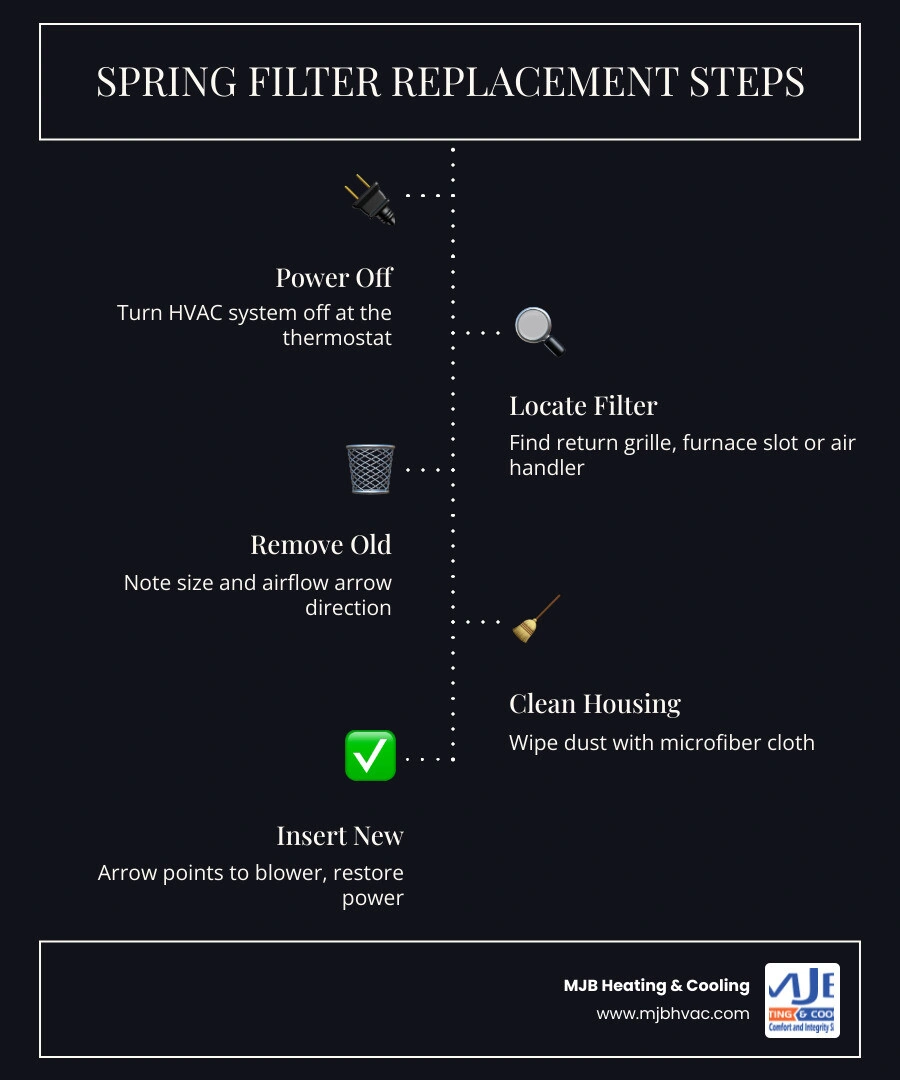
Replacing your home air filter is a quick, straightforward process. Follow these five simple steps to ensure a safe and effective replacement:
For more detailed advice on keeping your home comfort systems in top shape, check out our essential hvac maintenance tips for your furnace and ac.
While you are focusing on the air quality inside your home, don't forget about the air you breathe while driving. Your vehicle actually utilizes two different air filters that require seasonal attention: the cabin air filter and the engine air filter.
The cabin air filter purifies the air entering your car’s passenger compartment through the heater and air conditioning vents. Just like your home filter, it quickly becomes choked with spring pollen, road dust, and exhaust soot. A clogged cabin filter can lead to weak airflow from your vents, musty odors (often described as a "stale gym bag" smell), and persistent windshield fogging during damp spring rains. In most modern cars, the cabin filter is located directly behind the glove box. You can access it by opening the glove box, releasing the side tabs to let the compartment swing down, and clipping off the plastic filter cover.
The engine air filter, on the other hand, prevents dirt and debris from entering your car's engine cylinders. Replacing a clogged engine air filter is an easy way to restore performance; a fresh filter can boost acceleration by up to 11% and improve your overall gas mileage by as much as 10%. Most engine filters are housed in an easily accessible plastic box under the hood that secures with simple metal clips. Replacing both of these filters at the start of spring ensures a more comfortable, allergen-free ride and keeps your vehicle running efficiently.
Even though changing an air filter is a simple task, there are a few common mistakes that can lead to poor indoor air quality or system damage:
To keep your home maintenance on track and avoid these common pitfalls, review our comprehensive hvac maintenance guide 2026.
While the standard advice is to replace pleated filters every 90 days, peak spring pollen season in Kansas changes the rules. We highly recommend checking your filter every 30 days during April and May. If you have indoor pets that shed, live near active construction, or have family members who suffer from severe seasonal allergies, you may need to swap the filter out every month to keep your indoor air clean and your system running smoothly.
Unless your filter is explicitly labeled as "washable" or "reusable" (usually constructed with a heavy plastic or aluminum frame and electrostatic mesh), it is designed to be disposable. Standard cardboard-framed pleated or fiberglass filters should never be vacuumed, washed, or sprayed with water. Attempting to clean a disposable filter will ruin the delicate fibers, destroy its dust-holding capacity, and introduce moisture that can lead to mold growth.
While a basic filter change is an easy DIY task, there are times when you need to bring in a professional technician. If you notice ice forming on your outdoor AC unit or indoor copper lines, hear unusual whistling or banging noises coming from your ductwork, experience very weak airflow even after installing a clean filter, or notice your system "short-cycling" (turning on and off rapidly), it is time to call for professional help. These are signs of deeper issues like refrigerant leaks, dirty evaporator coils, or electrical faults that require expert diagnostics.
A clean air filter is the foundation of a healthy, efficient home. By following this spring air filter replacement guide, you can protect your family from seasonal allergies, keep your monthly energy bills under control, and prepare your cooling system to handle the hot summer months ahead.
At MJB Heating & Cooling, we have been serving families throughout the Wichita metro area—including Derby, Maize, Andover, and surrounding communities—since 1984. As a family-owned business, we pride ourselves on our honest approach, dependable service, and quality workmanship. If your spring inspection reveals that your air conditioner needs a professional touch, we are always here to help. Breathe easier with professional HVAC services and schedule your spring system tune-up with us today!
This spring air filter replacement guide walks you through exactly what to do — and when to do it — so your HVAC system runs clean and efficient all season long.
Quick Answer: How to Replace a Spring Air Filter in 5 Simple Steps
Every April and May, pollen counts spike across Central Kansas. At the same time, months of winter dust, pet dander, and debris have quietly been building up inside your HVAC system. If your filter hasn't been changed since fall, it's almost certainly working against you — forcing your blower motor to push air through a clogged barrier, raising your energy use, and recirculating allergens back into the rooms where your family lives and breathes.
The good news? A filter change takes less than five minutes and is the single most effective DIY task a homeowner can do to prevent a costly mid-summer breakdown. Whether you're in Wichita, Maize, Derby, or anywhere across the Central Kansas area, the steps are the same — and this guide covers all of them.
Key terms for spring air filter replacement guide:
Spring in the Wichita metro area is beautiful, but it is also one of the most challenging seasons for your home’s indoor air quality. As we transition from chilly winter nights to warm, humid summer afternoons, our heating and cooling systems face a double whammy of indoor and outdoor contaminants.
During the winter, your heating system recirculates indoor air continuously. This leads to a massive accumulation of skin cells, pet dander, lint, and household dust inside your ductwork and on the surface of your air filter. When spring arrives, tree pollen (especially from oak, elm, and hackberry trees common in Kansas) and mold spores find their way inside every time you open a door or window.
When you combine winter’s leftover dust with spring’s heavy pollen load, your air filter can become completely choked in a matter of weeks. A clogged filter restricts the volume of air flowing into your air handler. This restriction creates a "pressure drop," forcing your blower motor to work twice as hard to distribute conditioned air. According to the U.S. Department of Energy, running an HVAC system with a clean filter instead of a heavily clogged one can boost system efficiency by 5% to 15%.
Neglecting this simple task in April or May can lead to serious mechanical trouble by July. When airflow is restricted, the cooling coils on your air conditioner can drop below freezing, causing ice to build up and potentially leading to a system-wide breakdown. Taking a few minutes to complete a spring filter refresh is your best defense against unexpected breakdowns. For a complete look at getting your comfort system ready for the heat, check out our guide on spring ac preparation for kansas summer and read up on why we recommend spring maintenance to prevent summer breakdowns.
Before you head to the store or order filters online, it helps to understand what kind of filter your system uses and how different styles affect your indoor air quality. Air filters are rated on the MERV (Minimum Efficiency Reporting Value) scale, which ranges from 1 to 16 for residential systems. The higher the MERV rating, the smaller the particles the filter can trap. However, highly restrictive filters can also reduce airflow if your system isn't designed to handle them.
| Filter Type | MERV Rating | Typical Lifespan | What It Captures | Best For |
|---|---|---|---|---|
| Fiberglass | 1 - 4 | 30 Days | Large dust particles, lint, carpet fibers | Basic system protection, low-budget |
| Pleated Paper/Cotton | 8 - 11 | 90 Days | Pollen, mold spores, dust mites, pet dander | Standard residential homes, allergy control |
| High-Efficiency Pleated | 12 - 14 | 90 Days | Fine dust, bacteria, smoke, small allergens | Severe allergy sufferers, homes with multiple pets |
| HEPA (High-Efficiency Particulate Air) | 17 - 20 | 6 - 12 Months | 99.97% of particles down to 0.3 microns | Hospital-grade clean rooms (requires professional system modification) |
In addition to the filter type, you must pay attention to the thickness and the nominal size printed on the outer cardboard frame (such as 20x20x1 or 16x25x4). Always buy the exact nominal size that matches your current filter. Installing a filter that is even slightly too small allows unfiltered air to slip around the edges—a problem known in the industry as "bypass air." To learn more about how different designs affect your replacement schedule, take a look at our article on how often should hvac air filters be changed.
For the vast majority of homes in Central Kansas, a pleated filter with a MERV rating between 8 and 11 is the "sweet spot." These filters feature tightly folded material that increases the overall surface area, allowing them to capture microscopic pollen grains, pet dander, and mold spores without putting excessive strain on your blower motor.
While it might be tempting to buy a MERV 13 or 14 filter to maximize allergen removal during peak pollen season, these dense filters can create a significant pressure drop in older residential HVAC systems. If your system has to struggle to draw air, it can run longer cycles, drive up your energy bills, and wear out the fan motor prematurely. True HEPA filters (MERV 17-20) are incredibly effective at capturing 99.97% of airborne particles, but they are too thick for standard filter slots and require professional system modifications to prevent airflow restriction. If you are trying to figure out the perfect balance for your household's health and system longevity, read our detailed breakdown on how often should you change your hvac air filter.
Finding where your air filter lives can sometimes be the hardest part of the job, especially since different home builds in Maize, Derby, and Wichita utilize different HVAC configurations.
If you are having trouble finding your filter slot or want to ensure your system is set up correctly, check out our hvac maintenance tips for kansas homeowners for helpful home layout advice.
Replacing your home air filter is a quick, straightforward process. Follow these five simple steps to ensure a safe and effective replacement:
For more detailed advice on keeping your home comfort systems in top shape, check out our essential hvac maintenance tips for your furnace and ac.
While you are focusing on the air quality inside your home, don't forget about the air you breathe while driving. Your vehicle actually utilizes two different air filters that require seasonal attention: the cabin air filter and the engine air filter.
The cabin air filter purifies the air entering your car’s passenger compartment through the heater and air conditioning vents. Just like your home filter, it quickly becomes choked with spring pollen, road dust, and exhaust soot. A clogged cabin filter can lead to weak airflow from your vents, musty odors (often described as a "stale gym bag" smell), and persistent windshield fogging during damp spring rains. In most modern cars, the cabin filter is located directly behind the glove box. You can access it by opening the glove box, releasing the side tabs to let the compartment swing down, and clipping off the plastic filter cover.
The engine air filter, on the other hand, prevents dirt and debris from entering your car's engine cylinders. Replacing a clogged engine air filter is an easy way to restore performance; a fresh filter can boost acceleration by up to 11% and improve your overall gas mileage by as much as 10%. Most engine filters are housed in an easily accessible plastic box under the hood that secures with simple metal clips. Replacing both of these filters at the start of spring ensures a more comfortable, allergen-free ride and keeps your vehicle running efficiently.
Even though changing an air filter is a simple task, there are a few common mistakes that can lead to poor indoor air quality or system damage:
To keep your home maintenance on track and avoid these common pitfalls, review our comprehensive hvac maintenance guide 2026.
While the standard advice is to replace pleated filters every 90 days, peak spring pollen season in Kansas changes the rules. We highly recommend checking your filter every 30 days during April and May. If you have indoor pets that shed, live near active construction, or have family members who suffer from severe seasonal allergies, you may need to swap the filter out every month to keep your indoor air clean and your system running smoothly.
Unless your filter is explicitly labeled as "washable" or "reusable" (usually constructed with a heavy plastic or aluminum frame and electrostatic mesh), it is designed to be disposable. Standard cardboard-framed pleated or fiberglass filters should never be vacuumed, washed, or sprayed with water. Attempting to clean a disposable filter will ruin the delicate fibers, destroy its dust-holding capacity, and introduce moisture that can lead to mold growth.
While a basic filter change is an easy DIY task, there are times when you need to bring in a professional technician. If you notice ice forming on your outdoor AC unit or indoor copper lines, hear unusual whistling or banging noises coming from your ductwork, experience very weak airflow even after installing a clean filter, or notice your system "short-cycling" (turning on and off rapidly), it is time to call for professional help. These are signs of deeper issues like refrigerant leaks, dirty evaporator coils, or electrical faults that require expert diagnostics.
A clean air filter is the foundation of a healthy, efficient home. By following this spring air filter replacement guide, you can protect your family from seasonal allergies, keep your monthly energy bills under control, and prepare your cooling system to handle the hot summer months ahead.
At MJB Heating & Cooling, we have been serving families throughout the Wichita metro area—including Derby, Maize, Andover, and surrounding communities—since 1984. As a family-owned business, we pride ourselves on our honest approach, dependable service, and quality workmanship. If your spring inspection reveals that your air conditioner needs a professional touch, we are always here to help. Breathe easier with professional HVAC services and schedule your spring system tune-up with us today!
This spring air filter replacement guide walks you through exactly what to do — and when to do it — so your HVAC system runs clean and efficient all season long.
Quick Answer: How to Replace a Spring Air Filter in 5 Simple Steps
Every April and May, pollen counts spike across Central Kansas. At the same time, months of winter dust, pet dander, and debris have quietly been building up inside your HVAC system. If your filter hasn't been changed since fall, it's almost certainly working against you — forcing your blower motor to push air through a clogged barrier, raising your energy use, and recirculating allergens back into the rooms where your family lives and breathes.
The good news? A filter change takes less than five minutes and is the single most effective DIY task a homeowner can do to prevent a costly mid-summer breakdown. Whether you're in Wichita, Maize, Derby, or anywhere across the Central Kansas area, the steps are the same — and this guide covers all of them.
Key terms for spring air filter replacement guide:
Spring in the Wichita metro area is beautiful, but it is also one of the most challenging seasons for your home’s indoor air quality. As we transition from chilly winter nights to warm, humid summer afternoons, our heating and cooling systems face a double whammy of indoor and outdoor contaminants.
During the winter, your heating system recirculates indoor air continuously. This leads to a massive accumulation of skin cells, pet dander, lint, and household dust inside your ductwork and on the surface of your air filter. When spring arrives, tree pollen (especially from oak, elm, and hackberry trees common in Kansas) and mold spores find their way inside every time you open a door or window.
When you combine winter’s leftover dust with spring’s heavy pollen load, your air filter can become completely choked in a matter of weeks. A clogged filter restricts the volume of air flowing into your air handler. This restriction creates a "pressure drop," forcing your blower motor to work twice as hard to distribute conditioned air. According to the U.S. Department of Energy, running an HVAC system with a clean filter instead of a heavily clogged one can boost system efficiency by 5% to 15%.
Neglecting this simple task in April or May can lead to serious mechanical trouble by July. When airflow is restricted, the cooling coils on your air conditioner can drop below freezing, causing ice to build up and potentially leading to a system-wide breakdown. Taking a few minutes to complete a spring filter refresh is your best defense against unexpected breakdowns. For a complete look at getting your comfort system ready for the heat, check out our guide on spring ac preparation for kansas summer and read up on why we recommend spring maintenance to prevent summer breakdowns.
Before you head to the store or order filters online, it helps to understand what kind of filter your system uses and how different styles affect your indoor air quality. Air filters are rated on the MERV (Minimum Efficiency Reporting Value) scale, which ranges from 1 to 16 for residential systems. The higher the MERV rating, the smaller the particles the filter can trap. However, highly restrictive filters can also reduce airflow if your system isn't designed to handle them.
| Filter Type | MERV Rating | Typical Lifespan | What It Captures | Best For |
|---|---|---|---|---|
| Fiberglass | 1 - 4 | 30 Days | Large dust particles, lint, carpet fibers | Basic system protection, low-budget |
| Pleated Paper/Cotton | 8 - 11 | 90 Days | Pollen, mold spores, dust mites, pet dander | Standard residential homes, allergy control |
| High-Efficiency Pleated | 12 - 14 | 90 Days | Fine dust, bacteria, smoke, small allergens | Severe allergy sufferers, homes with multiple pets |
| HEPA (High-Efficiency Particulate Air) | 17 - 20 | 6 - 12 Months | 99.97% of particles down to 0.3 microns | Hospital-grade clean rooms (requires professional system modification) |
In addition to the filter type, you must pay attention to the thickness and the nominal size printed on the outer cardboard frame (such as 20x20x1 or 16x25x4). Always buy the exact nominal size that matches your current filter. Installing a filter that is even slightly too small allows unfiltered air to slip around the edges—a problem known in the industry as "bypass air." To learn more about how different designs affect your replacement schedule, take a look at our article on how often should hvac air filters be changed.
For the vast majority of homes in Central Kansas, a pleated filter with a MERV rating between 8 and 11 is the "sweet spot." These filters feature tightly folded material that increases the overall surface area, allowing them to capture microscopic pollen grains, pet dander, and mold spores without putting excessive strain on your blower motor.
While it might be tempting to buy a MERV 13 or 14 filter to maximize allergen removal during peak pollen season, these dense filters can create a significant pressure drop in older residential HVAC systems. If your system has to struggle to draw air, it can run longer cycles, drive up your energy bills, and wear out the fan motor prematurely. True HEPA filters (MERV 17-20) are incredibly effective at capturing 99.97% of airborne particles, but they are too thick for standard filter slots and require professional system modifications to prevent airflow restriction. If you are trying to figure out the perfect balance for your household's health and system longevity, read our detailed breakdown on how often should you change your hvac air filter.
Finding where your air filter lives can sometimes be the hardest part of the job, especially since different home builds in Maize, Derby, and Wichita utilize different HVAC configurations.
If you are having trouble finding your filter slot or want to ensure your system is set up correctly, check out our hvac maintenance tips for kansas homeowners for helpful home layout advice.
Replacing your home air filter is a quick, straightforward process. Follow these five simple steps to ensure a safe and effective replacement:
For more detailed advice on keeping your home comfort systems in top shape, check out our essential hvac maintenance tips for your furnace and ac.
While you are focusing on the air quality inside your home, don't forget about the air you breathe while driving. Your vehicle actually utilizes two different air filters that require seasonal attention: the cabin air filter and the engine air filter.
The cabin air filter purifies the air entering your car’s passenger compartment through the heater and air conditioning vents. Just like your home filter, it quickly becomes choked with spring pollen, road dust, and exhaust soot. A clogged cabin filter can lead to weak airflow from your vents, musty odors (often described as a "stale gym bag" smell), and persistent windshield fogging during damp spring rains. In most modern cars, the cabin filter is located directly behind the glove box. You can access it by opening the glove box, releasing the side tabs to let the compartment swing down, and clipping off the plastic filter cover.
The engine air filter, on the other hand, prevents dirt and debris from entering your car's engine cylinders. Replacing a clogged engine air filter is an easy way to restore performance; a fresh filter can boost acceleration by up to 11% and improve your overall gas mileage by as much as 10%. Most engine filters are housed in an easily accessible plastic box under the hood that secures with simple metal clips. Replacing both of these filters at the start of spring ensures a more comfortable, allergen-free ride and keeps your vehicle running efficiently.
Even though changing an air filter is a simple task, there are a few common mistakes that can lead to poor indoor air quality or system damage:
To keep your home maintenance on track and avoid these common pitfalls, review our comprehensive hvac maintenance guide 2026.
While the standard advice is to replace pleated filters every 90 days, peak spring pollen season in Kansas changes the rules. We highly recommend checking your filter every 30 days during April and May. If you have indoor pets that shed, live near active construction, or have family members who suffer from severe seasonal allergies, you may need to swap the filter out every month to keep your indoor air clean and your system running smoothly.
Unless your filter is explicitly labeled as "washable" or "reusable" (usually constructed with a heavy plastic or aluminum frame and electrostatic mesh), it is designed to be disposable. Standard cardboard-framed pleated or fiberglass filters should never be vacuumed, washed, or sprayed with water. Attempting to clean a disposable filter will ruin the delicate fibers, destroy its dust-holding capacity, and introduce moisture that can lead to mold growth.
While a basic filter change is an easy DIY task, there are times when you need to bring in a professional technician. If you notice ice forming on your outdoor AC unit or indoor copper lines, hear unusual whistling or banging noises coming from your ductwork, experience very weak airflow even after installing a clean filter, or notice your system "short-cycling" (turning on and off rapidly), it is time to call for professional help. These are signs of deeper issues like refrigerant leaks, dirty evaporator coils, or electrical faults that require expert diagnostics.
A clean air filter is the foundation of a healthy, efficient home. By following this spring air filter replacement guide, you can protect your family from seasonal allergies, keep your monthly energy bills under control, and prepare your cooling system to handle the hot summer months ahead.
At MJB Heating & Cooling, we have been serving families throughout the Wichita metro area—including Derby, Maize, Andover, and surrounding communities—since 1984. As a family-owned business, we pride ourselves on our honest approach, dependable service, and quality workmanship. If your spring inspection reveals that your air conditioner needs a professional touch, we are always here to help. Breathe easier with professional HVAC services and schedule your spring system tune-up with us today!

This spring air filter replacement guide walks you through exactly what to do — and when to do it — so your HVAC system runs clean and efficient all season long.
Quick Answer: How to Replace a Spring Air Filter in 5 Simple Steps
Every April and May, pollen counts spike across Central Kansas. At the same time, months of winter dust, pet dander, and debris have quietly been building up inside your HVAC system. If your filter hasn't been changed since fall, it's almost certainly working against you — forcing your blower motor to push air through a clogged barrier, raising your energy use, and recirculating allergens back into the rooms where your family lives and breathes.
The good news? A filter change takes less than five minutes and is the single most effective DIY task a homeowner can do to prevent a costly mid-summer breakdown. Whether you're in Wichita, Maize, Derby, or anywhere across the Central Kansas area, the steps are the same — and this guide covers all of them.
Key terms for spring air filter replacement guide:
Spring in the Wichita metro area is beautiful, but it is also one of the most challenging seasons for your home’s indoor air quality. As we transition from chilly winter nights to warm, humid summer afternoons, our heating and cooling systems face a double whammy of indoor and outdoor contaminants.
During the winter, your heating system recirculates indoor air continuously. This leads to a massive accumulation of skin cells, pet dander, lint, and household dust inside your ductwork and on the surface of your air filter. When spring arrives, tree pollen (especially from oak, elm, and hackberry trees common in Kansas) and mold spores find their way inside every time you open a door or window.
When you combine winter’s leftover dust with spring’s heavy pollen load, your air filter can become completely choked in a matter of weeks. A clogged filter restricts the volume of air flowing into your air handler. This restriction creates a "pressure drop," forcing your blower motor to work twice as hard to distribute conditioned air. According to the U.S. Department of Energy, running an HVAC system with a clean filter instead of a heavily clogged one can boost system efficiency by 5% to 15%.
Neglecting this simple task in April or May can lead to serious mechanical trouble by July. When airflow is restricted, the cooling coils on your air conditioner can drop below freezing, causing ice to build up and potentially leading to a system-wide breakdown. Taking a few minutes to complete a spring filter refresh is your best defense against unexpected breakdowns. For a complete look at getting your comfort system ready for the heat, check out our guide on spring ac preparation for kansas summer and read up on why we recommend spring maintenance to prevent summer breakdowns.
Before you head to the store or order filters online, it helps to understand what kind of filter your system uses and how different styles affect your indoor air quality. Air filters are rated on the MERV (Minimum Efficiency Reporting Value) scale, which ranges from 1 to 16 for residential systems. The higher the MERV rating, the smaller the particles the filter can trap. However, highly restrictive filters can also reduce airflow if your system isn't designed to handle them.
| Filter Type | MERV Rating | Typical Lifespan | What It Captures | Best For |
|---|---|---|---|---|
| Fiberglass | 1 - 4 | 30 Days | Large dust particles, lint, carpet fibers | Basic system protection, low-budget |
| Pleated Paper/Cotton | 8 - 11 | 90 Days | Pollen, mold spores, dust mites, pet dander | Standard residential homes, allergy control |
| High-Efficiency Pleated | 12 - 14 | 90 Days | Fine dust, bacteria, smoke, small allergens | Severe allergy sufferers, homes with multiple pets |
| HEPA (High-Efficiency Particulate Air) | 17 - 20 | 6 - 12 Months | 99.97% of particles down to 0.3 microns | Hospital-grade clean rooms (requires professional system modification) |
In addition to the filter type, you must pay attention to the thickness and the nominal size printed on the outer cardboard frame (such as 20x20x1 or 16x25x4). Always buy the exact nominal size that matches your current filter. Installing a filter that is even slightly too small allows unfiltered air to slip around the edges—a problem known in the industry as "bypass air." To learn more about how different designs affect your replacement schedule, take a look at our article on how often should hvac air filters be changed.
For the vast majority of homes in Central Kansas, a pleated filter with a MERV rating between 8 and 11 is the "sweet spot." These filters feature tightly folded material that increases the overall surface area, allowing them to capture microscopic pollen grains, pet dander, and mold spores without putting excessive strain on your blower motor.
While it might be tempting to buy a MERV 13 or 14 filter to maximize allergen removal during peak pollen season, these dense filters can create a significant pressure drop in older residential HVAC systems. If your system has to struggle to draw air, it can run longer cycles, drive up your energy bills, and wear out the fan motor prematurely. True HEPA filters (MERV 17-20) are incredibly effective at capturing 99.97% of airborne particles, but they are too thick for standard filter slots and require professional system modifications to prevent airflow restriction. If you are trying to figure out the perfect balance for your household's health and system longevity, read our detailed breakdown on how often should you change your hvac air filter.
Finding where your air filter lives can sometimes be the hardest part of the job, especially since different home builds in Maize, Derby, and Wichita utilize different HVAC configurations.
If you are having trouble finding your filter slot or want to ensure your system is set up correctly, check out our hvac maintenance tips for kansas homeowners for helpful home layout advice.
Replacing your home air filter is a quick, straightforward process. Follow these five simple steps to ensure a safe and effective replacement:
For more detailed advice on keeping your home comfort systems in top shape, check out our essential hvac maintenance tips for your furnace and ac.
While you are focusing on the air quality inside your home, don't forget about the air you breathe while driving. Your vehicle actually utilizes two different air filters that require seasonal attention: the cabin air filter and the engine air filter.
The cabin air filter purifies the air entering your car’s passenger compartment through the heater and air conditioning vents. Just like your home filter, it quickly becomes choked with spring pollen, road dust, and exhaust soot. A clogged cabin filter can lead to weak airflow from your vents, musty odors (often described as a "stale gym bag" smell), and persistent windshield fogging during damp spring rains. In most modern cars, the cabin filter is located directly behind the glove box. You can access it by opening the glove box, releasing the side tabs to let the compartment swing down, and clipping off the plastic filter cover.
The engine air filter, on the other hand, prevents dirt and debris from entering your car's engine cylinders. Replacing a clogged engine air filter is an easy way to restore performance; a fresh filter can boost acceleration by up to 11% and improve your overall gas mileage by as much as 10%. Most engine filters are housed in an easily accessible plastic box under the hood that secures with simple metal clips. Replacing both of these filters at the start of spring ensures a more comfortable, allergen-free ride and keeps your vehicle running efficiently.
Even though changing an air filter is a simple task, there are a few common mistakes that can lead to poor indoor air quality or system damage:
To keep your home maintenance on track and avoid these common pitfalls, review our comprehensive hvac maintenance guide 2026.
While the standard advice is to replace pleated filters every 90 days, peak spring pollen season in Kansas changes the rules. We highly recommend checking your filter every 30 days during April and May. If you have indoor pets that shed, live near active construction, or have family members who suffer from severe seasonal allergies, you may need to swap the filter out every month to keep your indoor air clean and your system running smoothly.
Unless your filter is explicitly labeled as "washable" or "reusable" (usually constructed with a heavy plastic or aluminum frame and electrostatic mesh), it is designed to be disposable. Standard cardboard-framed pleated or fiberglass filters should never be vacuumed, washed, or sprayed with water. Attempting to clean a disposable filter will ruin the delicate fibers, destroy its dust-holding capacity, and introduce moisture that can lead to mold growth.
While a basic filter change is an easy DIY task, there are times when you need to bring in a professional technician. If you notice ice forming on your outdoor AC unit or indoor copper lines, hear unusual whistling or banging noises coming from your ductwork, experience very weak airflow even after installing a clean filter, or notice your system "short-cycling" (turning on and off rapidly), it is time to call for professional help. These are signs of deeper issues like refrigerant leaks, dirty evaporator coils, or electrical faults that require expert diagnostics.
A clean air filter is the foundation of a healthy, efficient home. By following this spring air filter replacement guide, you can protect your family from seasonal allergies, keep your monthly energy bills under control, and prepare your cooling system to handle the hot summer months ahead.
At MJB Heating & Cooling, we have been serving families throughout the Wichita metro area—including Derby, Maize, Andover, and surrounding communities—since 1984. As a family-owned business, we pride ourselves on our honest approach, dependable service, and quality workmanship. If your spring inspection reveals that your air conditioner needs a professional touch, we are always here to help. Breathe easier with professional HVAC services and schedule your spring system tune-up with us today!
This spring air filter replacement guide walks you through exactly what to do — and when to do it — so your HVAC system runs clean and efficient all season long.
Quick Answer: How to Replace a Spring Air Filter in 5 Simple Steps
Every April and May, pollen counts spike across Central Kansas. At the same time, months of winter dust, pet dander, and debris have quietly been building up inside your HVAC system. If your filter hasn't been changed since fall, it's almost certainly working against you — forcing your blower motor to push air through a clogged barrier, raising your energy use, and recirculating allergens back into the rooms where your family lives and breathes.
The good news? A filter change takes less than five minutes and is the single most effective DIY task a homeowner can do to prevent a costly mid-summer breakdown. Whether you're in Wichita, Maize, Derby, or anywhere across the Central Kansas area, the steps are the same — and this guide covers all of them.
Key terms for spring air filter replacement guide:
Spring in the Wichita metro area is beautiful, but it is also one of the most challenging seasons for your home’s indoor air quality. As we transition from chilly winter nights to warm, humid summer afternoons, our heating and cooling systems face a double whammy of indoor and outdoor contaminants.
During the winter, your heating system recirculates indoor air continuously. This leads to a massive accumulation of skin cells, pet dander, lint, and household dust inside your ductwork and on the surface of your air filter. When spring arrives, tree pollen (especially from oak, elm, and hackberry trees common in Kansas) and mold spores find their way inside every time you open a door or window.
When you combine winter’s leftover dust with spring’s heavy pollen load, your air filter can become completely choked in a matter of weeks. A clogged filter restricts the volume of air flowing into your air handler. This restriction creates a "pressure drop," forcing your blower motor to work twice as hard to distribute conditioned air. According to the U.S. Department of Energy, running an HVAC system with a clean filter instead of a heavily clogged one can boost system efficiency by 5% to 15%.
Neglecting this simple task in April or May can lead to serious mechanical trouble by July. When airflow is restricted, the cooling coils on your air conditioner can drop below freezing, causing ice to build up and potentially leading to a system-wide breakdown. Taking a few minutes to complete a spring filter refresh is your best defense against unexpected breakdowns. For a complete look at getting your comfort system ready for the heat, check out our guide on spring ac preparation for kansas summer and read up on why we recommend spring maintenance to prevent summer breakdowns.
Before you head to the store or order filters online, it helps to understand what kind of filter your system uses and how different styles affect your indoor air quality. Air filters are rated on the MERV (Minimum Efficiency Reporting Value) scale, which ranges from 1 to 16 for residential systems. The higher the MERV rating, the smaller the particles the filter can trap. However, highly restrictive filters can also reduce airflow if your system isn't designed to handle them.
| Filter Type | MERV Rating | Typical Lifespan | What It Captures | Best For |
|---|---|---|---|---|
| Fiberglass | 1 - 4 | 30 Days | Large dust particles, lint, carpet fibers | Basic system protection, low-budget |
| Pleated Paper/Cotton | 8 - 11 | 90 Days | Pollen, mold spores, dust mites, pet dander | Standard residential homes, allergy control |
| High-Efficiency Pleated | 12 - 14 | 90 Days | Fine dust, bacteria, smoke, small allergens | Severe allergy sufferers, homes with multiple pets |
| HEPA (High-Efficiency Particulate Air) | 17 - 20 | 6 - 12 Months | 99.97% of particles down to 0.3 microns | Hospital-grade clean rooms (requires professional system modification) |
In addition to the filter type, you must pay attention to the thickness and the nominal size printed on the outer cardboard frame (such as 20x20x1 or 16x25x4). Always buy the exact nominal size that matches your current filter. Installing a filter that is even slightly too small allows unfiltered air to slip around the edges—a problem known in the industry as "bypass air." To learn more about how different designs affect your replacement schedule, take a look at our article on how often should hvac air filters be changed.
For the vast majority of homes in Central Kansas, a pleated filter with a MERV rating between 8 and 11 is the "sweet spot." These filters feature tightly folded material that increases the overall surface area, allowing them to capture microscopic pollen grains, pet dander, and mold spores without putting excessive strain on your blower motor.
While it might be tempting to buy a MERV 13 or 14 filter to maximize allergen removal during peak pollen season, these dense filters can create a significant pressure drop in older residential HVAC systems. If your system has to struggle to draw air, it can run longer cycles, drive up your energy bills, and wear out the fan motor prematurely. True HEPA filters (MERV 17-20) are incredibly effective at capturing 99.97% of airborne particles, but they are too thick for standard filter slots and require professional system modifications to prevent airflow restriction. If you are trying to figure out the perfect balance for your household's health and system longevity, read our detailed breakdown on how often should you change your hvac air filter.
Finding where your air filter lives can sometimes be the hardest part of the job, especially since different home builds in Maize, Derby, and Wichita utilize different HVAC configurations.
If you are having trouble finding your filter slot or want to ensure your system is set up correctly, check out our hvac maintenance tips for kansas homeowners for helpful home layout advice.
Replacing your home air filter is a quick, straightforward process. Follow these five simple steps to ensure a safe and effective replacement:
For more detailed advice on keeping your home comfort systems in top shape, check out our essential hvac maintenance tips for your furnace and ac.
While you are focusing on the air quality inside your home, don't forget about the air you breathe while driving. Your vehicle actually utilizes two different air filters that require seasonal attention: the cabin air filter and the engine air filter.
The cabin air filter purifies the air entering your car’s passenger compartment through the heater and air conditioning vents. Just like your home filter, it quickly becomes choked with spring pollen, road dust, and exhaust soot. A clogged cabin filter can lead to weak airflow from your vents, musty odors (often described as a "stale gym bag" smell), and persistent windshield fogging during damp spring rains. In most modern cars, the cabin filter is located directly behind the glove box. You can access it by opening the glove box, releasing the side tabs to let the compartment swing down, and clipping off the plastic filter cover.
The engine air filter, on the other hand, prevents dirt and debris from entering your car's engine cylinders. Replacing a clogged engine air filter is an easy way to restore performance; a fresh filter can boost acceleration by up to 11% and improve your overall gas mileage by as much as 10%. Most engine filters are housed in an easily accessible plastic box under the hood that secures with simple metal clips. Replacing both of these filters at the start of spring ensures a more comfortable, allergen-free ride and keeps your vehicle running efficiently.
Even though changing an air filter is a simple task, there are a few common mistakes that can lead to poor indoor air quality or system damage:
To keep your home maintenance on track and avoid these common pitfalls, review our comprehensive hvac maintenance guide 2026.
While the standard advice is to replace pleated filters every 90 days, peak spring pollen season in Kansas changes the rules. We highly recommend checking your filter every 30 days during April and May. If you have indoor pets that shed, live near active construction, or have family members who suffer from severe seasonal allergies, you may need to swap the filter out every month to keep your indoor air clean and your system running smoothly.
Unless your filter is explicitly labeled as "washable" or "reusable" (usually constructed with a heavy plastic or aluminum frame and electrostatic mesh), it is designed to be disposable. Standard cardboard-framed pleated or fiberglass filters should never be vacuumed, washed, or sprayed with water. Attempting to clean a disposable filter will ruin the delicate fibers, destroy its dust-holding capacity, and introduce moisture that can lead to mold growth.
While a basic filter change is an easy DIY task, there are times when you need to bring in a professional technician. If you notice ice forming on your outdoor AC unit or indoor copper lines, hear unusual whistling or banging noises coming from your ductwork, experience very weak airflow even after installing a clean filter, or notice your system "short-cycling" (turning on and off rapidly), it is time to call for professional help. These are signs of deeper issues like refrigerant leaks, dirty evaporator coils, or electrical faults that require expert diagnostics.
A clean air filter is the foundation of a healthy, efficient home. By following this spring air filter replacement guide, you can protect your family from seasonal allergies, keep your monthly energy bills under control, and prepare your cooling system to handle the hot summer months ahead.
At MJB Heating & Cooling, we have been serving families throughout the Wichita metro area—including Derby, Maize, Andover, and surrounding communities—since 1984. As a family-owned business, we pride ourselves on our honest approach, dependable service, and quality workmanship. If your spring inspection reveals that your air conditioner needs a professional touch, we are always here to help. Breathe easier with professional HVAC services and schedule your spring system tune-up with us today!


Our A/C stopped working on a Sunday and due to health issues, we needed to find a service company available on a Sunday. I called MJB and left a message on their emergency voice mail. Within 10 minutes Tom Buck called me to hear my description of the symptoms. He was just finishing an appointment in Wichita and would be on his way to my home on the south end of Derby. He arrived within 30 minutes! From start to finish he was the perfect example of what you could ever hope for in an HVAC tech and a human being. His evaluation of our system inside and out was as thorough as I could ever imagine and once he was done with the repair, our system is running as well or better than ever. Well worth the price for the evaluation, parts, and labor. Thank you again Tom for an awesome experience.
Our AC went out during the hottest days of the year, and they were out next day! We have been jerked around by a shoddy home warranty for years. We finally had a chance to pick our own repair people, and MJB came highly recommended. I can see why! I was impressed with the honesty and speed at which they fixed our AC unit!
Our commercial building had a lightening/electrical strike and damaged our 20 ton AC unit. No one could find us a new unit before the end of September. Imagining going all of August and September with no AC in Kansas and working inside near 100 degree temps is less than thrilling. Dale and the team at MJB called around and saved the day. They had us a new unit 5 weeks earlier than other could promise and I now have happy employees. The unit is amazingly quiet, super cold and so much more energy efficient. Thank you for being our super hero!
Came out and installed my new furnace. Was very polite and affordable. They are very acknowledgeable and I highly recommend!
Thank you very much. We had our 1st warm night in 3weeks. MJB took the time and effort to find the real problem. And the employees were kind and thoughtful and explained things very well. I cannot thank you and all of MJB. Will recommend you highly. Thanks again Marjorie Herman Oxford Kansas
We had a new system installed and I was so impressed with how quick they were in come out and install it, in the middle of a hot summer day. They were so friendly & very professional. I had a small problem with a weird sound and they came over immediately and fixed it. Love them!