


.avif)





Blogs
Stay updated with our latest blog posts.
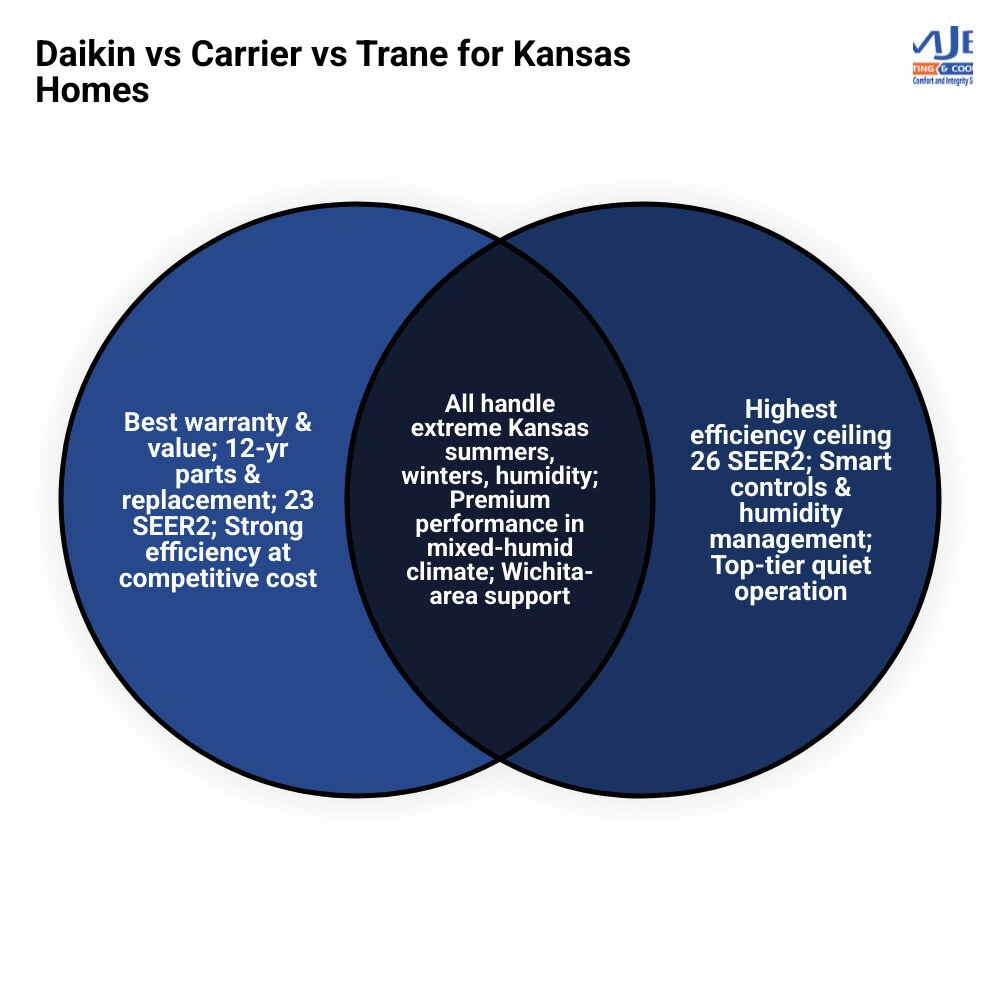
When weighing daikin vs carrier vs trane for kansas homes, most homeowners want the same thing: a system that handles brutal summer heat, cold winters, and high humidity without breaking down or driving up utility bills. Here is a quick breakdown to answer the core question right away:
| Brand | Best For | Warranty | Top SEER2 | Reliability Rank |
|---|---|---|---|---|
| Daikin | Best warranty + value | 12-year parts + 12-year unit replacement | 23 SEER2 | Strong and improving |
| Carrier | Humidity control + smart features | 10-year (registered) | 26 SEER2 | Top tier |
| Trane | Durability + cold-weather resilience | 10-year parts + 12-year compressor (registered) | 22 SEER2 | Top tier |
Quick answer:
All three are premium brands that perform well in Central Kansas. The differences come down to warranty structure, efficiency ceiling, comfort features, and local dealer support — all of which matter a great deal in a climate that swings from 105°F summers to sub-zero winter nights.
Kansas homeowners face a genuinely tough HVAC environment. The Wichita metro area sits in a mixed-humid climate zone where summer dewpoints regularly push into the uncomfortable range, and winter cold snaps can be severe enough to test any system's limits. Picking the wrong brand — or the wrong installer — can mean years of higher bills, humidity problems, and service headaches.
This guide breaks down exactly how Daikin, Carrier, and Trane stack up for Kansas-specific conditions, from efficiency ratings and warranty terms to noise levels and local support networks across the Wichita area and surrounding communities.
Similar topics to daikin vs carrier vs trane for kansas homes:
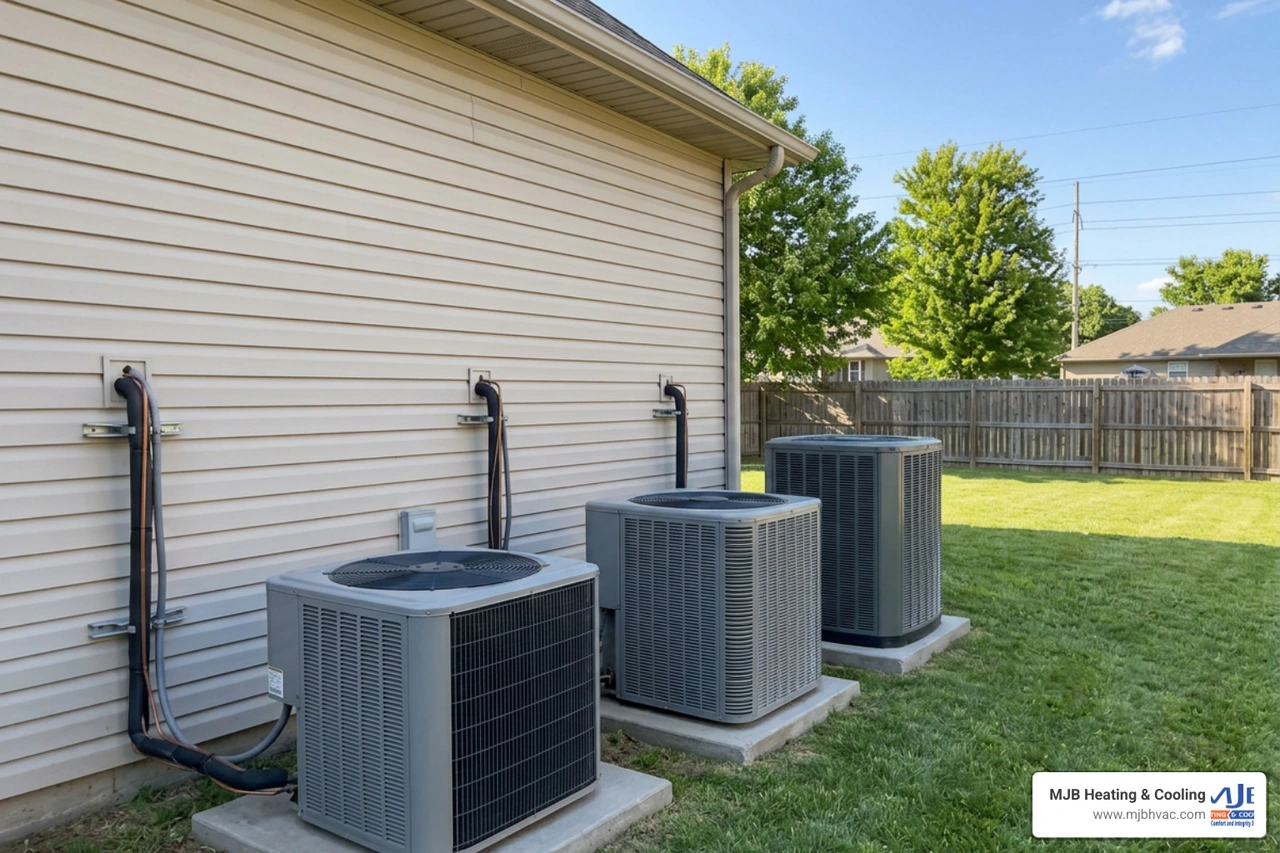
Living in Central Kansas means preparing your home for extreme seasonal shifts. From the intense, dusty winds of spring in Derby and Haysville to the baking sun of July in Wichita, your outdoor condenser unit must be built to survive the elements. When analyzing daikin vs carrier vs trane for kansas homes, we have to look past the glossy brochures and evaluate how these physical cabinets, coils, and compressors hold up under real-world pressure.
Our local weather demands a system that can run continuously for 12 to 18 hours a day during a summer heatwave, and then pivot to reliable, high-output heating when winter blizzards sweep across the plains. For a complete understanding of how our local weather patterns dictate your system needs, check out our Kansas Climate HVAC Guide.
To withstand the classic Kansas weather cycle, your HVAC system needs heavy-duty physical protection and smart operational programming.
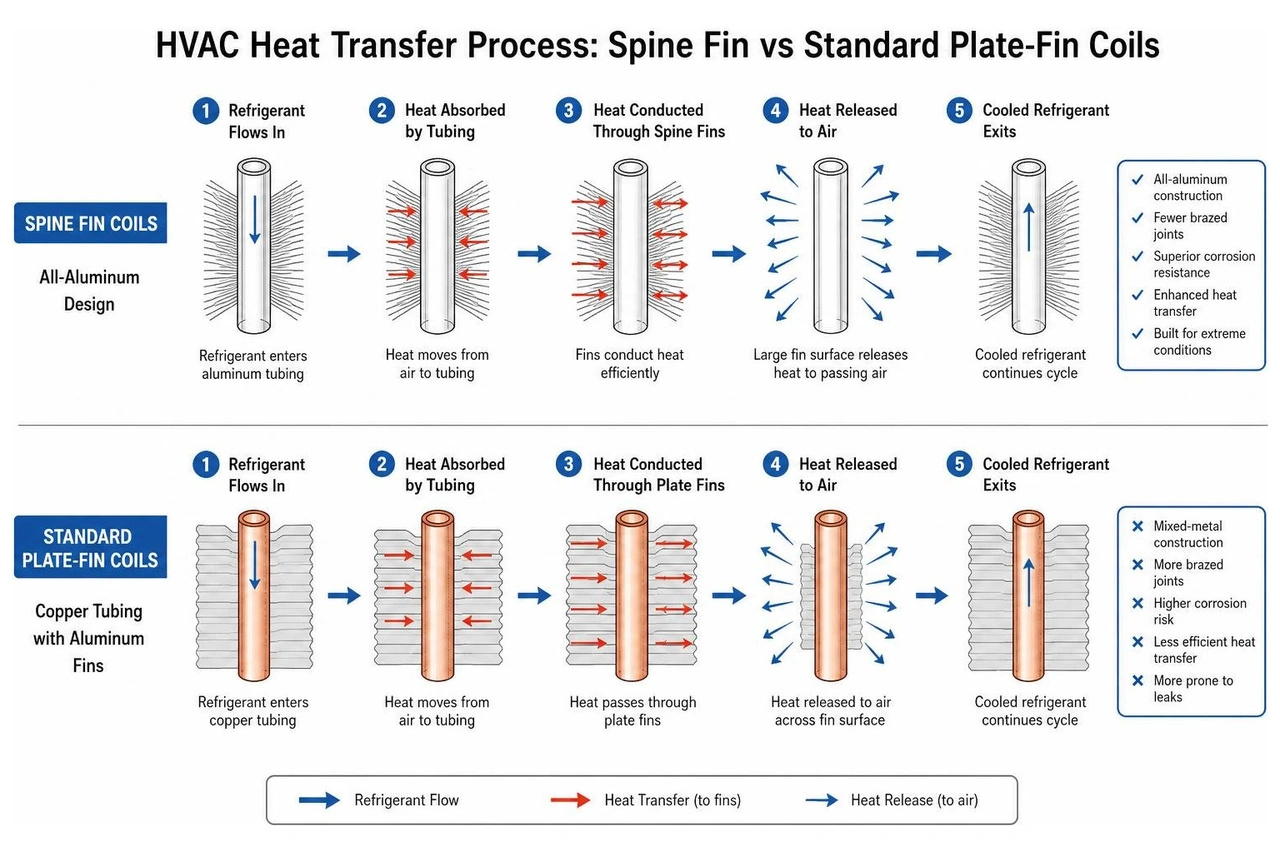
Trane has built its entire 140-year reputation on physical durability. Their outdoor units feature a unique design, including a full-sided louvered steel cabinet that shields the internal components from hail, flying debris, and nesting pests. If you have ever experienced a severe spring thunderstorm in El Dorado or Andover, you know how crucial hail protection can be for your delicate aluminum condenser fins.
Carrier systems are also highly resilient, utilizing a dense wire coil guard and a baked-on powder paint finish that resists rust and corrosion. Carrier's engineering focus is on precision operation; their high-end systems are designed to run smoothly even when outdoor temperatures climb past 100°F, adjusting compressor speeds incrementally to prevent system shutdowns.
Daikin approach to extreme weather relies heavily on advanced inverter technology and robust internal components. Because Daikin is the world’s largest HVAC manufacturer, they have invested heavily in creating systems that can operate efficiently in extreme climates worldwide. Their outdoor units are built with anti-corrosion coatings and smart defrost cycles that keep heat pumps running efficiently even when freezing rain threatens to coat the outdoor fan blades in ice.
To determine which configuration works best for your specific neighborhood, take a look at our guide on the Best HVAC Setup for Kansas Weather.
The internal engineering of these three brands highlights different design philosophies:
In July 2026, energy efficiency is more than just an environmental talking point; it is a direct driver of your monthly household budget. Investing in a high-efficiency system can significantly lower your cooling and heating bills, but you must balance that long-term operating value against the initial installation requirements. For a detailed breakdown of how standard systems compare to premium high-efficiency units, see our Standard Efficiency vs High Efficiency HVAC Comparison.
In 2023, the HVAC industry transitioned to SEER2 and HSPF2 testing standards. These newer ratings are designed to reflect real-world operating conditions, including the physical static pressure of typical residential ductwork. When comparing these brands, looking at the maximum efficiency ratings can help you understand each manufacturer's engineering capabilities.
| Brand | Max AC Efficiency (SEER2) | Max Heat Pump Heating Efficiency (HSPF2) | Compressor Type Options |
|---|---|---|---|
| Daikin | Up to 23.0 SEER2 | Up to 12.0 HSPF2 | Single-Stage, Two-Stage, Variable-Speed (Inverter) |
| Carrier | Up to 26.0 SEER2 | Up to 13.5 HSPF2 | Single-Stage, Two-Stage, Variable-Speed (Inverter) |
| Trane | Up to 22.0 SEER2 | Up to 11.0 HSPF2 | Single-Stage, Two-Stage, Variable-Speed |
While Carrier holds the absolute crown for maximum potential efficiency with its top-tier Infinity line, Daikin and Trane offer highly competitive mid-range and premium options that perform exceptionally well in our climate. To understand how these numbers translate to actual energy use in your home, check out our resource on Efficiency Ratings Explained for Homeowners.
While maximum SEER2 ratings look impressive on paper, real-world energy savings in places like Park City, Valley Center, or Mulvane depend heavily on how well the system manages our local humidity.
During a humid Southern Plains summer, high moisture levels in the air make 85°F feel like 95°F. Standard single-stage air conditioners cool the air quickly but do not run long enough to pull moisture out of the house, leaving you with a cold, clammy indoor environment.
Variable-speed compressors — found in Daikin Fit systems, Carrier Infinity units, and Trane XV series systems — solve this problem by running at lower capacities for longer periods. By maintaining a slow, continuous airflow over the indoor cooling coil, these systems can extract up to 400% more moisture from your indoor air than a standard single-stage unit. Because dry air feels naturally cooler than humid air, you can keep your thermostat set a few degrees higher during the summer without sacrificing comfort, leading to substantial energy savings on your monthly Evergy bills.
Buying a new HVAC system is a long-term investment. To protect that investment, you need to understand the manufacturer's warranty policies and ensure that the new equipment is fully compatible with your home's existing infrastructure. To guide your decision-making process, read our comprehensive guide on Choosing the Right HVAC Brand for Your Home.
The warranty is where Daikin stands out in the residential HVAC industry:
Note: For all three brands, registration is absolutely critical. Failing to register your new system online within the manufacturer's specified window can automatically cut your warranty coverage in half.
A common scenario for homeowners in older neighborhoods in Wichita, Augusta, or Newton is needing to replace an aging air conditioner while keeping a perfectly functional, relatively new furnace (such as a Bryant or Carrier gas furnace).
While it is physically possible to pair a new outdoor unit from one brand with an indoor coil and furnace from another, doing so can limit your system's performance. For an HVAC system to achieve its rated SEER2 efficiency and qualifying rebates, the outdoor unit, indoor evaporator coil, and furnace blower motor must be certified as a matched system by the Air-Conditioning, Heating, and Refrigeration Institute (AHRI).
If you pair a high-efficiency Daikin or Trane outdoor unit with an older, unmatched indoor blower, the system may default to single-stage operation, and you will miss out on the energy savings and humidity control you paid for.
Modern comfort is about more than just raw heating and cooling power; it is about how easily you can control your home's environment, how quietly the system operates in your backyard, and how quickly you can get replacement parts if something goes wrong.
If you live in a quiet suburban neighborhood in Maize or Rose Hill, or have a rural property near Towanda or Bentley, you do not want an outdoor condenser that sounds like a jet engine turning on every time it calls for cooling.
When making your final decision, local parts availability and technician expertise are just as important as the name on the cabinet. A premium system that is poorly installed or lacks local parts support can quickly become a headache during a summer heatwave.
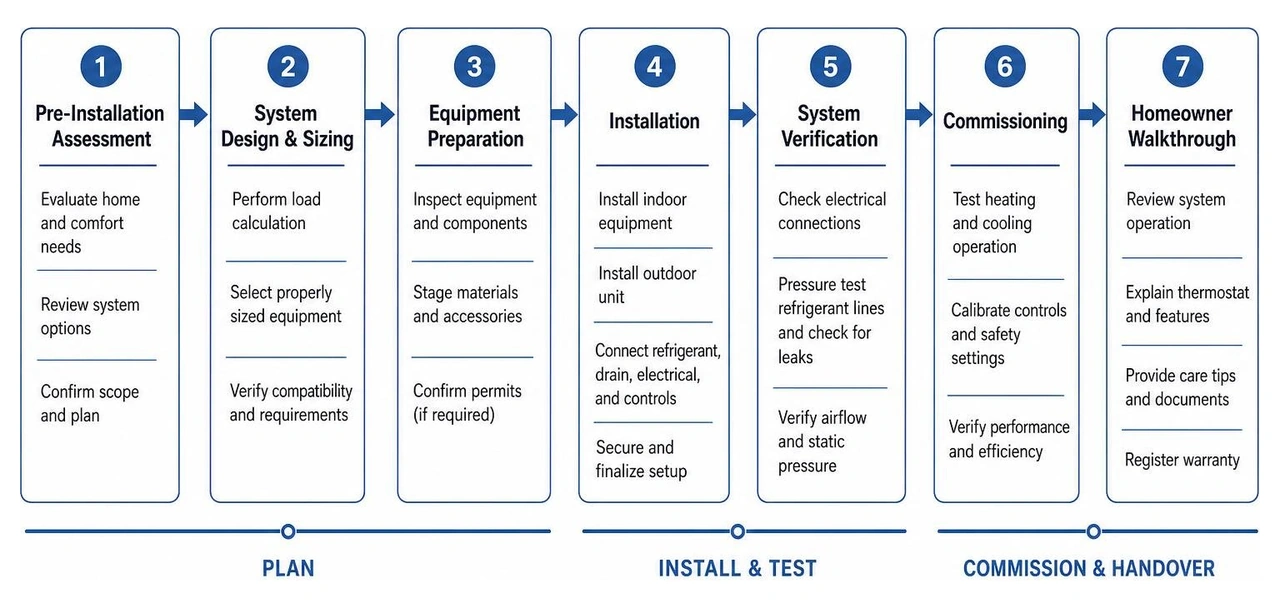
This is why choosing a certified, highly trained dealer is essential. For Daikin systems, working with an authorized installer ensures your system is sized correctly, commissioned properly, and backed by the manufacturer's full support. Learn more about why this matters by reading Why Choosing a Certified Daikin Installer Matters.
Furthermore, working with a certified professional gives you access to exclusive manufacturer benefits and guarantees. To understand these advantages, read about the Benefits of Choosing a Certified Daikin Comfort Pro Dealer and see How Daikin Certification Ensures Quality Installation.
Additionally, high-efficiency installations often qualify for local Evergy utility rebates and federal 25C tax credits, helping you maximize your long-term value from day one.
Carrier and Daikin are both exceptional at managing high humidity. Carrier's Infinity system offers highly precise humidity control through its proprietary smart thermostat, while Daikin's continuous-run inverter technology excels at maintaining low, steady airflow to extract maximum moisture from the air.
Yes! This is called a dual-fuel hybrid system. The Daikin heat pump handles the heating during mild spring and autumn days, and the system automatically switches to your gas furnace when temperatures drop below freezing, optimizing your heating efficiency and fuel costs.
High-efficiency systems from Daikin, Carrier, and Trane can qualify for Evergy utility rebates and federal 25C tax credits. To qualify, the system must meet specific SEER2 and HSPF2 efficiency thresholds, which we can help you verify using official AHRI matched documentation.
At MJB Heating & Cooling, we have been serving our neighbors across the Wichita metro area — including Derby, Andover, Haysville, and El Dorado — since 1984. As a family-owned business, we pride ourselves on our honest business approach and quality workmanship. Whether you decide on Daikin, Carrier, or Trane, our goal is to ensure your home enjoys dependable comfort all year round.
Ready to maximize your home's energy efficiency? Discover energy savings with Daikin's HSPF rating insights and let our experienced team help you design the perfect comfort system for your family.
When weighing daikin vs carrier vs trane for kansas homes, most homeowners want the same thing: a system that handles brutal summer heat, cold winters, and high humidity without breaking down or driving up utility bills. Here is a quick breakdown to answer the core question right away:
| Brand | Best For | Warranty | Top SEER2 | Reliability Rank |
|---|---|---|---|---|
| Daikin | Best warranty + value | 12-year parts + 12-year unit replacement | 23 SEER2 | Strong and improving |
| Carrier | Humidity control + smart features | 10-year (registered) | 26 SEER2 | Top tier |
| Trane | Durability + cold-weather resilience | 10-year parts + 12-year compressor (registered) | 22 SEER2 | Top tier |
Quick answer:
All three are premium brands that perform well in Central Kansas. The differences come down to warranty structure, efficiency ceiling, comfort features, and local dealer support — all of which matter a great deal in a climate that swings from 105°F summers to sub-zero winter nights.
Kansas homeowners face a genuinely tough HVAC environment. The Wichita metro area sits in a mixed-humid climate zone where summer dewpoints regularly push into the uncomfortable range, and winter cold snaps can be severe enough to test any system's limits. Picking the wrong brand — or the wrong installer — can mean years of higher bills, humidity problems, and service headaches.
This guide breaks down exactly how Daikin, Carrier, and Trane stack up for Kansas-specific conditions, from efficiency ratings and warranty terms to noise levels and local support networks across the Wichita area and surrounding communities.
Similar topics to daikin vs carrier vs trane for kansas homes:
Living in Central Kansas means preparing your home for extreme seasonal shifts. From the intense, dusty winds of spring in Derby and Haysville to the baking sun of July in Wichita, your outdoor condenser unit must be built to survive the elements. When analyzing daikin vs carrier vs trane for kansas homes, we have to look past the glossy brochures and evaluate how these physical cabinets, coils, and compressors hold up under real-world pressure.
Our local weather demands a system that can run continuously for 12 to 18 hours a day during a summer heatwave, and then pivot to reliable, high-output heating when winter blizzards sweep across the plains. For a complete understanding of how our local weather patterns dictate your system needs, check out our Kansas Climate HVAC Guide.
To withstand the classic Kansas weather cycle, your HVAC system needs heavy-duty physical protection and smart operational programming.
Trane has built its entire 140-year reputation on physical durability. Their outdoor units feature a unique design, including a full-sided louvered steel cabinet that shields the internal components from hail, flying debris, and nesting pests. If you have ever experienced a severe spring thunderstorm in El Dorado or Andover, you know how crucial hail protection can be for your delicate aluminum condenser fins.
Carrier systems are also highly resilient, utilizing a dense wire coil guard and a baked-on powder paint finish that resists rust and corrosion. Carrier's engineering focus is on precision operation; their high-end systems are designed to run smoothly even when outdoor temperatures climb past 100°F, adjusting compressor speeds incrementally to prevent system shutdowns.
Daikin approach to extreme weather relies heavily on advanced inverter technology and robust internal components. Because Daikin is the world’s largest HVAC manufacturer, they have invested heavily in creating systems that can operate efficiently in extreme climates worldwide. Their outdoor units are built with anti-corrosion coatings and smart defrost cycles that keep heat pumps running efficiently even when freezing rain threatens to coat the outdoor fan blades in ice.
To determine which configuration works best for your specific neighborhood, take a look at our guide on the Best HVAC Setup for Kansas Weather.
The internal engineering of these three brands highlights different design philosophies:
In July 2026, energy efficiency is more than just an environmental talking point; it is a direct driver of your monthly household budget. Investing in a high-efficiency system can significantly lower your cooling and heating bills, but you must balance that long-term operating value against the initial installation requirements. For a detailed breakdown of how standard systems compare to premium high-efficiency units, see our Standard Efficiency vs High Efficiency HVAC Comparison.
In 2023, the HVAC industry transitioned to SEER2 and HSPF2 testing standards. These newer ratings are designed to reflect real-world operating conditions, including the physical static pressure of typical residential ductwork. When comparing these brands, looking at the maximum efficiency ratings can help you understand each manufacturer's engineering capabilities.
| Brand | Max AC Efficiency (SEER2) | Max Heat Pump Heating Efficiency (HSPF2) | Compressor Type Options |
|---|---|---|---|
| Daikin | Up to 23.0 SEER2 | Up to 12.0 HSPF2 | Single-Stage, Two-Stage, Variable-Speed (Inverter) |
| Carrier | Up to 26.0 SEER2 | Up to 13.5 HSPF2 | Single-Stage, Two-Stage, Variable-Speed (Inverter) |
| Trane | Up to 22.0 SEER2 | Up to 11.0 HSPF2 | Single-Stage, Two-Stage, Variable-Speed |
While Carrier holds the absolute crown for maximum potential efficiency with its top-tier Infinity line, Daikin and Trane offer highly competitive mid-range and premium options that perform exceptionally well in our climate. To understand how these numbers translate to actual energy use in your home, check out our resource on Efficiency Ratings Explained for Homeowners.
While maximum SEER2 ratings look impressive on paper, real-world energy savings in places like Park City, Valley Center, or Mulvane depend heavily on how well the system manages our local humidity.
During a humid Southern Plains summer, high moisture levels in the air make 85°F feel like 95°F. Standard single-stage air conditioners cool the air quickly but do not run long enough to pull moisture out of the house, leaving you with a cold, clammy indoor environment.
Variable-speed compressors — found in Daikin Fit systems, Carrier Infinity units, and Trane XV series systems — solve this problem by running at lower capacities for longer periods. By maintaining a slow, continuous airflow over the indoor cooling coil, these systems can extract up to 400% more moisture from your indoor air than a standard single-stage unit. Because dry air feels naturally cooler than humid air, you can keep your thermostat set a few degrees higher during the summer without sacrificing comfort, leading to substantial energy savings on your monthly Evergy bills.
Buying a new HVAC system is a long-term investment. To protect that investment, you need to understand the manufacturer's warranty policies and ensure that the new equipment is fully compatible with your home's existing infrastructure. To guide your decision-making process, read our comprehensive guide on Choosing the Right HVAC Brand for Your Home.
The warranty is where Daikin stands out in the residential HVAC industry:
Note: For all three brands, registration is absolutely critical. Failing to register your new system online within the manufacturer's specified window can automatically cut your warranty coverage in half.
A common scenario for homeowners in older neighborhoods in Wichita, Augusta, or Newton is needing to replace an aging air conditioner while keeping a perfectly functional, relatively new furnace (such as a Bryant or Carrier gas furnace).
While it is physically possible to pair a new outdoor unit from one brand with an indoor coil and furnace from another, doing so can limit your system's performance. For an HVAC system to achieve its rated SEER2 efficiency and qualifying rebates, the outdoor unit, indoor evaporator coil, and furnace blower motor must be certified as a matched system by the Air-Conditioning, Heating, and Refrigeration Institute (AHRI).
If you pair a high-efficiency Daikin or Trane outdoor unit with an older, unmatched indoor blower, the system may default to single-stage operation, and you will miss out on the energy savings and humidity control you paid for.
Modern comfort is about more than just raw heating and cooling power; it is about how easily you can control your home's environment, how quietly the system operates in your backyard, and how quickly you can get replacement parts if something goes wrong.
If you live in a quiet suburban neighborhood in Maize or Rose Hill, or have a rural property near Towanda or Bentley, you do not want an outdoor condenser that sounds like a jet engine turning on every time it calls for cooling.
When making your final decision, local parts availability and technician expertise are just as important as the name on the cabinet. A premium system that is poorly installed or lacks local parts support can quickly become a headache during a summer heatwave.
This is why choosing a certified, highly trained dealer is essential. For Daikin systems, working with an authorized installer ensures your system is sized correctly, commissioned properly, and backed by the manufacturer's full support. Learn more about why this matters by reading Why Choosing a Certified Daikin Installer Matters.
Furthermore, working with a certified professional gives you access to exclusive manufacturer benefits and guarantees. To understand these advantages, read about the Benefits of Choosing a Certified Daikin Comfort Pro Dealer and see How Daikin Certification Ensures Quality Installation.
Additionally, high-efficiency installations often qualify for local Evergy utility rebates and federal 25C tax credits, helping you maximize your long-term value from day one.
Carrier and Daikin are both exceptional at managing high humidity. Carrier's Infinity system offers highly precise humidity control through its proprietary smart thermostat, while Daikin's continuous-run inverter technology excels at maintaining low, steady airflow to extract maximum moisture from the air.
Yes! This is called a dual-fuel hybrid system. The Daikin heat pump handles the heating during mild spring and autumn days, and the system automatically switches to your gas furnace when temperatures drop below freezing, optimizing your heating efficiency and fuel costs.
High-efficiency systems from Daikin, Carrier, and Trane can qualify for Evergy utility rebates and federal 25C tax credits. To qualify, the system must meet specific SEER2 and HSPF2 efficiency thresholds, which we can help you verify using official AHRI matched documentation.
At MJB Heating & Cooling, we have been serving our neighbors across the Wichita metro area — including Derby, Andover, Haysville, and El Dorado — since 1984. As a family-owned business, we pride ourselves on our honest business approach and quality workmanship. Whether you decide on Daikin, Carrier, or Trane, our goal is to ensure your home enjoys dependable comfort all year round.
Ready to maximize your home's energy efficiency? Discover energy savings with Daikin's HSPF rating insights and let our experienced team help you design the perfect comfort system for your family.
When weighing daikin vs carrier vs trane for kansas homes, most homeowners want the same thing: a system that handles brutal summer heat, cold winters, and high humidity without breaking down or driving up utility bills. Here is a quick breakdown to answer the core question right away:
| Brand | Best For | Warranty | Top SEER2 | Reliability Rank |
|---|---|---|---|---|
| Daikin | Best warranty + value | 12-year parts + 12-year unit replacement | 23 SEER2 | Strong and improving |
| Carrier | Humidity control + smart features | 10-year (registered) | 26 SEER2 | Top tier |
| Trane | Durability + cold-weather resilience | 10-year parts + 12-year compressor (registered) | 22 SEER2 | Top tier |
Quick answer:
All three are premium brands that perform well in Central Kansas. The differences come down to warranty structure, efficiency ceiling, comfort features, and local dealer support — all of which matter a great deal in a climate that swings from 105°F summers to sub-zero winter nights.
Kansas homeowners face a genuinely tough HVAC environment. The Wichita metro area sits in a mixed-humid climate zone where summer dewpoints regularly push into the uncomfortable range, and winter cold snaps can be severe enough to test any system's limits. Picking the wrong brand — or the wrong installer — can mean years of higher bills, humidity problems, and service headaches.
This guide breaks down exactly how Daikin, Carrier, and Trane stack up for Kansas-specific conditions, from efficiency ratings and warranty terms to noise levels and local support networks across the Wichita area and surrounding communities.
Similar topics to daikin vs carrier vs trane for kansas homes:
Living in Central Kansas means preparing your home for extreme seasonal shifts. From the intense, dusty winds of spring in Derby and Haysville to the baking sun of July in Wichita, your outdoor condenser unit must be built to survive the elements. When analyzing daikin vs carrier vs trane for kansas homes, we have to look past the glossy brochures and evaluate how these physical cabinets, coils, and compressors hold up under real-world pressure.
Our local weather demands a system that can run continuously for 12 to 18 hours a day during a summer heatwave, and then pivot to reliable, high-output heating when winter blizzards sweep across the plains. For a complete understanding of how our local weather patterns dictate your system needs, check out our Kansas Climate HVAC Guide.
To withstand the classic Kansas weather cycle, your HVAC system needs heavy-duty physical protection and smart operational programming.
Trane has built its entire 140-year reputation on physical durability. Their outdoor units feature a unique design, including a full-sided louvered steel cabinet that shields the internal components from hail, flying debris, and nesting pests. If you have ever experienced a severe spring thunderstorm in El Dorado or Andover, you know how crucial hail protection can be for your delicate aluminum condenser fins.
Carrier systems are also highly resilient, utilizing a dense wire coil guard and a baked-on powder paint finish that resists rust and corrosion. Carrier's engineering focus is on precision operation; their high-end systems are designed to run smoothly even when outdoor temperatures climb past 100°F, adjusting compressor speeds incrementally to prevent system shutdowns.
Daikin approach to extreme weather relies heavily on advanced inverter technology and robust internal components. Because Daikin is the world’s largest HVAC manufacturer, they have invested heavily in creating systems that can operate efficiently in extreme climates worldwide. Their outdoor units are built with anti-corrosion coatings and smart defrost cycles that keep heat pumps running efficiently even when freezing rain threatens to coat the outdoor fan blades in ice.
To determine which configuration works best for your specific neighborhood, take a look at our guide on the Best HVAC Setup for Kansas Weather.
The internal engineering of these three brands highlights different design philosophies:
In July 2026, energy efficiency is more than just an environmental talking point; it is a direct driver of your monthly household budget. Investing in a high-efficiency system can significantly lower your cooling and heating bills, but you must balance that long-term operating value against the initial installation requirements. For a detailed breakdown of how standard systems compare to premium high-efficiency units, see our Standard Efficiency vs High Efficiency HVAC Comparison.
In 2023, the HVAC industry transitioned to SEER2 and HSPF2 testing standards. These newer ratings are designed to reflect real-world operating conditions, including the physical static pressure of typical residential ductwork. When comparing these brands, looking at the maximum efficiency ratings can help you understand each manufacturer's engineering capabilities.
| Brand | Max AC Efficiency (SEER2) | Max Heat Pump Heating Efficiency (HSPF2) | Compressor Type Options |
|---|---|---|---|
| Daikin | Up to 23.0 SEER2 | Up to 12.0 HSPF2 | Single-Stage, Two-Stage, Variable-Speed (Inverter) |
| Carrier | Up to 26.0 SEER2 | Up to 13.5 HSPF2 | Single-Stage, Two-Stage, Variable-Speed (Inverter) |
| Trane | Up to 22.0 SEER2 | Up to 11.0 HSPF2 | Single-Stage, Two-Stage, Variable-Speed |
While Carrier holds the absolute crown for maximum potential efficiency with its top-tier Infinity line, Daikin and Trane offer highly competitive mid-range and premium options that perform exceptionally well in our climate. To understand how these numbers translate to actual energy use in your home, check out our resource on Efficiency Ratings Explained for Homeowners.
While maximum SEER2 ratings look impressive on paper, real-world energy savings in places like Park City, Valley Center, or Mulvane depend heavily on how well the system manages our local humidity.
During a humid Southern Plains summer, high moisture levels in the air make 85°F feel like 95°F. Standard single-stage air conditioners cool the air quickly but do not run long enough to pull moisture out of the house, leaving you with a cold, clammy indoor environment.
Variable-speed compressors — found in Daikin Fit systems, Carrier Infinity units, and Trane XV series systems — solve this problem by running at lower capacities for longer periods. By maintaining a slow, continuous airflow over the indoor cooling coil, these systems can extract up to 400% more moisture from your indoor air than a standard single-stage unit. Because dry air feels naturally cooler than humid air, you can keep your thermostat set a few degrees higher during the summer without sacrificing comfort, leading to substantial energy savings on your monthly Evergy bills.
Buying a new HVAC system is a long-term investment. To protect that investment, you need to understand the manufacturer's warranty policies and ensure that the new equipment is fully compatible with your home's existing infrastructure. To guide your decision-making process, read our comprehensive guide on Choosing the Right HVAC Brand for Your Home.
The warranty is where Daikin stands out in the residential HVAC industry:
Note: For all three brands, registration is absolutely critical. Failing to register your new system online within the manufacturer's specified window can automatically cut your warranty coverage in half.
A common scenario for homeowners in older neighborhoods in Wichita, Augusta, or Newton is needing to replace an aging air conditioner while keeping a perfectly functional, relatively new furnace (such as a Bryant or Carrier gas furnace).
While it is physically possible to pair a new outdoor unit from one brand with an indoor coil and furnace from another, doing so can limit your system's performance. For an HVAC system to achieve its rated SEER2 efficiency and qualifying rebates, the outdoor unit, indoor evaporator coil, and furnace blower motor must be certified as a matched system by the Air-Conditioning, Heating, and Refrigeration Institute (AHRI).
If you pair a high-efficiency Daikin or Trane outdoor unit with an older, unmatched indoor blower, the system may default to single-stage operation, and you will miss out on the energy savings and humidity control you paid for.
Modern comfort is about more than just raw heating and cooling power; it is about how easily you can control your home's environment, how quietly the system operates in your backyard, and how quickly you can get replacement parts if something goes wrong.
If you live in a quiet suburban neighborhood in Maize or Rose Hill, or have a rural property near Towanda or Bentley, you do not want an outdoor condenser that sounds like a jet engine turning on every time it calls for cooling.
When making your final decision, local parts availability and technician expertise are just as important as the name on the cabinet. A premium system that is poorly installed or lacks local parts support can quickly become a headache during a summer heatwave.
This is why choosing a certified, highly trained dealer is essential. For Daikin systems, working with an authorized installer ensures your system is sized correctly, commissioned properly, and backed by the manufacturer's full support. Learn more about why this matters by reading Why Choosing a Certified Daikin Installer Matters.
Furthermore, working with a certified professional gives you access to exclusive manufacturer benefits and guarantees. To understand these advantages, read about the Benefits of Choosing a Certified Daikin Comfort Pro Dealer and see How Daikin Certification Ensures Quality Installation.
Additionally, high-efficiency installations often qualify for local Evergy utility rebates and federal 25C tax credits, helping you maximize your long-term value from day one.
Carrier and Daikin are both exceptional at managing high humidity. Carrier's Infinity system offers highly precise humidity control through its proprietary smart thermostat, while Daikin's continuous-run inverter technology excels at maintaining low, steady airflow to extract maximum moisture from the air.
Yes! This is called a dual-fuel hybrid system. The Daikin heat pump handles the heating during mild spring and autumn days, and the system automatically switches to your gas furnace when temperatures drop below freezing, optimizing your heating efficiency and fuel costs.
High-efficiency systems from Daikin, Carrier, and Trane can qualify for Evergy utility rebates and federal 25C tax credits. To qualify, the system must meet specific SEER2 and HSPF2 efficiency thresholds, which we can help you verify using official AHRI matched documentation.
At MJB Heating & Cooling, we have been serving our neighbors across the Wichita metro area — including Derby, Andover, Haysville, and El Dorado — since 1984. As a family-owned business, we pride ourselves on our honest business approach and quality workmanship. Whether you decide on Daikin, Carrier, or Trane, our goal is to ensure your home enjoys dependable comfort all year round.
Ready to maximize your home's energy efficiency? Discover energy savings with Daikin's HSPF rating insights and let our experienced team help you design the perfect comfort system for your family.

When weighing daikin vs carrier vs trane for kansas homes, most homeowners want the same thing: a system that handles brutal summer heat, cold winters, and high humidity without breaking down or driving up utility bills. Here is a quick breakdown to answer the core question right away:
| Brand | Best For | Warranty | Top SEER2 | Reliability Rank |
|---|---|---|---|---|
| Daikin | Best warranty + value | 12-year parts + 12-year unit replacement | 23 SEER2 | Strong and improving |
| Carrier | Humidity control + smart features | 10-year (registered) | 26 SEER2 | Top tier |
| Trane | Durability + cold-weather resilience | 10-year parts + 12-year compressor (registered) | 22 SEER2 | Top tier |
Quick answer:
All three are premium brands that perform well in Central Kansas. The differences come down to warranty structure, efficiency ceiling, comfort features, and local dealer support — all of which matter a great deal in a climate that swings from 105°F summers to sub-zero winter nights.
Kansas homeowners face a genuinely tough HVAC environment. The Wichita metro area sits in a mixed-humid climate zone where summer dewpoints regularly push into the uncomfortable range, and winter cold snaps can be severe enough to test any system's limits. Picking the wrong brand — or the wrong installer — can mean years of higher bills, humidity problems, and service headaches.
This guide breaks down exactly how Daikin, Carrier, and Trane stack up for Kansas-specific conditions, from efficiency ratings and warranty terms to noise levels and local support networks across the Wichita area and surrounding communities.
Similar topics to daikin vs carrier vs trane for kansas homes:
Living in Central Kansas means preparing your home for extreme seasonal shifts. From the intense, dusty winds of spring in Derby and Haysville to the baking sun of July in Wichita, your outdoor condenser unit must be built to survive the elements. When analyzing daikin vs carrier vs trane for kansas homes, we have to look past the glossy brochures and evaluate how these physical cabinets, coils, and compressors hold up under real-world pressure.
Our local weather demands a system that can run continuously for 12 to 18 hours a day during a summer heatwave, and then pivot to reliable, high-output heating when winter blizzards sweep across the plains. For a complete understanding of how our local weather patterns dictate your system needs, check out our Kansas Climate HVAC Guide.
To withstand the classic Kansas weather cycle, your HVAC system needs heavy-duty physical protection and smart operational programming.
Trane has built its entire 140-year reputation on physical durability. Their outdoor units feature a unique design, including a full-sided louvered steel cabinet that shields the internal components from hail, flying debris, and nesting pests. If you have ever experienced a severe spring thunderstorm in El Dorado or Andover, you know how crucial hail protection can be for your delicate aluminum condenser fins.
Carrier systems are also highly resilient, utilizing a dense wire coil guard and a baked-on powder paint finish that resists rust and corrosion. Carrier's engineering focus is on precision operation; their high-end systems are designed to run smoothly even when outdoor temperatures climb past 100°F, adjusting compressor speeds incrementally to prevent system shutdowns.
Daikin approach to extreme weather relies heavily on advanced inverter technology and robust internal components. Because Daikin is the world’s largest HVAC manufacturer, they have invested heavily in creating systems that can operate efficiently in extreme climates worldwide. Their outdoor units are built with anti-corrosion coatings and smart defrost cycles that keep heat pumps running efficiently even when freezing rain threatens to coat the outdoor fan blades in ice.
To determine which configuration works best for your specific neighborhood, take a look at our guide on the Best HVAC Setup for Kansas Weather.
The internal engineering of these three brands highlights different design philosophies:
In July 2026, energy efficiency is more than just an environmental talking point; it is a direct driver of your monthly household budget. Investing in a high-efficiency system can significantly lower your cooling and heating bills, but you must balance that long-term operating value against the initial installation requirements. For a detailed breakdown of how standard systems compare to premium high-efficiency units, see our Standard Efficiency vs High Efficiency HVAC Comparison.
In 2023, the HVAC industry transitioned to SEER2 and HSPF2 testing standards. These newer ratings are designed to reflect real-world operating conditions, including the physical static pressure of typical residential ductwork. When comparing these brands, looking at the maximum efficiency ratings can help you understand each manufacturer's engineering capabilities.
| Brand | Max AC Efficiency (SEER2) | Max Heat Pump Heating Efficiency (HSPF2) | Compressor Type Options |
|---|---|---|---|
| Daikin | Up to 23.0 SEER2 | Up to 12.0 HSPF2 | Single-Stage, Two-Stage, Variable-Speed (Inverter) |
| Carrier | Up to 26.0 SEER2 | Up to 13.5 HSPF2 | Single-Stage, Two-Stage, Variable-Speed (Inverter) |
| Trane | Up to 22.0 SEER2 | Up to 11.0 HSPF2 | Single-Stage, Two-Stage, Variable-Speed |
While Carrier holds the absolute crown for maximum potential efficiency with its top-tier Infinity line, Daikin and Trane offer highly competitive mid-range and premium options that perform exceptionally well in our climate. To understand how these numbers translate to actual energy use in your home, check out our resource on Efficiency Ratings Explained for Homeowners.
While maximum SEER2 ratings look impressive on paper, real-world energy savings in places like Park City, Valley Center, or Mulvane depend heavily on how well the system manages our local humidity.
During a humid Southern Plains summer, high moisture levels in the air make 85°F feel like 95°F. Standard single-stage air conditioners cool the air quickly but do not run long enough to pull moisture out of the house, leaving you with a cold, clammy indoor environment.
Variable-speed compressors — found in Daikin Fit systems, Carrier Infinity units, and Trane XV series systems — solve this problem by running at lower capacities for longer periods. By maintaining a slow, continuous airflow over the indoor cooling coil, these systems can extract up to 400% more moisture from your indoor air than a standard single-stage unit. Because dry air feels naturally cooler than humid air, you can keep your thermostat set a few degrees higher during the summer without sacrificing comfort, leading to substantial energy savings on your monthly Evergy bills.
Buying a new HVAC system is a long-term investment. To protect that investment, you need to understand the manufacturer's warranty policies and ensure that the new equipment is fully compatible with your home's existing infrastructure. To guide your decision-making process, read our comprehensive guide on Choosing the Right HVAC Brand for Your Home.
The warranty is where Daikin stands out in the residential HVAC industry:
Note: For all three brands, registration is absolutely critical. Failing to register your new system online within the manufacturer's specified window can automatically cut your warranty coverage in half.
A common scenario for homeowners in older neighborhoods in Wichita, Augusta, or Newton is needing to replace an aging air conditioner while keeping a perfectly functional, relatively new furnace (such as a Bryant or Carrier gas furnace).
While it is physically possible to pair a new outdoor unit from one brand with an indoor coil and furnace from another, doing so can limit your system's performance. For an HVAC system to achieve its rated SEER2 efficiency and qualifying rebates, the outdoor unit, indoor evaporator coil, and furnace blower motor must be certified as a matched system by the Air-Conditioning, Heating, and Refrigeration Institute (AHRI).
If you pair a high-efficiency Daikin or Trane outdoor unit with an older, unmatched indoor blower, the system may default to single-stage operation, and you will miss out on the energy savings and humidity control you paid for.
Modern comfort is about more than just raw heating and cooling power; it is about how easily you can control your home's environment, how quietly the system operates in your backyard, and how quickly you can get replacement parts if something goes wrong.
If you live in a quiet suburban neighborhood in Maize or Rose Hill, or have a rural property near Towanda or Bentley, you do not want an outdoor condenser that sounds like a jet engine turning on every time it calls for cooling.
When making your final decision, local parts availability and technician expertise are just as important as the name on the cabinet. A premium system that is poorly installed or lacks local parts support can quickly become a headache during a summer heatwave.
This is why choosing a certified, highly trained dealer is essential. For Daikin systems, working with an authorized installer ensures your system is sized correctly, commissioned properly, and backed by the manufacturer's full support. Learn more about why this matters by reading Why Choosing a Certified Daikin Installer Matters.
Furthermore, working with a certified professional gives you access to exclusive manufacturer benefits and guarantees. To understand these advantages, read about the Benefits of Choosing a Certified Daikin Comfort Pro Dealer and see How Daikin Certification Ensures Quality Installation.
Additionally, high-efficiency installations often qualify for local Evergy utility rebates and federal 25C tax credits, helping you maximize your long-term value from day one.
Carrier and Daikin are both exceptional at managing high humidity. Carrier's Infinity system offers highly precise humidity control through its proprietary smart thermostat, while Daikin's continuous-run inverter technology excels at maintaining low, steady airflow to extract maximum moisture from the air.
Yes! This is called a dual-fuel hybrid system. The Daikin heat pump handles the heating during mild spring and autumn days, and the system automatically switches to your gas furnace when temperatures drop below freezing, optimizing your heating efficiency and fuel costs.
High-efficiency systems from Daikin, Carrier, and Trane can qualify for Evergy utility rebates and federal 25C tax credits. To qualify, the system must meet specific SEER2 and HSPF2 efficiency thresholds, which we can help you verify using official AHRI matched documentation.
At MJB Heating & Cooling, we have been serving our neighbors across the Wichita metro area — including Derby, Andover, Haysville, and El Dorado — since 1984. As a family-owned business, we pride ourselves on our honest business approach and quality workmanship. Whether you decide on Daikin, Carrier, or Trane, our goal is to ensure your home enjoys dependable comfort all year round.
Ready to maximize your home's energy efficiency? Discover energy savings with Daikin's HSPF rating insights and let our experienced team help you design the perfect comfort system for your family.
When weighing daikin vs carrier vs trane for kansas homes, most homeowners want the same thing: a system that handles brutal summer heat, cold winters, and high humidity without breaking down or driving up utility bills. Here is a quick breakdown to answer the core question right away:
| Brand | Best For | Warranty | Top SEER2 | Reliability Rank |
|---|---|---|---|---|
| Daikin | Best warranty + value | 12-year parts + 12-year unit replacement | 23 SEER2 | Strong and improving |
| Carrier | Humidity control + smart features | 10-year (registered) | 26 SEER2 | Top tier |
| Trane | Durability + cold-weather resilience | 10-year parts + 12-year compressor (registered) | 22 SEER2 | Top tier |
Quick answer:
All three are premium brands that perform well in Central Kansas. The differences come down to warranty structure, efficiency ceiling, comfort features, and local dealer support — all of which matter a great deal in a climate that swings from 105°F summers to sub-zero winter nights.
Kansas homeowners face a genuinely tough HVAC environment. The Wichita metro area sits in a mixed-humid climate zone where summer dewpoints regularly push into the uncomfortable range, and winter cold snaps can be severe enough to test any system's limits. Picking the wrong brand — or the wrong installer — can mean years of higher bills, humidity problems, and service headaches.
This guide breaks down exactly how Daikin, Carrier, and Trane stack up for Kansas-specific conditions, from efficiency ratings and warranty terms to noise levels and local support networks across the Wichita area and surrounding communities.
Similar topics to daikin vs carrier vs trane for kansas homes:
Living in Central Kansas means preparing your home for extreme seasonal shifts. From the intense, dusty winds of spring in Derby and Haysville to the baking sun of July in Wichita, your outdoor condenser unit must be built to survive the elements. When analyzing daikin vs carrier vs trane for kansas homes, we have to look past the glossy brochures and evaluate how these physical cabinets, coils, and compressors hold up under real-world pressure.
Our local weather demands a system that can run continuously for 12 to 18 hours a day during a summer heatwave, and then pivot to reliable, high-output heating when winter blizzards sweep across the plains. For a complete understanding of how our local weather patterns dictate your system needs, check out our Kansas Climate HVAC Guide.
To withstand the classic Kansas weather cycle, your HVAC system needs heavy-duty physical protection and smart operational programming.
Trane has built its entire 140-year reputation on physical durability. Their outdoor units feature a unique design, including a full-sided louvered steel cabinet that shields the internal components from hail, flying debris, and nesting pests. If you have ever experienced a severe spring thunderstorm in El Dorado or Andover, you know how crucial hail protection can be for your delicate aluminum condenser fins.
Carrier systems are also highly resilient, utilizing a dense wire coil guard and a baked-on powder paint finish that resists rust and corrosion. Carrier's engineering focus is on precision operation; their high-end systems are designed to run smoothly even when outdoor temperatures climb past 100°F, adjusting compressor speeds incrementally to prevent system shutdowns.
Daikin approach to extreme weather relies heavily on advanced inverter technology and robust internal components. Because Daikin is the world’s largest HVAC manufacturer, they have invested heavily in creating systems that can operate efficiently in extreme climates worldwide. Their outdoor units are built with anti-corrosion coatings and smart defrost cycles that keep heat pumps running efficiently even when freezing rain threatens to coat the outdoor fan blades in ice.
To determine which configuration works best for your specific neighborhood, take a look at our guide on the Best HVAC Setup for Kansas Weather.
The internal engineering of these three brands highlights different design philosophies:
In July 2026, energy efficiency is more than just an environmental talking point; it is a direct driver of your monthly household budget. Investing in a high-efficiency system can significantly lower your cooling and heating bills, but you must balance that long-term operating value against the initial installation requirements. For a detailed breakdown of how standard systems compare to premium high-efficiency units, see our Standard Efficiency vs High Efficiency HVAC Comparison.
In 2023, the HVAC industry transitioned to SEER2 and HSPF2 testing standards. These newer ratings are designed to reflect real-world operating conditions, including the physical static pressure of typical residential ductwork. When comparing these brands, looking at the maximum efficiency ratings can help you understand each manufacturer's engineering capabilities.
| Brand | Max AC Efficiency (SEER2) | Max Heat Pump Heating Efficiency (HSPF2) | Compressor Type Options |
|---|---|---|---|
| Daikin | Up to 23.0 SEER2 | Up to 12.0 HSPF2 | Single-Stage, Two-Stage, Variable-Speed (Inverter) |
| Carrier | Up to 26.0 SEER2 | Up to 13.5 HSPF2 | Single-Stage, Two-Stage, Variable-Speed (Inverter) |
| Trane | Up to 22.0 SEER2 | Up to 11.0 HSPF2 | Single-Stage, Two-Stage, Variable-Speed |
While Carrier holds the absolute crown for maximum potential efficiency with its top-tier Infinity line, Daikin and Trane offer highly competitive mid-range and premium options that perform exceptionally well in our climate. To understand how these numbers translate to actual energy use in your home, check out our resource on Efficiency Ratings Explained for Homeowners.
While maximum SEER2 ratings look impressive on paper, real-world energy savings in places like Park City, Valley Center, or Mulvane depend heavily on how well the system manages our local humidity.
During a humid Southern Plains summer, high moisture levels in the air make 85°F feel like 95°F. Standard single-stage air conditioners cool the air quickly but do not run long enough to pull moisture out of the house, leaving you with a cold, clammy indoor environment.
Variable-speed compressors — found in Daikin Fit systems, Carrier Infinity units, and Trane XV series systems — solve this problem by running at lower capacities for longer periods. By maintaining a slow, continuous airflow over the indoor cooling coil, these systems can extract up to 400% more moisture from your indoor air than a standard single-stage unit. Because dry air feels naturally cooler than humid air, you can keep your thermostat set a few degrees higher during the summer without sacrificing comfort, leading to substantial energy savings on your monthly Evergy bills.
Buying a new HVAC system is a long-term investment. To protect that investment, you need to understand the manufacturer's warranty policies and ensure that the new equipment is fully compatible with your home's existing infrastructure. To guide your decision-making process, read our comprehensive guide on Choosing the Right HVAC Brand for Your Home.
The warranty is where Daikin stands out in the residential HVAC industry:
Note: For all three brands, registration is absolutely critical. Failing to register your new system online within the manufacturer's specified window can automatically cut your warranty coverage in half.
A common scenario for homeowners in older neighborhoods in Wichita, Augusta, or Newton is needing to replace an aging air conditioner while keeping a perfectly functional, relatively new furnace (such as a Bryant or Carrier gas furnace).
While it is physically possible to pair a new outdoor unit from one brand with an indoor coil and furnace from another, doing so can limit your system's performance. For an HVAC system to achieve its rated SEER2 efficiency and qualifying rebates, the outdoor unit, indoor evaporator coil, and furnace blower motor must be certified as a matched system by the Air-Conditioning, Heating, and Refrigeration Institute (AHRI).
If you pair a high-efficiency Daikin or Trane outdoor unit with an older, unmatched indoor blower, the system may default to single-stage operation, and you will miss out on the energy savings and humidity control you paid for.
Modern comfort is about more than just raw heating and cooling power; it is about how easily you can control your home's environment, how quietly the system operates in your backyard, and how quickly you can get replacement parts if something goes wrong.
If you live in a quiet suburban neighborhood in Maize or Rose Hill, or have a rural property near Towanda or Bentley, you do not want an outdoor condenser that sounds like a jet engine turning on every time it calls for cooling.
When making your final decision, local parts availability and technician expertise are just as important as the name on the cabinet. A premium system that is poorly installed or lacks local parts support can quickly become a headache during a summer heatwave.
This is why choosing a certified, highly trained dealer is essential. For Daikin systems, working with an authorized installer ensures your system is sized correctly, commissioned properly, and backed by the manufacturer's full support. Learn more about why this matters by reading Why Choosing a Certified Daikin Installer Matters.
Furthermore, working with a certified professional gives you access to exclusive manufacturer benefits and guarantees. To understand these advantages, read about the Benefits of Choosing a Certified Daikin Comfort Pro Dealer and see How Daikin Certification Ensures Quality Installation.
Additionally, high-efficiency installations often qualify for local Evergy utility rebates and federal 25C tax credits, helping you maximize your long-term value from day one.
Carrier and Daikin are both exceptional at managing high humidity. Carrier's Infinity system offers highly precise humidity control through its proprietary smart thermostat, while Daikin's continuous-run inverter technology excels at maintaining low, steady airflow to extract maximum moisture from the air.
Yes! This is called a dual-fuel hybrid system. The Daikin heat pump handles the heating during mild spring and autumn days, and the system automatically switches to your gas furnace when temperatures drop below freezing, optimizing your heating efficiency and fuel costs.
High-efficiency systems from Daikin, Carrier, and Trane can qualify for Evergy utility rebates and federal 25C tax credits. To qualify, the system must meet specific SEER2 and HSPF2 efficiency thresholds, which we can help you verify using official AHRI matched documentation.
At MJB Heating & Cooling, we have been serving our neighbors across the Wichita metro area — including Derby, Andover, Haysville, and El Dorado — since 1984. As a family-owned business, we pride ourselves on our honest business approach and quality workmanship. Whether you decide on Daikin, Carrier, or Trane, our goal is to ensure your home enjoys dependable comfort all year round.
Ready to maximize your home's energy efficiency? Discover energy savings with Daikin's HSPF rating insights and let our experienced team help you design the perfect comfort system for your family.


Our A/C stopped working on a Sunday and due to health issues, we needed to find a service company available on a Sunday. I called MJB and left a message on their emergency voice mail. Within 10 minutes Tom Buck called me to hear my description of the symptoms. He was just finishing an appointment in Wichita and would be on his way to my home on the south end of Derby. He arrived within 30 minutes! From start to finish he was the perfect example of what you could ever hope for in an HVAC tech and a human being. His evaluation of our system inside and out was as thorough as I could ever imagine and once he was done with the repair, our system is running as well or better than ever. Well worth the price for the evaluation, parts, and labor. Thank you again Tom for an awesome experience.
Our AC went out during the hottest days of the year, and they were out next day! We have been jerked around by a shoddy home warranty for years. We finally had a chance to pick our own repair people, and MJB came highly recommended. I can see why! I was impressed with the honesty and speed at which they fixed our AC unit!
Our commercial building had a lightening/electrical strike and damaged our 20 ton AC unit. No one could find us a new unit before the end of September. Imagining going all of August and September with no AC in Kansas and working inside near 100 degree temps is less than thrilling. Dale and the team at MJB called around and saved the day. They had us a new unit 5 weeks earlier than other could promise and I now have happy employees. The unit is amazingly quiet, super cold and so much more energy efficient. Thank you for being our super hero!
Came out and installed my new furnace. Was very polite and affordable. They are very acknowledgeable and I highly recommend!
Thank you very much. We had our 1st warm night in 3weeks. MJB took the time and effort to find the real problem. And the employees were kind and thoughtful and explained things very well. I cannot thank you and all of MJB. Will recommend you highly. Thanks again Marjorie Herman Oxford Kansas
We had a new system installed and I was so impressed with how quick they were in come out and install it, in the middle of a hot summer day. They were so friendly & very professional. I had a small problem with a weird sound and they came over immediately and fixed it. Love them!


