.avif)





Blogs
Stay updated with our latest blog posts.

As the first real chill of the season arrives and that October first-freeze startup approaches, having reliable home maintenance tips and troubleshooting advice on hand is essential. When you walk over to the thermostat and switch your system from cooling to heating for the first time in months, you expect an immediate flow of warm, comfortable air. What you might not expect is a sudden, pungent odor or a strange mechanical noise echoing from the vents. For many homeowners, figuring out what is normal and what requires professional help becomes a priority the moment these unexpected symptoms appear.
A sudden drop in temperatures forces dormant heating systems into immediate action. Because the equipment has been sitting idle since spring, homeowners frequently encounter unexpected burning smells and unusual sounds during this initial heating cycle. Understanding the crucial difference between harmless dust burn-off and a dangerous mechanical failure is critical for your home's safety. Knowing when to rely on professional HVAC services rather than ignoring a potential hazard can prevent severe winter breakdowns and keep your family safe.
It is perfectly normal to feel a bit of panic when you smell something burning inside your house. However, the science behind that initial autumn odor is usually quite simple. Heating components sit idle for months, quietly collecting airborne particles from everyday living. When the heat exchanger or heating coils finally warm up, this accumulated debris literally burns off the metal surfaces, creating a distinct, temporary odor that spreads through your ductwork.
A typical pattern we see in Derby KS area homes involves the lingering effects of summer weather. The hot, humid summers in the region cause airborne dust, pet dander, and cooking particles to become slightly damp and heavy. This moisture acts as an adhesive, causing household dust to stick and cake onto dormant furnace heat exchangers and heat pump coils between May and September.
Because this debris is caked on rather than loosely resting on the surface, it requires higher temperatures to burn away completely. This makes the eventual burn-off smell much more pronounced during the first cold snap. Proper air filtration during the summer cooling season is one of the most effective ways to reduce these fall startup odors, as a clean filter catches the particles before they can stick to the internal components.
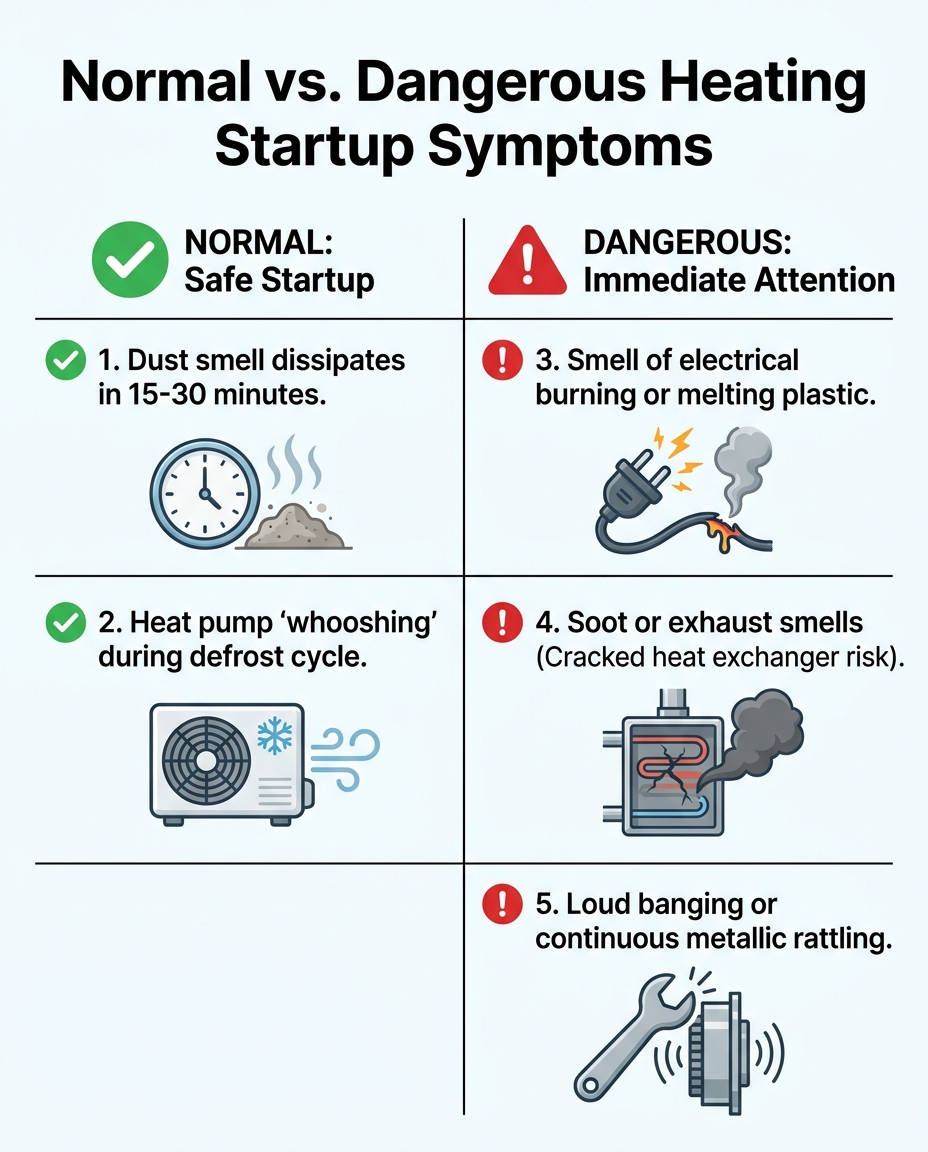
Timing the duration of the smell is the easiest and most reliable diagnostic tool you have as a homeowner. The normal burn-off smell should dissipate quickly as the system runs. This is commonly known as the 15-to-30 minute rule. If the odor is simply dust burning away, the smell will peak in the first few minutes and fade entirely within half an hour.
Ventilating the home slightly by opening a few windows during this first run can help clear the air and make the process more comfortable. However, persistent smells that linger beyond the first hour require an immediate system shut-down. An odor that does not fade indicates a deeper, ongoing issue beyond simple surface dust.
Modern heating solutions often involve dual-fuel setups, which utilize both an electric heat pump for moderate cold and a gas furnace for extreme freezing temperatures. Because these two systems operate using entirely different mechanical processes, they produce entirely different sounds and behaviors during that critical October first-freeze startup.
A Daikin heat pump has specific operational sounds that can catch a homeowner off guard if they are not familiar with the technology. One of the most common is a loud "whooshing" noise that occurs during its normal defrost cycle. When outdoor temperatures drop, frost can accumulate on the exterior coils. The system temporarily reverses its operation to melt this frost, shifting a component called the reversing valve. This shift creates a sudden rush of refrigerant that sounds like a deep sigh or whoosh.
These defrost cycles are absolutely necessary to prevent the outdoor coil from turning into a block of solid ice, and they should never be mistaken for mechanical failure. You may even see steam rising from the outdoor unit as the frost melts away—this is normal water vapor, not smoke. Knowing how Daikin compares to other HVAC brands can help set accurate expectations for these operational noise levels and defrost behaviors.
When the outdoor temperature plummets past the heat pump's efficiency threshold, a dual-fuel system automatically switches over to the gas furnace. Gas furnaces have distinct ignition clicks, a low rumble as the burners light, and powerful blower motor sounds that differ entirely from the quieter, steady hum of electric heat pump operation. Understanding which part of your system is currently running will help you identify whether the sounds you hear are standard operational noises or warning signs.
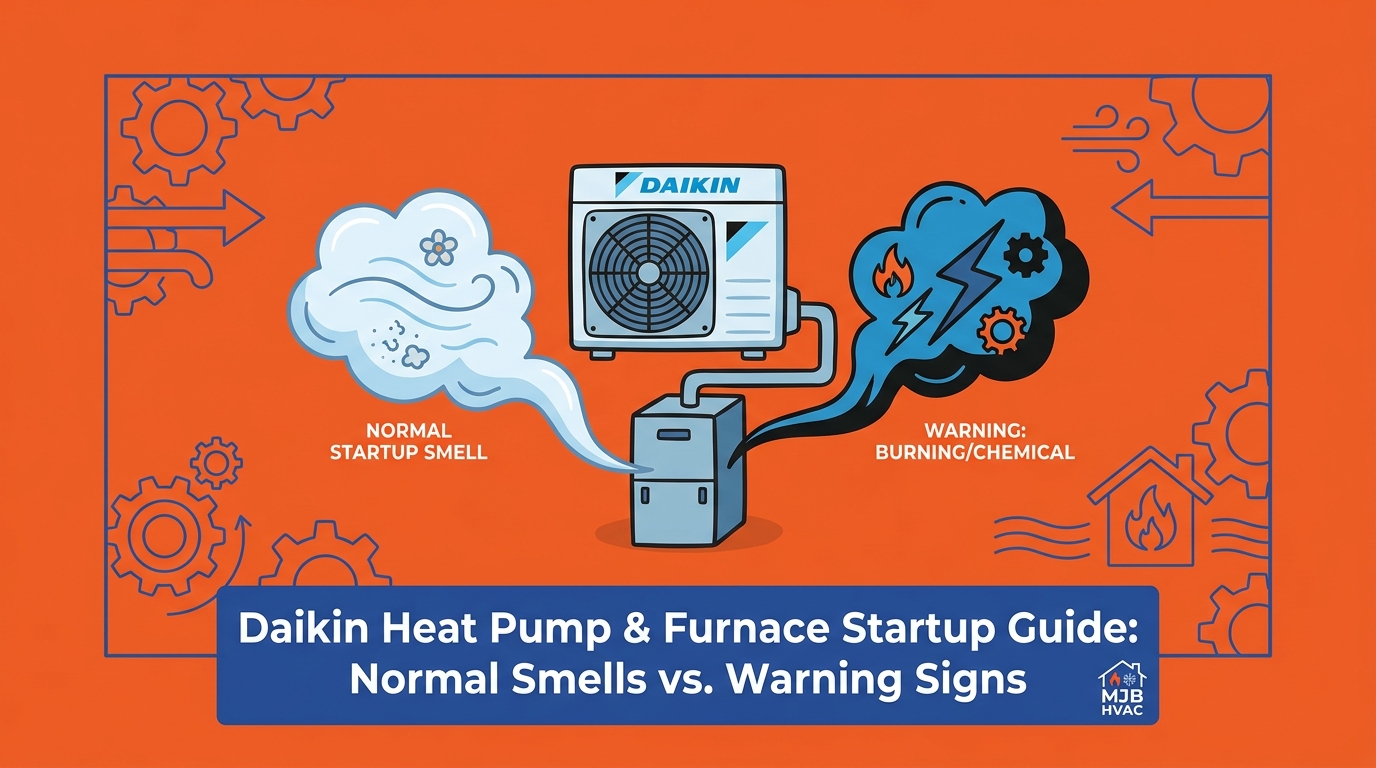
While a brief dusty smell is harmless, other odors are major red flags. Contrasting harmless dust smells with dangerous electrical, plastic, or persistent soot odors is a vital part of protecting Derby KS area homes during the winter months.
• Burning Dust / Musty — Likely Cause: Accumulated debris on dormant coils or heat exchangers. — Required Action: Monitor for 15-30 minutes. If it fades, no action is needed.
• Electrical / Ozone — Likely Cause: Overheating blower motor, frayed wiring, or failing capacitor. — Required Action: Shut off system immediately at the thermostat. Call a professional.
• Melting Plastic — Likely Cause: Foreign object in ductwork or melting wire casings near the heat source. — Required Action: Shut off system immediately. Inspect visible vents, then call a professional.
• Soot / Exhaust — Likely Cause: Cracked heat exchanger or blocked exhaust flue. — Required Action: Shut off system, evacuate if CO alarms sound, and call for emergency service.
Electrical or ozone-like smells often point directly to a failing blower motor or overheating internal wiring. When an aging motor struggles to push air—often because it is fighting against a severely clogged air filter—it draws excess amperage, causing the internal components to overheat. The smell of melting plastic is equally serious. This can indicate that a child's toy or household item has fallen into a floor register, or worse, that the protective casings around the system's high-voltage wires are melting. Both electrical and plastic odors should trigger an immediate system shutdown to prevent a potential fire hazard.
A strong, persistent soot or exhaust smell is arguably the most critical red flag you can encounter. This usually points to a cracked heat exchanger. The heat exchanger is the metal chamber that safely contains the toxic combustion gases (like carbon monoxide) while transferring heat to the air circulating through your home. If this metal cracks due to age and stress, those toxic gases can mix with your breathing air.
Carbon monoxide itself is completely odorless, making these secondary odors—like soot, exhaust, or a sharp metallic smell—critical warning signs. If you smell exhaust fumes coming from your vents, shut the system off immediately, ensure your carbon monoxide detectors are active, and call for professional diagnostic help.
Your ears are just as important as your nose when evaluating an October first-freeze startup. Identifying specific sounds that signal mechanical failure rather than normal operation can save you from a catastrophic breakdown in the middle of a freezing night.
• Loud banging or booming: A loud boom upon startup often indicates delayed ignition. This happens when dirty burners prevent the gas from lighting immediately. Gas builds up inside the combustion chamber until it finally catches, creating a miniature explosion that bangs against the metal walls.
• Continuous rattling or scraping: A persistent metallic scraping can point to a loose blower wheel that has come off balance and is hitting the metal housing. It can also indicate pieces of a cracked heat exchanger vibrating against each other.
• High-pitched squealing: This usually means a failing blower belt (in older models) or motor bearings that have lost their lubrication and are grinding metal-on-metal.
• Rapid clicking without heat: If you hear continuous clicking but the warm air never arrives, the system is struggling to ignite, often due to a faulty flame sensor or a malfunctioning igniter.
The danger of gas accumulation inside the combustion chamber cannot be overstated. Delayed ignition puts immense physical stress on the heat exchanger. Over time, the force of these small "booms" can crack the metal, leading to the carbon monoxide risks mentioned earlier. Dirty burners prevent smooth, quiet ignition, which is why professional cleaning is so vital.
It is important to distinguish between the harmless sound of loose ductwork expanding as it warms up (which sounds like a soft, occasional "pop") and internal furnace damage. A continuous, rhythmic rattling or squealing will not resolve on its own. Ignoring a squealing motor will inevitably lead to motor burnout, turning a minor repair into a major component replacement. None of these mechanical noises should be ignored, and all require diagnostic testing by a qualified technician.
With so many online tutorials available, it can be tempting to try and track down a strange noise or smell yourself. However, establishing strict safety boundaries and emphasizing the necessity of professional intervention is crucial for homeowners in Derby KS area homes.
Opening a furnace cabinet or dismantling heat pump components exposes you to high voltage and fast-moving mechanical parts. More importantly, improper adjustments to gas valves, burners, or heat exchangers can create severe fire hazards and carbon monoxide leaks. Heating systems are complex, highly regulated pieces of equipment, and guessing at a repair puts your entire household at risk.
Visual inspections by untrained individuals frequently miss microscopic heat exchanger cracks. A crack the width of a human hair expands when the metal gets hot, allowing lethal carbon monoxide to escape into your airstream. A professional utilizes specialized combustion analysis tools and digital cameras to inspect these areas safely. This highlights the absolute importance of having functional carbon monoxide detectors installed on every level of your home, especially near sleeping areas.
Beyond the physical dangers, attempting DIY repairs often voids manufacturer warranties. Manufacturers require proof of professional maintenance and repair to process warranty claims. Unauthorized repairs instantly nullify this coverage. Relying on a certified professional ensures safety protocols are followed and accurate diagnostics are performed across our local service areas. As a Certified Daikin Comfort Pro Dealer, MJB Heating & Cooling has the specialized training to ensure safe diagnostics while fully protecting your Daikin Comfort Promise Warranty.
The best way to handle an October first-freeze startup is to shift from reactive troubleshooting to proactive maintenance. Preparing your system before the temperatures drop ensures a safe, efficient, and odor-free transition into the heating season.
1. Schedule a pre-season inspection: This allows technicians to clean dirty burners, inspect the heat exchanger for stress cracks, and test all electrical connections before the heavy winter workload begins.
2. Replace your air filters: Regularly changing air filters prevents the severe airflow restrictions that lead to overheating motors and electrical burning smells. Start the season with a fresh, clean filter.
3. Clear the surrounding area: Ensure there are no flammable items, boxes, or storage containers resting against the furnace cabinet, and clear away any autumn leaves or debris from the outdoor heat pump unit.
4. Test your thermostat: Run the system for 15 minutes on a mild day to ensure the thermostat communicates properly with the heating equipment.
Enrolling in a preventative maintenance plan provides peace of mind and priority service during the busy fall season. Catching minor wear and tear—like a slightly loose belt or a dirty flame sensor—before it becomes a major mechanical failure ensures safe, efficient operation for the entire winter. It is much easier to replace a worn part in September than to deal with a total system breakdown in December.
If an older system exhibits constant warning signs, requires frequent repairs, or produces loud banging noises every time it starts, it may be time to consider a replacement. Upgrading to a modern heat pump or high-efficiency furnace can drastically improve your home's safety and comfort. With flexible financing options available, upgrading is more accessible than ever. Additionally, federal tax credits may apply to qualifying heat pump installations, helping to offset the initial investment (always verify current programs with a tax professional).
Experiencing a brief, slightly musty burning dust smell during the first heating cycle of the year is a normal part of home ownership for Derby KS area homes. However, persistent odors, sharp electrical smells, or loud banging noises are clear signals to shut the system down immediately. Never compromise on your home's safety by ignoring these critical warning signs or attempting risky DIY repairs on gas and high-voltage equipment.
Secure your comfort and safety for the months ahead by taking proactive steps today. Whether you need a thorough safety inspection to track down a strange noise or you want to keep your system running efficiently all winter long, signing up for a preventative maintenance plan is the smartest decision a homeowner can make.
Yes, a temporary burning smell is completely normal during the first use of the season. This odor is caused by the system burning off the layer of household dust and debris that settled on the heat exchanger and coils over the summer months. As long as the smell resembles dusty or musty air and fades quickly, there is no cause for alarm.
A normal dust burn-off smell should last between 15 and 30 minutes. The odor will be strongest during the first five minutes of operation and will gradually dissipate as the system continues to run. If the smell persists for more than an hour, shut the system off, as this indicates a more serious problem.
A cracked heat exchanger often produces a sharp, unpleasant odor that smells like exhaust fumes, soot, or formaldehyde. Because the heat exchanger is failing to contain combustion gases, these dangerous fumes mix with your breathing air. If you notice this smell, shut down your heating system immediately and call a professional.
Heat pumps naturally make a loud "whooshing" or sighing noise when they enter their defrost cycle. This sound is caused by the reversing valve shifting to temporarily send warm refrigerant to the outdoor coil to melt accumulated frost. While it can sound surprising, it is a necessary and safe part of normal heat pump operation.
You should worry about furnace noises if you hear loud banging, continuous metallic rattling, or high-pitched squealing. Banging often points to delayed gas ignition, rattling can mean a loose blower wheel or broken internal components, and squealing indicates failing motor bearings. None of these sounds will fix themselves and require professional attention.
A professional pre-season inspection catches minor wear and tear before it escalates into a complete system breakdown. Technicians clean critical components like the burners and flame sensor, verify electrical connections, and inspect the heat exchanger for microscopic safety hazards. This proactive care ensures your system runs safely and efficiently when freezing weather arrives.


Our A/C stopped working on a Sunday and due to health issues, we needed to find a service company available on a Sunday. I called MJB and left a message on their emergency voice mail. Within 10 minutes Tom Buck called me to hear my description of the symptoms. He was just finishing an appointment in Wichita and would be on his way to my home on the south end of Derby. He arrived within 30 minutes! From start to finish he was the perfect example of what you could ever hope for in an HVAC tech and a human being. His evaluation of our system inside and out was as thorough as I could ever imagine and once he was done with the repair, our system is running as well or better than ever. Well worth the price for the evaluation, parts, and labor. Thank you again Tom for an awesome experience.
Our AC went out during the hottest days of the year, and they were out next day! We have been jerked around by a shoddy home warranty for years. We finally had a chance to pick our own repair people, and MJB came highly recommended. I can see why! I was impressed with the honesty and speed at which they fixed our AC unit!
Our commercial building had a lightening/electrical strike and damaged our 20 ton AC unit. No one could find us a new unit before the end of September. Imagining going all of August and September with no AC in Kansas and working inside near 100 degree temps is less than thrilling. Dale and the team at MJB called around and saved the day. They had us a new unit 5 weeks earlier than other could promise and I now have happy employees. The unit is amazingly quiet, super cold and so much more energy efficient. Thank you for being our super hero!
Came out and installed my new furnace. Was very polite and affordable. They are very acknowledgeable and I highly recommend!
Thank you very much. We had our 1st warm night in 3weeks. MJB took the time and effort to find the real problem. And the employees were kind and thoughtful and explained things very well. I cannot thank you and all of MJB. Will recommend you highly. Thanks again Marjorie Herman Oxford Kansas
We had a new system installed and I was so impressed with how quick they were in come out and install it, in the middle of a hot summer day. They were so friendly & very professional. I had a small problem with a weird sound and they came over immediately and fixed it. Love them!