.avif)





Blogs
Stay updated with our latest blog posts.


You flip the thermostat to "heat" as the house grows chilly, but instead of cozy warmth, you are hit with a distinct burning smell and unfamiliar mechanical noises. Getting common homeowner questions answered about whether these early-season heating quirks are normal or dangerous is a top priority for families wanting a safe, comfortable home. The October first cold snap often catches us off guard, leaving many rushing to the thermostat after months of system inactivity. A sudden odor or strange sound coming from your vents during this initial heating cycle can easily spark anxiety, especially as the outdoor temperatures continue to drop.
If you are unsure about the safety of your system, our team is ready to provide comprehensive HVAC services to ensure everything operates smoothly.
Heat pumps operate very differently than traditional gas furnaces, which means their startup behaviors are also unique. While a gas furnace relies on combustion, a heat pump moves heat from the outside air into your home using electricity and refrigerant. Because of this fundamental difference in technology, the sounds and smells your system produces during its first major transition of the year require a different kind of understanding. Learning to distinguish between harmless seasonal startup behaviors and actual mechanical issues is the key to enjoying a stress-free transition into the cooler months.
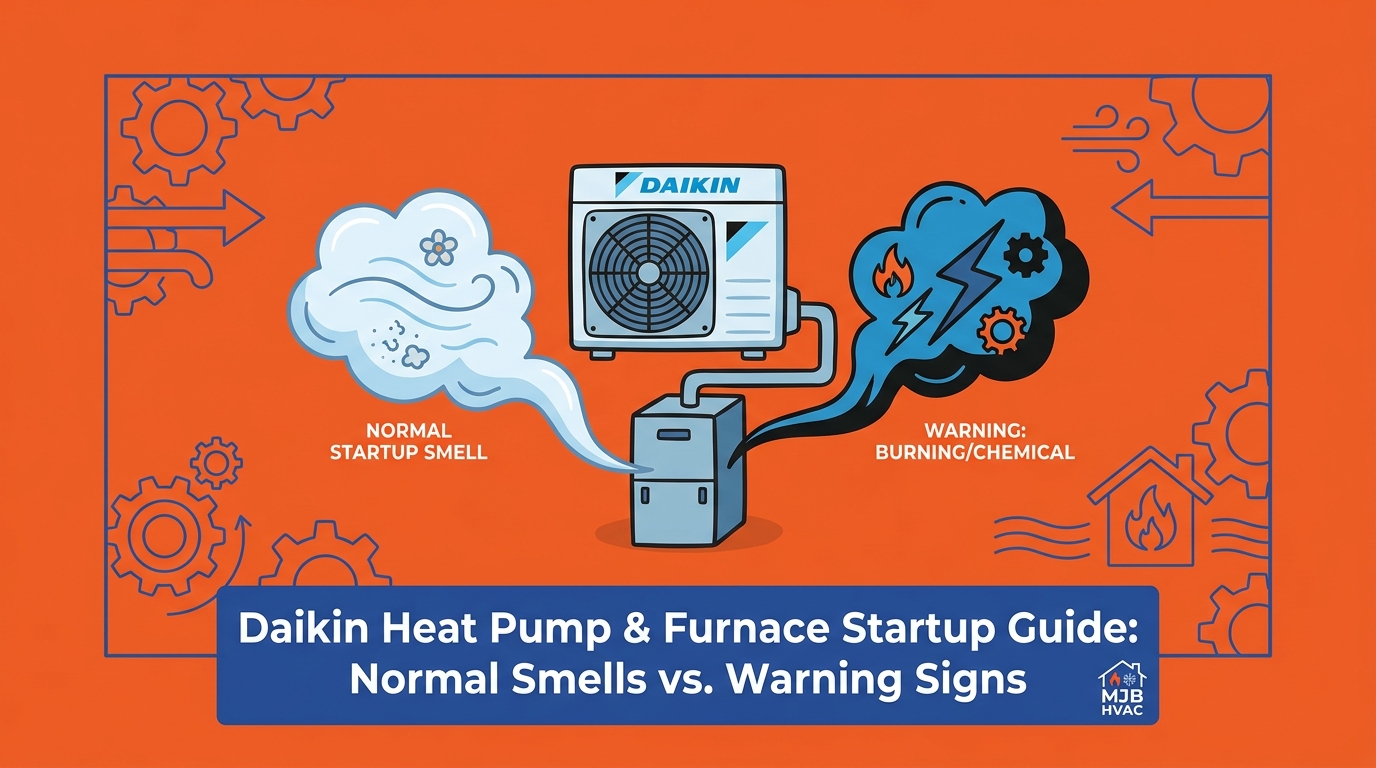
The Problem: The most frequent concern homeowners report during the first cool evening in Derby KS is a sharp, dusty, or slightly acrid burning smell spreading through the house within minutes of the heat turning on. This odor is alarming, often prompting families to immediately shut down the system and open their windows.
The Cause: During the long, idle summer months, your heat pump's indoor coil and auxiliary electric heating elements sit unused. Over time, household dust, pet dander, and microscopic airborne debris settle and accumulate on these components. When the thermostat finally calls for heat, these elements warm up rapidly. The accumulated debris is instantly incinerated by the rising temperatures. What you are smelling is quite literally the burn-off of months of settled dust.
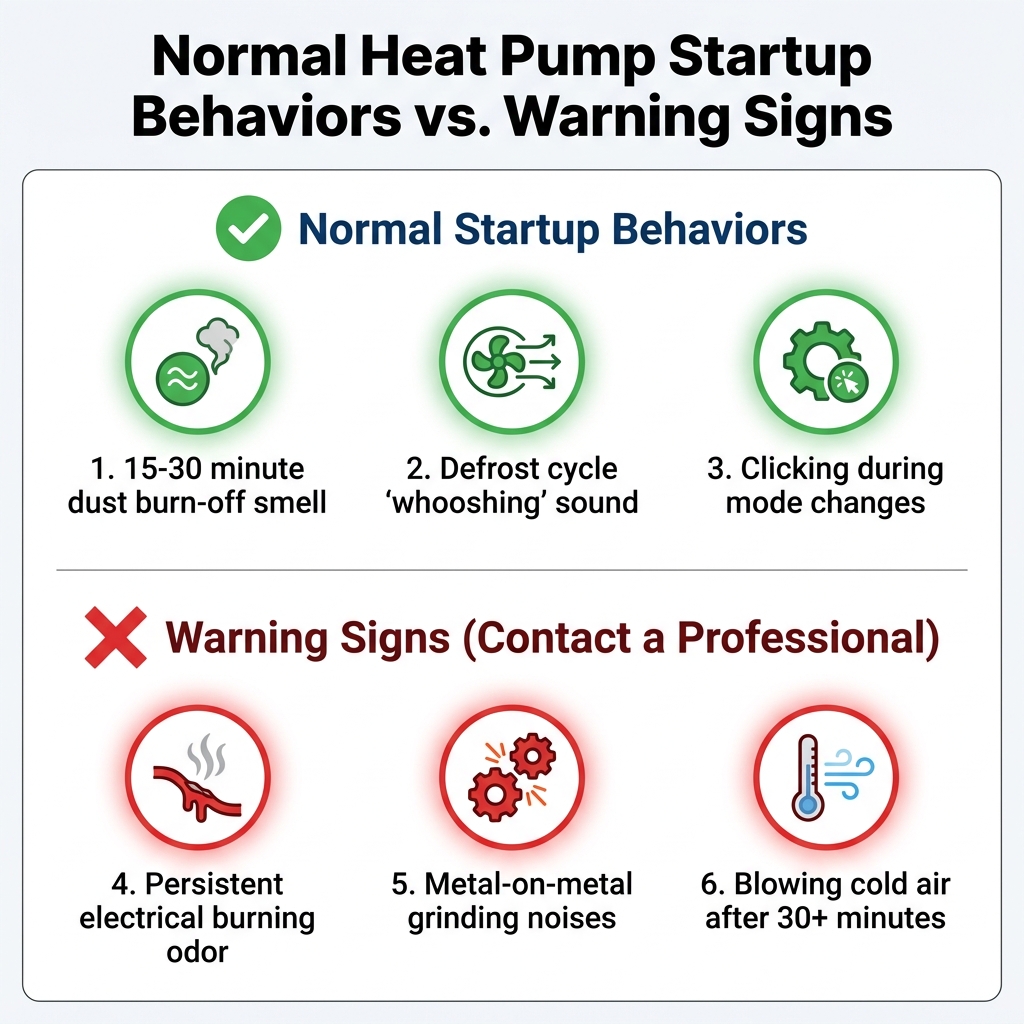
The Solution: The best approach is simply to monitor the situation while allowing the system to run. A normal dust burn-off smell should dissipate entirely within 15 to 30 minutes of continuous operation. Once the auxiliary strips and coils are clean, the odor will vanish and should not return for the rest of the season.
To help minimize this effect in the future, consider the following routine checks:
• Change your air filters regularly: A clean filter captures more airborne dust before it can settle on the internal coils.
• Keep the indoor unit area clean: Vacuuming around the air handler reduces the amount of loose debris pulled into the system.
• Schedule pre-season maintenance: A professional cleaning removes the dust buildup before the first heating cycle even begins.
If you are exploring ways to improve your home's overall heating efficiency and reduce seasonal maintenance surprises, reviewing modern Daikin heat pump options can provide insight into systems designed with advanced filtration and self-regulating features.
Heat pumps are dynamic machines that physically shift their internal operations based on the weather outside. This shifting creates specific sounds that can be surprising if you are not accustomed to them. Kansas's rapid October temperature drops—where warm, mild days plunge into freezing nights—force heat pumps into sudden, high-load heating demands. This extreme weather pattern frequently triggers one of the most misunderstood heat pump functions: the defrost cycle.
When the outdoor temperature dips near freezing during that October first cold snap, the moisture in the air can freeze onto the outdoor unit's coils. If this frost builds up, it blocks airflow and prevents the system from absorbing heat. To protect itself, the system initiates a defrost cycle. It temporarily reverses its operation, sending warm refrigerant back to the outdoor unit to melt the ice.
During this process, you will likely hear several distinct, perfectly normal noises:
• The "Whoosh" Sound: As the reversing valve shifts the flow of pressurized refrigerant from heating mode to defrost mode (and back again), you will hear a loud whooshing or hissing sound. This is simply the pressure equalizing inside the copper lines.
• Clicking and Humming: You may hear a distinct click from the outdoor unit as relays open and close, followed by a low hum as the compressor ramps up or down.
• Fan Stopping: The outdoor fan will stop spinning during the defrost cycle, even while the compressor continues to run. This allows the heat to build up and melt the ice faster. You might even see steam rising from the unit as the frost melts.
These sounds indicate that your system is intelligently managing the harsh weather conditions. However, persistent metal-on-metal grinding, aggressive rattling, or loud banging are never part of a normal defrost cycle and warrant professional attention.
The transitional seasons in Derby KS are notoriously unpredictable. Extreme day-to-night temperature swings mean your home might require light cooling at 2:00 PM and heavy heating by 2:00 AM. Traditional single-stage HVAC systems struggle with this volatility; they only know how to run at 100% capacity or turn off completely. This constant on-and-off cycling wastes energy, creates uncomfortable temperature fluctuations, and accelerates mechanical wear and tear.
Daikin systems utilize advanced inverter technology to solve this exact problem. Instead of a basic on/off switch, an inverter-driven variable-speed compressor acts more like the accelerator pedal in a car. It precisely adjusts its operational speed to match the exact heating or cooling demand of your home at any given moment.
If the temperature drops slightly, the compressor runs at a low, energy-efficient speed to gently maintain comfort. If a sudden freeze hits, it ramps up capacity to deliver powerful heat. This intelligent adaptation means the system rarely has to shut down completely during transitional weather, which drastically reduces the electrical spikes associated with hard starts. If you are comparing Daikin to other HVAC brands, this precise control and the resulting reduction in mechanical stress are major factors in long-term reliability and comfort.
The Problem: While dust burn-off and reversing valve whooshes are normal, not every unusual behavior should be ignored. Homeowners often struggle to draw the line between a harmless seasonal quirk and a serious mechanical failure that requires immediate intervention during an October first cold snap.
The Cause: Ignoring genuine warning signs can lead to cascading component failures, while attempting to diagnose complex electrical or refrigeration issues yourself can be dangerous and frequently voids manufacturer warranties.
The Solution: Know exactly what to look for and rely on certified professionals for diagnostics. If you experience a persistent electrical burning smell that smells like melting plastic rather than dusty heat, shut the system off immediately at the thermostat. Similarly, if the system blows cold air for more than 30 minutes without warming up, or if you hear loud banging and grinding, it is time to call for help.
• Burning Smell — Normal Cause: Dust burning off coils (lasts 15-30 mins) — Warning Sign (Call a Pro): Smells like melting plastic or burning wires; persists for hours
• Loud Noises — Normal Cause: Whooshing from reversing valve, clicking relays — Warning Sign (Call a Pro): Metal-on-metal grinding, loud banging, aggressive rattling
• Cool Air from Vents — Normal Cause: Brief draft during a defrost cycle — Warning Sign (Call a Pro): System blows cold air continuously for over 30 minutes
• Outdoor Unit Smoking — Normal Cause: Steam rising as frost melts during defrost — Warning Sign (Call a Pro): Dark smoke or a strong electrical fire odor
Attempting DIY troubleshooting on modern, highly computerized HVAC equipment often leads to extended downtime or further system damage. Proper diagnosis is critical. One local homeowner spent nearly a week in a hot house during the summer because a previous company completely misdiagnosed their system's failure. When our team arrived, we properly diagnosed the root issue, repaired the immediate problem, and eventually completed a clean, efficient installation of a brand-new unit. Getting the diagnosis right the first time saves you from prolonged discomfort and wasted expenses.
Working with a certified Daikin Comfort Pro dealer ensures that the technicians evaluating your system have passed rigorous, specialized training on these exact units. Furthermore, this certification provides the peace of mind that comes with the Daikin Comfort Promise, ensuring that your warranty remains intact and your service meets the highest manufacturer standards.
If your older system is constantly struggling, producing alarming noises, or failing to keep the house warm during the early fall in Derby KS, it might be time to consider a replacement rather than a band-aid repair. Heading into the deep, freezing winter with a compromised heating system is a significant risk. A total breakdown in January is not just inconvenient; it can lead to frozen pipes and unsafe indoor temperatures.
Upgrading before the severe weather arrives offers substantial performance benefits. Modern Daikin heat pumps provide superior energy efficiency, effectively moving heat even when outdoor temperatures drop well below freezing. This high-efficiency operation can lead to noticeably lower winter utility bills compared to running an aging, struggling system.
Furthermore, taking proactive steps now allows you to explore various financial incentives without the pressure of an emergency replacement. Generic energy rebates or federal tax credits may apply to qualifying high-efficiency heat pump installations, making the upgrade more manageable (we always recommend verifying current program details with your utility provider or a tax professional). To help facilitate immediate upgrades when necessary, there are also flexible HVAC financing options available, ensuring you do not have to compromise on your family's winter comfort.
Yes, a brief burning smell is completely normal during the first few heating cycles of the fall. This odor is caused by the system burning off household dust and debris that settled on the indoor coils and auxiliary heating strips over the summer. The smell should be dusty rather than electrical, and it is a harmless part of the seasonal transition.
Normal noises include a loud "whooshing" or hissing sound when the reversing valve shifts modes, clicking sounds from electrical relays, and a steady hum from the compressor. During an October first cold snap, you may also notice the outdoor fan stopping completely during a defrost cycle. Grinding, screeching, or loud banging noises are abnormal and require a technician's inspection.
The typical dust burn-off process takes between 15 and 30 minutes of continuous heating operation. Once the internal components reach their operating temperature and incinerate the accumulated debris, the smell will clear out of your home. If the odor persists for several hours or returns days later, shut the system down and call a professional.
A defrost cycle typically begins with a distinct "whoosh" as pressurized refrigerant changes direction to melt ice on the outdoor unit. You will then hear the outdoor fan shut off, while the compressor continues to run with a low, vibrating hum. When the cycle completes a few minutes later, another whoosh occurs as the system returns to normal heating mode.
If the smell occurs only during the first few uses of the season, it is the standard dust burn-off phenomenon. However, if your Daikin heat pump emits a sharp, acrid smell similar to melting plastic or burning wires at any point in the season, this indicates an electrical overheating issue or a failing motor. Electrical odors should always be treated as an emergency.
You should call a certified HVAC technician immediately if the burning smell persists beyond 30 minutes, smells strongly of melting plastic or ozone, or is accompanied by smoke. You should also seek expert help if the smell occurs alongside loud grinding noises or if the system fails to produce warm air, as these are clear indicators of mechanical or electrical failure.
Rapid temperature swings force traditional systems to constantly cycle on and off, which drains energy and increases wear. However, Daikin inverter technology adapts to these swings by continuously adjusting the compressor speed to match the exact temperature requirements. This variable-speed operation maintains high efficiency and consistent comfort, even when warm afternoons quickly turn into freezing nights.
Understanding how your Daikin heat pump operates during the transitional fall weather brings much-needed peace of mind. Knowing that a brief dusty smell or a sudden whooshing noise from the outdoor unit is just your system doing its job allows you to relax and enjoy the changing seasons in Derby KS. By familiarizing yourself with these normal behaviors, you are better equipped to spot the actual warning signs that require attention.
Remember that professional guidance is always the safest route if uncertainties arise. If a smell lingers too long, or a noise sounds too harsh, do not hesitate to have a certified expert evaluate the system. We encourage you to schedule a thorough pre-winter inspection and explore your professional support options now, ensuring your home remains a warm, safe haven before the harsh winter weather truly arrives.


Our A/C stopped working on a Sunday and due to health issues, we needed to find a service company available on a Sunday. I called MJB and left a message on their emergency voice mail. Within 10 minutes Tom Buck called me to hear my description of the symptoms. He was just finishing an appointment in Wichita and would be on his way to my home on the south end of Derby. He arrived within 30 minutes! From start to finish he was the perfect example of what you could ever hope for in an HVAC tech and a human being. His evaluation of our system inside and out was as thorough as I could ever imagine and once he was done with the repair, our system is running as well or better than ever. Well worth the price for the evaluation, parts, and labor. Thank you again Tom for an awesome experience.
Our AC went out during the hottest days of the year, and they were out next day! We have been jerked around by a shoddy home warranty for years. We finally had a chance to pick our own repair people, and MJB came highly recommended. I can see why! I was impressed with the honesty and speed at which they fixed our AC unit!
Our commercial building had a lightening/electrical strike and damaged our 20 ton AC unit. No one could find us a new unit before the end of September. Imagining going all of August and September with no AC in Kansas and working inside near 100 degree temps is less than thrilling. Dale and the team at MJB called around and saved the day. They had us a new unit 5 weeks earlier than other could promise and I now have happy employees. The unit is amazingly quiet, super cold and so much more energy efficient. Thank you for being our super hero!
Came out and installed my new furnace. Was very polite and affordable. They are very acknowledgeable and I highly recommend!
Thank you very much. We had our 1st warm night in 3weeks. MJB took the time and effort to find the real problem. And the employees were kind and thoughtful and explained things very well. I cannot thank you and all of MJB. Will recommend you highly. Thanks again Marjorie Herman Oxford Kansas
We had a new system installed and I was so impressed with how quick they were in come out and install it, in the middle of a hot summer day. They were so friendly & very professional. I had a small problem with a weird sound and they came over immediately and fixed it. Love them!