.avif)





Blogs
Stay updated with our latest blog posts.
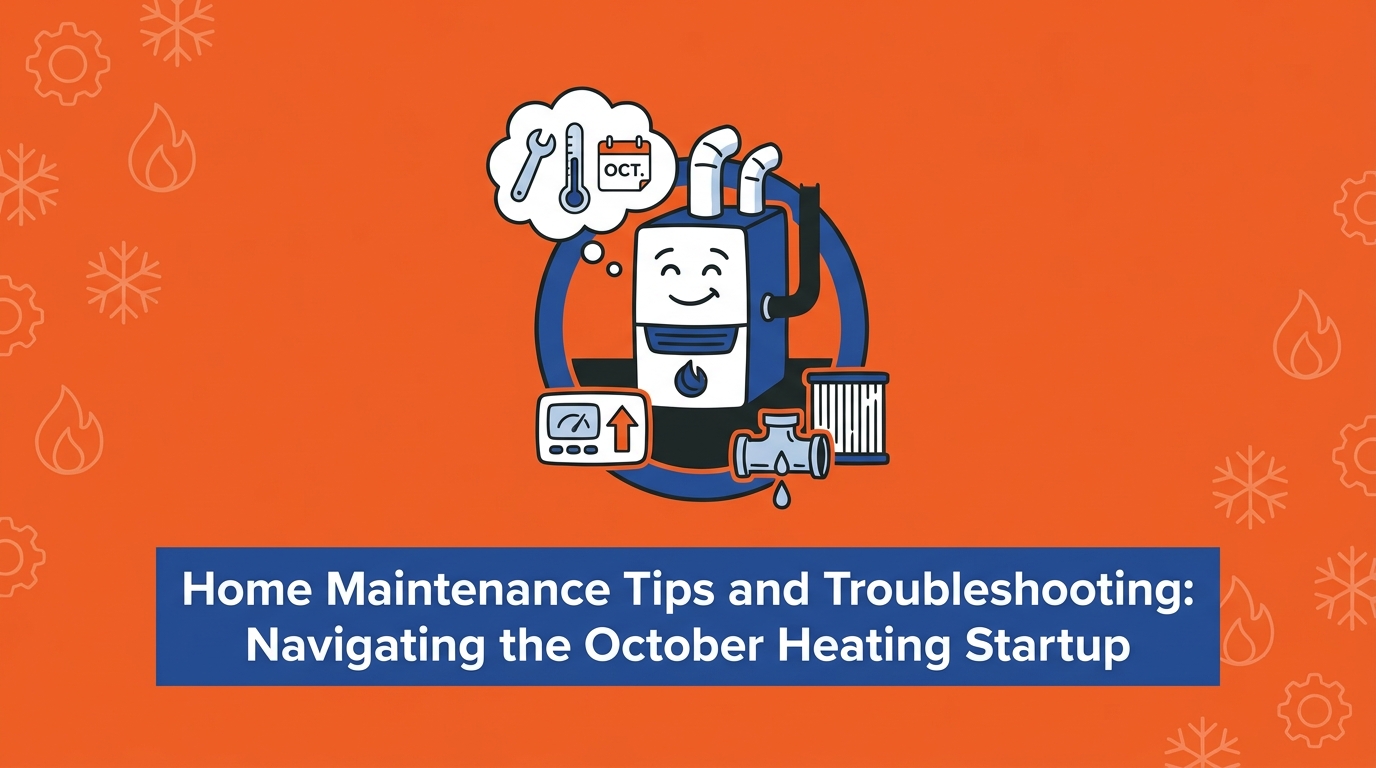

Your thermostat clicks over to 'heat' for the first time in months, but instead of comforting warmth, you are greeted by a sharp burning odor and unsettling clanks from the vents. Navigating effective home maintenance tips and troubleshooting during this initial transition from cooling to heating is often the most stressful part of homeownership. You are immediately faced with a critical decision: are these startup quirks just normal dust burning off, or are they early warning signs of a dangerous mechanical failure?
As the first October frost approaches, turning on the furnace shouldn't feel like a gamble. Many homeowners experience anxiety during this seasonal shift because the heating system has sat dormant all summer. Lingering issues from the cooling season can complicate matters. For instance, if you noticed your air conditioner struggling during late September heatwaves but decided to put off calling for help, you should schedule an AC repair before fully winterizing the unit. Addressing these leftover cooling issues ensures your HVAC system's shared electrical components are stable before they are subjected to heavy heating demands.
Proactive troubleshooting is the key to preventing mid-winter emergencies. By understanding exactly what happens inside your furnace during its first run of the season, you can confidently distinguish between harmless operational noises and serious red flags that require immediate professional intervention.
The Problem: Many homeowners do not realize that the physical environment surrounding their HVAC system changes drastically between August and October, directly influencing how the furnace behaves on day one. In Derby and surrounding Sedgwick County, the heavy humidity of summer acts almost like a mild adhesive for airborne particles.
The Cause: During the cooling season, high indoor humidity causes microscopic dust, pet dander, and household debris to stick stubbornly to the internal components of your furnace, particularly the heat exchanger and blower motor assembly. As the seasons change, the Kansas climate shifts rapidly from a humid summer to a very dry autumn. This sudden drop in ambient moisture dries out the accumulated dust layer, turning it into a brittle, highly flammable coating resting directly on your heating elements.
Furthermore, the transition puts a completely different type of stress on your system's shared electrical parts. A blower motor that ran constantly to circulate chilled air is now tasked with pushing heavy, heated air. Lingering electrical wear from the summer months often reveals itself right at this transition point. For example, recognizing the sound of a failing compressor capacitor during the final cooling days can actually predict electrical struggles when the furnace attempts its first ignition sequence.
The Solution: Understanding this climate-driven buildup helps explain why the first startup is often accompanied by odors and noises. Recognizing that this dry dust accumulation is a natural byproduct of the regional weather shift allows homeowners to anticipate the initial burn-off rather than panicking, while still remaining vigilant for sounds of electrical fatigue.
The single most common symptom of an autumn heating startup is a distinct, alarming odor spreading through the house. When a furnace sits idle from spring until the first October frost, the heat exchanger—the metal component responsible for transferring heat into your breathing air—becomes coated in settled dust. When the burners ignite for the first time, surface temperatures on the heat exchanger spike rapidly, incinerating that settled layer of debris.
This normal "burning dust" smell is often described as a dry, slightly metallic, or stale odor. It typically begins within minutes of the blower engaging and should completely dissipate within 30 to 60 minutes as the system cycles air through the house. While unpleasant, it is a harmless and expected part of the seasonal transition.
However, it is vital to contrast this normal burn-off with dangerous odors that indicate an immediate safety hazard. If you smell melting plastic, sharp electrical burning (similar to burning wire insulation), or the distinct rotten egg odor of a natural gas leak, the situation is no longer a routine startup. In the presence of these dangerous smells, immediately shut off the heating system at the thermostat, open windows to ventilate the area, and contact a licensed professional.
To help you navigate these initial startup odors, use this quick reference guide to determine whether you should wait it out or take immediate action.
• Dry, stale burning dust — Typical Cause: Incineration of settled summer debris on the heat exchanger — Duration: 30 to 60 minutes — Required Action: Normal operation. Monitor to ensure it fades. Check and replace the air filter.
• Sharp, acrid electrical smell — Typical Cause: Overheating blower motor, failing wiring, or a seized bearing — Duration: Persistent while running — Required Action: Shut down the system immediately at the thermostat and call for professional diagnostics.
• Melting plastic or rubber — Typical Cause: Foreign object in the ductwork or a failing electrical component — Duration: Persistent while running — Required Action: Shut down the system immediately to prevent fire hazards.
• Rotten eggs (Sulfur) — Typical Cause: Natural gas leak near the furnace or gas valve — Duration: Constant, even when off — Required Action: Evacuate the home, leave the doors open, and call the gas company or emergency services.
The Problem: Beyond unexpected smells, the first heating cycle often introduces a symphony of new sounds. Homeowners frequently struggle to separate harmless thermal expansion from the warning cries of mechanical failure.
The Cause: When a furnace ignites, the sudden introduction of high heat causes the metal components of the unit and the attached ductwork to expand rapidly. This thermal expansion produces light clicking sounds before ignition and dull "popping" or "pinging" noises as the sheet metal flexes. These sounds are entirely normal and simply indicate that the materials are reacting to the temperature change.
Conversely, warning noises are typically much louder and continuous. A loud, violent bang when the system starts is often a sign of delayed ignition—a dangerous condition where gas builds up in the combustion chamber before finally igniting with a small explosion. Squealing or screeching sounds usually point to a failing blower motor belt or dry, worn-out bearings. Grinding noises indicate metal-on-metal contact, meaning a component has broken loose or failed entirely.
The Solution: Ignoring these mechanical warning sounds can lead to catastrophic system failure right when you need the heat the most. One local homeowner experienced this firsthand during a frigid winter day when their heater completely stopped working after days of ignored grinding sounds. A technician was dispatched and arrived within ten minutes to fix the heater, ultimately discovering an out-of-code hot water tank pipe in the process that could have caused secondary property damage. Rapid intervention in Derby and surrounding Sedgwick County is critical to preventing a minor mechanical noise from cascading into a total breakdown during extreme cold.
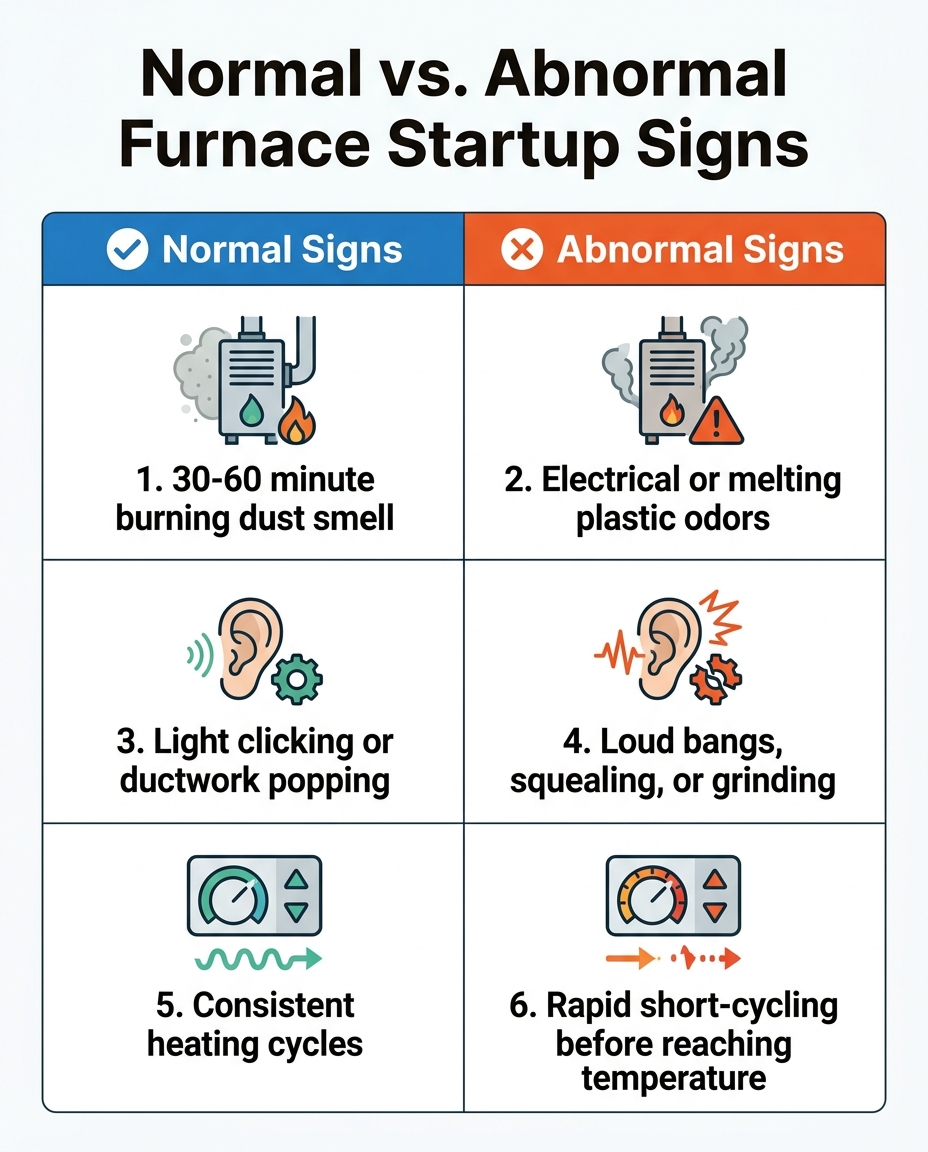
One of the most deceptive heating issues a homeowner can face is short-cycling. This occurs when the furnace turns on, runs for only a few minutes, and then abruptly shuts off before the thermostat reaches its set temperature. The system will then rapidly restart, creating an endless, inefficient loop.
Before the first October frost sets in, testing for short-cycling is crucial because it drastically reduces equipment lifespan. Every time a furnace starts, it draws a massive amount of energy and puts mechanical wear on the ignition components and blower motor. Rapidly repeating this process forces the system to work twice as hard for half the result, leading to inadequate heating, skyrocketing energy consumption, and premature component failure.
At the homeowner level, the most common culprit for short-cycling is a heavily soiled air filter. When a filter becomes clogged with summer dust and pet dander, it severely restricts airflow through the furnace. Without adequate air moving over the heat exchanger, the internal temperature of the unit spikes dangerously high. As a safety mechanism, the furnace's high-limit switch detects this overheating and immediately shuts the burners down to prevent a fire. Once the unit cools, it tries again, resulting in the short-cycling loop.
Beyond dirty filters, short-cycling often stems from professional-level causes that require expert diagnostics. A dirty flame sensor, for example, will fail to detect the burner's fire and will shut the gas valve off within seconds as a safety precaution. Alternatively, an oversized unit will heat the immediate area around the thermostat too quickly, satisfying the sensor before the rest of the house is warm, causing it to shut down prematurely.
The Problem: When a furnace fails to start properly, many homeowners are tempted to take matters into their own hands. However, modern HVAC systems involve high-voltage electricity, combustible natural gas, and complex safety sensors. Crossing the line between basic maintenance and amateur repair can result in severe injury, voided warranties, or fatal carbon monoxide leaks.
The Cause: The internet is filled with DIY videos that make complex repairs look simple, leading homeowners in Derby and surrounding Sedgwick County to attempt tasks they are not licensed to perform. It is vital to establish strict boundaries on what maintenance is safe for a homeowner and what requires a certified technician.
The Solution: Stick to the safe, approved homeowner checklist. You can safely perform the following tasks:
• Replacing air filters: Check filters monthly and replace them when dirty to ensure proper airflow and prevent overheating.
• Checking thermostat batteries: A blank screen or unresponsive system is often cured by simply swapping out AA or AAA batteries.
• Ensuring vents are unblocked: Walk through the house and ensure rugs, furniture, and curtains are not obstructing supply or return registers.
• Verifying the circuit breaker: Check the electrical panel to ensure the HVAC breaker hasn't tripped during the seasonal switchover.
Explicitly, here is what you must NEVER do: never open the sealed furnace cabinet, never attempt to clean or bypass a flame sensor, and never adjust gas valves or electrical relays without a license. Instead of risking your safety, rely on a routine preventative maintenance plan. Professional diagnostics ensure that issues invisible to the untrained eye—such as micro-cracks in the heat exchanger or incorrect gas pressure—are caught and resolved, ensuring the system operates safely and efficiently throughout the winter.
The window for proactive preparation is narrow. Early October is the critical timeframe for these final checks, long before the first major freeze forces local HVAC companies into emergency-only dispatch modes. Testing your heating system now allows you to address any of the smells, noises, or short-cycling behaviors we have discussed without the pressure of a freezing house.
There is immense peace of mind that comes from knowing your heating system has been fully vetted by a professional. A pre-winter inspection ensures that the burners are clean, the exhaust flues are clear of summer debris or bird nests, and all safety switches are fully operational. It transforms the anxiety of the first cold snap into confidence.
It is also important to address the reality of aging systems. If your furnace is over 15 years old, a routine startup check might reveal that it simply cannot safely survive another winter. Facing a replacement can be daunting, but discovering this in early autumn provides the time needed to explore flexible financing options. Upgrading on your own timeline, rather than during a midnight emergency in January, eases the financial burden and ensures you select the most efficient system for your home.
Distinguishing between normal startup quirks and real mechanical dangers is the key to a stress-free winter season. While a brief burning dust smell or the light popping of expanding ductwork is nothing to fear, persistent electrical odors, loud bangs, and rapid short-cycling demand immediate attention. Mastering these home maintenance tips and troubleshooting strategies empowers you to protect your system and your property.
If any of your initial startup checks reveal warning signs, do not wait for the weather in Derby and surrounding Sedgwick County to worsen. MJB Heating & Cooling utilizes a reliable dispatch protocol, ensuring fast response times and expert diagnostics for any unexpected heating failures. Reach out for professional HVAC services today to secure your family's comfort and safety for the long winter ahead.
Is it normal for a heater to smell when first turned on?
Yes, a brief burning dust smell is entirely normal during the first startup of the season. This occurs because dust settles on the heat exchanger over the summer and incinerates when the burners ignite. The odor should be dry and stale, and it typically dissipates within 30 to 60 minutes of operation.
Why is my furnace short cycling?
Short-cycling is most commonly caused by a severely clogged air filter that restricts airflow and causes the furnace to overheat. The system's high-limit switch detects this dangerous temperature spike and shuts the burners down prematurely. If replacing the filter does not resolve the issue, it may be due to a dirty flame sensor or an oversized unit, which requires professional diagnostics.
What furnace noises are dangerous?
Loud, continuous, or violent noises are clear warning signs of mechanical trouble. A loud bang upon startup often indicates delayed gas ignition, while squealing points to a failing blower motor belt or worn bearings. Grinding sounds suggest metal-on-metal contact, meaning a component has broken and the system should be shut down immediately.
How long should the burning dust smell last on a furnace?
The normal burning dust smell should only last for about 30 to 60 minutes after the first ignition of the season. As the system continuously circulates air through the home, the odor will fade. If the smell persists for hours, or if it changes to an electrical or melting plastic odor, turn off the system and call a technician.
When should I call a professional for furnace repair?
You should call a professional whenever you experience persistent burning odors, loud mechanical noises, continuous short-cycling, or a complete lack of heat. Additionally, if you suspect a gas leak (indicated by a rotten egg smell), evacuate the home and contact emergency services and a licensed HVAC technician immediately.
What is the difference between normal thermal expansion and a failing blower motor?
Normal thermal expansion sounds like light clicking, pinging, or dull popping as the metal ductwork and furnace components heat up and expand. These sounds are intermittent and harmless. A failing blower motor, however, produces continuous, loud squealing, screeching, or grinding noises while the fan is running, indicating serious mechanical friction.


Our A/C stopped working on a Sunday and due to health issues, we needed to find a service company available on a Sunday. I called MJB and left a message on their emergency voice mail. Within 10 minutes Tom Buck called me to hear my description of the symptoms. He was just finishing an appointment in Wichita and would be on his way to my home on the south end of Derby. He arrived within 30 minutes! From start to finish he was the perfect example of what you could ever hope for in an HVAC tech and a human being. His evaluation of our system inside and out was as thorough as I could ever imagine and once he was done with the repair, our system is running as well or better than ever. Well worth the price for the evaluation, parts, and labor. Thank you again Tom for an awesome experience.
Our AC went out during the hottest days of the year, and they were out next day! We have been jerked around by a shoddy home warranty for years. We finally had a chance to pick our own repair people, and MJB came highly recommended. I can see why! I was impressed with the honesty and speed at which they fixed our AC unit!
Our commercial building had a lightening/electrical strike and damaged our 20 ton AC unit. No one could find us a new unit before the end of September. Imagining going all of August and September with no AC in Kansas and working inside near 100 degree temps is less than thrilling. Dale and the team at MJB called around and saved the day. They had us a new unit 5 weeks earlier than other could promise and I now have happy employees. The unit is amazingly quiet, super cold and so much more energy efficient. Thank you for being our super hero!
Came out and installed my new furnace. Was very polite and affordable. They are very acknowledgeable and I highly recommend!
Thank you very much. We had our 1st warm night in 3weeks. MJB took the time and effort to find the real problem. And the employees were kind and thoughtful and explained things very well. I cannot thank you and all of MJB. Will recommend you highly. Thanks again Marjorie Herman Oxford Kansas
We had a new system installed and I was so impressed with how quick they were in come out and install it, in the middle of a hot summer day. They were so friendly & very professional. I had a small problem with a weird sound and they came over immediately and fixed it. Love them!