.avif)





Blogs
Stay updated with our latest blog posts.
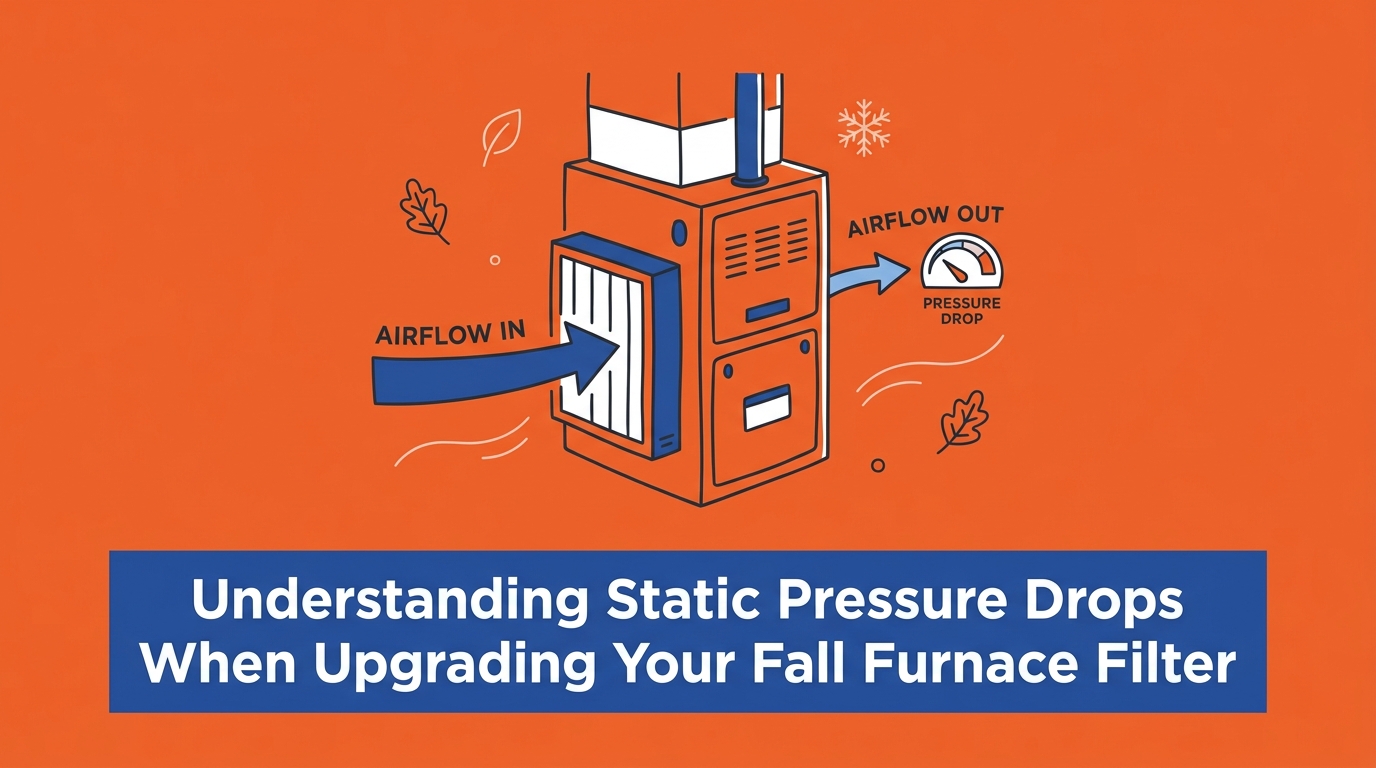

At MJB Heating & Cooling, we frequently see a frustrating cycle: your furnace is running, but the vents are barely pushing out any warm air, and the system keeps shutting off prematurely. This is exactly why understanding static pressure drops when upgrading your fall furnace filter is a critical step before the cold weather permanently sets in. In our experience servicing homes throughout the Derby area, we see many homeowners eagerly buy the highest-rated pleated filter on the hardware store shelf to combat autumn dust, completely unaware that they are unintentionally choking off essential furnace airflow. While the intention is to improve indoor air quality, blindly installing a highly restrictive filter in an older HVAC system fundamentally alters the system's static pressure.
If you need immediate help optimizing your system for the upcoming season, exploring professional HVAC services is the safest way to protect your equipment while improving your home's air quality.
This hidden airflow restriction is a primary culprit behind equipment overheating and short-cycling just as temperatures begin to drop. When you transition into your September pre-heating season fall prep, the focus often shifts heavily toward capturing allergens. However, choosing the right filter requires understanding the mechanical limits of your specific heating equipment. An older furnace was simply not designed to push air through the dense, tightly woven synthetic materials found in modern premium filters. By forcing the system to work harder than its engineered capacity, you trade a slight improvement in air quality for a massive reduction in mechanical reliability.
To understand why a simple filter change can cause such drastic operational problems, you have to look at the physics of airflow inside your ductwork. Total external static pressure is the measurement of resistance to airflow within the ductwork and HVAC components. Our technicians often describe it as blood pressure for your heating system. Most residential HVAC systems are engineered to operate at a specific, carefully calculated static pressure limit, typically around 0.5 inches of water column (in. w.c.). Every component in the air stream—from the duct sizing to the evaporator coil, and especially the air filter—adds a specific amount of resistance to this total number.
The furnace blower motor is responsible for pushing and pulling air against this resistance to maintain proper air volume and ensure a safe temperature rise across the heat exchanger. When you introduce the MERV 13 vs MERV 8 airflow restriction dynamic into the equation, any added resistance at the return drop immediately alters this delicate mechanical balance. If the static pressure rises too high, the blower motor simply cannot move enough cubic feet of air per minute (CFM) to keep the internal components cool.
The severity of this airflow restriction depends heavily on the type of blower motor inside your furnace. In the older PSC (Permanent Split Capacitor) blower motors we frequently service, the system lacks the ability to automatically adjust its speed or torque in response to increased resistance. They operate at a fixed speed based on how they were wired at installation. When resistance increases due to a dense filter, the volume of air moving over the heat exchanger drops proportionally. The motor spins just as fast, but it moves significantly less air, leading to a rapid buildup of heat inside the furnace cabinet.
When selecting a filter, you are always balancing filtration efficiency against aerodynamic drag. MERV 13 filters are highly effective at capturing microscopic particulate matter, trapping particles as small as 0.3 microns. This makes them excellent for indoor air quality, particularly in homes sensitive to allergens. However, this high level of filtration comes at a steep mechanical cost. To trap such tiny particles, MERV 13 filters utilize extremely tight media weaves and a higher pleat count, which inherently creates higher static pressure drops across the filter media.
Contrast this with MERV 8 filters, which offer adequate baseline protection for the internal equipment without severe airflow penalties. Our team typically sees that a MERV 8 filter will easily catch pet hair, lint, and common household dust, keeping the blower wheel and evaporator coil clean, which is the primary purpose of an HVAC filter. For a deeper dive into balancing these factors, you can explore the best air filter for homes in dusty climates.
• MERV 8 — Target Particle Size: 3.0 to 10.0 microns — Airflow Resistance: Low to Moderate — Best Application: Older systems, baseline equipment protection, minimizing static pressure
• MERV 11 — Target Particle Size: 1.0 to 3.0 microns — Airflow Resistance: Moderate to High — Best Application: Modern systems with ECM motors, moderate allergy concerns
• MERV 13 — Target Particle Size: 0.3 to 1.0 microns — Airflow Resistance: Very High — Best Application: Systems specifically engineered for high static pressure, severe allergies
The MERV 13 vs MERV 8 airflow restriction comparison is stark when measured with professional diagnostic tools. Clarify in your mind that forcing a MERV 13 filter into a system designed for lower resistance acts exactly like breathing through a heavy wool blanket. The system starves for air, the heat cannot escape the cabinet, and the efficiency of the entire heating cycle plummets.
The static pressure drop created by a clean MERV 13 filter is only the beginning of the problem. Airborne particulate matter spikes significantly during the autumn transition. Here in Derby, KS, our team knows firsthand how the fall harvest season creates heavy agricultural dust, combining dry topsoil, crop chaff, and seasonal allergens into a thick airborne mixture. This prompts many well-meaning homeowners to mistakenly buy overly restrictive filters right before winter to keep the indoor air pristine.
As a high-efficiency filter captures this heavy influx of harvest dust, its resistance to airflow increases exponentially day by day. What starts as a marginal static pressure drop on day one can become a critical airflow restriction within just a few weeks. The microscopic pores in the MERV 13 media plug up rapidly with agricultural dust, turning the filter into a nearly solid wall.
This rapid loading effect makes seasonal timing a crucial factor in filter selection. During your September pre-heating season fall prep, installing a filter that is already at the upper limit of your system's static pressure capacity leaves zero room for error. Once the harvest dust begins to load onto the filter media, the static pressure pushes past the danger zone, triggering a cascade of mechanical safety shutdowns.
When airflow is severely restricted, the furnace cannot dissipate the heat it generates. This leads to a specific mechanical failure sequence designed to prevent catastrophic damage or fire. Understanding this sequence highlights why the MERV 13 vs MERV 8 airflow restriction issue is far more than just a minor nuisance.
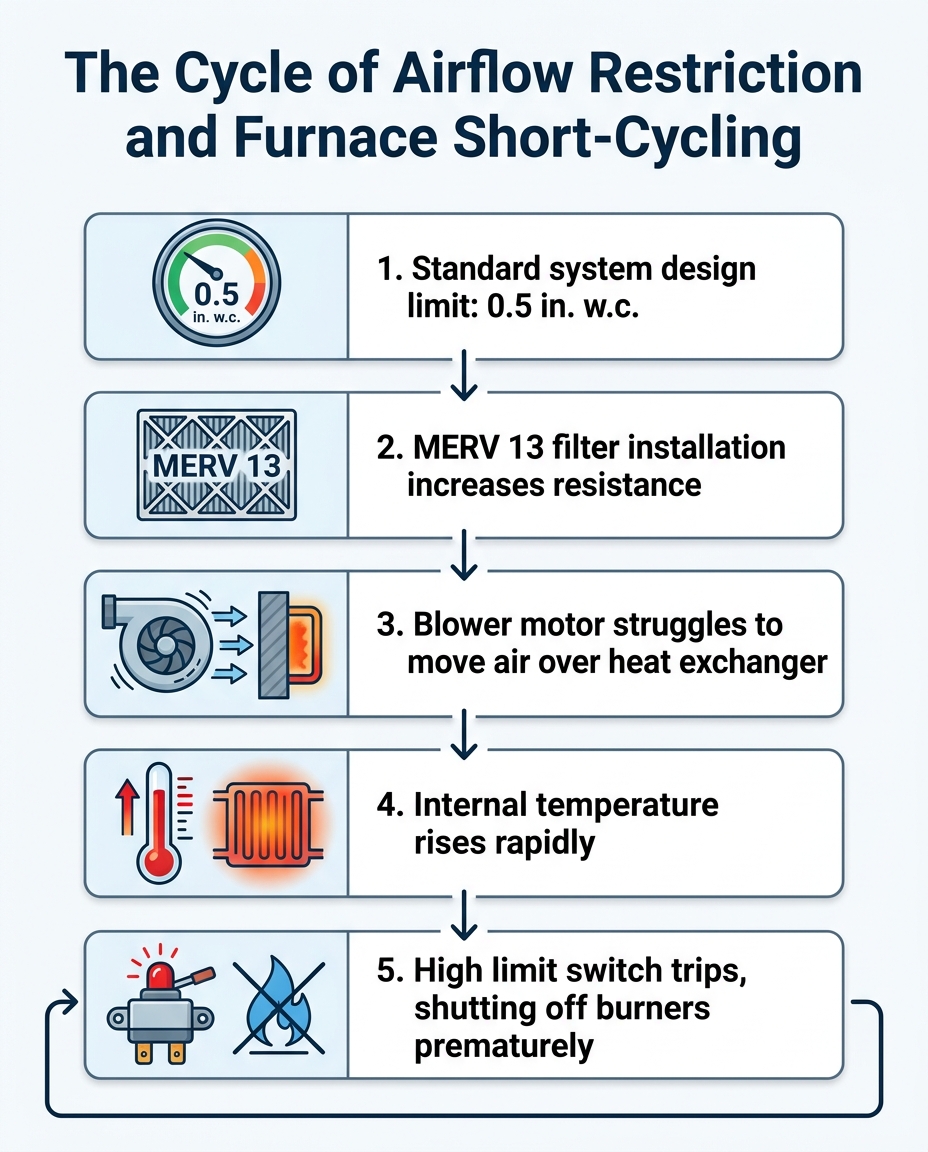
1. Initial Airflow Restriction: The dense, dust-loaded filter prevents the blower motor from pulling enough return air into the cabinet.
2. Heat Exchanger Overheating: Without sufficient cool air washing over the metal heat exchanger, the internal temperature of the furnace skyrockets well beyond safe operating parameters.
3. Safety Sensor Activation: The high limit switch—a bimetallic thermal safety sensor located near the heat exchanger—detects this unsafe internal temperature.
4. Premature Shutdown: The limit switch trips, immediately shutting off the gas valve and extinguishing the burners, even though the thermostat has not yet reached the target indoor temperature.
5. The Short Cycle Repeats: The blower continues to run to cool the cabinet down. Once the limit switch cools and resets, the burners ignite again, only to overheat and shut down a few minutes later.
This continuous on-and-off sequence is known as short-cycling. It is a direct symptom of severe static pressure issues and indicates that the furnace is operating under extreme thermal distress.
Ignoring static pressure drops and prioritizing maximum particulate capture over equipment health has severe long-term consequences. Operating an older furnace under high static pressure forces the blower motor to work significantly harder, generating excess heat within the motor windings themselves. Continuous strain accelerates wear on internal components, significantly reducing the lifespan of the heating system. The blower motor bearings degrade, the capacitor weakens, and the heat exchanger expands and contracts violently due to the extreme temperature swings of short-cycling, increasing the risk of stress cracks.
A stressed system is highly susceptible to complete failure during extreme cold weather when it is needed most. Just last winter, our team responded to a frantic call from a local homeowner on a frigid day when their heater completely stopped working. One of our technicians arrived within ten minutes to fix the heater, identifying that severe airflow restrictions had triggered a total system shutdown. We even caught a related code violation on the hot water tank while assessing the mechanical room. This type of sudden, mid-winter failure is exactly what proactive airflow management aims to avoid.
Prioritizing equipment health through proper airflow management prevents costly, sudden breakdowns. By ensuring your filter matches the system's capabilities during your September pre-heating season fall prep, you protect the mechanical integrity of the furnace. If you are unsure whether your system is already showing signs of strain, reviewing the local heating and cooling service areas can connect you with professionals who can evaluate your equipment before the deep freeze arrives.
Guessing which filter rating your system can handle is a gamble with expensive equipment. You cannot accurately determine the airflow resistance of your ductwork simply by looking at it or feeling the air at the vents. The MERV 13 vs MERV 8 airflow restriction debate is heavily dependent on the unique layout of your home's duct system.
When MJB Heating & Cooling technicians evaluate a system, we precisely measure static pressure using specialized diagnostic tools called manometers. By carefully placing test probes in the return and supply plenums, we can determine the exact resistance in the ductwork while the system is running. Highlighting technical expertise in properly measuring static pressure and matching filter MERV ratings to the specific HVAC system's blower capabilities is essential to prevent winter breakdowns. This data removes the guesswork from filter selection.
Understanding the baseline pressure allows for an informed decision on whether the system can accommodate a MERV 13 upgrade safely. If the static pressure is already hovering near the 0.5 in. w.c. limit with a standard filter, upgrading to a restrictive media is a guaranteed path to short-cycling. In some cases, if high-efficiency filtration is non-negotiable for your family's health, our technicians may recommend professional duct modifications or blower motor adjustments to safely support the added resistance.
A new, highly restrictive filter can drastically reduce airflow through your heating system. This lack of air causes the internal heat exchanger to overheat rapidly. When the temperature exceeds safe limits, the high limit switch trips, shutting down the burners prematurely while the blower continues to run, creating a continuous on-and-off short cycle.
Yes, MERV 13 filters have much tighter media weaves designed to trap microscopic particles as small as 0.3 microns. This dense construction inherently increases resistance and restricts airflow compared to lower-rated filters, which can significantly alter the total external static pressure of an older HVAC system.
High static pressure forces the blower motor to work much harder against the resistance in the ductwork. This reduces the total volume of conditioned air delivered to the living spaces, causes the internal cabinet to overheat, and accelerates mechanical wear and tear on the blower motor and heat exchanger.
Yes, if the heating system was not originally designed to handle high resistance, a high MERV filter can cause chronic overheating. Over time, this thermal stress leads to premature blower motor failure, frequent limit switch tripping, and even dangerous cracks in the metal heat exchanger.
For systems that are highly sensitive to static pressure, our team generally recommends a lower MERV filter (like a MERV 8) changed frequently. This provides much better airflow and protects equipment health better than a neglected high-efficiency filter. The MERV 13 vs MERV 8 airflow restriction difference means a standard filter keeps the system breathing easily while still keeping the internal mechanical components clean.
Balancing indoor air quality with furnace airflow limits is essential for a reliable, uninterrupted heating season. Understanding why high-MERV filters cause short-cycling empowers homeowners to make safer, more informed maintenance choices during their September pre-heating season fall prep. You do not have to sacrifice the lifespan of your furnace just to manage autumn dust.
At MJB Heating & Cooling, we believe a professional assessment ensures the right filter rating is safely matched to your system's specific mechanical capabilities. By securing a comprehensive furnace maintenance plan, you can rely on precise static pressure measurements rather than guesswork. Taking these proactive steps guarantees that understanding static pressure drops when upgrading your fall furnace filter translates directly into a warmer, safer, and more efficient home all winter long.


Our A/C stopped working on a Sunday and due to health issues, we needed to find a service company available on a Sunday. I called MJB and left a message on their emergency voice mail. Within 10 minutes Tom Buck called me to hear my description of the symptoms. He was just finishing an appointment in Wichita and would be on his way to my home on the south end of Derby. He arrived within 30 minutes! From start to finish he was the perfect example of what you could ever hope for in an HVAC tech and a human being. His evaluation of our system inside and out was as thorough as I could ever imagine and once he was done with the repair, our system is running as well or better than ever. Well worth the price for the evaluation, parts, and labor. Thank you again Tom for an awesome experience.
Our AC went out during the hottest days of the year, and they were out next day! We have been jerked around by a shoddy home warranty for years. We finally had a chance to pick our own repair people, and MJB came highly recommended. I can see why! I was impressed with the honesty and speed at which they fixed our AC unit!
Our commercial building had a lightening/electrical strike and damaged our 20 ton AC unit. No one could find us a new unit before the end of September. Imagining going all of August and September with no AC in Kansas and working inside near 100 degree temps is less than thrilling. Dale and the team at MJB called around and saved the day. They had us a new unit 5 weeks earlier than other could promise and I now have happy employees. The unit is amazingly quiet, super cold and so much more energy efficient. Thank you for being our super hero!
Came out and installed my new furnace. Was very polite and affordable. They are very acknowledgeable and I highly recommend!
Thank you very much. We had our 1st warm night in 3weeks. MJB took the time and effort to find the real problem. And the employees were kind and thoughtful and explained things very well. I cannot thank you and all of MJB. Will recommend you highly. Thanks again Marjorie Herman Oxford Kansas
We had a new system installed and I was so impressed with how quick they were in come out and install it, in the middle of a hot summer day. They were so friendly & very professional. I had a small problem with a weird sound and they came over immediately and fixed it. Love them!