.avif)





Blogs
Stay updated with our latest blog posts.
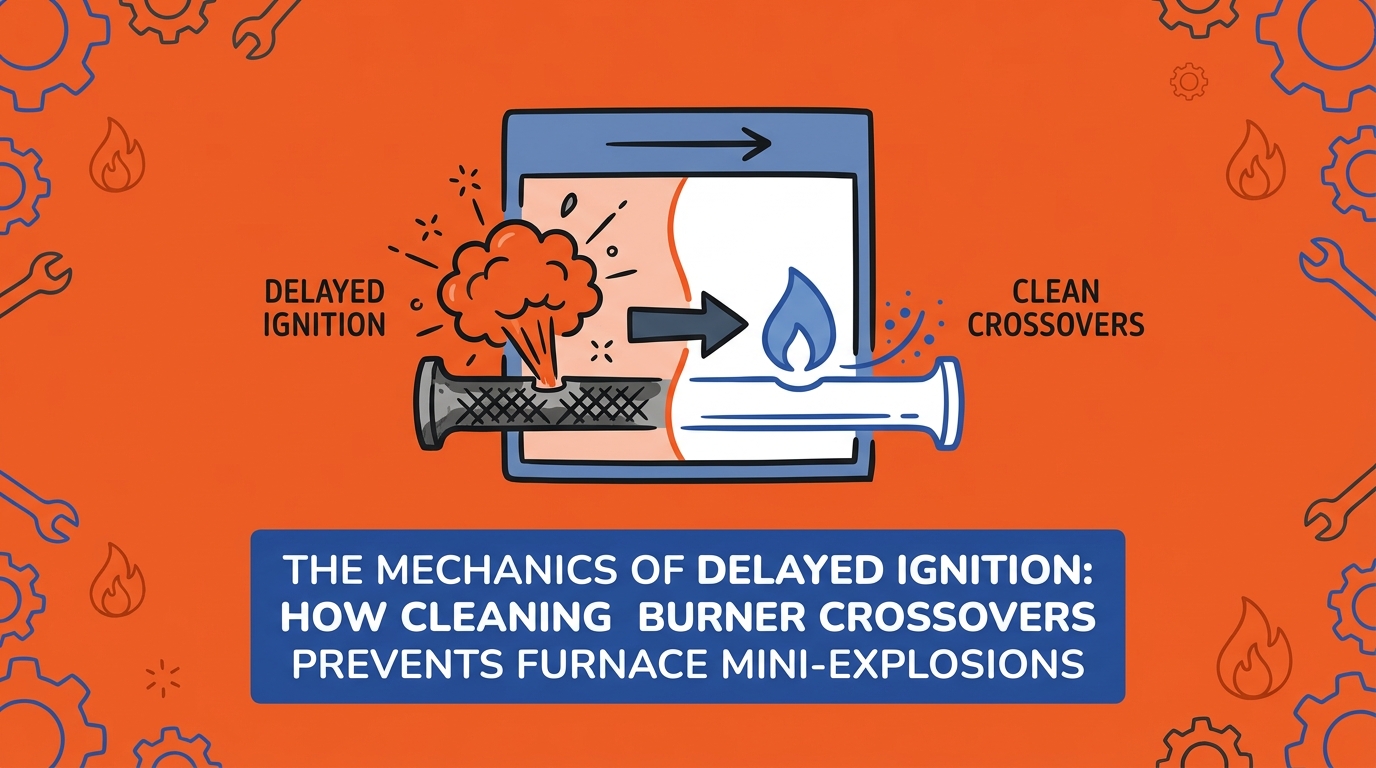

You flip the thermostat to 'heat' on the first chilly morning, expecting a gentle rush of warm air. Instead, a startling boom shakes the floorboards. That strange noise from your furnace isn't going away on its own. In fact, understanding the importance of cleaning burner crossovers to prevent mini-explosions in your HVAC system is one of the most critical things a homeowner can do before winter.
If you are dealing with these alarming sounds, it is time to seek professional HVAC services to address the root cause, or schedule a comprehensive furnace repair in Derby to secure your home.
Turning on the heating system for the first time in the fall often reveals hidden issues that developed quietly over the summer. After months of sitting idle, your furnace has to suddenly perform a highly synchronized mechanical process. Many homeowners expect a little bit of dust to burn off or a few clicks as the system wakes up. However, a delayed ignition 'bang' or 'boom' noise upon startup is not a normal operational sound.
Recognizing this concussive noise as a critical safety hazard is the first step in protecting your home and equipment. That loud boom is the sound of a small gas explosion happening inside your furnace cabinet. When you hear it, your system is telling you that the precise timing of its ignition process has failed.
Common sounds you might hear during a fall startup:
• A faint burning smell: Usually just harmless dust burning off the heat exchanger during the first cycle of the year.
• Gentle clicking: The normal sound of the thermostat communicating with the control board and the igniter warming up.
• A loud bang or boom: A severe warning sign of delayed ignition that requires immediate attention.
• Rattling metal: Often indicates a loose panel, a failing blower motor bearing, or an unbalanced fan wheel.
Addressing the root cause requires specialized diagnostic skills. Ignoring the symptom inevitably leads to complex issues requiring comprehensive repairs, as the repeated concussive force takes a heavy toll on the internal structure of your heating system.
To understand why that alarming noise happens, it helps to look inside the combustion chamber of your gas furnace. Gas furnaces rely on a series of burners to generate heat efficiently and evenly across the heat exchanger. These burners sit side-by-side in a row, much like the burners on a gas grill, but they operate with much higher precision.
The crossover channel is a narrow, precision-engineered structural bridge connecting these individual burners. You can think of it as a tiny, slotted pathway cut into the metal between each burner head. Its primary function is to carry the flame from the primary igniter to all adjacent burners sequentially.
When your thermostat calls for heat, the gas valve opens, and the primary igniter sparks or glows to light the very first burner in the row. But the other burners don't have their own igniters. Instead, the flame travels across the crossover channel from the first burner to the second, then to the third, and so on.
This ignition process must happen in mere milliseconds to prevent unburned gas from accumulating in the combustion chamber. The speed is entirely dependent on those crossover channels being perfectly clean and unobstructed.
• Clean and Unobstructed — Flame Travel Speed: Milliseconds (Instantaneous) — System Safety Outcome: Safe, smooth ignition with a quiet "whoosh" sound.
• Partially Blocked (Dust/Light Soot) — Flame Travel Speed: 1 to 2 Seconds — System Safety Outcome: Rough ignition, minor popping, decreased heating efficiency.
• Severely Blocked (Heavy Rust/Debris) — Flame Travel Speed: 3+ Seconds — System Safety Outcome: Dangerous gas buildup leading to a concussive mini-explosion.
When the system operates exactly as designed, the entire row of burners lights up almost simultaneously. You hear a soft, reassuring sound of rushing air and flame. The heat exchanger warms up evenly, and the blower fan distributes that warmth throughout your house. But when that structural bridge fails, the entire sequence breaks down.
When rust, soot, or debris blocks the crossover channels, the flame cannot travel smoothly from the igniter to the subsequent burners. This physical obstruction creates a highly dangerous environment inside the enclosed metal cabinet of your heating system.
While the first burner ignites successfully, the blocked burners continue to release raw, unburned gas into the enclosed combustion chamber. Because the flame cannot cross over to light them, this gas rapidly pools and expands inside the unit.
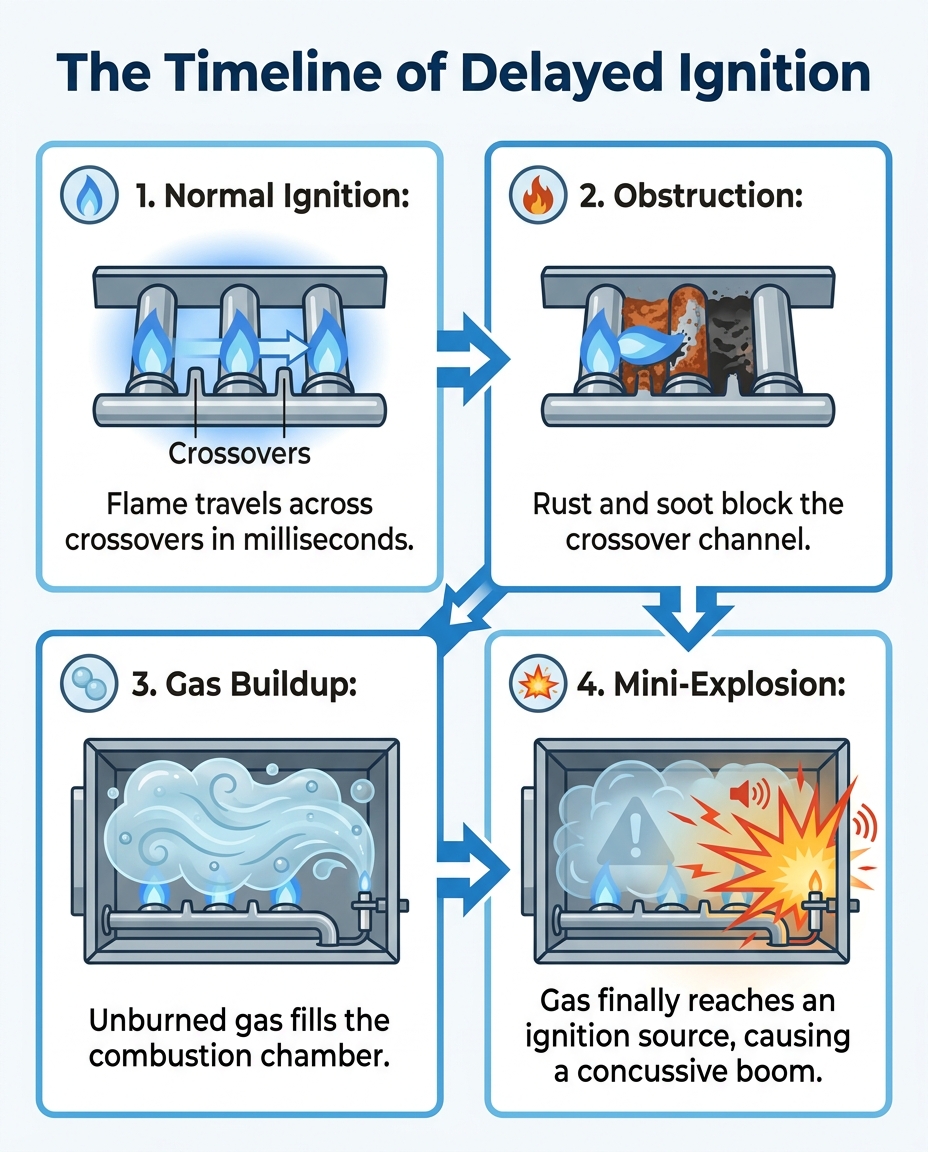
The mechanics of delayed ignition follow a strict, dangerous sequence. Understanding this process highlights exactly why a loud bang from your furnace is never something to brush off.
1. The Call for Heat: The thermostat signals the furnace to start. The draft inducer motor turns on, the igniter warms up, and the gas valve opens to feed fuel to the burner assembly.
2. Partial Ignition: The primary burner catches the flame from the igniter. However, the crossover channel leading to the next burner is blocked by heavy rust or soot.
3. Dangerous Accumulation: The unlit burners continue spraying highly combustible gas into the chamber. The gas cloud grows larger by the second, filling the space around the heat exchanger.
4. The Concussive Boom: Once the accumulating gas cloud expands far enough to finally reach the flame of the first burner, it all ignites simultaneously. This creates a concussive force—a literal mini-explosion inside your furnace.
The Hidden Danger: This concussive force is a leading cause of cracked heat exchangers. The heat exchanger is the metal shield that separates the toxic combustion gases from the clean air being blown into your home. When the force of a mini-explosion cracks this metal shield, your furnace can leak dangerous carbon monoxide directly into your living spaces. Hearing a loud bang from your furnace is the unmistakable auditory warning of this dangerous gas buildup, signaling that the structural integrity of your system is under severe stress.
You might wonder how a furnace that worked perfectly in March suddenly develops blocked crossover channels by October. The answer lies in what happens to the equipment during the long months it sits unused. Furnaces sit entirely dormant for months during the cooling season, making them highly susceptible to environmental degradation.
Kansas experiences high summer humidity which accelerates rust and corrosion on dormant furnace burners after heavy winter usage. During the winter, the furnace burns gas, which naturally produces trace amounts of moisture as a byproduct of combustion. While the furnace is running, the intense heat bakes this moisture away. But once the system shuts down for the spring and summer, the environment inside the cabinet changes drastically.
High summer humidity levels introduce heavy moisture into the basement or utility areas where the furnace is typically located. This moisture causes condensation to form on the cold metal surfaces of the burners and crossover channels. Because these components are often made of steel or cast iron, the combination of raw metal, leftover combustion residue, and high humidity creates the perfect recipe for rapid corrosion.
The off-season timeline:
• May through July: Condensation forms on the cold metal burner tubes and crossover slots.
• August: The moisture interacts with trace soot left over from winter, forming a hard, crusty layer of rust across the narrow pathways.
• September pre-heating season: By the time the first chilly night arrives, this unchecked rust has created solid physical blockages in the gas pathways, setting the stage for delayed ignition.
This is why the September pre-heating season sees such a high spike in delayed ignition events. The system simply cannot overcome the structural roadblocks that summer humidity left behind.
When homeowners learn that a little bit of rust is causing their furnace to boom, the temptation is often to open the cabinet and clean it themselves. This is an incredibly dangerous mistake. Gas appliances operate under strict safety guidelines set by organizations like the National Fire Protection Association (NFPA), and for good reason.
Attempting to clean burner crossovers with wire brushes, needles, or compressed air can alter the precise factory calibration of the gas flow. The crossover slot is not just a random gap; it is a meticulously sized orifice designed to let a very specific volume of gas pass through.
The dangers of DIY tampering include:
• Enlarging the orifice: Scrubbing with a stiff wire brush can widen the crossover channel. This allows too much gas to flow, creating a rolling, uncontrolled flame that can melt internal wiring.
• Pushing debris deeper: Using compressed air often forces rust flakes deeper into the burner tube, creating a permanent blockage that ruins the entire burner assembly.
• Damaging the gas valve: Improper handling of the burners can stress the connections at the main gas valve, leading to silent, highly combustible gas leaks in your home.
• Misaligning the igniter: Nudging the primary igniter even a fraction of an inch during cleaning can prevent it from lighting the first burner, shutting down the system entirely.
Improper handling of gas valves and burners can exacerbate gas leaks or create entirely new ignition hazards. Any suspected issue with delayed ignition should be treated as a scenario requiring emergency furnace repair, never a weekend DIY project. The risks to your home and family are simply too high to gamble with uncalibrated tools.
The only safe way to resolve blocked crossover channels and prevent furnace mini-explosions is through professional intervention. Professional technicians utilize specialized diagnostic tools to safely access and evaluate the entire burner assembly without risking damage to the delicate gas orifices.
When a technician arrives to address a delayed ignition issue, they do not just wipe down the visible surfaces. Thorough maintenance protocols ensure every crossover channel is meticulously inspected and cleaned by trained professionals. This level of detail is what separates a safe, efficient furnace from a potential hazard.
The professional remediation process includes:
• Safe disassembly: The gas supply is locked out, and the burner assembly is carefully removed from the combustion chamber.
• Precision cleaning: Technicians use specialized, non-abrasive tools designed specifically for HVAC equipment to clear rust and soot without altering the factory dimensions of the crossover slots.
• Burner alignment: The burners are reinstalled and perfectly aligned to ensure the flame travels exactly as the manufacturer intended.
• Combustion analysis: Once reassembled, the system is test-fired while the technician measures the gas pressure and monitors the ignition timing down to the millisecond.
Every single crossover channel must be meticulously inspected and cleaned to restore the millisecond-timing required for safe ignition. Routine fall tune-ups identify and remove summer rust buildup before the system is subjected to heavy winter heating loads. Enrolling in a comprehensive HVAC maintenance plan ensures these critical safety checks are performed annually without fail, giving you lasting peace of mind.
That explosive sound is a textbook symptom of delayed ignition. It happens when unburned gas accumulates inside the furnace cabinet because the burners are failing to light in sequence. Once that large pocket of pooled gas finally reaches a flame, it ignites all at once, creating a concussive boom that echoes through your ductwork. This is a mechanical failure that requires immediate professional attention.
Yes, delayed ignition is highly dangerous and should never be ignored. The concussive force of the mini-explosion puts immense stress on the metal heat exchanger. Over time, these repeated blasts can crack the heat exchanger, which risks leaking deadly carbon monoxide directly into your home's breathing air. It also poses a severe fire hazard if the flames roll out of the combustion chamber.
Only a licensed HVAC professional can safely fix delayed ignition by cleaning or replacing the obstructed burner crossovers. The technician will safely isolate the gas supply, remove the burner assembly, and use specialized tools to clear rust and soot without altering the precise factory calibration of the gas pathways. Homeowners should never attempt to clean gas components themselves due to the severe safety risks.
When dirt, soot, and rust build up on furnace burners, they disrupt the efficient flow of gas and flame. This leads to a significant loss of heating efficiency, meaning your system has to burn more fuel to produce the same amount of heat. More importantly, dirty burners block the crossover channels, leading to dangerous safety hazards like delayed ignition, flame rollout, and increased carbon monoxide production.
Yes, summer humidity is a primary driver of off-season furnace damage. During the dormant cooling months, high humidity levels cause condensation to form on the cold metal parts inside your furnace cabinet. Because the furnace isn't running to bake that moisture away, the water sits on the steel and cast-iron components, rapidly accelerating rust and corrosion on the burners and crossover channels.
Understanding the mechanics behind that alarming startup noise empowers homeowners to make safe, informed decisions about their heating systems. A loud boom is not a quirk of an aging system; it is a clear mechanical cry for help caused by summer rust and blocked crossover channels. Taking action during the September pre-heating season prevents minor rust issues from becoming dangerous mid-winter emergencies.
You rely on your heating system to keep your family safe and warm through the darkest, coldest days of the year. Don't wait for a startling mini-explosion to tell you that your system is struggling. Ensure your system is ready to operate safely and efficiently by scheduling a professional evaluation before the heavy winter weather demands peak performance from your equipment.


Our A/C stopped working on a Sunday and due to health issues, we needed to find a service company available on a Sunday. I called MJB and left a message on their emergency voice mail. Within 10 minutes Tom Buck called me to hear my description of the symptoms. He was just finishing an appointment in Wichita and would be on his way to my home on the south end of Derby. He arrived within 30 minutes! From start to finish he was the perfect example of what you could ever hope for in an HVAC tech and a human being. His evaluation of our system inside and out was as thorough as I could ever imagine and once he was done with the repair, our system is running as well or better than ever. Well worth the price for the evaluation, parts, and labor. Thank you again Tom for an awesome experience.
Our AC went out during the hottest days of the year, and they were out next day! We have been jerked around by a shoddy home warranty for years. We finally had a chance to pick our own repair people, and MJB came highly recommended. I can see why! I was impressed with the honesty and speed at which they fixed our AC unit!
Our commercial building had a lightening/electrical strike and damaged our 20 ton AC unit. No one could find us a new unit before the end of September. Imagining going all of August and September with no AC in Kansas and working inside near 100 degree temps is less than thrilling. Dale and the team at MJB called around and saved the day. They had us a new unit 5 weeks earlier than other could promise and I now have happy employees. The unit is amazingly quiet, super cold and so much more energy efficient. Thank you for being our super hero!
Came out and installed my new furnace. Was very polite and affordable. They are very acknowledgeable and I highly recommend!
Thank you very much. We had our 1st warm night in 3weeks. MJB took the time and effort to find the real problem. And the employees were kind and thoughtful and explained things very well. I cannot thank you and all of MJB. Will recommend you highly. Thanks again Marjorie Herman Oxford Kansas
We had a new system installed and I was so impressed with how quick they were in come out and install it, in the middle of a hot summer day. They were so friendly & very professional. I had a small problem with a weird sound and they came over immediately and fixed it. Love them!