


.avif)





Blogs
Stay updated with our latest blog posts.
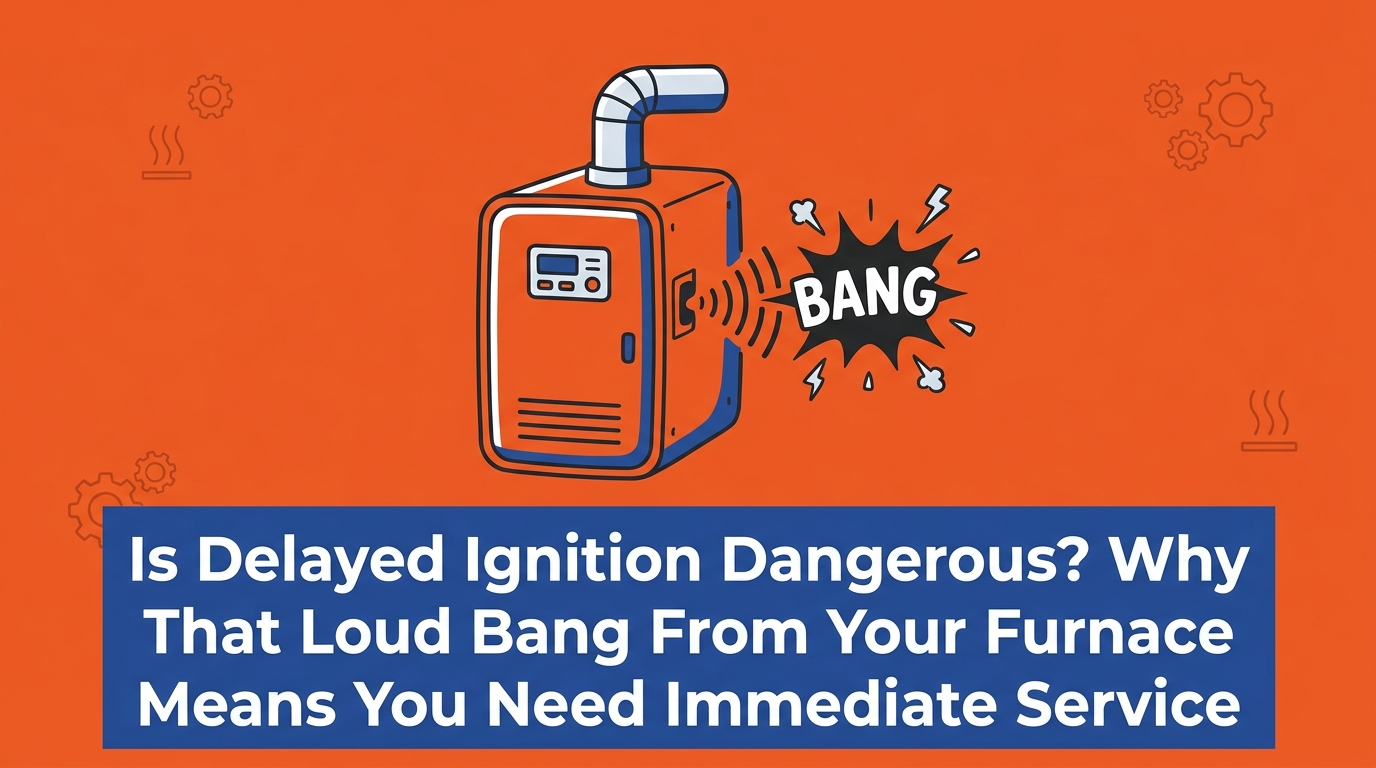

Did you just adjust your thermostat for the first chilly night of the year, only to be startled by a massive boom echoing through your ductwork? If you are wondering why that loud bang from your furnace means you need immediate service, you are not alone. Here at MJB Heating & Cooling, our team fields panicked calls every fall from homeowners who assume this sudden, violent sound is just the heating system "waking up" after a long summer slumber. However, that jarring noise is actually a severe mechanical warning sign that requires professional attention.
When this happens, you need professional heating and cooling services to diagnose the underlying safety issue, which frequently requires emergency furnace repair in Derby.
After hearing this startling noise, it is incredibly common for homeowners to immediately pull out their smartphones and search, "is delayed ignition dangerous?" Based on what we see in the field, the short answer is an absolute yes. This loud bang is not a normal operational sound, and it will not simply go away on its own. Ignoring this specific noise can lead to severe structural damage within your heating equipment and create significant safety hazards for your household. Understanding exactly what is happening inside your system is the first step to protecting your family and your property.
To understand why this sound is so alarming, you have to look at the physical mechanics of how your heating system generates warmth. The loud bang you hear is caused by a phenomenon known as delayed ignition. In a properly functioning system, gas flows into the combustion chamber and is ignited instantly by the pilot light or electronic igniter. The transition is smooth, quiet, and seamless.
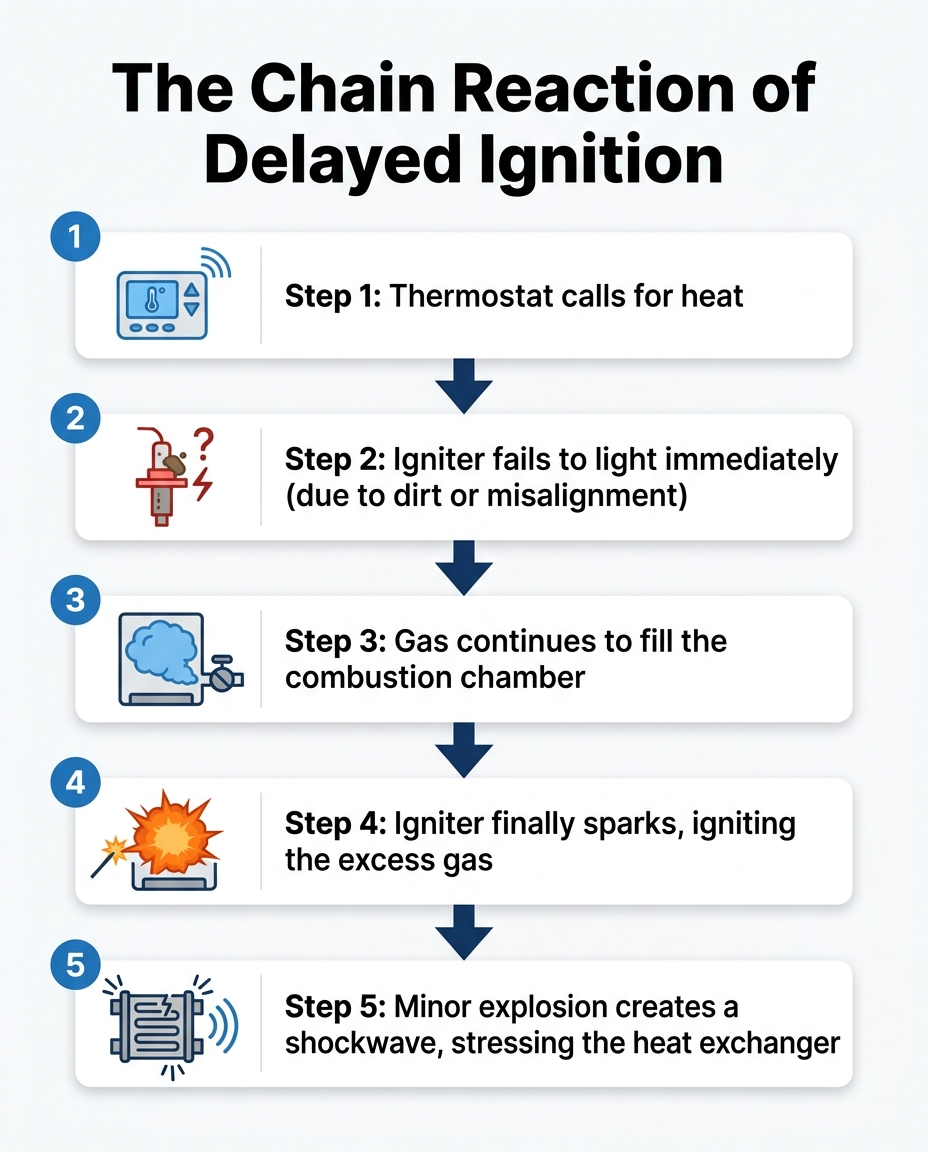
When you have delayed ignition in your heating system, that seamless process breaks down. Gas continues to flow into the combustion chamber, but the igniter fails to light it immediately. The gas pools and accumulates inside the enclosed space of the furnace. By the time the igniter finally sparks, there is a much larger volume of highly combustible gas present than the system was designed to handle at one time.
The loud bang you hear is not just a mechanical clunk; it is quite literally a minor gas explosion occurring inside your heating equipment. When the delayed spark finally catches the pooled gas, it ignites all at once. This rapid expansion of combusted gas creates a physical shockwave that slams against the internal metal components of the unit. The sound of that shockwave echoing through your sheet metal ductwork is the terrifying boom that startled you.
Our technicians typically trace this hazardous sequence of events back to several underlying mechanical failures:
• Dirty or clogged burners: Rust, dust, and debris can block the ports where gas is supposed to flow, forcing it to find alternative, delayed paths to the igniter.
• Misaligned electronic igniters: If the spark mechanism is physically bent or shifted away from the gas flow, it will take longer for the gas to reach the ignition source.
• Faulty gas valves: A sluggish or malfunctioning valve may release gas at the wrong pressure, disrupting the precise timing required for safe combustion.
• Weak pilot flames: In older systems, a pilot light that is too small or flickering will fail to ignite the main burner gas immediately.
While delayed ignition can happen at any point during the winter, we consistently find that the September pre-heating season is the absolute highest risk period. During the long, idle summer months, your heating system sits completely unused. Throughout this downtime, airborne dust, pet dander, lint, and other microscopic debris naturally settle onto the internal components, particularly the burners and the igniter assembly.
The very first time you turn on the system in early fall is when these dirty, insulated components are put to the test. A layer of summer dust is often all it takes to insulate the igniter just enough to delay the spark by a few crucial seconds. This is why that first chilly evening is notorious for startling homeowners with a sudden boom.
Addressing this issue immediately is critical because of the local climate. Here in Derby, KS, we experience freezing winter temperatures that put immense, continuous strain on heating equipment. If you ignore the loud bang in early fall, assuming it will eventually just "burn off" the dust and go away, you are setting the stage for a catastrophic failure. A sudden furnace breakdown or a mandatory system condemnation in the dead of a mid-winter freeze is highly dangerous for your home and your family. Early fall intervention prevents a minor maintenance issue from becoming a mid-winter crisis.
The noise itself is startling, but the true danger lies in what that shockwave does to the physical structure of your equipment. As HVAC professionals, we know the most critical component inside your furnace is the heat exchanger. This is a series of metal tubes or coils that separate the toxic combustion gases from the clean air that gets blown into your living spaces.
Every single time your system experiences delayed ignition, that minor gas explosion slams against the walls of the heat exchanger. In our years of inspecting compromised systems, a pattern we see often is severe metal fatigue caused by this repeated physical trauma. The constant expansion, contraction, and violent shockwaves force the metal to weaken, eventually leading to microscopic fissures and stress cracks. Once the heat exchanger is cracked, the entire system becomes a severe liability.
A cracked heat exchanger elevates delayed ignition from a frustrating mechanical nuisance to a life-safety emergency. According to safety guidelines from the Consumer Product Safety Commission (CPSC) and the Centers for Disease Control and Prevention (CDC), a compromised heat exchanger is one of the leading causes of residential carbon monoxide leaks.
Because carbon monoxide is completely odorless, colorless, and tasteless, it is virtually undetectable without specialized sensors. If the heat exchanger cracks, the toxic exhaust gases produced by the burners can escape the combustion chamber and mix directly with the warm air circulating through your vents. The loud bang of delayed ignition is often the only audible, early warning sign you will get before the structural integrity of the metal fails completely.
While a massive boom is one of the most urgent sounds your system can make, it is not the only auditory warning sign of impending trouble. Complex climate control equipment relies on dozens of moving parts, electrical relays, and pressurized chambers. Any harsh, sudden, or persistent mechanical sound warrants professional investigation.
If your HVAC system making strange noises has you concerned, cross-reference what you are hearing with these common warning signs our team encounters:
• Rapid Clicking: If you hear a rapid, repetitive clicking sound before the blower motor turns on, you likely have a failing electronic igniter or a malfunctioning flame sensor. The system is trying to spark but failing to catch.
• Loud Humming or Buzzing: When recognizing clicking or humming sounds, a deep electrical buzz usually points to a failing blower motor, a seized draft inducer, or a dying capacitor that is struggling to hold an electrical charge.
• High-Pitched Screeching: A harsh metal-on-metal screech typically indicates a failing bearing in the blower motor or a frayed, slipping blower belt in older units.
• Rattling or Clanking: Loose panels, unbalanced blower wheels, or failing motor mounts will create a persistent rattle that vibrates through the floorboards.
None of these sounds are normal. Modern heating equipment is designed to operate quietly and smoothly. When the acoustic profile of your equipment changes drastically, it is always a sign that a component is operating outside of its intended safety parameters.
If you have just experienced a terrifying boom from your vents, your immediate actions dictate the safety of your household and the survivability of your equipment. Because delayed ignition involves volatile combustible gases and the risk of carbon monoxide exposure, you must handle the situation with extreme caution.
Follow these exact steps to secure your home:
1. Turn off the system at the thermostat immediately: Do not let the unit run through another heating cycle. Switch the thermostat setting from "Heat" to "Off" to stop the call for gas.
2. Do NOT attempt DIY diagnostics or repairs: Never attempt to disassemble the burner assembly, clean the gas nozzles, adjust the gas valve pressure, or test the igniter yourself. Working with residential gas lines and combustion chambers requires specialized licensing, calibrated tools, and rigorous safety training. A mistake here can be fatal.
3. Check your carbon monoxide detectors: Ensure your home's CO detectors are plugged in, have fresh batteries, and are functioning correctly.
4. Call for emergency HVAC dispatch: Contact a licensed professional immediately to inspect the heat exchanger for stress cracks and safely clean or replace the malfunctioning burner components.
When dealing with dangerous heating failures in Derby KS area homes, our fast, reliable emergency dispatch at MJB Heating & Cooling is what separates a quick repair from a total system replacement. For example, our team recently responded to a local homeowner on a frigid winter day when their heater completely stopped working. One of our technicians arrived within ten minutes to fix the heater and even identified an unrelated code violation on the hot water tank. Fast, professional intervention keeps your property safe and ensures your equipment operates within strict safety codes.
Your heating equipment is responsible for keeping your family safe and comfortable through the harshest winter weather. Understanding why that loud bang from your furnace means you need immediate service empowers you to act quickly before a minor ignition delay turns into a cracked heat exchanger and a carbon monoxide hazard. Do not wait for the noise to go away on its own, and do not risk running a compromised system when the deep freeze arrives.
Proactive, professional service is the only way to ensure your burners are clean, your igniter is aligned, and your heat exchanger is structurally sound. If your system is startling you with loud booms, rattles, or clicks, reach out to our team at MJB Heating & Cooling to schedule an emergency repair or a comprehensive pre-season safety inspection today to restore your peace of mind.
Yes, delayed ignition is highly dangerous and should never be ignored. It causes a minor gas explosion inside the combustion chamber that creates a violent physical shockwave. Over time, these repeated shockwaves can crack the metal heat exchanger, which can allow deadly, odorless carbon monoxide gas to leak into your home's breathing air.
When your furnace sounds like it exploded, you are hearing the physical shockwave of delayed ignition. This happens when the igniter fails to light the gas immediately, allowing excess combustible gas to pool inside the chamber. When the spark finally catches, the large volume of gas ignites all at once, creating a loud boom that echoes through your ductwork.
Yes, the loud bang itself is the mechanism that eventually leads to carbon monoxide leaks. The physical force of that delayed gas explosion slams against the heat exchanger. Repeated impacts cause metal fatigue and microscopic stress cracks, which break the seal that normally keeps toxic exhaust gases separated from your indoor air circulation.
Delayed ignition is most commonly caused by dirty or clogged burners that restrict gas flow, forcing the gas to find alternative paths to the spark. It can also be caused by misaligned electronic igniters, a weak or flickering pilot light, or a malfunctioning gas valve that fails to release gas at the correct pressure during the startup cycle.
In our experience, it only takes a few extra seconds of unlit gas flow to create a startlingly loud bang. Heating systems are precisely calibrated to ignite a very specific volume of gas instantly. Even a tiny accumulation beyond that engineered threshold will expand rapidly enough upon ignition to create a physical shockwave inside the metal cabinet.
No, you should never attempt to fix delayed ignition or clean the burner assembly yourself. Diagnosing and repairing gas valves, igniters, and combustion chambers requires a licensed HVAC professional. Improperly handling these components can lead to gas leaks, severe fire hazards, or fatal carbon monoxide exposure in your home.


Our A/C stopped working on a Sunday and due to health issues, we needed to find a service company available on a Sunday. I called MJB and left a message on their emergency voice mail. Within 10 minutes Tom Buck called me to hear my description of the symptoms. He was just finishing an appointment in Wichita and would be on his way to my home on the south end of Derby. He arrived within 30 minutes! From start to finish he was the perfect example of what you could ever hope for in an HVAC tech and a human being. His evaluation of our system inside and out was as thorough as I could ever imagine and once he was done with the repair, our system is running as well or better than ever. Well worth the price for the evaluation, parts, and labor. Thank you again Tom for an awesome experience.
Our AC went out during the hottest days of the year, and they were out next day! We have been jerked around by a shoddy home warranty for years. We finally had a chance to pick our own repair people, and MJB came highly recommended. I can see why! I was impressed with the honesty and speed at which they fixed our AC unit!
Our commercial building had a lightening/electrical strike and damaged our 20 ton AC unit. No one could find us a new unit before the end of September. Imagining going all of August and September with no AC in Kansas and working inside near 100 degree temps is less than thrilling. Dale and the team at MJB called around and saved the day. They had us a new unit 5 weeks earlier than other could promise and I now have happy employees. The unit is amazingly quiet, super cold and so much more energy efficient. Thank you for being our super hero!
Came out and installed my new furnace. Was very polite and affordable. They are very acknowledgeable and I highly recommend!
Thank you very much. We had our 1st warm night in 3weeks. MJB took the time and effort to find the real problem. And the employees were kind and thoughtful and explained things very well. I cannot thank you and all of MJB. Will recommend you highly. Thanks again Marjorie Herman Oxford Kansas
We had a new system installed and I was so impressed with how quick they were in come out and install it, in the middle of a hot summer day. They were so friendly & very professional. I had a small problem with a weird sound and they came over immediately and fixed it. Love them!


