


.avif)





Blogs
Stay updated with our latest blog posts.
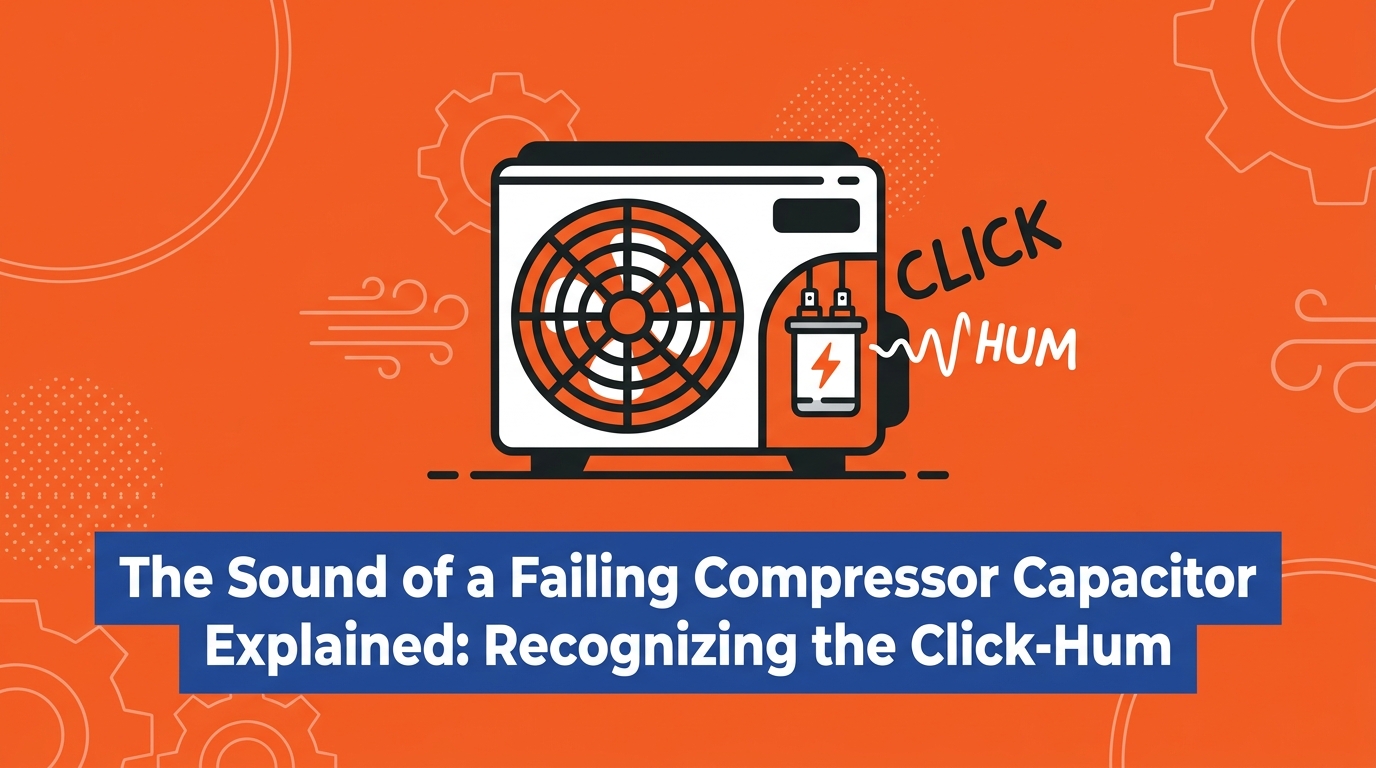

If you are standing in your yard wondering why your outdoor unit is buzzing, having the sound of a failing compressor capacitor explained can be the difference between a quick repair and a completely destroyed system. You walk past your outdoor air conditioning unit and immediately stop in your tracks because it sounds completely different than its normal, steady operation. Instead of the familiar roar of the fan and the smooth operation of the compressor, you hear a distinct, struggling noise. A wave of panic often sets in when you realize your house isn't cooling properly, the vents are blowing lukewarm air, and your outdoor equipment is clearly straining to do its job.
This is the critical decision point for any homeowner. You must decide whether to let the system run in the hopes that it will eventually kick on, or shut it off immediately at the thermostat to protect the internal components. In our years of dispatching crews to service calls across Derby, KS, the team at MJB Heating & Cooling has found that ignoring this specific noise is one of the fastest ways to ruin an otherwise healthy air conditioner. If you need immediate help with these symptoms, explore our HVAC services or schedule AC repair today.
Recognizing the early warning signs of electrical failure is your best defense against catastrophic breakdowns. Your air conditioning system is a complex network of electrical and mechanical parts that must work in perfect harmony. When one component begins to fail, it changes the auditory signature of the equipment. Homeowners who pay attention to these subtle changes can often catch a degrading part before it causes collateral damage to the expensive, heavy-duty motors inside the cabinet.
To properly diagnose what you are hearing, you need to understand the exact sequence of noises your outdoor unit is making. A failing capacitor produces a very specific auditory pattern: a distinct electrical click followed by a low, struggling hum. The "click" is the sound of the electrical contactor pulling in—this is the switch that tells the system to send power to the motors. Immediately after that click, instead of the system roaring to life, you hear a deep, vibrating hum or buzz.
While this humming occurs, you might notice that the fan blades at the top of the unit are not spinning at all, or they are twitching slightly but failing to rotate. This "click-hum" cycle is a stark contrast to the normal, smooth sound of a healthy compressor engaging. When a healthy system starts up, the click is instantly followed by a powerful whoosh of air and the steady, rhythmic sound of compression. When the capacitor fails, the system is starved of the energy it needs to start.
If you stand near the unit for ten or fifteen minutes, you will likely notice that this sound repeats. The humming will last for a short period, followed by silence, and then a few minutes later, the click and hum will happen again. The system is repeatedly trying and failing to start. This exact "click-hum" description is exactly what our local MJB Heating & Cooling technicians listen for when they first pull up to a service call. It is a dead giveaway that the electrical jump-start has failed. If you have noticed other odd sounds, you might also want to read more about an AC making strange noises to narrow down the symptoms.
• The Initial Start — Normal Operation: A single click followed instantly by a loud, smooth roar. — Failing Capacitor Operation: A distinct electrical click followed by a low, struggling hum.
• Fan Movement — Normal Operation: Fan blades spin up rapidly to full speed, blowing hot air upward. — Failing Capacitor Operation: Fan blades remain completely still or twitch slightly without spinning.
• Cycle Frequency — Normal Operation: Unit runs continuously for 15-20 minutes until the house is cool. — Failing Capacitor Operation: Unit hums for a minute, shuts off, and repeats the attempt shortly after.
• Vibration Level — Normal Operation: Steady, balanced vibration through the cabinet. — Failing Capacitor Operation: Harsh, shaking vibration during the humming phase.

To understand why your air conditioner is making that terrible noise, you have to understand the job of the capacitor. Think of a capacitor as a massive, temporary battery that stores energy. Your home's electrical grid provides a steady stream of power, but it does not provide enough instantaneous energy to get a heavy compressor motor spinning from a dead stop.
This brings us to the concept of "starting torque." The compressor motor is a heavy piece of machinery. Overcoming the physical inertia to get it moving requires a massive jolt of electricity—often three to five times more power than it needs to keep running once it is already in motion. You can compare this to a car's jump-starter, or trying to push a heavy boulder. Getting the boulder to roll takes a tremendous amount of initial effort, but once it is rolling, you only need a steady push to keep it moving. The capacitor delivers that tremendous initial effort.
Without this vital jolt of stored electricity, the compressor motor is essentially locked in place. The electrical current from your house is hitting the motor, but the motor cannot turn. This is what produces the deep humming noise; the electrical energy is being converted into heat and vibration instead of rotational movement. The motor is quite literally trapped in a stalled state.
There are generally two types of capacitors at work in your system, and understanding the difference helps clarify why the unit behaves the way it does during a failure.
• Start Capacitors: These are responsible solely for that initial, massive jolt of energy. They give the compressor the starting torque it needs and then drop out of the electrical circuit once the motor is running at roughly 75% speed.
• Run Capacitors: These stay in the circuit continuously while the system is on. They provide a steady, even flow of electrical current to maintain continuous smooth operation, helping the motor run efficiently without overheating.
• Dual Run Capacitors: Most modern residential systems use a dual run capacitor, which is a single metal cylinder that handles the electrical needs for both the compressor and the outdoor fan motor. This is why a single failure often results in both the compressor humming and the fan refusing to spin simultaneously.
Capacitors are incredibly hard-working components, but they have a distinct weakness: they are highly sensitive to extreme temperatures and thermal strain. During July peak summer heat, the environment inside your outdoor AC unit becomes incredibly hostile to electrical components. The ambient temperature inside the metal outdoor AC cabinet can soar well beyond the outside air temperature, creating an oven-like effect.
This trapped heat literally bakes the internal components of the capacitor. Inside the metal cylinder, there are layers of thin metallic foil separated by a chemical dielectric fluid or film. When exposed to extreme temperatures for prolonged periods, this fluid begins to break down, expand, and lose its ability to hold an electrical charge. In severe cases, the top of the capacitor will actually bulge outward like a swollen tin can due to the internal pressure created by the boiling dielectric fluid.
Age combined with heavy summer load accelerates this breakdown dramatically. Here in the local area, we know firsthand how Derby, KS summer heatwaves place immense thermal strain on outdoor units. The system runs longer, cycles on and off more frequently, and has less time to cool down between cycles. This relentless demand makes overheated, degraded capacitors one of the top reasons our MJB Heating & Cooling team gets emergency service calls during the hottest months of the year.
Factors that accelerate capacitor failure:
• Extreme ambient heat: Direct sunlight baking the metal cabinet while the system runs continuously.
• Age and wear: Most capacitors have a natural lifespan of 5 to 10 years, depending on usage.
• Voltage fluctuations: Power surges or inconsistent voltage from the grid can damage the internal foil layers.
• Debris and poor airflow: A dirty outdoor coil forces the compressor to run hotter, transferring excess heat directly to the electrical compartment.
The most important takeaway when you hear the click-hum sound is that you must take immediate action. The natural instinct for many homeowners is to leave the air conditioning on, hoping that the system will eventually push through the struggle and start cooling the house. This is the worst possible decision you can make for the health of your equipment.
Leaving a humming, non-starting compressor running causes it to overheat rapidly. Because the motor is locked in place but still receiving power, it draws what is known as "Locked Rotor Amps" (LRA). This is a massive surge of continuous electrical current that generates intense heat inside the motor windings. If left on, this heat will eventually melt the protective insulation around the copper wires inside the compressor, causing an electrical short. Once the compressor shorts out, it is completely ruined.
Replacing a relatively inexpensive capacitor is a minor repair that can be done quickly. Replacing a burnt-out compressor is a massive, highly invasive undertaking that often means replacing the entire outdoor unit. One local homeowner experienced the extreme end of this recently. Their system had been struggling and eventually stopped running for almost a week during a stretch of hot weather. We diagnosed the severe damage, which ultimately required us to install a completely new, efficient system to get their house nice and cool again. Catching the problem early and shutting off the power can often prevent this level of replacement. (If you do find yourself needing a full system replacement, keep in mind that upgrading to high-efficiency cooling equipment, like qualifying heat pumps, may make you eligible for federal tax credits or local utility incentives. We always recommend verifying current programs with your utility provider or a tax professional.)
The Emergency Shutdown Checklist:
1. Recognize the sound: Confirm the click-hum pattern and the lack of cold air inside.
2. Go to the thermostat: Immediately switch the cooling setting to the "OFF" position.
3. Turn off the fan: Ensure the indoor blower fan is set to "AUTO" so it does not run needlessly.
4. Call for backup: Reach out to a professional to safely test the electrical components.
Once you have safely turned off the system at the thermostat, the next step is strictly for a trained professional. Air conditioning capacitors are designed to store energy, meaning they hold lethal amounts of high-voltage electricity even when the main power to the unit is completely disconnected. Attempting to inspect or remove a capacitor without the proper training and specialized discharge tools is incredibly dangerous.
When a technician arrives, they follow a strict protocol to safely diagnose the issue. First, they pull the electrical disconnect to cut all power to the unit. Then, using an insulated tool, they safely discharge the old capacitor to neutralize the stored voltage. Once it is safe to handle, they use a specialized multimeter to test the microfarad readings. A microfarad is the unit of measurement that dictates how much charge the capacitor can hold. If the reading falls below the manufacturer's specified tolerance, the part is verified as dead and must be replaced.
Getting the problem fixed right the first time by a trained professional is essential. For instance, during a recent July scorcher, our technician Dale responded to a Derby, KS home with a stubborn AC issue. He took his time to thoroughly trace the electrical fault, ensuring it was resolved correctly the first time rather than just applying a quick patch. A professional will also inspect the compressor and the wiring for any heat damage caused by the humming phase, ensuring no secondary issues were created.
This is also why proactive care is so valuable. Routine check-ups can catch weak capacitors before they fail completely during a heatwave. Technicians measure the microfarads during standard tune-ups, allowing you to replace a degrading part on your own schedule before you are ever left without cooling. If you want to stay ahead of these electrical failures, look into a comprehensive preventative maintenance plan to keep your system running smoothly.
A bad AC capacitor typically produces a distinct "click" followed by a low, continuous humming or buzzing sound from the outdoor unit. The click is the electrical relay attempting to start the system, while the hum is the sound of the compressor motor struggling to turn without the necessary electrical jump-start. If you hear this pattern repeating every few minutes, the capacitor has likely failed.
Yes, you should turn off your air conditioner immediately at the thermostat if the outdoor unit is humming but not starting. Leaving the system running while it is struggling forces the compressor motor to draw excessive electrical current, which rapidly generates extreme heat. Shutting it off prevents the motor from overheating and suffering permanent damage.
Yes, a bad capacitor can absolutely ruin an AC compressor if the system is left turned on. Without the capacitor to start the motor, the compressor remains locked in place while absorbing high-voltage electricity. This melts the internal wire insulation and causes the compressor to burn out, turning a simple repair into a total system replacement.
In most modern residential systems, the outdoor fan will not run if the capacitor is bad because they use a "dual run" capacitor that powers both the compressor and the fan. If that single component fails, both the fan and the compressor lose their ability to start. Occasionally, you may hear the unit humming while the fan blades twitch but fail to spin.
In hot climates, an AC capacitor typically lasts between 5 and 10 years, though extreme thermal strain can shorten this lifespan. The intense ambient heat inside the metal cabinet bakes the internal chemical fluid, causing it to degrade faster during prolonged summer heatwaves. Regular maintenance can track the capacitor's degradation and replace it before it completely fails.
Hearing a strange noise from your air conditioner is never a welcome experience, but recognizing the click-hum of a failing capacitor gives you the power to act quickly. By shutting off the system at the thermostat immediately, you protect your heavy-duty compressor from dangerous overheating and permanent electrical damage. A prompt professional response from our team at MJB Heating & Cooling can save your system and get your home cooling again quickly. Do not wait for the heat to take a toll on your family's comfort; reach out to your local experts to safely diagnose the issue, replace the failing electrical components, and restore your peace of mind.


Our A/C stopped working on a Sunday and due to health issues, we needed to find a service company available on a Sunday. I called MJB and left a message on their emergency voice mail. Within 10 minutes Tom Buck called me to hear my description of the symptoms. He was just finishing an appointment in Wichita and would be on his way to my home on the south end of Derby. He arrived within 30 minutes! From start to finish he was the perfect example of what you could ever hope for in an HVAC tech and a human being. His evaluation of our system inside and out was as thorough as I could ever imagine and once he was done with the repair, our system is running as well or better than ever. Well worth the price for the evaluation, parts, and labor. Thank you again Tom for an awesome experience.
Our AC went out during the hottest days of the year, and they were out next day! We have been jerked around by a shoddy home warranty for years. We finally had a chance to pick our own repair people, and MJB came highly recommended. I can see why! I was impressed with the honesty and speed at which they fixed our AC unit!
Our commercial building had a lightening/electrical strike and damaged our 20 ton AC unit. No one could find us a new unit before the end of September. Imagining going all of August and September with no AC in Kansas and working inside near 100 degree temps is less than thrilling. Dale and the team at MJB called around and saved the day. They had us a new unit 5 weeks earlier than other could promise and I now have happy employees. The unit is amazingly quiet, super cold and so much more energy efficient. Thank you for being our super hero!
Came out and installed my new furnace. Was very polite and affordable. They are very acknowledgeable and I highly recommend!
Thank you very much. We had our 1st warm night in 3weeks. MJB took the time and effort to find the real problem. And the employees were kind and thoughtful and explained things very well. I cannot thank you and all of MJB. Will recommend you highly. Thanks again Marjorie Herman Oxford Kansas
We had a new system installed and I was so impressed with how quick they were in come out and install it, in the middle of a hot summer day. They were so friendly & very professional. I had a small problem with a weird sound and they came over immediately and fixed it. Love them!


