.avif)





Blogs
Stay updated with our latest blog posts.
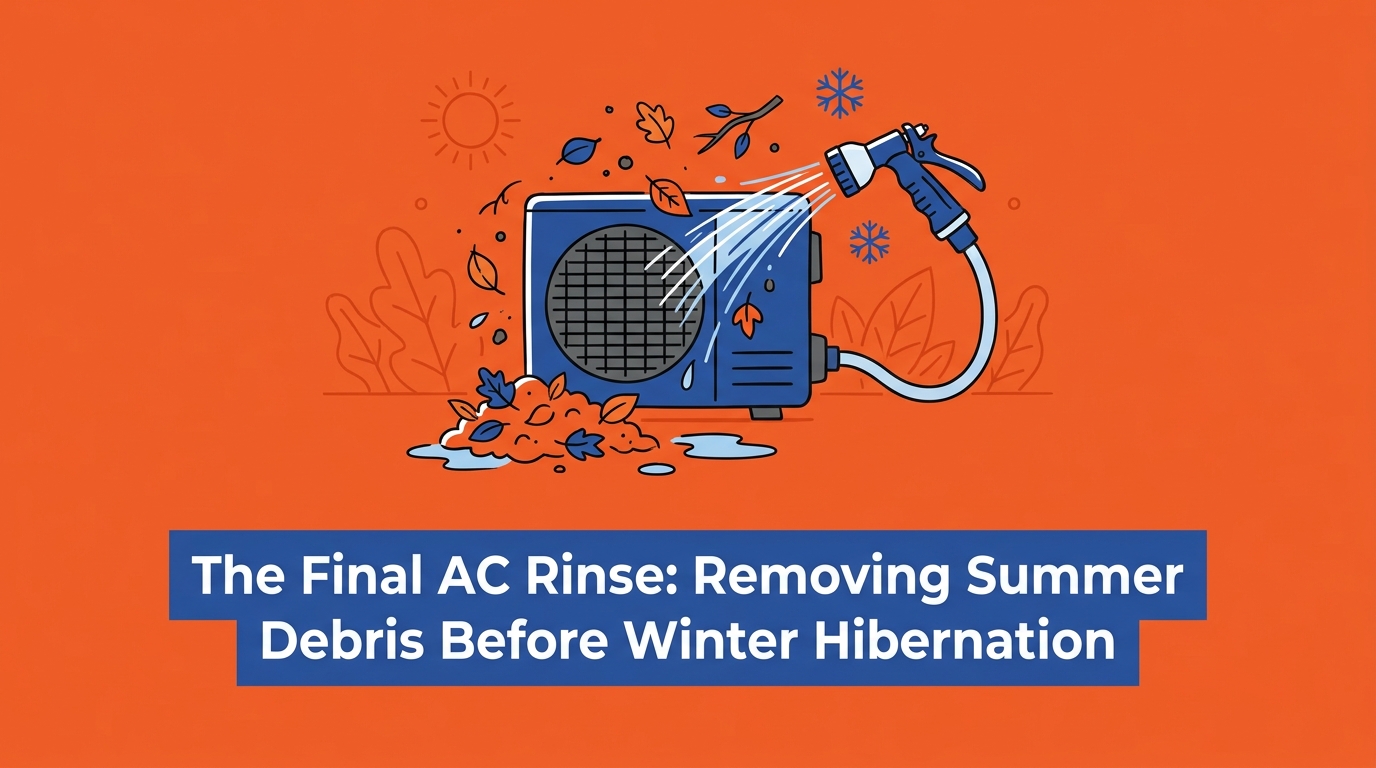

September is finally here, bringing cooler nights to the region and signaling the perfect time for The Final AC Rinse: Removing Summer Debris Before Winter Hibernation. Here at MJB Heating & Cooling, our technicians see firsthand how the intense summer heat takes a toll before your outdoor air conditioning unit slowly transitions out of its heavy daily workload. However, while the thermostat might be taking a break, the physical equipment sitting in your yard is currently enduring the aftermath of a long, punishing cooling season. Right now, your outdoor unit is likely coated in a thick, baked-on layer of yard debris, dust, and organic matter that has accumulated over the past several months.
We constantly remind our customers that this seasonal transition presents a critical decision point for homeowners. You can simply turn off the thermostat and abandon the outdoor unit to the elements, or you can take an active approach to prepare the equipment to survive the harsh winter months ahead. Simply shutting down the system leaves behind a crust of organic material that actively works against the health of your machinery. Actively preparing the unit, starting with a thorough exterior rinse, is a cornerstone of any effective HVAC maintenance plan.
Taking the time for September fall-prep is not just about keeping your yard looking tidy; it is a vital preventative measure that directly extends the lifespan of your cooling equipment. By washing away the remnants of summer before the cold weather sets in, you prevent a cascade of hidden mechanical and chemical issues that silently degrade your system while it sits dormant. A proactive rinse now ensures that when the spring heat returns, your air conditioner will be ready to perform efficiently, saving you from unexpected breakdowns and costly early replacements.
To understand why an autumn cleaning is so critical, you have to look closely at the specific types of organic matter that accumulate on outdoor units throughout the local cooling season. In our years maintaining HVAC systems, we've learned that the debris buildup is not just random dirt; it is a highly specific, layered combination of environmental elements that compound over time. For many Derby KS residential properties, our team typically sees this accumulation create a dense, restrictive barrier that chokes the system.
The buildup typically happens in three distinct phases:
• Late Spring Cottonwood Fluff: Long before the peak summer heat arrives, cottonwood trees release massive amounts of sticky, fibrous fluff. The condenser fan pulls this fine material directly into the intake vents, where it weaves itself into the aluminum fins, creating a sticky base layer that acts like a net for everything that follows.
• Weekly Lawn Clippings: Throughout the summer, routine lawn maintenance throws pulverized grass clippings against the base of the unit. The moisture in the fresh grass allows it to adhere tightly to the existing cottonwood fluff, baking into a hard, green crust under the intense July and August sun.
• Late-Summer Harvest Dust: As agricultural activity ramps up late in the season, fine harvest dust settles over Derby and surrounding service areas. This microscopic particulate matter coats the equipment, filling in the microscopic gaps between the grass and fluff, solidifying the blockage.
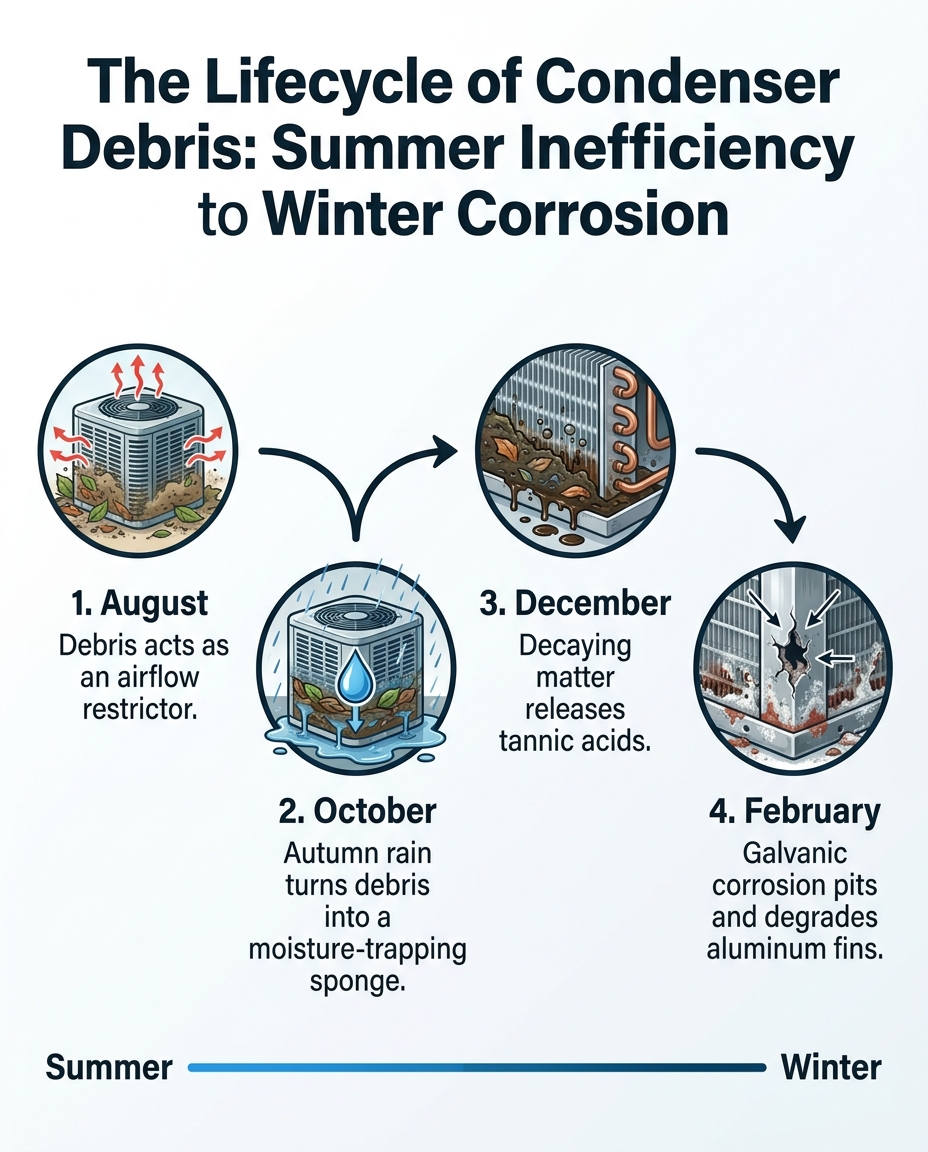
These three elements combine to create a dense, restrictive mat over the exterior fins of your air conditioner. While this mat acted as a severe airflow restrictor during the hottest days of August—forcing your compressor to work overtime just to pull in air—it poses an entirely different and far more destructive chemical threat as we move into December. The very debris that suffocated your system in the summer will soon become the catalyst for severe winter damage if left unaddressed.
The real danger of leaving summer debris on your air conditioner lies in the physical transformation this organic matter undergoes when the seasons change. During the hot, dry months, the crust of grass and dirt is primarily a mechanical nuisance, blocking airflow and reducing energy efficiency. However, when exposed to autumn rain and freezing winter precipitation, this dried debris undergoes a destructive metamorphosis.
Instead of a dry crust, the packed dirt, leaves, and grass clippings turn into a moisture-trapping sponge. When winter snowmelt and freezing rain coat the unit, this organic sponge absorbs the water and holds it directly against the unit's vital mechanical components. Rather than shedding water naturally, a dirty condenser traps freezing moisture against its delicate exterior, creating a persistent, damp environment that lasts for months.
This trapped moisture is the primary catalyst for severe equipment degradation during the dormant winter months. A clean, dry unit easily sheds snowmelt, allowing the metal components to dry quickly in the winter sun. In stark contrast, we often find that a dirty unit wrapped in a wet, organic blanket traps ice and encourages a slow, silent destruction process that goes completely unnoticed until we are called out to test the system the following spring.
The threat goes far beyond simple trapped water. As part of your September fall-prep, our team stresses the importance of understanding the concept of organic decay. When leaves, grass clippings, and twigs begin to rot, they do not just break down into harmless dirt. The decomposition process actively releases weak tannic acids into the surrounding moisture.
These naturally occurring tannic acids are highly corrosive over long periods. When this acidic mixture is trapped under a layer of winter snow, it cannot evaporate or wash away. Instead, it remains in constant, direct contact with the metal surfaces of your air conditioning unit, slowly eating away at the materials throughout the entire winter season. What starts as a simple pile of wet leaves quickly becomes a localized chemical hazard for your HVAC equipment.
To fully grasp the severity of leaving acidic, rotting debris on your system, you must look at the anatomy of the condenser coil itself. The exterior of your outdoor unit is wrapped in thousands of paper-thin aluminum fins. These fins play a critical role in heat transfer, dramatically increasing the surface area of the coil so the system can effectively exhaust hot air from your home. Because they must be incredibly thin to transfer heat efficiently, they are also incredibly fragile.
Aluminum is widely used in HVAC manufacturing because it is highly resistant to standard iron rust. However, aluminum is uniquely vulnerable to acidic pitting and galvanic corrosion. When the tannic acids from decaying Derby KS residential properties' yard waste sit against these delicate fins, a slow chemical reaction begins. We've replaced countless coils where the acid had etched into the metal, causing microscopic pitting and degrading the structural integrity of the fins.
• Clean and Rinsed — Winter Impact: Sheds snowmelt quickly; remains dry and chemically neutral. — Long-Term System Consequence: Maintains peak heat transfer efficiency; full expected lifespan.
• Coated in Organic Debris — Winter Impact: Traps acidic moisture and ice directly against the metal. — Long-Term System Consequence: Micro-leaks, crumbling fins, and eventual structural failure of the coil.
The long-term consequences of fin corrosion are severe. A pattern we see often is that as the aluminum pits and weakens, the fins become brittle and can easily crumble to the touch. Worse, if the corrosion reaches the copper tubing beneath the fins, it can cause micro-leaks that allow refrigerant to escape. This damage occurs completely silently over the winter. You will not hear it happening, and you will not see it until the system is turned back on in the spring and fails to cool your home. Preventing this costly corrosion is directly tied to the simple, proactive act of washing away the organic matter before the freezing weather arrives.
Empowering yourself to protect your equipment is a vital part of homeownership. Performing a final exterior rinse is a highly effective way to prevent winter corrosion, but our technicians strictly delineate what constitutes safe, preventative homeowner care versus what requires professional intervention. The goal of your September fall-prep rinse is strictly surface organic removal—washing away the corrosive grass and dust—not performing a mechanical tune-up or chemical cleaning.
At MJB Heating & Cooling, we believe in teaching homeowners safe, preventative care tips that genuinely extend equipment lifespan, building trust rather than gatekeeping basic maintenance. However, there is a hard line between a safe rinse and accidental damage. You must explicitly avoid using pressure washers, stiff-bristled brushes, or harsh chemical cleaners. The delicate aluminum fins we discussed earlier can be easily bent, flattened, or dissolved by aggressive cleaning methods, completely ruining the unit's ability to transfer heat.
If you discover that the summer debris is packed deeply inside the coil, or if you notice a thick layer of grime behind the fan guard that a gentle hose cannot dislodge, a simple exterior rinse is no longer sufficient. Dismantling the outer casing of the unit, applying specialized chemical foaming agents, and cleaning the interior components must be handled through professional cooling services to ensure the system is not damaged and electrical components remain safe.
1. Always cut the power first: Locate the outdoor disconnect box near the unit or flip the dedicated breaker in your main electrical panel to the "off" position before water ever touches the equipment.
2. Use a gentle shower setting: Equip your standard garden hose with a nozzle set to a soft "shower" or "mist" spray pattern. Never use a jet or stream setting.
3. Aim downward at a 45-degree angle: Spray the water from the top of the unit downward. Spraying straight into the fins or upward can drive dirt deeper into the delicate coil structures rather than washing it away.
Executing this maintenance task effectively relies entirely on proper seasonal timing. You are looking for a specific sweet spot in the calendar: the window after the heavy, daily cooling demand ends, but well before the first hard freeze hits the region. For most Derby KS residential properties, our local experience shows this window opens in mid-to-late September and closes tightly by late October.
Rinsing the unit too late in the year introduces a new set of risks. If the ambient temperature drops suddenly overnight, any residual water left inside the unit from your hose could freeze, potentially expanding and damaging sensitive mechanical components or fan blades. You must allow the unit ample time to completely air dry on a warm, sunny autumn afternoon before the evening temperatures plummet.
The preparation checklist:
• Monitor the forecast: Choose a clear, sunny day with temperatures comfortably above 60 degrees Fahrenheit to ensure rapid evaporation.
• Clear the perimeter: Before rinsing, clear the surrounding two feet of the unit from encroaching fall foliage, overgrown bushes, and dropping leaves to prevent immediate re-contamination.
• Let it breathe: Allow the unit to dry completely before considering putting any sort of protective winter cover over the top (if your manufacturer recommends one).
Addressing this simple chore now pays massive dividends later. It prevents the frustrating experience of discovering your AC not cooling properly during the first unexpected, sweltering heatwave next spring. By following the advice we give our own families, you put your equipment to bed clean, dry, and protected against the elements.
Why should I clean my AC condenser before winter?
Cleaning your condenser before winter removes accumulated summer debris like grass clippings and dirt. If left on the unit, this organic matter traps winter moisture and snowmelt against the equipment. Over time, this trapped moisture leads to severe rust and corrosion on vital mechanical components. A clean unit sheds water easily and remains dry throughout the dormant season.
How does organic debris damage AC fins?
As organic debris like leaves and grass breaks down, it releases weak tannic acids. When these acids are held against the delicate aluminum fins by trapped winter moisture, a process called galvanic corrosion begins. This corrosion silently pits and degrades the metal, eventually leading to crumbling fins, reduced efficiency, and potential refrigerant leaks.
Can I hose down my outside AC unit safely?
Yes, you can safely hose down the exterior of your unit using a standard garden hose set to a gentle shower setting. You must always turn off the electrical power at the breaker or disconnect box before starting. Aim the water downward at a 45-degree angle to wash surface debris away without bending the fragile aluminum fins.
What happens if grass gets left in the AC unit over winter?
Grass clippings left in the unit act like a sponge, absorbing and holding freezing winter precipitation directly against the condenser coil. As the grass rots, it creates an acidic, damp environment that accelerates metal degradation. This leads to a loss of structural integrity in the fins and drastically shortens the lifespan of the equipment.
Do I need to cover my air conditioner after rinsing it?
Most modern air conditioners are designed to withstand winter weather without a full cover, as full covers can trap ground moisture and encourage pest infestations. However, placing a small piece of plywood over the top fan grate can prevent heavy icicles and falling branches from damaging the interior blades. Always allow the unit to completely air dry after rinsing before placing anything over it.
As the temperatures drop across Derby KS residential properties, taking a few minutes to perform a final exterior rinse is your best defense against acidic winter decay. Washing away the accumulated grass clippings, cottonwood fluff, and harvest dust stops the destructive cycle of trapped moisture and tannic acid before it can begin. Protecting those delicate aluminum fins right now ensures that your system will deliver much better performance when the summer heat inevitably returns.
If during your inspection you notice deep-seated grime, heavily bent fins, or debris that a gentle hose cannot clear, do not attempt to dismantle the unit yourself. Reach out to the team at MJB Heating & Cooling to schedule professional cooling services to properly deep-clean the system. Securing your condenser's health today guarantees a more comfortable, efficient, and reliable home tomorrow.


Our A/C stopped working on a Sunday and due to health issues, we needed to find a service company available on a Sunday. I called MJB and left a message on their emergency voice mail. Within 10 minutes Tom Buck called me to hear my description of the symptoms. He was just finishing an appointment in Wichita and would be on his way to my home on the south end of Derby. He arrived within 30 minutes! From start to finish he was the perfect example of what you could ever hope for in an HVAC tech and a human being. His evaluation of our system inside and out was as thorough as I could ever imagine and once he was done with the repair, our system is running as well or better than ever. Well worth the price for the evaluation, parts, and labor. Thank you again Tom for an awesome experience.
Our AC went out during the hottest days of the year, and they were out next day! We have been jerked around by a shoddy home warranty for years. We finally had a chance to pick our own repair people, and MJB came highly recommended. I can see why! I was impressed with the honesty and speed at which they fixed our AC unit!
Our commercial building had a lightening/electrical strike and damaged our 20 ton AC unit. No one could find us a new unit before the end of September. Imagining going all of August and September with no AC in Kansas and working inside near 100 degree temps is less than thrilling. Dale and the team at MJB called around and saved the day. They had us a new unit 5 weeks earlier than other could promise and I now have happy employees. The unit is amazingly quiet, super cold and so much more energy efficient. Thank you for being our super hero!
Came out and installed my new furnace. Was very polite and affordable. They are very acknowledgeable and I highly recommend!
Thank you very much. We had our 1st warm night in 3weeks. MJB took the time and effort to find the real problem. And the employees were kind and thoughtful and explained things very well. I cannot thank you and all of MJB. Will recommend you highly. Thanks again Marjorie Herman Oxford Kansas
We had a new system installed and I was so impressed with how quick they were in come out and install it, in the middle of a hot summer day. They were so friendly & very professional. I had a small problem with a weird sound and they came over immediately and fixed it. Love them!