.avif)





Blogs
Stay updated with our latest blog posts.
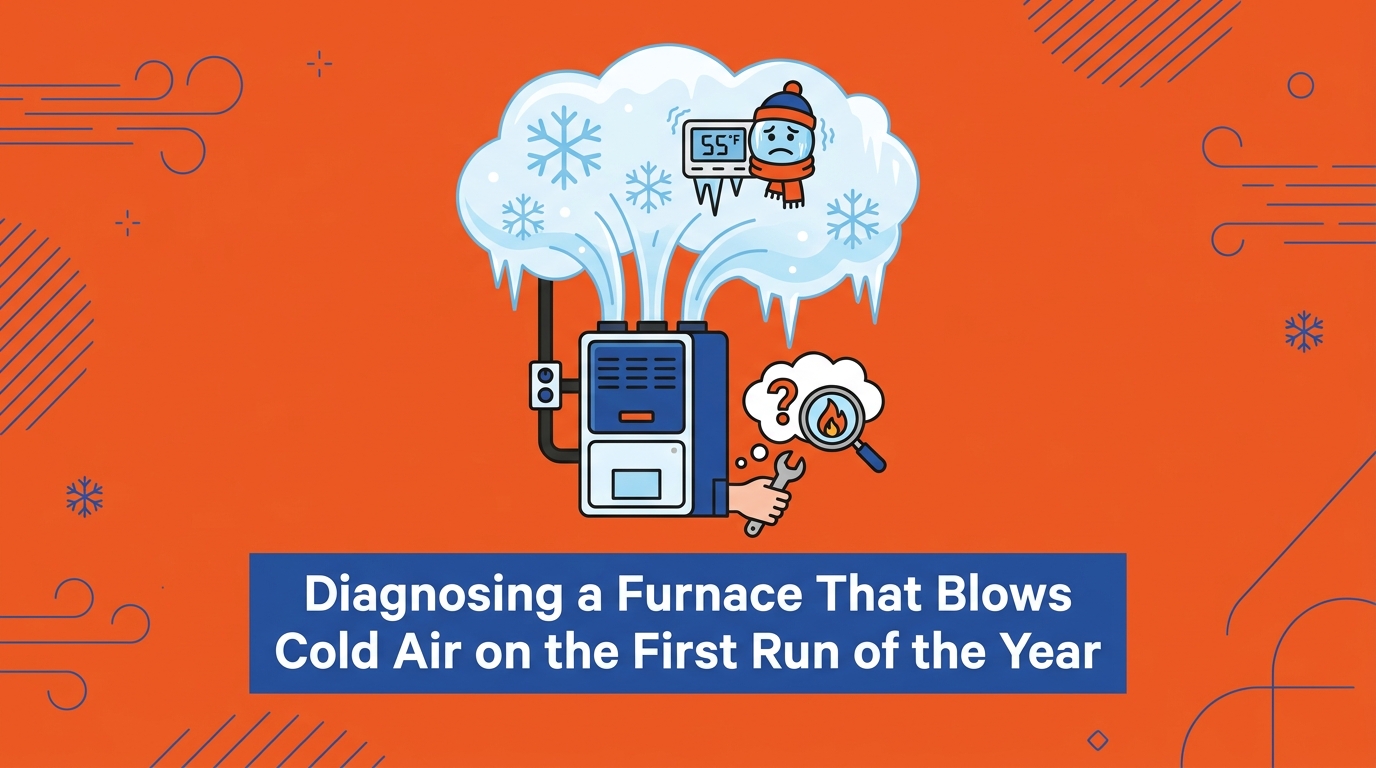

When early fall brings that first brisk September morning to the region, diagnosing a furnace that blows cold air on the first run of the year is usually the last thing you want to deal with. You wake up, notice the sharp temperature drop in your home, and walk over to the thermostat to switch it from cooling to heating for the very first time since last spring. You hear the familiar click, the system hums to life, and you wait for that comforting wave of warmth. Instead, a steady stream of unheated, cold air pushes out of your vents, leaving the house just as chilly as before.
At MJB Heating & Cooling, our team sees this early-fall panic every year. After all, your heating system has been sitting completely idle for months, and a sudden failure feels like a catastrophic breakdown right at the start of the season. However, before you assume the worst, it helps to understand that this specific symptom is often a predictable off-season issue rather than a total system failure. When a furnace sits unused throughout the long summer, dust settles, components remain stagnant, and minor disruptions in the starting sequence can easily occur.
Addressing this symptom early is the smartest move you can make as a homeowner. Catching a starting sequence failure now, while the weather is still relatively mild, gives you ample time to schedule professional HVAC services before the deep, freezing temperatures of winter arrive. The key is recognizing that your system is likely trying to protect itself from an unsafe operating condition.
To understand why the first heating cycle is so prone to hiccups, you have to look at what your equipment goes through during the off-season. While your air conditioner was working overtime to keep you cool, the internal heating components of your furnace were essentially in hibernation. During this downtime, the system is exposed to ambient humidity, airborne dust, and temperature fluctuations.
When you finally demand heat, the furnace has to wake up and execute a perfectly timed sequence of electrical and gas-related commands. If even one microscopic sensor is dirty, or if one switch fails to register the correct pressure, the system halts the warming process. It does this not because it is broken beyond repair, but because it is designed to fail safely. The cold air you feel is often just the system's fan running a safety protocol, clearing out the ductwork while refusing to ignite the gas until everything is perfectly aligned.
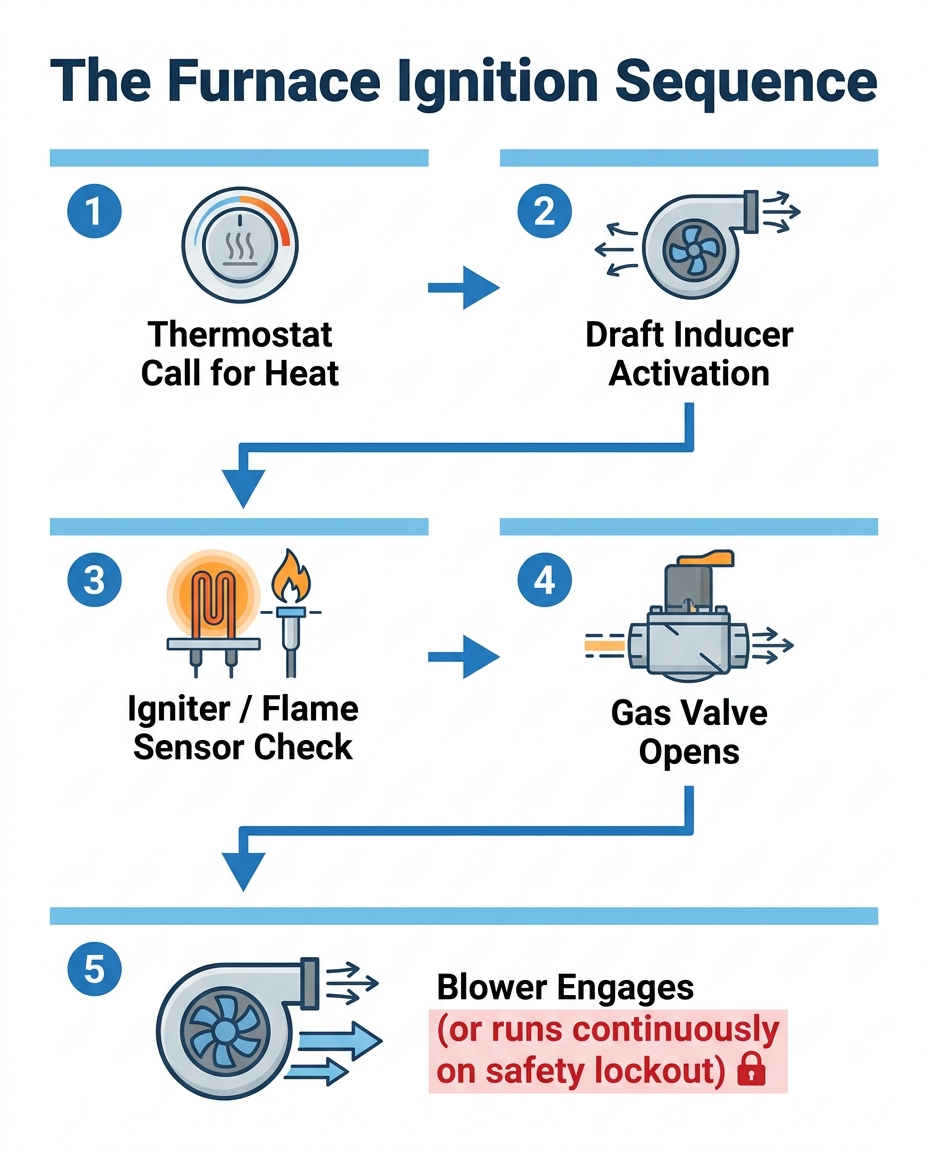
To truly understand why your vents are pushing cold air, you have to look under the hood at the technical mechanics of the furnace cycle. Modern heating systems do not simply flood the chamber with gas and strike a match. Instead, they follow a strict, step-by-step sequence of operations. If any step in this sequence fails, the system immediately shifts into a safety lockout protocol.
1. The Thermostat Call: You set the thermostat to heat, and it sends a low-voltage electrical signal to the furnace control board requesting warmth.
2. Draft Inducer Activation: Before any gas is released, the draft inducer motor turns on. This small fan pulls residual gases out of the heat exchanger and ensures there is a clear path for exhaust to vent safely out of your home.
3. The Pressure Switch Check: A pressure switch verifies that the draft inducer is actually moving air. If the venting is blocked (perhaps by a bird's nest or debris from the summer), the sequence stops right here.
4. Igniter and Sensor Sequence: Once the draft is proven, the hot surface igniter begins to glow red-hot (or the spark igniter begins clicking).
5. Gas Valve Opening: Only after the igniter is ready does the gas valve open, releasing fuel into the burners where it is ignited.
6. Flame Verification and Blower Engagement: A flame sensor confirms that a fire is actually present. If the flame is verified, the main blower fan turns on a few moments later to push the newly heated air through your home.
If the system fails to ignite the gas, or if it fails to verify that the flame is burning steadily, the control board initiates a hard safety lockout. However, it does not just shut everything down instantly. As a safety measure, the furnace continues to run the main blower fan for several minutes. This is designed to purge any unburned gas from the heat exchanger and cool down the internal components.
This is exactly why you feel cold air. The blower is doing its job to protect your home, but the burners are locked out. Knowing that your system is functioning exactly as designed to keep you safe is reassuring, even if it feels like a malfunction. When this sequence breaks down repeatedly, it is time to call for emergency furnace repair in Derby to accurately diagnose which specific step in the chain is failing.
In our years of servicing HVAC systems across the Derby area, we've found that one of the most frequent culprits behind a first-run ignition failure is directly tied to our local environment. Here in Kansas, early fall brings the beginning of the harvest season. While the agricultural activity is a staple of the region, it also significantly increases the amount of airborne particulate matter floating through the air right as early morning temperatures begin to drop.
Throughout the long summer, your furnace sits completely idle. During these months, that harvest dust, along with normal household pet dander and lint, settles over the internal components. The most sensitive of these components is the flame sensor.
The flame sensor is a thin metal rod located right in the path of the burner assembly. Its job is incredibly precise: it relies on a tiny electrical current, measured in microamps, to detect the presence of a flame. When the gas ignites, the fire actually conducts a minute amount of electricity. The sensor reads this current and tells the control board, "The fire is lit, it is safe to keep the gas flowing."
However, when a microscopic layer of summer dust coats that metal rod, the dust acts as an electrical insulator. The burners may ignite for a brief second, but the insulated sensor cannot feel the microamps. The control board assumes the fire failed to light and immediately slams the gas valve shut to prevent a dangerous gas buildup. The blower fan then kicks on to clear the chamber, resulting in cold air coming from your vents.
• Clean Sensor — Sensor Reading: Strong microamp reading — System Response: Gas valve remains open — Result at the Vent: Steady, warm airflow
• Dust-Coated Sensor — Sensor Reading: Weak or blocked reading — System Response: Gas valve shuts off immediately — Result at the Vent: Cold air blowing continuously
While it might seem tempting to open the cabinet and wipe the sensor off yourself, this is one of the most common errors in furnace repair. The metal rod is delicate, and cleaning it requires specific, non-abrasive materials. Using standard sandpaper or household cleaners leaves behind deep scratches or chemical residues that can permanently damage the sensor's ability to read microamps, turning a simple cleaning into a costly part replacement. It also requires working near the gas manifold, which should always be left to a licensed professional.
Another major reason your furnace might blow cold air on its first run actually traces back to how you maintained the system over the summer. Heavy air conditioning usage demands a lot of airflow, and if you neglected to change your air filters during those long, hot months, you might have inadvertently caused a fall heating lockout.
Your heating system relies on a steady, unrestricted volume of air moving across the heat exchanger. The heat exchanger gets incredibly hot while the burners are firing, and the airflow from the blower fan is what extracts that heat and carries it into your home. If the air filter is clogged with summer dust, pet hair, and debris, the total system airflow is severely restricted.
When airflow drops, the heat exchanger cannot shed its heat fast enough. The internal temperature of the furnace skyrockets rapidly. To prevent the metal from cracking or causing a fire hazard, the system is equipped with a high-limit switch. This safety device constantly monitors the internal temperature of the cabinet.
If the furnace overheats due to restricted airflow, the high-limit switch trips. It immediately forces the burners off, cutting the heat source. However, it leaves the blower fan running continuously to cool the overheated system down. To the homeowner, this feels exactly like the furnace is broken—the system is running loudly, but only cold air is coming out.
Resetting a limit switch without addressing the root cause is highly dangerous. If the switch is bypassed or repeatedly reset while airflow remains restricted, the heat exchanger will eventually suffer catastrophic damage. Understanding these safety mechanisms is just as vital for heating as it is when dealing with heat pump error codes and solutions. Both systems rely on strict safety parameters to protect the equipment and your home.
Beyond dust and airflow issues, secondary mechanical components often degrade quietly while the system is inactive. After months of sitting idle in a warm, humid basement or utility closet, the parts responsible for actually sparking the fire can become brittle, weak, or entirely unresponsive.
Modern furnaces typically use a hot surface igniter instead of a traditional standing pilot light. A hot surface igniter is made from a fragile material, usually silicon carbide, which glows white-hot to ignite the gas. Over years of use, this material goes through thousands of extreme expansion and contraction cycles—heating up to hundreds of degrees and then cooling back down to room temperature.
During the off-season, when the component sits cold for months, microscopic cracks that formed during the previous winter can worsen. When the thermostat finally calls for heat on that first brisk morning, the electrical current hits the damaged igniter, and the brittle material simply fails to glow. Because the igniter never reaches the required temperature, the sequence of operations is interrupted before the gas valve can even open.
For older furnace models that still rely on a standing pilot light, the off-season poses different challenges. Pilot lights are frequently extinguished during the summer, either intentionally by the homeowner to save fuel, or accidentally by a stray draft. Additionally, the tiny orifice that feeds gas to the pilot can become clogged with dust or even small spider webs over the summer. When the pilot is out, the thermocouple will not allow the main gas valve to open, resulting in a system that blows cold air while trying to clear the chamber.
Testing these components is not a simple visual check. Diagnosing a weak spark or a failing hot surface igniter requires specialized diagnostic tools, including multimeters, to test electrical resistance safely and accurately.
When you are shivering in your living room in Derby KS, it is natural to want a quick fix. You can and should check the basics: verify that your thermostat is set to "heat" and not just "fan on," and replace any dirty air filters left over from the summer. However, once you move past the thermostat and the filter, troubleshooting an ignition failure crosses a clear boundary into licensed professional territory.
Attempting DIY repairs on internal components like gas valves, high-limit switches, or delicate flame sensors carries significant risks. A furnace is a complex appliance that mixes high-voltage electricity, combustible natural gas, and carbon monoxide exhaust. A single misstep in reassembling a gas valve or calibrating a pressure switch can create a severe safety hazard for your family.
A trained technician does not just guess at the problem. They use proper multimeter testing to correctly diagnose electrical faults versus mechanical failures. They can measure the exact microamp draw of a flame sensor, test the ohms of resistance on a hot surface igniter, and use a manometer to ensure the gas pressure is calibrated exactly to the manufacturer's specifications. This level of precision provides the peace of mind that comes with knowing your system is operating safely.
Furthermore, our technicians can resolve these specific off-season buildup issues incredibly fast. Our team at MJB Heating & Cooling brings deep local expertise to the Derby metro area, offering prompt emergency dispatch to resolve sudden cold snaps quickly. For example, we recently helped a local homeowner who reached out on a frigid day when their heater completely stopped working. One of our technicians arrived promptly, efficiently repaired the heating system, and even identified and corrected an underlying code violation that the homeowner was completely unaware of. That is the kind of thorough, safe resolution we pride ourselves on delivering.
When you need reliable furnace repair in Andover or Derby, relying on a professional ensures the problem is fixed right the first time, without risking damage to your equipment.
The best way to handle a furnace that blows cold air on the first run of the year is to prevent the situation entirely. Pivoting from reactive troubleshooting to proactive maintenance is the smartest strategy for any homeowner. A comprehensive fall tune-up addresses all the off-season buildup before you ever need to turn the thermostat up.
During a professional tune-up, a technician meticulously clears away the summer harvest dust, tests all safety mechanisms, and calibrates the system for optimal performance before the deep cold arrives. This proactive approach offers significant long-term efficiency benefits. A clean, calibrated system uses less energy to heat your home, reducing strain on the blower motor and heat exchanger. Maintaining peak efficiency also ensures your system stays eligible should you explore generic federal tax credits or utility incentive programs for high-efficiency upgrades down the road.
Catching minor degradation early—like a hot surface igniter that is just starting to show microscopic cracks—prevents expensive, uncomfortable emergency calls in the middle of winter. We've seen firsthand how waiting for a total breakdown is always more stressful and disruptive than scheduling routine maintenance. Just last year, our team helped a customer who experienced the frustration of a sudden, total system failure because a minor degradation was ignored. Proactive care ensures you aren't left in the cold.
When a licensed professional performs a pre-season inspection, they follow a rigorous checklist to ensure every component is ready for the heavy winter workload. You can expect them to:
• Clean and inspect the flame sensor: Removing off-season insulation so it reads microamps perfectly.
• Test the high-limit switch: Ensuring the system will shut down safely if airflow is ever restricted.
• Measure igniter resistance: Catching brittle or failing igniters before they snap.
• Check the draft inducer and venting: Clearing out any summer debris or blockages in the exhaust pipe.
• Calibrate the gas pressure: Ensuring the burners are firing efficiently without wasting fuel or creating excess soot.
• Inspect the heat exchanger: Looking for any signs of metal fatigue or cracks that could leak carbon monoxide.
By investing in a pre-season tune-up, you take the guesswork out of that first brisk September morning. Instead of crossing your fingers and hoping for warm air, you can turn on your thermostat with total confidence.
Why is my furnace running but no heat is coming out?
This usually happens when the system enters a safety lockout. The burners fail to ignite or the system overheats, so the gas valve shuts off while the blower fan continues to run to safely clear the heat exchanger and cool the system down.
Can a dirty flame sensor cause my furnace to blow cold air?
Yes, a dirty flame sensor is one of the most common causes of this issue. A microscopic layer of dust prevents the sensor from detecting the burner flame, causing the system to shut off the gas immediately while leaving the blower fan running.
Why is my furnace blowing cold air on the very first run of the year?
Over the summer, your furnace sits idle, allowing dust to settle on delicate sensors and moving parts to stagnate. When you turn it on for the first time, these minor off-season buildups frequently interrupt the strict ignition sequence, resulting in cold air.
Can a dirty air filter from summer cause my furnace to blow cold air?
Absolutely. A clogged air filter restricts airflow, which prevents the furnace from shedding heat. This causes the internal temperature to spike, tripping the high-limit switch, which turns off the burners but leaves the fan running to cool the system.
How do professionals diagnose a furnace that won't ignite?
Professionals use specialized diagnostic tools like multimeters and manometers to test the system. They measure the microamp draw of the flame sensor, the electrical resistance of the igniter, and the precise gas pressure at the valve to pinpoint the exact failure.
Is it safe to reset a tripped furnace limit switch myself?
No, it is highly dangerous to repeatedly reset a limit switch without addressing the root cause. The switch trips to prevent severe overheating; bypassing it can lead to a cracked heat exchanger, a fire hazard, or carbon monoxide leaks.
Diagnosing a furnace that blows cold air on the first run of the year doesn't have to be a stressful ordeal. By understanding the common culprits like dirty flame sensors and tripped limit switches, you can make informed decisions about your home's comfort. Schedule a professional fall tune-up today to secure a clean, calibrated system, ensuring reliable warmth and peace of mind long before the deep winter freeze sets in.


Our A/C stopped working on a Sunday and due to health issues, we needed to find a service company available on a Sunday. I called MJB and left a message on their emergency voice mail. Within 10 minutes Tom Buck called me to hear my description of the symptoms. He was just finishing an appointment in Wichita and would be on his way to my home on the south end of Derby. He arrived within 30 minutes! From start to finish he was the perfect example of what you could ever hope for in an HVAC tech and a human being. His evaluation of our system inside and out was as thorough as I could ever imagine and once he was done with the repair, our system is running as well or better than ever. Well worth the price for the evaluation, parts, and labor. Thank you again Tom for an awesome experience.
Our AC went out during the hottest days of the year, and they were out next day! We have been jerked around by a shoddy home warranty for years. We finally had a chance to pick our own repair people, and MJB came highly recommended. I can see why! I was impressed with the honesty and speed at which they fixed our AC unit!
Our commercial building had a lightening/electrical strike and damaged our 20 ton AC unit. No one could find us a new unit before the end of September. Imagining going all of August and September with no AC in Kansas and working inside near 100 degree temps is less than thrilling. Dale and the team at MJB called around and saved the day. They had us a new unit 5 weeks earlier than other could promise and I now have happy employees. The unit is amazingly quiet, super cold and so much more energy efficient. Thank you for being our super hero!
Came out and installed my new furnace. Was very polite and affordable. They are very acknowledgeable and I highly recommend!
Thank you very much. We had our 1st warm night in 3weeks. MJB took the time and effort to find the real problem. And the employees were kind and thoughtful and explained things very well. I cannot thank you and all of MJB. Will recommend you highly. Thanks again Marjorie Herman Oxford Kansas
We had a new system installed and I was so impressed with how quick they were in come out and install it, in the middle of a hot summer day. They were so friendly & very professional. I had a small problem with a weird sound and they came over immediately and fixed it. Love them!