.avif)





Blogs
Stay updated with our latest blog posts.

Are you staring out at your yard as the leaves start to drop, asking yourself: should I cover my outdoor AC unit for the Kansas winter? It is a common question, and a completely understandable one. As fall yard cleanup begins, your instinct is naturally to protect your expensive outdoor equipment from the impending snow, ice, and freezing temperatures. After all, you cover your patio furniture, your grill, and your pool to shield them from the harsh winter weather. It seems perfectly logical to do the same for your air conditioner.
Preparing your home for changing seasons means relying on professional HVAC services and a proactive HVAC maintenance plan to protect your investment.
However, the core dilemma most homeowners face is whether to buy a tight, full-wrap winter cover or use alternative methods to shield the unit. The short answer is that while protecting your equipment from heavy falling ice is a good idea, completely sealing the unit often leads to unintended, costly damage. Wrapping your condenser in a tight tarp or custom vinyl cover creates a trap for moisture and pests, turning your protective instinct into a recipe for a broken system come spring.
We are conditioned to bundle things up against the cold. When the temperature drops, we put on heavy coats, weatherstrip our doors, and seal our windows. Applying that same logic to a large metal box sitting in the backyard feels right. But an air conditioning condenser is not a delicate piece of patio furniture. It is a highly engineered piece of mechanical equipment designed specifically to live outdoors 365 days a year. Understanding how that equipment interacts with the local climate is the first step in properly preparing your home for the colder months.
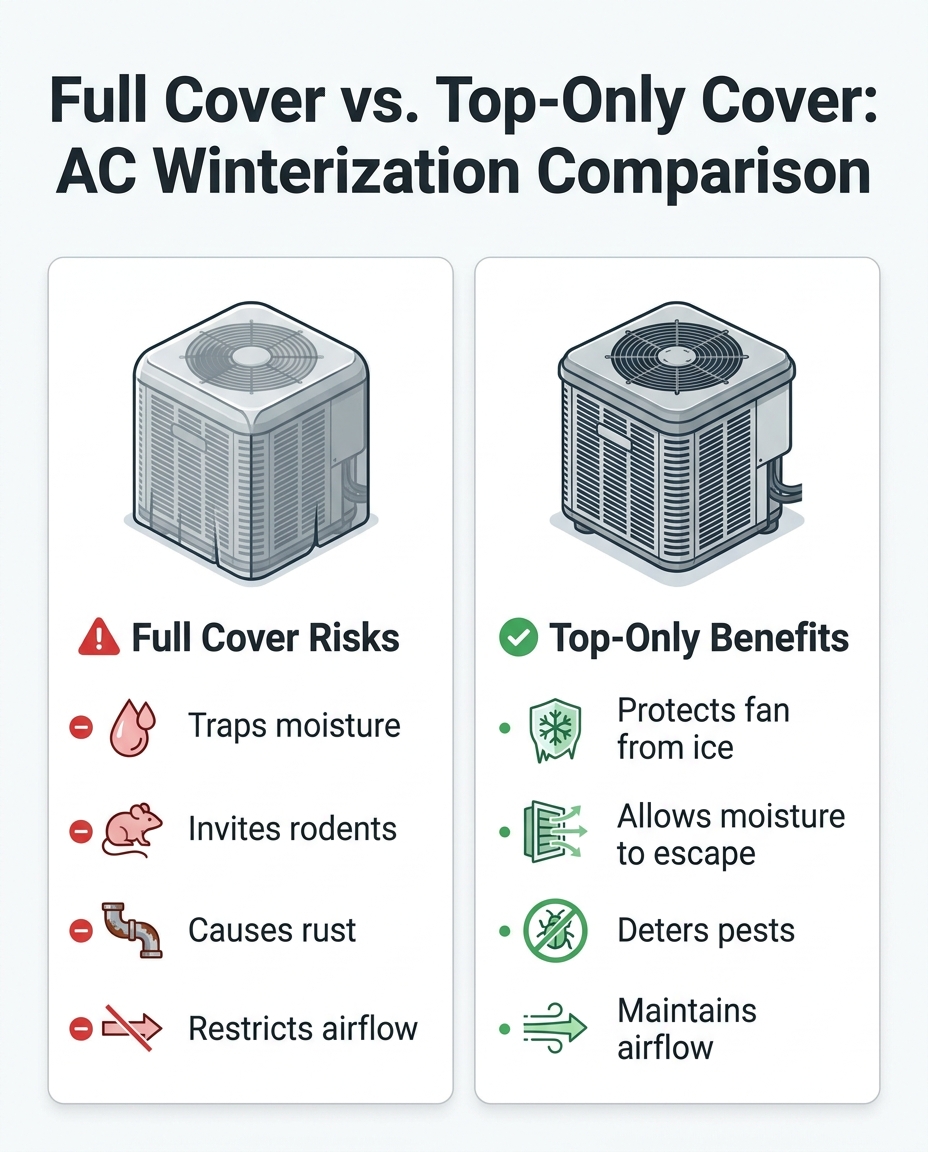
The quick fix: No, you should not fully cover your outdoor AC unit during the winter. Completely wrapping your air conditioner in a tarp or custom cover traps moisture inside and restricts necessary airflow, which can lead to severe rust and invite rodents to nest inside the equipment.
Modern outdoor AC condensers are built with highly durable metals, including aluminum, copper, and galvanized steel. These materials are specifically chosen and treated with weather-resistant finishes to withstand harsh outdoor elements, from driving rain to heavy snowfall. The internal components are sealed against moisture, and the electrical connections are housed in weather-tight compartments.
Major HVAC manufacturers universally advise against full wraps because they restrict necessary airflow. Even in the dead of winter, your unit needs to breathe. Homeowners in Derby, KS and surrounding Kansas communities often mistakenly trap moisture inside their units by trying to protect them. When you throw a heavy plastic cover over the system, you eliminate the natural ventilation that keeps the internal components dry.
Engineers design these units with open grates and louvered panels for a reason. The open design allows wind to blow through the coils, drying out any condensation or melted snow quickly. When you override this design with a cover, you are fighting the engineering of the system.
• Keeps the equipment completely dry — What a Full Cover Actually Does: Traps ground moisture inside the unit, preventing evaporation
• Protects delicate parts from the cold — What a Full Cover Actually Does: Creates a sheltered, wind-blocked environment for pests
• Prevents rust from snow exposure — What a Full Cover Actually Does: Accelerates corrosion by holding dampness against metal coils
• Keeps dirt and debris out — What a Full Cover Actually Does: Blocks natural airflow needed to keep internal wiring dry
One of the most destructive consequences of wrapping your air conditioner is the biological threat it invites. In our years serving the Derby area, the MJB Heating & Cooling team has seen firsthand how a fully covered AC unit creates an ideal, wind-blocked microclimate for pests. Underneath that heavy tarp, the environment is dark, protected from predators, and shielded from the biting winter wind. For small animals, it is the perfect winter resort.
During the September pre-heating-season transition, field mice and other small rodents actively seek warm, sheltered nesting spots before the first freeze hits. As the nights get cooler, these pests start migrating from open fields and yards toward the warmth and protection of residential structures. If they find a tightly wrapped air conditioner sitting next to your house, they will gladly move in.
Once inside, rodents do not just sleep quietly; they cause extensive damage. Field mice have a biological need to chew constantly to keep their teeth filed down. Unfortunately, the internal wiring of your air conditioner is often their chew toy of choice.
• Chewed electrical wiring: Mice will strip the insulation off high-voltage wires, creating severe short circuits that can destroy the compressor when the unit is turned on in the spring.
• Nesting debris: Rodents carry in leaves, twigs, and grass to build their nests, often packing this highly flammable material directly into the electrical contactor box.
• Corrosive waste: Animal urine is highly acidic. When mice live inside your unit all winter, their waste can eat through the delicate aluminum fins and copper tubing, causing catastrophic refrigerant leaks.
• Restricted airflow: A large nest packed against the condenser coils acts like a blanket, preventing the system from releasing heat properly and forcing it to work much harder than necessary.
Leaving the sides of the unit exposed is the best way to deter pests. Without a cover to block the wind and hide them from predators, mice are highly unlikely to choose the inside of your air conditioner as a winter home.
The local climate plays a massive role in why full covers are detrimental. Kansas experiences a highly volatile winter weather pattern. We frequently see heavy snow followed by a few days of sunshine and temperatures climbing into the 40s or 50s, only to plunge back below freezing the next night. This continuous freeze-thaw cycle is incredibly hard on wrapped equipment.
When you place a vinyl or plastic cover over your AC unit, you are essentially creating a greenhouse over a patch of damp earth or concrete. As the snow melts during a warmer afternoon, the ground moisture evaporates and rises into the unit. Because the cover is tightly wrapped, that moisture has nowhere to go. It hits the underside of the cold tarp, condenses, and drips back down onto the internal components.
When the sun goes down and temperatures plummet back below freezing, all that trapped condensation turns to ice directly on your compressor, contactor, and condenser coils. The next day, it thaws and repeats the process. Your air conditioner spends the entire winter sitting inside a damp, corrosive icebox.
This continuous cycle accelerates rust and corrosion on the condenser coils and internal parts at an alarming rate. Rust eats away at the structural integrity of the metal and dramatically reduces the efficiency of the heat transfer process. In contrast, an uncovered unit allows the Kansas wind and winter sunlight to naturally dry out internal moisture. Snow may fall on the unit, but when it melts, the moisture quickly evaporates into the open air, leaving the internal components dry and safe.

As your local Derby experts at MJB Heating & Cooling, our technicians see the real-world consequences of improper winterization every single spring. When the weather finally warms up and homeowners call us out for their annual cooling tune-ups, the units that were tightly wrapped all winter are almost always in the worst shape.
Removing a winter cover often reveals a disastrous scene. Our technicians frequently uncover massive rodent nests packed tightly around the compressor, bare wires where the insulation has been completely chewed away, and heavy rust scaling on the bottom of the cabinet. These issues turn what should be a routine tune-up into an extensive, stressful repair process before the summer heat even arrives.
This highlights the importance of professional testing and diagnostics in the spring to ensure the system has not suffered winter damage. Proper spring maintenance involves checking refrigerant levels, cleaning out any debris that blew in over the winter, and rigorously testing electrical components that may have been compromised by moisture or pests.
Sometimes, the damage uncovered in the spring is severe enough that the system cannot be salvaged, or the homeowner decides it is time to upgrade an aging unit that barely survived the winter. For instance, one local homeowner recently needed a new ductless heating & air unit installation. Our team provided a quote and completed the full installation efficiently, ensuring their home was comfortable and ready for the upcoming season. Leaving the unit to breathe over the winter results in a much cleaner, safer spring start-up and helps extend the life of your equipment so you can plan for replacements on your own timeline.
If full wraps are out of the question, how do you protect your outdoor unit from the elements? The answer is the "top-only" protection method. This approach shields the most vulnerable part of the unit—the top fan grate—from falling ice, heavy icicles dropping from the roof, and late-fall debris, without causing the moisture and pest problems associated with full covers.
Here is a safe, homeowner-friendly way to properly winterize the exterior of your AC unit:
1. Measure the top grate: Take a quick measurement of the exhaust grate on top of your air conditioner.
2. Cut a piece of plywood: Cut a sturdy piece of plywood to match those dimensions so it covers the top opening completely but does not overhang the sides significantly.
3. Secure the wood: Place the plywood over the fan grate and weigh it down with a heavy brick or secure it tightly with bungee cords hooked to the side panels.
4. Leave the sides open: Ensure that the entire perimeter of the unit remains completely exposed to the open air.
This method protects the fan blades and internal motor from heavy, damaging ice accumulation while leaving the sides completely open for critical airflow. Additionally, you should clear away leaves, branches, and organic debris from the base of the unit. Rake away any dead grass or excessive mulch built up around the bottom pan. Keeping the perimeter clear prevents moisture from pooling at ground level and ensures that any snowmelt can drain away from the equipment quickly and efficiently.
While deciding how to handle your outdoor AC unit is an important part of fall yard cleanup, it is only half of the seasonal transition. As your air conditioning system is shutting down for its long winter rest, your heating system is about to take on the heavy lifting. Broadening your focus to full-home winterization bridges the gap between cooling and heating seasons.
The most important step you can take in the fall is scheduling professional heating maintenance before the first major cold snap hits. A furnace that has sat idle for six months needs to be inspected, cleaned, and tested for safe operation. Addressing potential issues early can prevent the need for emergency furnace repair in Derby during the freezing winter months.
During this transition period, it is also a great time to evaluate the overall efficiency of your home. If your heating system is struggling, or if your AC barely made it through the summer, planning ahead gives you a massive advantage. Homeowners considering system replacements should look into generally applicable utility incentive programs or Kansas energy rebates for HVAC upgrades to maximize their investment. Be sure to verify current programs with your utility provider or a tax professional. Taking a comprehensive approach to your HVAC system in the fall ensures that your home stays warm, safe, and energy-efficient all winter long, without any unexpected breakdowns.
No, you do not need to cover your AC unit in the winter. Outdoor air conditioning condensers are specifically manufactured to withstand snow, ice, and freezing temperatures without a protective wrap. Covering the unit completely can actually trap moisture inside, leading to severe rust and corrosion on the internal components.
If you do not cover your AC unit, it will naturally ventilate and dry out after rain or snowstorms. The open design allows wind and sunlight to evaporate moisture, keeping the internal electrical components and metal coils safe from rust. Leaving it uncovered is exactly how the manufacturer intended the equipment to operate in winter.
Yes, placing a piece of plywood on top of your AC unit is an excellent way to protect it. This top-only method shields the fragile fan blades from falling icicles and heavy debris dropping from trees or gutters. Just be sure to weigh the wood down with a brick and leave the sides of the unit completely exposed.
To winterize your outside AC unit properly, start by clearing away any leaves, dirt, or debris from the base to ensure proper drainage. Next, place a sturdy piece of plywood over the top fan grate to protect it from falling ice. Finally, schedule a professional fall maintenance visit to ensure the system is safely shut down and your heating system is ready to take over.
Yes, mice are highly attracted to covered AC units during the winter. A heavy tarp or vinyl cover blocks the wind and creates a dark, sheltered microclimate that is perfect for rodents seeking a warm place to nest. Once inside, they frequently chew through electrical wiring and cause catastrophic damage to the system.
The best way to protect your AC unit from snow and ice is to use the top-only coverage method. Secure a piece of wood over the top grate to stop heavy ice from falling into the fan assembly. Do not worry about snow accumulating on the sides; the unit is built to handle it, and the snow will melt and evaporate harmlessly.
A heat pump should never be covered under any circumstances during the winter. Unlike a standard AC that sits idle in the cold, a heat pump runs all winter long to heat your home and requires massive amounts of unobstructed airflow to function. Covering a heat pump will immediately cause the system to fail and can severely damage the compressor.


Our A/C stopped working on a Sunday and due to health issues, we needed to find a service company available on a Sunday. I called MJB and left a message on their emergency voice mail. Within 10 minutes Tom Buck called me to hear my description of the symptoms. He was just finishing an appointment in Wichita and would be on his way to my home on the south end of Derby. He arrived within 30 minutes! From start to finish he was the perfect example of what you could ever hope for in an HVAC tech and a human being. His evaluation of our system inside and out was as thorough as I could ever imagine and once he was done with the repair, our system is running as well or better than ever. Well worth the price for the evaluation, parts, and labor. Thank you again Tom for an awesome experience.
Our AC went out during the hottest days of the year, and they were out next day! We have been jerked around by a shoddy home warranty for years. We finally had a chance to pick our own repair people, and MJB came highly recommended. I can see why! I was impressed with the honesty and speed at which they fixed our AC unit!
Our commercial building had a lightening/electrical strike and damaged our 20 ton AC unit. No one could find us a new unit before the end of September. Imagining going all of August and September with no AC in Kansas and working inside near 100 degree temps is less than thrilling. Dale and the team at MJB called around and saved the day. They had us a new unit 5 weeks earlier than other could promise and I now have happy employees. The unit is amazingly quiet, super cold and so much more energy efficient. Thank you for being our super hero!
Came out and installed my new furnace. Was very polite and affordable. They are very acknowledgeable and I highly recommend!
Thank you very much. We had our 1st warm night in 3weeks. MJB took the time and effort to find the real problem. And the employees were kind and thoughtful and explained things very well. I cannot thank you and all of MJB. Will recommend you highly. Thanks again Marjorie Herman Oxford Kansas
We had a new system installed and I was so impressed with how quick they were in come out and install it, in the middle of a hot summer day. They were so friendly & very professional. I had a small problem with a weird sound and they came over immediately and fixed it. Love them!