


.avif)





Blogs
Stay updated with our latest blog posts.

Before the first true freeze hits the Derby area, early fall brings a confusing mix of brisk mornings and sweltering afternoons. If you are scheduling the transition: when to shut down the AC and test the furnace, getting the timing exactly right is critical to protect your equipment. At MJB Heating & Cooling, we have seen firsthand how unpredictable Kansas weather can take a toll on residential systems. You want to ensure your heating system is ready for the cold, but you also worry about damaging your air conditioner by switching back and forth too quickly.
In our experience serving the Derby community, proactive preparation with professional HVAC services is your best defense against unexpected mechanical failures.
This time of year is defined by the September "fake fall" in Kansas. You might wake up to frost on the windshield, only to need the air conditioner running at full capacity by three in the afternoon. This weather volatility creates a unique dilemma for homeowners. Running the furnace when it is too warm outside can overheat the system, but waiting until a blizzard arrives to turn on the heat leaves you vulnerable to sudden breakdowns.
Finding the perfect window to test your furnace requires understanding exactly how your equipment reacts to outdoor temperatures. By learning the specific temperature thresholds and safe methods for preliminary testing, you can prepare your home for winter without putting unnecessary mechanical strain on your HVAC system.
The transition between summer and winter is rarely a smooth line. Our technicians at MJB Heating & Cooling know all too well that the September "fake fall" in Kansas is notorious for delivering 30-degree temperature swings within a single 24-hour period. These wild fluctuations make it incredibly difficult to manage indoor comfort using just the calendar. If you switch your system to heating mode on September 1st simply because summer is unofficially over, you will likely find your house uncomfortably hot just a few days later.
To keep your system running smoothly through these unpredictable weeks, keeping up with a regular HVAC maintenance plan ensures both the heating and cooling sides of your equipment are prepared for sudden weather shifts.
The main reason this period is so difficult to manage involves the thermal mass of your home. Your house absorbs heat from the sun throughout the day and holds onto it. This means your indoor environment reacts differently to the weather than the outdoor air does.
• Morning heat loss: Overnight, the outdoor temperature drops sharply. By 6:00 AM, the house feels chilly because the thermal mass has finally cooled down.
• Afternoon heat gain: As the sun beats down on the roof and windows, the home absorbs solar radiation. Even if the outdoor air is only 75°F, the trapped heat inside can push indoor temperatures past 80°F.
• Insulation retention: Modern insulation is designed to trap air. In the summer, it keeps cool air in. In the fall, it can trap daytime heat, forcing the AC to work hard late in the afternoon.
Because of these factors, relying on a specific date to switch your system over is a mistake. Instead, we highly recommend a strategic, temperature-based approach to manage your home's climate control safely during this volatile season.
When you decide it is time to check your heating system, you must follow one golden rule: only test the furnace when outdoor temperatures are below 65°F for safe furnace testing. This specific threshold is not arbitrary; it is based on the mechanical design and safety limits of modern heating equipment.
Running a furnace when the weather is too warm can cause significant issues within the unit. Here is exactly why the 65-degree rule matters:
1. Preventing heat exchanger overheating: Your furnace generates an immense amount of heat. If the air inside your home and the air outside are already warm, the system cannot dissipate that heat fast enough. The heat exchanger can rapidly overheat, causing excess wear on the metal components.
2. Avoiding limit switch lockouts: Modern furnaces are equipped with high-limit safety switches. If the internal temperature of the furnace gets too high, this switch will automatically shut the system down to prevent a fire. Testing the heater on a warm day will almost certainly trip this sensor, locking out the system and requiring a reset.
3. Ensuring accurate thermostat communication: Thermostats measure the ambient temperature in the room. If the room is already 72°F and you set the heat to 75°F, the furnace will only run for a minute or two before shutting off. This is called short-cycling, and it prevents you from running a thorough, accurate test of the system's longer heating cycles.
In Kansas, this 65-degree window usually only exists between 6:00 AM and 9:00 AM during early fall. Planning your preliminary test for the early morning ensures the outdoor air is cool enough to let the furnace run a full, safe cycle without triggering safety shutoffs.
During a typical fake fall day, you might be tempted to run the heater at dawn and flip the AC on by lunchtime. While modern thermostats allow you to do this, switching back and forth too rapidly carries hidden mechanical dangers. Understanding these risks is a core part of following essential HVAC maintenance tips to prolong the life of your equipment.
The primary risk involves the air conditioner's compressor and the system's refrigerant. When your AC is running, the compressor pressurizes the refrigerant to move heat out of your home. If you turn the AC off and immediately switch to heating mode, the refrigerant pressures inside the lines have not had time to equalize.
If you then switch back to cooling mode just a short while later, the compressor has to start up against highly unequal pressures. This phenomenon, known as "short-cycling" or "hard starting," puts immense electrical and mechanical strain on the compressor motor. Over time, this rapid switching can lead to premature compressor failure, which is one of the most expensive repairs in the HVAC industry.
To avoid this, we always advise our customers to implement a safe waiting period. If you run the furnace in the morning and an unexpected afternoon heatwave strikes, turn the thermostat to "Off" for at least two to three hours before turning on the air conditioner. This resting period allows the refrigerant pressures to balance out naturally. Proper seasonal maintenance also helps mitigate some of this wear and tear, ensuring that capacitors and motors are strong enough to handle the transition weeks.
Testing your heating system before winter arrives is a smart move, provided you do it safely. You can verify that the basic components are functioning without crossing into risky DIY repair territory. Always remember that outdoor temperatures must be below 65°F for safe furnace testing before you begin this process.
Follow these steps to run a preliminary check on your system:
• Verify the temperature: Check your local weather app or an outdoor thermometer. Ensure the outside air is well below the 65-degree threshold.
• Adjust the thermostat: Switch your thermostat from "Cool" or "Off" to the "Heat" position.
• Set the target: Raise the temperature setting just three to five degrees above the current room temperature. This is enough to trigger a full heating cycle without turning your house into a sauna.
• Let it run: Allow the system to operate for 10 to 15 minutes. This gives the blower motor time to push air through the ductwork and allows the heat exchanger to reach its normal operating temperature.
• Return to neutral: Once the test is complete and you have verified warm air, lower the temperature setting back down, or switch the system back to "Off" or "Auto" until you actually need it.
While the test is running, pay close attention to the sequence of operations. A gas furnace follows a very specific order when it turns on. First, you should hear a click at the thermostat. Next, the inducer motor will start up—this sounds like a small fan humming near the furnace. After a few seconds, the igniter will glow and the gas valve will open, creating a gentle "whoosh" sound as the burners light.
Finally, after the heat exchanger warms up (usually 30 to 60 seconds later), the main blower fan will kick on, pushing warm air through your vents. Note any unusual grinding, squealing, or rattling during this sequence. Verify that the air coming from the registers is actually warm. If the sequence stops at any point—for instance, if the inducer fan turns on but the burners never light—the system has detected a safety fault and requires professional attention.
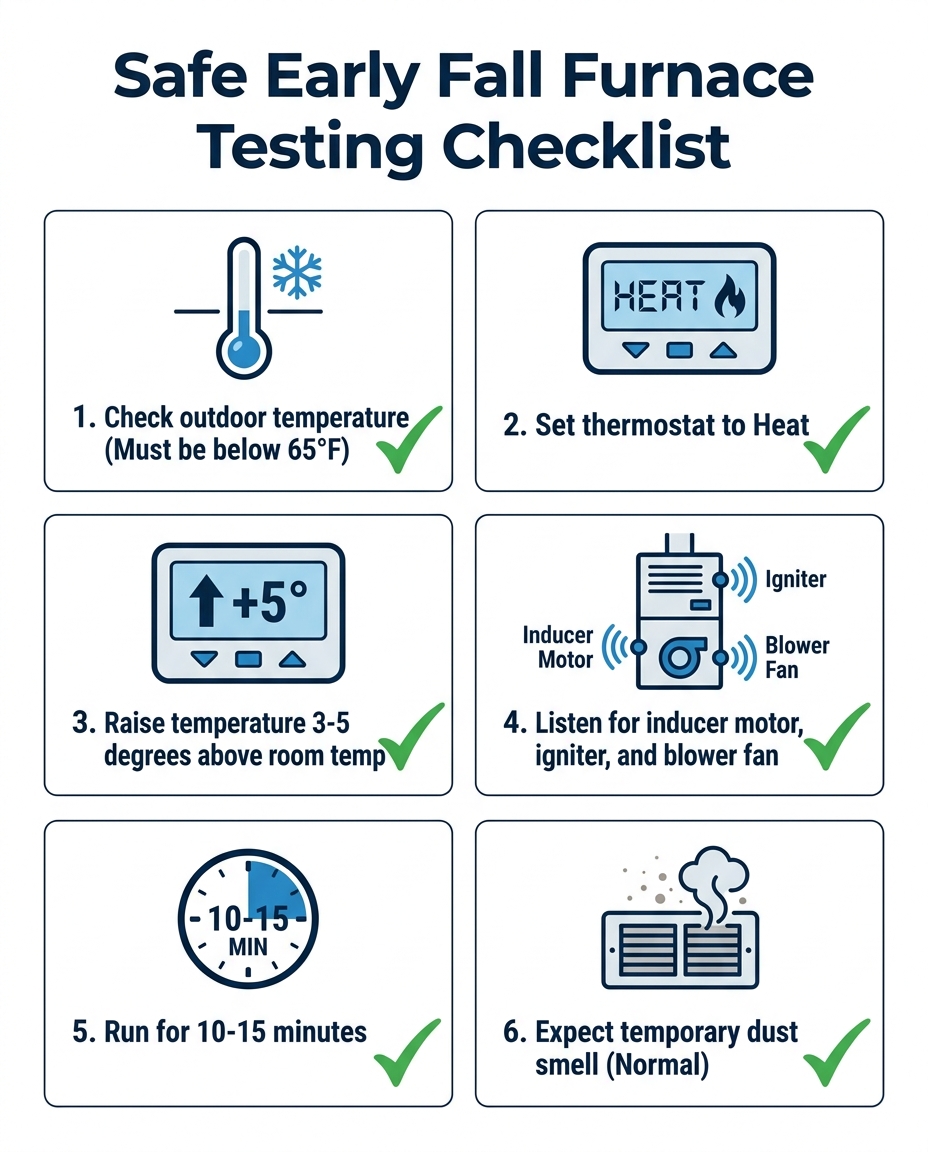
One of the most common reasons homeowners panic during their first fall furnace test is the sudden smell of burning. In most cases, a temporary "burning dust" smell is completely normal. Throughout the summer, dust and airborne particles settle on the cold heat exchanger. When the burners ignite for the first time in months, that accumulated dust burns off, sending a distinct odor through the vents. This smell should dissipate within 15 to 30 minutes.
However, not all smells are harmless. It is crucial to identify odors that indicate a serious malfunction. If you notice the smell of electrical burning, melting plastic, or a persistent rotten egg odor (which indicates a gas leak), shut the system down immediately at the thermostat and call for professional furnace repair in Derby.
Failing the preliminary test means you need to act quickly. If the system refuses to ignite, if the blower motor never starts, or if the furnace turns on and off repeatedly every two minutes, do not ignore the problem. Waiting until a genuinely freezing day arrives will only leave you in an uncomfortable and potentially dangerous situation.
We frequently see the consequences of skipping this step. For example, our team recently helped a Derby homeowner who experienced a sudden equipment failure on a frigid winter day when their heater simply refused to turn on. Our technicians arrived rapidly to inspect the system, resolved the heating issue, and even identified a hot water tank pipe that was not up to code. While fast emergency response is always our goal at MJB Heating & Cooling, catching these exact types of issues during a September "fake fall" test run prevents you from having to make that stressful, freezing-day phone call in the first place.
• Brief burning dust smell — Likely Cause: Summer dust burning off heat exchanger — Required Action: Normal; let it run for 15-30 mins
• Electrical or melting plastic smell — Likely Cause: Failing motor or melted wiring — Required Action: Shut off immediately; call professional
• System clicks but no air blows — Likely Cause: Failed igniter or blower motor issue — Required Action: Schedule repair service
• Rotten egg odor near vents — Likely Cause: Natural gas leak — Required Action: Shut off system; evacuate; call gas company/HVAC
Testing your system early does more than just give you peace of mind; it helps you avoid the dreaded "first freeze phenomenon." Every year, when the first actual freezing night hits the Derby area, local HVAC companies are completely overwhelmed with emergency no-heat calls. Homeowners who waited until the last minute to turn on their furnaces often find themselves facing long dispatch delays and cold nights.
By running your test during the September "fake fall" in Kansas, you put yourself ahead of the curve. If your preliminary test reveals a failed igniter or a struggling blower motor, you have the luxury of scheduling a repair at your convenience, rather than waiting in an emergency backlog.
Early fall is also the ideal time to explore system upgrades or efficiency improvements before the harsh winter weather sets in. If your current system is aging and struggling to keep up, you might want to look into Kansas energy rebates for HVAC upgrades. Many utility programs and federal tax credits may apply to qualifying high-efficiency installations, making early fall the perfect window to upgrade your equipment without rushing.
Working with our local Derby experts at MJB Heating & Cooling ensures you receive proactive guidance tailored to our region's unique weather patterns. Our team helps you prepare your home properly, ensuring you are never caught off guard when the season finally turns cold for good.
Successfully navigating the shift from summer to winter requires a little bit of strategy and a basic understanding of your home's heating equipment. By strictly adhering to the rule of waiting for outdoor temperatures below 65°F for safe furnace testing, you protect your system from overheating and ensure accurate results.
Remember that the temporary smells of burning dust are normal, but persistent odors or a failure to ignite are clear signs that your system needs attention. Taking control of this process early in the season gives you the ultimate peace of mind.
If your preliminary test reveals any issues, or if you simply want the reassurance of a comprehensive professional inspection, now is the time to act. Schedule your fall tune-up with your local HVAC experts today to ensure your home stays warm, safe, and comfortable all winter long.
When should I switch from AC to heat?
You should switch from AC to heat when the indoor temperature consistently drops below your comfort level, and the outdoor temperature remains cool. Avoid relying on a specific calendar date, as early fall weather fluctuates wildly. Wait for a steady pattern of cooler days before making a permanent switch to heating mode.
At what temperature should I turn on my furnace for testing?
You should only turn on your furnace for testing when the outdoor temperature is below 65°F. Testing the system when it is warmer outside can cause the heat exchanger to overheat. Early morning is usually the best time to find this safe temperature window during the early fall.
Is it bad to switch back and forth between AC and heat on the same day?
Yes, switching rapidly between AC and heat can cause significant strain on your HVAC system. If you change modes without waiting, the refrigerant pressures inside the air conditioner do not have time to equalize. Always wait at least two to three hours after turning off the AC before turning on the heat, and vice versa.
Why does my heater smell like burning dust when I first turn it on?
Your heater smells like burning dust because particles settle on the internal components during the idle summer months. When the burners ignite for the first time, this accumulated dust burns off rapidly. This is a normal process and the odor should clear out completely within 15 to 30 minutes of operation.
Can running the furnace when it's warm outside damage my system?
Running the furnace when it is warm outside can absolutely damage your system by causing it to overheat. The furnace relies on cooler return air to keep the heat exchanger at a safe operating temperature. If the air is too warm, the high-limit safety switch will trip, potentially locking out your system and requiring a professional reset.
How long should I wait between turning off the AC and turning on the heat?
You should wait at least two to three hours between turning off the air conditioner and turning on the furnace. This resting period allows the system's internal pressures to stabilize and prevents the compressor from hard-starting. Patience during this switch protects your equipment from unnecessary mechanical wear and tear.


Our A/C stopped working on a Sunday and due to health issues, we needed to find a service company available on a Sunday. I called MJB and left a message on their emergency voice mail. Within 10 minutes Tom Buck called me to hear my description of the symptoms. He was just finishing an appointment in Wichita and would be on his way to my home on the south end of Derby. He arrived within 30 minutes! From start to finish he was the perfect example of what you could ever hope for in an HVAC tech and a human being. His evaluation of our system inside and out was as thorough as I could ever imagine and once he was done with the repair, our system is running as well or better than ever. Well worth the price for the evaluation, parts, and labor. Thank you again Tom for an awesome experience.
Our AC went out during the hottest days of the year, and they were out next day! We have been jerked around by a shoddy home warranty for years. We finally had a chance to pick our own repair people, and MJB came highly recommended. I can see why! I was impressed with the honesty and speed at which they fixed our AC unit!
Our commercial building had a lightening/electrical strike and damaged our 20 ton AC unit. No one could find us a new unit before the end of September. Imagining going all of August and September with no AC in Kansas and working inside near 100 degree temps is less than thrilling. Dale and the team at MJB called around and saved the day. They had us a new unit 5 weeks earlier than other could promise and I now have happy employees. The unit is amazingly quiet, super cold and so much more energy efficient. Thank you for being our super hero!
Came out and installed my new furnace. Was very polite and affordable. They are very acknowledgeable and I highly recommend!
Thank you very much. We had our 1st warm night in 3weeks. MJB took the time and effort to find the real problem. And the employees were kind and thoughtful and explained things very well. I cannot thank you and all of MJB. Will recommend you highly. Thanks again Marjorie Herman Oxford Kansas
We had a new system installed and I was so impressed with how quick they were in come out and install it, in the middle of a hot summer day. They were so friendly & very professional. I had a small problem with a weird sound and they came over immediately and fixed it. Love them!


