.avif)





Blogs
Stay updated with our latest blog posts.
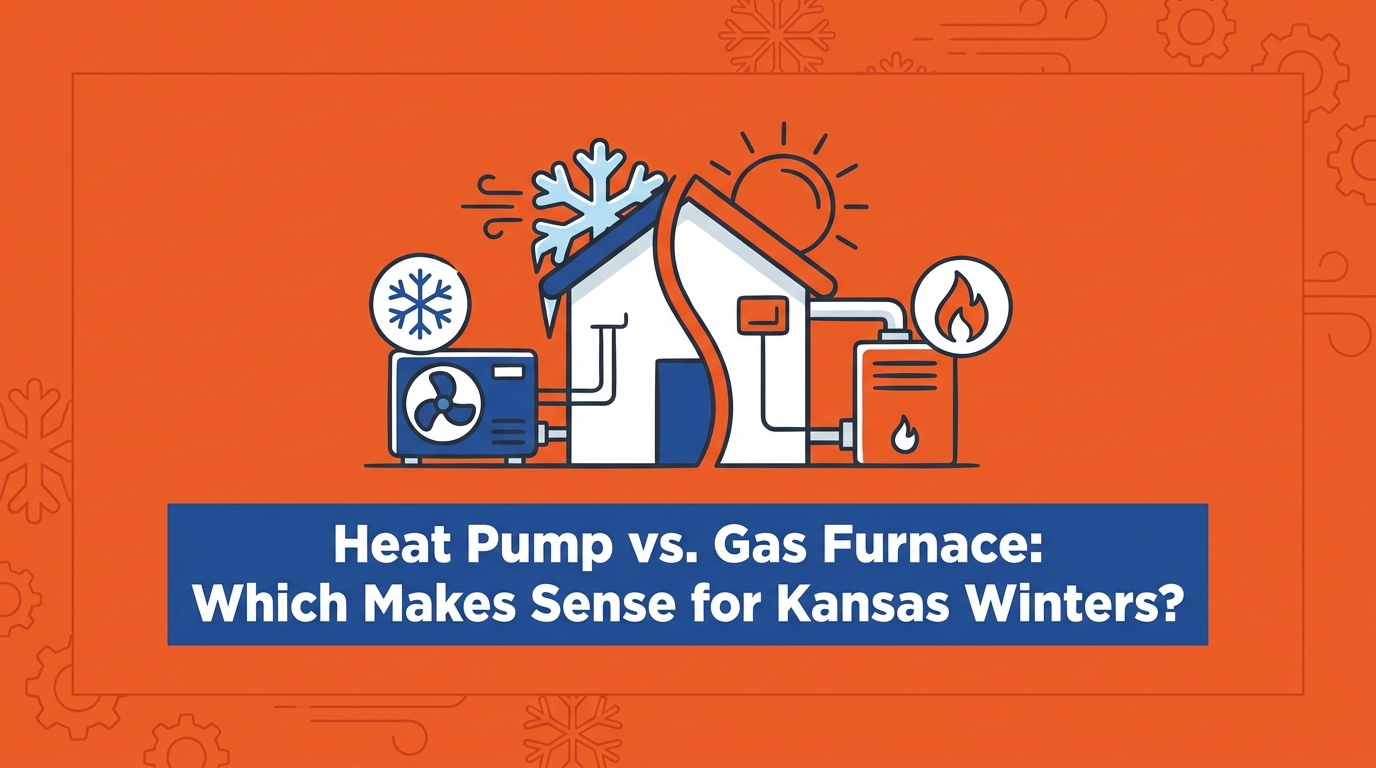

Are you weighing a Heat Pump vs. Gas Furnace: Which Makes Sense for Kansas Winters? When replacing an aging HVAC system, this is the most critical question we hear homeowners ask before the freezing temperatures arrive. Kansas weather is notoriously unpredictable. A heating system here must be versatile enough to handle mild autumn afternoons and powerful enough to survive brutal, sub-zero winter freezes. If your current heater is struggling, you are likely standing at a crossroads: do you stick with the traditional gas combustion you already know, or do you embrace high-efficiency electric heat pump technology?
In our years of helping Sedgwick County homeowners prepare for winter, our team at MJB Heating & Cooling has found that making this choice during the September pre-heating season transition is crucial. Waiting until your furnace fails on a freezing night severely limits your options and forces a rushed decision. By comparing these systems side-by-side right now, you can find a clear path forward for your home. Whether you prioritize rapid heating, long-term energy savings, or a hybrid approach, understanding how these systems operate in our specific climate is the first step. If you need guidance on upgrading your system before the cold sets in, exploring professional HVAC services ensures your home is equipped to handle whatever the season brings.
To make an informed decision, you need to understand how each system actually generates heat and where their operational limits lie. In our service area throughout Derby, KS and surrounding Sedgwick County, we experience wild temperature swings—mild fall days can rapidly drop to bitter cold nights in a matter of hours. Your heating system has to react to these shifts efficiently.
Traditional gas furnaces generate heat through combustion. They burn natural gas to create a flame, which heats a heat exchanger. The system's blower then pushes air over this hot metal and distributes it throughout your home. Because this process relies on burning fuel, a gas furnace offers a consistent, powerful heating capacity regardless of how cold it gets outside.
Heat pumps operate entirely differently. Instead of generating heat, they transfer it. Even in cold weather, ambient heat exists in the outside air. A heat pump extracts this thermal energy, compresses it to raise the temperature, and moves it inside. However, pulling heat from the air becomes progressively harder as the temperature drops below freezing.
• Heating Method — Gas Furnace: Combusts fuel to generate original heat. — Cold-Climate Heat Pump: Transfers existing ambient heat from outdoors.
• Cold Weather Limit — Gas Furnace: Unaffected by outdoor temperatures. — Cold-Climate Heat Pump: Maintains efficiency down to sub-zero temperatures (modern models).
• Energy Source — Gas Furnace: Natural gas or propane. — Cold-Climate Heat Pump: 100% electricity.
• Sizing Importance — Gas Furnace: Requires precise sizing to prevent short-cycling. — Cold-Climate Heat Pump: Critical for balancing summer cooling and winter heating loads.
Modern cold-climate heat pumps are a massive leap forward from the older models that used to struggle in the Midwest. Today's advanced technology allows them to operate efficiently even at sub-zero temperatures. However, our installation technicians frequently see the consequences of poorly sized units. Properly sizing either system is critical for maximizing efficiency and lifespan in our regional climate. If you are considering an electric upgrade, professional heat pump installation ensures the unit is perfectly matched to your home's exact square footage and insulation levels.
Beyond technical specifications, our team always reminds customers about the psychological comfort factor. Heat pumps and gas furnaces physically feel different when they operate, and understanding this difference is vital for homeowners in Derby, KS and surrounding Sedgwick County.
The traditional "blast of heat": If you grew up with a gas furnace, you are accustomed to supply air that is significantly hotter than your room temperature—often blowing out of the vents at 120°F or higher. This creates a rapid, intense warming effect. The furnace turns on, blasts the house with hot air until the thermostat is satisfied, and then shuts off.
The steady, consistent warmth: A heat pump delivers a much steadier, lower-temperature heat. The air coming from your vents might be closer to 90°F or 95°F. Because this is lower than your body temperature (98.6°F), the moving air can occasionally feel cool to the touch, leading to the common misconception that the heat pump is "blowing cold air." In reality, it is simply delivering heat closer to the room's set temperature.
• Gas Furnace Comfort Profile: Fast recovery times, intense heat bursts, noticeable on/off cycles, and slightly drier indoor air.
• Heat Pump Comfort Profile: Continuous operation, even temperature distribution, fewer cold spots, and gentler airflow.
Neither approach is wrong, but personal preference matters. If you prefer walking into a house and feeling an immediate wall of hot air, a gas furnace aligns with your expectations. If you prefer a home that stays at a constant, unvarying temperature without sudden drafts, our team often recommends a heat pump as an excellent choice.
Upgrading your heating system is a major investment, and it helps to weigh the initial installation requirements against the long-term operational efficiency. Making this decision during the September pre-heating season transition gives you time to research tax incentives and utility rebates before peak demand hits.
Pros:
• Exceptional efficiency: Heat pumps transfer heat rather than creating it, allowing them to produce significantly more energy than they consume.
• Two-in-one system: A heat pump provides both winter heating and summer cooling, effectively replacing your air conditioner as well.
• Incentive eligibility: Federal tax credits and utility incentive programs frequently apply to qualifying high-efficiency heat pump installations, making them a highly compelling upgrade.
Cons:
• Initial investment: The upfront investment for a high-efficiency heat pump is generally higher than a standard gas furnace.
• Electrical requirements: Older homes may require an electrical panel upgrade to support the new system.
Pros:
• Lower initial barrier: Standard gas furnaces typically require a lower upfront investment, especially if your home already has existing, safe gas lines in place.
• Familiar infrastructure: Replacing an old gas furnace with a new one is often a straightforward, one-to-one swap.
Cons:
• Fossil fuel reliance: You remain tied to fluctuating natural gas prices.
• Single function: A furnace only heats; you will still need a separate air conditioning unit for the summer months.
Always verify current generic rebate programs with your utility provider or a tax professional, as these incentives can dramatically shift the long-term value of your chosen system.
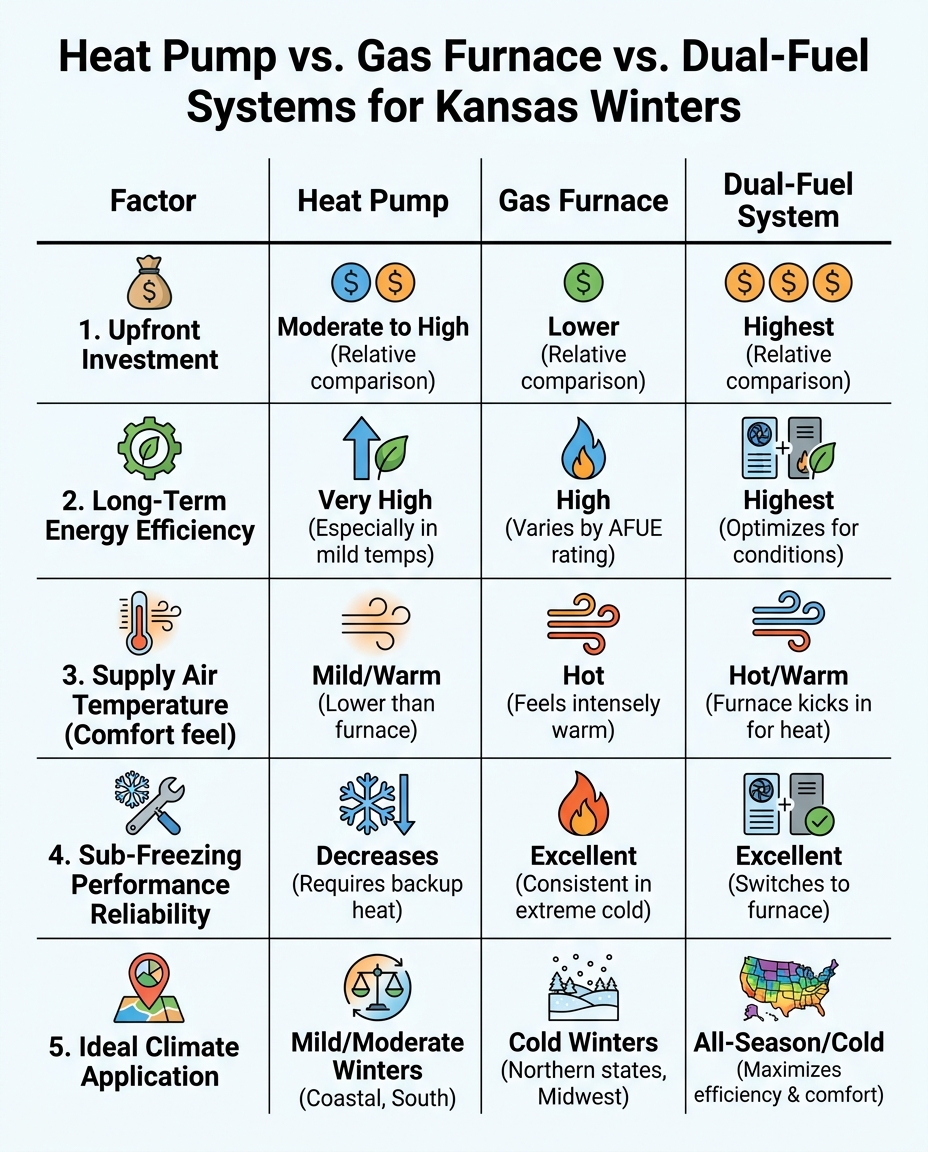
The Problem: In our daily work throughout Derby, KS and surrounding Sedgwick County, we see homeowners who often feel torn. They want the incredible energy efficiency of an electric heat pump during our mild autumns and early springs, but they worry about losing the raw heating power of a gas furnace during severe January cold snaps.
The Cause: Heat pumps are most efficient in moderate cold. As temperatures plunge toward zero, the heat pump has to work harder to extract thermal energy, which can slightly reduce its efficiency and heating speed. Conversely, a gas furnace is overkill on a mild 50°F November day, burning fossil fuels when a lighter touch would suffice.
The Solution: A dual-fuel (or hybrid) heating system. This setup pairs an electric heat pump with a traditional gas furnace backup. The system uses a smart thermostat to monitor the outdoor temperature. During mild weather, the highly efficient heat pump handles all the heating. When the temperature drops below a critical threshold (the "balance point"), the system automatically switches over to the gas furnace.
This automatic switchover maximizes energy efficiency while guaranteeing robust heating power during severe cold snaps. For homes that already have natural gas connections, our team highly recommends a dual-fuel setup as the ultimate solution. It removes the stress of choosing between efficiency and power. If you are looking into affordable furnace installation in Wichita or Derby, asking your technician about pairing it with a heat pump for a dual-fuel setup is a smart long-term strategy.
Every few years, Kansas is hit by a polar vortex—a severe weather event that plunges temperatures to dangerous, sub-zero levels for days at a time. The impact of these periodic extreme freezes on residential heating infrastructure is massive. Systems that haven't been properly maintained are pushed beyond their limits, leading to widespread breakdowns.
Regardless of the system you choose, having a reliable unit is critical when temperatures plummet. A heater failure in this environment isn't just uncomfortable; it's a risk to your home's plumbing and your family's safety. Our MJB Heating & Cooling technicians see this pattern every winter. For example, one local homeowner experienced this firsthand during a frigid winter day when their heater completely stopped working. Reaching out to our team for emergency support, they were relieved when our technician arrived within just 10 minutes. We not only fixed the heater promptly to restore warmth but also identified a non-compliant pipe on the hot water tank that could have caused future issues.
This illustrates the absolute importance of rapid professional response and proactive system care. When selecting your next system, you want cold-climate equipment designed specifically to withstand severe winter stress. For instance, exploring Daikin heat pump options reveals technology engineered with advanced compressors that maintain exceptional heating capacity even when the neighborhood is frozen solid. Whether you rely on high-efficiency electric or traditional gas, partnering with a responsive local team ensures you are never left in the cold.
The timing of your HVAC replacement is just as important as the equipment you choose. Waiting for the first hard freeze to replace an aging system limits your options and vastly increases your stress. When the first major cold front hits, our local technicians are flooded with emergency "no heat" calls.
Early fall—specifically the September pre-heating season transition—is the optimal transition month for HVAC upgrades in Kansas. The weather is mild, meaning your home won't become dangerously cold while the system is swapped out, and supply chains are generally less strained than in mid-winter.
Take these proactive steps now to secure your winter comfort:
1. Schedule a comprehensive inspection: Have one of our professionals evaluate your current system's heat exchanger, blower motor, and overall safety.
2. Calculate your heating load: Ensure your home's square footage, insulation, and ductwork are properly assessed to determine the exact size required for a new unit.
3. Weigh your system options: Review the pros and cons of heat pumps, gas furnaces, and dual-fuel systems based on your specific comfort preferences.
4. Book your installation early: Secure your spot on the schedule before the peak winter demand hits the region.
Proactive replacement ensures uninterrupted comfort throughout the winter. If your current unit is showing its age, exploring furnace installation in Derby right now allows you to make a calm, calculated decision rather than a panicked emergency purchase.
Ultimately, both heat pumps and gas furnaces offer distinct advantages for Kansas winters. A modern, cold-climate heat pump delivers incredible energy efficiency and steady, even comfort. A traditional gas furnace provides the intense, rapid heating power many homeowners are used to. For those who want the absolute best of both worlds, a dual-fuel system offers a powerful, seamless compromise.
The best choice depends entirely on your home's existing infrastructure, your personal comfort preferences, and your long-term efficiency goals. There is no one-size-fits-all answer for Derby, KS and surrounding Sedgwick County. What works perfectly for a newly built, tightly insulated home might not be the right fit for a historic property with older ductwork.
This is where our team's local expertise makes all the difference. At MJB Heating & Cooling, we bring years of hands-on experience in correctly sizing and recommending heating systems specifically tailored to handle Derby and the surrounding Kansas climate realities. By consulting with a local expert who understands the unique demands of our weather patterns, you can confidently select the perfect system to keep your home warm, safe, and efficient all winter long.
Yes, modern heat pumps are highly effective in Kansas. Unlike older units, today's cold-climate heat pumps are engineered to extract heat from the outside air even when temperatures drop below freezing. They provide exceptional energy efficiency during the mild fall and spring, and maintain reliable performance throughout the majority of the winter.
While modern heat pumps can handle sub-zero temperatures, having a backup furnace provides peace of mind during extreme cold snaps. A dual-fuel system pairs a heat pump with a gas furnace, automatically switching to gas when temperatures plummet. This ensures you always have the most efficient and powerful heating source actively running.
A dual-fuel heating system is a hybrid setup that combines an electric heat pump with a traditional gas furnace. The system uses a smart thermostat to alternate between the two based on outdoor temperatures. It relies on the highly efficient heat pump during moderate weather and switches to the gas furnace during severe freezes.
Standard older heat pumps often begin losing efficiency around 35°F to 40°F. However, modern cold-climate heat pumps maintain high efficiency levels well below freezing, often operating effectively down to 5°F or even sub-zero temperatures before requiring supplemental heat.
The better choice depends on your specific home and goals. A gas furnace is excellent for rapid, powerful heating and homes already equipped with gas lines. A heat pump offers superior long-term efficiency and provides both heating and cooling in one unit. Many Midwest homeowners find a dual-fuel system to be the ideal compromise.
Yes, federal tax credits and various utility incentive programs frequently apply to qualifying high-efficiency heat pump installations. These programs are designed to encourage energy-efficient home upgrades. You should always verify current generic rebate programs with your utility provider or a tax professional to see what your new system qualifies for.


Our A/C stopped working on a Sunday and due to health issues, we needed to find a service company available on a Sunday. I called MJB and left a message on their emergency voice mail. Within 10 minutes Tom Buck called me to hear my description of the symptoms. He was just finishing an appointment in Wichita and would be on his way to my home on the south end of Derby. He arrived within 30 minutes! From start to finish he was the perfect example of what you could ever hope for in an HVAC tech and a human being. His evaluation of our system inside and out was as thorough as I could ever imagine and once he was done with the repair, our system is running as well or better than ever. Well worth the price for the evaluation, parts, and labor. Thank you again Tom for an awesome experience.
Our AC went out during the hottest days of the year, and they were out next day! We have been jerked around by a shoddy home warranty for years. We finally had a chance to pick our own repair people, and MJB came highly recommended. I can see why! I was impressed with the honesty and speed at which they fixed our AC unit!
Our commercial building had a lightening/electrical strike and damaged our 20 ton AC unit. No one could find us a new unit before the end of September. Imagining going all of August and September with no AC in Kansas and working inside near 100 degree temps is less than thrilling. Dale and the team at MJB called around and saved the day. They had us a new unit 5 weeks earlier than other could promise and I now have happy employees. The unit is amazingly quiet, super cold and so much more energy efficient. Thank you for being our super hero!
Came out and installed my new furnace. Was very polite and affordable. They are very acknowledgeable and I highly recommend!
Thank you very much. We had our 1st warm night in 3weeks. MJB took the time and effort to find the real problem. And the employees were kind and thoughtful and explained things very well. I cannot thank you and all of MJB. Will recommend you highly. Thanks again Marjorie Herman Oxford Kansas
We had a new system installed and I was so impressed with how quick they were in come out and install it, in the middle of a hot summer day. They were so friendly & very professional. I had a small problem with a weird sound and they came over immediately and fixed it. Love them!