.avif)





Blogs
Stay updated with our latest blog posts.
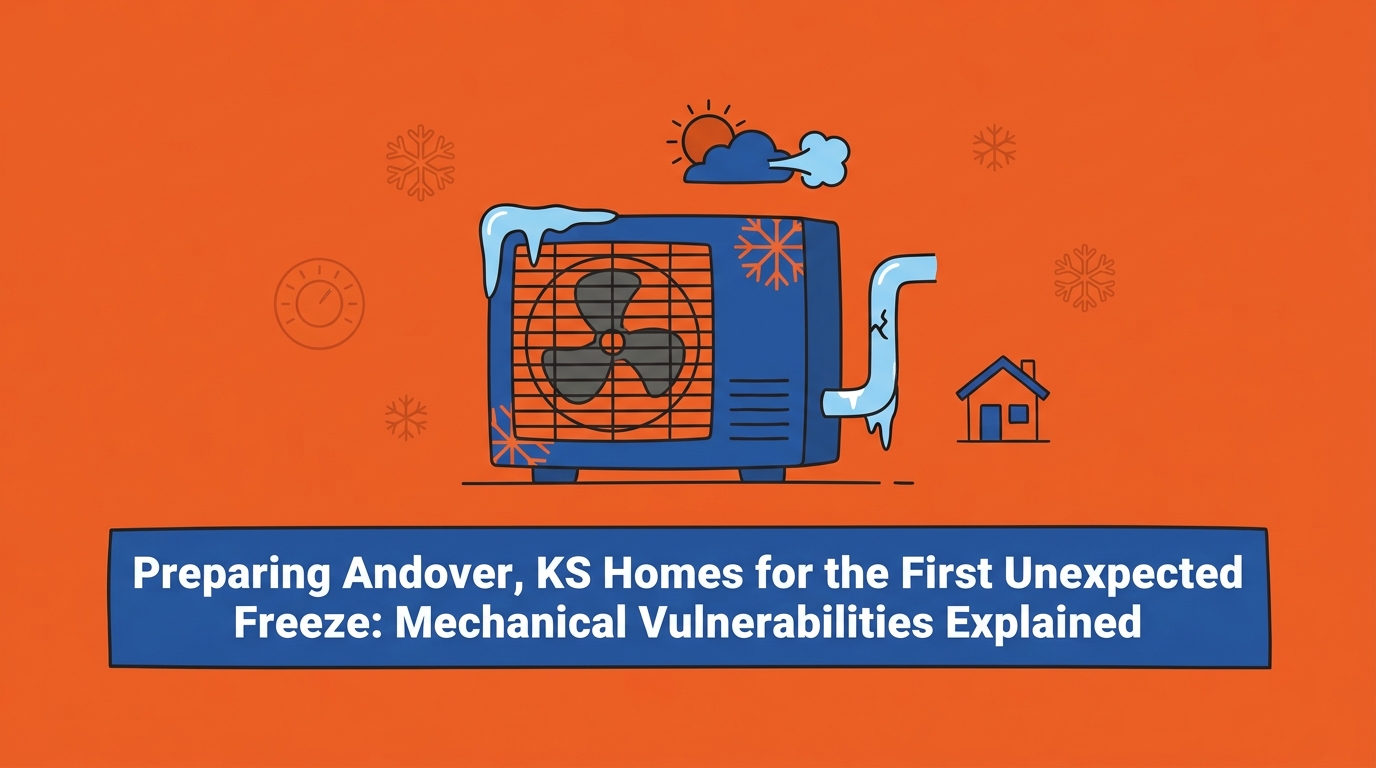

September weather in the region often begins with mild 70-degree afternoons, but our team at MJB Heating & Cooling knows that preparing Andover homes for the first unexpected freeze is a critical step before that comfort vanishes into overnight freezing temperatures. When a dormant heating system sits unused throughout the long, humid summer, forcing it into immediate, high-capacity operation during an early fall sudden temperature drop frequently results in a failure to ignite. In our experience, the transition from a completely idle state to maximum thermal output places immense stress on mechanical, electrical, and combustion components that have not cycled in months.
Addressing these mechanical vulnerabilities early through professional HVAC services is the core of a reliable heating maintenance plan.
The concrete problem we see many property owners face is that dormant heating systems are highly susceptible to lockout conditions when triggered by abrupt weather changes. Without gradual acclimation, minor issues that developed over the summer—such as oxidized sensors or stiff motor bearings—instantly become system-halting faults. Identifying which specific critical components require professional inspection before the freeze hits is a vital decision point. A proactive, structured approach to heating maintenance prevents the severe discomfort and property risks associated with unexpected cold-night emergencies.
Sudden, rapid freezes cause significantly more mechanical breakdowns than gradual seasonal cooling due to the raw physics of thermal contraction and material resistance. When temperatures plummet overnight, our technicians typically see the physical properties of the materials inside a heating system change rapidly, creating a high-friction environment for moving parts.
The impact of thickened lubricants: Over the summer months, the lubricants that keep blower motors and inducer draft fans spinning freely can settle, separate, or increase in viscosity. When an overnight freeze hits Andover area homes, the thermostat demands instant, high-speed rotation from these motors. Because the lubricant is cold and highly viscous, the motor must overcome massive initial resistance, leading to excessive electrical draw and potential overheating.
The restriction of settled debris: Beyond lubrication issues, microscopic dust and debris settle into the bearings and tracks of mechanical components during dormancy. Gradual testing allows these components to slowly clear this debris under mild loads. However, the abrupt demands of a rapid overnight temperature drop force these parts to grind through the settled particulate at maximum speed.
We see these specific mechanical stresses frequently because they are unique to the climate patterns seen in Andover and surrounding service areas, where historical weather data shows extreme overnight temperature drops frequently follow mild autumn days. This specific weather pattern leaves no room for gradual system acclimation.
• Motor Lubrication — Gradual Seasonal Cooling: Warms up slowly, distributing oil evenly before high-speed demand. — Rapid First Freeze (Kansas Pattern): Remains thick and cold, forcing the motor to fight high mechanical resistance.
• Component Expansion — Gradual Seasonal Cooling: Metals expand slowly, reducing the risk of thermal shock and cracking. — Rapid First Freeze (Kansas Pattern): Rapid heating against freezing ambient air causes severe thermal stress.
• System Diagnostics — Gradual Seasonal Cooling: Minor faults trigger soft lockouts during mild weather, allowing time for repairs. — Rapid First Freeze (Kansas Pattern): System locks out on the coldest night, resulting in an immediate thermal emergency.
Attempting DIY testing on the first freezing night is inherently too late. By the time a homeowner realizes the furnace is locked out, the ambient temperature in the house is already dropping rapidly, transforming a routine maintenance need into an urgent service call for our dispatch team.
Summer dormancy allows a significant amount of household dust, pet dander, and airborne particulate to settle directly onto the critical components inside a furnace. The heat exchanger and the flame sensor are particularly vulnerable to this accumulation, and our technicians find that their failure to operate correctly is a leading cause of no-heat calls during an early fall sudden temperature drop.
When a furnace is triggered for the first time in months, the dust resting on the heat exchanger rapidly burns off. This process creates a distinct, temporary burning smell that permeates the ductwork. While this initial burn-off is a known mechanical process, excessive accumulation creates an insulating layer that impedes the heat exchanger's ability to transfer thermal energy efficiently, forcing the system to run longer to satisfy the thermostat.
More critically, dust and environmental factors heavily impact the flame sensor. The flame sensor is a vital safety device designed to detect the presence of a flame within milliseconds of the gas valve opening. If the sensor is coated in debris or heavily oxidized, it fails to register the flame. The system's control board assumes the gas is not igniting and immediately shuts the valve to prevent a dangerous gas leak. This safety lockout leaves the home completely cold.
Because sensor failures trigger specific, hard system lockouts, they require professional diagnostics to clear and resolve. In our daily service runs, sensor issues are a common culprit when our team is troubleshooting heat pump error codes or furnace faults, as modern control boards are highly sensitive to micro-amp variations.
The environment inside a dormant furnace is not entirely static. During the humid summer months, the ambient moisture in the air interacts with the metallic surface of the flame sensor. This prolonged exposure to humidity causes a chemical process known as oxidation, creating a microscopic, non-conductive layer of rust and scale on the sensor's rod.
• Micro-amp sensitivity: Flame sensors operate by passing an electrical current of just a few micro-amps through the flame itself. Even a microscopic layer of oxidation can block this tiny current.
• The danger of improper cleaning: Cleaning an oxidized flame sensor requires a licensed professional. The component is highly delicate, and utilizing harsh abrasives like heavy sandpaper will score the metal, creating deep grooves that accelerate future oxidation and ultimately ruin the sensor.
• Environmental acceleration: We often find that basements and utility closets experience higher humidity levels in the summer, accelerating the oxidation process on all exposed metallic sensors.
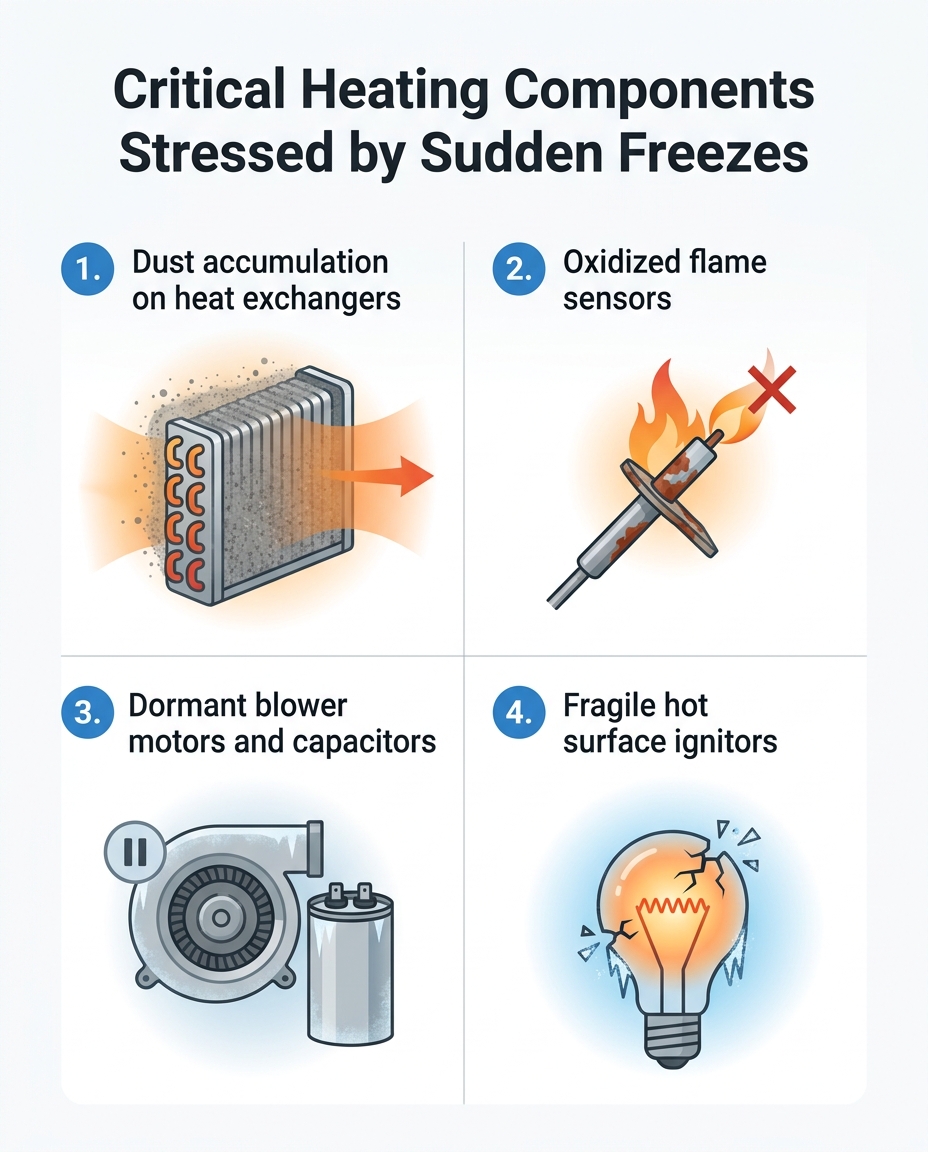
While mechanical resistance is a significant factor during a sudden freeze, the electrical stresses placed on a dormant HVAC system are equally severe. The most vulnerable components in the electrical chain are the blower motor and its associated run capacitor. When an early fall sudden temperature drop forces the system to activate, these electrical parts must transition from zero load to maximum capacity instantly.
A capacitor functions similarly to a highly specialized, powerful battery. Its primary role is to store a concentrated electrical charge and deliver an initial, massive jolt of energy to start the blower motor. Over time, capacitors naturally degrade, losing their ability to hold a full charge. When sudden high-capacity demand is placed on a dormant, stiff motor, the motor requires an even larger jolt of energy to overcome the thickened lubricants. If the aging capacitor cannot deliver this increased voltage, it will fail completely, leaving the motor humming but unable to spin—a scenario our emergency dispatch fields constantly during the first freeze.
Furthermore, temperature extremes directly affect electrical resistance in aging HVAC components. Cold wiring, cold contactors, and chilled metallic connections inherently resist the flow of electricity more than warm components. This increased resistance causes a voltage drop, forcing the system's transformers and motors to draw higher amperage to compensate, which can blow fuses or trip breakers.
A critical safety warning: Homeowners must never attempt to inspect, test, or replace high-voltage electrical components without professional training. HVAC capacitors are designed to hold a lethal electrical charge long after the main power to the unit has been disconnected at the breaker. Due to these inherent dangers, the U.S. Department of Energy strongly recommends professional pre-season inspections to maintain system efficiency and ensure absolute safety for Andover area homes.
The sequence of operations in a modern gas furnace is a highly orchestrated, step-by-step process. If any single step fails, the entire ignition sequence halts. The most common point of failure when a system is turned on during an early fall sudden temperature drop is the hot surface ignitor. This component acts as the spark plug of the furnace, glowing white-hot to ignite the gas.
Hot surface ignitors are engineered from fragile materials like silicon carbide or silicon nitride. When a furnace receives a call for heat, the ignitor must heat up to over 2,000 degrees Fahrenheit in a matter of seconds. After sitting dormant in a cool, damp basement all summer, the sudden influx of extreme electrical heat creates massive thermal shock. If the ignitor has developed microscopic stress fractures over previous seasons, this rapid temperature change will cause the material to crack completely, instantly disabling the furnace's ability to create a flame.
A sudden breakdown on a frigid day requires an immediate emergency response, which can easily be avoided with proactive professional checks. For example, last winter, our team responded to a severely cold winter day where a homeowner experienced a complete heater failure when the system simply stopped working. One of our technicians arrived promptly to diagnose and restore the heating function. Crucially, during this comprehensive repair process, our professional also identified and resolved a dangerous code violation on a nearby hot water tank. This highlights a pattern we see often: a comprehensive professional inspection uncovers secondary safety issues, ensuring whole-home safety beyond just the furnace itself.
Combustion and ignition systems are highly volatile by nature. Because they deal directly with natural gas, high voltage, and carbon monoxide exhaust, they must only be serviced, tested, and calibrated by licensed professionals.
Many property owners mistakenly believe that replacing the air filter is sufficient preparation for the winter months. While a clean filter is vital for airflow, a basic filter change is entirely insufficient preparation for an early fall sudden temperature drop. True winterization requires sophisticated, professional-grade diagnostic checks to ensure deep system reliability.
Comprehensive professional testing goes far beyond a visual inspection. Technicians utilize specialized multimeters to test the exact micro-farad readings of capacitors and the micro-amp draw of flame sensors. They analyze the combustion efficiency using digital combustion analyzers to ensure the fuel-to-air ratio is perfectly calibrated, preventing dangerous carbon monoxide production. Furthermore, all high-limit safety switches are manually tripped and tested to guarantee they will shut the system down in the event of an overheating emergency.
To combat the unique environmental challenges we face across Derby, Andover, and the surrounding areas, our team at MJB Heating & Cooling utilizes specific pre-season diagnostic protocols tailored specifically to withstand the rapid temperature swings of Kansas weather extremes. We ensure that every electrical connection is tightened against thermal contraction, and every mechanical bearing is properly evaluated for the high-friction stress of a sudden freeze.
The ultimate benefit of these rigorous protocols is absolute peace of mind. Knowing that a system has been stress-tested by professionals before the cold arrives eliminates the anxiety of wondering if the furnace will start on the first freezing night. Homeowners in Andover area homes are encouraged to contact our heating experts to schedule these specialized pre-season diagnostics before the weather shifts.
Our service technicians find that a furnace often fails to ignite after summer dormancy due to oxidized flame sensors, cracked hot surface ignitors, or stuck gas valves. During an early fall sudden temperature drop, the system requires perfect execution of its ignition sequence, and even a microscopic layer of rust on a sensor can halt the process. Professional diagnostics are required to test the electrical continuity of these specific combustion components safely.
Sudden temperature drops force dormant systems into high-capacity operation while lubricants are thick and mechanical components are cold, creating immense physical resistance. This rapid transition causes thermal shock to fragile parts and forces electrical capacitors to work significantly harder to start stiff motors. Gradual cooling allows systems to acclimate, whereas rapid freezes expose underlying vulnerabilities instantly.
Critical components that demand professional inspection include the hot surface ignitor, the flame sensor, the inducer draft motor, the run capacitor, and the heat exchanger. These parts handle high voltage, natural gas, and carbon monoxide exhaust, making them dangerous to test without proper training. A licensed technician will measure the precise electrical draw and combustion efficiency of these parts.
The temporary burning smell during the first startup is caused by the combustion of household dust and particulate that settled on the heat exchanger over the summer. While a brief odor is a normal mechanical process, a smell that persists for hours indicates heavy accumulation that may impede system efficiency. If the smell is accompanied by smoke or electrical odors, the system should be shut down immediately for professional evaluation.
Skipping pre-season service significantly increases the risk of unexpected mechanical failure during the first major cold snap, often leading to emergency service calls. Unserviced furnaces operate with degraded efficiency, forcing the system to run longer cycles and accumulate excessive wear on aging motors. Furthermore, neglecting professional inspections leaves potential safety hazards, such as compromised heat exchangers or faulty high-limit switches, completely undetected.
The optimal window for scheduling heating inspections is in September, well before the first overnight freeze threatens the region. Booking early ensures the system is thoroughly tested and any necessary replacement parts are installed before extreme weather creates a surge in emergency service requests. Proactive scheduling provides peace of mind that the home is fully prepared for an early fall sudden temperature drop.
Addressing the mechanical vulnerabilities of a dormant heating system before the first freeze is the most effective way to protect your home from unexpected breakdowns. We've seen firsthand how the physics of rapid temperature drops place immense stress on aging capacitors, oxidized flame sensors, and cold blower motors, proving that simple DIY filter changes are not enough to guarantee reliable winter operation.
A clear understanding of the professional checks required to prevent ignition failure ensures that Andover area homes remain safe and warm when the weather turns abruptly. Secure your comfort and avoid the stress of an emergency breakdown by enrolling in a comprehensive maintenance program, ensuring your heating system is rigorously tested and optimized long before the cold arrives.


Our A/C stopped working on a Sunday and due to health issues, we needed to find a service company available on a Sunday. I called MJB and left a message on their emergency voice mail. Within 10 minutes Tom Buck called me to hear my description of the symptoms. He was just finishing an appointment in Wichita and would be on his way to my home on the south end of Derby. He arrived within 30 minutes! From start to finish he was the perfect example of what you could ever hope for in an HVAC tech and a human being. His evaluation of our system inside and out was as thorough as I could ever imagine and once he was done with the repair, our system is running as well or better than ever. Well worth the price for the evaluation, parts, and labor. Thank you again Tom for an awesome experience.
Our AC went out during the hottest days of the year, and they were out next day! We have been jerked around by a shoddy home warranty for years. We finally had a chance to pick our own repair people, and MJB came highly recommended. I can see why! I was impressed with the honesty and speed at which they fixed our AC unit!
Our commercial building had a lightening/electrical strike and damaged our 20 ton AC unit. No one could find us a new unit before the end of September. Imagining going all of August and September with no AC in Kansas and working inside near 100 degree temps is less than thrilling. Dale and the team at MJB called around and saved the day. They had us a new unit 5 weeks earlier than other could promise and I now have happy employees. The unit is amazingly quiet, super cold and so much more energy efficient. Thank you for being our super hero!
Came out and installed my new furnace. Was very polite and affordable. They are very acknowledgeable and I highly recommend!
Thank you very much. We had our 1st warm night in 3weeks. MJB took the time and effort to find the real problem. And the employees were kind and thoughtful and explained things very well. I cannot thank you and all of MJB. Will recommend you highly. Thanks again Marjorie Herman Oxford Kansas
We had a new system installed and I was so impressed with how quick they were in come out and install it, in the middle of a hot summer day. They were so friendly & very professional. I had a small problem with a weird sound and they came over immediately and fixed it. Love them!