.avif)





Blogs
Stay updated with our latest blog posts.
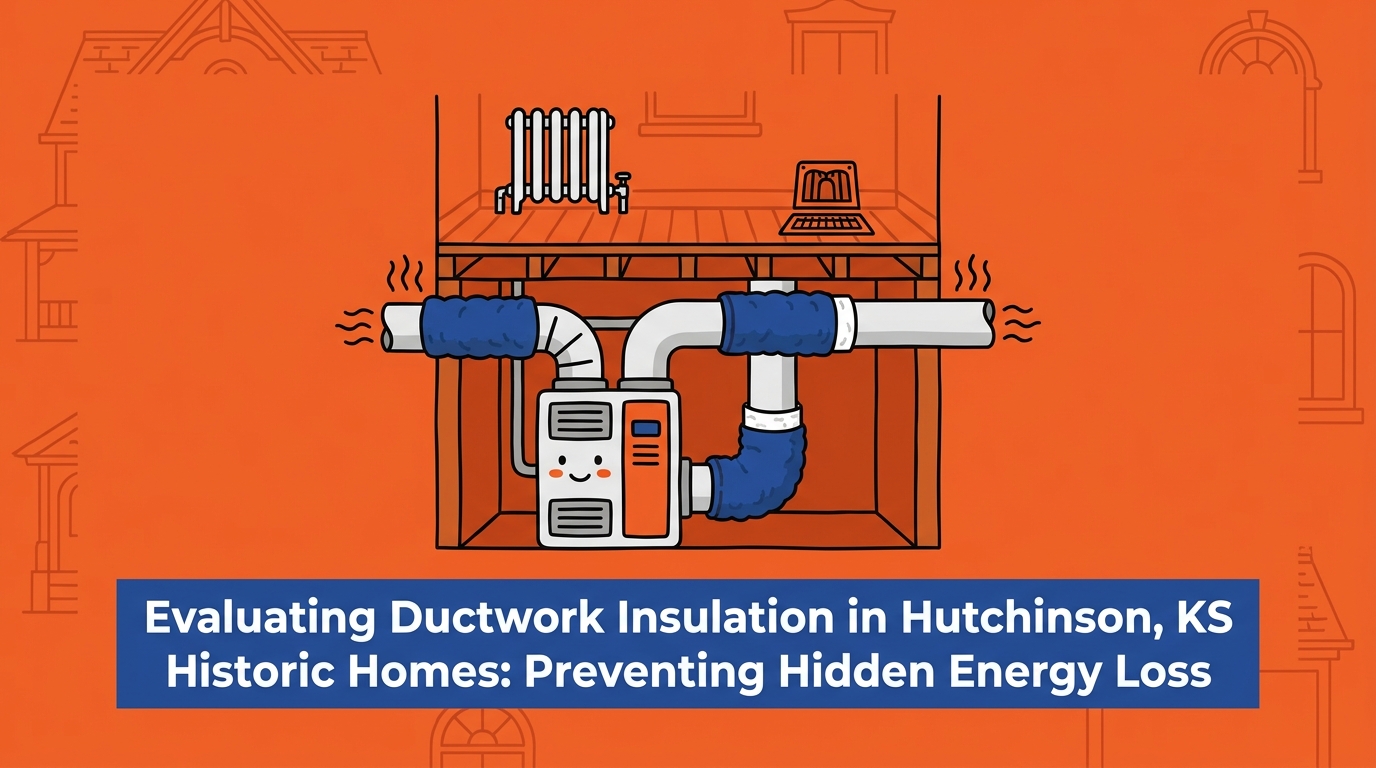

Your furnace is running constantly, but you are still shivering in your living room—which is exactly why evaluating ductwork insulation in Hutchinson's historic homes is the critical first step to solving uneven heating. You turn up the thermostat to combat the chill, yet certain areas of the house remain stubbornly cold. This is a common frustration for homeowners as the weather cools, often leading to uncomfortably high utility bills and a home that simply refuses to stay warm.
Here is the thing: the issue frequently is not the furnace itself. Homeowners often assume their heating unit is failing when, in reality, the delivery system is to blame. The network of metal running through the unconditioned spaces of your property is responsible for carrying that freshly heated air to your living areas. If those pathways are unprotected, the heat dissipates long before it reaches your vents.
As we enter the September pre-heating season, addressing these hidden leaks is an absolute priority. The sharp transition from late summer to a brisk Kansas fall leaves very little time to prepare before freezing temperatures arrive. If you wait until the deep winter sets in, your heating system will already be overworked, and the energy loss will be reflected on your monthly statements. Securing professional HVAC services is the safest and most effective way to uncover these invisible energy drains before the cold weather takes hold.
Many of the beautiful homes built before the 1970s were never originally designed for forced-air heating systems. Hutchinson historic properties were typically constructed with radiant heat, boilers, or traditional fireplaces in mind. When modern central heating became the standard, these architectural gems had to be adapted, which meant finding creative ways to hide a massive network of bulky metal pathways.
A typical pattern we see is the retrofitting of ducts into extreme, unconditioned environments. To preserve the home's charm, original plaster walls, and intricate woodwork, installers often hid the ductwork in the least insulated areas of the property, such as drafty attics and stone crawlspaces. While this preserved the aesthetic of the home, it left modern HVAC systems highly vulnerable to massive thermal loss. These original architectural choices force the heated air to travel through freezing zones before it ever reaches your living room, requiring your system to work significantly harder than it should. This is why having an active HVAC maintenance plan is so important for older properties.
In the context of older builds, unconditioned spaces refer to attics, basements, and crawlspaces that are not actively heated or cooled by your central air system. Unlike modern homes that often feature sealed and insulated crawlspaces, historic properties typically have highly ventilated or poorly sealed foundations.
During a Kansas winter, these unconditioned areas reach near-outdoor ambient temperatures. When a thin, bare metal pipe carrying 100-degree air passes through a 30-degree crawlspace, the laws of thermodynamics take over. The cold environment rapidly steals the heat from the metal, cooling the air inside before it even reaches your floor registers.
Understanding the severity of energy loss requires looking at the data. According to ENERGY STAR, up to 30 percent of the air moving through a duct system is lost due to leaks, holes, and poor insulation. In an older home where the ductwork runs entirely through freezing zones, that percentage can be even higher.
The Problem: Heat loss in unconditioned spaces primarily occurs through two distinct mechanisms: conduction and air leakage. Both force your heating unit to overwork to meet the thermostat's demand, putting unnecessary wear and tear on the blower motor and heat exchanger.
The Cause: Conduction happens when thin, uninsulated metal rapidly transfers heat to the freezing air of a crawlspace. Metal is a highly efficient thermal conductor. Without a protective barrier, the heat bleeds through the metal walls of the ductwork. Air leakage, on the other hand, occurs when poorly sealed joints in aging systems literally blow heated air into the attic or basement instead of the living space. Decades of expanding and contracting metal can cause original seals to break, creating physical holes where your expensive heated air escapes.
The Solution: Professional evaluation and targeted insulation stop both conduction and air leakage. Wrapping the metal in high R-value materials creates a thermal break, while applying specialized sealants to the joints ensures the air actually reaches your living areas.
• Thermal Conduction — How It Happens in Older Homes: Bare metal transfers heat directly to the freezing air surrounding it in an attic or crawlspace. — The Resulting Impact: Air arriving at the vent is significantly cooler than when it left the furnace.
• Air Leakage — How It Happens in Older Homes: Failing joints and degraded tape allow conditioned air to blow directly out of the system. — The Resulting Impact: You pay to heat your crawlspace or attic while your living room remains cold.
• Negative Pressure — How It Happens in Older Homes: Leaks on the return side pull freezing, dirty air from the unconditioned space into the system. — The Resulting Impact: The furnace has to work harder to heat colder air, and indoor air quality plummets.


While heat loss is the most obvious problem, poorly insulated delivery systems carry secondary risks that can be far more destructive. The temperature differential between warm ducts and cold crawlspaces—or cold ducts in a warm, humid crawlspace during seasonal transitions—creates significant condensation. When warm, moist air collides with a cold metal surface, water droplets form rapidly.
A typical pattern we see in older basements and crawlspaces is excessive moisture leading to structural damage over time. In fact, one local homeowner reached out during the summer when extensive condensation in their basement started causing real physical damage. A technician diagnosed the issue, installed a new system, and provided targeted repair options, which completely resolved the basement moisture problem and finally allowed the family to sleep comfortably without worrying about their home's foundation.
Water pooling around aging metal accelerates rust and deterioration, slowly eating away at the components. More alarmingly, this constant moisture drips onto wooden floor joists and dirt crawlspaces, creating the perfect environment for wood rot and poor indoor air quality. Proper insulation acts as a vital vapor barrier, preventing this condensation cycle entirely and protecting both your home's foundation and the air your family breathes.
Identifying symptoms of failing insulation in your own historic home does not require crawling into dangerous, dark spaces. There are several clear indicators you can spot right from your living room. If you notice any of the following, it usually means your delivery system is compromised:
• Uneven room temperatures: Rooms that are consistently colder than the rest of the house, particularly those furthest from the HVAC unit, indicate that heat is being lost along the journey.
• Spiking utility costs: A noticeable increase in heating bills compared to previous years, or compared to similar-sized modern homes in your neighborhood, points directly to severe thermal loss.
• Excessive dust buildup: If you are dusting constantly, duct leaks on the return side are likely pulling in debris, dirt, and insulation particles from the attic or crawlspace and blowing them into your home.
• Constant system cycling: HVAC systems that run constantly but struggle to reach the temperature set on the thermostat are battling massive air leakage or conduction losses.
• Unexplained odors: Musty or stale smells coming from your vents often mean moisture and condensation have taken hold in the unconditioned spaces surrounding the bare metal.
Working on Hutchinson historic properties requires a delicate balance. Upgrading HVAC efficiency in homes with significant historical value cannot be handled with a one-size-fits-all approach. The architectural integrity of original plaster walls, hand-carved trim, and aging stone foundations must be protected at all costs.
Standard, aggressive retrofitting techniques often fail or cause unintended damage to the structural integrity of older properties. Trying to force modern, rigid components into tight, unconventional spaces designed a century ago is a recipe for disaster. This is where MJB Heating & Cooling's specific expertise in navigating the unique architectural challenges of historic Kansas homes makes a profound difference. Emphasizing care and precision, a professional approach ensures that the historical aesthetic remains completely untouched.
By using specialized materials and flexible, high-R-value wraps designed specifically for tight, unconventional spaces, your home can achieve modern energy standards. Reassuringly, homeowners do not have to choose between preserving the charm of their historic property and enjoying comfortable, efficient heating. With the right expertise in the Hutchinson service area, both are entirely possible.
Because these metal pathways are hidden in difficult-to-reach areas, a professional ductwork evaluation is necessary to uncover the full extent of the problem. During a comprehensive assessment, a technician will check the existing R-values of any old insulation, identify hidden air leaks, and measure the static pressure of the system to pinpoint exactly where the energy is escaping.
Once the vulnerabilities are mapped out, professional methods are used to secure the system. This involves applying a thick mastic sealant to all joints and seams—which hardens into a permanent, airtight bond—rather than relying on standard cloth tape that degrades rapidly in extreme temperatures. After sealing, the metal is carefully wrapped in specialized insulation rated for unconditioned spaces.
Completing this assessment in the September pre-heating season ensures the system is fully prepared before the first major Kansas freeze. Additionally, modernizing your insulation can sometimes qualify for local utility incentives or federal programs. You can often learn more about Kansas energy rebates for HVAC upgrades by consulting with a professional or checking local utility guidelines. Above all, remember that navigating tight, potentially hazardous crawlspaces and ensuring code compliance is highly specialized work requiring a licensed professional—never attempt DIY repairs in these environments.
Yes, any ductwork running through an unconditioned crawlspace must be insulated to prevent severe heat loss and condensation. Because crawlspaces reach near-outdoor temperatures during the winter, bare metal will rapidly transfer the heat from your furnace into the cold air beneath your floors. Proper insulation creates a thermal barrier that keeps the heated air inside the system where it belongs. This also prevents moisture buildup that can lead to rust and structural damage.
According to ENERGY STAR, up to 30 percent of the conditioned air moving through a home's duct system is lost due to leaks, holes, and poor insulation. In older historic homes where the pathways run entirely through freezing attics or basements, the thermal loss can be even more severe. This massive inefficiency forces your heating unit to run longer cycles, driving up utility costs and putting unnecessary strain on the mechanical components.
High heating bills in older homes are frequently caused by retrofitted ductwork running through unconditioned spaces without adequate protection. Even if you have a brand-new, high-efficiency furnace, it cannot overcome the physics of blowing hot air through freezing, uninsulated metal pipes. The heat dissipates before reaching your living areas, causing the furnace to run constantly to satisfy the thermostat, which directly inflates your monthly energy costs.
Uneven heating in older homes is a classic symptom of thermal loss along the delivery route. Rooms located furthest from the furnace receive the least amount of heat because the air has traveled the longest distance through a cold, unprotected environment. By the time the air reaches the furthest vents, it has lost most of its thermal energy, leaving those specific rooms feeling drafty and cold regardless of the thermostat setting.
The recommended R-value for HVAC ducts in an unconditioned attic typically ranges from R-6 to R-8, depending on local building codes and climate severity. Higher R-values provide thicker, more robust resistance to heat flow, which is highly beneficial in regions that experience sharp winter temperature drops. A licensed professional will evaluate your specific attic environment to determine the exact insulation rating required to meet modern efficiency standards safely.
Yes, poorly sealed and uninsulated metal pathways are a leading cause of moisture problems in unconditioned basements. When warm air travels through cold metal—or when cold air travels through warm metal during seasonal changes—condensation forms rapidly on the exterior of the pipe. Over time, this constant dripping creates a damp environment that encourages wood rot, rust, and poor indoor air quality throughout the home.
Uninsulated and poorly sealed ductwork is a leading cause of energy loss, uneven heating, and structural moisture threats in historic properties. When your home's delivery system runs through freezing, unconditioned spaces, your furnace is forced to fight a losing battle against the outside elements. Do not wait until the first major freeze leaves your living room shivering. Schedule a professional evaluation of your historic home's system before the cold weather sets in permanently, and let a local expert ensure your property stays warm, protected, and efficient all winter long.


Our A/C stopped working on a Sunday and due to health issues, we needed to find a service company available on a Sunday. I called MJB and left a message on their emergency voice mail. Within 10 minutes Tom Buck called me to hear my description of the symptoms. He was just finishing an appointment in Wichita and would be on his way to my home on the south end of Derby. He arrived within 30 minutes! From start to finish he was the perfect example of what you could ever hope for in an HVAC tech and a human being. His evaluation of our system inside and out was as thorough as I could ever imagine and once he was done with the repair, our system is running as well or better than ever. Well worth the price for the evaluation, parts, and labor. Thank you again Tom for an awesome experience.
Our AC went out during the hottest days of the year, and they were out next day! We have been jerked around by a shoddy home warranty for years. We finally had a chance to pick our own repair people, and MJB came highly recommended. I can see why! I was impressed with the honesty and speed at which they fixed our AC unit!
Our commercial building had a lightening/electrical strike and damaged our 20 ton AC unit. No one could find us a new unit before the end of September. Imagining going all of August and September with no AC in Kansas and working inside near 100 degree temps is less than thrilling. Dale and the team at MJB called around and saved the day. They had us a new unit 5 weeks earlier than other could promise and I now have happy employees. The unit is amazingly quiet, super cold and so much more energy efficient. Thank you for being our super hero!
Came out and installed my new furnace. Was very polite and affordable. They are very acknowledgeable and I highly recommend!
Thank you very much. We had our 1st warm night in 3weeks. MJB took the time and effort to find the real problem. And the employees were kind and thoughtful and explained things very well. I cannot thank you and all of MJB. Will recommend you highly. Thanks again Marjorie Herman Oxford Kansas
We had a new system installed and I was so impressed with how quick they were in come out and install it, in the middle of a hot summer day. They were so friendly & very professional. I had a small problem with a weird sound and they came over immediately and fixed it. Love them!