.avif)





Blogs
Stay updated with our latest blog posts.
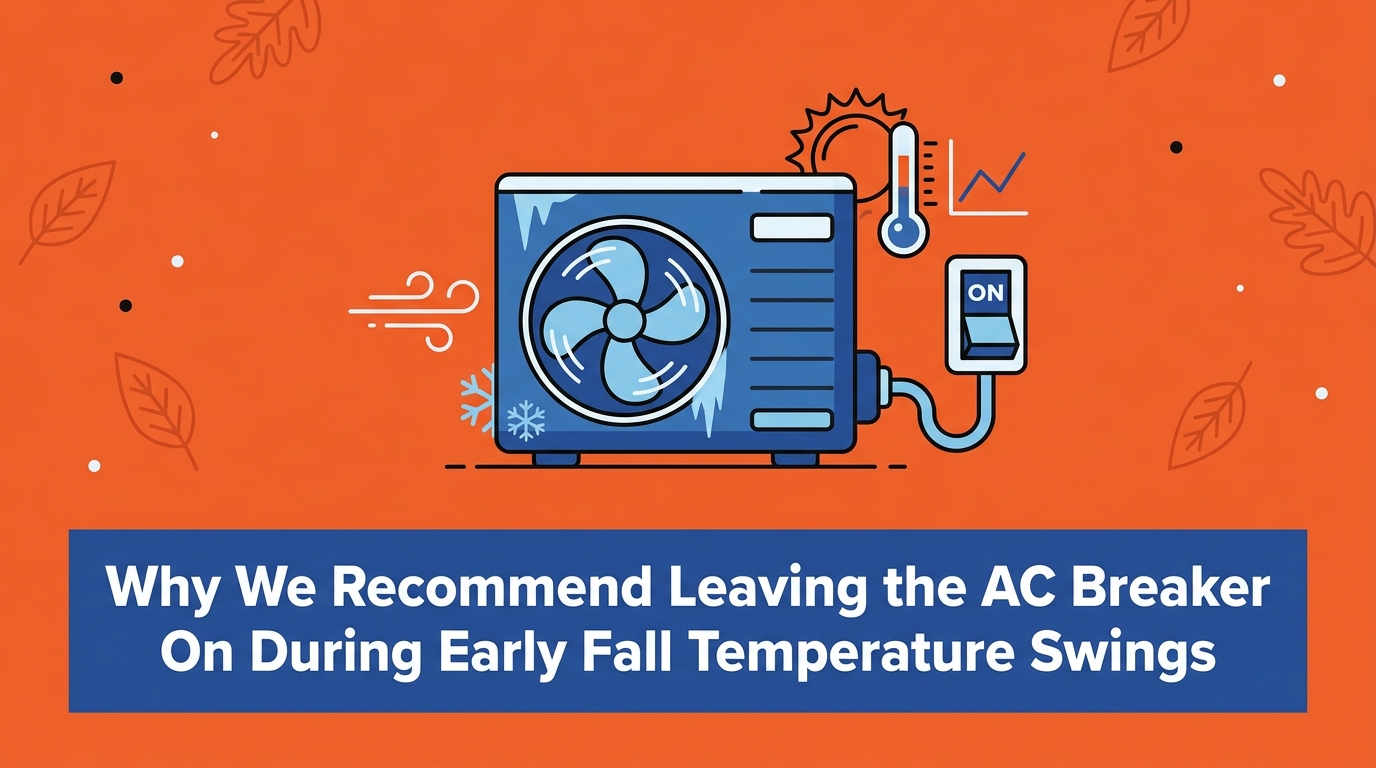

September cold nights are just around the corner, bringing that familiar temptation to winterize early, which leads many homeowners to ask why we recommend leaving the AC breaker on during early fall temperature swings. You walk past the electrical panel, notice the crisp autumn air outside, and think it might be time to shut down the cooling system for good. The instinct makes perfect sense. Why leave power running to an appliance you assume you will not need until next spring? You want to prepare your home for the changing seasons and avoid wasting unnecessary electricity.
However, modern air conditioning systems are complex machines that rely on specific electrical components to protect their internal mechanics during unpredictable seasonal shifts. Cutting the power at the panel disables these critical safeguards right when your equipment needs them most. The decision point comes down to balancing the desire to save a marginal amount of electricity against the strict mechanical needs of your outdoor condenser unit. Instead of attempting a DIY electrical shutdown that could inadvertently damage your compressor, it is much safer to rely on professional HVAC services to guide your seasonal transitions and keep your equipment protected year-round.
Here in Derby KS, September weather is famous for its extreme unpredictability. We regularly experience "yo-yo" weather patterns where the temperature can swing drastically within a single twenty-four-hour period. It is entirely common to wake up to a chilly, 40-degree morning, only to have the afternoon sun push the thermometer back up into the mid-80s. This rapid fluctuation is exactly what makes early fall the most dangerous time of year for your air conditioning equipment.
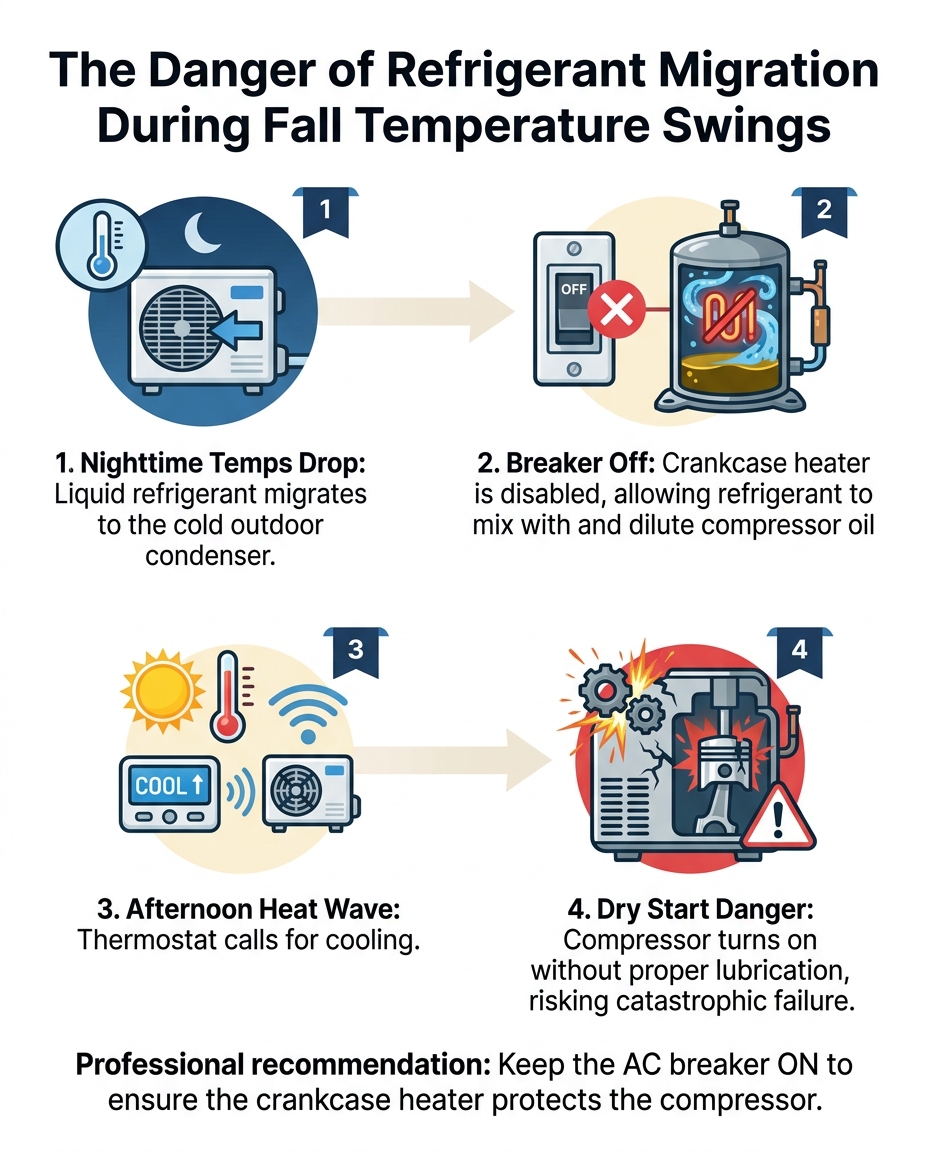
When the outdoor temperature drops significantly overnight, the metal components of your outdoor condenser become ice cold. Then, as the afternoon heats up, your indoor thermostat senses the rising temperature inside your home and automatically calls for cooling. The system attempts to turn on and push refrigerant through lines that were freezing cold just hours prior. This specific temperature dynamic—warm days immediately following cold nights—creates the highest risk period for outdoor condenser units.
• Early Morning (4:00 AM) — Typical Derby KS September Temp: 45°F (Cold) — AC System Status: Idle / Off — Hidden Mechanical Risk: Refrigerant migrates to the coldest part of the system (the outdoor unit).
• Mid-Morning (10:00 AM) — Typical Derby KS September Temp: 65°F (Mild) — AC System Status: Idle / Off — Hidden Mechanical Risk: Oil and refrigerant remain mixed inside the compressor housing.
• Late Afternoon (4:00 PM) — Typical Derby KS September Temp: 85°F (Hot) — AC System Status: Calling for Cooling — Hidden Mechanical Risk: Compressor turns on with diluted oil, causing severe metal-on-metal friction.
The problem is not just the cold air itself, but the rapid transition back to heat. When your system sits idle in the freezing night air and is suddenly forced to operate at maximum capacity in the afternoon sun, the internal components face immense mechanical stress. Understanding exactly how this weather affects the chemicals inside your system is the first step to protecting your investment.
To understand why flipping the breaker is a bad idea, you have to understand a natural physical process called refrigerant migration. Refrigerant is the chemical compound responsible for moving heat out of your home. It naturally travels from areas of high pressure and high temperature toward areas of low pressure and low temperature. During the peak of summer, this process works smoothly. But when the seasons change, the physics begin to work against your equipment.
During cold nights, the outdoor condenser becomes the absolute coldest point in your entire heating and cooling system. Because refrigerant naturally seeks out the coldest area, it slowly migrates in liquid form away from your indoor evaporator coil and settles directly into the outdoor compressor. Just as you might find yourself checking your condensate drain when the AC quits after dark, you also need to monitor how the nighttime temperature affects your outdoor unit. The liquid refrigerant pools inside the compressor housing, creating a dangerous chemical environment.
Inside your AC compressor is a specific reservoir of lubricating oil. This oil is just as vital to your air conditioner as motor oil is to your car's engine. When liquid refrigerant migrates into the compressor overnight, it forces its way into this oil supply.
• Viscosity breakdown: Compressors require a very specific oil thickness (viscosity) to function properly. Liquid refrigerant severely thins out the oil.
• Loss of protection: The diluted, watery oil washes away from vital bearings, valves, and moving metal parts.
• Hidden vulnerability: This mechanical danger remains completely hidden while the system is off. The damage only occurs the moment the thermostat calls for cooling the next day.
• Chemical foaming: When the compressor finally turns on, the sudden pressure drop causes the liquid refrigerant to rapidly boil out of the oil, creating a foam that provides zero lubrication.
Because this process happens silently in the middle of the night, most homeowners have no idea their compressor is sitting in a pool of diluted, ineffective oil. They simply hear the system turn on in the afternoon and assume everything is working normally, completely unaware of the internal wear and tear taking place.
Fortunately, modern air conditioning manufacturers are well aware of the dangers of refrigerant migration. To combat this issue, they install a small but incredibly important component called a crankcase heater inside or wrapped around the compressor. The crankcase heater has one primary function: keeping the compressor oil warm.
By maintaining a temperature inside the compressor that is slightly higher than the surrounding outdoor air, the crankcase heater prevents the refrigerant from migrating and settling in the oil. The heat forces the refrigerant to remain in a vapor state or pushes it back into the refrigerant lines where it belongs. This ensures that the lubricating oil remains thick, pure, and ready to protect the moving parts the moment the system turns on.
At MJB Heating & Cooling, our proactive, preventative approach focuses on keeping your system safe before a breakdown ever happens. We view the crankcase heater as your equipment's built-in prevention system—a critical safeguard that homeowners should never accidentally disable. However, the crankcase heater can only do its job if it has continuous electrical power.
The false economy of flipping the breaker:
• Minimal power draw: A crankcase heater uses a very small amount of electricity—often less power than a standard incandescent light bulb.
• Continuous protection: It actively monitors the temperature and keeps the oil warm throughout the coldest nights of early fall.
• Catastrophic risk: Turning off the breaker at the electrical panel completely disables this heater.
When you flip the breaker to save a tiny fraction of electricity, you are actively turning off the exact component designed to save your compressor from destroying itself. The minimal energy savings will never outweigh the massive expense of replacing a seized compressor.
When a compressor attempts to turn on without proper lubrication because the oil was washed away by migrated refrigerant, the HVAC industry calls this a "dry start." A dry start is one of the most violent and damaging events that can happen to an air conditioning system. Because the bearings and valves have no protective oil film, they grind directly against each other at high speeds.
During a dry start, the metal-on-metal friction generates immediate, intense heat. The compressor motor has to work twice as hard to overcome the physical resistance, pulling a massive surge of electricity (often called a hard start). This electrical and mechanical strain damages the internal windings, scores the metal cylinders, and leaves permanent scarring inside the unit. Even if the compressor survives one dry start, repeated dry starts throughout the fall will rapidly accelerate its death.
We have seen firsthand how quickly compressor damage escalates. One homeowner reached out after their cooling system failed completely, leaving them without AC for almost a week during hot weather. When our technicians arrived to diagnose the equipment, the compressor damage was so severe that repairing it was no longer a viable long-term solution, and we ultimately installed a new system to restore their comfort. Catastrophic failures like this often trace back to the hidden mechanical stress of repeated dry starts caused by disabled crankcase heaters.
Signs your system may have suffered a dry start:
• Loud grinding noises: A harsh, metallic sound when the outdoor unit first kicks on.
• Tripped breakers: The excessive electrical draw required to turn a poorly lubricated motor often trips the circuit breaker.
• Delayed cooling: The system struggles to reach operating pressure, resulting in warm air blowing from the vents for several minutes.
• Overheating: The outdoor unit becomes excessively hot to the touch and may shut itself down on thermal overload.
If leaving the breaker on is necessary during early fall, you are likely wondering when it is finally safe to shut the system down for the winter. The answer depends entirely on the stabilization of the weather. You should only consider a full shutdown when the cooling season has truly ended—meaning consistently cold days with absolutely zero chance of an afternoon heat wave triggering your thermostat.
Once the weather in our local service area has firmly transitioned into deep autumn and the daily high temperatures stay reliably below 65 degrees, you can safely begin the winterization process. However, winterization involves much more than just flipping a switch. Proper seasonal shutdown requires careful preparation to protect the equipment from snow, ice, and debris over the long winter months.
Proper steps for safe winterization:
1. Verify the forecast: Check the extended weather forecast to ensure no unexpected warm fronts are approaching.
2. Adjust the thermostat: Switch your indoor thermostat from "Cool" to "Heat" so the system cannot accidentally call for air conditioning.
3. Clear the perimeter: Remove fallen leaves, branches, and tall grass from around the base of the outdoor condenser to prevent moisture buildup and rust.
4. Schedule a tune-up: Have a professional inspect the system, check the electrical connections, and verify that the heating side of your HVAC system is ready for the cold months ahead.
If you are ever unsure whether the weather has stabilized enough to shut down the cooling system, the safest course of action is to simply leave the breaker on. The crankcase heater will continue to protect the compressor, and as long as your thermostat is set to heating mode, the AC will not run.
Navigating the transition from summer to winter requires a clear understanding of how your HVAC equipment actually operates. Leaving the breaker on during early fall is a scientifically grounded strategy designed to protect expensive internal components from the physical realities of refrigerant migration. The minor amount of electricity used by the crankcase heater is the best defense you have against unpredictable fall temperature swings and the catastrophic damage of a dry start.
Your air conditioning system is a major investment, and protecting it requires more than just seasonal guesswork. By keeping the power flowing to your outdoor unit until the cold weather permanently sets in, you ensure that the compressor oil remains warm, pure, and ready to lubricate the moving parts. To keep your entire system running flawlessly year after year, we highly recommend enrolling in a preventative maintenance plan. A structured plan provides a clear, scientifically grounded approach to seasonal transitions, ensuring your equipment is fully protected from Kansas's unpredictable weather.
Should I turn off the AC breaker in the fall?
No, you should not turn off the AC breaker during early fall. Leaving the breaker on provides continuous power to the crankcase heater, which keeps the compressor oil warm. If you turn the breaker off, you risk severe internal damage if a sudden warm afternoon causes the system to run without proper lubrication.
What happens if I turn off my AC breaker?
Turning off the AC breaker disables all power to the outdoor unit, including the protective crankcase heater. Without this heater, cold nighttime temperatures cause liquid refrigerant to migrate into the compressor and dilute the lubricating oil. This creates a highly dangerous environment for the mechanical components the next time the system is turned on.
Why does my AC compressor need a heater?
The AC compressor needs a heater to maintain a safe oil temperature during cold weather. The heat prevents liquid refrigerant from mixing with the oil and thinning it out. By keeping the oil thick and pure, the heater ensures the internal bearings and valves are fully lubricated when the motor starts.
What causes a hard start or dry start on an AC compressor?
A dry start is caused by a lack of proper lubrication, often due to refrigerant migrating into the oil during cold weather. When the compressor tries to turn on without thick oil, the metal parts grind together, creating immense physical resistance. This resistance forces the motor to pull a massive surge of electricity, resulting in a hard start.
Does turning off the AC breaker save money?
Turning off the AC breaker saves only a microscopic amount of electricity, as the crankcase heater draws very little power. However, the risk of disabling this heater far outweighs any potential savings. The cost to replace a seized compressor destroyed by a dry start will instantly erase years of minor electrical savings.
When is it truly safe to shut off my air conditioner for winter?
It is only safe to shut off the air conditioner when the daily high temperatures consistently remain below 65 degrees and there is no chance of an afternoon heat wave. Once the weather has permanently shifted into deep autumn, you can switch your thermostat to heating mode and safely begin your winterization routine.


Our A/C stopped working on a Sunday and due to health issues, we needed to find a service company available on a Sunday. I called MJB and left a message on their emergency voice mail. Within 10 minutes Tom Buck called me to hear my description of the symptoms. He was just finishing an appointment in Wichita and would be on his way to my home on the south end of Derby. He arrived within 30 minutes! From start to finish he was the perfect example of what you could ever hope for in an HVAC tech and a human being. His evaluation of our system inside and out was as thorough as I could ever imagine and once he was done with the repair, our system is running as well or better than ever. Well worth the price for the evaluation, parts, and labor. Thank you again Tom for an awesome experience.
Our AC went out during the hottest days of the year, and they were out next day! We have been jerked around by a shoddy home warranty for years. We finally had a chance to pick our own repair people, and MJB came highly recommended. I can see why! I was impressed with the honesty and speed at which they fixed our AC unit!
Our commercial building had a lightening/electrical strike and damaged our 20 ton AC unit. No one could find us a new unit before the end of September. Imagining going all of August and September with no AC in Kansas and working inside near 100 degree temps is less than thrilling. Dale and the team at MJB called around and saved the day. They had us a new unit 5 weeks earlier than other could promise and I now have happy employees. The unit is amazingly quiet, super cold and so much more energy efficient. Thank you for being our super hero!
Came out and installed my new furnace. Was very polite and affordable. They are very acknowledgeable and I highly recommend!
Thank you very much. We had our 1st warm night in 3weeks. MJB took the time and effort to find the real problem. And the employees were kind and thoughtful and explained things very well. I cannot thank you and all of MJB. Will recommend you highly. Thanks again Marjorie Herman Oxford Kansas
We had a new system installed and I was so impressed with how quick they were in come out and install it, in the middle of a hot summer day. They were so friendly & very professional. I had a small problem with a weird sound and they came over immediately and fixed it. Love them!