.avif)





Blogs
Stay updated with our latest blog posts.


Checking your condensate drain when the AC quits after dark is often the best first step when your air conditioner shuts down just as the house finally quiets down for the night. You have checked the thermostat, flipped the breaker, and yet the vents remain silent. If you find yourself frantically searching for why your "ac not working at night" is happening during this busy back-to-school transition, you are experiencing one of the most common—and frustrating—late-summer HVAC issues. The good news is that your system likely has not suffered a catastrophic mechanical failure. Instead, it is highly probable that a hidden safety mechanism has intentionally shut the equipment down to protect your property.
When an air conditioner suddenly quits after a long day of cooling, the most frequent culprit is a clogged condensate drain line that has tripped a safety float switch. This switch acts as a vital line of defense, cutting power to the thermostat the moment standing water threatens to overflow the indoor drain pan. By understanding how this mechanism works, you can often visually identify the problem before making a panicked midnight phone call for professional HVAC services. Knowing what to look for empowers you to assess the situation calmly, protect your home from water damage, and decide on the right next steps.
To understand why this specific shutdown happens right at bedtime, you have to look at the daily workload your air conditioner handles. Your AC does not just cool the air; it also acts as a massive dehumidifier. During August late-summer long cooling cycles, the system works overtime to strip heavy moisture from the indoor air. As warm air passes over the freezing cold evaporator coil, water condenses on the metal fins and drips down into a collection pan, much like a cold glass of water sweating on a hot afternoon.
A typical residential air conditioning system can produce anywhere from 5 to 20 gallons of water per day during peak humidity. In the morning, the system operates normally, extracting a steady stream of moisture that flows down the primary PVC drain line. However, if that line has developed a partial blockage over the summer, the water drains slower than it enters the pan.
As the afternoon heat peaks, the system runs continuously. By evening, the massive volume of water being pulled from the air begins to outpace the sluggish drain. The water level in the pan slowly rises hour by hour. By the time the house settles down for the night, the all-day moisture extraction has finally pushed the water level over the limit, tripping the safety switch exactly at bedtime.
At MJB Heating & Cooling, our technicians see this exact scenario play out every August. The hot, humid late summers in Derby, KS force air conditioners to extract an extraordinary amount of moisture from the air. This heavy environmental load makes late-August algae clogs and evening drain pan overflows highly predictable. The shutdown is not a coincidence of timing; it is the mathematical result of a long, humid day overwhelming a partially restricted pipe.
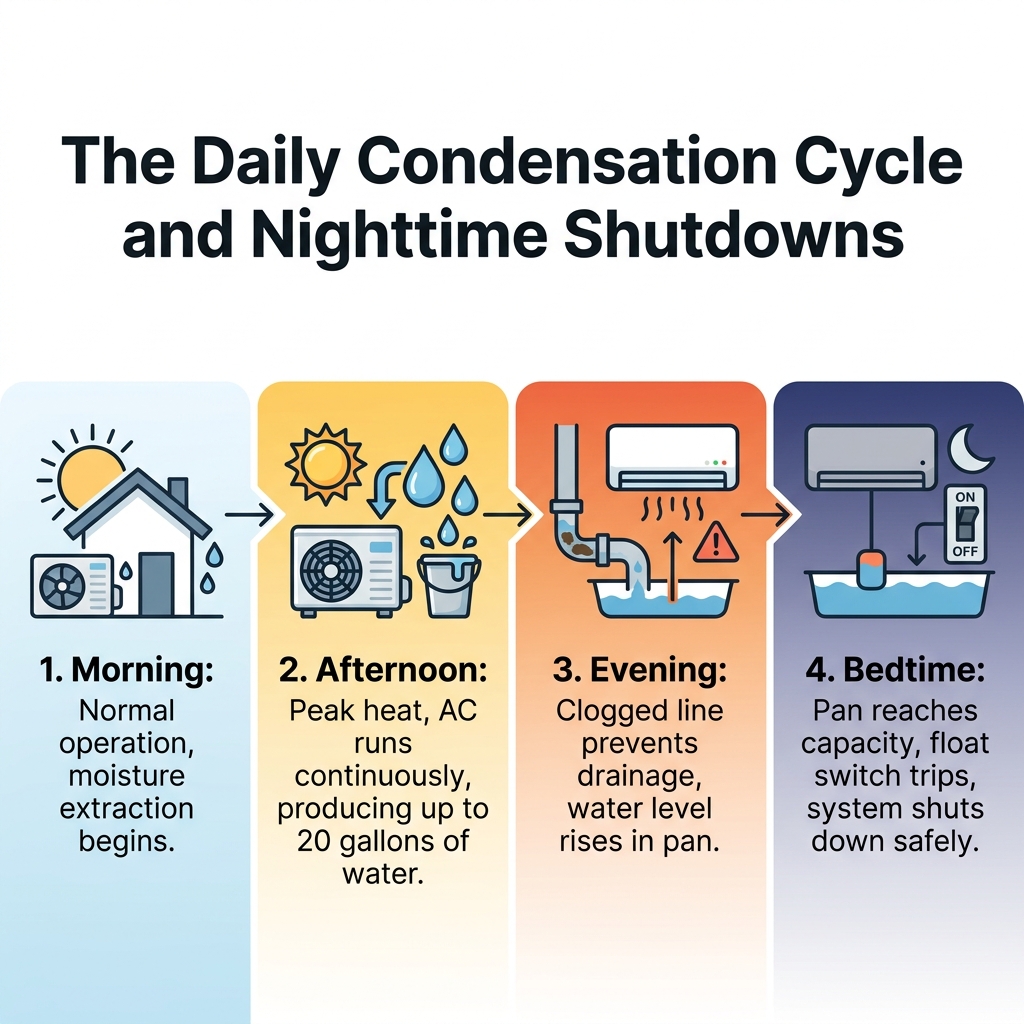

An AC float switch is a small mechanical or electronic safety device located near the indoor unit's evaporator coil and drain pan. Its sole purpose is to monitor the water level inside that pan. When the condensate drain line clogs and water begins to back up, the rising water lifts a small buoyant mechanism inside the switch. Once the float reaches a certain height, it severs the low-voltage electrical circuit that communicates with your thermostat.
When this circuit is broken, the thermostat often goes completely blank, and the air conditioner immediately halts operation. While losing cooling on a hot night in Derby KS is incredibly frustrating, a tripped switch is actually a sign that your system is working perfectly to protect your home. Without this switch, the indoor unit would continue running, endlessly pulling moisture from the air and dumping it into an already overflowing pan.
The consequences of a failed or missing float switch can be severe. Unchecked water overflowing from an attic unit can destroy ceiling drywall, ruin insulation, and collapse onto the floor below. For basement or closet units, overflowing pans can warp hardwood floors, soak carpets, and trigger rapid mold growth in the surrounding walls.
Our team at MJB Heating & Cooling recently helped a local homeowner who faced a situation where extensive condensation in their basement began causing significant property damage. Because they reached out regarding the urgent issue, our technicians addressed it immediately—ultimately installing a new system so the customer could sleep better knowing their home was protected for years to come. This highlights exactly why the float switch is so vital: the minor inconvenience of a warm night is vastly preferable to the severe property damage caused by an overflowing drain pan.
If your system shuts down unexpectedly in the evening, you can perform a safe, visual-only inspection to determine if a tripped float switch is the cause. It is absolutely critical that you do not attempt to dismantle the equipment, remove sealed access panels, or bypass any electrical wiring. These steps are strictly for visual confirmation to help you communicate effectively with a technician.
1. Turn off the thermostat: Before inspecting the unit, switch your thermostat to the "Off" position. This ensures the system does not suddenly power on while you are looking at it.
2. Locate the indoor air handler: Find your indoor HVAC unit. Depending on your home's layout, this will typically be located in a utility closet, the basement, or up in the attic.
3. Find the primary drain pan and PVC line: Look near the bottom of the indoor unit where a white PVC pipe exits the cabinet. This is the condensate drain line. The float switch is usually a small device spliced into this PVC pipe or plugged directly into a secondary port on the drain pan itself.
4. Look for standing water: Shine a flashlight at the drain pan and the base of the unit. If you see standing water pooling around the unit, overflowing the pan, or sitting high up inside the clear cap of the float switch, you have confirmed a clog.
5. Check for secondary signs of moisture: Inspect the floor or ceiling around the unit for water stains, dampness, or active dripping.
A strict warning: Never attempt dangerous DIY electrical bypasses to force the system to run. Bypassing a float switch removes the only safeguard preventing gallons of water from flooding your home. If you confirm standing water, leave the system off and prepare to call a professional.
Understanding why the drain line became clogged in the first place bridges the gap between a one-time emergency and long-term preventative maintenance. Condensate lines do not usually clog overnight; they suffer from a slow, cumulative buildup of biological and particulate matter over months of constant use.
The inside of a condensate drain line is dark, constantly damp, and relatively warm—creating the perfect breeding ground for algae, mold, and mildew. As the air conditioner runs throughout the spring and summer, these biological contaminants take root inside the PVC piping. Over time, they grow into a thick, gelatinous sludge that slowly restricts the flow of water.
Biological growth is not the only culprit. Even with a good air filter in place, microscopic dust particles, pet dander, and airborne dirt inevitably make their way into the return ducts and across the evaporator coil. This debris washes off the coil with the condensation and flows into the drain pan. When this dirt mixes with the algae and mold inside the pipe, it creates a dense, cement-like blockage.
By the end of the cooling season, months of constant use allow these blockages to solidify. Additionally, environmental factors play a role. If you are curious about local environmental impacts on your plumbing and HVAC systems, understanding how hard water affects AC condensate drain lines can shed light on mineral scale buildup that further narrows the pipe, making it even easier for sludge to cause a complete backup.
Once you have visually confirmed that a clogged drain line and tripped float switch are responsible for your nighttime AC failure, you face a decision: do you need immediate after-hours emergency help, or can you safely wait until morning? In our years serving the Derby community, our team at MJB Heating & Cooling believes in reducing late-night panic by offering honest guidance on when emergency service is truly necessary versus when a standard morning appointment will suffice.
Making this decision requires evaluating the indoor temperature, the vulnerability of your household members, and the severity of the water issue. If the system is safely shut down and the house remains tolerable, waiting for standard morning hours is often a safe, cost-effective choice.
• Indoor Temperature — Wait for Standard Morning Call: House is warm but tolerable with ceiling fans and open windows. — Request Emergency After-Hours Service: House is dangerously hot, posing a risk of heat exhaustion.
• Household Members — Wait for Standard Morning Call: Healthy adults and older children who can manage a warm night. — Request Emergency After-Hours Service: Infants, elderly residents, or individuals with heat-sensitive medical conditions.
• Water Severity — Wait for Standard Morning Call: Water is fully contained within the drain pan; no active leaking. — Request Emergency After-Hours Service: Water is actively pouring onto floors, through ceilings, or near electrical panels.
• Time of Night — Wait for Standard Morning Call: Failure happens at 3:00 AM; morning is only a few hours away. — Request Emergency After-Hours Service: Failure happens at 8:00 PM; a long, hot night stretches ahead.
Regardless of when you schedule the visit, a professional must clear the line and reset the switch to ensure the system operates safely. If you decide to wait for morning, you can easily review our service areas to ensure a technician can be dispatched to your home as soon as standard operations resume.
When the air conditioner stops working in the dark, homeowners often have the same immediate questions. Here are the clear, authoritative answers to help you understand exactly what is happening with your system.
A sudden nighttime shutdown is often caused by a tripped float switch triggered by a clogged condensate drain. This happens at night because the system has spent the entire day extracting humidity from the air. By evening, that heavy volume of water finally overflows the partially blocked drain pan, causing the safety switch to cut power just as you are going to bed.
The float switch is typically located on the secondary drain port of the indoor air handler's drain pan. In many modern installations, it can also be found spliced directly into the primary PVC drain line exiting the unit. It often looks like a small PVC cap or a small electronic sensor with two low-voltage wires running back into the air handler cabinet.
When the drain line is clogged, water backs up into the indoor drain pan instead of flowing safely outside. If your system has a functioning float switch, the rising water triggers the switch to shut off the air conditioner. If no switch is present, or if the switch fails, the water will overflow the pan and cause extensive property damage to ceilings, walls, and floors.
The most common symptom of a tripped float switch is a blank thermostat screen or a system that completely refuses to turn on despite having power at the breaker. A quick visual inspection of the indoor unit will usually reveal standing water sitting high inside the drain pan or lifting the float mechanism inside the switch housing.
We strongly advise against bypassing the float switch under any circumstances. Bypassing this vital safety mechanism forces the air conditioner to keep running and producing condensation, which guarantees that the drain pan will overflow. This risks severe water damage to your ceilings, floors, and the sensitive electrical components of the HVAC equipment itself.
Water pools in the pan due to blockages in the condensate drain line, usually formed by a buildup of algae, mold, dirt, and pet dander. Over months of operation, this debris turns into a thick sludge that stops water flow. Improper initial installation, a lack of a proper P-trap, or a cracked drain pan can also contribute to standing water issues.
Addressing a tripped float switch requires more than just resetting a button; it requires completely clearing the root cause of the clog to prevent it from happening again the very next night. Attempting to vacuum out the line yourself often leaves stubborn algae behind, leading to a repeat failure. When your system shuts down unexpectedly, reaching out to local experts is the safest way to clear the blockage, verify the integrity of the drain pan, and restore your cooling safely.
To avoid these late-night surprises entirely, proactive care is your best defense. Regular cleanings keep the drain lines clear of the biological growth that causes these frustrating shutdowns. Consider investing in a comprehensive preventative maintenance plan to ensure your system is thoroughly inspected and flushed before the heavy heat of late summer arrives, giving you the peace of mind to sleep comfortably all season long.


Our A/C stopped working on a Sunday and due to health issues, we needed to find a service company available on a Sunday. I called MJB and left a message on their emergency voice mail. Within 10 minutes Tom Buck called me to hear my description of the symptoms. He was just finishing an appointment in Wichita and would be on his way to my home on the south end of Derby. He arrived within 30 minutes! From start to finish he was the perfect example of what you could ever hope for in an HVAC tech and a human being. His evaluation of our system inside and out was as thorough as I could ever imagine and once he was done with the repair, our system is running as well or better than ever. Well worth the price for the evaluation, parts, and labor. Thank you again Tom for an awesome experience.
Our AC went out during the hottest days of the year, and they were out next day! We have been jerked around by a shoddy home warranty for years. We finally had a chance to pick our own repair people, and MJB came highly recommended. I can see why! I was impressed with the honesty and speed at which they fixed our AC unit!
Our commercial building had a lightening/electrical strike and damaged our 20 ton AC unit. No one could find us a new unit before the end of September. Imagining going all of August and September with no AC in Kansas and working inside near 100 degree temps is less than thrilling. Dale and the team at MJB called around and saved the day. They had us a new unit 5 weeks earlier than other could promise and I now have happy employees. The unit is amazingly quiet, super cold and so much more energy efficient. Thank you for being our super hero!
Came out and installed my new furnace. Was very polite and affordable. They are very acknowledgeable and I highly recommend!
Thank you very much. We had our 1st warm night in 3weeks. MJB took the time and effort to find the real problem. And the employees were kind and thoughtful and explained things very well. I cannot thank you and all of MJB. Will recommend you highly. Thanks again Marjorie Herman Oxford Kansas
We had a new system installed and I was so impressed with how quick they were in come out and install it, in the middle of a hot summer day. They were so friendly & very professional. I had a small problem with a weird sound and they came over immediately and fixed it. Love them!