.avif)





Blogs
Stay updated with our latest blog posts.
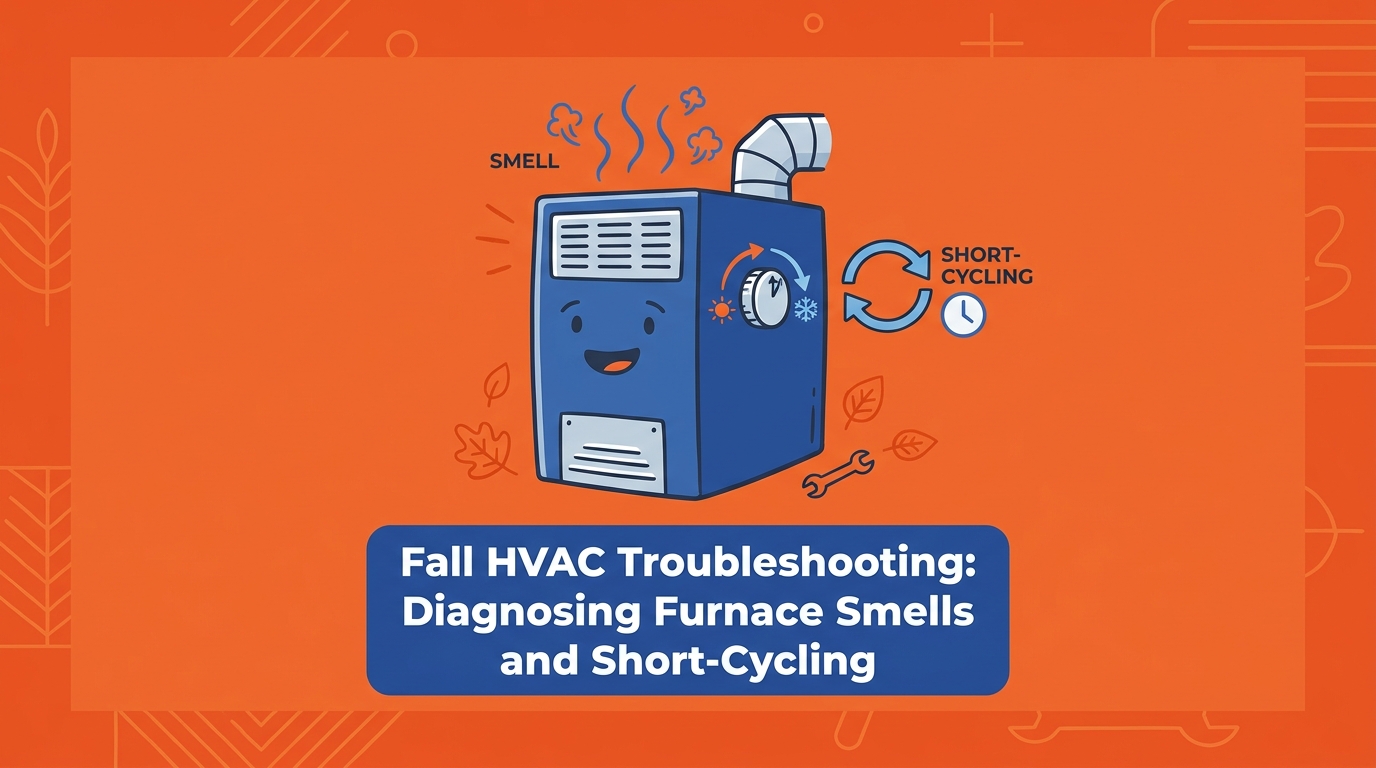

October brings a sudden, undeniable chill to the air, and your furnace has likely been sitting dormant since early spring. When you need home maintenance tips and troubleshooting, the first cold snap of the year is usually what prompts the search. In our experience at MJB Heating & Cooling, Kansas weather swings rapidly in mid-fall, meaning residential heating systems go from zero usage to high demand practically overnight. We see firsthand how this sudden transition puts immense stress on mechanical components that have been gathering dust for months.
As you turn up the thermostat for that initial October heating startup, you might encounter a central dilemma: deciding if those strange initial smells and sudden shutoffs are normal seasonal quirks or signs of a failing component. You rely on your system to keep your family safe and warm, so ignoring these early warning signs is never a good strategy. Whether you need to Schedule AC Repair for a lingering summer air conditioning issue that never quite went away, or you need comprehensive HVAC Services to ensure your furnace is fully prepared for the freezing months ahead, professional oversight is the key to long-term comfort.
To understand why your heating system acts up during the seasonal transition, it helps to know what happens mechanically when a furnace is turned on after sitting idle through the summer. Our technicians often explain to homeowners in Derby KS that that first chilly evening triggers a complex sequence of events inside the furnace cabinet, and any disruption in this sequence can lead to noticeable operational hiccups.
When you set your thermostat to heat, the system does not simply blast warm air instantly. It follows a strict mechanical and safety protocol:
1. The Call for Heat: The thermostat sends an electrical signal to the furnace control board.
2. The Draft Inducer Motor: This small fan turns on first, clearing lingering gases out of the heat exchanger and ensuring the flue is clear for safe venting.
3. The Igniter and Gas Valve: Once airflow is confirmed, the igniter glows hot (or a spark fires), and the gas valve opens to supply fuel to the burners.
4. The Flame Sensor: A critical safety component verifies that a flame is actually present. If it does not detect a flame, it shuts the gas valve immediately to prevent a dangerous buildup.
5. The Blower Motor: Finally, once the heat exchanger reaches the proper temperature, the main blower fan pushes the newly warmed air through your home's ductwork.
The Impact of Summer Dormancy
During the long summer months, settled dust, pet dander, and airborne debris naturally accumulate on the heat exchanger, the burners, and the blower motor assembly. When the furnace ignites for the first time in months, these components rapidly heat up, baking whatever has settled on them. This first cold snap acts as a high-stress event for dormant mechanical and electrical components. Belts that have stiffened must suddenly flex, motors that have sat still must spin at high RPMs, and sensors covered in a fine layer of dust must accurately read temperatures and flames. Understanding this sequence helps clarify why the initial startup is the most common time for dormant issues to finally reveal themselves.
Every October, our team fields calls from homeowners panicking about a sudden, distinct odor coming from their vents during their heating startup. While some smells are entirely harmless, others are urgent warning signs that require immediate action. Knowing the difference can save your system from severe damage and protect your home.
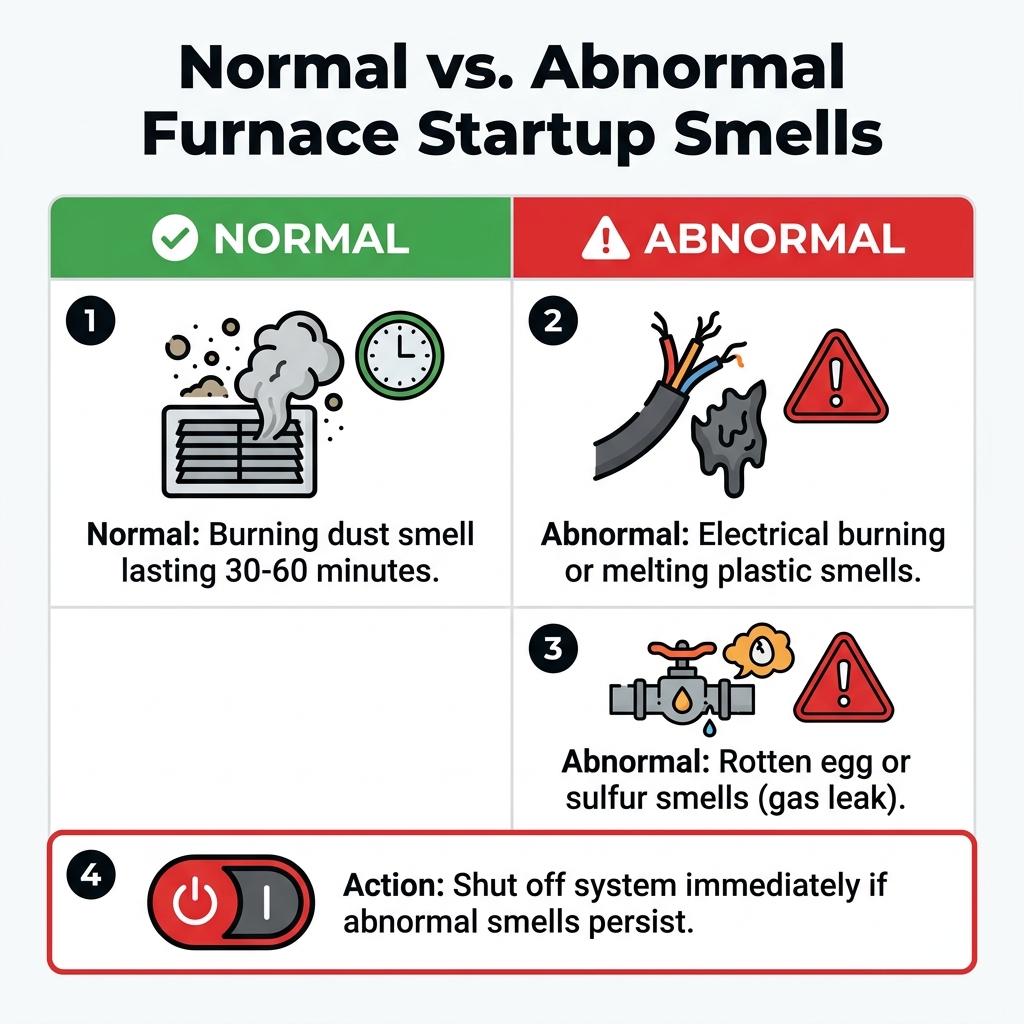
A slight burning dust smell is completely normal for the first 30 to 60 minutes of operation. As the heat exchanger warms up, it simply incinerates the thin layer of debris that gathered over the summer. However, if the smell lingers for hours or changes in character, you need to pay close attention.
• Burning Dust or Musty Smell — Likely Cause: Summer dust accumulation burning off the heat exchanger. — Safety Level & Required Action: Normal. Should dissipate within 30 to 60 minutes. Open a window if needed.
• Electrical Burning or Ozone — Likely Cause: Overheating blower motor, frayed wiring, or a failing circuit board. — Safety Level & Required Action: Dangerous. Shut off the system immediately at the thermostat and breaker. Call a professional.
• Melting Plastic or Rubber — Likely Cause: A foreign object in the ductwork or a failing internal belt/component. — Safety Level & Required Action: Dangerous. Turn off the system. This requires professional inspection to prevent a fire hazard.
• Rotten Eggs or Sulfur — Likely Cause: A natural gas leak near the furnace or gas valve. — Safety Level & Required Action: Emergency. Evacuate the home, leave the doors open, do not touch light switches, and call the gas company.
The best way to minimize that initial burning dust smell and catch potential electrical hazards early is through proactive, professional care. Having an active HVAC Maintenance Plan ensures that a technician cleans the internal components, tests the electrical connections, and verifies the integrity of the heat exchanger long before you actually need to turn the heat on.
Another frequent issue our service technicians encounter during the first major temperature drop is a frustrating phenomenon known as short-cycling. If you notice your furnace turning on, running for just a few minutes, and then abruptly shutting off before the house actually warms up, your system is short-cycling. This prevents the home from properly reaching your desired temperature and places massive strain on the furnace's internal components.
The Role of the High-Limit Switch
Modern heating systems are equipped with a variety of safety sensors, the most important of which is the high-limit switch. This switch monitors the temperature of the heat exchanger. If the internal temperature rises beyond a safe threshold, the high-limit switch triggers an automatic safety shutoff, instantly cutting power to the burners while leaving the blower fan running to cool the system down. Once the furnace cools, it tries to start again, overheats again, and shuts down again—creating the short-cycling loop.
Why Does the System Overheat?
Short-cycling is almost always a symptom of a larger airflow or mechanical restriction, not just a simple thermostat glitch. The most common culprit we see in the field is a severely clogged air filter. When the blower motor cannot pull enough cold air across the heat exchanger to cool it down, the heat stays trapped inside the cabinet, tripping the safety sensor. Other causes include blocked return vents, a failing blower motor, or an oversized furnace that heats the immediate space too quickly.
Because a furnace that constantly turns on and off consumes excessive energy and wears out its ignition components prematurely, prompt attention is required across all Kansas Service Areas before freezing overnight temperatures set in. Ignoring a short-cycling furnace in Derby KS will eventually lead to a completely failed blower motor or a cracked heat exchanger.
When faced with a furnace that refuses to stay on or emits a strange odor during the October heating startup, it can be tempting to open the cabinet and look for a quick fix. However, modern HVAC systems contain complex electrical and gas components that require licensed expertise to handle safely. Establishing clear safety boundaries is vital for protecting your home and your family.
The Dangers of Bypassing Safety Sensors
You should never attempt to bypass a flame sensor, jump a high-limit switch, or modify the gas valve. These components exist specifically to prevent catastrophic system failure, fires, and carbon monoxide leaks. If a safety switch is tripping, it is doing its job by protecting you from a severe underlying problem. Attempting DIY fixes on a gas appliance is not just risky; it can easily void your manufacturer's warranty and violate local building codes.
• Electrical Hazards: Furnaces use high-voltage components that can cause severe shock if mishandled.
• Carbon Monoxide Risks: Improperly adjusted burners or a cracked heat exchanger can leak odorless, deadly carbon monoxide into your living space.
• Fire Risks: Tinkering with the ignition sequence or gas pressure can create immediate fire hazards.
Prioritizing safety over technical DIY fixes is the smartest financial and physical decision you can make. As a safety-first team with Daikin Comfort Pro expertise, we at MJB Heating & Cooling want homeowners to know that professional diagnosis is the only safe path forward. Fast, professional intervention on frigid days can even uncover hidden dangers you might never have noticed. For example, during a previous winter's frigid day, our team responded to a local homeowner experiencing a complete heater failure. Our technician arrived rapidly, restored the heat, and in the process, identified a critical code violation on the home's hot water tank that the homeowner had been completely unaware of. That level of comprehensive safety oversight is impossible to achieve with a DIY approach.
During our fall maintenance visits across Derby KS, our technicians frequently hear the same concerns from homeowners firing up their heating systems for the first time. Here are our clear answers to the most common questions regarding fall HVAC troubleshooting.
Your furnace smells like burning dust because settled airborne particles accumulate on the heat exchanger during its summer dormancy. When the burners ignite for the first time in months, this layer of dust rapidly heats up and burns off. This process is completely harmless and is a standard part of the seasonal transition.
A normal burning dust smell should only last for the first 30 to 60 minutes of operation. Once the initial layer of debris is incinerated, the odor will dissipate as the air circulates. If the smell persists longer than an hour, or if it grows stronger, you should turn the system off and schedule an inspection.
A furnace short cycles when an internal safety mechanism, usually the high-limit switch, detects overheating and shuts the burners down to prevent damage. The most common causes are dirty air filters restricting airflow, blocked vents, faulty thermostats, or a malfunctioning flame sensor. This safety mechanism protects your heat exchanger from cracking under extreme heat stress.
It is generally safe to run a furnace if the smell is strictly a light, dusty odor that fades within an hour. However, it is never safe to run a furnace that smells like electrical burning, melting plastic, or rotten eggs. If you detect any of these dangerous odors, the definitive rule is to shut the system down immediately at the thermostat and call a professional.
You should call a professional technician if a burning smell persists beyond the first hour of operation, if the odor is accompanied by strange grinding or squealing noises, or if the system fails to produce heat. A professional diagnosis is essential to rule out electrical shorts, failing motors, or cracked heat exchangers that threaten your home's safety.
Yes, lingering summer air conditioning issues can absolutely affect your heating system because both modes share critical internal components, such as the blower motor and ductwork. If a blower motor was strained heavily during the hotter months, that underlying weakness can cause it to fail completely when switching to heating mode. If you noticed your AC not cooling properly in extreme heat late in the summer, having a technician inspect the shared air handler before winter is highly recommended.
Sometimes, what seems like a routine October heating startup issue reveals a much larger problem. If your furnace is frequently short-cycling, emitting strange odors despite recent cleanings, or requiring multiple service calls just to keep the house warm, you may be facing a system replacement rather than a simple repair.
When dealing with an older unit, you must weigh the cost of ongoing repairs against the age and efficiency of the current system. A furnace that is over 15 years old and requires a major component replacement—like a cracked heat exchanger or a burnt-out blower motor—is often not worth the investment. Upgrading to a newer, high-efficiency model not only resolves the immediate mechanical failures but also provides significantly better airflow, safer operation, and lower monthly energy usage.
Our team understands that a full system replacement is a major household decision. Exploring HVAC Financing Options—and checking if generic federal tax credits or local utility incentives apply to qualifying high-efficiency installations—can make upgrading to a safer, more efficient system highly manageable, allowing you to break the cost into predictable monthly payments. Proactive replacements in the fall prevent the nightmare scenario of an emergency system failure in the dead of winter, when temperatures drop below freezing and technicians are fully booked.
True peace of mind comes from knowing that your heating system is safe, efficient, and fully ready to handle the harsh winter ahead. For homeowners in Derby KS, ignoring persistent smells, strange noises, or a short-cycling furnace is a gamble that rarely pays off.
If your system is struggling during its initial startup, do not wait for a complete breakdown on the coldest night of the year. Reach out to the MJB Heating & Cooling team for a professional inspection or repair today. A qualified technician can properly diagnose the root cause of the issue, prioritize your family's safety, and ensure your home remains a warm, comfortable sanctuary all season long.


Our A/C stopped working on a Sunday and due to health issues, we needed to find a service company available on a Sunday. I called MJB and left a message on their emergency voice mail. Within 10 minutes Tom Buck called me to hear my description of the symptoms. He was just finishing an appointment in Wichita and would be on his way to my home on the south end of Derby. He arrived within 30 minutes! From start to finish he was the perfect example of what you could ever hope for in an HVAC tech and a human being. His evaluation of our system inside and out was as thorough as I could ever imagine and once he was done with the repair, our system is running as well or better than ever. Well worth the price for the evaluation, parts, and labor. Thank you again Tom for an awesome experience.
Our AC went out during the hottest days of the year, and they were out next day! We have been jerked around by a shoddy home warranty for years. We finally had a chance to pick our own repair people, and MJB came highly recommended. I can see why! I was impressed with the honesty and speed at which they fixed our AC unit!
Our commercial building had a lightening/electrical strike and damaged our 20 ton AC unit. No one could find us a new unit before the end of September. Imagining going all of August and September with no AC in Kansas and working inside near 100 degree temps is less than thrilling. Dale and the team at MJB called around and saved the day. They had us a new unit 5 weeks earlier than other could promise and I now have happy employees. The unit is amazingly quiet, super cold and so much more energy efficient. Thank you for being our super hero!
Came out and installed my new furnace. Was very polite and affordable. They are very acknowledgeable and I highly recommend!
Thank you very much. We had our 1st warm night in 3weeks. MJB took the time and effort to find the real problem. And the employees were kind and thoughtful and explained things very well. I cannot thank you and all of MJB. Will recommend you highly. Thanks again Marjorie Herman Oxford Kansas
We had a new system installed and I was so impressed with how quick they were in come out and install it, in the middle of a hot summer day. They were so friendly & very professional. I had a small problem with a weird sound and they came over immediately and fixed it. Love them!