


.avif)





Blogs
Stay updated with our latest blog posts.
Is upgrading to a smart thermostat worth it? For most homeowners in the Wichita metro area, the answer is yes. Smart thermostats save energy by automatically adjusting your home's temperature based on your schedule, occupancy, and even the weather outside. With Central Kansas summers pushing temperatures well past 100°F and winters dropping below freezing, your HVAC system works hard year-round — and every bit of wasted runtime costs you money.
Here's a quick snapshot of what you can expect:
The EPA's Energy Star program puts average savings at around 8% on utility bills. Studies on Nest and Ecobee devices show heating energy reductions of roughly 13% and cooling reductions of around 15% in typical U.S. homes. In a place like Wichita — where seasonal extremes are the norm, not the exception — those numbers can climb even higher.
The core idea is simple: a smart thermostat stops your HVAC from running when it doesn't need to, without you having to think about it.
When we talk about Return on Investment (ROI), we are looking at how quickly the device pays for itself through lower utility bills. In the Kansas climate, where we experience "all four seasons in one week," the efficiency of your HVAC system is paramount.
To understand the value, it helps to compare the three main types of thermostats:
| Feature | Manual Thermostat | Programmable Thermostat | Smart Thermostat |
|---|---|---|---|
| Connectivity | None | None | Wi-Fi Enabled |
| Remote Control | No | No | Yes (Smartphone/Tablet) |
| Learning Capability | No | No | Yes |
| Occupancy Sensors | No | No | Yes |
| Energy Reports | No | No | Yes |
| Automatic Updates | No | No | Yes |
Research shows that while programmable thermostats can save money, 40% to 70% of users never actually program them or frequently override the settings. This is where the "smart" aspect changes the game. By automating the process, these devices ensure you aren't cooling an empty house in Andover or heating a vacant living room in Derby while you're at work.
Most Energy Star-certified models save households an average of $50 per year, though many users report savings between $131 and $145 annually. Given the typical purchase price, the payback period is often just 1 to 2 years. Beyond the hardware, you should also consider the installation. If you are unsure about your system's wiring, reviewing Expert HVAC Installation Questions for Your Technician can help you prepare for a professional setup.
Living in the Wichita metro area means dealing with unpredictable temperature spikes. A smart thermostat doesn't just follow a clock; it uses advanced technology to respond to the real world.
The "learning" feature is perhaps the biggest leap forward in HVAC technology. During the first week of use, the device watches your habits. Do you turn the heat down before bed? Do you prefer it cooler on Saturday mornings?
The thermostat builds a schedule around you, rather than forcing you to program a complicated interface. It also uses "Adaptive Recovery." If you want your home to be 72°F at 7:00 AM, the thermostat calculates exactly how long your specific furnace or AC takes to reach that temperature based on the outdoor conditions, starting the cycle at the precise moment needed to hit the goal efficiently. To ensure your system can keep up with these smart commands, don't forget Essential HVAC Maintenance Tips for Your Furnace and AC.
We’ve all had that moment of panic halfway to a vacation destination: "Did I leave the AC on 68?" With remote access, you can check and adjust your home’s climate from anywhere in the world with a Wi-Fi connection.
This is especially useful for residents in our service area who travel frequently. You can set the house to a "Vacation Mode" that protects your pipes from freezing in the winter or prevents humidity buildup in the summer, then turn the system back to your preferred comfort level while you're still at the airport or driving back into town.
Before you run out to buy the latest model, we need to talk about the "C-wire" or Common Wire.
Most smart thermostats are essentially small computers with glowing screens and Wi-Fi radios. They need a constant stream of 24V power to stay connected. Older homes in places like Wellington or Newton may only have two or four wires running to the thermostat, lacking the dedicated C-wire that provides this power.
If your home lacks a C-wire, you have a few options:
If you’re attempting a DIY install and hear your HVAC System Making Strange Noises afterward, it could be a sign of a wiring conflict or a short circuit. It is always safer to have a professional verify the voltage and compatibility.
A smart thermostat is a powerful tool, but it works best as part of a healthy HVAC ecosystem. One of the most underrated benefits is the maintenance alert system.
Many smart models track how many hours your system has run and will send a notification to your phone when it’s time to change the filter. This is crucial because a clogged filter is the leading cause of system breakdowns and inefficiency. If you're wondering How Often Should HVAC Air Filters Be Changed, your smart thermostat can take the guesswork out of it by monitoring actual usage rather than just the passage of time.
Furthermore, these devices can integrate with other smart home systems like Alexa or Google Home, allowing for voice-controlled comfort. From an environmental perspective, the cumulative effect of thousands of homes in the Wichita area reducing their energy waste by 10% is massive, significantly lowering the local carbon footprint.
In most cases, yes. As long as your system uses standard 24V wiring (the most common type for forced-air furnaces and central AC), a smart thermostat can control it. However, if you have very old equipment or specialized systems like electric baseboard heat, you may need a specific type of controller. We recommend a quick professional assessment to ensure you don't accidentally blow a transformer in an older unit.
While many homeowners successfully install these devices themselves, professional installation offers peace of mind. We ensure the wiring is secure, the system is configured correctly for your specific HVAC type (like a heat pump vs. a gas furnace), and that the Wi-Fi signal is strong enough for reliable operation. Plus, professional installation often protects your equipment warranty.
Savings vary based on your home’s insulation and your previous habits. If you were already diligent about manually turning the thermostat down every time you left the house, your savings might be closer to 8%. If you tend to "set it and forget it" at a constant 70°F year-round, you could see savings upwards of 15% to 20%.
At the end of the day, is upgrading to a smart thermostat worth it? When you consider the combination of lower utility bills, increased comfort, and the ability to monitor your home from anywhere, the investment is one of the smartest upgrades you can make for your property.
At MJB Heating & Cooling, we’ve been serving the Wichita metro area since 1984. Whether you’re in Derby, Andover, or right here in Wichita, our family-owned team is dedicated to quality workmanship and an honest business approach. We understand the specific demands the Central Kansas climate puts on your HVAC system, and we’re here to help you navigate the best technology to keep your home comfortable and your bills manageable.
If you’re ready to upgrade your comfort and start saving, contact us today to discuss which smart thermostat is right for your home.
Is upgrading to a smart thermostat worth it? For most homeowners in the Wichita metro area, the answer is yes. Smart thermostats save energy by automatically adjusting your home's temperature based on your schedule, occupancy, and even the weather outside. With Central Kansas summers pushing temperatures well past 100°F and winters dropping below freezing, your HVAC system works hard year-round — and every bit of wasted runtime costs you money.
Here's a quick snapshot of what you can expect:
The EPA's Energy Star program puts average savings at around 8% on utility bills. Studies on Nest and Ecobee devices show heating energy reductions of roughly 13% and cooling reductions of around 15% in typical U.S. homes. In a place like Wichita — where seasonal extremes are the norm, not the exception — those numbers can climb even higher.
The core idea is simple: a smart thermostat stops your HVAC from running when it doesn't need to, without you having to think about it.
When we talk about Return on Investment (ROI), we are looking at how quickly the device pays for itself through lower utility bills. In the Kansas climate, where we experience "all four seasons in one week," the efficiency of your HVAC system is paramount.
To understand the value, it helps to compare the three main types of thermostats:
| Feature | Manual Thermostat | Programmable Thermostat | Smart Thermostat |
|---|---|---|---|
| Connectivity | None | None | Wi-Fi Enabled |
| Remote Control | No | No | Yes (Smartphone/Tablet) |
| Learning Capability | No | No | Yes |
| Occupancy Sensors | No | No | Yes |
| Energy Reports | No | No | Yes |
| Automatic Updates | No | No | Yes |
Research shows that while programmable thermostats can save money, 40% to 70% of users never actually program them or frequently override the settings. This is where the "smart" aspect changes the game. By automating the process, these devices ensure you aren't cooling an empty house in Andover or heating a vacant living room in Derby while you're at work.
Most Energy Star-certified models save households an average of $50 per year, though many users report savings between $131 and $145 annually. Given the typical purchase price, the payback period is often just 1 to 2 years. Beyond the hardware, you should also consider the installation. If you are unsure about your system's wiring, reviewing Expert HVAC Installation Questions for Your Technician can help you prepare for a professional setup.
Living in the Wichita metro area means dealing with unpredictable temperature spikes. A smart thermostat doesn't just follow a clock; it uses advanced technology to respond to the real world.
The "learning" feature is perhaps the biggest leap forward in HVAC technology. During the first week of use, the device watches your habits. Do you turn the heat down before bed? Do you prefer it cooler on Saturday mornings?
The thermostat builds a schedule around you, rather than forcing you to program a complicated interface. It also uses "Adaptive Recovery." If you want your home to be 72°F at 7:00 AM, the thermostat calculates exactly how long your specific furnace or AC takes to reach that temperature based on the outdoor conditions, starting the cycle at the precise moment needed to hit the goal efficiently. To ensure your system can keep up with these smart commands, don't forget Essential HVAC Maintenance Tips for Your Furnace and AC.
We’ve all had that moment of panic halfway to a vacation destination: "Did I leave the AC on 68?" With remote access, you can check and adjust your home’s climate from anywhere in the world with a Wi-Fi connection.
This is especially useful for residents in our service area who travel frequently. You can set the house to a "Vacation Mode" that protects your pipes from freezing in the winter or prevents humidity buildup in the summer, then turn the system back to your preferred comfort level while you're still at the airport or driving back into town.
Before you run out to buy the latest model, we need to talk about the "C-wire" or Common Wire.
Most smart thermostats are essentially small computers with glowing screens and Wi-Fi radios. They need a constant stream of 24V power to stay connected. Older homes in places like Wellington or Newton may only have two or four wires running to the thermostat, lacking the dedicated C-wire that provides this power.
If your home lacks a C-wire, you have a few options:
If you’re attempting a DIY install and hear your HVAC System Making Strange Noises afterward, it could be a sign of a wiring conflict or a short circuit. It is always safer to have a professional verify the voltage and compatibility.
A smart thermostat is a powerful tool, but it works best as part of a healthy HVAC ecosystem. One of the most underrated benefits is the maintenance alert system.
Many smart models track how many hours your system has run and will send a notification to your phone when it’s time to change the filter. This is crucial because a clogged filter is the leading cause of system breakdowns and inefficiency. If you're wondering How Often Should HVAC Air Filters Be Changed, your smart thermostat can take the guesswork out of it by monitoring actual usage rather than just the passage of time.
Furthermore, these devices can integrate with other smart home systems like Alexa or Google Home, allowing for voice-controlled comfort. From an environmental perspective, the cumulative effect of thousands of homes in the Wichita area reducing their energy waste by 10% is massive, significantly lowering the local carbon footprint.
In most cases, yes. As long as your system uses standard 24V wiring (the most common type for forced-air furnaces and central AC), a smart thermostat can control it. However, if you have very old equipment or specialized systems like electric baseboard heat, you may need a specific type of controller. We recommend a quick professional assessment to ensure you don't accidentally blow a transformer in an older unit.
While many homeowners successfully install these devices themselves, professional installation offers peace of mind. We ensure the wiring is secure, the system is configured correctly for your specific HVAC type (like a heat pump vs. a gas furnace), and that the Wi-Fi signal is strong enough for reliable operation. Plus, professional installation often protects your equipment warranty.
Savings vary based on your home’s insulation and your previous habits. If you were already diligent about manually turning the thermostat down every time you left the house, your savings might be closer to 8%. If you tend to "set it and forget it" at a constant 70°F year-round, you could see savings upwards of 15% to 20%.
At the end of the day, is upgrading to a smart thermostat worth it? When you consider the combination of lower utility bills, increased comfort, and the ability to monitor your home from anywhere, the investment is one of the smartest upgrades you can make for your property.
At MJB Heating & Cooling, we’ve been serving the Wichita metro area since 1984. Whether you’re in Derby, Andover, or right here in Wichita, our family-owned team is dedicated to quality workmanship and an honest business approach. We understand the specific demands the Central Kansas climate puts on your HVAC system, and we’re here to help you navigate the best technology to keep your home comfortable and your bills manageable.
If you’re ready to upgrade your comfort and start saving, contact us today to discuss which smart thermostat is right for your home.
Is upgrading to a smart thermostat worth it? For most homeowners in the Wichita metro area, the answer is yes. Smart thermostats save energy by automatically adjusting your home's temperature based on your schedule, occupancy, and even the weather outside. With Central Kansas summers pushing temperatures well past 100°F and winters dropping below freezing, your HVAC system works hard year-round — and every bit of wasted runtime costs you money.
Here's a quick snapshot of what you can expect:
The EPA's Energy Star program puts average savings at around 8% on utility bills. Studies on Nest and Ecobee devices show heating energy reductions of roughly 13% and cooling reductions of around 15% in typical U.S. homes. In a place like Wichita — where seasonal extremes are the norm, not the exception — those numbers can climb even higher.
The core idea is simple: a smart thermostat stops your HVAC from running when it doesn't need to, without you having to think about it.
When we talk about Return on Investment (ROI), we are looking at how quickly the device pays for itself through lower utility bills. In the Kansas climate, where we experience "all four seasons in one week," the efficiency of your HVAC system is paramount.
To understand the value, it helps to compare the three main types of thermostats:
| Feature | Manual Thermostat | Programmable Thermostat | Smart Thermostat |
|---|---|---|---|
| Connectivity | None | None | Wi-Fi Enabled |
| Remote Control | No | No | Yes (Smartphone/Tablet) |
| Learning Capability | No | No | Yes |
| Occupancy Sensors | No | No | Yes |
| Energy Reports | No | No | Yes |
| Automatic Updates | No | No | Yes |
Research shows that while programmable thermostats can save money, 40% to 70% of users never actually program them or frequently override the settings. This is where the "smart" aspect changes the game. By automating the process, these devices ensure you aren't cooling an empty house in Andover or heating a vacant living room in Derby while you're at work.
Most Energy Star-certified models save households an average of $50 per year, though many users report savings between $131 and $145 annually. Given the typical purchase price, the payback period is often just 1 to 2 years. Beyond the hardware, you should also consider the installation. If you are unsure about your system's wiring, reviewing Expert HVAC Installation Questions for Your Technician can help you prepare for a professional setup.
Living in the Wichita metro area means dealing with unpredictable temperature spikes. A smart thermostat doesn't just follow a clock; it uses advanced technology to respond to the real world.
The "learning" feature is perhaps the biggest leap forward in HVAC technology. During the first week of use, the device watches your habits. Do you turn the heat down before bed? Do you prefer it cooler on Saturday mornings?
The thermostat builds a schedule around you, rather than forcing you to program a complicated interface. It also uses "Adaptive Recovery." If you want your home to be 72°F at 7:00 AM, the thermostat calculates exactly how long your specific furnace or AC takes to reach that temperature based on the outdoor conditions, starting the cycle at the precise moment needed to hit the goal efficiently. To ensure your system can keep up with these smart commands, don't forget Essential HVAC Maintenance Tips for Your Furnace and AC.
We’ve all had that moment of panic halfway to a vacation destination: "Did I leave the AC on 68?" With remote access, you can check and adjust your home’s climate from anywhere in the world with a Wi-Fi connection.
This is especially useful for residents in our service area who travel frequently. You can set the house to a "Vacation Mode" that protects your pipes from freezing in the winter or prevents humidity buildup in the summer, then turn the system back to your preferred comfort level while you're still at the airport or driving back into town.
Before you run out to buy the latest model, we need to talk about the "C-wire" or Common Wire.
Most smart thermostats are essentially small computers with glowing screens and Wi-Fi radios. They need a constant stream of 24V power to stay connected. Older homes in places like Wellington or Newton may only have two or four wires running to the thermostat, lacking the dedicated C-wire that provides this power.
If your home lacks a C-wire, you have a few options:
If you’re attempting a DIY install and hear your HVAC System Making Strange Noises afterward, it could be a sign of a wiring conflict or a short circuit. It is always safer to have a professional verify the voltage and compatibility.
A smart thermostat is a powerful tool, but it works best as part of a healthy HVAC ecosystem. One of the most underrated benefits is the maintenance alert system.
Many smart models track how many hours your system has run and will send a notification to your phone when it’s time to change the filter. This is crucial because a clogged filter is the leading cause of system breakdowns and inefficiency. If you're wondering How Often Should HVAC Air Filters Be Changed, your smart thermostat can take the guesswork out of it by monitoring actual usage rather than just the passage of time.
Furthermore, these devices can integrate with other smart home systems like Alexa or Google Home, allowing for voice-controlled comfort. From an environmental perspective, the cumulative effect of thousands of homes in the Wichita area reducing their energy waste by 10% is massive, significantly lowering the local carbon footprint.
In most cases, yes. As long as your system uses standard 24V wiring (the most common type for forced-air furnaces and central AC), a smart thermostat can control it. However, if you have very old equipment or specialized systems like electric baseboard heat, you may need a specific type of controller. We recommend a quick professional assessment to ensure you don't accidentally blow a transformer in an older unit.
While many homeowners successfully install these devices themselves, professional installation offers peace of mind. We ensure the wiring is secure, the system is configured correctly for your specific HVAC type (like a heat pump vs. a gas furnace), and that the Wi-Fi signal is strong enough for reliable operation. Plus, professional installation often protects your equipment warranty.
Savings vary based on your home’s insulation and your previous habits. If you were already diligent about manually turning the thermostat down every time you left the house, your savings might be closer to 8%. If you tend to "set it and forget it" at a constant 70°F year-round, you could see savings upwards of 15% to 20%.
At the end of the day, is upgrading to a smart thermostat worth it? When you consider the combination of lower utility bills, increased comfort, and the ability to monitor your home from anywhere, the investment is one of the smartest upgrades you can make for your property.
At MJB Heating & Cooling, we’ve been serving the Wichita metro area since 1984. Whether you’re in Derby, Andover, or right here in Wichita, our family-owned team is dedicated to quality workmanship and an honest business approach. We understand the specific demands the Central Kansas climate puts on your HVAC system, and we’re here to help you navigate the best technology to keep your home comfortable and your bills manageable.
If you’re ready to upgrade your comfort and start saving, contact us today to discuss which smart thermostat is right for your home.

Is upgrading to a smart thermostat worth it? For most homeowners in the Wichita metro area, the answer is yes. Smart thermostats save energy by automatically adjusting your home's temperature based on your schedule, occupancy, and even the weather outside. With Central Kansas summers pushing temperatures well past 100°F and winters dropping below freezing, your HVAC system works hard year-round — and every bit of wasted runtime costs you money.
Here's a quick snapshot of what you can expect:
• Average annual savings: 8–15% on heating and cooling costs
• Typical payback period: 1–2 years
• How they save: Automated setbacks, geofencing, occupancy sensing, and learning your schedule
• Who benefits most: Homeowners with irregular schedules, frequent travelers, or those who rarely reprogram a basic thermostat
• Who may see less benefit: Homes that are always occupied, located in very mild climates, or have variable-speed HVAC systems not suited to frequent on/off cycling
• Compatibility note: Most modern forced-air systems work great; older systems may need a C-wire check first
The EPA's Energy Star program puts average savings at around 8% on utility bills. Studies on Nest and Ecobee devices show heating energy reductions of roughly 13% and cooling reductions of around 15% in typical U.S. homes. In a place like Wichita — where seasonal extremes are the norm, not the exception — those numbers can climb even higher.
The core idea is simple: a smart thermostat stops your HVAC from running when it doesn't need to, without you having to think about it.

When we talk about Return on Investment (ROI), we are looking at how quickly the device pays for itself through lower utility bills. In the Kansas climate, where we experience "all four seasons in one week," the efficiency of your HVAC system is paramount.
To understand the value, it helps to compare the three main types of thermostats:
• Connectivity — Manual Thermostat: None — Programmable Thermostat: None — Smart Thermostat: Wi-Fi Enabled
• Remote Control — Manual Thermostat: No — Programmable Thermostat: No — Smart Thermostat: Yes (Smartphone/Tablet)
• Learning Capability — Manual Thermostat: No — Programmable Thermostat: No — Smart Thermostat: Yes
• Occupancy Sensors — Manual Thermostat: No — Programmable Thermostat: No — Smart Thermostat: Yes
• Energy Reports — Manual Thermostat: No — Programmable Thermostat: No — Smart Thermostat: Yes
• Automatic Updates — Manual Thermostat: No — Programmable Thermostat: No — Smart Thermostat: Yes
Research shows that while programmable thermostats can save money, 40% to 70% of users never actually program them or frequently override the settings. This is where the "smart" aspect changes the game. By automating the process, these devices ensure you aren't cooling an empty house in Andover or heating a vacant living room in Derby while you're at work.
Most Energy Star-certified models save households an average of $50 per year, though many users report savings between $131 and $145 annually. Given the typical purchase price, the payback period is often just 1 to 2 years. Beyond the hardware, you should also consider the installation. If you are unsure about your system's wiring, reviewing Expert HVAC Installation Questions for Your Technician can help you prepare for a professional setup.
Living in the Wichita metro area means dealing with unpredictable temperature spikes. A smart thermostat doesn't just follow a clock; it uses advanced technology to respond to the real world.
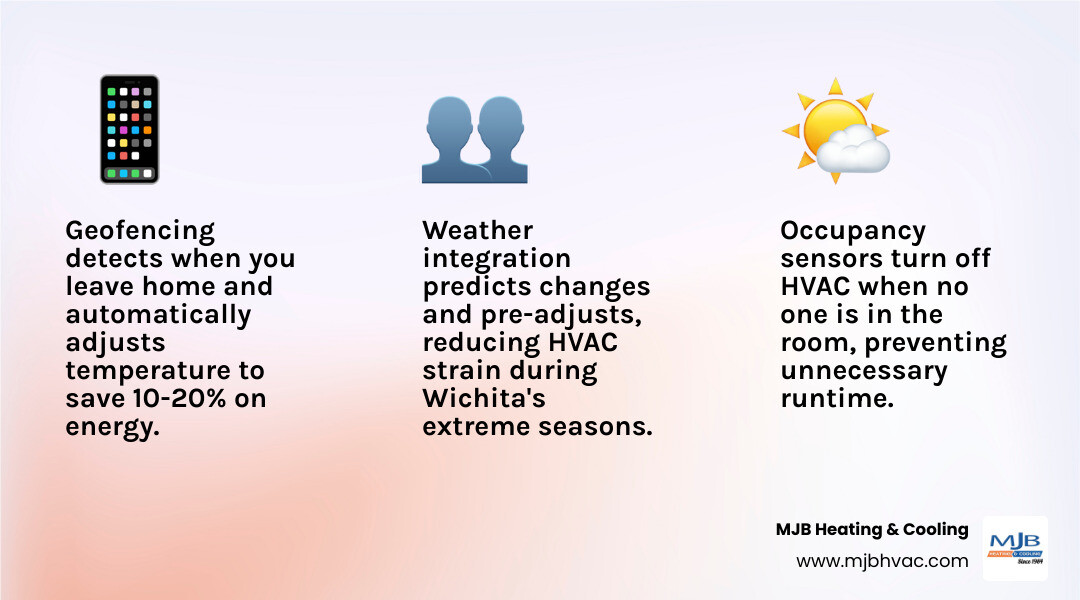
• Geofencing: This uses your phone’s GPS to create a virtual boundary around your home. When you leave the boundary (heading to work in Maize or running errands in Goddard), the thermostat switches to "Eco Mode." When you cross back into the boundary, it begins cooling or heating so the house is comfortable by the time you walk through the door.
• Occupancy Sensors: Many models use motion sensors to detect if anyone is actually in the room. If the house is quiet for a few hours, the system scales back usage automatically.
• Weather Integration: Smart thermostats track local Kansas weather forecasts. If a heatwave is rolling into Sedgwick County, the system can adjust its cooling strategy to maintain efficiency before the mercury hits 100°F.
• Energy Usage Reports: You’ll receive monthly breakdowns showing exactly when and why your HVAC system ran. This insight helps you identify habits that might be driving up your bills.
The "learning" feature is perhaps the biggest leap forward in HVAC technology. During the first week of use, the device watches your habits. Do you turn the heat down before bed? Do you prefer it cooler on Saturday mornings?
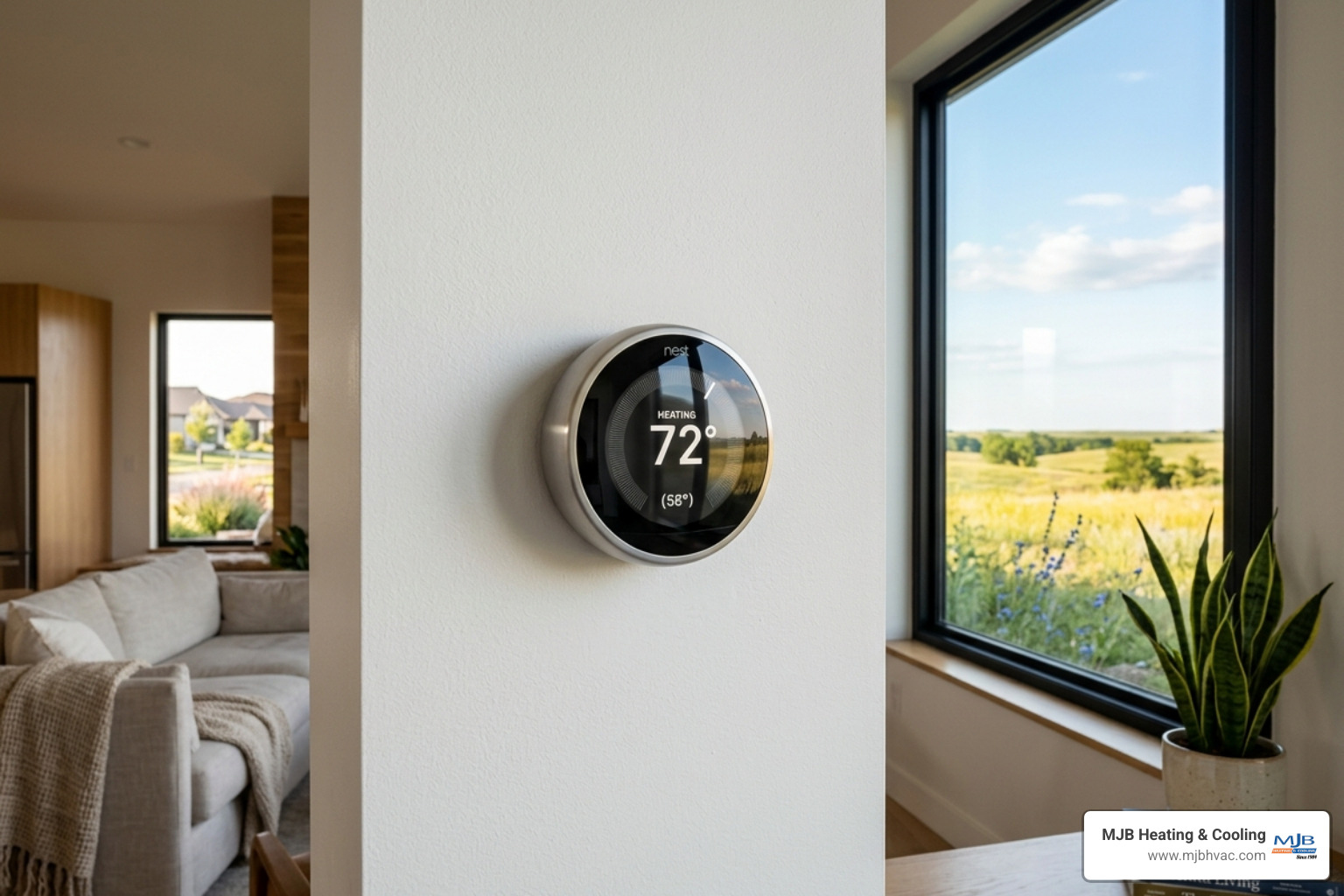
The thermostat builds a schedule around you, rather than forcing you to program a complicated interface. It also uses "Adaptive Recovery." If you want your home to be 72°F at 7:00 AM, the thermostat calculates exactly how long your specific furnace or AC takes to reach that temperature based on the outdoor conditions, starting the cycle at the precise moment needed to hit the goal efficiently. To ensure your system can keep up with these smart commands, don't forget Essential HVAC Maintenance Tips for Your Furnace and AC.
We’ve all had that moment of panic halfway to a vacation destination: "Did I leave the AC on 68?" With remote access, you can check and adjust your home’s climate from anywhere in the world with a Wi-Fi connection.
This is especially useful for residents in our service area who travel frequently. You can set the house to a "Vacation Mode" that protects your pipes from freezing in the winter or prevents humidity buildup in the summer, then turn the system back to your preferred comfort level while you're still at the airport or driving back into town.
Before you run out to buy the latest model, we need to talk about the "C-wire" or Common Wire.
Most smart thermostats are essentially small computers with glowing screens and Wi-Fi radios. They need a constant stream of 24V power to stay connected. Older homes in places like Wellington or Newton may only have two or four wires running to the thermostat, lacking the dedicated C-wire that provides this power.
If your home lacks a C-wire, you have a few options:
1. Power Extender Kits: Many manufacturers include an adapter that can be installed at your furnace or air handler.
2. Battery-Powered Models: Some models can "power steal" from other wires, though this can sometimes lead to connectivity issues or even damage to older HVAC components.
3. Professional Wiring: We can often run a new wire to ensure your system has a stable, permanent power source.
If you’re attempting a DIY install and hear your HVAC System Making Strange Noises afterward, it could be a sign of a wiring conflict or a short circuit. It is always safer to have a professional verify the voltage and compatibility.
A smart thermostat is a powerful tool, but it works best as part of a healthy HVAC ecosystem. One of the most underrated benefits is the maintenance alert system.
Many smart models track how many hours your system has run and will send a notification to your phone when it’s time to change the filter. This is crucial because a clogged filter is the leading cause of system breakdowns and inefficiency. If you're wondering How Often Should HVAC Air Filters Be Changed, your smart thermostat can take the guesswork out of it by monitoring actual usage rather than just the passage of time.
Furthermore, these devices can integrate with other smart home systems like Alexa or Google Home, allowing for voice-controlled comfort. From an environmental perspective, the cumulative effect of thousands of homes in the Wichita area reducing their energy waste by 10% is massive, significantly lowering the local carbon footprint.
In most cases, yes. As long as your system uses standard 24V wiring (the most common type for forced-air furnaces and central AC), a smart thermostat can control it. However, if you have very old equipment or specialized systems like electric baseboard heat, you may need a specific type of controller. We recommend a quick professional assessment to ensure you don't accidentally blow a transformer in an older unit.
While many homeowners successfully install these devices themselves, professional installation offers peace of mind. We ensure the wiring is secure, the system is configured correctly for your specific HVAC type (like a heat pump vs. a gas furnace), and that the Wi-Fi signal is strong enough for reliable operation. Plus, professional installation often protects your equipment warranty.
Savings vary based on your home’s insulation and your previous habits. If you were already diligent about manually turning the thermostat down every time you left the house, your savings might be closer to 8%. If you tend to "set it and forget it" at a constant 70°F year-round, you could see savings upwards of 15% to 20%.
At the end of the day, is upgrading to a smart thermostat worth it? When you consider the combination of lower utility bills, increased comfort, and the ability to monitor your home from anywhere, the investment is one of the smartest upgrades you can make for your property.
At MJB Heating & Cooling, we’ve been serving the Wichita metro area since 1984. Whether you’re in Derby, Andover, or right here in Wichita, our family-owned team is dedicated to quality workmanship and an honest business approach. We understand the specific demands the Central Kansas climate puts on your HVAC system, and we’re here to help you navigate the best technology to keep your home comfortable and your bills manageable.
If you’re ready to upgrade your comfort and start saving, contact us today to discuss which smart thermostat is right for your home.
Is upgrading to a smart thermostat worth it? For most homeowners in the Wichita metro area, the answer is yes. Smart thermostats save energy by automatically adjusting your home's temperature based on your schedule, occupancy, and even the weather outside. With Central Kansas summers pushing temperatures well past 100°F and winters dropping below freezing, your HVAC system works hard year-round — and every bit of wasted runtime costs you money.
Here's a quick snapshot of what you can expect:
The EPA's Energy Star program puts average savings at around 8% on utility bills. Studies on Nest and Ecobee devices show heating energy reductions of roughly 13% and cooling reductions of around 15% in typical U.S. homes. In a place like Wichita — where seasonal extremes are the norm, not the exception — those numbers can climb even higher.
The core idea is simple: a smart thermostat stops your HVAC from running when it doesn't need to, without you having to think about it.
When we talk about Return on Investment (ROI), we are looking at how quickly the device pays for itself through lower utility bills. In the Kansas climate, where we experience "all four seasons in one week," the efficiency of your HVAC system is paramount.
To understand the value, it helps to compare the three main types of thermostats:
| Feature | Manual Thermostat | Programmable Thermostat | Smart Thermostat |
|---|---|---|---|
| Connectivity | None | None | Wi-Fi Enabled |
| Remote Control | No | No | Yes (Smartphone/Tablet) |
| Learning Capability | No | No | Yes |
| Occupancy Sensors | No | No | Yes |
| Energy Reports | No | No | Yes |
| Automatic Updates | No | No | Yes |
Research shows that while programmable thermostats can save money, 40% to 70% of users never actually program them or frequently override the settings. This is where the "smart" aspect changes the game. By automating the process, these devices ensure you aren't cooling an empty house in Andover or heating a vacant living room in Derby while you're at work.
Most Energy Star-certified models save households an average of $50 per year, though many users report savings between $131 and $145 annually. Given the typical purchase price, the payback period is often just 1 to 2 years. Beyond the hardware, you should also consider the installation. If you are unsure about your system's wiring, reviewing Expert HVAC Installation Questions for Your Technician can help you prepare for a professional setup.
Living in the Wichita metro area means dealing with unpredictable temperature spikes. A smart thermostat doesn't just follow a clock; it uses advanced technology to respond to the real world.
The "learning" feature is perhaps the biggest leap forward in HVAC technology. During the first week of use, the device watches your habits. Do you turn the heat down before bed? Do you prefer it cooler on Saturday mornings?
The thermostat builds a schedule around you, rather than forcing you to program a complicated interface. It also uses "Adaptive Recovery." If you want your home to be 72°F at 7:00 AM, the thermostat calculates exactly how long your specific furnace or AC takes to reach that temperature based on the outdoor conditions, starting the cycle at the precise moment needed to hit the goal efficiently. To ensure your system can keep up with these smart commands, don't forget Essential HVAC Maintenance Tips for Your Furnace and AC.
We’ve all had that moment of panic halfway to a vacation destination: "Did I leave the AC on 68?" With remote access, you can check and adjust your home’s climate from anywhere in the world with a Wi-Fi connection.
This is especially useful for residents in our service area who travel frequently. You can set the house to a "Vacation Mode" that protects your pipes from freezing in the winter or prevents humidity buildup in the summer, then turn the system back to your preferred comfort level while you're still at the airport or driving back into town.
Before you run out to buy the latest model, we need to talk about the "C-wire" or Common Wire.
Most smart thermostats are essentially small computers with glowing screens and Wi-Fi radios. They need a constant stream of 24V power to stay connected. Older homes in places like Wellington or Newton may only have two or four wires running to the thermostat, lacking the dedicated C-wire that provides this power.
If your home lacks a C-wire, you have a few options:
If you’re attempting a DIY install and hear your HVAC System Making Strange Noises afterward, it could be a sign of a wiring conflict or a short circuit. It is always safer to have a professional verify the voltage and compatibility.
A smart thermostat is a powerful tool, but it works best as part of a healthy HVAC ecosystem. One of the most underrated benefits is the maintenance alert system.
Many smart models track how many hours your system has run and will send a notification to your phone when it’s time to change the filter. This is crucial because a clogged filter is the leading cause of system breakdowns and inefficiency. If you're wondering How Often Should HVAC Air Filters Be Changed, your smart thermostat can take the guesswork out of it by monitoring actual usage rather than just the passage of time.
Furthermore, these devices can integrate with other smart home systems like Alexa or Google Home, allowing for voice-controlled comfort. From an environmental perspective, the cumulative effect of thousands of homes in the Wichita area reducing their energy waste by 10% is massive, significantly lowering the local carbon footprint.
In most cases, yes. As long as your system uses standard 24V wiring (the most common type for forced-air furnaces and central AC), a smart thermostat can control it. However, if you have very old equipment or specialized systems like electric baseboard heat, you may need a specific type of controller. We recommend a quick professional assessment to ensure you don't accidentally blow a transformer in an older unit.
While many homeowners successfully install these devices themselves, professional installation offers peace of mind. We ensure the wiring is secure, the system is configured correctly for your specific HVAC type (like a heat pump vs. a gas furnace), and that the Wi-Fi signal is strong enough for reliable operation. Plus, professional installation often protects your equipment warranty.
Savings vary based on your home’s insulation and your previous habits. If you were already diligent about manually turning the thermostat down every time you left the house, your savings might be closer to 8%. If you tend to "set it and forget it" at a constant 70°F year-round, you could see savings upwards of 15% to 20%.
At the end of the day, is upgrading to a smart thermostat worth it? When you consider the combination of lower utility bills, increased comfort, and the ability to monitor your home from anywhere, the investment is one of the smartest upgrades you can make for your property.
At MJB Heating & Cooling, we’ve been serving the Wichita metro area since 1984. Whether you’re in Derby, Andover, or right here in Wichita, our family-owned team is dedicated to quality workmanship and an honest business approach. We understand the specific demands the Central Kansas climate puts on your HVAC system, and we’re here to help you navigate the best technology to keep your home comfortable and your bills manageable.
If you’re ready to upgrade your comfort and start saving, contact us today to discuss which smart thermostat is right for your home.


Our A/C stopped working on a Sunday and due to health issues, we needed to find a service company available on a Sunday. I called MJB and left a message on their emergency voice mail. Within 10 minutes Tom Buck called me to hear my description of the symptoms. He was just finishing an appointment in Wichita and would be on his way to my home on the south end of Derby. He arrived within 30 minutes! From start to finish he was the perfect example of what you could ever hope for in an HVAC tech and a human being. His evaluation of our system inside and out was as thorough as I could ever imagine and once he was done with the repair, our system is running as well or better than ever. Well worth the price for the evaluation, parts, and labor. Thank you again Tom for an awesome experience.
Our AC went out during the hottest days of the year, and they were out next day! We have been jerked around by a shoddy home warranty for years. We finally had a chance to pick our own repair people, and MJB came highly recommended. I can see why! I was impressed with the honesty and speed at which they fixed our AC unit!
Our commercial building had a lightening/electrical strike and damaged our 20 ton AC unit. No one could find us a new unit before the end of September. Imagining going all of August and September with no AC in Kansas and working inside near 100 degree temps is less than thrilling. Dale and the team at MJB called around and saved the day. They had us a new unit 5 weeks earlier than other could promise and I now have happy employees. The unit is amazingly quiet, super cold and so much more energy efficient. Thank you for being our super hero!
Came out and installed my new furnace. Was very polite and affordable. They are very acknowledgeable and I highly recommend!
Thank you very much. We had our 1st warm night in 3weeks. MJB took the time and effort to find the real problem. And the employees were kind and thoughtful and explained things very well. I cannot thank you and all of MJB. Will recommend you highly. Thanks again Marjorie Herman Oxford Kansas
We had a new system installed and I was so impressed with how quick they were in come out and install it, in the middle of a hot summer day. They were so friendly & very professional. I had a small problem with a weird sound and they came over immediately and fixed it. Love them!


