.avif)





Blogs
Stay updated with our latest blog posts.
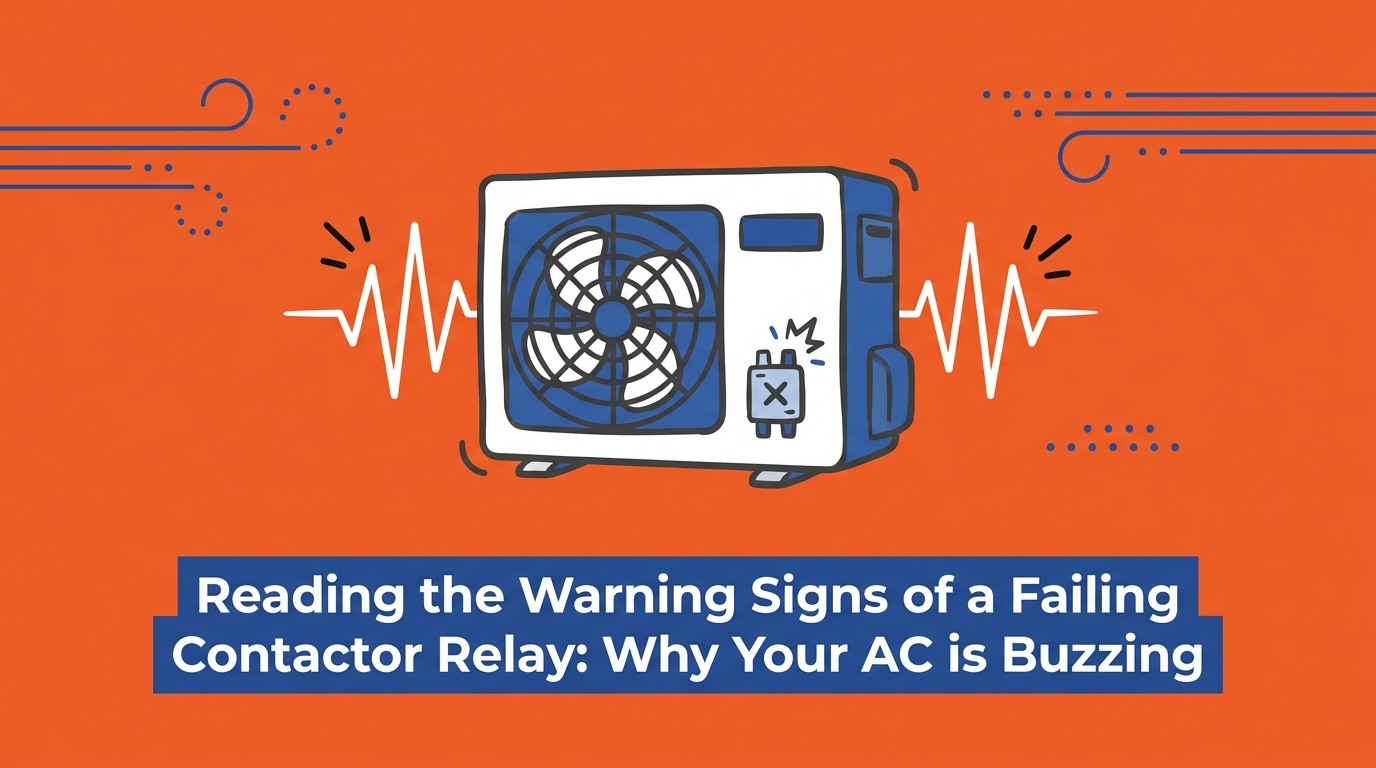

If you are walking past your outdoor unit during a hot afternoon and hear a harsh, electrical hum, reading the warning signs of a failing contactor relay becomes an urgent priority. That strange noise coming from your air conditioner is not something that will fix itself. At MJB Heating & Cooling, our technicians frequently see homeowners in Derby KS notice a distinct buzzing or rapid chattering sound paired with intermittent cooling, but because cold air is still blowing through the vents, they assume everything is fine. This creates a critical decision point: you can ignore the noise and hope for the best, or you can investigate the issue before a minor electrical fault escalates into a catastrophic system failure.
Sensory troubleshooting is your first line of defense against unexpected breakdowns. When your outdoor condenser starts making unfamiliar noises, it is usually a cry for help from a strained electrical component. Catching these early auditory clues allows you to rely on professional HVAC services to resolve the issue safely and affordably. Understanding what that buzzing sound means can save you from spending days without air conditioning during the hottest weeks of the year.
Common reactions to a buzzing outdoor unit:
• Ignoring it: Assuming that as long as cold air is blowing, the system is perfectly healthy.
• Resetting the breaker: Hoping a quick power cycle will clear the strange noise.
• Investigating safely: Listening closely to identify if the sound is mechanical (like a loose fan blade) or electrical (like a failing relay).
The smartest path is always the third option. By learning how to identify the specific sounds of electrical strain, you protect your system from severe damage.
Before you can understand why your system is buzzing, it helps to know exactly what this critical component does. An AC contactor relay is essentially a heavy-duty, high-voltage electromagnetic switch. Its primary job is to control the flow of massive amounts of electricity to your outdoor compressor and condenser fan. Because your thermostat operates on low voltage, it cannot directly power the heavy machinery outside. Instead, it uses the contactor relay as a middleman.
Every time your home needs cooling, the thermostat sends a low-voltage signal to the relay. This signal energizes a magnetic coil, which physically pulls a set of metal contacts together. Once those contacts touch, high voltage rushes across the bridge, bringing your compressor and fan to life. By the time August late-summer wear sets in, this switch has slammed shut and pulled apart thousands of times.
That immense electrical load takes a toll over a long cooling season. Just as you might spend time recognizing the click and hum of a failing compressor capacitor, understanding the wear and tear on your contactor relay is crucial for system longevity.
Think of the contactor as the gatekeeper between your home's electrical panel and the heavy-duty AC components outside. For electricity to transfer efficiently and safely, the metal contacts must form a clean, flat, and secure connection.
Why the connection matters:
• Smooth power delivery: A clean connection allows electricity to flow without generating excess heat.
• Component protection: It ensures the compressor receives the exact voltage required to start smoothly.
• Efficiency: Flat contacts prevent voltage drops that force the system to work harder than necessary.
The magnetic coil is the muscle behind the switch. It uses a magnetic field to physically pull the heavy metal contacts closed against the force of a strong spring. When the coil weakens due to age or heat, or when the contacts degrade, the physical connection becomes compromised. The coil will struggle to hold the switch closed, leading to the rapid clicking and buzzing sounds that signal trouble.
When your contactor relay begins to fail, it rarely happens silently. The most obvious symptom is an audible buzzing, humming, or chattering from the outdoor condenser. To protect your system, you need to know the difference between the normal sounds of operation and the warning signs of electrical degradation.
Under normal conditions, when your AC turns on, you should hear a firm, single "click" as the magnetic coil pulls the contacts together. This is immediately followed by the smooth, steady hum of the compressor and fan spinning up. However, when the metal contacts become pitted and uneven from thousands of cycles of high-voltage electricity, they no longer sit flush against each other.
The intense Kansas summer heat forces units to run continuously, giving the relay no time to cool down. This constant heavy cycling accelerates the electrical arcing and pitting process. As electricity tries to jump across the uneven, pitted metal surfaces, it creates small electrical arcs. This arcing generates intense heat and leaves behind a layer of black carbon buildup. The carbon increases electrical resistance, which creates even more heat and makes it harder for the magnetic coil to hold the contacts tightly together.
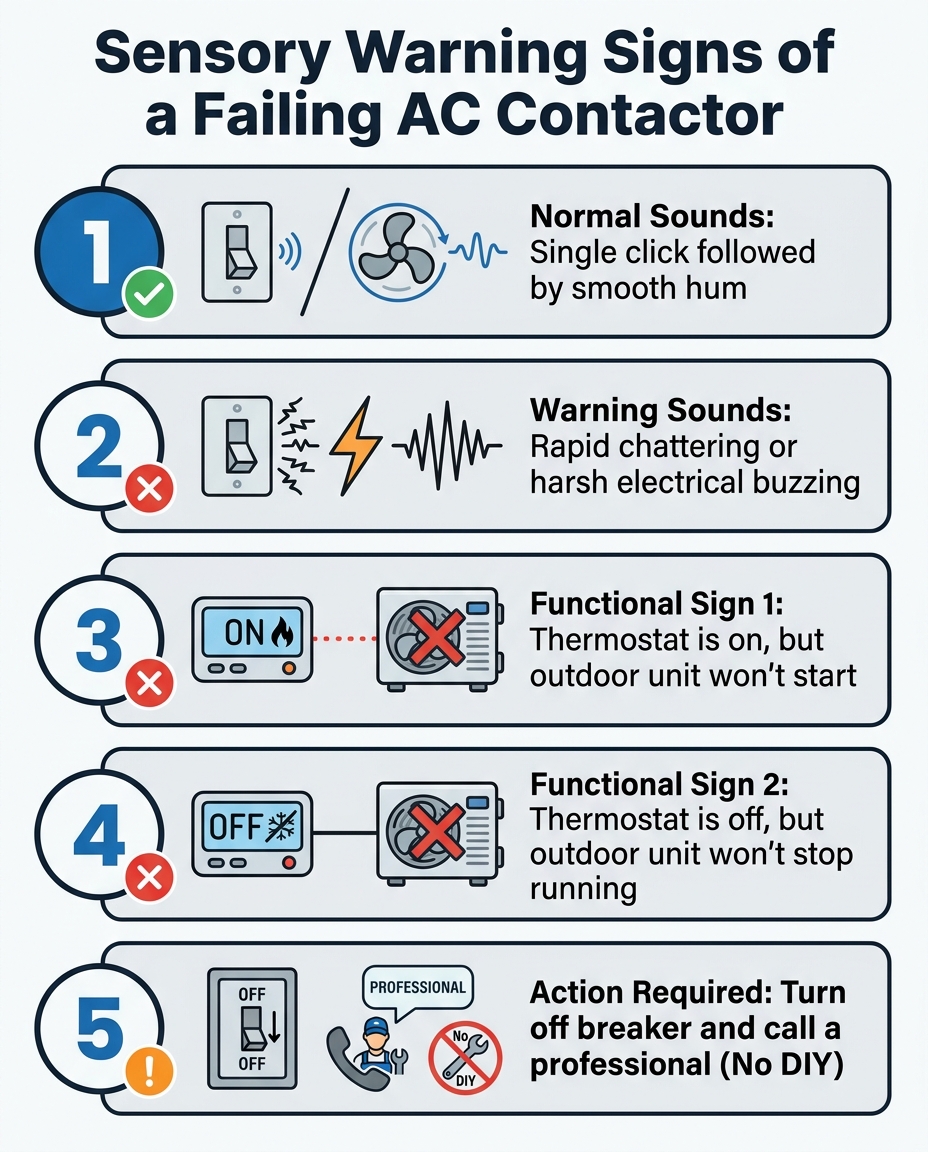

Understanding what you are listening for can help you catch a failing relay before it damages your compressor.
• Single, firm "click" followed by steady fan hum — What It Means Mechanically: Contacts pull together cleanly; normal voltage flow. — Action Required: None. System is operating normally.
• Rapid, continuous "chattering" or clicking — What It Means Mechanically: Magnetic coil is weak and struggling to hold contacts closed. — Action Required: Professional inspection needed soon.
• Loud, harsh electrical buzzing or humming — What It Means Mechanically: Electricity is arcing across pitted, carbon-coated contacts. — Action Required: Turn off system; professional replacement required.
While an audible buzzing is the most common sensory warning, a failing contactor relay also drastically impacts how your home feels. Because this component controls the power to the outdoor unit, its failure often manifests as bizarre, intermittent cooling issues that mimic other AC problems.
Right around the back-to-school transition this year, one local homeowner experienced this exact frustration during a late-summer heatwave. Their AC simply stopped running entirely, leaving them without cooling for nearly a week after an initial misdiagnosis. When our MJB Heating & Cooling technicians arrived, we traced the root electrical faults, got the system running again immediately, and eventually helped the family transition to a reliable new system—ensuring they could take advantage of applicable federal tax credits and local utility incentive programs to help offset the upgrade. This highlights a pattern we see often: how critical accurate electrical diagnostics are when dealing with August late-summer wear.
If you notice that your indoor fan is blowing warm air while the outdoor unit remains completely silent, a thick layer of carbon buildup may be blocking the high voltage from reaching the compressor. Conversely, the contacts can get so hot from electrical arcing that they literally melt together. When this happens, the outdoor unit will run continuously, even if you turn the thermostat completely off. If your system refuses to shut down, you must schedule an AC diagnostic immediately to prevent severe equipment damage.
A contactor that is heavily pitted will eventually fail to transfer electricity at all. The thermostat will call for cooling, the indoor blower fan will turn on, but the high voltage will hit a wall of carbon buildup at the relay.
What you will notice:
• The thermostat says "cooling" but the house temperature keeps rising.
• Air flows from the vents, but it is room temperature.
• The outdoor unit makes no sound at all, not even a hum.
A "stuck closed" contactor is a massive red flag. When the metal contacts melt and fuse together, they bypass the thermostat entirely. The outdoor unit will run endlessly, draining electricity and putting immense mechanical strain on the compressor. The only way to stop it is to manually shut off the power at your home's electrical breaker panel.
Ignoring an audible buzzing from your outdoor unit is a dangerous gamble. What starts as a minor nuisance of electrical arcing can quickly escalate into a catastrophic mechanical failure. When the electrical resistance across pitted contacts becomes too high, the resulting heat is intense enough to literally melt the metal components together. In the HVAC industry, this is known as a "welded contactor."
When a contactor welds shut, it forces the compressor to run continuously without its necessary cooling cycles. Compressors are not designed to run infinitely without breaks; they generate significant internal heat that must be dissipated. If a welded contactor forces the compressor to run for hours or days on end during the intense heat in Derby KS, the compressor will inevitably overheat and burn out.
Replacing a contactor relay is a minor, routine preventative step. Replacing an entire burned-out compressor is one of the most extensive and labor-intensive repairs in the HVAC world. In our years serving the Derby area, our team at MJB Heating & Cooling has found that transparent, expert diagnostics catch these specific failing components early, saving homeowners from catastrophic system breakdowns. By addressing the buzzing sound immediately, you are protecting the heart of your air conditioning system.
With so many tutorials available online, it can be tempting to grab a multimeter and test the buzzing component yourself. However, when it comes to an AC contactor relay, DIY testing is incredibly dangerous and should never be attempted by a homeowner.
The contactor relay handles lethal amounts of high voltage—typically 240 volts or more. Unlike changing an air filter or clearing leaves away from the condenser, testing a contactor requires interacting with live voltage. If you place a multimeter probe incorrectly, slip, or drop a tool across the terminals, you risk a severe arc flash, electrical burns, or fatal electrocution.
Your role as a homeowner ends at sensory troubleshooting. If you hear an audible buzzing, humming, or chattering from the outdoor condenser, or if you observe that the unit will not turn off, you have successfully diagnosed that a problem exists. That is the absolute limit of safe DIY involvement. Replacing the component requires a licensed professional to ensure proper sizing, secure wiring, and strict safety compliance.
The best way to deal with a failing contactor relay is to prevent it from reaching the point of failure in the first place. By taking proactive steps, you can extend the life of your electrical components and ensure your system survives the heavy August late-summer wear.
Routine maintenance is the secret to a long-lasting air conditioner. When an MJB Heating & Cooling technician inspects your system, we don't just look at the filters and refrigerant levels; we visually inspect the contactor relay for early signs of pitting, carbon buildup, or burn marks. Catching this wear and tear early allows for proactive replacement before the part fails and leaves you without cooling.
Steps to protect your system's electrical health:
1. Schedule end-of-season checkups: Catch the cumulative wear and tear that builds up over a long, hot summer before it causes a breakdown.
2. Keep the outdoor unit clear: Remove leaves, branches, and debris from around the condenser. A clean unit breathes easier, which reduces overall cycle times and lessens the electrical strain on the relay.
3. Enroll in a preventative HVAC maintenance plan: Regular professional inspections ensure that high-voltage components are tested safely and replaced proactively when wear is detected.
4. Listen to your system: Make a habit of walking past your outdoor unit occasionally while it is running to ensure it sounds smooth and steady.
A failing AC contactor typically sounds like a loud, harsh electrical buzz or a rapid chattering noise. Normal operation produces a single, firm click followed by the smooth hum of the fan and compressor. If you hear a persistent buzzing or clicking while the outdoor unit is running in Derby KS, it indicates that the magnetic coil is struggling or the metal contacts are pitted and arcing.
If an AC contactor gets stuck (welded closed), the outdoor unit will run continuously, even if the indoor thermostat is turned off. This bypasses all temperature controls and forces the compressor to run without necessary resting periods. To stop the unit and prevent severe compressor damage, you must manually turn off the power at your home's electrical breaker panel and call a professional.
Your outside AC unit is buzzing because electrical current is likely arcing across degraded, pitted metal contacts inside the relay switch. Over thousands of cooling cycles, the contacts build up carbon and lose their smooth surface, causing electrical resistance and heat. This buzzing is a major warning sign that the component needs to be replaced before it fails completely.
Yes, a severely degraded or shorted contactor can absolutely trip your electrical breaker. If the coil shorts out or if the pitted contacts create too much electrical resistance, the system will draw more amperage than the circuit is designed to handle. If your AC breaker trips, do not repeatedly reset it; have a professional inspect the electrical components.
You can identify a bad contactor through sensory troubleshooting: listen for rapid chattering or harsh buzzing, and watch for functional symptoms like an outdoor unit that refuses to start or refuses to turn off. Because the contactor handles lethal high voltage, sensory observation is the only safe way for a homeowner to diagnose the issue without a multimeter.
No, a pitted contactor should never be cleaned or filed down; it must be replaced. Filing the metal contacts removes their protective coating and alters the precise physical gap required for safe operation, which will only cause it to fail faster and more dangerously. Professional replacement is the only safe and reliable solution for a degraded relay.
An audible buzzing, humming, or chattering from the outdoor condenser is a direct cry for help from a strained electrical component. Recognizing these auditory warning signs is the key to preventing a minor wear-and-tear issue from escalating into a welded contactor and a ruined compressor. As the long end-of-season cooling period comes to a close, do not ignore the strange noises your system makes. Rely on professional diagnostics at the first sign of trouble to keep your home comfortable, your equipment safe, and your family protected from sudden late-summer breakdowns.


Our A/C stopped working on a Sunday and due to health issues, we needed to find a service company available on a Sunday. I called MJB and left a message on their emergency voice mail. Within 10 minutes Tom Buck called me to hear my description of the symptoms. He was just finishing an appointment in Wichita and would be on his way to my home on the south end of Derby. He arrived within 30 minutes! From start to finish he was the perfect example of what you could ever hope for in an HVAC tech and a human being. His evaluation of our system inside and out was as thorough as I could ever imagine and once he was done with the repair, our system is running as well or better than ever. Well worth the price for the evaluation, parts, and labor. Thank you again Tom for an awesome experience.
Our AC went out during the hottest days of the year, and they were out next day! We have been jerked around by a shoddy home warranty for years. We finally had a chance to pick our own repair people, and MJB came highly recommended. I can see why! I was impressed with the honesty and speed at which they fixed our AC unit!
Our commercial building had a lightening/electrical strike and damaged our 20 ton AC unit. No one could find us a new unit before the end of September. Imagining going all of August and September with no AC in Kansas and working inside near 100 degree temps is less than thrilling. Dale and the team at MJB called around and saved the day. They had us a new unit 5 weeks earlier than other could promise and I now have happy employees. The unit is amazingly quiet, super cold and so much more energy efficient. Thank you for being our super hero!
Came out and installed my new furnace. Was very polite and affordable. They are very acknowledgeable and I highly recommend!
Thank you very much. We had our 1st warm night in 3weeks. MJB took the time and effort to find the real problem. And the employees were kind and thoughtful and explained things very well. I cannot thank you and all of MJB. Will recommend you highly. Thanks again Marjorie Herman Oxford Kansas
We had a new system installed and I was so impressed with how quick they were in come out and install it, in the middle of a hot summer day. They were so friendly & very professional. I had a small problem with a weird sound and they came over immediately and fixed it. Love them!