


.avif)





Blogs
Stay updated with our latest blog posts.
How HVAC load calculations work is one of the most important things to understand before replacing or installing any heating or cooling system. Here's the short version:
How HVAC load calculations work — quick summary:
The result tells your contractor exactly what size system your home actually requires — not a guess.
Most homeowners assume bigger means better when it comes to HVAC. It doesn't. And most contractors who skip a proper load calculation and go by the old "one ton per 500 square feet" rule are setting you up for comfort problems, high energy bills, and equipment that wears out too fast.
A DOE report found that improper HVAC sizing due to inaccurate load calculations leads to widespread comfort issues, energy waste, poor performance, and increased risk of component failure. That's not a rare edge case — it's the predictable result of skipping a step that should always come first.
For homeowners in Wichita and across Central Kansas, where summer heat and winter cold both push systems hard, getting this step right matters more than almost anything else in the HVAC process.
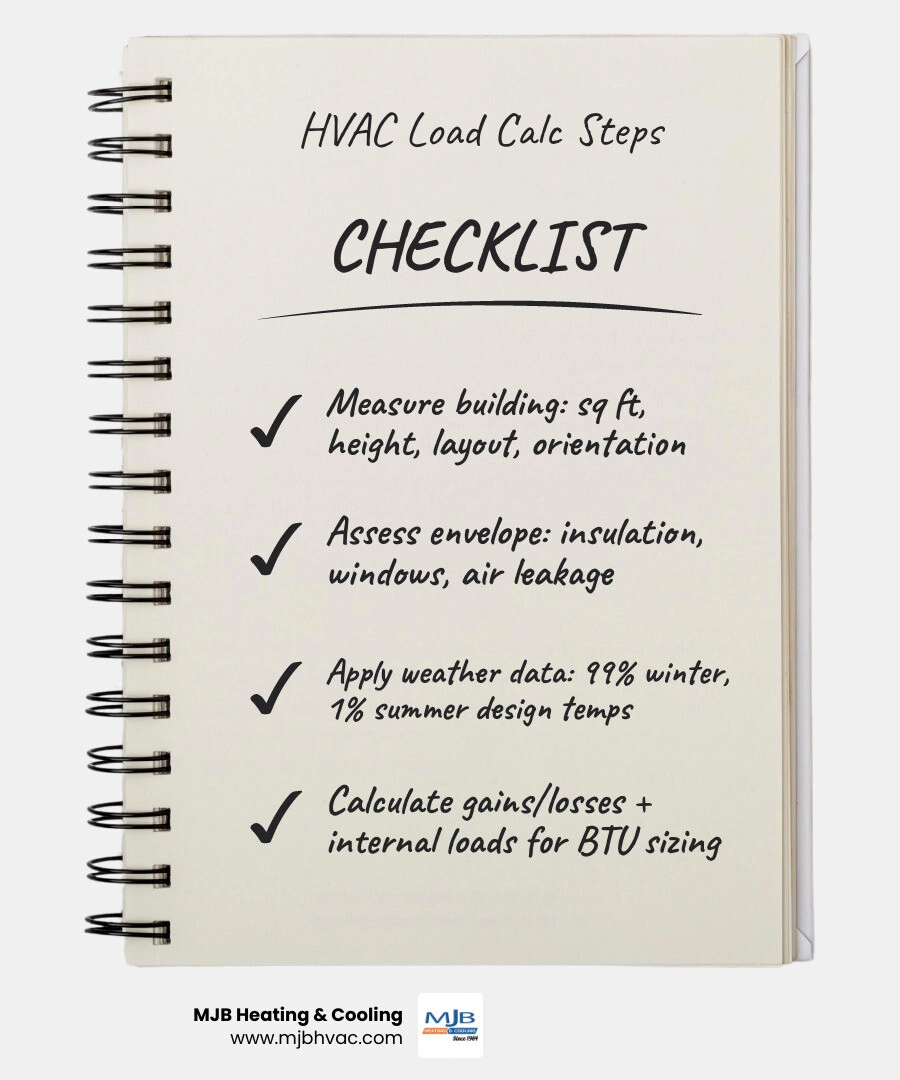
An HVAC load calculation is a scientific determination of exactly how much heat a building loses in the winter and gains in the summer. In the industry, we call the gold standard for this process "Manual J." Developed by the Air Conditioning Contractors of America (ACCA), Manual J is the technical foundation upon which every high-performing system is built.
Think of it as the blueprint for your comfort. It is the critical first step in the system design sequence because it moves us away from guesswork and into the realm of building science. Without this calculation, a contractor is essentially "box swapping"—taking out an old unit and putting in a new one of the same size, assuming the original installer got it right decades ago.
However, your home is a dynamic "building shell." Over time, you might have added new windows, upgraded your insulation in Andover, or finished a basement in Derby. These changes fundamentally alter the "load" or the amount of work the HVAC system must do. By performing a Manual J calculation, we ensure the system is sized for "peak demand"—those rare but brutal days in Kansas when the temperature hits triple digits or drops below zero.
Understanding How Proper HVAC Sizing Affects Comfort and Efficiency is about more than just numbers; it’s about ensuring that your investment provides the exact climate control your specific structure requires.
For years, the HVAC industry relied on a "rule of thumb" that suggested one ton of cooling capacity for every 400 to 500 square feet of living space. In May 2026, this approach is not just outdated—it is technically indefensible.
Modern building codes, such as the 2012 IECC, have made homes significantly more energy-efficient than those built just twenty years ago. A 2,223-square-foot house that used to "need" a 4-ton or 5-ton unit by the old rules may actually only require a 2-ton system when calculated properly.
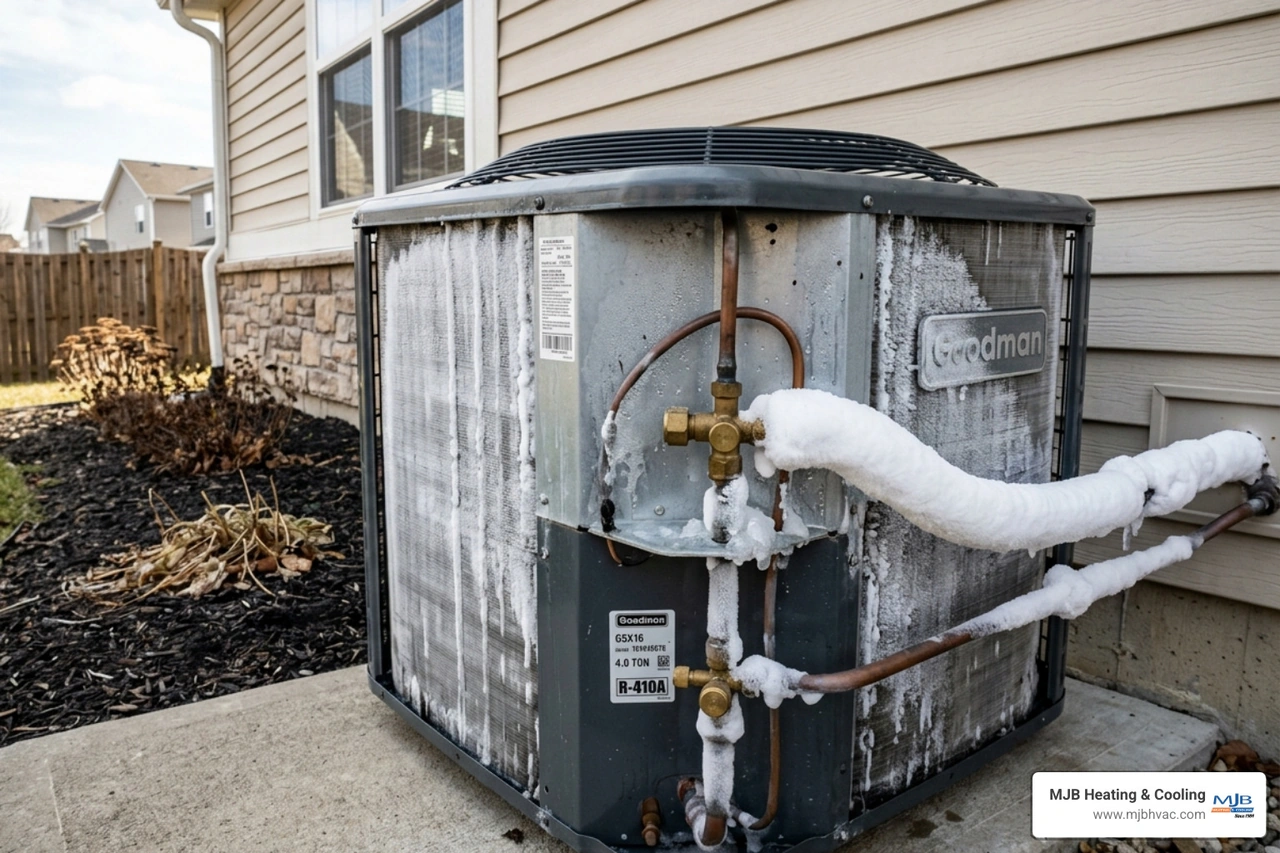
When a system is oversized based on a rule of thumb, it leads to a destructive phenomenon called short cycling. This is when a powerful unit turns on, blasts the house with cold air, and reaches the thermostat setpoint in five or ten minutes. While the air feels cool, the system hasn't run long enough to remove moisture. This results in a "cold and clammy" environment and significantly increases the risk of mold growth because relative humidity stays above the 60% threshold.
Furthermore, short cycling is like stop-and-go traffic for your car; it wears out the compressor and blower motor prematurely. Adding arbitrary "safety factors" to a load estimate—like rounding up to the next ton "just to be safe"—can inflate a cooling load by as much as 161%. This leads to Uneven Heating Throughout Your Home in Wichita and cooling cycles that never quite feel right.
To understand how hvac load calculations work, we have to look at the two different "battles" your system fights: heat gain and heat loss.
Heating calculations are modeled for the worst-case scenario: a dark, freezing winter night. We assume the sun has set (no solar gain), the appliances are off, and the house is empty. We use "99% winter design temperatures." This means we size the furnace to keep you warm during the coldest temperatures that occur for 99% of the hours in a typical year. We focus on "transmission losses"—how much heat is leaking through your walls, roof, and floor.
Cooling calculations are more complex because they involve two types of heat:
For cooling, we use "1% summer design values." In a place like Orlando, temperatures exceed 93°F only about 13 hours a year. We don't size for the record-breaking 110°F day; we size for the conditions your home faces 99% of the time. This ensures the system runs long, efficient cycles that pull humidity out of the air. Our Kansas Climate HVAC Guide provides more insight into how our local weather specifically dictates these design choices.
A professional doesn't just look at square footage. To truly understand how hvac load calculations work, we must input dozens of variables into specialized software.
If you have recently performed weatherization retrofits—like air sealing or adding attic insulation—it is essential to perform a new load calculation. A system sized for your "old" leaky house will be far too large for your "new" efficient one. For more tips on this, see our Guide to Preparing Your Home for a New AC.
A Manual J load calculation is just the first piece of the puzzle. In professional HVAC circles, we follow a three-part sequence to ensure a perfect installation. You can learn more about this in our Step-by-Step AC Installation Process.
Once Manual J tells us your home needs, for example, 24,500 BTUs of cooling, we move to Manual S. This is where we select the specific piece of equipment. We don't just grab a "2-ton" unit. We look at the manufacturer's performance data to find a unit that delivers the right balance of sensible and latent cooling at our specific Kansas design temperatures. This ensures the Perfect New Furnace or AC actually performs as advertised in your specific home.
The final step is Manual D, which focuses on the ductwork. If the load calculation shows that your master bedroom needs 4,000 BTUs but your guest room only needs 1,000, the ductwork must be sized to deliver exactly those amounts. Improper duct design leads to high static pressure—the "blood pressure" of your HVAC system—which causes noise and equipment strain. Whether you are looking at a Central AC vs. Ductless Mini-Split Comparison, the distribution of that air is what determines if you have "hot spots" or "cold spots."
Modern codes (like the 2012 IECC and beyond) have improved energy efficiency by 30% or more compared to older standards. Using a "rule of thumb" from the 1990s on a 2026 home is like using a map from the 1800s to navigate Wichita; the landscape has changed too much. Modern homes hold onto their conditioned air much longer, requiring smaller, more efficient systems.
Absolutely. Adding insulation or performing air sealing reduces your home's heat gain and loss. If you replace your HVAC system with the same size unit you had before those upgrades, the system will be significantly oversized. This leads to short cycling and poor humidity control.
Most software uses "defaults" for air leakage based on the age of the home. However, a blower door test provides a real-time, exact measurement of how much air is actually leaking through your building shell. This allows us to use hard data instead of "average" estimates, ensuring your system is sized with surgical precision.
At MJB Heating & Cooling, we believe that an honest business approach starts with getting the science right. Since 1984, our family-owned team has been rooted in Derby, KS, serving the entire Wichita metro area with a commitment to quality workmanship that stands the test of time.
We don't believe in "box swapping" or shortcuts. We know that how hvac load calculations work is the difference between a system that lasts 20 years and one that fails in 10. Whether you are in Andover, Haysville, or Newton, our technicians use the latest building science principles to ensure your home remains a sanctuary of comfort, regardless of what the Kansas weather throws our way.
Don't settle for a "ballpark" guess that could cost you thousands in energy bills and repairs. Schedule your professional load calculation and service today and experience the MJB difference.
How HVAC load calculations work is one of the most important things to understand before replacing or installing any heating or cooling system. Here's the short version:
How HVAC load calculations work — quick summary:
The result tells your contractor exactly what size system your home actually requires — not a guess.
Most homeowners assume bigger means better when it comes to HVAC. It doesn't. And most contractors who skip a proper load calculation and go by the old "one ton per 500 square feet" rule are setting you up for comfort problems, high energy bills, and equipment that wears out too fast.
A DOE report found that improper HVAC sizing due to inaccurate load calculations leads to widespread comfort issues, energy waste, poor performance, and increased risk of component failure. That's not a rare edge case — it's the predictable result of skipping a step that should always come first.
For homeowners in Wichita and across Central Kansas, where summer heat and winter cold both push systems hard, getting this step right matters more than almost anything else in the HVAC process.
An HVAC load calculation is a scientific determination of exactly how much heat a building loses in the winter and gains in the summer. In the industry, we call the gold standard for this process "Manual J." Developed by the Air Conditioning Contractors of America (ACCA), Manual J is the technical foundation upon which every high-performing system is built.
Think of it as the blueprint for your comfort. It is the critical first step in the system design sequence because it moves us away from guesswork and into the realm of building science. Without this calculation, a contractor is essentially "box swapping"—taking out an old unit and putting in a new one of the same size, assuming the original installer got it right decades ago.
However, your home is a dynamic "building shell." Over time, you might have added new windows, upgraded your insulation in Andover, or finished a basement in Derby. These changes fundamentally alter the "load" or the amount of work the HVAC system must do. By performing a Manual J calculation, we ensure the system is sized for "peak demand"—those rare but brutal days in Kansas when the temperature hits triple digits or drops below zero.
Understanding How Proper HVAC Sizing Affects Comfort and Efficiency is about more than just numbers; it’s about ensuring that your investment provides the exact climate control your specific structure requires.
For years, the HVAC industry relied on a "rule of thumb" that suggested one ton of cooling capacity for every 400 to 500 square feet of living space. In May 2026, this approach is not just outdated—it is technically indefensible.
Modern building codes, such as the 2012 IECC, have made homes significantly more energy-efficient than those built just twenty years ago. A 2,223-square-foot house that used to "need" a 4-ton or 5-ton unit by the old rules may actually only require a 2-ton system when calculated properly.
When a system is oversized based on a rule of thumb, it leads to a destructive phenomenon called short cycling. This is when a powerful unit turns on, blasts the house with cold air, and reaches the thermostat setpoint in five or ten minutes. While the air feels cool, the system hasn't run long enough to remove moisture. This results in a "cold and clammy" environment and significantly increases the risk of mold growth because relative humidity stays above the 60% threshold.
Furthermore, short cycling is like stop-and-go traffic for your car; it wears out the compressor and blower motor prematurely. Adding arbitrary "safety factors" to a load estimate—like rounding up to the next ton "just to be safe"—can inflate a cooling load by as much as 161%. This leads to Uneven Heating Throughout Your Home in Wichita and cooling cycles that never quite feel right.
To understand how hvac load calculations work, we have to look at the two different "battles" your system fights: heat gain and heat loss.
Heating calculations are modeled for the worst-case scenario: a dark, freezing winter night. We assume the sun has set (no solar gain), the appliances are off, and the house is empty. We use "99% winter design temperatures." This means we size the furnace to keep you warm during the coldest temperatures that occur for 99% of the hours in a typical year. We focus on "transmission losses"—how much heat is leaking through your walls, roof, and floor.
Cooling calculations are more complex because they involve two types of heat:
For cooling, we use "1% summer design values." In a place like Orlando, temperatures exceed 93°F only about 13 hours a year. We don't size for the record-breaking 110°F day; we size for the conditions your home faces 99% of the time. This ensures the system runs long, efficient cycles that pull humidity out of the air. Our Kansas Climate HVAC Guide provides more insight into how our local weather specifically dictates these design choices.
A professional doesn't just look at square footage. To truly understand how hvac load calculations work, we must input dozens of variables into specialized software.
If you have recently performed weatherization retrofits—like air sealing or adding attic insulation—it is essential to perform a new load calculation. A system sized for your "old" leaky house will be far too large for your "new" efficient one. For more tips on this, see our Guide to Preparing Your Home for a New AC.
A Manual J load calculation is just the first piece of the puzzle. In professional HVAC circles, we follow a three-part sequence to ensure a perfect installation. You can learn more about this in our Step-by-Step AC Installation Process.
Once Manual J tells us your home needs, for example, 24,500 BTUs of cooling, we move to Manual S. This is where we select the specific piece of equipment. We don't just grab a "2-ton" unit. We look at the manufacturer's performance data to find a unit that delivers the right balance of sensible and latent cooling at our specific Kansas design temperatures. This ensures the Perfect New Furnace or AC actually performs as advertised in your specific home.
The final step is Manual D, which focuses on the ductwork. If the load calculation shows that your master bedroom needs 4,000 BTUs but your guest room only needs 1,000, the ductwork must be sized to deliver exactly those amounts. Improper duct design leads to high static pressure—the "blood pressure" of your HVAC system—which causes noise and equipment strain. Whether you are looking at a Central AC vs. Ductless Mini-Split Comparison, the distribution of that air is what determines if you have "hot spots" or "cold spots."
Modern codes (like the 2012 IECC and beyond) have improved energy efficiency by 30% or more compared to older standards. Using a "rule of thumb" from the 1990s on a 2026 home is like using a map from the 1800s to navigate Wichita; the landscape has changed too much. Modern homes hold onto their conditioned air much longer, requiring smaller, more efficient systems.
Absolutely. Adding insulation or performing air sealing reduces your home's heat gain and loss. If you replace your HVAC system with the same size unit you had before those upgrades, the system will be significantly oversized. This leads to short cycling and poor humidity control.
Most software uses "defaults" for air leakage based on the age of the home. However, a blower door test provides a real-time, exact measurement of how much air is actually leaking through your building shell. This allows us to use hard data instead of "average" estimates, ensuring your system is sized with surgical precision.
At MJB Heating & Cooling, we believe that an honest business approach starts with getting the science right. Since 1984, our family-owned team has been rooted in Derby, KS, serving the entire Wichita metro area with a commitment to quality workmanship that stands the test of time.
We don't believe in "box swapping" or shortcuts. We know that how hvac load calculations work is the difference between a system that lasts 20 years and one that fails in 10. Whether you are in Andover, Haysville, or Newton, our technicians use the latest building science principles to ensure your home remains a sanctuary of comfort, regardless of what the Kansas weather throws our way.
Don't settle for a "ballpark" guess that could cost you thousands in energy bills and repairs. Schedule your professional load calculation and service today and experience the MJB difference.
How HVAC load calculations work is one of the most important things to understand before replacing or installing any heating or cooling system. Here's the short version:
How HVAC load calculations work — quick summary:
The result tells your contractor exactly what size system your home actually requires — not a guess.
Most homeowners assume bigger means better when it comes to HVAC. It doesn't. And most contractors who skip a proper load calculation and go by the old "one ton per 500 square feet" rule are setting you up for comfort problems, high energy bills, and equipment that wears out too fast.
A DOE report found that improper HVAC sizing due to inaccurate load calculations leads to widespread comfort issues, energy waste, poor performance, and increased risk of component failure. That's not a rare edge case — it's the predictable result of skipping a step that should always come first.
For homeowners in Wichita and across Central Kansas, where summer heat and winter cold both push systems hard, getting this step right matters more than almost anything else in the HVAC process.
An HVAC load calculation is a scientific determination of exactly how much heat a building loses in the winter and gains in the summer. In the industry, we call the gold standard for this process "Manual J." Developed by the Air Conditioning Contractors of America (ACCA), Manual J is the technical foundation upon which every high-performing system is built.
Think of it as the blueprint for your comfort. It is the critical first step in the system design sequence because it moves us away from guesswork and into the realm of building science. Without this calculation, a contractor is essentially "box swapping"—taking out an old unit and putting in a new one of the same size, assuming the original installer got it right decades ago.
However, your home is a dynamic "building shell." Over time, you might have added new windows, upgraded your insulation in Andover, or finished a basement in Derby. These changes fundamentally alter the "load" or the amount of work the HVAC system must do. By performing a Manual J calculation, we ensure the system is sized for "peak demand"—those rare but brutal days in Kansas when the temperature hits triple digits or drops below zero.
Understanding How Proper HVAC Sizing Affects Comfort and Efficiency is about more than just numbers; it’s about ensuring that your investment provides the exact climate control your specific structure requires.
For years, the HVAC industry relied on a "rule of thumb" that suggested one ton of cooling capacity for every 400 to 500 square feet of living space. In May 2026, this approach is not just outdated—it is technically indefensible.
Modern building codes, such as the 2012 IECC, have made homes significantly more energy-efficient than those built just twenty years ago. A 2,223-square-foot house that used to "need" a 4-ton or 5-ton unit by the old rules may actually only require a 2-ton system when calculated properly.
When a system is oversized based on a rule of thumb, it leads to a destructive phenomenon called short cycling. This is when a powerful unit turns on, blasts the house with cold air, and reaches the thermostat setpoint in five or ten minutes. While the air feels cool, the system hasn't run long enough to remove moisture. This results in a "cold and clammy" environment and significantly increases the risk of mold growth because relative humidity stays above the 60% threshold.
Furthermore, short cycling is like stop-and-go traffic for your car; it wears out the compressor and blower motor prematurely. Adding arbitrary "safety factors" to a load estimate—like rounding up to the next ton "just to be safe"—can inflate a cooling load by as much as 161%. This leads to Uneven Heating Throughout Your Home in Wichita and cooling cycles that never quite feel right.
To understand how hvac load calculations work, we have to look at the two different "battles" your system fights: heat gain and heat loss.
Heating calculations are modeled for the worst-case scenario: a dark, freezing winter night. We assume the sun has set (no solar gain), the appliances are off, and the house is empty. We use "99% winter design temperatures." This means we size the furnace to keep you warm during the coldest temperatures that occur for 99% of the hours in a typical year. We focus on "transmission losses"—how much heat is leaking through your walls, roof, and floor.
Cooling calculations are more complex because they involve two types of heat:
For cooling, we use "1% summer design values." In a place like Orlando, temperatures exceed 93°F only about 13 hours a year. We don't size for the record-breaking 110°F day; we size for the conditions your home faces 99% of the time. This ensures the system runs long, efficient cycles that pull humidity out of the air. Our Kansas Climate HVAC Guide provides more insight into how our local weather specifically dictates these design choices.
A professional doesn't just look at square footage. To truly understand how hvac load calculations work, we must input dozens of variables into specialized software.
If you have recently performed weatherization retrofits—like air sealing or adding attic insulation—it is essential to perform a new load calculation. A system sized for your "old" leaky house will be far too large for your "new" efficient one. For more tips on this, see our Guide to Preparing Your Home for a New AC.
A Manual J load calculation is just the first piece of the puzzle. In professional HVAC circles, we follow a three-part sequence to ensure a perfect installation. You can learn more about this in our Step-by-Step AC Installation Process.
Once Manual J tells us your home needs, for example, 24,500 BTUs of cooling, we move to Manual S. This is where we select the specific piece of equipment. We don't just grab a "2-ton" unit. We look at the manufacturer's performance data to find a unit that delivers the right balance of sensible and latent cooling at our specific Kansas design temperatures. This ensures the Perfect New Furnace or AC actually performs as advertised in your specific home.
The final step is Manual D, which focuses on the ductwork. If the load calculation shows that your master bedroom needs 4,000 BTUs but your guest room only needs 1,000, the ductwork must be sized to deliver exactly those amounts. Improper duct design leads to high static pressure—the "blood pressure" of your HVAC system—which causes noise and equipment strain. Whether you are looking at a Central AC vs. Ductless Mini-Split Comparison, the distribution of that air is what determines if you have "hot spots" or "cold spots."
Modern codes (like the 2012 IECC and beyond) have improved energy efficiency by 30% or more compared to older standards. Using a "rule of thumb" from the 1990s on a 2026 home is like using a map from the 1800s to navigate Wichita; the landscape has changed too much. Modern homes hold onto their conditioned air much longer, requiring smaller, more efficient systems.
Absolutely. Adding insulation or performing air sealing reduces your home's heat gain and loss. If you replace your HVAC system with the same size unit you had before those upgrades, the system will be significantly oversized. This leads to short cycling and poor humidity control.
Most software uses "defaults" for air leakage based on the age of the home. However, a blower door test provides a real-time, exact measurement of how much air is actually leaking through your building shell. This allows us to use hard data instead of "average" estimates, ensuring your system is sized with surgical precision.
At MJB Heating & Cooling, we believe that an honest business approach starts with getting the science right. Since 1984, our family-owned team has been rooted in Derby, KS, serving the entire Wichita metro area with a commitment to quality workmanship that stands the test of time.
We don't believe in "box swapping" or shortcuts. We know that how hvac load calculations work is the difference between a system that lasts 20 years and one that fails in 10. Whether you are in Andover, Haysville, or Newton, our technicians use the latest building science principles to ensure your home remains a sanctuary of comfort, regardless of what the Kansas weather throws our way.
Don't settle for a "ballpark" guess that could cost you thousands in energy bills and repairs. Schedule your professional load calculation and service today and experience the MJB difference.


How HVAC load calculations work is one of the most important things to understand before replacing or installing any heating or cooling system. Here's the short version:
How HVAC load calculations work — quick summary:
The result tells your contractor exactly what size system your home actually requires — not a guess.
Most homeowners assume bigger means better when it comes to HVAC. It doesn't. And most contractors who skip a proper load calculation and go by the old "one ton per 500 square feet" rule are setting you up for comfort problems, high energy bills, and equipment that wears out too fast.
A DOE report found that improper HVAC sizing due to inaccurate load calculations leads to widespread comfort issues, energy waste, poor performance, and increased risk of component failure. That's not a rare edge case — it's the predictable result of skipping a step that should always come first.
For homeowners in Wichita and across Central Kansas, where summer heat and winter cold both push systems hard, getting this step right matters more than almost anything else in the HVAC process.
An HVAC load calculation is a scientific determination of exactly how much heat a building loses in the winter and gains in the summer. In the industry, we call the gold standard for this process "Manual J." Developed by the Air Conditioning Contractors of America (ACCA), Manual J is the technical foundation upon which every high-performing system is built.
Think of it as the blueprint for your comfort. It is the critical first step in the system design sequence because it moves us away from guesswork and into the realm of building science. Without this calculation, a contractor is essentially "box swapping"—taking out an old unit and putting in a new one of the same size, assuming the original installer got it right decades ago.
However, your home is a dynamic "building shell." Over time, you might have added new windows, upgraded your insulation in Andover, or finished a basement in Derby. These changes fundamentally alter the "load" or the amount of work the HVAC system must do. By performing a Manual J calculation, we ensure the system is sized for "peak demand"—those rare but brutal days in Kansas when the temperature hits triple digits or drops below zero.
Understanding How Proper HVAC Sizing Affects Comfort and Efficiency is about more than just numbers; it’s about ensuring that your investment provides the exact climate control your specific structure requires.
For years, the HVAC industry relied on a "rule of thumb" that suggested one ton of cooling capacity for every 400 to 500 square feet of living space. In May 2026, this approach is not just outdated—it is technically indefensible.
Modern building codes, such as the 2012 IECC, have made homes significantly more energy-efficient than those built just twenty years ago. A 2,223-square-foot house that used to "need" a 4-ton or 5-ton unit by the old rules may actually only require a 2-ton system when calculated properly.
When a system is oversized based on a rule of thumb, it leads to a destructive phenomenon called short cycling. This is when a powerful unit turns on, blasts the house with cold air, and reaches the thermostat setpoint in five or ten minutes. While the air feels cool, the system hasn't run long enough to remove moisture. This results in a "cold and clammy" environment and significantly increases the risk of mold growth because relative humidity stays above the 60% threshold.
Furthermore, short cycling is like stop-and-go traffic for your car; it wears out the compressor and blower motor prematurely. Adding arbitrary "safety factors" to a load estimate—like rounding up to the next ton "just to be safe"—can inflate a cooling load by as much as 161%. This leads to Uneven Heating Throughout Your Home in Wichita and cooling cycles that never quite feel right.
To understand how hvac load calculations work, we have to look at the two different "battles" your system fights: heat gain and heat loss.
Heating calculations are modeled for the worst-case scenario: a dark, freezing winter night. We assume the sun has set (no solar gain), the appliances are off, and the house is empty. We use "99% winter design temperatures." This means we size the furnace to keep you warm during the coldest temperatures that occur for 99% of the hours in a typical year. We focus on "transmission losses"—how much heat is leaking through your walls, roof, and floor.
Cooling calculations are more complex because they involve two types of heat:
For cooling, we use "1% summer design values." In a place like Orlando, temperatures exceed 93°F only about 13 hours a year. We don't size for the record-breaking 110°F day; we size for the conditions your home faces 99% of the time. This ensures the system runs long, efficient cycles that pull humidity out of the air. Our Kansas Climate HVAC Guide provides more insight into how our local weather specifically dictates these design choices.
A professional doesn't just look at square footage. To truly understand how hvac load calculations work, we must input dozens of variables into specialized software.
If you have recently performed weatherization retrofits—like air sealing or adding attic insulation—it is essential to perform a new load calculation. A system sized for your "old" leaky house will be far too large for your "new" efficient one. For more tips on this, see our Guide to Preparing Your Home for a New AC.
A Manual J load calculation is just the first piece of the puzzle. In professional HVAC circles, we follow a three-part sequence to ensure a perfect installation. You can learn more about this in our Step-by-Step AC Installation Process.
Once Manual J tells us your home needs, for example, 24,500 BTUs of cooling, we move to Manual S. This is where we select the specific piece of equipment. We don't just grab a "2-ton" unit. We look at the manufacturer's performance data to find a unit that delivers the right balance of sensible and latent cooling at our specific Kansas design temperatures. This ensures the Perfect New Furnace or AC actually performs as advertised in your specific home.
The final step is Manual D, which focuses on the ductwork. If the load calculation shows that your master bedroom needs 4,000 BTUs but your guest room only needs 1,000, the ductwork must be sized to deliver exactly those amounts. Improper duct design leads to high static pressure—the "blood pressure" of your HVAC system—which causes noise and equipment strain. Whether you are looking at a Central AC vs. Ductless Mini-Split Comparison, the distribution of that air is what determines if you have "hot spots" or "cold spots."
Modern codes (like the 2012 IECC and beyond) have improved energy efficiency by 30% or more compared to older standards. Using a "rule of thumb" from the 1990s on a 2026 home is like using a map from the 1800s to navigate Wichita; the landscape has changed too much. Modern homes hold onto their conditioned air much longer, requiring smaller, more efficient systems.
Absolutely. Adding insulation or performing air sealing reduces your home's heat gain and loss. If you replace your HVAC system with the same size unit you had before those upgrades, the system will be significantly oversized. This leads to short cycling and poor humidity control.
Most software uses "defaults" for air leakage based on the age of the home. However, a blower door test provides a real-time, exact measurement of how much air is actually leaking through your building shell. This allows us to use hard data instead of "average" estimates, ensuring your system is sized with surgical precision.
At MJB Heating & Cooling, we believe that an honest business approach starts with getting the science right. Since 1984, our family-owned team has been rooted in Derby, KS, serving the entire Wichita metro area with a commitment to quality workmanship that stands the test of time.
We don't believe in "box swapping" or shortcuts. We know that how hvac load calculations work is the difference between a system that lasts 20 years and one that fails in 10. Whether you are in Andover, Haysville, or Newton, our technicians use the latest building science principles to ensure your home remains a sanctuary of comfort, regardless of what the Kansas weather throws our way.
Don't settle for a "ballpark" guess that could cost you thousands in energy bills and repairs. Schedule your professional load calculation and service today and experience the MJB difference.
How HVAC load calculations work is one of the most important things to understand before replacing or installing any heating or cooling system. Here's the short version:
How HVAC load calculations work — quick summary:
The result tells your contractor exactly what size system your home actually requires — not a guess.
Most homeowners assume bigger means better when it comes to HVAC. It doesn't. And most contractors who skip a proper load calculation and go by the old "one ton per 500 square feet" rule are setting you up for comfort problems, high energy bills, and equipment that wears out too fast.
A DOE report found that improper HVAC sizing due to inaccurate load calculations leads to widespread comfort issues, energy waste, poor performance, and increased risk of component failure. That's not a rare edge case — it's the predictable result of skipping a step that should always come first.
For homeowners in Wichita and across Central Kansas, where summer heat and winter cold both push systems hard, getting this step right matters more than almost anything else in the HVAC process.
An HVAC load calculation is a scientific determination of exactly how much heat a building loses in the winter and gains in the summer. In the industry, we call the gold standard for this process "Manual J." Developed by the Air Conditioning Contractors of America (ACCA), Manual J is the technical foundation upon which every high-performing system is built.
Think of it as the blueprint for your comfort. It is the critical first step in the system design sequence because it moves us away from guesswork and into the realm of building science. Without this calculation, a contractor is essentially "box swapping"—taking out an old unit and putting in a new one of the same size, assuming the original installer got it right decades ago.
However, your home is a dynamic "building shell." Over time, you might have added new windows, upgraded your insulation in Andover, or finished a basement in Derby. These changes fundamentally alter the "load" or the amount of work the HVAC system must do. By performing a Manual J calculation, we ensure the system is sized for "peak demand"—those rare but brutal days in Kansas when the temperature hits triple digits or drops below zero.
Understanding How Proper HVAC Sizing Affects Comfort and Efficiency is about more than just numbers; it’s about ensuring that your investment provides the exact climate control your specific structure requires.
For years, the HVAC industry relied on a "rule of thumb" that suggested one ton of cooling capacity for every 400 to 500 square feet of living space. In May 2026, this approach is not just outdated—it is technically indefensible.
Modern building codes, such as the 2012 IECC, have made homes significantly more energy-efficient than those built just twenty years ago. A 2,223-square-foot house that used to "need" a 4-ton or 5-ton unit by the old rules may actually only require a 2-ton system when calculated properly.
When a system is oversized based on a rule of thumb, it leads to a destructive phenomenon called short cycling. This is when a powerful unit turns on, blasts the house with cold air, and reaches the thermostat setpoint in five or ten minutes. While the air feels cool, the system hasn't run long enough to remove moisture. This results in a "cold and clammy" environment and significantly increases the risk of mold growth because relative humidity stays above the 60% threshold.
Furthermore, short cycling is like stop-and-go traffic for your car; it wears out the compressor and blower motor prematurely. Adding arbitrary "safety factors" to a load estimate—like rounding up to the next ton "just to be safe"—can inflate a cooling load by as much as 161%. This leads to Uneven Heating Throughout Your Home in Wichita and cooling cycles that never quite feel right.
To understand how hvac load calculations work, we have to look at the two different "battles" your system fights: heat gain and heat loss.
Heating calculations are modeled for the worst-case scenario: a dark, freezing winter night. We assume the sun has set (no solar gain), the appliances are off, and the house is empty. We use "99% winter design temperatures." This means we size the furnace to keep you warm during the coldest temperatures that occur for 99% of the hours in a typical year. We focus on "transmission losses"—how much heat is leaking through your walls, roof, and floor.
Cooling calculations are more complex because they involve two types of heat:
For cooling, we use "1% summer design values." In a place like Orlando, temperatures exceed 93°F only about 13 hours a year. We don't size for the record-breaking 110°F day; we size for the conditions your home faces 99% of the time. This ensures the system runs long, efficient cycles that pull humidity out of the air. Our Kansas Climate HVAC Guide provides more insight into how our local weather specifically dictates these design choices.
A professional doesn't just look at square footage. To truly understand how hvac load calculations work, we must input dozens of variables into specialized software.
If you have recently performed weatherization retrofits—like air sealing or adding attic insulation—it is essential to perform a new load calculation. A system sized for your "old" leaky house will be far too large for your "new" efficient one. For more tips on this, see our Guide to Preparing Your Home for a New AC.
A Manual J load calculation is just the first piece of the puzzle. In professional HVAC circles, we follow a three-part sequence to ensure a perfect installation. You can learn more about this in our Step-by-Step AC Installation Process.
Once Manual J tells us your home needs, for example, 24,500 BTUs of cooling, we move to Manual S. This is where we select the specific piece of equipment. We don't just grab a "2-ton" unit. We look at the manufacturer's performance data to find a unit that delivers the right balance of sensible and latent cooling at our specific Kansas design temperatures. This ensures the Perfect New Furnace or AC actually performs as advertised in your specific home.
The final step is Manual D, which focuses on the ductwork. If the load calculation shows that your master bedroom needs 4,000 BTUs but your guest room only needs 1,000, the ductwork must be sized to deliver exactly those amounts. Improper duct design leads to high static pressure—the "blood pressure" of your HVAC system—which causes noise and equipment strain. Whether you are looking at a Central AC vs. Ductless Mini-Split Comparison, the distribution of that air is what determines if you have "hot spots" or "cold spots."
Modern codes (like the 2012 IECC and beyond) have improved energy efficiency by 30% or more compared to older standards. Using a "rule of thumb" from the 1990s on a 2026 home is like using a map from the 1800s to navigate Wichita; the landscape has changed too much. Modern homes hold onto their conditioned air much longer, requiring smaller, more efficient systems.
Absolutely. Adding insulation or performing air sealing reduces your home's heat gain and loss. If you replace your HVAC system with the same size unit you had before those upgrades, the system will be significantly oversized. This leads to short cycling and poor humidity control.
Most software uses "defaults" for air leakage based on the age of the home. However, a blower door test provides a real-time, exact measurement of how much air is actually leaking through your building shell. This allows us to use hard data instead of "average" estimates, ensuring your system is sized with surgical precision.
At MJB Heating & Cooling, we believe that an honest business approach starts with getting the science right. Since 1984, our family-owned team has been rooted in Derby, KS, serving the entire Wichita metro area with a commitment to quality workmanship that stands the test of time.
We don't believe in "box swapping" or shortcuts. We know that how hvac load calculations work is the difference between a system that lasts 20 years and one that fails in 10. Whether you are in Andover, Haysville, or Newton, our technicians use the latest building science principles to ensure your home remains a sanctuary of comfort, regardless of what the Kansas weather throws our way.
Don't settle for a "ballpark" guess that could cost you thousands in energy bills and repairs. Schedule your professional load calculation and service today and experience the MJB difference.


Our A/C stopped working on a Sunday and due to health issues, we needed to find a service company available on a Sunday. I called MJB and left a message on their emergency voice mail. Within 10 minutes Tom Buck called me to hear my description of the symptoms. He was just finishing an appointment in Wichita and would be on his way to my home on the south end of Derby. He arrived within 30 minutes! From start to finish he was the perfect example of what you could ever hope for in an HVAC tech and a human being. His evaluation of our system inside and out was as thorough as I could ever imagine and once he was done with the repair, our system is running as well or better than ever. Well worth the price for the evaluation, parts, and labor. Thank you again Tom for an awesome experience.
Our AC went out during the hottest days of the year, and they were out next day! We have been jerked around by a shoddy home warranty for years. We finally had a chance to pick our own repair people, and MJB came highly recommended. I can see why! I was impressed with the honesty and speed at which they fixed our AC unit!
Our commercial building had a lightening/electrical strike and damaged our 20 ton AC unit. No one could find us a new unit before the end of September. Imagining going all of August and September with no AC in Kansas and working inside near 100 degree temps is less than thrilling. Dale and the team at MJB called around and saved the day. They had us a new unit 5 weeks earlier than other could promise and I now have happy employees. The unit is amazingly quiet, super cold and so much more energy efficient. Thank you for being our super hero!
Came out and installed my new furnace. Was very polite and affordable. They are very acknowledgeable and I highly recommend!
Thank you very much. We had our 1st warm night in 3weeks. MJB took the time and effort to find the real problem. And the employees were kind and thoughtful and explained things very well. I cannot thank you and all of MJB. Will recommend you highly. Thanks again Marjorie Herman Oxford Kansas
We had a new system installed and I was so impressed with how quick they were in come out and install it, in the middle of a hot summer day. They were so friendly & very professional. I had a small problem with a weird sound and they came over immediately and fixed it. Love them!


