


.avif)





Blogs
Stay updated with our latest blog posts.
Furnace installation in wichita, ks is one of the most important investments you'll make as a homeowner. When your furnace starts showing its age—frequent breakdowns, uneven heating, or skyrocketing energy bills—you're not just dealing with an inconvenience. You're facing safety risks, wasted money, and uncomfortable cold spots throughout your home. A new, properly installed furnace restores reliable warmth, lowers your monthly utility bills, and gives you peace of mind during harsh Kansas winters.
Quick Answer: What You Need to Know About Furnace Installation
If you're experiencing heating issues, understanding your options for heating services in Wichita is essential. For expert help choosing and installing the right system, contact MJB Heating & Cooling today.
This guide walks you through everything you need to know—from recognizing when it's time to replace your old furnace to understanding the installation process and maximizing your new system's performance. We'll cover fuel types, efficiency ratings, what happens on installation day, and how to keep your investment running strong for years to come.
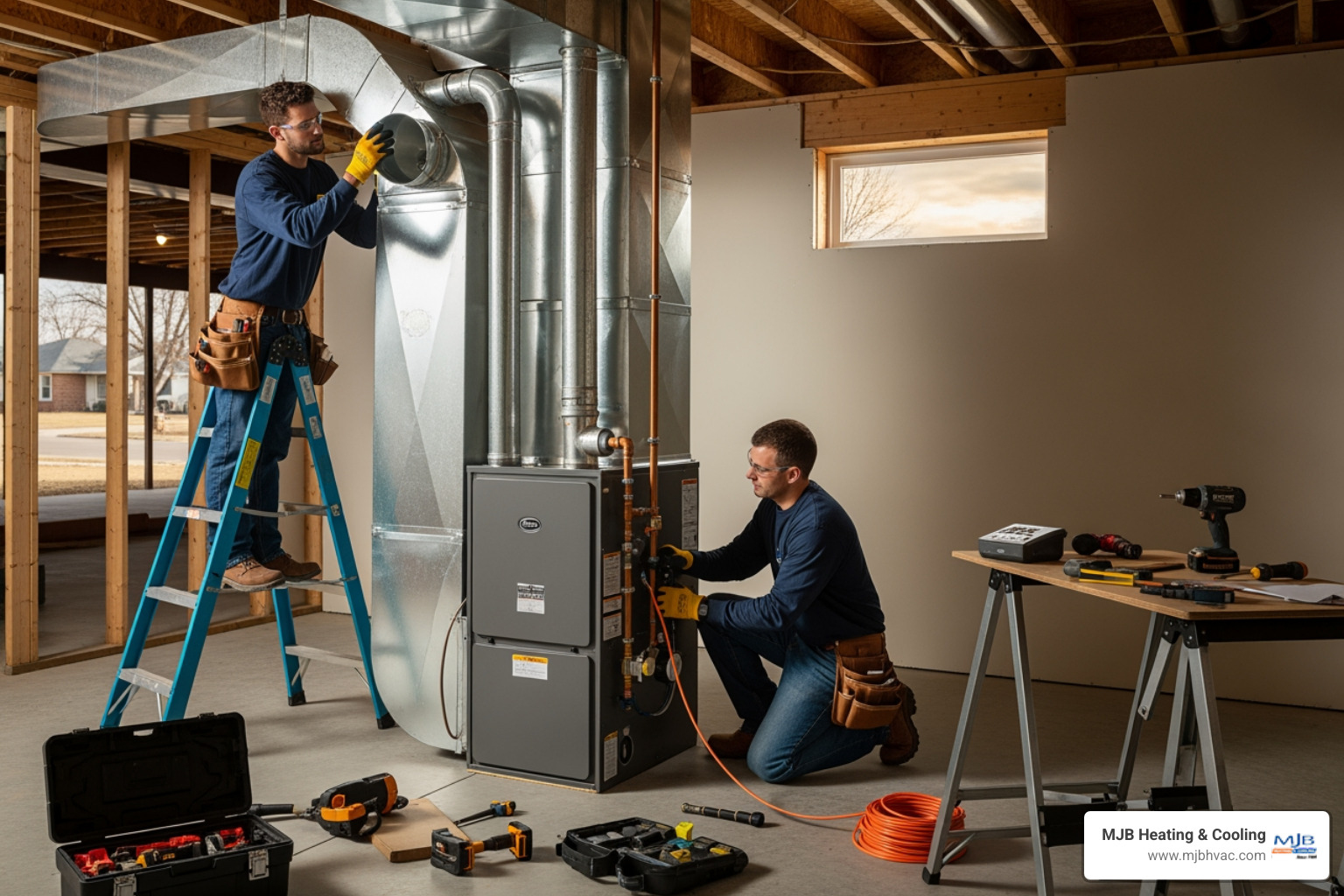
Winter in Wichita can be quite brutal, and there's nothing worse than a furnace that can't keep up with the biting cold. For many homeowners, the question isn't if their furnace will eventually need replacing, but when. Recognizing the signs that your heating system is nearing its end-of-life is crucial for preventing unexpected breakdowns and maintaining a comfortable, safe home.
We've been helping families in the Wichita metro area stay warm since 1984, and we've seen countless furnaces come and go. Here are the most common indicators that it might be time to consider a new furnace installation in Wichita, KS:
If your furnace is over 15 years old, experiencing frequent breakdowns, or not heating efficiently, it may be time for a replacement to improve energy efficiency and reduce repair needs.
Deciding on a new furnace installation in Wichita, KS isn't just about replacing a broken appliance; it's an investment in your home's future comfort, safety, and efficiency. The benefits of upgrading to a new, high-efficiency furnace are substantial:
Selecting the ideal furnace for your home is more than just picking a brand. It involves a careful consideration of your home's unique characteristics, your comfort preferences, and your goals for efficiency and performance. As your trusted local experts, we're here to guide you through this important decision, ensuring you get a system that's perfectly suited for furnace installation in Wichita, KS.
The type of fuel your furnace uses is a primary consideration, especially given the availability and usage patterns in the Wichita metro area. Here's a comparison of the most common fuel types:
| Fuel Type | Availability in Wichita | Operating Efficiency | Upfront Considerations | Long-Term Performance |
|---|---|---|---|---|
| Natural Gas | Widely available in most urban and suburban areas. | Very efficient, especially with modern condensing units. | Requires gas line connection and proper venting. | Well-suited for Kansas winters with strong, consistent heat. |
| Electric | Available everywhere, regardless of gas line access. | 100% efficient at converting electricity to heat. | No gas line or venting needed, simpler installation needs. | Often longer equipment lifespan due to fewer combustion components. |
| Propane | Common in rural areas without natural gas lines. | High efficiency, similar to natural gas. | Requires a storage tank and regular refills. | Reliable comfort where natural gas service is not available. |
Natural Gas Furnaces: Most homes in Wichita use natural gas furnaces. They are a popular choice due to the widespread availability of natural gas lines and the strong, steady heat they provide. Modern natural gas furnaces offer excellent efficiency and robust heating even in the coldest conditions.
Electric Furnaces: For homes without access to natural gas, electric furnaces are a viable option. They tend to have straightforward installation needs since they don't require gas lines or combustion venting. Electric furnaces often have a longer lifespan due to fewer moving parts and no combustion process.
Propane Furnaces: Propane is an excellent alternative for homes outside the natural gas grid. Propane furnaces are highly efficient and produce clean heat. The main consideration is the need for a propane storage tank on your property and scheduling regular refills.
Heat Pumps: While not strictly furnaces, it's worth mentioning heat pumps as a highly efficient heating and cooling solution. Modern cold-climate heat pumps can efficiently heat many Wichita homes, and some homeowners opt for dual-fuel systems, pairing a heat pump with a gas furnace for optimal performance during the coldest days.
Choosing the right size furnace is paramount. An improperly sized furnace—too big or too small—will lead to inefficiency, discomfort, and premature wear. This is where our expertise truly shines during a furnace installation in Wichita, KS.
For more information on ensuring your heating system is perfectly matched to your home's needs, you might find our insights on Heating Installation Andover KS helpful.
When it comes to furnace installation in Wichita, KS, the quality of the installation is just as important as the quality of the furnace itself. A professional installation ensures your system operates safely, efficiently, and reliably for years to come. Since 1984, our family-owned business has prioritized quality workmanship and an honest approach, making us a trusted name in the Wichita metro area.
We understand that a new furnace installation can seem like a daunting task, but we strive to make the process as smooth and hassle-free as possible. Here's a general overview of what you can expect when our certified technicians arrive at your home for a furnace installation in Wichita, KS:
While the thought of tackling a large home project yourself might be tempting, attempting to install a furnace without proper training is not recommended. Professional installation is not just a suggestion; it's a necessity for several vital reasons:
Our job isn't done once the furnace is physically in place. We believe in ensuring you're fully comfortable and confident with your new system.
Congratulations on your new furnace installation in Wichita, KS! Now that you've made this significant investment, the next step is ensuring it lasts as long as possible and continues to provide efficient, reliable heat. Just like a car, your furnace needs regular care to perform at its best.
Regular maintenance is the secret sauce to a long-lasting, high-performing furnace. Here's how you can help preserve your investment:
Investing in a new furnace can be a significant decision, but there are often ways to make it more manageable and ensure its long-term value.
A new furnace, when properly sized, installed, and maintained, can typically last between 15 to 20 years. Some high-efficiency condensing furnaces can even reach 15-25 years with diligent care. Factors like the type of furnace (electric furnaces may last longer due to fewer moving parts), frequency of use, and consistency of professional maintenance significantly influence its lifespan. Avoiding issues like dirty filters or incorrect sizing helps maximize its operational life.
A typical residential furnace installation in Wichita, KS generally takes between 4 to 8 hours. Most standard replacements are completed within a single day. However, the duration can vary based on the complexity of the job. For instance, if significant ductwork modifications are needed, electrical upgrades are required, or you're switching fuel types (e.g., from electric to natural gas, which requires installing new gas lines), the process may extend beyond one day.
Due to the complexity involving high-voltage electricity, gas lines (for gas or propane furnaces), and proper venting to prevent carbon monoxide leaks, furnace installation is not a DIY project. Professional installation is essential for safety, efficiency, and compliance with local Wichita, KS building codes. Attempting a self-installation can lead to dangerous situations, void your manufacturer's warranty, and result in an inefficient or malfunctioning system. Trusting certified HVAC professionals ensures your system is installed correctly and safely.
Investing in a new furnace is a significant decision for any homeowner, ensuring comfort, safety, and efficiency during Kansas winters. From recognizing the signs of a failing unit to understanding the installation process and post-care, being informed helps you make the best choice for your home. For expert guidance and quality workmanship, trust a local, family-owned company like MJB Heating & Cooling. Learn more about our professional heating services in Wichita, KS.
Furnace installation in wichita, ks is one of the most important investments you'll make as a homeowner. When your furnace starts showing its age—frequent breakdowns, uneven heating, or skyrocketing energy bills—you're not just dealing with an inconvenience. You're facing safety risks, wasted money, and uncomfortable cold spots throughout your home. A new, properly installed furnace restores reliable warmth, lowers your monthly utility bills, and gives you peace of mind during harsh Kansas winters.
Quick Answer: What You Need to Know About Furnace Installation
If you're experiencing heating issues, understanding your options for heating services in Wichita is essential. For expert help choosing and installing the right system, contact MJB Heating & Cooling today.
This guide walks you through everything you need to know—from recognizing when it's time to replace your old furnace to understanding the installation process and maximizing your new system's performance. We'll cover fuel types, efficiency ratings, what happens on installation day, and how to keep your investment running strong for years to come.
Winter in Wichita can be quite brutal, and there's nothing worse than a furnace that can't keep up with the biting cold. For many homeowners, the question isn't if their furnace will eventually need replacing, but when. Recognizing the signs that your heating system is nearing its end-of-life is crucial for preventing unexpected breakdowns and maintaining a comfortable, safe home.
We've been helping families in the Wichita metro area stay warm since 1984, and we've seen countless furnaces come and go. Here are the most common indicators that it might be time to consider a new furnace installation in Wichita, KS:
If your furnace is over 15 years old, experiencing frequent breakdowns, or not heating efficiently, it may be time for a replacement to improve energy efficiency and reduce repair needs.
Deciding on a new furnace installation in Wichita, KS isn't just about replacing a broken appliance; it's an investment in your home's future comfort, safety, and efficiency. The benefits of upgrading to a new, high-efficiency furnace are substantial:
Selecting the ideal furnace for your home is more than just picking a brand. It involves a careful consideration of your home's unique characteristics, your comfort preferences, and your goals for efficiency and performance. As your trusted local experts, we're here to guide you through this important decision, ensuring you get a system that's perfectly suited for furnace installation in Wichita, KS.
The type of fuel your furnace uses is a primary consideration, especially given the availability and usage patterns in the Wichita metro area. Here's a comparison of the most common fuel types:
| Fuel Type | Availability in Wichita | Operating Efficiency | Upfront Considerations | Long-Term Performance |
|---|---|---|---|---|
| Natural Gas | Widely available in most urban and suburban areas. | Very efficient, especially with modern condensing units. | Requires gas line connection and proper venting. | Well-suited for Kansas winters with strong, consistent heat. |
| Electric | Available everywhere, regardless of gas line access. | 100% efficient at converting electricity to heat. | No gas line or venting needed, simpler installation needs. | Often longer equipment lifespan due to fewer combustion components. |
| Propane | Common in rural areas without natural gas lines. | High efficiency, similar to natural gas. | Requires a storage tank and regular refills. | Reliable comfort where natural gas service is not available. |
Natural Gas Furnaces: Most homes in Wichita use natural gas furnaces. They are a popular choice due to the widespread availability of natural gas lines and the strong, steady heat they provide. Modern natural gas furnaces offer excellent efficiency and robust heating even in the coldest conditions.
Electric Furnaces: For homes without access to natural gas, electric furnaces are a viable option. They tend to have straightforward installation needs since they don't require gas lines or combustion venting. Electric furnaces often have a longer lifespan due to fewer moving parts and no combustion process.
Propane Furnaces: Propane is an excellent alternative for homes outside the natural gas grid. Propane furnaces are highly efficient and produce clean heat. The main consideration is the need for a propane storage tank on your property and scheduling regular refills.
Heat Pumps: While not strictly furnaces, it's worth mentioning heat pumps as a highly efficient heating and cooling solution. Modern cold-climate heat pumps can efficiently heat many Wichita homes, and some homeowners opt for dual-fuel systems, pairing a heat pump with a gas furnace for optimal performance during the coldest days.
Choosing the right size furnace is paramount. An improperly sized furnace—too big or too small—will lead to inefficiency, discomfort, and premature wear. This is where our expertise truly shines during a furnace installation in Wichita, KS.
For more information on ensuring your heating system is perfectly matched to your home's needs, you might find our insights on Heating Installation Andover KS helpful.
When it comes to furnace installation in Wichita, KS, the quality of the installation is just as important as the quality of the furnace itself. A professional installation ensures your system operates safely, efficiently, and reliably for years to come. Since 1984, our family-owned business has prioritized quality workmanship and an honest approach, making us a trusted name in the Wichita metro area.
We understand that a new furnace installation can seem like a daunting task, but we strive to make the process as smooth and hassle-free as possible. Here's a general overview of what you can expect when our certified technicians arrive at your home for a furnace installation in Wichita, KS:
While the thought of tackling a large home project yourself might be tempting, attempting to install a furnace without proper training is not recommended. Professional installation is not just a suggestion; it's a necessity for several vital reasons:
Our job isn't done once the furnace is physically in place. We believe in ensuring you're fully comfortable and confident with your new system.
Congratulations on your new furnace installation in Wichita, KS! Now that you've made this significant investment, the next step is ensuring it lasts as long as possible and continues to provide efficient, reliable heat. Just like a car, your furnace needs regular care to perform at its best.
Regular maintenance is the secret sauce to a long-lasting, high-performing furnace. Here's how you can help preserve your investment:
Investing in a new furnace can be a significant decision, but there are often ways to make it more manageable and ensure its long-term value.
A new furnace, when properly sized, installed, and maintained, can typically last between 15 to 20 years. Some high-efficiency condensing furnaces can even reach 15-25 years with diligent care. Factors like the type of furnace (electric furnaces may last longer due to fewer moving parts), frequency of use, and consistency of professional maintenance significantly influence its lifespan. Avoiding issues like dirty filters or incorrect sizing helps maximize its operational life.
A typical residential furnace installation in Wichita, KS generally takes between 4 to 8 hours. Most standard replacements are completed within a single day. However, the duration can vary based on the complexity of the job. For instance, if significant ductwork modifications are needed, electrical upgrades are required, or you're switching fuel types (e.g., from electric to natural gas, which requires installing new gas lines), the process may extend beyond one day.
Due to the complexity involving high-voltage electricity, gas lines (for gas or propane furnaces), and proper venting to prevent carbon monoxide leaks, furnace installation is not a DIY project. Professional installation is essential for safety, efficiency, and compliance with local Wichita, KS building codes. Attempting a self-installation can lead to dangerous situations, void your manufacturer's warranty, and result in an inefficient or malfunctioning system. Trusting certified HVAC professionals ensures your system is installed correctly and safely.
Investing in a new furnace is a significant decision for any homeowner, ensuring comfort, safety, and efficiency during Kansas winters. From recognizing the signs of a failing unit to understanding the installation process and post-care, being informed helps you make the best choice for your home. For expert guidance and quality workmanship, trust a local, family-owned company like MJB Heating & Cooling. Learn more about our professional heating services in Wichita, KS.
Furnace installation in wichita, ks is one of the most important investments you'll make as a homeowner. When your furnace starts showing its age—frequent breakdowns, uneven heating, or skyrocketing energy bills—you're not just dealing with an inconvenience. You're facing safety risks, wasted money, and uncomfortable cold spots throughout your home. A new, properly installed furnace restores reliable warmth, lowers your monthly utility bills, and gives you peace of mind during harsh Kansas winters.
Quick Answer: What You Need to Know About Furnace Installation
If you're experiencing heating issues, understanding your options for heating services in Wichita is essential. For expert help choosing and installing the right system, contact MJB Heating & Cooling today.
This guide walks you through everything you need to know—from recognizing when it's time to replace your old furnace to understanding the installation process and maximizing your new system's performance. We'll cover fuel types, efficiency ratings, what happens on installation day, and how to keep your investment running strong for years to come.
Winter in Wichita can be quite brutal, and there's nothing worse than a furnace that can't keep up with the biting cold. For many homeowners, the question isn't if their furnace will eventually need replacing, but when. Recognizing the signs that your heating system is nearing its end-of-life is crucial for preventing unexpected breakdowns and maintaining a comfortable, safe home.
We've been helping families in the Wichita metro area stay warm since 1984, and we've seen countless furnaces come and go. Here are the most common indicators that it might be time to consider a new furnace installation in Wichita, KS:
If your furnace is over 15 years old, experiencing frequent breakdowns, or not heating efficiently, it may be time for a replacement to improve energy efficiency and reduce repair needs.
Deciding on a new furnace installation in Wichita, KS isn't just about replacing a broken appliance; it's an investment in your home's future comfort, safety, and efficiency. The benefits of upgrading to a new, high-efficiency furnace are substantial:
Selecting the ideal furnace for your home is more than just picking a brand. It involves a careful consideration of your home's unique characteristics, your comfort preferences, and your goals for efficiency and performance. As your trusted local experts, we're here to guide you through this important decision, ensuring you get a system that's perfectly suited for furnace installation in Wichita, KS.
The type of fuel your furnace uses is a primary consideration, especially given the availability and usage patterns in the Wichita metro area. Here's a comparison of the most common fuel types:
| Fuel Type | Availability in Wichita | Operating Efficiency | Upfront Considerations | Long-Term Performance |
|---|---|---|---|---|
| Natural Gas | Widely available in most urban and suburban areas. | Very efficient, especially with modern condensing units. | Requires gas line connection and proper venting. | Well-suited for Kansas winters with strong, consistent heat. |
| Electric | Available everywhere, regardless of gas line access. | 100% efficient at converting electricity to heat. | No gas line or venting needed, simpler installation needs. | Often longer equipment lifespan due to fewer combustion components. |
| Propane | Common in rural areas without natural gas lines. | High efficiency, similar to natural gas. | Requires a storage tank and regular refills. | Reliable comfort where natural gas service is not available. |
Natural Gas Furnaces: Most homes in Wichita use natural gas furnaces. They are a popular choice due to the widespread availability of natural gas lines and the strong, steady heat they provide. Modern natural gas furnaces offer excellent efficiency and robust heating even in the coldest conditions.
Electric Furnaces: For homes without access to natural gas, electric furnaces are a viable option. They tend to have straightforward installation needs since they don't require gas lines or combustion venting. Electric furnaces often have a longer lifespan due to fewer moving parts and no combustion process.
Propane Furnaces: Propane is an excellent alternative for homes outside the natural gas grid. Propane furnaces are highly efficient and produce clean heat. The main consideration is the need for a propane storage tank on your property and scheduling regular refills.
Heat Pumps: While not strictly furnaces, it's worth mentioning heat pumps as a highly efficient heating and cooling solution. Modern cold-climate heat pumps can efficiently heat many Wichita homes, and some homeowners opt for dual-fuel systems, pairing a heat pump with a gas furnace for optimal performance during the coldest days.
Choosing the right size furnace is paramount. An improperly sized furnace—too big or too small—will lead to inefficiency, discomfort, and premature wear. This is where our expertise truly shines during a furnace installation in Wichita, KS.
For more information on ensuring your heating system is perfectly matched to your home's needs, you might find our insights on Heating Installation Andover KS helpful.
When it comes to furnace installation in Wichita, KS, the quality of the installation is just as important as the quality of the furnace itself. A professional installation ensures your system operates safely, efficiently, and reliably for years to come. Since 1984, our family-owned business has prioritized quality workmanship and an honest approach, making us a trusted name in the Wichita metro area.
We understand that a new furnace installation can seem like a daunting task, but we strive to make the process as smooth and hassle-free as possible. Here's a general overview of what you can expect when our certified technicians arrive at your home for a furnace installation in Wichita, KS:
While the thought of tackling a large home project yourself might be tempting, attempting to install a furnace without proper training is not recommended. Professional installation is not just a suggestion; it's a necessity for several vital reasons:
Our job isn't done once the furnace is physically in place. We believe in ensuring you're fully comfortable and confident with your new system.
Congratulations on your new furnace installation in Wichita, KS! Now that you've made this significant investment, the next step is ensuring it lasts as long as possible and continues to provide efficient, reliable heat. Just like a car, your furnace needs regular care to perform at its best.
Regular maintenance is the secret sauce to a long-lasting, high-performing furnace. Here's how you can help preserve your investment:
Investing in a new furnace can be a significant decision, but there are often ways to make it more manageable and ensure its long-term value.
A new furnace, when properly sized, installed, and maintained, can typically last between 15 to 20 years. Some high-efficiency condensing furnaces can even reach 15-25 years with diligent care. Factors like the type of furnace (electric furnaces may last longer due to fewer moving parts), frequency of use, and consistency of professional maintenance significantly influence its lifespan. Avoiding issues like dirty filters or incorrect sizing helps maximize its operational life.
A typical residential furnace installation in Wichita, KS generally takes between 4 to 8 hours. Most standard replacements are completed within a single day. However, the duration can vary based on the complexity of the job. For instance, if significant ductwork modifications are needed, electrical upgrades are required, or you're switching fuel types (e.g., from electric to natural gas, which requires installing new gas lines), the process may extend beyond one day.
Due to the complexity involving high-voltage electricity, gas lines (for gas or propane furnaces), and proper venting to prevent carbon monoxide leaks, furnace installation is not a DIY project. Professional installation is essential for safety, efficiency, and compliance with local Wichita, KS building codes. Attempting a self-installation can lead to dangerous situations, void your manufacturer's warranty, and result in an inefficient or malfunctioning system. Trusting certified HVAC professionals ensures your system is installed correctly and safely.
Investing in a new furnace is a significant decision for any homeowner, ensuring comfort, safety, and efficiency during Kansas winters. From recognizing the signs of a failing unit to understanding the installation process and post-care, being informed helps you make the best choice for your home. For expert guidance and quality workmanship, trust a local, family-owned company like MJB Heating & Cooling. Learn more about our professional heating services in Wichita, KS.
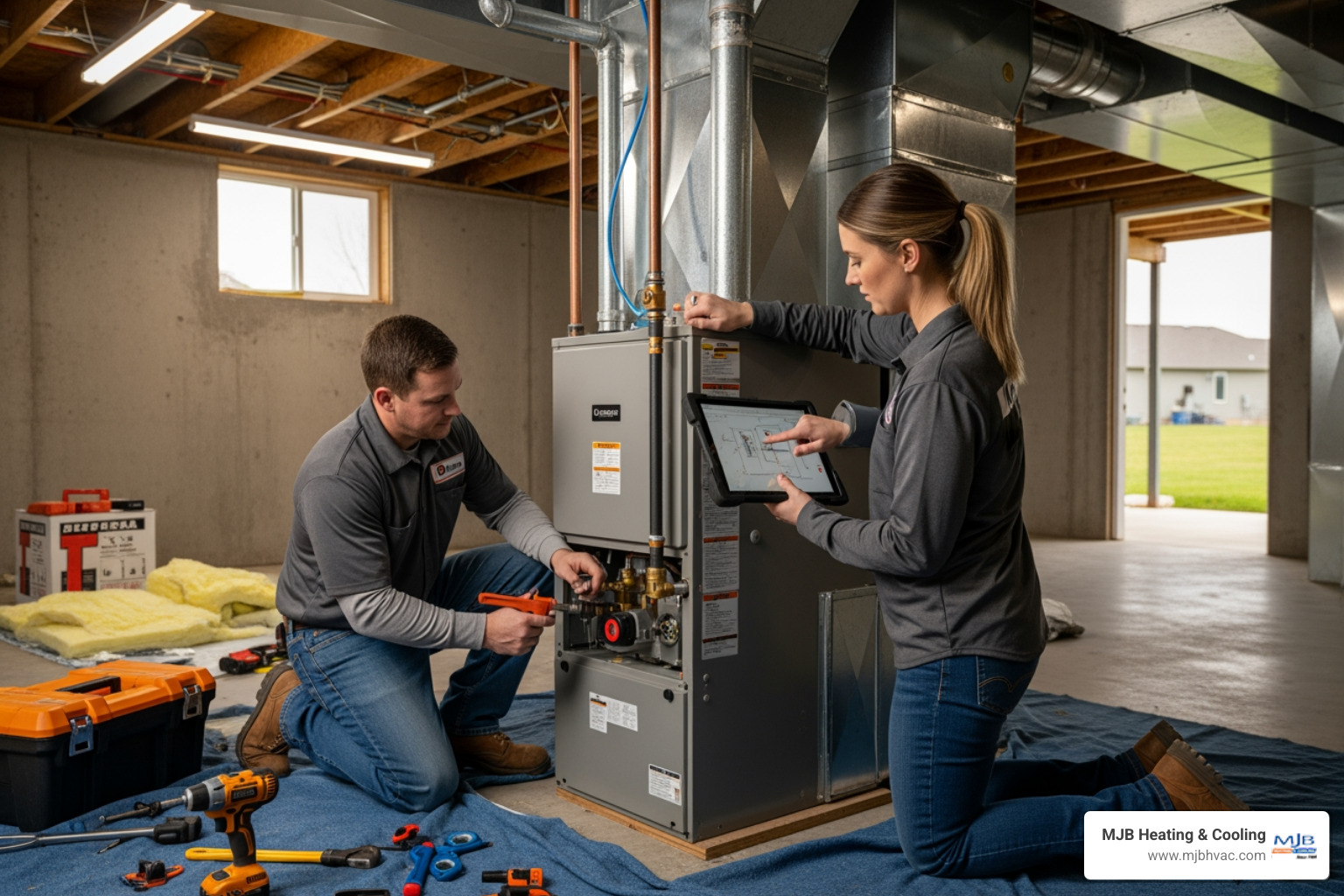

Furnace installation in wichita, ks is one of the most important investments you'll make as a homeowner. When your furnace starts showing its age—frequent breakdowns, uneven heating, or skyrocketing energy bills—you're not just dealing with an inconvenience. You're facing safety risks, wasted money, and uncomfortable cold spots throughout your home. A new, properly installed furnace restores reliable warmth, lowers your monthly utility bills, and gives you peace of mind during harsh Kansas winters.
Quick Answer: What You Need to Know About Furnace Installation
• Timeline: Most installations take 4-8 hours for a standard replacement
• Lifespan: A new furnace typically lasts 15-20 years with proper maintenance
• Key Signs You Need Replacement: Your system is over 15 years old, requires frequent repairs, or heats unevenly
• Efficiency Gains: New furnaces reach 92-97% efficiency vs. 80% for older models
• Professional Installation: Required for safety, code compliance, and warranty validation
If you're experiencing heating issues, understanding your options for heating services in Wichita is essential. For expert help choosing and installing the right system, contact MJB Heating & Cooling today.
This guide walks you through everything you need to know—from recognizing when it's time to replace your old furnace to understanding the installation process and maximizing your new system's performance. We'll cover fuel types, efficiency ratings, what happens on installation day, and how to keep your investment running strong for years to come.

Winter in Wichita can be quite brutal, and there's nothing worse than a furnace that can't keep up with the biting cold. For many homeowners, the question isn't if their furnace will eventually need replacing, but when. Recognizing the signs that your heating system is nearing its end-of-life is crucial for preventing unexpected breakdowns and maintaining a comfortable, safe home.
We've been helping families in the Wichita metro area stay warm since 1984, and we've seen countless furnaces come and go. Here are the most common indicators that it might be time to consider a new furnace installation in Wichita, KS:
• Furnace lifespan 15-20 years: While some natural gas furnaces can stretch to 30 years, the average lifespan of a furnace is generally 15 to 20 years. If your furnace is older than 15 years, it's operating on borrowed time. Furnaces older than 15 to 20 years are near end-of-life, and replacement is typically the smarter long-term option than pouring money into an aging system.
• Increased repair frequency: Is your furnace requiring frequent repairs? If those repair calls are becoming a regular occurrence, the cumulative cost can quickly approach that of a new unit. It's a classic case of diminishing returns—at some point, fixing the old becomes more expensive than investing in new.
• Higher utility costs: Older units only bring about 80% efficiency, while newer models boost that up to the 92 to 97% range. If you've noticed a steady increase in your energy bills without a corresponding change in usage, your furnace is likely losing its efficiency and working harder to produce the same amount of heat. 55% of all the energy used in the average U.S. household goes to the heating and air conditioning system, so even a small efficiency gain can make a big difference.
• Inconsistent heating: Do you have cold spots in certain rooms while others are perfectly warm? This uneven heating can be a sign that your furnace is struggling to distribute heat effectively. For more insights on this issue, check out our guide on Uneven heating throughout your home Wichita.
• Strange noises or smells: Furnaces are generally quiet operators. If you're hearing loud banging, squealing, rattling, or whistling sounds, it's a red flag. Similarly, persistent dusty, metallic, or chemical odors emanating from your vents are cause for concern.
• Yellow pilot light: For gas furnaces, a healthy pilot light should burn blue. A yellow or flickering pilot light can indicate incomplete combustion, which can produce dangerous carbon monoxide. This is a serious safety hazard and requires immediate attention.
• Soot or rust: Visible soot buildup around the furnace or rust on internal components can signal problems with combustion or moisture, both of which compromise safety and efficiency.
• Heating system has delayed ignition Wichita: If you hear a "whoosh" sound several seconds after the thermostat calls for heat, it indicates delayed ignition. This can be caused by dirty burners or a faulty igniter and can be a fire hazard.
If your furnace is over 15 years old, experiencing frequent breakdowns, or not heating efficiently, it may be time for a replacement to improve energy efficiency and reduce repair needs.
Deciding on a new furnace installation in Wichita, KS isn't just about replacing a broken appliance; it's an investment in your home's future comfort, safety, and efficiency. The benefits of upgrading to a new, high-efficiency furnace are substantial:
• Improved energy efficiency: This is often the biggest motivator. Newer furnaces are built with efficiency in mind, boasting AFUE (Annual Fuel Utilization Efficiency) ratings in the 92-97% range. This means more of the fuel you pay for is converted into usable heat for your home, compared to older units that might only be 80% efficient.
• Lower monthly bills: With significantly improved efficiency, you'll see a noticeable reduction in your heating needs. Over the lifespan of your new furnace, this can provide substantial value.
• Improved home comfort: Say goodbye to cold spots! A new furnace, properly sized and installed, delivers consistent, even heating throughout your entire home. Many modern systems also offer multi-stage or variable-speed operation for more precise temperature control and quieter performance.
• Better indoor air quality: Modern furnaces often come with improved filtration capabilities. When paired with high-quality air filters and proper ductwork, they can significantly reduce dust, allergens, and other airborne pollutants, contributing to a healthier living environment.
• Increased reliability: New furnaces come with warranties and are far less prone to breakdowns than older models. This means fewer service calls and the peace of mind knowing your home will stay warm even during the coldest Kansas nights.
• Quieter operation: Advancements in technology mean new furnaces run much quieter than their predecessors. You'll likely forget it's even running, enjoying peaceful warmth without intrusive mechanical noises.
• Environmental benefits: By consuming less fuel, a high-efficiency furnace can reduce your home's carbon footprint.
• Boosts market appeal: Investing in a new, energy-efficient furnace can increase your home's resale value, showing prospective buyers that key systems are updated and well-cared for.
Selecting the ideal furnace for your home is more than just picking a brand. It involves a careful consideration of your home's unique characteristics, your comfort preferences, and your goals for efficiency and performance. As your trusted local experts, we're here to guide you through this important decision, ensuring you get a system that's perfectly suited for furnace installation in Wichita, KS.
The type of fuel your furnace uses is a primary consideration, especially given the availability and usage patterns in the Wichita metro area. Here's a comparison of the most common fuel types:
• Natural Gas — Availability in Wichita: Widely available in most urban and suburban areas. — Operating Efficiency: Very efficient, especially with modern condensing units. — Upfront Considerations: Requires gas line connection and proper venting. — Long-Term Performance: Well-suited for Kansas winters with strong, consistent heat.
• Electric — Availability in Wichita: Available everywhere, regardless of gas line access. — Operating Efficiency: 100% efficient at converting electricity to heat. — Upfront Considerations: No gas line or venting needed, simpler installation needs. — Long-Term Performance: Often longer equipment lifespan due to fewer combustion components.
• Propane — Availability in Wichita: Common in rural areas without natural gas lines. — Operating Efficiency: High efficiency, similar to natural gas. — Upfront Considerations: Requires a storage tank and regular refills. — Long-Term Performance: Reliable comfort where natural gas service is not available.
Natural Gas Furnaces: Most homes in Wichita use natural gas furnaces. They are a popular choice due to the widespread availability of natural gas lines and the strong, steady heat they provide. Modern natural gas furnaces offer excellent efficiency and robust heating even in the coldest conditions.
Electric Furnaces: For homes without access to natural gas, electric furnaces are a viable option. They tend to have straightforward installation needs since they don't require gas lines or combustion venting. Electric furnaces often have a longer lifespan due to fewer moving parts and no combustion process.
Propane Furnaces: Propane is an excellent alternative for homes outside the natural gas grid. Propane furnaces are highly efficient and produce clean heat. The main consideration is the need for a propane storage tank on your property and scheduling regular refills.
Heat Pumps: While not strictly furnaces, it's worth mentioning heat pumps as a highly efficient heating and cooling solution. Modern cold-climate heat pumps can efficiently heat many Wichita homes, and some homeowners opt for dual-fuel systems, pairing a heat pump with a gas furnace for optimal performance during the coldest days.
Choosing the right size furnace is paramount. An improperly sized furnace—too big or too small—will lead to inefficiency, discomfort, and premature wear. This is where our expertise truly shines during a furnace installation in Wichita, KS.
• BTU (British Thermal Units): This is the standard unit of measurement for a furnace's heating capacity. It indicates how much heat the furnace can produce. Getting the BTU output right is critical for effective heating.
• AFUE (Annual Fuel Utilization Efficiency): This rating tells you how efficiently your furnace converts fuel into usable heat. For example, a 95% AFUE furnace means 95% of the fuel's energy is used for heating, and only 5% is lost through the exhaust. High-AFUE condensing furnaces (95% or higher) are often the most energy-efficient choice.
• Manual J load calculation: This is an industry-standard calculation that we perform to accurately determine your home's heating needs. It considers numerous factors such as your home's square footage, insulation levels, window types, air leakage, home orientation, and local climate data for Wichita. This detailed assessment ensures the system's capacity precisely matches your home's actual heating requirements.
• Dangers of improper sizing:
— Oversized furnace: A furnace that's too powerful will "short-cycle," meaning it heats up too quickly and then shuts off, leading to inconsistent temperatures, increased wear and tear, and wasted energy.
— Undersized furnace: A furnace that's too small will run constantly, struggling to reach the desired temperature. This also leads to increased wear, higher energy use, and a perpetually chilly home.
• Single-stage vs. two-stage vs. variable-speed blowers:
— Single-stage: These furnaces operate at full capacity whenever they're on. They're simpler but offer less precise temperature control.
— Two-stage: These furnaces have two heating outputs—a lower setting for mild days and a higher setting for colder days. This provides more consistent heating and better efficiency.
— Variable-speed blowers: These advanced blowers can adjust their speed to precisely match your home's heating needs. They offer the quietest operation, best temperature control, and improved indoor air quality.
For more information on ensuring your heating system is perfectly matched to your home's needs, you might find our insights on Heating Installation Andover KS helpful.
When it comes to furnace installation in Wichita, KS, the quality of the installation is just as important as the quality of the furnace itself. A professional installation ensures your system operates safely, efficiently, and reliably for years to come. Since 1984, our family-owned business has prioritized quality workmanship and an honest approach, making us a trusted name in the Wichita metro area.
We understand that a new furnace installation can seem like a daunting task, but we strive to make the process as smooth and hassle-free as possible. Here's a general overview of what you can expect when our certified technicians arrive at your home for a furnace installation in Wichita, KS:
1. Initial consultation and assessment: Before installation day, we'll have conducted a thorough assessment of your home's heating needs and recommended the best system. On installation day, our team will confirm the plan, answer any last-minute questions, and prepare the work area.
2. Safe removal of the old unit: Our technicians will safely disconnect and remove your old furnace, ensuring all gas, electrical, and venting connections are properly shut off. We'll handle the responsible disposal and recycling of the old equipment, including its metal components, in compliance with local regulations.
3. Preparing the space: We'll prepare the area for the new furnace, which may involve minor adjustments to the platform or surrounding space. We take care to protect your home from dirt and debris, often using drop cloths and shoe covers.
4. Setting the new furnace: The new furnace will be carefully positioned and leveled according to manufacturer specifications and local codes.
5. Connecting ductwork, electrical, and fuel lines: This is a critical step that requires precision and expertise. Our technicians will connect the new furnace to your existing ductwork, ensuring optimal airflow. All electrical connections will be made safely and according to code, and for gas or propane furnaces, the fuel lines will be securely connected and rigorously tested for leaks.
6. Venting installation: For gas and propane furnaces, proper venting is crucial for safety. We'll ensure the exhaust system is correctly installed, often utilizing sealed combustion and direct venting for improved safety and efficiency in modern, tighter homes.
7. Thermostat integration: Your new thermostat will be wired and programmed to integrate seamlessly with your new furnace. If you're upgrading to a smart thermostat, we'll ensure it's properly set up and connected.
8. System testing and calibration: Once all connections are made, we'll perform comprehensive tests to ensure the furnace is operating correctly, safely, and at peak efficiency. This includes combustion safety testing, checking for proper airflow, and verifying all controls.
9. Typical duration 4-8 hours: A typical residential furnace installation in Wichita, KS generally takes between 4 to 8 hours. Most installations are completed in one day. However, more complex jobs, such as those requiring significant ductwork modifications, electrical panel upgrades, or switching fuel types (e.g., from electric to gas), may take longer.
While the thought of tackling a large home project yourself might be tempting, attempting to install a furnace without proper training is not recommended. Professional installation is not just a suggestion; it's a necessity for several vital reasons:
• Safety compliance: Furnaces involve complex systems like gas lines, high-voltage electricity, and combustion processes. Improper installation can lead to dangerous situations, including gas leaks, electrical fires, or carbon monoxide poisoning. Our certified technicians are trained to adhere to strict safety protocols and local codes, including Kansas state mechanical and electrical codes, and specific Wichita or Sedgwick County requirements. Permits are usually required, especially if venting, gas lines, or electrical service are altered, and we handle all of that for you.
• Carbon monoxide prevention: For gas furnaces, combustion safety testing, proper vent clearances, and carbon monoxide prevention measures are absolutely essential. A professional ensures these are carefully handled, protecting your family from this silent hazard.
• Gas line integrity: Working with gas lines requires specialized knowledge and tools. Any mistake can have severe consequences. Our experts ensure all gas connections are secure and leak-free.
• Electrical connections: Furnaces require precise electrical wiring. Incorrect connections can damage the unit, create fire hazards, or lead to system malfunctions.
• Optimal performance and efficiency: Proper sizing, ductwork connections, and system calibration are critical for your furnace to operate at its advertised efficiency. A professional installation helps your new furnace deliver steady warmth without wasting energy, supporting your long-term investment.
• Warranty validation: Most furnace manufacturers require professional installation for their warranties to be valid. Installation by an unlicensed individual can void your warranty, leaving you responsible for future repair needs.
• Heating Installation Derby KS: Our expertise extends across the Wichita metro area, ensuring top-tier professional installation in all our service locations.
Our job isn't done once the furnace is physically in place. We believe in ensuring you're fully comfortable and confident with your new system.
• System testing and calibration: We perform thorough tests to verify that every component of your new furnace is functioning correctly and efficiently. This includes checking temperatures, pressures, and electrical readings.
• Airflow balancing: We'll adjust the system to ensure balanced airflow, providing consistent heating throughout your home and helping eliminate cold spots.
• Thermostat programming: We'll walk you through the features of your new thermostat, showing you how to program it for optimal comfort and energy savings.
• Homeowner walkthrough: Our technician will conduct a comprehensive walkthrough of your new system, explaining its key components, how it operates, and what to look for regarding performance.
• Maintenance requirements: We'll discuss essential maintenance steps, including the importance of annual tune-ups and filter replacement schedules.
• Filter changing schedule: We'll show you how to access and change your air filter, advising on the recommended frequency (typically every 1 to 3 months, or more often if you have pets or allergies).
• Answering questions: We encourage you to ask any questions you have about your new furnace. We want you to feel completely at ease with your investment.
Congratulations on your new furnace installation in Wichita, KS! Now that you've made this significant investment, the next step is ensuring it lasts as long as possible and continues to provide efficient, reliable heat. Just like a car, your furnace needs regular care to perform at its best.
Regular maintenance is the secret sauce to a long-lasting, high-performing furnace. Here's how you can help preserve your investment:
• Scheduling annual professional tune-ups: This is the single most important maintenance step. We recommend scheduling a tune-up before the heating season begins. During these appointments, our technicians will clean internal components, inspect the heat exchanger for cracks, check electrical connections, test safety controls, lubricate moving parts, and verify thermostat calibration. This preventative care is crucial for longevity, efficiency, and safe operation.
• Importance of clean air filters: Routinely changing or cleaning your air filter every 1 to 3 months is the simplest and most crucial task you can do. A dirty filter restricts airflow, forcing your furnace to work harder, which reduces efficiency, increases energy use, and can lead to premature wear.
• Checking vents for blockages: Ensure all return registers and supply vents are clear of furniture, drapes, or other obstructions. Blocked vents can disrupt airflow, causing uneven heating and making your furnace work harder.
• Listening for unusual sounds: While new furnaces are quieter, pay attention to any new or unusual noises. Strange sounds can be an early indicator of a developing problem that can be addressed before it becomes a major repair.
• Heating Installation Haysville KS: Regular maintenance is a service we proudly provide across the entire Wichita metro area, including our Haysville community, to help your heating system run smoothly.
Investing in a new furnace can be a significant decision, but there are often ways to make it more manageable and ensure its long-term value.
• Federal tax credits: Keep an eye out for federal tax credits that may be available for installing certain high-efficiency heating and cooling systems. These can provide a direct reduction in your tax liability.
• Local utility rebates: Many local utility companies in the Wichita metro area offer rebates for homeowners who upgrade to energy-efficient furnaces. We can help you identify eligible systems and guide you through the application process.
• Manufacturer promotions: Furnace manufacturers often run seasonal promotions or special offers that can help reduce the upfront commitment of your new system.
• Available financing options: We understand that a new furnace is a significant investment. That's why we offer financing solutions to help make upgrading your heating system more accessible. Ask us about available financing plans that can help you manage your new system with convenient monthly payments.
• Payback from energy savings: The long-term value of a new, high-efficiency furnace is clear. The energy savings from lower utility usage can provide a meaningful "payback" over time. Documenting your pre-installation energy usage can even help you track these savings after your new system is installed.
A new furnace, when properly sized, installed, and maintained, can typically last between 15 to 20 years. Some high-efficiency condensing furnaces can even reach 15-25 years with diligent care. Factors like the type of furnace (electric furnaces may last longer due to fewer moving parts), frequency of use, and consistency of professional maintenance significantly influence its lifespan. Avoiding issues like dirty filters or incorrect sizing helps maximize its operational life.
A typical residential furnace installation in Wichita, KS generally takes between 4 to 8 hours. Most standard replacements are completed within a single day. However, the duration can vary based on the complexity of the job. For instance, if significant ductwork modifications are needed, electrical upgrades are required, or you're switching fuel types (e.g., from electric to natural gas, which requires installing new gas lines), the process may extend beyond one day.
Due to the complexity involving high-voltage electricity, gas lines (for gas or propane furnaces), and proper venting to prevent carbon monoxide leaks, furnace installation is not a DIY project. Professional installation is essential for safety, efficiency, and compliance with local Wichita, KS building codes. Attempting a self-installation can lead to dangerous situations, void your manufacturer's warranty, and result in an inefficient or malfunctioning system. Trusting certified HVAC professionals ensures your system is installed correctly and safely.
Investing in a new furnace is a significant decision for any homeowner, ensuring comfort, safety, and efficiency during Kansas winters. From recognizing the signs of a failing unit to understanding the installation process and post-care, being informed helps you make the best choice for your home. For expert guidance and quality workmanship, trust a local, family-owned company like MJB Heating & Cooling. Learn more about our professional heating services in Wichita, KS.
Furnace installation in wichita, ks is one of the most important investments you'll make as a homeowner. When your furnace starts showing its age—frequent breakdowns, uneven heating, or skyrocketing energy bills—you're not just dealing with an inconvenience. You're facing safety risks, wasted money, and uncomfortable cold spots throughout your home. A new, properly installed furnace restores reliable warmth, lowers your monthly utility bills, and gives you peace of mind during harsh Kansas winters.
Quick Answer: What You Need to Know About Furnace Installation
If you're experiencing heating issues, understanding your options for heating services in Wichita is essential. For expert help choosing and installing the right system, contact MJB Heating & Cooling today.
This guide walks you through everything you need to know—from recognizing when it's time to replace your old furnace to understanding the installation process and maximizing your new system's performance. We'll cover fuel types, efficiency ratings, what happens on installation day, and how to keep your investment running strong for years to come.
Winter in Wichita can be quite brutal, and there's nothing worse than a furnace that can't keep up with the biting cold. For many homeowners, the question isn't if their furnace will eventually need replacing, but when. Recognizing the signs that your heating system is nearing its end-of-life is crucial for preventing unexpected breakdowns and maintaining a comfortable, safe home.
We've been helping families in the Wichita metro area stay warm since 1984, and we've seen countless furnaces come and go. Here are the most common indicators that it might be time to consider a new furnace installation in Wichita, KS:
If your furnace is over 15 years old, experiencing frequent breakdowns, or not heating efficiently, it may be time for a replacement to improve energy efficiency and reduce repair needs.
Deciding on a new furnace installation in Wichita, KS isn't just about replacing a broken appliance; it's an investment in your home's future comfort, safety, and efficiency. The benefits of upgrading to a new, high-efficiency furnace are substantial:
Selecting the ideal furnace for your home is more than just picking a brand. It involves a careful consideration of your home's unique characteristics, your comfort preferences, and your goals for efficiency and performance. As your trusted local experts, we're here to guide you through this important decision, ensuring you get a system that's perfectly suited for furnace installation in Wichita, KS.
The type of fuel your furnace uses is a primary consideration, especially given the availability and usage patterns in the Wichita metro area. Here's a comparison of the most common fuel types:
| Fuel Type | Availability in Wichita | Operating Efficiency | Upfront Considerations | Long-Term Performance |
|---|---|---|---|---|
| Natural Gas | Widely available in most urban and suburban areas. | Very efficient, especially with modern condensing units. | Requires gas line connection and proper venting. | Well-suited for Kansas winters with strong, consistent heat. |
| Electric | Available everywhere, regardless of gas line access. | 100% efficient at converting electricity to heat. | No gas line or venting needed, simpler installation needs. | Often longer equipment lifespan due to fewer combustion components. |
| Propane | Common in rural areas without natural gas lines. | High efficiency, similar to natural gas. | Requires a storage tank and regular refills. | Reliable comfort where natural gas service is not available. |
Natural Gas Furnaces: Most homes in Wichita use natural gas furnaces. They are a popular choice due to the widespread availability of natural gas lines and the strong, steady heat they provide. Modern natural gas furnaces offer excellent efficiency and robust heating even in the coldest conditions.
Electric Furnaces: For homes without access to natural gas, electric furnaces are a viable option. They tend to have straightforward installation needs since they don't require gas lines or combustion venting. Electric furnaces often have a longer lifespan due to fewer moving parts and no combustion process.
Propane Furnaces: Propane is an excellent alternative for homes outside the natural gas grid. Propane furnaces are highly efficient and produce clean heat. The main consideration is the need for a propane storage tank on your property and scheduling regular refills.
Heat Pumps: While not strictly furnaces, it's worth mentioning heat pumps as a highly efficient heating and cooling solution. Modern cold-climate heat pumps can efficiently heat many Wichita homes, and some homeowners opt for dual-fuel systems, pairing a heat pump with a gas furnace for optimal performance during the coldest days.
Choosing the right size furnace is paramount. An improperly sized furnace—too big or too small—will lead to inefficiency, discomfort, and premature wear. This is where our expertise truly shines during a furnace installation in Wichita, KS.
For more information on ensuring your heating system is perfectly matched to your home's needs, you might find our insights on Heating Installation Andover KS helpful.
When it comes to furnace installation in Wichita, KS, the quality of the installation is just as important as the quality of the furnace itself. A professional installation ensures your system operates safely, efficiently, and reliably for years to come. Since 1984, our family-owned business has prioritized quality workmanship and an honest approach, making us a trusted name in the Wichita metro area.
We understand that a new furnace installation can seem like a daunting task, but we strive to make the process as smooth and hassle-free as possible. Here's a general overview of what you can expect when our certified technicians arrive at your home for a furnace installation in Wichita, KS:
While the thought of tackling a large home project yourself might be tempting, attempting to install a furnace without proper training is not recommended. Professional installation is not just a suggestion; it's a necessity for several vital reasons:
Our job isn't done once the furnace is physically in place. We believe in ensuring you're fully comfortable and confident with your new system.
Congratulations on your new furnace installation in Wichita, KS! Now that you've made this significant investment, the next step is ensuring it lasts as long as possible and continues to provide efficient, reliable heat. Just like a car, your furnace needs regular care to perform at its best.
Regular maintenance is the secret sauce to a long-lasting, high-performing furnace. Here's how you can help preserve your investment:
Investing in a new furnace can be a significant decision, but there are often ways to make it more manageable and ensure its long-term value.
A new furnace, when properly sized, installed, and maintained, can typically last between 15 to 20 years. Some high-efficiency condensing furnaces can even reach 15-25 years with diligent care. Factors like the type of furnace (electric furnaces may last longer due to fewer moving parts), frequency of use, and consistency of professional maintenance significantly influence its lifespan. Avoiding issues like dirty filters or incorrect sizing helps maximize its operational life.
A typical residential furnace installation in Wichita, KS generally takes between 4 to 8 hours. Most standard replacements are completed within a single day. However, the duration can vary based on the complexity of the job. For instance, if significant ductwork modifications are needed, electrical upgrades are required, or you're switching fuel types (e.g., from electric to natural gas, which requires installing new gas lines), the process may extend beyond one day.
Due to the complexity involving high-voltage electricity, gas lines (for gas or propane furnaces), and proper venting to prevent carbon monoxide leaks, furnace installation is not a DIY project. Professional installation is essential for safety, efficiency, and compliance with local Wichita, KS building codes. Attempting a self-installation can lead to dangerous situations, void your manufacturer's warranty, and result in an inefficient or malfunctioning system. Trusting certified HVAC professionals ensures your system is installed correctly and safely.
Investing in a new furnace is a significant decision for any homeowner, ensuring comfort, safety, and efficiency during Kansas winters. From recognizing the signs of a failing unit to understanding the installation process and post-care, being informed helps you make the best choice for your home. For expert guidance and quality workmanship, trust a local, family-owned company like MJB Heating & Cooling. Learn more about our professional heating services in Wichita, KS.


Our A/C stopped working on a Sunday and due to health issues, we needed to find a service company available on a Sunday. I called MJB and left a message on their emergency voice mail. Within 10 minutes Tom Buck called me to hear my description of the symptoms. He was just finishing an appointment in Wichita and would be on his way to my home on the south end of Derby. He arrived within 30 minutes! From start to finish he was the perfect example of what you could ever hope for in an HVAC tech and a human being. His evaluation of our system inside and out was as thorough as I could ever imagine and once he was done with the repair, our system is running as well or better than ever. Well worth the price for the evaluation, parts, and labor. Thank you again Tom for an awesome experience.
Our AC went out during the hottest days of the year, and they were out next day! We have been jerked around by a shoddy home warranty for years. We finally had a chance to pick our own repair people, and MJB came highly recommended. I can see why! I was impressed with the honesty and speed at which they fixed our AC unit!
Our commercial building had a lightening/electrical strike and damaged our 20 ton AC unit. No one could find us a new unit before the end of September. Imagining going all of August and September with no AC in Kansas and working inside near 100 degree temps is less than thrilling. Dale and the team at MJB called around and saved the day. They had us a new unit 5 weeks earlier than other could promise and I now have happy employees. The unit is amazingly quiet, super cold and so much more energy efficient. Thank you for being our super hero!
Came out and installed my new furnace. Was very polite and affordable. They are very acknowledgeable and I highly recommend!
Thank you very much. We had our 1st warm night in 3weeks. MJB took the time and effort to find the real problem. And the employees were kind and thoughtful and explained things very well. I cannot thank you and all of MJB. Will recommend you highly. Thanks again Marjorie Herman Oxford Kansas
We had a new system installed and I was so impressed with how quick they were in come out and install it, in the middle of a hot summer day. They were so friendly & very professional. I had a small problem with a weird sound and they came over immediately and fixed it. Love them!


