.avif)





Blogs
Stay updated with our latest blog posts.
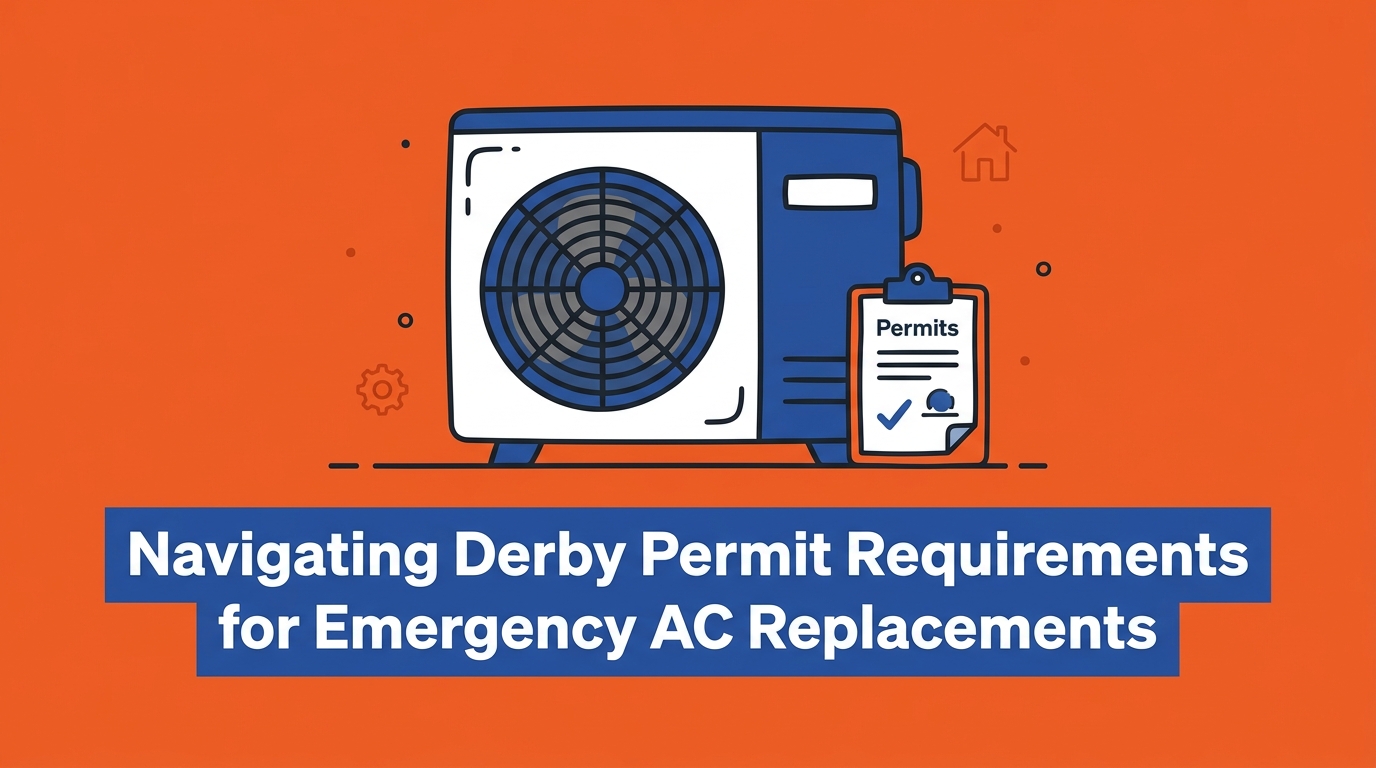

Your air conditioner is running nonstop, but the house still feels like an oven, and now the system has completely shut down. Navigating Derby permit requirements for emergency AC replacements is the last thing you want to worry about when indoor temperatures are rapidly climbing during a brutal late-summer heatwave. The August heat is unforgiving, and a sudden, unrepairable AC failure creates an immediate crisis for your household. You need immediate cooling relief, but you also know that major home upgrades require municipal approval. The conflict between your urgent need for a functioning air conditioner and the legal requirement for municipal permits can cause severe stress. At MJB Heating & Cooling, we see this exact scenario play out every August when the back-to-school heatwave hits Derby.
Fortunately, local codes account for these sudden crises, allowing homeowners to get immediate relief without breaking the law. Municipal building departments understand that waiting days for administrative paperwork to clear is simply not an option when indoor temperatures reach dangerous levels. The regulatory framework includes specific provisions for emergency changeouts, ensuring your family stays safe and comfortable while the bureaucratic process happens in the background. If you are facing a cooling crisis right now, you need professional HVAC services to assess the situation and schedule your emergency AC replacement immediately.
Prolonged exposure to extreme indoor temperatures during late summer is more than just uncomfortable; it is a genuine hazard. When the August late-summer heat settles over the region, a home without air conditioning can quickly become unlivable. Aging systems often fail catastrophically under the sustained strain of these heatwaves. A unit that has been struggling for weeks will finally give out when it is forced to run continuously against triple-digit outdoor temperatures. Because of this, municipal building departments recognize a complete lack of cooling as a legitimate safety emergency that requires immediate intervention.
Our team at MJB Heating & Cooling recently helped a local Derby family who experienced this exact crisis when their AC stopped running for almost a week during a severe stretch of hot weather. After a previous misdiagnosis by another company left them stranded and sweltering, we were called in to identify the true issue. Our technicians diagnosed the 25-year-old system, temporarily repaired it to provide brief relief, and then completely replaced it. Today, their house is nice and cool with a new, efficiently installed system. This highlights a pattern we see often: when a system fails during extreme weather, you cannot afford to wait.
While you wait for your emergency replacement to begin, there are a few steps you can take to mitigate the heat. Keep all blinds and curtains closed to block out radiant solar heat, avoid using heat-generating appliances like ovens or dryers, and rely on ceiling fans to keep air circulating. Knowing exactly what to check when your AC is not cooling properly in extreme heat can help you determine if you are facing a simple tripped breaker or a total system failure that requires an emergency replacement protocol.
When you are replacing a major appliance like a central air conditioner, you are dealing with high-voltage electricity, pressurized chemical refrigerants, and complex ductwork systems. Because of these factors, all HVAC changeouts legally require a mechanical permit to ensure safety standards are met. Establishing local authority means following the specific requirements set forth for Derby KS residential zones. In our years of serving the Derby community, we always remind homeowners that these regulations are not in place to make your life difficult; they exist to protect your property, your family, and the environment from the dangers of improper installation.
Building codes in Derby KS residential zones are strictly enforced to prevent catastrophic accidents and long-term structural issues. A mechanical permit triggers a mandatory inspection that verifies the installation against several critical safety benchmarks.
• Fire hazards from improper high-voltage electrical wiring: Air conditioners draw a massive amount of electrical current. If the disconnect box, wiring gauge, or breakers are incorrectly sized or installed, the risk of an electrical fire increases dramatically.
• Environmental and health risks from incorrect refrigerant handling: Modern refrigerants operate under extreme pressure. Improper brazing of the copper lines can lead to leaks, which are harmful to the environment and degrade the performance of your new system.
• Structural integrity issues related to ductwork and unit placement: The physical placement of the condenser pad and the secure connection of the indoor evaporator coil to your existing ductwork must meet specific structural guidelines to prevent water damage from condensation or poor airflow.
A common point of confusion during an emergency replacement is who is actually responsible for securing the permit. While the homeowner ultimately owns the property, the burden of pulling the permit should rarely fall on your shoulders.
• Application Submission — Homeowner Role: Provide property access and basic information. — Licensed Contractor Role: Navigate the municipal portal and submit all technical specifications.
• Liability and Compliance — Homeowner Role: Ensure the chosen contractor is licensed and insured. — Licensed Contractor Role: Assume legal liability for ensuring the installation meets all current building codes.
• Inspection Coordination — Homeowner Role: Be available to allow the city inspector access to the equipment. — Licensed Contractor Role: Schedule the inspection and correct any issues identified by the city at no extra cost.
Licensed contractors are typically required to pull the permit to assume liability for the work performed. Homeowners should never be forced to navigate the municipal portal themselves, especially during a stressful cooling emergency. Always verify that your contractor is actively registered with the local municipality before allowing work to begin.
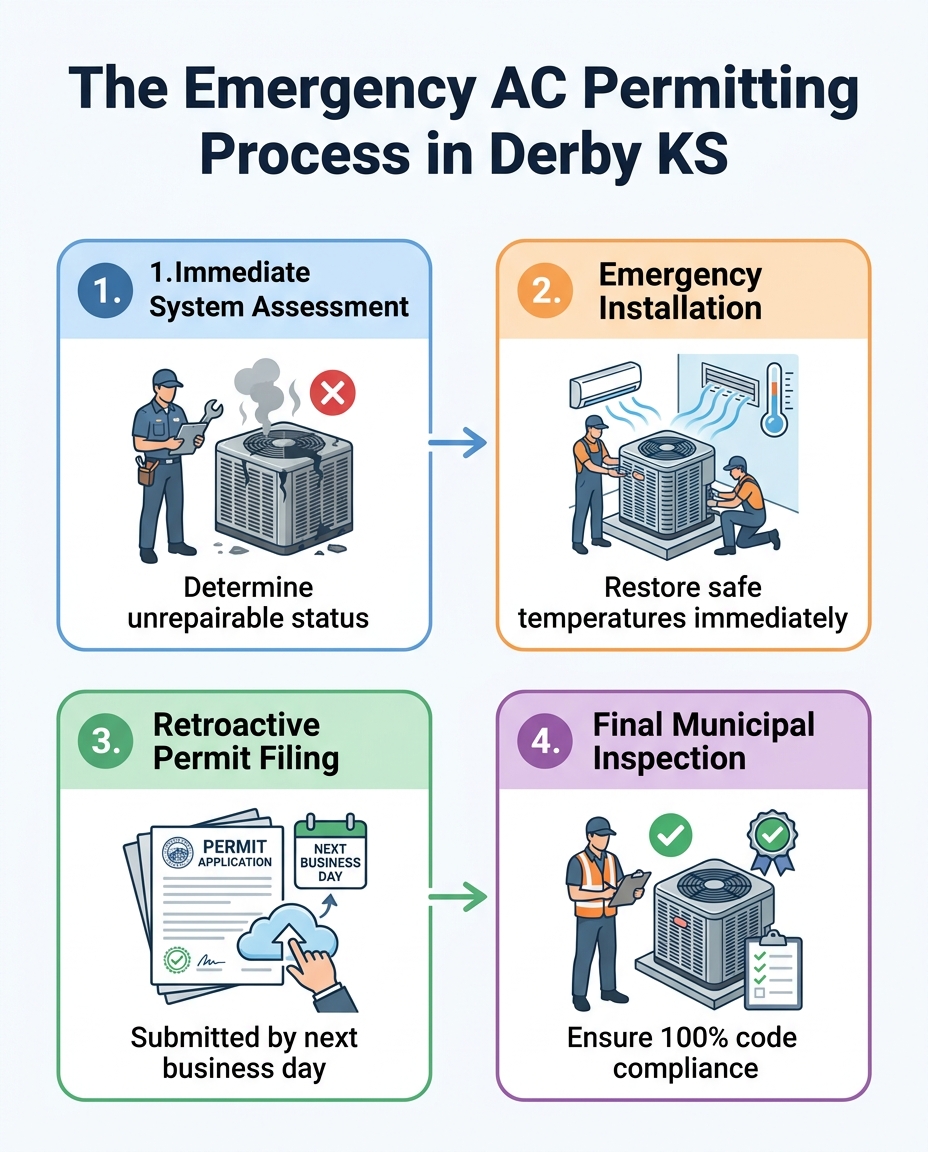
The fear of having to wait for standard approval often drives homeowners to consider skipping the permit process altogether. However, the legal protocol for retroactive emergency permits alleviates this fear completely. Local code enforcement defines an "emergency" as a situation where the lack of a functioning system poses a risk to health, safety, or property damage. Under these guidelines, contractors are granted permission to bypass the standard waiting period and restore cooling immediately.
The process begins the moment our MJB Heating & Cooling technicians arrive at your home. We evaluate the failed system and determine conclusively whether it can be repaired. Once the unit is deemed a total loss, work begins immediately to restore safe indoor temperatures. Our installation team removes the old equipment, sets the new condenser, connects the refrigerant lines, and wires the high-voltage electrical components. Your home begins cooling down that very same day, effectively ending the immediate crisis.
While you are enjoying your newly restored air conditioning, the administrative work begins behind the scenes. We submit the mechanical permit application to the city immediately following the weekend or holiday, usually by the next business day. During this processing window, the completed work is legally protected under emergency provisions. The city acknowledges that the work was performed to mitigate a safety hazard and processes the application retroactively.
Once the city processes the retroactive permit, a final safety inspection is scheduled. A city inspector visits your home to review the completed work, ensuring it aligns with 100% code compliance. They will check the electrical disconnects, verify the refrigerant line insulation, and ensure the unit is properly secured. Once the inspection is passed, the homeowner receives official documentation that the system is safe, legal, and officially recorded with the municipality.
When you are desperate for cooling, a contractor who offers to install a unit quickly and cheaply by skipping the permit process might sound appealing. However, allowing a contractor to perform unpermitted work, even in an emergency, carries severe long-term consequences that far outweigh the initial convenience. The short answer is: skipping the permit exposes you to financial and physical risks that our team has seen haunt homeowners for years.
First and foremost, unpermitted work automatically voids most major manufacturer warranties. Modern HVAC equipment comes with extensive parts warranties, but manufacturers stipulate that the equipment must be installed according to local building codes by a licensed professional. If a compressor fails two years down the line and you cannot produce a finalized municipal permit, the manufacturer will likely deny your warranty claim, leaving you responsible for the full cost of the repair.
Furthermore, unpermitted HVAC work causes significant complications during future home appraisals and real estate sales. When you attempt to sell your home, the buyer's inspector will check the age of the HVAC system against the city's permit records. If a new air conditioner was installed without a permit, it creates a massive red flag. You may be forced to pay for a retroactive inspection, pay municipal penalties, or even tear out and reinstall the system before the sale can close.
Beyond the financial implications, the safety risks of uninspected electrical and refrigerant work are substantial. The reality is: city inspectors act as an independent third party to ensure your contractor did not cut corners. Without this oversight, you have no guarantee that the high-voltage wiring is safe or that the exhaust flues (if attached to a furnace) are properly venting carbon monoxide. Finally, municipal fines and penalties for unpermitted work ultimately fall on the property owner, not the contractor who disappeared after taking your money.
A cooling emergency is stressful enough without adding municipal paperwork, city portal logins, and inspection scheduling to the mix. You should be focused on keeping your family comfortable, not deciphering local building codes or figuring out which forms need to be notarized. This is where choosing the right professional makes all the difference.
Because our team has established relationships with local code enforcement, we ensure smooth, expedited approvals. Working frequently within the municipality, we understand exactly what the inspectors are looking for and how to submit retroactive emergency applications without delays. At MJB Heating & Cooling, we handle all the local Derby code requirements and permit fast-tracking for you, completely removing the bureaucratic stress during a cooling emergency.
You can rest assured that all paperwork, scheduling, and inspection coordination is handled entirely by our team behind the scenes. From the moment you call us for help to the day the final inspection sticker is placed on your new unit, the administrative burden is lifted from your shoulders. Whether you are right in town or located elsewhere in the Derby service area, you get the benefit of a legally compliant installation without ever having to step foot inside a city building department.
Yes, replacing a central air conditioning system requires a mechanical permit in almost all Kansas municipalities, including Derby. This permit ensures that the high-voltage electrical connections and pressurized refrigerant lines are installed according to current safety codes. Skipping this requirement violates local laws and can result in significant fines for the property owner.
Yes, local codes generally allow contractors to bypass standard waiting periods and install a new system immediately during a severe cooling crisis. The contractor performs the work to restore safe indoor temperatures right away. They are then required to file the emergency permit retroactively, usually by the very next business day.
The licensed HVAC contractor performing the installation is responsible for pulling the mechanical permit. By pulling the permit under their license, the contractor assumes legal liability for ensuring the work meets all local building codes. Homeowners should avoid pulling the permit themselves, as doing so transfers the liability for the installation directly onto their own shoulders.
Replacing an AC without a permit leaves you vulnerable to municipal fines, safety hazards, and complications when trying to sell your home. When a buyer's home inspector discovers unpermitted mechanical work, it can stall or completely derail the real estate transaction. Additionally, you lose the peace of mind that comes from an independent city inspector verifying the safety of the electrical and refrigerant work.
Yes, most major HVAC manufacturers state in their terms and conditions that the equipment must be installed in compliance with local building codes to maintain warranty coverage. If a major component fails and you cannot provide proof of a finalized municipal permit, the manufacturer has the right to deny the warranty claim entirely.
While the physical installation happens immediately, the retroactive permit application is usually processed by the city within a few business days of submission. Once the paperwork is approved, the contractor will coordinate with you to schedule the final city inspection at your convenience. The entire administrative process is typically resolved within a week or two, with no interruption to your cooling.
You do not have to choose between immediate relief from the brutal summer heat and following local building codes. As a reputable local contractor, our team at MJB Heating & Cooling can expedite the emergency installation process, restoring your cooling immediately while managing all the necessary paperwork behind the scenes. If your system has failed and you need help navigating the process, reach out today to schedule an emergency assessment and get your home comfortable again.


Our A/C stopped working on a Sunday and due to health issues, we needed to find a service company available on a Sunday. I called MJB and left a message on their emergency voice mail. Within 10 minutes Tom Buck called me to hear my description of the symptoms. He was just finishing an appointment in Wichita and would be on his way to my home on the south end of Derby. He arrived within 30 minutes! From start to finish he was the perfect example of what you could ever hope for in an HVAC tech and a human being. His evaluation of our system inside and out was as thorough as I could ever imagine and once he was done with the repair, our system is running as well or better than ever. Well worth the price for the evaluation, parts, and labor. Thank you again Tom for an awesome experience.
Our AC went out during the hottest days of the year, and they were out next day! We have been jerked around by a shoddy home warranty for years. We finally had a chance to pick our own repair people, and MJB came highly recommended. I can see why! I was impressed with the honesty and speed at which they fixed our AC unit!
Our commercial building had a lightening/electrical strike and damaged our 20 ton AC unit. No one could find us a new unit before the end of September. Imagining going all of August and September with no AC in Kansas and working inside near 100 degree temps is less than thrilling. Dale and the team at MJB called around and saved the day. They had us a new unit 5 weeks earlier than other could promise and I now have happy employees. The unit is amazingly quiet, super cold and so much more energy efficient. Thank you for being our super hero!
Came out and installed my new furnace. Was very polite and affordable. They are very acknowledgeable and I highly recommend!
Thank you very much. We had our 1st warm night in 3weeks. MJB took the time and effort to find the real problem. And the employees were kind and thoughtful and explained things very well. I cannot thank you and all of MJB. Will recommend you highly. Thanks again Marjorie Herman Oxford Kansas
We had a new system installed and I was so impressed with how quick they were in come out and install it, in the middle of a hot summer day. They were so friendly & very professional. I had a small problem with a weird sound and they came over immediately and fixed it. Love them!