.avif)





Blogs
Stay updated with our latest blog posts.
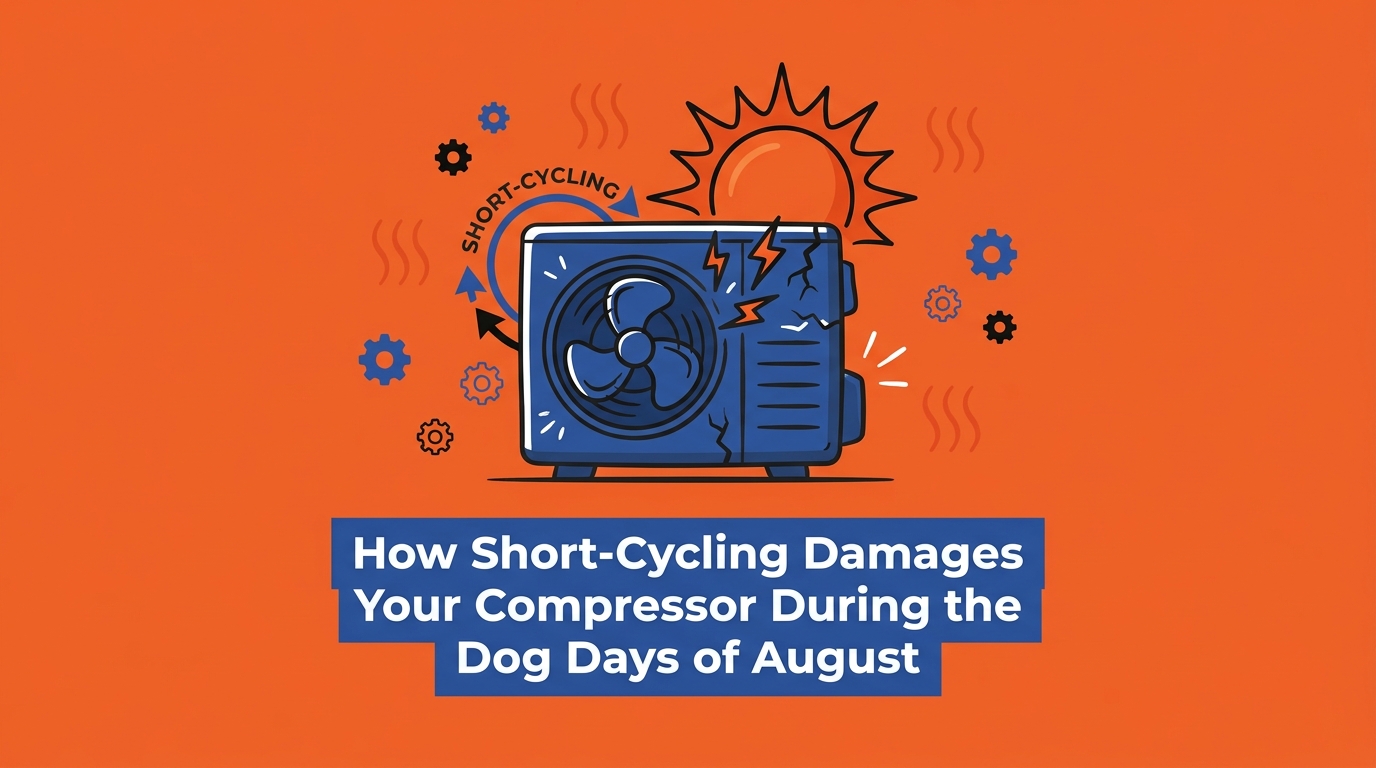

As families prep for the back-to-school transition in Derby, understanding how short-cycling damages your compressor during the dog days of August is critical when your air conditioner kicks on, blasts cold air for a few minutes, and then abruptly shuts off. That sudden shutdown is not a sign of an incredibly efficient system. In our years of keeping local homes comfortable, the team at MJB Heating & Cooling has seen firsthand how this points to a mechanical or sizing flaw that forces the equipment to work in frantic, abbreviated bursts. This phenomenon is known as short-cycling, and it is a serious threat to the most expensive component in your cooling system: the compressor.
During August extended heat waves, the extreme late-summer heat exposes the fatal flaws of an oversized or malfunctioning air conditioner. The system is asked to perform under peak load, but its inability to complete a full run cycle means it never stabilizes. Ignoring this issue does not just result in a warm house; it actively accelerates mechanical wear and tear that leads to catastrophic system failure. Recognizing the pattern early is the best way to protect your investment.
If you notice your system constantly starting and stopping, securing expert HVAC services is the safest course of action. A professional evaluation will determine exactly why the unit cannot complete its intended sequence. Enrolling in a preventative HVAC maintenance plan also ensures that these sizing and operational discrepancies are caught long before the compressor takes permanent damage.
• Frequent starts and stops: The unit turns on and off multiple times an hour.
• Uneven cooling: The room with the thermostat feels freezing, while the rest of the house remains hot.
• Loud startup noises: The constant booming or clicking of the outdoor unit engaging far more often than normal.
• Excessive indoor humidity: The air feels heavy and damp despite the temperature dropping.
To understand why this start-and-stop behavior is so destructive, you first need to know what a normal cooling cycle looks like. An air conditioner needs sufficient time to cool the home evenly, stabilize internal refrigerant pressures, and circulate air through the ductwork. A standard, healthy cooling cycle typically lasts 15 to 20 minutes, allowing the mechanical components to reach a steady, efficient cruising speed.
A short cycle occurs when the system shuts down prematurely, failing to complete its intended mechanical sequence. We define this as rapid on/off cycles lasting less than 10 minutes. When an air conditioner runs for only five or six minutes before powering down, it never reaches peak operational efficiency. The compressor, blower motor, and refrigerant lines are forced into a constant state of starting up and shutting down.
These abbreviated run times are a primary indicator of underlying mechanical or sizing flaws. Air conditioning systems are designed for endurance, not sprinting. When the equipment is forced to sprint in five-minute intervals, the mechanical stress multiplies exponentially.
• Average Duration — Normal Cooling Cycle: 15 to 20+ minutes — Short Cycle: Less than 10 minutes
• Temperature Control — Normal Cooling Cycle: Even cooling throughout the home — Short Cycle: Hot and cold spots in different rooms
• Humidity Removal — Normal Cooling Cycle: Effective moisture extraction — Short Cycle: Poor dehumidification; clammy air
• Compressor Stress — Normal Cooling Cycle: Low to moderate steady-state wear — Short Cycle: Severe startup strain and overheating
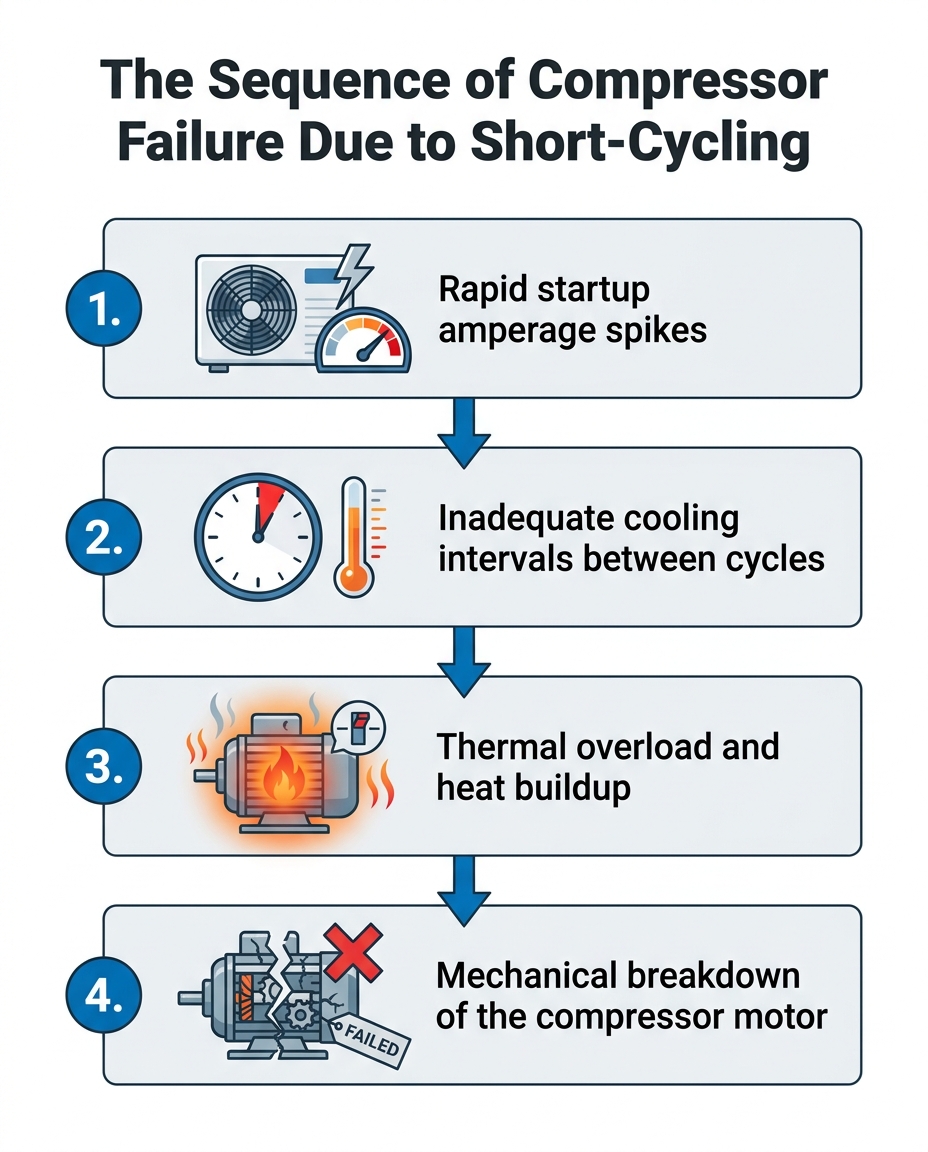
The core problem with short-cycling lies in the electrical demand required to start a compressor motor. Compressors draw significantly more amperage during startup than they do while running steadily. This initial surge of electricity generates a massive amount of heat within the motor windings. In a normal cycle, the long run time allows the cool refrigerant returning from the house to flow over the compressor motor, effectively cooling it down before the next cycle begins.
When a system short-cycles, that critical cooling period never happens. Rapid, repeated startups cause immense heat buildup within the compressor motor. Because the run time is so brief, the refrigerant never has a chance to carry that heat away. During August extended heat waves, the ambient outdoor temperatures are already punishingly high. This extreme external heat prevents the compressor from properly cooling down between these rapid cycles, trapping the motor in a compounding cycle of thermal stress.
This progression from thermal overload to complete mechanical breakdown is a pattern our team sees far too often during late summer. The internal insulation on the motor windings begins to degrade under the constant heat. Eventually, the compressor will lock up entirely, rendering the entire air conditioning system useless.
In fact, just last late summer, our MJB Heating & Cooling technicians responded to a Derby homeowner whose AC had completely stopped running during a brutal heat wave. The system had been rapidly cycling and overheating for weeks prior, eventually locking up completely. Our team got the AC temporarily running to provide some immediate relief, and later installed a properly sized new system to ensure the house stayed cool without destroying the new equipment.
A common myth in home cooling is that a larger capacity air conditioner will provide better or faster comfort. In reality, oversizing an air conditioning unit is one of the leading causes of short-cycling. To understand why, you have to look at how an air conditioner actually conditions the air. It does not just lower the temperature; it also extracts moisture.
ASHRAE standards indicate that residential cooling systems typically need 15 to 20 minutes of continuous runtime to effectively pull humidity out of indoor air. The indoor evaporator coil needs time to get cold, collect condensation from the passing air, and drain that moisture outside. If a system is oversized, it blasts the house with a massive volume of cold air, dropping the indoor temperature rapidly. The thermostat registers that the target temperature has been reached and shuts the system down after just a few minutes.
Because these rapid on/off cycles lasting less than 10 minutes are so brief, the system never has time to dehumidify the air. The temperature drops, but the moisture remains. In our experience servicing HVAC systems across the area, we frequently see how Derby's high late-summer humidity turns this into a major comfort issue. A short-cycling oversized unit will leave a home feeling uncomfortably cold but clammy. This damp environment is not just uncomfortable; it actually forces the system to turn back on quickly, as humid air holds heat and makes the home feel warmer than the thermostat reads.
1. Air circulation begins: Warm, humid air from the house is pulled into the return ducts.
2. Coil contact: The air passes over the freezing cold evaporator coil.
3. Condensation forms: Moisture in the air condenses into water droplets on the cold metal, similar to a cold glass of water on a hot day.
4. Moisture removal: The water drips into a drain pan and flows safely out of the house.
5. Extended runtime required: This entire process requires at least 15 minutes of steady airflow to make a noticeable impact on indoor humidity levels.
Short-cycling is a symptom, not the disease. Finding out exactly why the system is shutting down prematurely requires comprehensive testing. While an oversized unit is a very common culprit, rapid on/off cycles lasting less than 10 minutes can also be triggered by severe airflow restrictions, low refrigerant levels, or failing electrical components.
Experts differentiate between an improperly sized system and one suffering from mechanical faults by measuring static pressure, verifying the refrigerant charge, and calculating the actual heat load of the home. For example, a severely clogged air filter can restrict airflow so much that the indoor coil freezes solid. This triggers internal safety switches that shut the compressor down to protect it, resulting in a short cycle. Attempting DIY diagnostics on high-voltage compressor components is incredibly dangerous and often leads to misdiagnosis.
At MJB Heating & Cooling, our technicians rely on a thorough diagnostic approach to ensure homeowners get to the root cause of the issue—whether that means identifying an oversized unit or pinpointing severe airflow restrictions—rather than just applying temporary band-aid fixes. A thorough evaluation prevents recurring issues and ensures the long-term health of the equipment.
For homeowners in Derby and surrounding communities, professional testing provides clarity. Technicians use specialized gauges and multimeters to track the exact sequence of operation, isolating the exact moment and reason the system cuts out.
A compressor does not usually fail silently. As it struggles under the immense stress of short-cycling, it will give off auditory and visual warning signs. Recognizing these signs during August extended heat waves can mean the difference between a manageable repair and a total system replacement.
Continuous electrical strain often degrades supporting components first. The capacitor, which acts as a massive battery to help jump-start the compressor, takes the brunt of the abuse during rapid on/off cycles. When the capacitor begins to fail, the compressor struggles even harder to start, pulling even more amperage and generating even more heat. If you hear a distinct clicking or humming sound coming from the outdoor unit, but the fan isn't spinning, you are likely hearing the compressor trying and failing to start. You can learn more about recognizing the sound of a failing compressor capacitor to better understand this specific warning sign.
Other warning signs include:
• Dimming lights: If the lights inside your house dim every time the AC kicks on, the compressor is pulling excessive amperage due to high starting strain.
• Tripped breakers: A system that consistently trips the circuit breaker is drawing a dangerous amount of electrical current, often due to thermal overload.
• Grinding noises: Metallic grinding sounds indicate that the internal mechanical parts of the compressor are failing due to a lack of lubrication or severe wear.
If the worst happens and a compressor does fail due to chronic short-cycling, replacing the system is a major undertaking. However, there are accessible ways to manage the replacement costs. Exploring flexible financing options allows you to upgrade to a properly sized, high-efficiency system without bearing the entire burden at once. Depending on the system you choose, federal tax credits or local utility incentive programs may also apply to qualifying high-efficiency installations, so it is always worth checking current guidelines with your utility provider or tax professional.
Short cycling damages a compressor by forcing it to endure rapid startup amperage spikes without adequate time to cool down. Compressors draw massive amounts of electricity to start, which generates intense internal heat. When the system turns off after just a few minutes, the returning refrigerant cannot cool the motor, leading to severe thermal overload and eventual mechanical breakdown.
An AC that turns on and off every 5 minutes is often improperly sized for the home. An oversized unit cools the ambient air far too quickly, satisfying the thermostat before the system can stabilize. However, this behavior can also be caused by severe airflow restrictions or failing electrical components, requiring a professional diagnosis to pinpoint the exact cause.
A healthy air conditioning system should typically run for 15 to 20 minutes during a standard cooling cycle. This duration allows the system to reach peak electrical efficiency and evenly distribute cool air throughout the home. Most importantly, it provides the necessary time for the evaporator coil to properly pull humidity from the indoor air.
Yes, an oversized AC is one of the leading causes of short cycling. Because the unit has too much cooling capacity for the square footage of the home, it drops the indoor temperature rapidly and shuts off. This creates a frustrating cycle of rapid cooling followed by immediate ambient heat return, leaving the home feeling cold but highly humid.
Yes, a severely clogged air filter can cause an air conditioner to short cycle. When airflow is blocked, the cold air cannot escape the indoor unit, causing the evaporator coil to freeze solid into a block of ice. This freezing triggers internal safety pressure switches that force the system to shut down prematurely to protect the compressor from liquid refrigerant damage.
Understanding why your system is turning on and off constantly is the first step in protecting your most critical cooling components. The rapid on/off cycles associated with short-cycling place an unbearable electrical and thermal load on the compressor. During August extended heat waves, this stress compounds daily, accelerating wear and tear until the equipment simply gives out.
As the late-summer heat persists in Derby, addressing these rapid cycles promptly can save the system from total breakdown. Whether the root cause is an oversized unit, a failing capacitor, or a severe airflow restriction, our team at MJB Heating & Cooling knows that early intervention stops the damage in its tracks. If your system is struggling to complete a full cooling cycle, reach out for a professional evaluation to restore proper operation, protect your compressor, and finally get the comfortable, dehumidified air you deserve.


Our A/C stopped working on a Sunday and due to health issues, we needed to find a service company available on a Sunday. I called MJB and left a message on their emergency voice mail. Within 10 minutes Tom Buck called me to hear my description of the symptoms. He was just finishing an appointment in Wichita and would be on his way to my home on the south end of Derby. He arrived within 30 minutes! From start to finish he was the perfect example of what you could ever hope for in an HVAC tech and a human being. His evaluation of our system inside and out was as thorough as I could ever imagine and once he was done with the repair, our system is running as well or better than ever. Well worth the price for the evaluation, parts, and labor. Thank you again Tom for an awesome experience.
Our AC went out during the hottest days of the year, and they were out next day! We have been jerked around by a shoddy home warranty for years. We finally had a chance to pick our own repair people, and MJB came highly recommended. I can see why! I was impressed with the honesty and speed at which they fixed our AC unit!
Our commercial building had a lightening/electrical strike and damaged our 20 ton AC unit. No one could find us a new unit before the end of September. Imagining going all of August and September with no AC in Kansas and working inside near 100 degree temps is less than thrilling. Dale and the team at MJB called around and saved the day. They had us a new unit 5 weeks earlier than other could promise and I now have happy employees. The unit is amazingly quiet, super cold and so much more energy efficient. Thank you for being our super hero!
Came out and installed my new furnace. Was very polite and affordable. They are very acknowledgeable and I highly recommend!
Thank you very much. We had our 1st warm night in 3weeks. MJB took the time and effort to find the real problem. And the employees were kind and thoughtful and explained things very well. I cannot thank you and all of MJB. Will recommend you highly. Thanks again Marjorie Herman Oxford Kansas
We had a new system installed and I was so impressed with how quick they were in come out and install it, in the middle of a hot summer day. They were so friendly & very professional. I had a small problem with a weird sound and they came over immediately and fixed it. Love them!